
Food & Beverage Industry — Bottling & Canning
An in-depth technical reference covering gear construction, material compliance, lubrication systems, and drive selection criteria for high-throughput bottling and canning applications worldwide.
Beverage bottling and canning lines represent some of the most demanding continuous-duty conveyor applications in the food processing world. A single production shift at a mid-scale beverage plant may cycle 80,000 to 150,000 containers through filling, seaming, labeling, and palletizing stations — and every mechanical component in the drive train must function without interruption for that output target to be met. The single speed reducer is the component that sits directly between the electric motor and the conveyor or machinery drive shaft, and in food-grade environments it must satisfy both mechanical performance requirements and hygiene compliance standards simultaneously.
Plant engineers across Europe, North America, Southeast Asia, and Australia have increasingly standardized on worm gear single stage speed reducers for bottling and canning line drives. The reasons go beyond simple economics. Worm drive geometry offers self-locking capability at higher ratios, right-angle power transmission in a compact envelope, and a smooth, low-vibration output that protects fragile glass or thin-wall aluminum container integrity during line start-up and speed transitions. When configured with food-grade lubricants and sealed housings, this type of reducer also satisfies the hygiene requirements that regulatory bodies in the US, EU, and other major markets enforce for equipment in direct production zones.
This article examines the engineering and compliance factors that make food-grade worm drive units the preferred drive selection for beverage bottling and canning, covering gear construction, material systems, lubrication, mounting options, and service considerations specific to these applications.
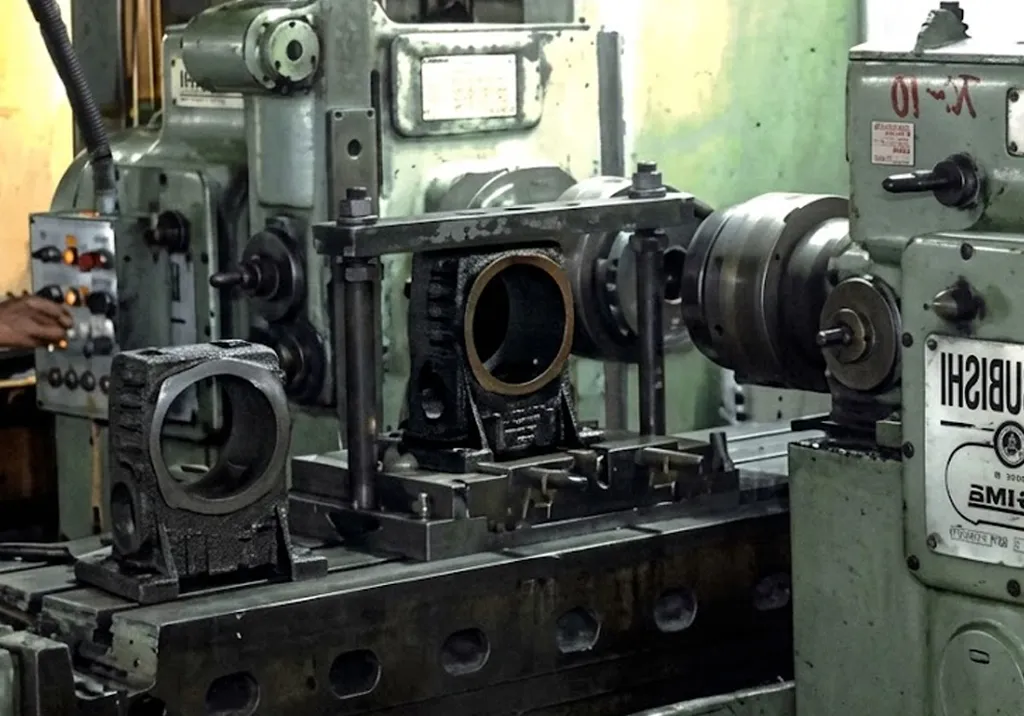
What Makes a Single Speed Reducer Suitable for Food-Grade Environments
The term food-grade, as it applies to drive equipment, refers to a combination of material selection, lubricant specification, sealing effectiveness, and surface finish standards that together minimize the risk of physical, chemical, or microbiological contamination in the production zone. For a single speed worm gear reducer, achieving food-grade compliance typically requires four simultaneous conditions to be satisfied: a sealed, smooth-surface housing that does not trap food particles or cleaning agent residue; shaft seals rated for resistance to the alkaline or acidic detergents used in Clean-In-Place (CIP) and washdown routines; lubricant meeting NSF/ANSI H1 registration for incidental food contact; and housing materials that do not corrode or leach metals when exposed to moisture, condensation, or mild chemical exposure from the production environment.
In bottling lines, the conveyor drive reducers are frequently positioned directly beneath or beside the filling and capping zones where liquid beverage spillage is routine. The reducer housing must be impervious to water ingress while also being easy to wipe down or pressure-wash without displacing shaft seals or forcing cleaning solution past oil seals into the gear cavity. WP series single speed reducers achieve this through double-lip oil seals at all shaft exits, a precision-machined housing mating surface at the gear cover joint, and a breather plug designed to equalize pressure without allowing contaminated air or wash water to enter the interior.
The smooth exterior surfaces of cast iron WP series housings — without exposed bolt pockets, recessed cavities, or blind threads on the outer profile — reduce the surface area where organic residue or moisture can accumulate between production runs. This is a recognized factor in facility audits conducted by bodies such as the SQF Institute, BRC Global Standards, and FSSC 22000 certification programs, which evaluate not only process hygiene but also the design suitability of processing equipment and its surrounding machinery.
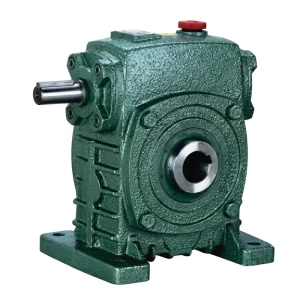
Featured Product
EP-WPKS Single Speed Reducer (4–365 kg)
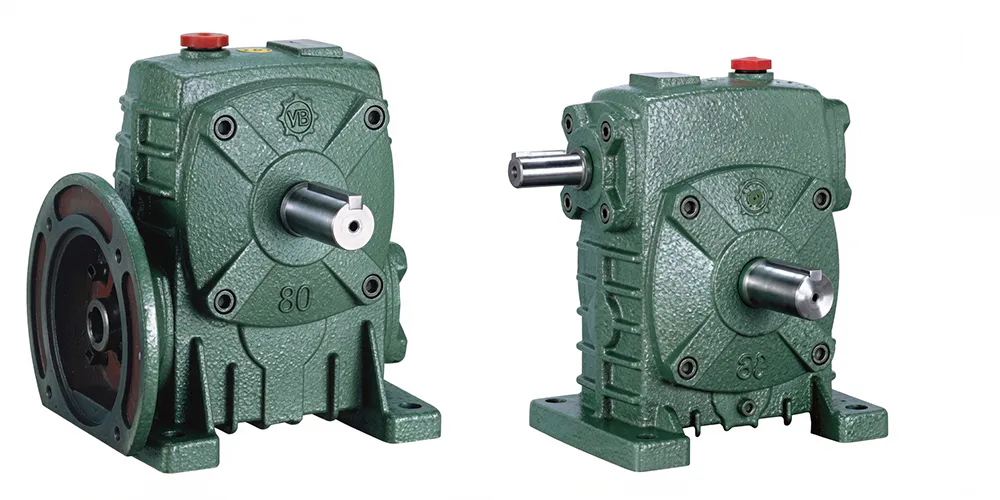
The EP-WPKS is a flange-mounted, single-stage worm gear speed reducer built for applications where rigid frame attachment and high radial output load capacity are both required. In canning lines, the lateral belt tension loads on conveyor head drums are often higher than in standard gravity conveyors due to the weight of aluminum cans and the frequent start-stop cycles at accumulation points. The WPKS oversized output shaft and reinforced bearing arrangement handle these conditions without shaft deflection-induced seal wear.
| Model | EP-WPKS |
| Load Range | 4 – 365 kg |
| Gear Arrangement | Single-stage worm drive |
| Ratio Range | 1:10 to 1:60 |
| Mounting | Flange (WPKS — solid output shaft) |
| Housing | Cast iron HT200 |
| Worm Wheel | Phosphor bronze / tin-bronze alloy |
| Standard | ISO 9001:2015 certified production |
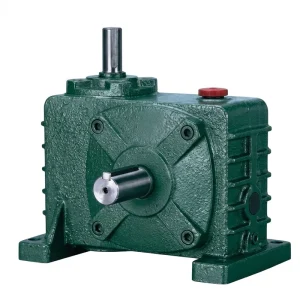
EP-WPZ Single Speed Reducer (0.4–5.2 L Oil Capacity)
For bottling lines operating 20–24 hours per day without scheduled stoppage windows, lubricant service intervals become a critical maintenance planning factor. The EP-WPZ variant offers an extended oil sump capacity of 0.4 to 5.2 liters, depending on housing size, which substantially increases the thermal mass of the lubricant volume and extends drain intervals when running NSF H1-rated synthetic gear oil. Facilities running ISO 22000-certified production schedules benefit from the longer change intervals, as they reduce the number of planned line stops per quarter. The WPZ series shares all dimensional and mounting standards with the standard WP single speed range, making it a drop-in upgrade on existing conveyor frames.
Browse the complete range of single speed reducers engineered for food and beverage applications:
Manufacturing Construction: How the WP Series Is Built for Beverage Line Duty
The core structural architecture of a WP series drive places the worm shaft and worm wheel in a single-stage meshing arrangement within a precision-cast iron housing. This single-stage configuration means there is only one gear mesh interface generating noise and heat, and only one gear mesh that can develop wear over time. For continuous-duty bottling applications where 24/7 operation is common across three shifts, the simplicity of the single-stage design directly translates into predictability: wear progression is linear and detectable through routine oil analysis, and the noise profile of a healthy unit remains essentially constant over time.
Manufactured from 20CrMnTi alloy steel, carburized and case-hardened to 58–62 HRC, with thread profile precision-ground to DIN class tolerances. The hardened surface resists the sliding abrasion inherent to worm drive contact without requiring frequent adjustment.
Centrifugally cast tin-bronze or phosphor bronze, machined to the worm thread profile. Bronze provides a sacrificial wear surface that polishes the steel worm rather than scoring it, extending worm shaft life beyond that of the wheel in most applications.
Gray cast iron HT200, ribbed for rigidity and thermal dissipation. The exterior is free of exposed internal cavities, recesses, or surface pockets that could retain liquid in wet zones. All through-bolts are recessed flush with the outer housing surface on food-adjacent configurations.
Double-lip rotary shaft seals at all shaft exits, manufactured in NBR (standard) or FKM (for chemical resistance to CIP detergent exposure). FKM seals are specified for installations in high-wash-frequency zones such as filling and rinsing areas of bottling facilities.
45# medium-carbon steel, induction hardened and ground. Keyway dimensions conform to ISO 773 / DIN 6885A standards, accepting standard sprockets, conveyor pulleys, and coupling hubs without additional machining for the majority of bottling line drive configurations.
Vented pressure equalization plug prevents internal overpressure during thermal cycles. Fitted with a fine mesh barrier to exclude airborne particulates and condensation moisture — an important feature in humid production areas such as pasteurization tunnels and cold-fill rooms.
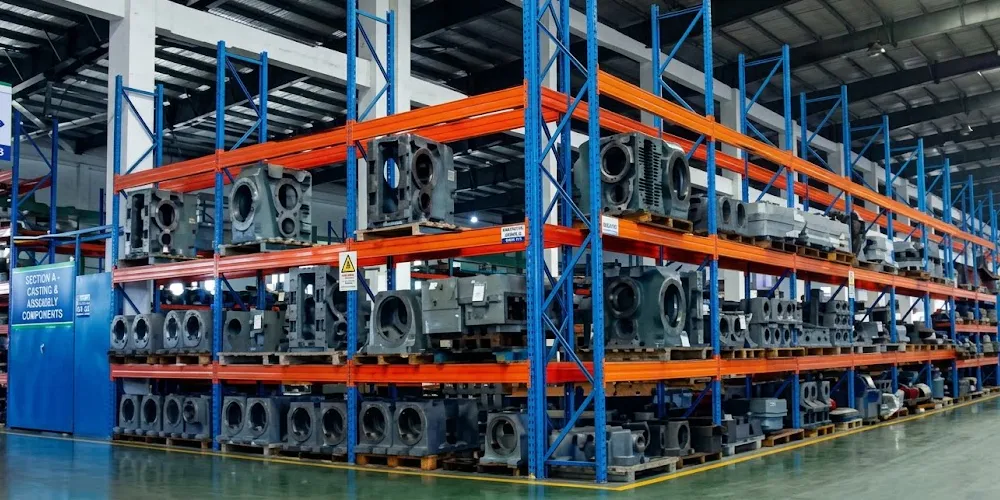
Material System: Compliance and Performance in the Same Package
Material compliance in food-grade drive equipment is governed by a layered set of standards. In North America, NSF International and the USDA historically set the framework; today NSF/ANSI Standard 51 for food equipment materials and NSF H1 lubricant registration are the primary references. In the European Union, Regulation (EC) No 1935/2004 governs materials intended for contact with food, while machine safety directive requirements under 2006/42/EC add structural and hygiene design expectations. The WP single speed reducer series addresses these requirements through a combination of material selection and surface finish that satisfies both the mechanical demands of the application and the regulatory baseline of the target market.
| Component | Material | Compliance Relevance | Bottling / Canning Benefit |
|---|---|---|---|
| Worm shaft | 20CrMnTi alloy steel | No surface coating that could flake into production zones | Long wear life under sustained can-line duty without abrasive particle generation |
| Worm wheel | Phosphor / tin-bronze | Non-ferrous; wear particles not detectable by iron-based metal detectors | Smooth, low-noise operation in filling halls where acoustic monitoring is used |
| Housing | Cast iron HT200 | Suitable for external food-grade paint coating for corrosion resistance | Dimensional stability under repeated thermal cycling from hot-fill production |
| Shaft seals | FKM elastomer | FDA 21 CFR 177.2600 compatible elastomers available | Resists degradation from peracetic acid and sodium hydroxide CIP solutions |
| Lubricant | NSF H1 synthetic ISO VG 220 | NSF/ANSI H1 registered for incidental food contact | Approved for use in zones where incidental contact with product cannot be fully excluded |
| Output shaft | 45# steel, hardened | Standard ISO keyway dimensions for certified coupling hardware | Accepts stainless steel couplings for conveyor head drum attachment in wet zones |
One material consideration specific to canning environments is the presence of aluminum dust generated at can-cutting and seaming stations. Cast iron housings with smooth painted or lacquered exterior surfaces resist aluminum particle adhesion more effectively than rougher textures, simplifying the housekeeping effort in adjacent drive areas and supporting facilities that operate under metal contamination control programs.
Lubrication in Food-Grade Bottling and Canning Environments
Lubricant selection is frequently the deciding factor in whether a worm speed reducer passes a food facility audit for use in a production zone rather than being restricted to a non-contact ancillary area. NSF International classifies lubricants used in food-grade environments under a tiered system: H1 lubricants are registered for incidental food contact and are the category required for reducers positioned in or adjacent to open product zones; H2 lubricants are suitable for use on equipment that is not exposed to food but requires a documented food-safe formulation; and HX-1 lubricants are approved food additives that can be used in direct food contact processes (not applicable to gear reducers).
For single speed reducers on bottling and canning line conveyors, NSF H1-registered ISO VG 220 fully synthetic polyalphaolefin (PAO) or polyalkylene glycol (PAG) lubricants are the standard specification used by food industry maintenance engineers. These synthetic bases offer better viscosity stability across the temperature range seen in beverage facilities (typically 5–45°C ambient), longer drain intervals than mineral oils, and better film retention under the boundary lubrication conditions that exist at worm drive startup. The EP-WPZ extended-oil-capacity variant offers a direct operational benefit when running synthetic H1 lubricants: the larger thermal mass delays oil temperature rise during sustained high-load operation, preserving viscosity grade and film thickness at the gear contact zone.
Break-In Period
Fill with ISO VG 220 H1 lubricant and operate for 300–400 hours before the first drain. Worm wheel bronze bedding generates fine particles during initial running — removing this first charge prevents long-term contamination of the oil film.
Synthetic Change Interval
With NSF H1 synthetic ISO VG 220, change intervals of 4,000–6,000 hours are achievable under normal bottling line conditions. Document each change in the facility maintenance management system for audit traceability.
Oil Level Orientation
Correct fill level depends on the installed orientation of the reducer. Horizontal worm shaft and vertical worm shaft installations use different fill port positions and volume references — always consult the mounting position fill chart before adding lubricant.
Contamination Monitoring
Periodic oil analysis (particle count, moisture, viscosity check) at mid-interval catch issues before they cause gear failure. Bronze particle elevation in the oil indicates accelerated wheel wear — a trigger for ratio or load review before the next scheduled stop.
View the complete WP series single speed reducer catalog — including food-grade and extended-oil-capacity variants — for bottling and canning system specifications.
Bottling Lines vs. Canning Lines: Drive Specification Differences
Although both bottling and canning lines share the same fundamental conveyor drive architecture, the specific mechanical demands placed on the single speed gear reducer differ between the two processes in ways that affect model and ratio selection. Understanding these differences prevents over-specification — which increases cost unnecessarily — and under-specification, which leads to premature drive failures and unplanned shutdowns.
| Parameter | Glass Bottle Line | PET Bottle Line | Aluminum Can Line |
|---|---|---|---|
| Conveyor load | High (glass weight) | Moderate | Low to moderate |
| Vibration sensitivity | Very high (breakage risk) | Low | Low to moderate |
| Preferred reducer type | Worm gear (smooth, low vibration) | Worm or helical | Worm gear (self-locking at inclines) |
| Typical ratio | 1:20 to 1:40 | 1:15 to 1:30 | 1:15 to 1:40 |
| CIP exposure frequency | Daily (filling zone) | Daily (filling zone) | Daily (seaming zone) |
| Seal spec recommendation | FKM (chemical resistance) | NBR or FKM | FKM (aluminum dust + CIP) |
| WP model recommendation | WPKS or WPKA (flange-mounted) | WPA or WPKA | WPKS or WPZ (extended oil) |
For glass bottle conveyor systems, the smooth torque delivery of the worm single reduction stage is particularly valuable at line startup. A rigid helical gear set at the same ratio tends to deliver torque with more abruptness at the beginning of each conveyor cycle, which on a full-length glass bottle accumulation table can cause front-row container tipping. The the inherent compliance of the worm drive under load dampens this startup impulse, reducing glass breakage rates at conveyor head positions — a documented cause of product loss and housekeeping downtime in beverage plants globally.
Complete Drive System Components: One-Stop Supply
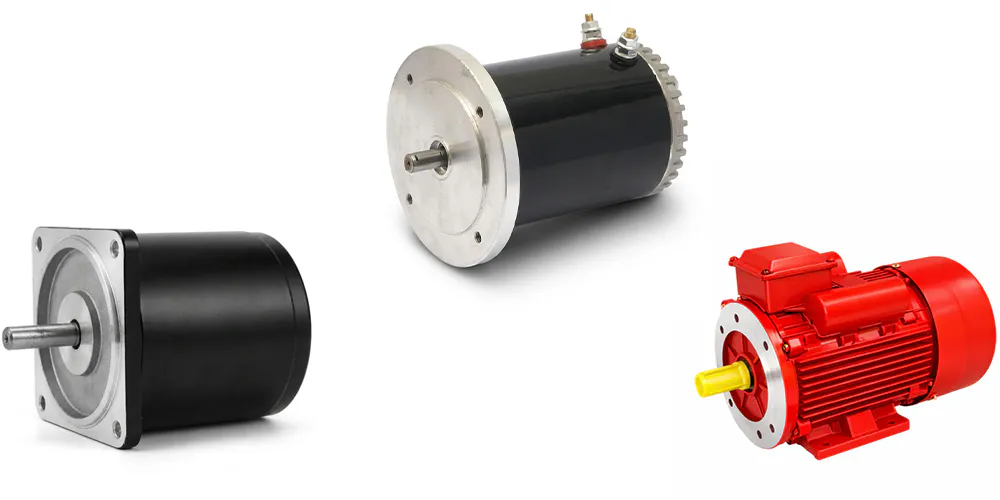
A properly functioning bottling or canning line conveyor drive depends on correct component matching across the entire drive train — not just the reducer. The following accessory product families are available alongside the single speed reducer range to enable complete system specification from a single supplier:
About the Manufacturer
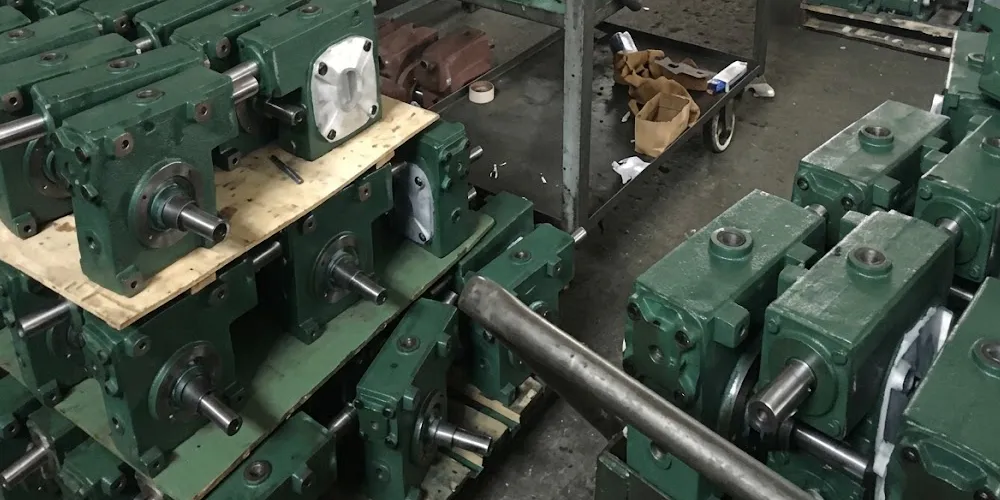
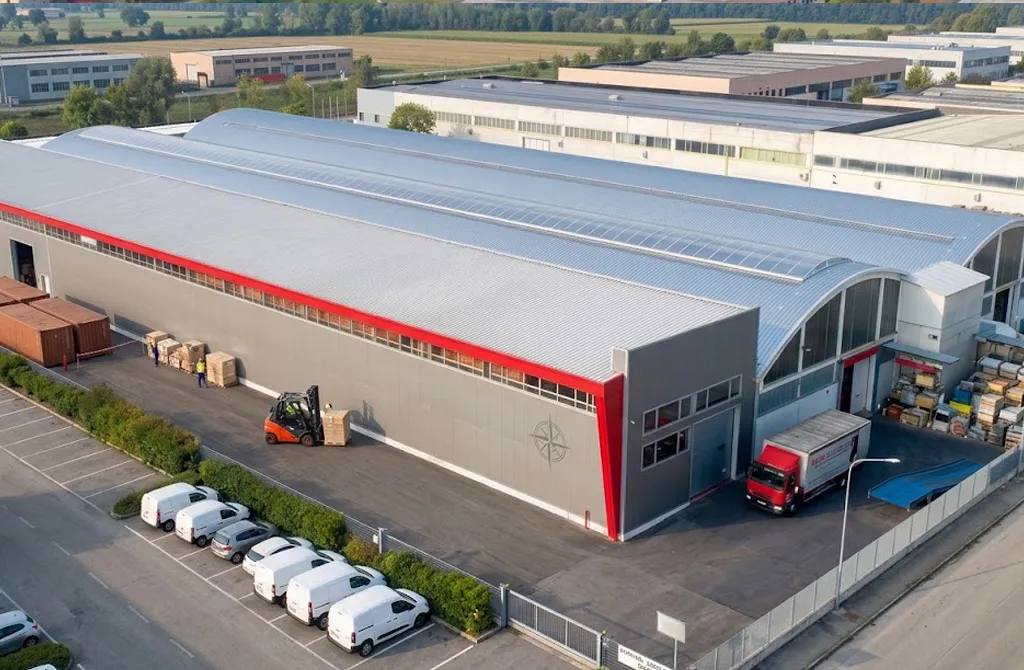
Operating under ISO 9001:2015 quality management, the production facility behind the WP reducer range maintains a vertically integrated manufacturing structure covering agricultural gearboxes, worm gear reducers, planetary gear drives, power take-off shafts, hydraulic cylinders, gears, chains, and electric motors. This breadth of product scope means that engineering teams sourcing complete conveyor drive systems — motor, reducer, coupling, and ancillary sprockets or pulleys — can consolidate procurement to a single supply point without managing separate vendor qualifications.
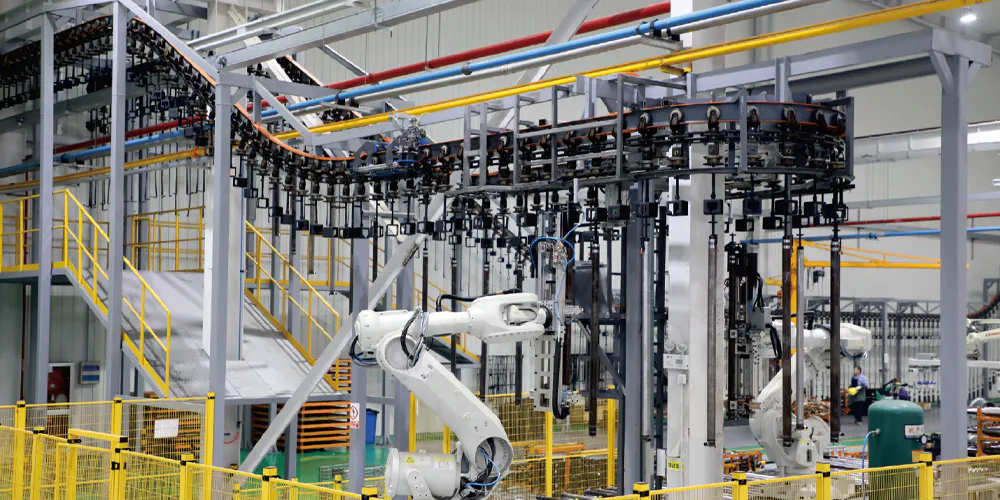
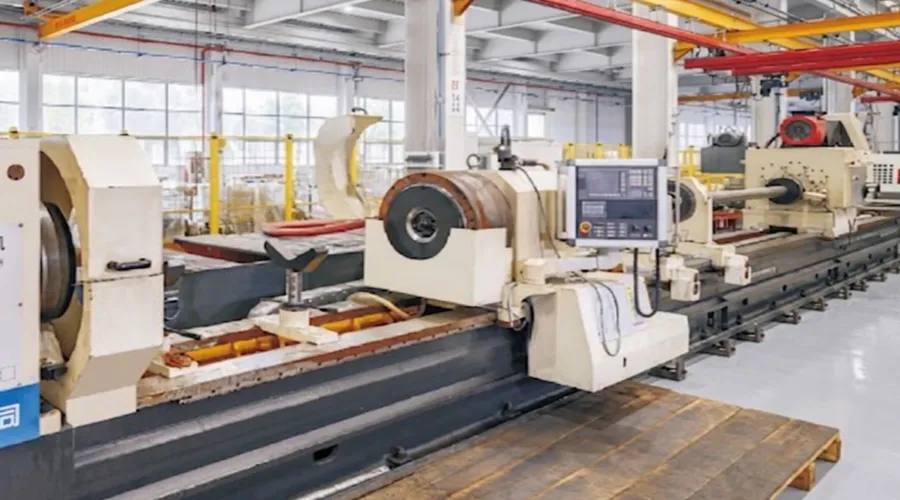
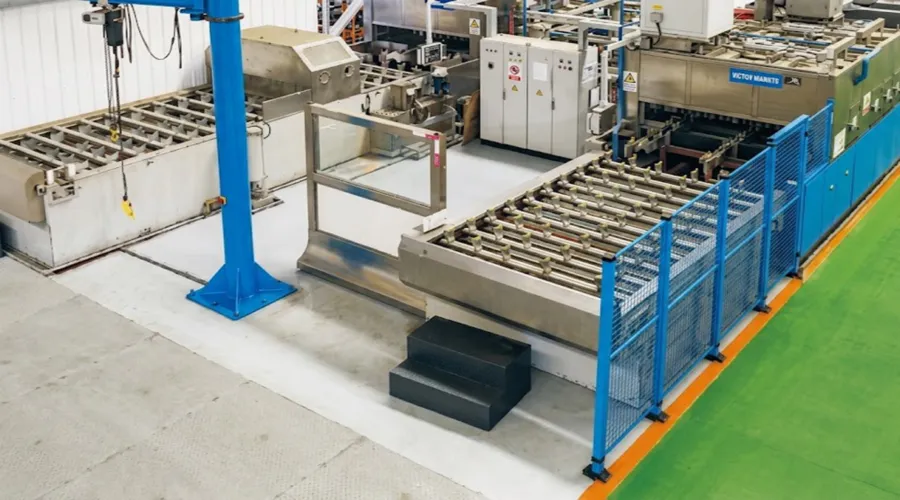
In-house processing capabilities include CNC gear hobbing, precision bore machining, heat treatment lines, assembly, and factory test running of completed reducer units. Component materials span ductile iron, cast iron, cast steel, precision cast steel, and cast aluminum — enabling production of both catalog-standard WP units and non-standard gear assemblies for OEM beverage equipment builders requiring custom shaft dimensions, mounting configurations, or output ratio steps outside the standard range.
WorkShop
Frequently Asked Questions
What type of single speed worm gear reducer works best for glass bottle conveyor lines in European beverage plants? ▼
Which food-grade lubricant should I use for a single speed reducer installed on a canning line in a North American facility? ▼
Where can I find a reliable single stage speed reducer supplier for beverage bottling equipment in Southeast Asia? ▼
How do I get a quote for a customized single speed reducer for a non-standard canning line configuration in Australia? ▼
What are the main disadvantages of reduction gears in food production environments and how does the worm drive design address them? ▼
Editor: PXY