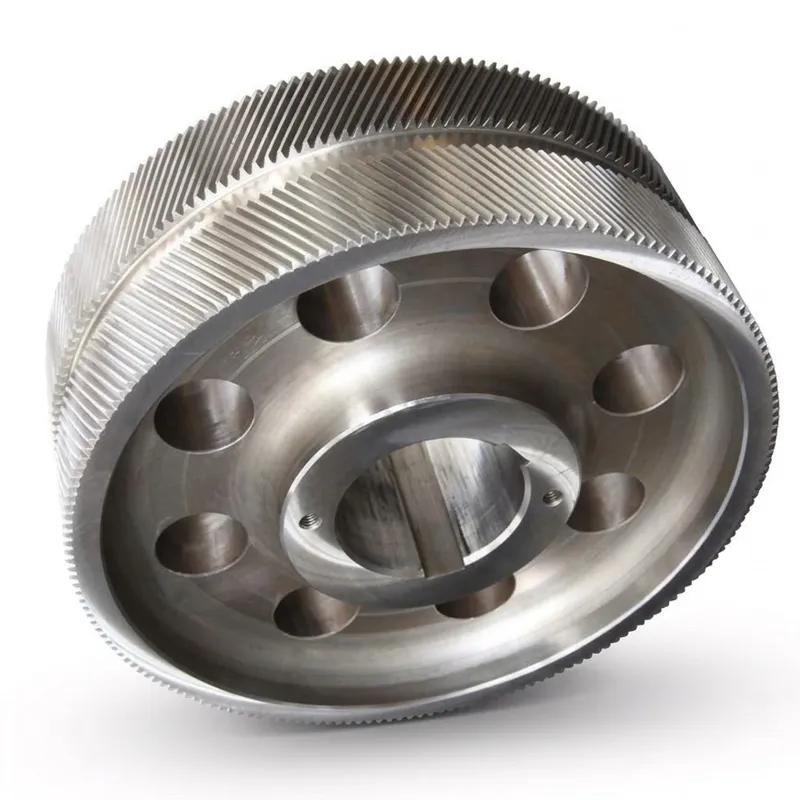
EP-Industrial Double Helical Gear
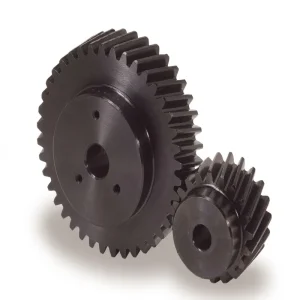
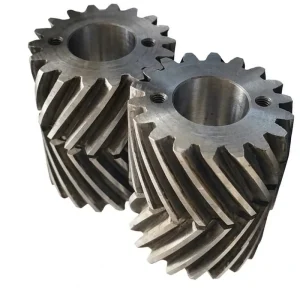
The EP-Industrial Double Helical Gear is a high-performance transmission component engineered for demanding industrial applications. Featuring a distinctive herringbone tooth form, this round gear is designed to effectively cancel out axial thrust forces, ensuring smooth operation and extended bearing life under heavy loads. Constructed from durable steel, the gear offers exceptional strength and reliability for critical machinery. Fully customizable in terms of material, diameter, size, and capacity, it can be tailored to meet specific torque and speed requirements. Ideal for use in heavy industrial gearboxes, compressors, and power transmission systems, this herringbone gear provides superior stability and load-carrying capability compared to standard helical designs, making it a robust solution for complex mechanical drives.
Industrial Power Transmission / Gear Solutions
Precision-engineered double helical gears built for continuous heavy-duty industrial operation — delivering smooth torque transmission, reduced axial thrust, and exceptional service life across demanding global applications.
Material: Steel / Customized
Tooth Form: Herringbone
Shape: Round
Capacity: Customized
ISO 9001:2015 Certified
Technical Specification Parameters
The table below summarises the core technical parameters for the EP-Industrial double helical gear series. Because these gears are manufactured to customer drawings, values shown as "Customised" indicate dimensions that are specified per order. Standard ranges are provided as a reference for application engineers during early design stages. Requests outside these ranges can be assessed on an individual basis.
| Параметр | EP-Industrial Double Helical Gear |
|---|---|
| Беріліс түрі | Herringbone / Double Helical |
| Tooth Form | Herringbone (V-groove or continuous) |
| Usage / Application | Industrial heavy-duty power transmission |
| Материал | Steel (alloy, carbon, stainless); customised per specification |
| Shape | Round (standard); custom flange or shaft-integrated forms available |
| Module Range | M1 – M50 (metric); CP equivalent for inch helical gears |
| Helix Angle (each row) | 15° – 45° (symmetric opposing rows) |
| Тістер саны | Customised (typically 10 – 300 T) |
| Outer Diameter | Customised (reference range: ø50 mm – ø2 000 mm) |
| Face Width (total, both rows) | Customised (reference range: 40 mm – 800 mm) |
| Bore Diameter | Customised (solid, through-bore, or shrink-fit hub) |
| Surface Hardness (typical) | 58 – 62 HRC (case-hardened); 280 – 320 HB (through-hardened) |
| Accuracy Grade | ISO 1328 Grade 5 – 9 (application-dependent) |
| Беттік өңдеу | As-ground, phosphated, blackened, or custom per requirement |
| Capacity | Customised (rated torque per project calculation) |
| Сапа стандарты | ISO 9001:2015; AGMA / DIN / ISO inspection available |
What Is a Double Helical Gear?
А double helical gear — also widely recognised as a herringbone gear — features two rows of helical teeth cut in opposing helix angles on a single gear body. This V-shaped or chevron tooth arrangement is what sets the double helical gear design apart from a standard helical gear or spur gear. When the mating gears mesh, the thrust force generated by each angled tooth row is cancelled out by the equal and opposite force from the mirrored row. The result is a near-zero net axial load on bearings, a factor that is critically important in large industrial gearboxes, turbine drives, and parallel shaft transmissions where bearing longevity and shaft alignment are non-negotiable.
The EP-Industrial series applies this time-proven double helical gear design philosophy to a precision-manufactured product line built for global industrial buyers. Every blank is machined from quality steel stock and subjected to rigorous dimensional inspection before tooth cutting. The final tooth profile — whether generated by hobbing, grinding, or a combination of both — meets international accuracy grades appropriate for the intended load and speed range. Customers working in steel rolling mills, mining conveyors, cement kilns, marine propulsion, and heavy industrial processing have relied on this type of gear for decades precisely because the advantages of double helical gear configurations are hard to replicate with any other gear geometry.
Compared with a single helical gear, the double helical gear eliminates the need for thrust bearings to absorb axial loads, reduces vibration and acoustic emission, and enables the transmission of higher torque for a given centre distance. Compared with a spur gear, contact ratio is substantially improved, meaning each tooth carries load for a longer arc of engagement. These properties, taken together, explain why engineers consistently select the double helical gear wherever smooth, high-capacity, long-life power transmission is required.
Five Key Advantages of Double Helical Gear
① Axial Thrust Cancellation
One of the defining advantages of double helical gear is the self-balancing of axial forces. Because each half of the gear carries equal but opposing helix angles, thrust loads cancel internally rather than being transferred to shaft bearings. This protects bearing seats, extends bearing service intervals, and makes the double helical gear the preferred choice wherever axial load management is critical — including turbine-driven compressors, mill pinion drives, and high-speed parallel shaft gearboxes. Engineers who have migrated from single helical designs consistently report measurable improvements in bearing operating temperatures after switching.
② Higher Torque Capacity per Unit Volume
The angled tooth geometry of a double helical gear enables a higher contact ratio than straight-cut spur gears, distributing the applied load across more tooth surface area at any given instant. This translates directly into a higher torque capacity for the same overall gear diameter and face width. When space and weight budgets are tight — as they are in gearboxes for wind turbines, rolling mill drives, and marine propulsion systems — the volumetric efficiency of the double helix gear geometry provides a meaningful engineering advantage over competing forms.
③ Smooth, Low-Noise Operation
The gradual tooth engagement characteristic of helical teeth — multiplied by the two-row arrangement in a double helical gear — produces exceptionally smooth power flow. Vibration amplitudes and noise signatures are substantially lower than those produced by spur gears at equivalent speeds and loads. This quality is particularly valued in food processing lines, pharmaceutical manufacturing, and precision machine tools where vibration can compromise product quality or process accuracy. The helical gear design achieves low noise not by accident but because the inclined tooth entry distributes impact energy over time rather than concentrating it at the moment of mesh.
④ Extended Operational Lifespan
Lower axial loading, improved load distribution, and reduced vibration collectively produce a gear that simply wears more slowly than comparable alternatives. Steel helical gear sets manufactured from appropriate alloy steel, heat-treated to achieve the right core toughness and surface hardness, and finished to accurate tooth profiles will routinely deliver many years of service in continuous-duty industrial installations. Proper lubrication — matched to the operating speed and temperature — sustains the elastohydrodynamic film on tooth flanks that is responsible for keeping metal-to-metal contact to a minimum throughout the service life of the double helical gear.
⑤ Fully Customisable to Application Requirements
Unlike catalogue gears with fixed dimensions, the EP-Industrial double helical gear series is engineered to order. Module, number of teeth, helix angle, face width, bore diameter, keyway geometry, and surface treatment are all specified per project. Custom made helical gears are produced with CNC hobbing and precision grinding equipment, and dimensional reports accompany each shipment. Whether a customer requires inch helical gears to metric-to-imperial conversion, stainless steel helical gears for corrosive environments, or high-capacity double helical gear sets for a rolling mill rebuild, the manufacturing process adapts to the brief.
How a Double Helical Gear Works
Understanding the working principle of a double helical gear begins with the geometry of a single helical tooth. When a helical gear rotates, each tooth enters mesh at one edge of the face width and progressively engages across the full tooth width before disengaging at the opposite edge. This gradual engagement is what produces the smooth, quiet running that characterises helical gear operation. The trade-off is that the inclined tooth generates a side load — an axial thrust force — proportional to the tangential tooth force and the tangent of the helix angle.
In a double helical gear, this problem is resolved by pairing two helical sections with equal but opposite helix angles on the same gear body, separated by a central groove or cut into a continuous V-profile. As the gear rotates, the axial thrust from the left-hand helix section is continuously balanced by the equal thrust from the right-hand section. The internal cancellation means the net force transmitted to the shaft and bearings is purely tangential — the useful driving force — with no residual axial component to be absorbed by thrust bearings.
From a lubrication standpoint, the double helical gear benefits from the same EHD film mechanism as other precision gear types. At normal industrial pitch-line velocities, the sliding and rolling motion at the tooth contact zone generates sufficient pressure to maintain a separating oil film. This film — thicker at higher speeds, thinner at very low speeds — is what converts what would otherwise be metal-to-metal sliding contact into a predominantly hydrodynamic interaction, dramatically reducing wear rates. Proper lubricant viscosity selection for the operating temperature and speed range is the single most important maintenance factor in maximising double helical gear service life.
The distinction between double helical vs herringbone gear is largely semantic in modern usage. Historically, a herringbone gear had no central groove — the two helix rows met at a sharp ridge — while a double helical gear had a machining groove between the two rows. Modern CNC gear cutting equipment can produce both forms, and the terms are frequently used interchangeably in industrial practice. Both operate on identical principles and deliver comparable performance; the central groove version simply allows easier hobbing tool runout during helical gear machining.
Material, Quality & Manufacturing Standards
The material selection for a double helical gear is determined by the application's torque, speed, operating environment, and required service life. The EP-Industrial series accommodates a broad range of helical gear material specifications. The most commonly specified base materials include:
- Medium-carbon alloy steel (e.g., 42CrMo4, 4140, 8620) — The workhorse material for most industrial double helical gear applications. Carburised or induction-hardened versions achieve surface hardness in the range of 58–62 HRC with a tough core, ideal for high-cycle, high-torque drives.
- Case-hardening steel — Used where maximum tooth-flank hardness is required to resist pitting and scuffing under concentrated contact stress. Commonly specified for helical gear motor manufacturer applications and high-speed reducer assemblies.
- Stainless steel grades (e.g., 316L, 17-4PH) — Stainless steel helical gears are specified for corrosive environments such as food processing, marine equipment, and chemical plant drives. Hardness is lower than alloy steel equivalents, so application loads must be derated accordingly.
- Custom material grades — Ductile iron, cast steel, and precision cast steel are available for larger, slower-running double helical gear sets where cost, weight, or damping properties are the governing factors. Cast blanks are fully machined after casting to achieve the required dimensional accuracy.
Every double helical gear produced in the EP-Industrial series goes through a structured manufacturing quality flow: raw material certification review → rough turning → normalising or annealing → finish turning → gear tooth generation (hobbing / shaping / grinding) → heat treatment → post-heat precision grinding or lapping → dimensional inspection against drawing tolerances → surface treatment (phosphating, blackening, or as-ground per requirement) → final inspection and packing. The manufacturing facility operates under ISO 9001:2015 quality management, with full lot traceability from raw material heat number to finished gear despatch record.
For customers who require documented accuracy grades, the double helical gear can be manufactured and inspected to ISO 1328, DIN 3961, or AGMA 2001 standards as specified. Tooth profile, helix, pitch, and runout are all measured on CNC gear-measuring centres, and full inspection reports are available upon request — a standard expectation in the helical gear manufacturing process for critical industrial applications.
Double Helical Gear Applications
The double helical gear applications span virtually every sector of heavy industry. Its core strengths — high torque density, axial thrust neutrality, and smooth operation — make it the preferred gear form wherever high power, continuous duty, and long maintenance intervals are demanded simultaneously. Below is an overview of the principal industries and drive types where the double helical gear is routinely specified.
Steel & Rolling Mill Drives
Rolling mills impose some of the harshest gear duty cycles in manufacturing. Massive reversing torques, peak loads during billet entry, and continuous operation across multi-shift schedules make bearing load management critical. The double helical gear is the dominant choice for rolling mill main drives, pinion stands, and edger drives globally precisely because its axial self-balancing characteristic eliminates the thrust bearing failures that plague single helical alternatives. Large double helical gear sets in this sector are typically forged alloy steel, case-hardened, and precision-ground to ISO grade 6 or better.
Marine Propulsion & Ship Gearboxes
Marine reduction gearboxes must be compact, lightweight relative to their power rating, and capable of operating reliably in environments with limited maintenance access. The high torque-to-volume ratio of the double helical gear — combined with low vibration that is particularly important in vessel comfort and acoustic signature applications — makes it the standard choice for naval and commercial marine gearboxes. Double helical gear uses in this sector include main propulsion reducers, thruster drives, and auxiliary machinery gearboxes aboard vessels operating in international waters.
Cement & Minerals Processing
Kiln drives, ball mill main drives, vertical roller mill transmissions, and similar equipment in cement and minerals processing operate at high torque and moderate speed for years between planned overhauls. These are exactly the conditions where the extended bearing and gear life delivered by a well-designed double helical gear system justifies the higher initial cost compared with spur gear alternatives. The dust-laden, thermally challenging environment typical of cement plants also benefits from the reliability that lower vibration and reduced bearing loads provide. Helical gear machining precision directly influences how long these drives run uninterrupted.
Power Generation & Turbine Drives
Gas turbine accessory gearboxes, wind turbine main gearboxes, and hydro generator step-up drives all use the double helical gear form in various configurations. In wind energy applications, the combination of high speed ratio, compact dimensions, and the ability to handle fluctuating loads without inducing harmful axial excitations makes the double helical gear a natural fit in the planetary-parallel shaft compound gearboxes used in most multi-megawatt turbines. Precision helical gear design for power generation must account for dynamic load factors and resonance avoidance across the turbine's full operating speed range.
Mining & Bulk Material Handling
Conveyor drives, bucket elevator drives, and crusher pinion assemblies in mining operations demand power transmission equipment that tolerates shock loads, operates in contaminated atmospheres, and requires minimal planned downtime. The double helical gear addresses all three requirements: its high contact ratio distributes shock loads across more teeth simultaneously, its inherent vibration suppression reduces structural fatigue in the gearbox housing, and its extended service life reduces replacement frequency. Australian, South American, and African mining operations — among the world's most demanding environments — routinely specify the double helical gear for primary and secondary drive applications.
Industrial Compressors & Pump Drives
High-speed compressor gearboxes — particularly the bull-gear/pinion arrangement common in centrifugal and integrally geared compressors — rely on the double helical gear to handle pitch-line velocities that can exceed 150 m/s at high-pressure stages. At these speeds, the smoothness and balance of the double helical gear are not merely desirable but essential: any vibration excitation at compressor operating frequencies can trigger rotor dynamic instabilities. Similarly, large pump drive gearboxes in oil and gas facilities benefit from the same thrust-balancing property, protecting mechanical seals that are highly sensitive to shaft axial movement.
Single vs Double Helical Gear — Choosing the Right Form
The choice between single vs double helical gear configurations is one of the most common decisions engineers face when specifying a gearbox for a new installation or a replacement drive. Both forms share the fundamental noise and load-distribution advantages of helical geometry over spur gears, but their differences in axial force management, manufacturing complexity, and cost make each more appropriate for specific contexts.
| Characteristic | Single Helical Gear | Қос спиральды тісті доңғалақ |
|---|---|---|
| Axial Thrust | Significant; requires thrust bearings | Self-cancelling; no thrust bearings needed |
| Noise & Vibration | Low (better than spur) | Very low (best-in-class parallel shaft) |
| Torque Capacity | High | Higher (effective double face width) |
| Manufacturing Complexity | Орташа | Higher; requires precise helix angle matching |
| Bearing Load | Radial + axial | Radial only (axial cancelled internally) |
| Typical Applications | General industrial drives, gearboxes | Mills, turbines, marine, mining — high power |
The herringbone gear vs double helical debate similarly comes down to manufacturing approach rather than performance: a true herringbone gear without a central groove requires specialised gear-cutting equipment but maximises usable face width, while the grooved double helical gear is more practical to produce on standard hobbing machines. For most industrial buyers, the grooved double helical gear is the right balance of performance and manufacturing accessibility.
Байланысты өнімдер және жүйенің үйлесімділігі
А double helical gear rarely operates as a standalone component. Complete power transmission systems demand matched drive elements — precisely why the EP-Industrial range extends beyond gears alone to encompass the full suite of compatible components. Whether you are building a new gearbox from scratch or sourcing replacement parts for an existing drive, one-source procurement eliminates the dimensional mismatches and compatibility risks that arise when mixing components from different suppliers.
Helical Gear (Full Series)
The broader helical gear range complements the double helical gear series with standard single helical gear sets in a wide range of modules, tooth counts, and materials. These gears are designed for compatibility with the same shaft centres and housing dimensions as the double helical variants, enabling system integrators to select the appropriate gear form for each stage of a compound gearbox. From small-module precision gears for instruments to large pitch-line velocity industrial sets, the complete helical gear portfolio covers the full application spectrum.
Беріліс қорабы
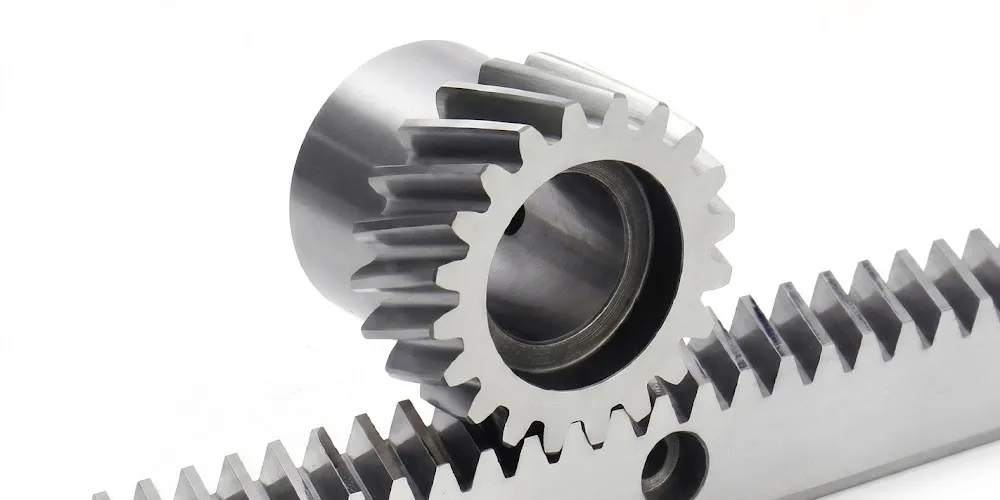
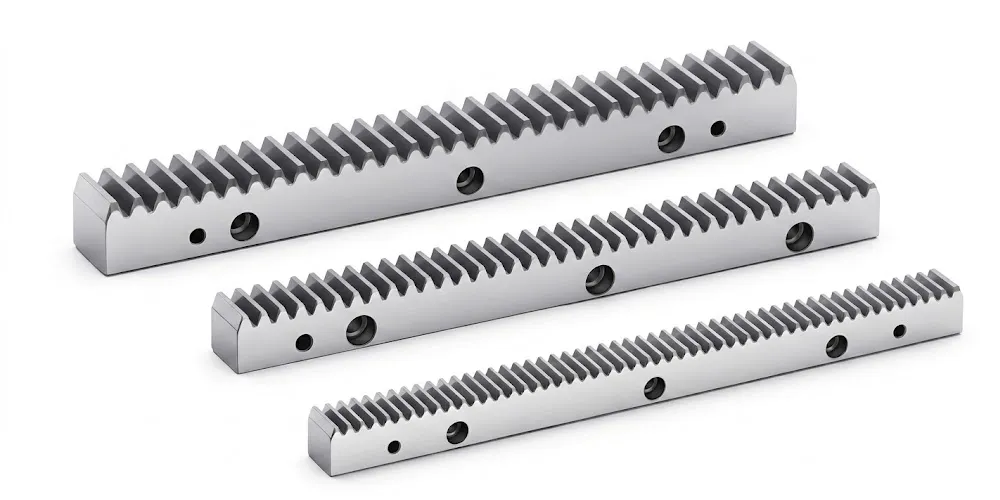
For applications that require linear motion — gantry drives, CNC axes, lifting equipment, and rack-and-pinion travel drives — the gear rack range provides the mating linear element to helical pinion gears. Rack modules are matched to the same module series as the cylindrical helical gear range, ensuring accurate pitch engagement without profile corrections. Available in straight and helical rack forms, in lengths suitable for cut-to-length or modular jointing, the gear rack completes the helical rack and pinion system alongside the helical pinion gear.
About the Manufacturing Facility
With over a decade of hands-on experience in mechanical power transmission manufacturing, we operate a vertically integrated production facility that covers the full spectrum of industrial drive components. Our product catalogue spans agricultural gearboxes, worm gear reducers, planetary gear drives, power take-off shafts, hydraulic cylinders, gears, chains, and motors — giving customers a single, technically capable source for complex multi-component procurement.
The factory holds ISO 9001:2015 certification, and quality management is applied at every stage of production from incoming raw material inspection to final dispatch. We design and manufacture a broad range of industrial and agricultural gearboxes and assemblies in materials including ductile iron, cast iron, cast steel, precision cast steel, and cast aluminium. Standard and non-standard mechanical components — gears, sprockets, worm gears, pulleys, worms, and shafts — are all produced in-house, enabling tight dimensional and material control that would not be possible through subcontracting. The double helical gear programme sits within this broader manufacturing competence, benefiting from the same precision equipment, tooling expertise, and quality disciplines that underpin the entire product range.
Our engineering team has supported industrial buyers in Europe, North America, Australia, the Middle East, and Southeast Asia with both standard catalogue products and fully custom made helical gears engineered to customer drawings. The combination of manufacturing depth, technical expertise, and documented quality credentials makes us a reliable long-term partner for buyers who cannot afford drive failures in their operations. We are a factory — not a trading house — which means every technical question is answered by the engineers who actually make the product.
Жиі қойылатын сұрақтар
The questions below reflect the real-world enquiries our engineering team receives most regularly from buyers evaluating the double helical gear for their industrial applications.
Редактор: PXY