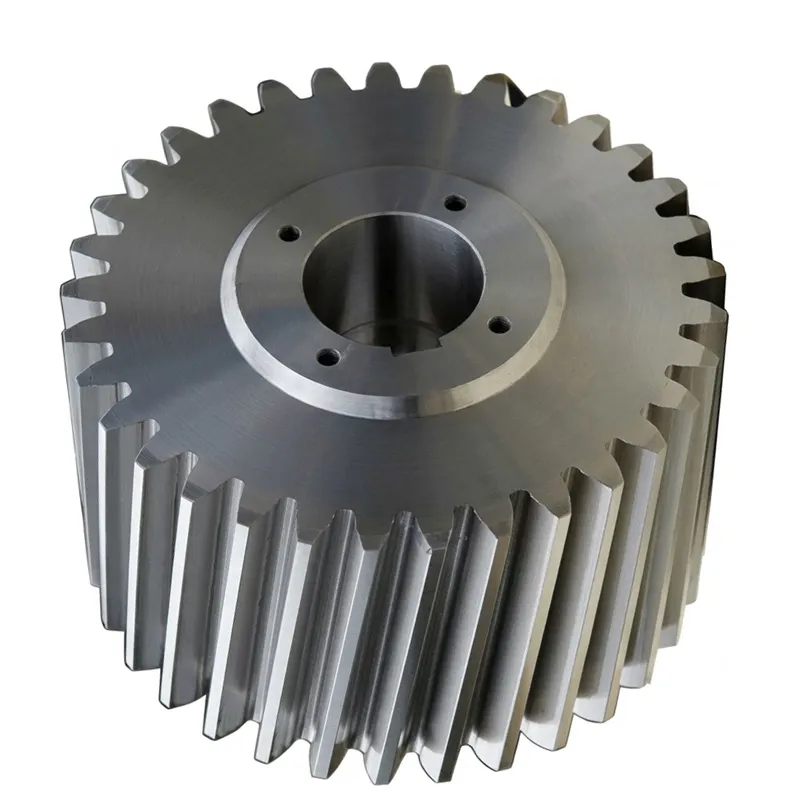
EP-тау-кен машиналары карбюрленген спиральды беріліс
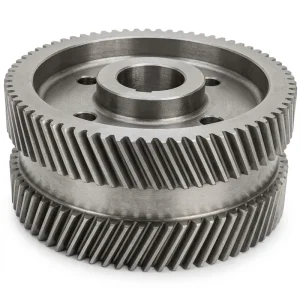
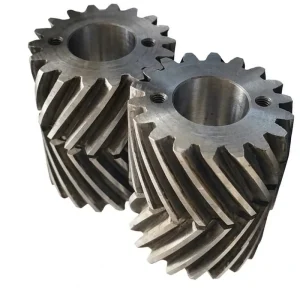
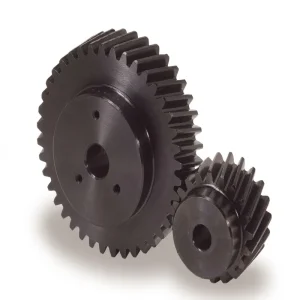
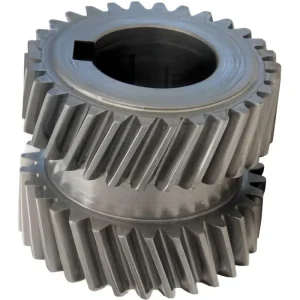
The EP-Mining Machinery Carburized Helical Gear is purpose-built for high-load, continuous-duty applications where reliability is non-negotiable. Based on an involute tooth profile and manufactured from 18CrNiMo6 alloy steel, each gear undergoes a rigorous multi-stage production process — forging, carburization, plane and internal grinding, tooth grinding, and precision line cutting — to achieve surface hardness and core toughness that outlast conventional gearing solutions.
Conforming to DIN 3962 Class 6 quality standards, this helical gear series targets demanding drive systems found in mining conveyors, excavators, crushing machinery, and heavy-duty industrial gearboxes. The helix angle of β=8° combined with a pressure angle of 20° optimizes load distribution across the full face width, reducing vibration and acoustic emissions compared to straight-cut spur gears. The standard configuration — M9, Z=33, a=20°, β=8°, x=0.2, right-handed — can be adapted for custom shaft configurations upon request.
What distinguishes this product line in the global market is the combination of deep-hardened tooth flanks, tight dimensional tolerances, and a manufacturing capability that covers both internal and external gear forms up to 2,500 mm OD. Whether you are sourcing a replacement helical pinion gear for a mill drive or specifying an entirely new helical gearset for a tunnel boring machine, the production infrastructure here supports the full requirement.
Industrial Power Transmission
Engineered for the harshest underground and surface mining environments — this carburized helical gear delivers precision tooth contact, extended service life, and consistent torque transmission under extreme loads.
Gear Basic Data
The following table summarizes the core gear parameters as specified for the EP-Mining Carburized Helical Gear. These values define the fundamental geometry that governs load capacity, contact ratio, and operational smoothness in your drive system.
| Параметр | Техникалық сипаттама |
|---|---|
| Gear Tooth Shape | Involute |
| Беріліс материалы | 18CrNiMo6 |
| Gear Process | Forging, carburization, plane and internal grinding, tooth grinding, line cutting |
| Pressure Angle | 20° |
| Quality Level | DIN 3962 Class 6 |
| Беріліс түрі | M9, Z=33, a=20°, β=8°, x=0.2, right-handed |
Manufacturing Capabilities — Gear & Spline
Our gear production facility operates with a broad range of machining processes to meet diverse customer requirements. The tables below define the dimensional limits and achievable quality levels for both internal and external gear forms. These figures apply to this helical gear series as well as our extended range of ground helical gear products and custom helical gear shaft assemblies.
Internal Gears and Internal Splines
| MILLING | SHAPING | TOOTH GRINDING | |
|---|---|---|---|
| Maximum O.D. | 2500 mm | 2500 mm | 2500 mm |
| Minimum I.D. | 650 mm | 50 mm | 100 мм |
| Maximum Face Width | 500 mm | 500 mm | 500 mm |
| Maximum Diametral Pitch | D.P. 1 | D.P. 1 | DP 0.5 |
| Maximum Module | 26 mm | 26 mm | 45 mm |
| AGMA Level / DIN Level | DIN Class 8 | DIN Class 8 | DIN Class 4 |
| Tooth Surface Finishing | Ra 3.2 | Ra 3.2 | Ra 0.6 |
| Maximum Helix Angle | ±22.5° | ±22.5° | ±45° |
External Gears and External Splines
| HOBBING | MILLING | TOOTH GRINDING | |
|---|---|---|---|
| Maximum O.D. | 1250 mm | 2500 mm | 2500 mm |
| Minimum O.D. | 20 mm | 200 mm | 20 mm |
| Maximum Face Width | 500 mm | 500 mm | 1480 mm |
| Maximum Diametral Pitch | D.P. 1 | D.P. 1 | DP 0.5 |
| Maximum Module | 26 mm | 26 mm | 45 mm |
| AGMA Level / DIN Level | DIN Class 8 | DIN Class 8 | DIN Class 4 |
| Tooth Surface Finishing | Ra 3.2 | Ra 3.2 | Ra 0.6 |
| Maximum Helix Angle | ±45° | ±45° | ±45° |
How a Helical Gear Works
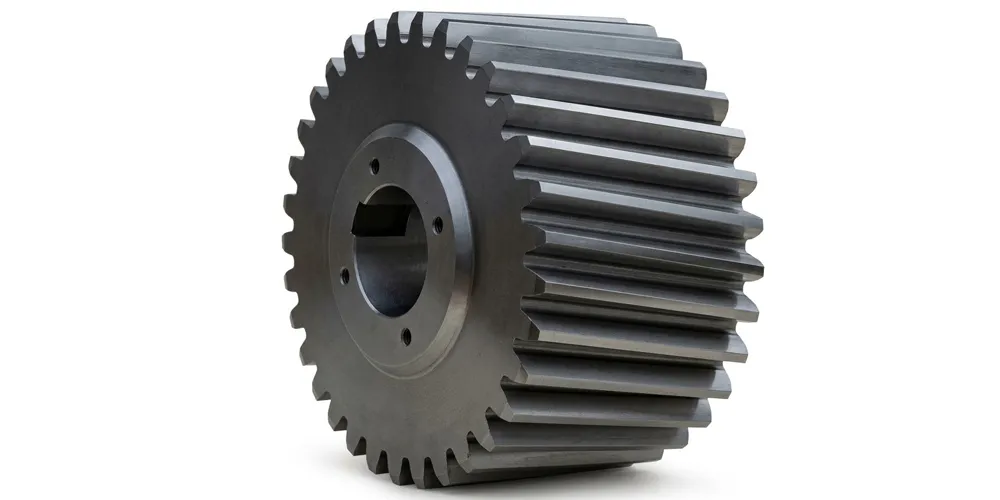
Unlike a conventional spur gear where each tooth engages along its full width at once, a helical gear uses teeth that are cut at an angle — the helix angle — relative to the axis of rotation. As a result, tooth engagement begins at one edge and progresses gradually across the face width. This progressive meshing action is the root cause of the smoother, quieter operation that makes helical gears the preferred choice over straight-cut designs in high-speed and high-load applications.
In the EP-Mining series, the β=8° helix angle is deliberately selected to balance axial thrust forces with contact ratio improvement. A higher helix angle would increase the overlap ratio further but would also generate proportionally larger axial loads on the bearing supports — a trade-off that matters enormously in mining gearbox design where bearing replacement downtime is costly. The involute tooth profile ensures consistent velocity ratios even under load deflection, maintaining stable torque transmission from input shaft to output.
The carburization treatment is where surface performance is defined. Heating the gear in a carbon-rich atmosphere at elevated temperature drives carbon diffusion into the outer tooth layer, creating a hard, wear-resistant case while preserving a tough, shock-absorbing core. After carburization, precision tooth grinding brings each flank to Ra 0.6 surface finish (tooth grinding process) and DIN Class 4 accuracy — a combination that extends lubricant film stability and significantly reduces pitting fatigue. The helical spur gear arrangement on parallel shafts is the most common configuration for helical gear reducer and parallel shaft gearbox applications worldwide, and this product is engineered to integrate directly into those systems.
Material & Quality Standards
The choice of 18CrNiMo6 as the base alloy is deliberate and well-proven in heavy-duty gear engineering. This chromium-nickel-molybdenum steel delivers a core tensile strength exceeding 1,000 MPa in the normalized condition, while the carburized case achieves surface hardness in the range of 58–62 HRC. The combination gives the gear excellent resistance to both surface fatigue (pitting and spalling) and bulk fatigue (bending at the root fillet) — the two primary failure modes that shorten gear life in mining drives.
The entire production sequence — forging for grain refinement, carburization for surface hardening, plane and internal grinding for dimensional accuracy, tooth grinding for profile and lead accuracy — is controlled against DIN 3962 Class 6 requirements. This standard governs tooth profile deviation, lead deviation, pitch deviation, and runout, ensuring that every gear shipped from the production floor meshes accurately with its mating pinion or ring gear. Quality-critical dimensions are verified on CNC gear measuring centers with full traceability to national measurement standards, supporting ISO 9001:2015 quality management documentation.
For buyers specifying replacement gearing for an existing helical gear reducer or upgrading a drive system, this means you receive parts that fit to drawing tolerances without field adjustment. For OEM integrators building new helical gearbox types — inline, right-angle, or multi-stage — the manufacturing capability covers modules from 1 to 45 mm and ODs from 20 mm to 2,500 mm, giving design engineers the flexibility to specify purpose-built gearing rather than adapting to catalog standards.
5 Key Advantages of This Carburized Helical Gear
Deep-Case Carburization for Long Tooth Life
The carburization process creates a hardened surface layer of 58–62 HRC while keeping a tough, ductile core. This structure resists pitting and spalling under repeated high-load cycles — exactly the conditions found in mining conveyor drives and crusher gearboxes running 24/7.
DIN Class 6 Precision Across the Full Tooth Form
Profile, lead, pitch, and runout all held to DIN 3962 Class 6 tolerances after final tooth grinding. This level of accuracy translates directly to even load sharing between helical teeth, reduced dynamic loads at speed, and predictable bearing life in the assembled helical gearset.
18CrNiMo6 Alloy — Engineered for Shock Loads
Mining equipment regularly experiences impact torque spikes from rock jamming, start-stop cycles, and overloads. The chromium-nickel-molybdenum composition of 18CrNiMo6 provides core toughness values that absorb these shocks without crack propagation, significantly outperforming lower-alloy gear steels under real operating conditions.
Broad Dimensional Range — OD 20 mm to 2,500 mm
From compact helical pinion gear components for gearmotor assemblies to large ring gears for rotary kiln drives, the production range covers an exceptionally wide envelope without changing supplier. This simplifies procurement and qualification for projects that require multiple gear sizes across the same drive train.
Compatibility with Standard Parallel Shaft Gearbox Platforms
The standard module, pressure angle, and helix angle specifications are aligned with widely used parallel shaft gearbox platforms from leading international OEMs. Replacement gearing drops into existing housings without shaft or bearing modification, dramatically reducing retrofit time and total cost of ownership compared to sourcing custom-design replacements.
Қолдану сценарийлері
The EP-Mining Carburized Helical Gear is specified across a broad range of industries where high torque, continuous duty, and long overhaul intervals are critical requirements. The following are the primary market segments served globally, including customers in Australia, South Korea, Canada, Germany, Brazil, and the UK.
Mining Conveyor Drives
Long-wall conveyors, pan conveyors, and belt conveyor head drives rely on compact, high-torque helical gear units. The carburized tooth surface handles the abrasive operating environment while maintaining gear accuracy after thousands of hours of continuous operation.
Crushing and Screening Equipment
Jaw crushers, cone crushers, and vibrating screens generate high impact torque spikes. The 18CrNiMo6 core absorbs these transient loads reliably, and the DIN Class 6 tooth accuracy ensures smooth engagement even when drive speed varies due to feed irregularities.
Industrial Cement and Rotary Kiln Drives
Large-diameter ring gears and pinions for rotary kilns demand very high face width and tight concentricity tolerances over diameters that can exceed 2,000 mm. The manufacturing capability here covers this size range, making this series a practical option for cement plant gear procurement.
Hoisting and Lifting Systems
Mine shaft hoists and overhead crane gearboxes depend on gear pairs that retain their tolerance class after years of start-stop duty. The combination of carburized surface hardness and precision grinding makes this helical gear type a dependable component in safety-critical hoisting applications.
Steel Mill Rolling Mill Drives
Rolling mill spindle drives and pinion stands operate under extreme radial loads and intermittent shock. The forged 18CrNiMo6 blank and deep case depth provide the fatigue strength needed to meet mill OEM specifications, with face widths up to 1,480 mm achievable in the tooth grinding process.
Marine and Offshore Winch Gearboxes
Anchor winches, mooring capstans, and offshore crane gearboxes specify high-quality helical gears with documented material and process traceability. The ISO 9001:2015 certified production process supports the documentation requirements of DNV, ABS, and Lloyd's Register gear approval procedures.
Helical Gear vs Spur Gear — Understanding the Difference
A question frequently asked by engineers sourcing gearing for new designs is: which is better, spur or helical gear? The answer depends on the application, but in mining machinery and heavy industrial drives, the helical gear vs spur gear comparison consistently resolves in favor of helical geometry for several practical reasons.
Spur gears — sometimes called spurs gears or helical spur gear in combined nomenclature — engage teeth along the full face width simultaneously. This produces an impulsive load on the shaft and bearings at each tooth passing frequency, generating noise and vibration that is especially undesirable in gearboxes running at intermediate or high speeds. The helical tooth, by contrast, enters and exits engagement progressively, which increases the average number of teeth in contact (the overlap ratio) and distributes load more evenly. The result is a measurable reduction in dynamic factors — typically 20–30% lower dynamic increment compared to a spur gear of identical pitch and module — and significantly reduced acoustic emission.
A fair question about downsides: what are the downsides of helical gears? The angled tooth generates an axial thrust force that must be reacted by the shaft bearing arrangement. For the β=8° helix angle used in this series, the axial force is a modest fraction of the tangential force, well within the capacity of standard taper roller or angular contact bearings. The other consideration is manufacturing cost — helical teeth require additional machine axes during hobbing or grinding compared to spur teeth. However, for high-power, long-service applications the total cost advantage of longer service intervals far outweighs the higher initial gear cost.
Related Products — Complete System Compatibility
For drive systems that require a fully integrated solution, we manufacture and supply the entire meshing assembly — not just the gear in isolation. Combining a carburized helical gear with a matched helical rack and pinion or a dedicated helical gear reducer from the same production facility guarantees geometric compatibility and eliminates the tolerance stack-up risk that arises when mixing components from multiple suppliers. This one-factory, one-standard approach is particularly valued by procurement teams managing maintenance parts across multiple mine sites in Australia, Canada, and South Korea.
Our standard and custom helical gear range covers modules from 1 to 45 mm across a wide range of material grades and surface treatment options — from normalized steel for low-duty applications to fully carburized and ground gear sets for continuous heavy-duty service. All configurations are available in both left-hand and right-hand helix to suit your gearbox layout.
Беріліс қорабы — Linear Drive Integration
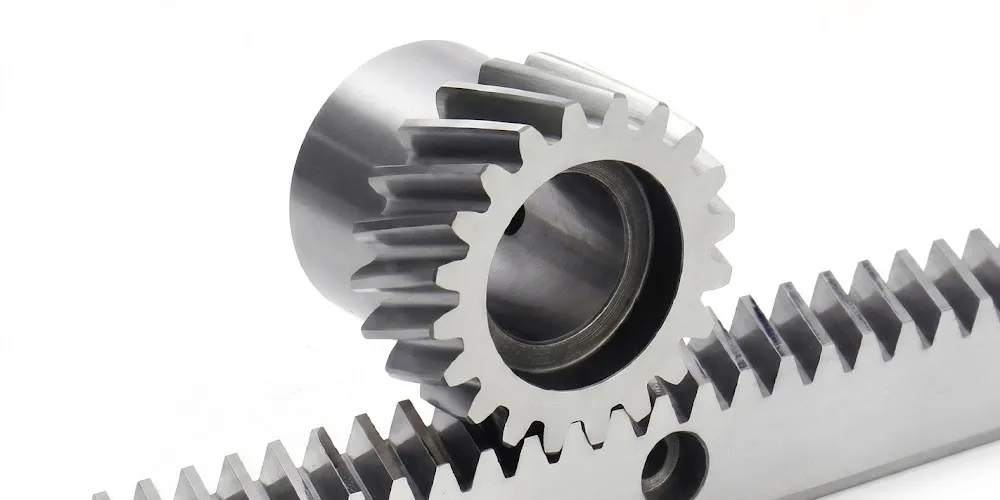
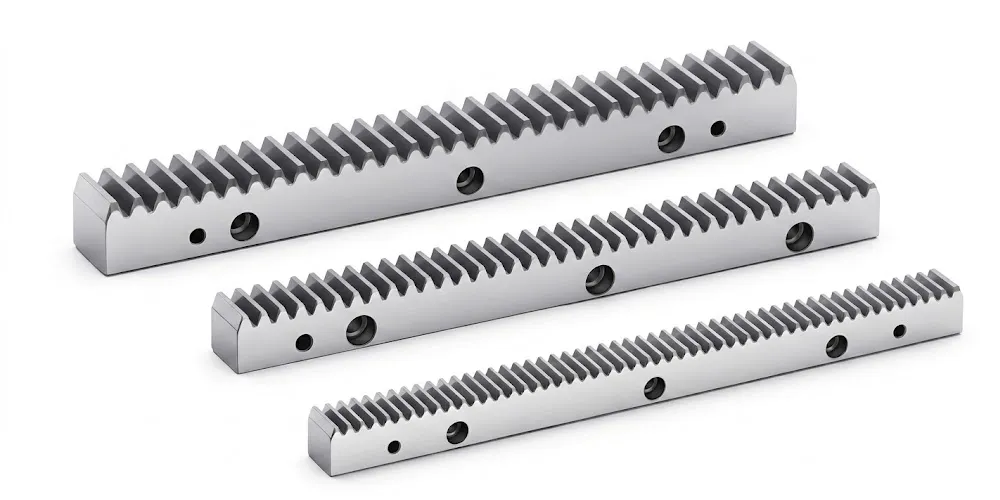
When the application calls for converting rotary motion to linear displacement — rack-and-pinion steering systems, portal crane travel drives, or machine tool feed axes — our precision gear rack range pairs directly with the helical pinion from this same product family. Helical rack tooth geometry mirrors the mating pinion helix angle for maximum contact area and smooth linear traversal at all feed rates.
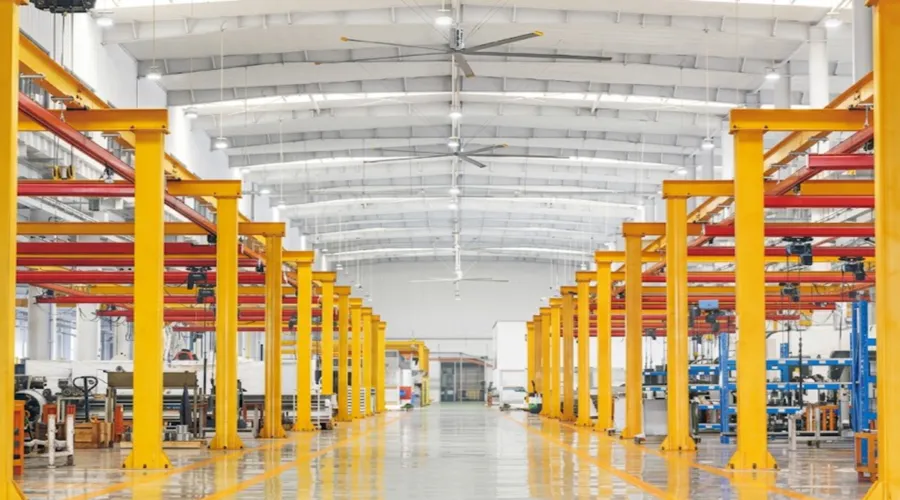
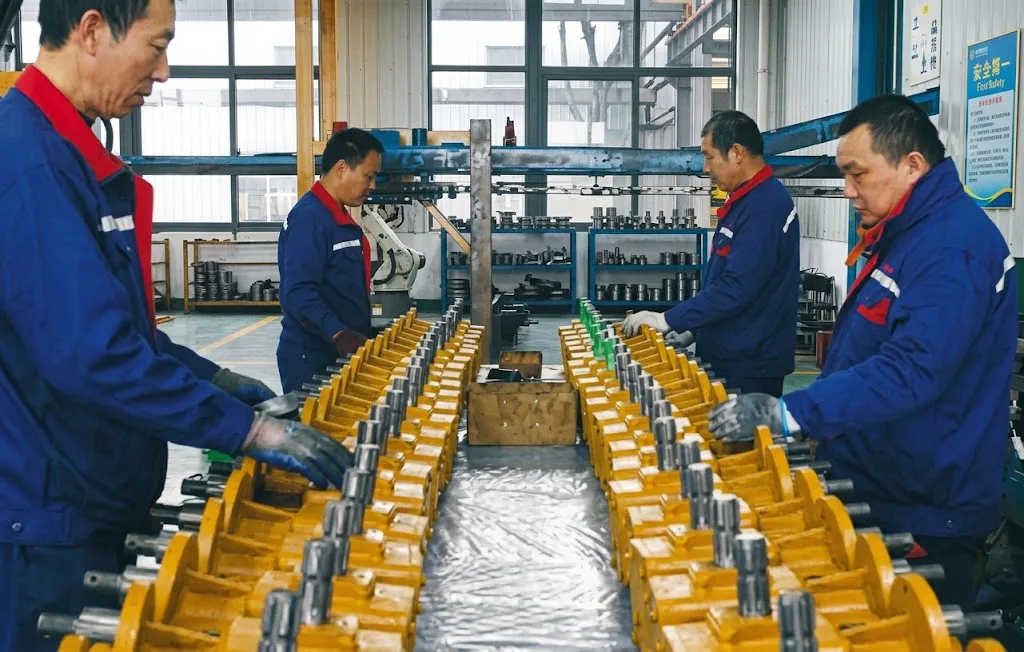
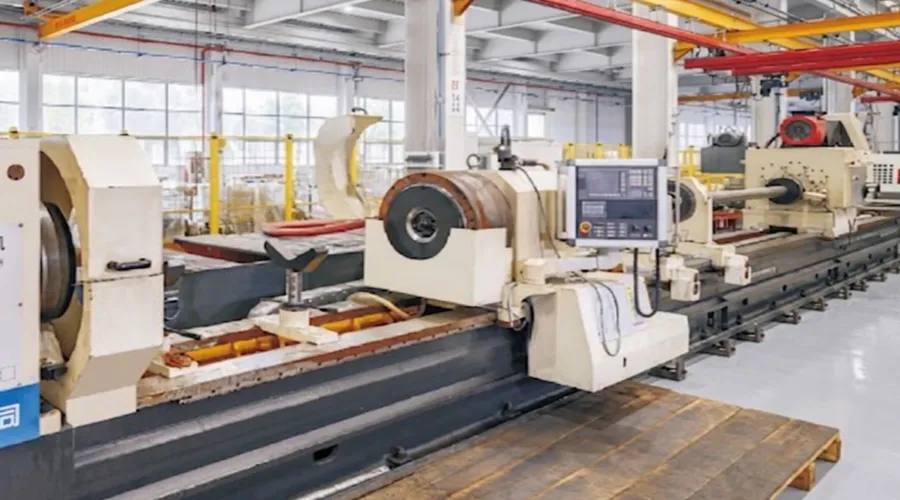
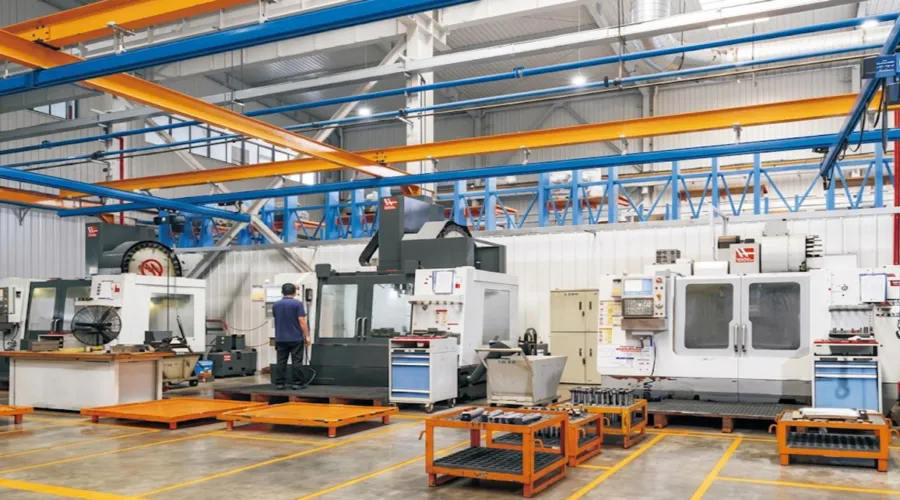
About Our Manufacturing Operation
With more than a decade of dedicated experience in mechanical transmission engineering, our factory has established a reputation among buyers across Australia, Germany, the UK, Brazil, Canada, and South Korea for consistent quality, reliable lead times, and genuine technical depth. We are not a trading house — we are a manufacturing facility that machines, inspects, and ships the parts ourselves, which means technical questions get answered by engineers who designed the process, not by agents who resell finished goods.
The product portfolio extends well beyond helical gears. Our production lines cover agricultural gearboxes, worm gear reducers, planetary gear drives, power take-off drive shafts, hydraulic cylinders, sprockets, chains, pulleys, worm gears, worms, shafts, and a broad range of standard and non-standard mechanical assemblies. Casting materials used across the product range include ductile iron, cast iron, cast steel, precision cast steel, and cast aluminum — allowing us to match material selection to the structural and weight requirements of each application. The entire operation is certified to ISO 9001:2015, with documented control of all production and inspection processes.
For buyers evaluating helical gear manufacturers or helical gear suppliers for a long-term supply relationship, our facility offers the combination of broad manufacturing capability, quality system certification, and direct engineering access that reduces total procurement risk. Custom specifications — modified helix angles, non-standard bore configurations, alternative surface treatments — are handled through a structured engineering review process with full dimensional reporting before shipment.
Шеберхана
Жиі қойылатын сұрақтар
Ready to Specify Your Helical Gear?
Whether you need a standard carburized helical gear from our production catalogue or a fully custom gear pair engineered to your drive system drawings, our technical team is ready to assist. Share your module, number of teeth, helix angle, and application loads to receive a detailed manufacturing proposal.
Редактор: PXY