EP-Plastic Worm Gears
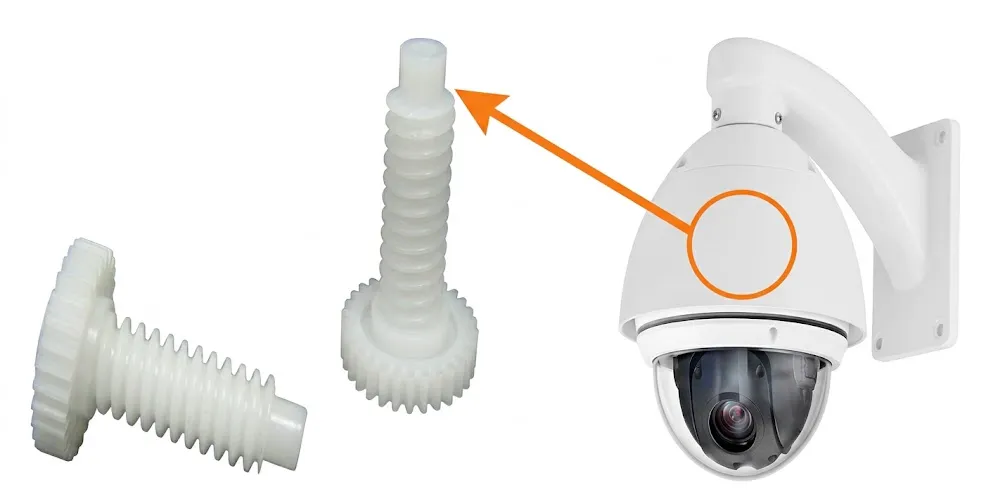
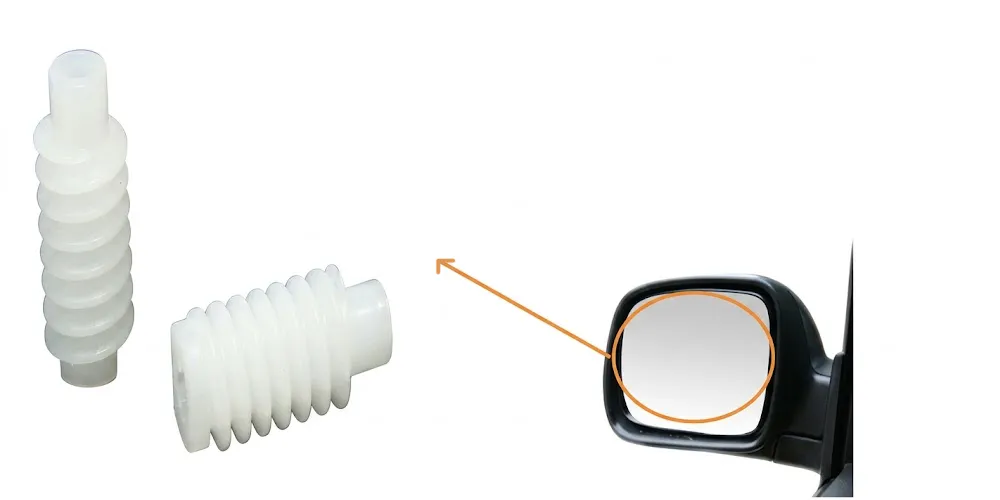
The EP-Plastic Worm Gears series delivers high-efficiency, compact transmission solutions featuring irreversible motion for secure positioning. Manufactured from advanced materials like TEPCON_M90-10, Polyacetal (POM), and Nylon, these gears offer high load capacity with reduced vibration and noise. Available in modules from M0.2 to M2.0, specific models include the lightweight M0.4 RH Worm (1T, 0.22g) for automotive rearview mirrors and the M0.4 Gear+Worm (30T/1T, 0.75g) for IP cameras and monitors. Customizable options feature bores of Ø1.40mm/Ø1.90mm, outer diameters from Ø4.0mm to Ø6.0mm, and lengths of 6.0mm to 10.0mm.
PRECISION POLYMER DRIVE COMPONENTS — WORM GEAR SERIES
EP-Plastic Worm Gears
A precision-engineered plastic worm gear series — Polyacetal (POM) and Nylon construction, module M0.2 to M2.0, engineered for high efficiency, compact design, irreversible motion locking, and quiet operation in automotive, surveillance, medical, and industrial drive applications worldwide.
Technical Specifications — EP-Plastic Worm Gear Series
Full parameter reference covering the standard EP series and the two documented M0.4 product configurations. Custom module, tooth count, bore, and material grade available through our OEM/ODM programme.
| Параметр | Standard EP Series | M0.4 × 30T Gear + Worm | M0.4 RH Worm |
|---|---|---|---|
| Type | Plastic Worm Gear Set | Gear + Worm (Set) | Worm Screw (RH) |
| Модуль | M0.2 – M2.0 | M0.4 | M0.4 |
| Материал | Polyacetal (POM) / Nylon | TEPCON_M90-10 | TEPCON_M90-10 |
| No. of Teeth | Configurable | 30T (wheel) / 1T (worm) | 1T (RH) |
| Bore (Ø) | Ø1.40 mm / Ø1.90 mm | Per configuration | Per configuration |
| Outer Diameter (Ø) | Ø4.0 mm / Ø5.0 mm / Ø6.0 mm (Flexible) | Per tooth count × module | Miniature (OD per spec) |
| Length | 6.0 mm / 8.5 mm / 10.0 mm (Flexible) | Per spec | Per spec |
| Weight | Varies by size | 0.75 g / pcs | 0.22 g / pcs |
| Gear Ratio (example) | 5:1 – 70:1+ (single stage) | 30:1 (30T / 1-start) | Worm component only |
| Қолданба | Automotive, camera, medical, industrial | IP camera, monitor | Automotive rearview mirror gearbox |
| Өздігінен құлыптау | Yes (at low lead angle) | Yes | Yes |
| Quality Certification | ISO 9001:2015 | ISO 9001:2015 | ISO 9001:2015 |
What Is a Plastic Worm Gear?
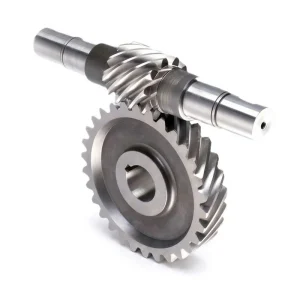
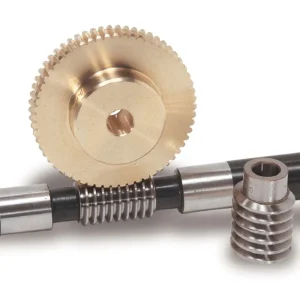
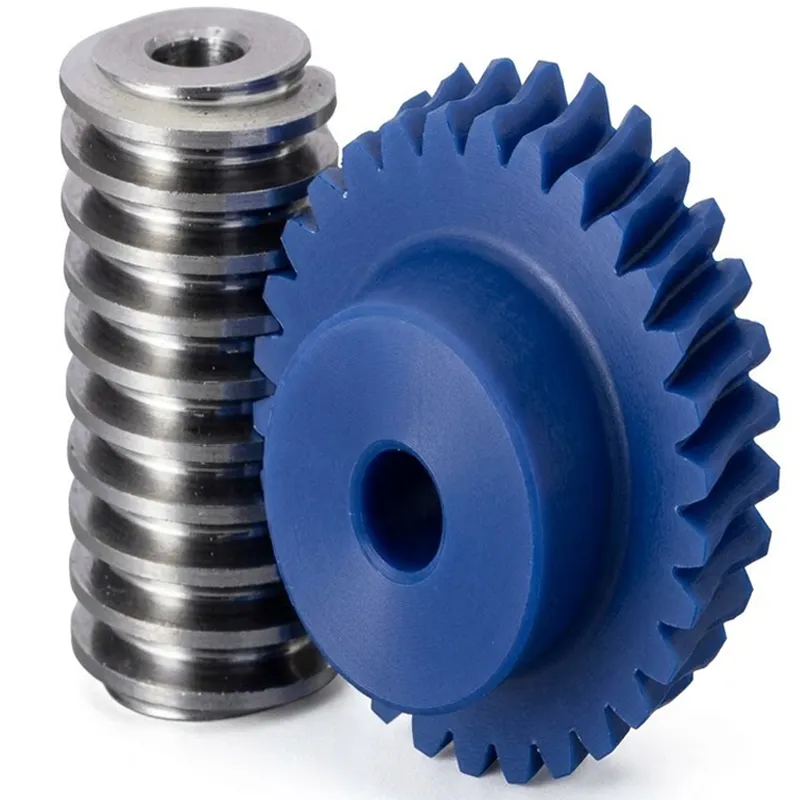
А plastic worm gear is a helical gear drive component consisting of two mating elements — a worm screw (the driving element, resembling a threaded shaft) and a worm wheel (the driven element, a toothed disc whose tooth form meshes with the worm's helical thread). Unlike spur or helical gear stages that transfer torque between parallel or intersecting shafts, the plastic worm gear operates on shafts arranged at 90° to each other, making it uniquely suited to applications requiring right-angle speed reduction in a single compact stage. The polymer construction — principally Polyacetal (POM) or Nylon — adds corrosion immunity, self-lubrication at the mesh interface, and a significant weight advantage over equivalent bronze or cast iron worm gear sets, while the plastic worm drive's inherent self-locking property in certain lead angle configurations provides a built-in brake against back-driving — an irreversible motion capability that no other common gear format replicates in a single component.
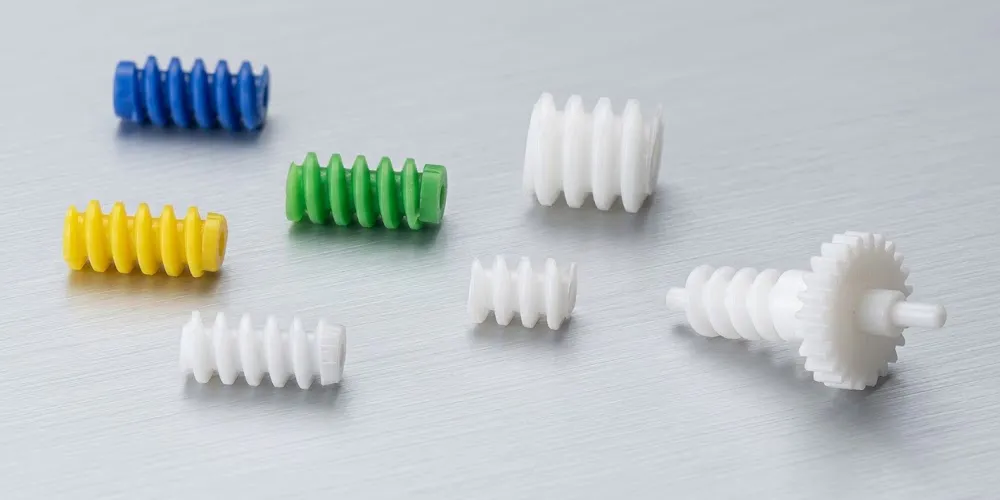
Our EP series plastic worm gear covers module M0.2 through M2.0, outer diameters from Ø4.0 mm to Ø6.0 mm (flexible on request), bore sizes Ø1.40 mm and Ø1.90 mm, and worm lengths of 6.0 mm, 8.5 mm, and 10.0 mm (flexible). Two representative configurations from the EP series illustrate the product scope: the M0.4 × 30T Gear + Worm set in TEPCON_M90-10 material (weight 0.75 g per piece), specified for IP camera and monitor adjustment mechanisms; and the M0.4 RH Worm in TEPCON_M90-10 (weight 0.22 g per piece), applied in automotive rearview mirror adjustment gearboxes. Both illustrate the miniaturised precision that distinguishes this series from conventional industrial worm gear sets, and both demonstrate the product's fitness for high-volume OEM applications where weight and package size are primary constraints.
The core characteristics of the EP plastic worm gear — high efficiency within the working load range, irreversible motion locking, suitability for compact design envelopes, high load capacity relative to size, and reduced vibration and noise — are drawn directly from the product's verified features. These are not generic marketing claims; they are engineering properties inherent to the worm gear geometry and the specific polymer materials selected for this series.
Five Defining Features of the EP-Plastic Worm Gear
① High Efficiency Within Rated Load Range
Worm gear efficiency is governed by the lead angle of the worm screw and the friction coefficient at the mesh interface. In a plastic worm gear using POM (Polyacetal) as the wheel material against a hardened worm, the low friction coefficient of POM — typically 0.04–0.10 against steel — pushes mesh efficiency to the upper range achievable for worm drives, often 70–85% at optimal lead angles. This is meaningfully higher than bronze-on-steel worm gear sets of equivalent ratio when properly lubricated, and the POM plastic worm gear achieves this without requiring external lubricant at the gear mesh itself — reducing maintenance requirements and the risk of lubricant contamination in sensitive equipment environments.
② Irreversible Motion — Built-In Self-Locking
One of the most practically useful properties of the plastic worm gear format is its inherent self-locking capability at low lead angles. When the worm's helix angle is below the friction angle of the mesh — typically below 5–6° for POM on steel — the gear set locks against back-driving: the load on the worm wheel cannot drive the worm screw in reverse. This irreversible motion property eliminates the need for a separate mechanical brake or solenoid hold in applications like rearview mirror adjusters, antenna positioners, window lifters, and security camera pan/tilt mechanisms — all applications served by the EP series. The automotive rearview mirror gearbox application specifically cited for the M0.4 RH Worm relies on exactly this self-locking behaviour to hold mirror position without a separate retaining mechanism.
③ Compact Design — High Ratio in Minimal Space
A single plastic worm gear stage can achieve speed reduction ratios from 5:1 to 70:1 or higher in a physical footprint that a multi-stage spur or helical gear train cannot match. The M0.4 × 30T configuration in the EP series illustrates this: a 30-tooth worm wheel meshing with a 1-start worm gives a 30:1 ratio in a component weighing just 0.75 g, with an outer diameter small enough to fit inside an IP camera pan mechanism or automotive mirror housing. This compactness is the primary reason the worm gear format dominates small-motor output stages, handheld tool reducers, and precision instrument drives where space is the first constraint.
④ High Load Capacity Relative to Component Size
The worm gear tooth engagement is a sliding contact across the full tooth length simultaneously — a contact geometry that distributes load over a larger area than an equivalent spur gear tooth mesh. In a well-designed plastic worm gear set, this broad contact zone allows the polymer wheel to carry significantly higher tangential loads than its tooth module size alone would suggest. The POM and Nylon materials in the EP series are selected specifically for their compressive strength and resilience under sliding contact — properties that directly determine the allowable tangential load on the worm wheel tooth flanks and therefore the gear set's overall torque capacity.
⑤ Reduced Vibration and Noise
The continuous sliding contact in a worm drive produces smoother power transfer than the impulsive tooth engagement of a spur gear. When this inherently smooth mesh is combined with a polymer worm wheel — whose elastic modulus is 70–100 times lower than steel — the result is a plastic worm gear stage that operates at noticeably lower noise levels than any metal-on-metal equivalent. In consumer electronics (IP cameras, domestic appliances), automotive interior mechanisms (mirror adjusters, window regulators), and office automation equipment, this acoustic advantage is a direct competitive specification. The EP series' TEPCON_M90-10 material, used in both the camera and automotive product variants, is specifically selected for this combination of strength, dimensional stability, and low-noise mesh behaviour.
Material Selection — What Is the Best Plastic Material for Worm Gears?
What is the best plastic material for gears in worm drive applications? The answer depends on whether the application prioritises dimensional stability, impact resilience, chemical resistance, or temperature performance. The EP plastic worm gear series addresses the most common worm gear duty cycles with two primary polymer families — POM (Polyacetal) and Nylon (PA) — plus the proprietary engineering polymer TEPCON_M90-10 used in the M0.4 miniature series.
Polyacetal (POM) — Primary Worm Wheel Material
POM (Polyacetal, also marketed as Delrin or Celcon) is the preferred material for worm wheel bodies in the EP series where dimensional stability and consistent bore tolerance are the primary requirements. POM's low moisture absorption (below 0.2% under standard conditions) means the bore fit stays within specification throughout the product service life — a critical property in the miniaturised bore sizes (Ø1.40 mm and Ø1.90 mm) used in the EP range, where even 0.01 mm of bore expansion could cause shaft retention failure. POM's compressive strength (approximately 35 MPa) and low coefficient of friction make it the standard small plastic worm gear material for camera mechanisms, automotive mirror adjusters, and instrument actuators globally. Its self-lubricating surface eliminates the need for external grease in these applications, avoiding the lubricant contamination risk that is particularly relevant in optical systems like IP cameras and surveillance monitors.
Nylon (PA) — Impact-Tolerant Worm Wheel Grade
Where the drive system must absorb shock loads — for example, in a plastic worm drive serving a hand-held power tool, a packaging machine indexing mechanism, or an agricultural equipment actuator — Nylon (PA6 or PA66) is the preferred worm wheel material over POM. Nylon's higher elongation-at-break and greater toughness allow the tooth profile to deflect slightly under impact and return without permanent deformation or fracture — the same property that makes nylon the dominant material in nylon worm gear applications for conveyor drives and agricultural actuators in markets including Canada, Australia, and the UK. The trade-off is that nylon absorbs more moisture than POM and shows greater dimensional variation in humid environments; bore fits in nylon plastic worm gear designs should account for this characteristic in the engineering specification. A nylon plastic worm wheel against a steel worm screw typically achieves adequate efficiency for duty cycles below 500 RPM, covering the majority of applications in this product class.
TEPCON_M90-10 — Miniature Precision Grade
The M0.4 series variants in the EP range use TEPCON_M90-10, a precision engineering polymer compound optimised for miniature worm gear moulding at module M0.4 and below. This material is characterised by high flow consistency under moulding conditions — essential for accurately forming the helical tooth geometry of a miniature plastic worm screw and worm wheel at 0.75 g and 0.22 g respectively. TEPCON_M90-10 delivers the right balance of surface hardness, dimensional stability, and low mesh friction for the IP camera and automotive rearview mirror applications documented in the EP series specification. It is not a catalogued commodity polymer; it is a proprietary compound selected specifically for worm gear duty at miniature scale, which is why the M0.4 EP series achieves the tooth accuracy and surface quality needed for these precision OEM applications.
How a Plastic Worm Gear Works — Mechanism and Torque Path
The purpose of a worm gear is to transmit torque between two shafts arranged at 90° to each other while simultaneously achieving a substantial speed reduction in a single gear stage. In the EP plastic worm gear set, the plastic worm screw — a helical thread form cut on a cylindrical shaft — rotates and pushes against the curved tooth flanks of the plastic worm wheel. The worm's thread advances the worm wheel by exactly one tooth pitch per revolution of the worm screw. If the worm wheel has 30 teeth (as in the M0.4 × 30T configuration), one full revolution of the worm shaft advances the worm wheel by exactly 1/30 of a revolution, giving a 30:1 speed reduction ratio from a single component pair.
The contact between the plastic worm screw and the plastic worm wheel is fundamentally different from spur or helical gear contact. Rather than the rolling-dominated engagement of an involute tooth pair, the worm mesh involves a significant sliding component — the worm thread slides along the worm wheel tooth flank throughout each engagement. This sliding contact is the source of two of the plastic worm gear's defining characteristics: the higher friction that enables self-locking at low lead angles, and the heat generation that must be managed through material selection and duty cycle control. POM's low friction coefficient (0.04–0.10 vs steel) manages the heat generation issue by minimising the energy lost per unit of sliding contact area, which is why POM is the material of first choice for continuous-duty worm gear applications in the EP series. In intermittent-duty applications — such as rearview mirror adjusters that operate for only a few seconds per actuation — the thermal load is low enough that even the miniaturised M0.4 RH Worm in TEPCON_M90-10 can be operated without active cooling considerations.
The self-locking property of the plastic worm gear at low lead angles deserves specific engineering attention. When the lead angle is below the arctangent of the friction coefficient at the mesh — typically below 5–6° for POM on steel — the axial force that the worm wheel's tooth load generates on the worm shaft is insufficient to overcome the friction at the thread flanks, and the worm screw cannot be driven in reverse by the worm wheel. This is the irreversible motion feature stated in the EP series specifications, and it is the property that makes the worm drive the natural choice for rearview mirror position holding, security camera pan-locking, and any other application where the driven load must hold its position without a continuous holding current or a separate mechanical brake.
Worm Gear Advantages, Disadvantages, and How Polymer Materials Address Them
What are the disadvantages of worm gears? Honest engineering guidance requires acknowledging both sides of the worm drive's performance profile. The principal limitations of the worm gear format are: lower mechanical efficiency than helical or spur gear stages at equivalent reduction ratios; heat generation at the sliding mesh interface under high-duty cycles; and the need for careful lubrication in metal worm gear sets to manage wear on the bronze wheel. The plastic worm gear format directly addresses the last two of these three limitations — a point that is often underappreciated by engineers accustomed to specifying metal worm gear sets.
The heat generation issue in metal worm drives is driven by the high friction coefficient at the bronze-on-steel interface (typically 0.08–0.15 depending on lubrication condition). POM against a hardened steel worm screw operates at a friction coefficient of 0.04–0.10 in dry running conditions — comparable to or better than a well-lubricated bronze worm wheel in a metal set. This means the plastic worm gear runs cooler than a metal equivalent at the same input speed and load, reducing the thermal management burden in enclosed gearbox housings. The lubrication problem is eliminated entirely: POM and Nylon are self-lubricating, requiring no oil bath or grease fill to maintain their mesh friction coefficients over service life. For applications like camera mechanisms and automotive mirror drives — where lubricant contamination of adjacent optical surfaces is a genuine failure risk — this lubricant-free operation is a safety-critical advantage, not merely a convenience.
The efficiency limitation of the worm gear format — inherently lower than helical gear stages — is real and must be accepted as a characteristic of the geometry rather than a deficiency of the EP series. A plastic worm gear at 30:1 ratio will typically operate at 60–80% efficiency depending on lead angle and material pairing; a two-stage helical drive at the same ratio can achieve 92–96%. The correct engineering response is to select the worm gear when the application needs self-locking, compactness, or right-angle shaft arrangement — and to specify helical stages when efficiency is the primary driver. The worm drive is not an inferior helical gear; it is the right tool for specific jobs that helical and spur gear formats cannot perform.
Application Scenarios — Where Plastic Worm Gears Are Specified
The EP plastic worm gear series is designed for the intersection of three requirements: compact right-angle drive, self-locking position hold, and lubricant-free polymer mesh. The sectors below represent the primary markets where this combination delivers demonstrable advantages over metal worm gear sets or alternative polymer drive formats.
IP Cameras & Surveillance Equipment
The M0.4 × 30T Gear + Worm configuration documented in the EP series is explicitly specified for IP camera and monitor pan/tilt mechanisms. The plastic worm gear at this module provides a 30:1 reduction in a 0.75 g component, enabling a small stepper motor to position a camera with sufficient torque multiplication and self-locking position hold — the camera stays pointed in the selected direction without holding current to the motor. This combination of compact drive and position retention makes the small plastic worm gear the standard choice for camera module designers in South Korea, Japan, Germany, and across the global surveillance equipment supply chain.
Automotive Interior Mechanisms
The M0.4 RH Worm documented in the EP series is specified for automotive rearview mirror adjustment gearboxes. In this application, a small DC motor drives the plastic worm screw to rotate the mirror housing to the selected position; when the motor stops, the worm's self-locking property holds the mirror angle without any additional holding mechanism. The plastic worm gear must survive the automotive temperature cycle (−40 °C to +85 °C interior environment) and maintain its position under continuous vibration — requirements that TEPCON_M90-10 is specifically formulated to meet. Automotive buyers in Germany, Japan, and Canada regularly source miniature plastic worm drive components in this module range for mirror, vent flap, and seat adjustment sub-assemblies.
Medical Devices & Diagnostic Equipment
Infusion pump flow-rate adjusters, laboratory autosampler position drives, and endoscope tip deflection mechanisms use plastic worm gear sets for their combination of precise reduction ratio, lubricant-free operation (critical in sterile environments), self-locking position hold between motor steps, and compact package. POM worm gear sets at M0.2 to M0.5 are the standard selection for these applications, with the lubricant-free mesh eliminating the contamination risk that would disqualify oil-bath metal worm gear sets from product-contact drive positions in regulated medical device supply chains across the EU and North America.
Consumer Electronics & Domestic Appliances
Motorised blinds and shading systems, domestic appliance timer drives, electric toothbrush gear trains, and handheld power tool reduction stages all employ small plastic worm gears for their space-efficient right-angle drive and position-hold characteristics. The quiet operation of a plastic worm gear stage — inherently lower noise than any metal worm equivalent at the same input speed — is a direct competitive specification in consumer products where acoustic comfort is a primary customer expectation. Nylon worm gears are particularly common in this sector for their toughness against occasional overload.
Industrial Automation & Packaging
Label applicator drives, conveyor diverters, pharmaceutical packaging pick heads, and filling machine cap drives use plastic worm drive components in modules M1.0 to M2.0 for applications where a right-angle drive stage, a compact body, and lubricant-free operation all contribute to system performance. In pharmaceutical and food packaging environments in Australia, Canada, and the UK, the elimination of grease or oil at the worm mesh is a regulatory requirement, and the plastic worm gear in POM or Nylon satisfies this requirement without engineering compromise.
Agricultural Machinery Actuators
Spray nozzle direction controllers, seed rate adjustment mechanisms, and implement levelling actuators in precision agriculture equipment use nylon worm gear sets for their toughness in field conditions and inherent position-hold capability. A nylon plastic worm wheel against a steel worm screw resists the mud, fertiliser, and seasonal temperature extremes of outdoor agricultural use in Canada, Brazil, and Australia without requiring lubrication maintenance, while the self-locking feature of the plastic double reduction gears configuration ensures implement positions hold under vibration without a separate locking mechanism.
Related Products — Complete Drive System from One Source
Beyond the EP plastic worm gear series, we manufacture the complementary gear and rack components that complete a drive system specification — all engineered to compatible dimensional and quality standards, available from the same ISO 9001:2015 certified source.
Қос спиральды тісті доңғалақ
In drive systems where a plastic worm gear stage handles the right-angle input reduction and the output requires a further parallel-shaft reduction at higher load capacity or efficiency, our double helical gear series provides the downstream performance step. The opposing helix angles cancel axial thrust, delivering smooth torque at elevated speeds — a natural complement to the worm stage's high-ratio, self-locking output in multi-stage precision drive trains used in camera pan-tilt systems, medical device actuators, and industrial automation gearboxes.
Беріліс қорабы
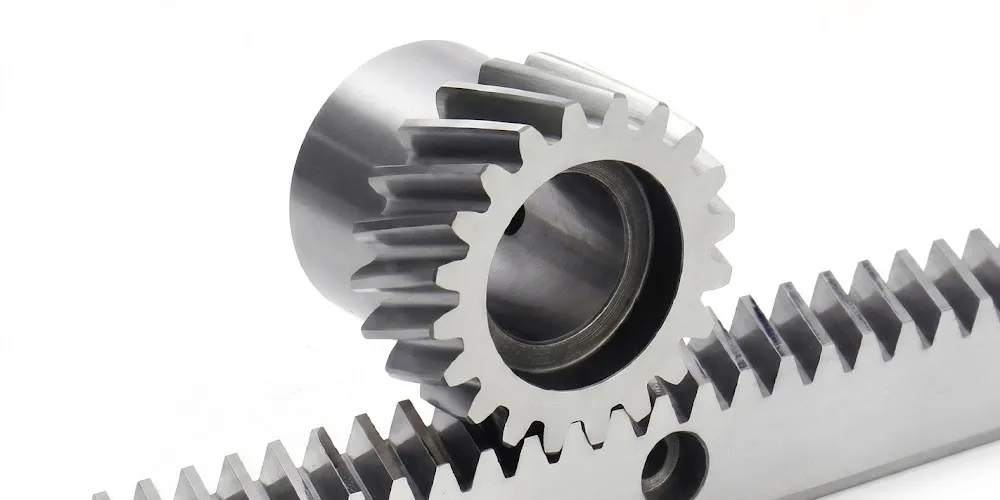
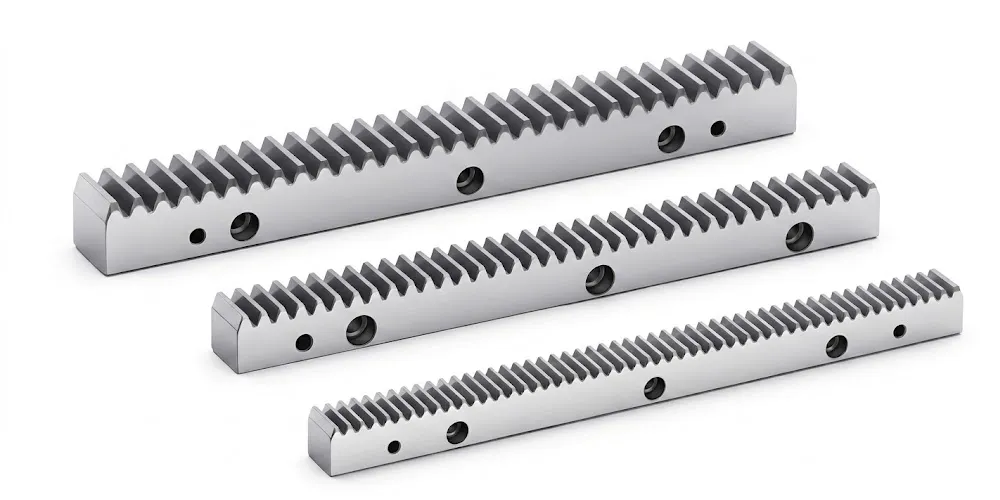
Where the rotary output of a plastic worm gear reduction stage must be converted to linear motion, our gear rack series provides the pinion-to-rack interface at matching metric module pitches. Steel, stainless steel, and engineering polymer racks in module M0.5 and above pair directly with spur gear pinions driven by the worm wheel output — a configuration used in precision linear positioning stages, laboratory instrument traverse mechanisms, and automated dispensing systems. Single-source supply of both the worm gear set and the output linear stage simplifies engineering, qualification, and procurement management for OEM customers worldwide.
Order & Trade Information
Minimum Order Quantity
Standard plastic worm gears carry a baseline MOQ. Mixed module sizes, tooth counts, and material grades can be combined into a single order totalling approximately USD 1,500, allowing customers to evaluate several configurations simultaneously. For first-article verification, 1–5 pcs samples are available at sample pricing. Orders of 1–2 pcs for urgent spare or prototype requirements can be assessed individually, though per-unit cost will be higher at sub-baseline quantities.
Lead Time
Standard catalogued plastic worm gear configurations: 10–25 working days. Standard parts with bore modification or worm hand (LH/RH) change: 15–35 working days. Custom OEM/ODM worm gear sets from customer drawing or sample: 20–45 working days. High-precision ground worm wheel configurations: 30–60 working days. Sample and test-piece orders (1–5 pcs): 7–25 working days, with complex or miniature configurations assessed individually before confirming lead time.
Incoterms & Payment
Standard component orders: EXW, FOB, CIF, and DAP terms available. Samples and urgent spare parts: EXW / FCA / DAP / courier service. FCA, CFR, CPT, CIP, and DDP negotiable for specific import programmes or established procurement relationships. Payment: T/T and L/C both accepted. Packing: plastic bag + cartons standard; wooden packing available for bulk or heavy shipments on request.
OEM / ODM Programme
Full OEM and ODM custom plastic worm gear production is available. Customers may submit 2D drawings, 3D models, or physical sample gears for reverse engineering. MOQ for custom configurations depends on material grade, module, tooth count, worm hand, and precision requirement. A drawing approval step precedes production release. Full material and dimensional certification documentation is provided at delivery for all custom batches, including TEPCON_M90-10 miniature configurations for automotive and camera OEM programmes.
About Our Manufacturing Capability
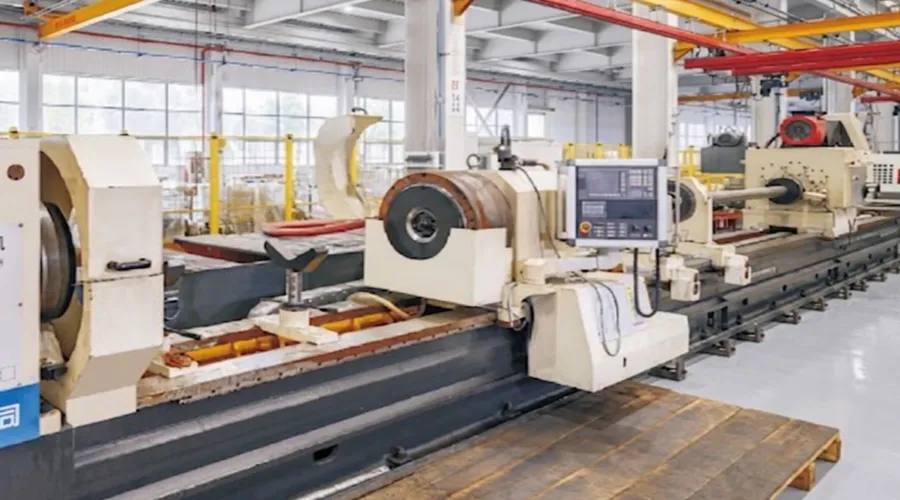
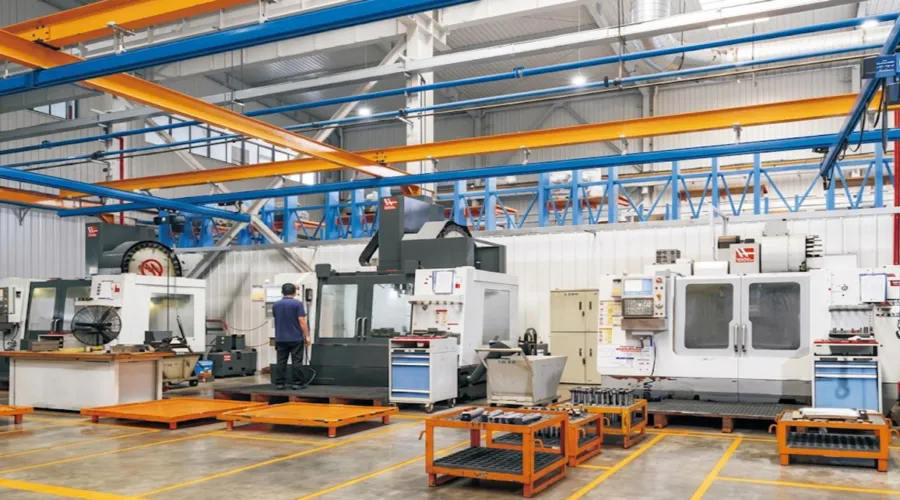
With over ten years of specialised experience in mechanical power transmission, our facility designs and produces precision drive components across a comprehensive product range. Our manufacturing portfolio covers agricultural gearboxes, worm gear reducers, planetary drive systems, power take-off shafts, hydraulic cylinders, drive chains, gears, and industrial motors — all produced under a single ISO 9001:2015 certified quality management system.
We design and manufacture gearbox housings and assemblies in ductile iron, grey cast iron, cast steel, precision cast steel, and cast aluminium, alongside a full range of gears, sprockets, worm gears, pulleys, shafts, and worms in standard and non-standard configurations. For the EP plastic worm gear series specifically, we operate CNC worm hobbing and profile-milling equipment capable of producing the miniature worm thread geometry at M0.2 module that the IP camera and automotive mirror OEM applications demand. Our direct-factory supply model — no intermediary trading layer — keeps lead times competitive and documentation complete for customers qualifying our products in regulated automotive, medical, or defence supply chains in Canada, Germany, Japan, South Korea, Australia, and the UK.
Шеберхана


Жиі қойылатын сұрақтар
Редактор: PXY