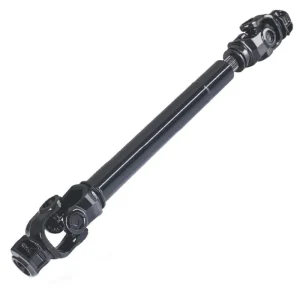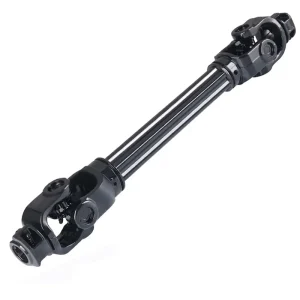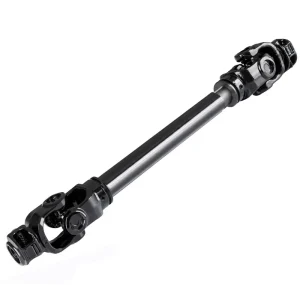
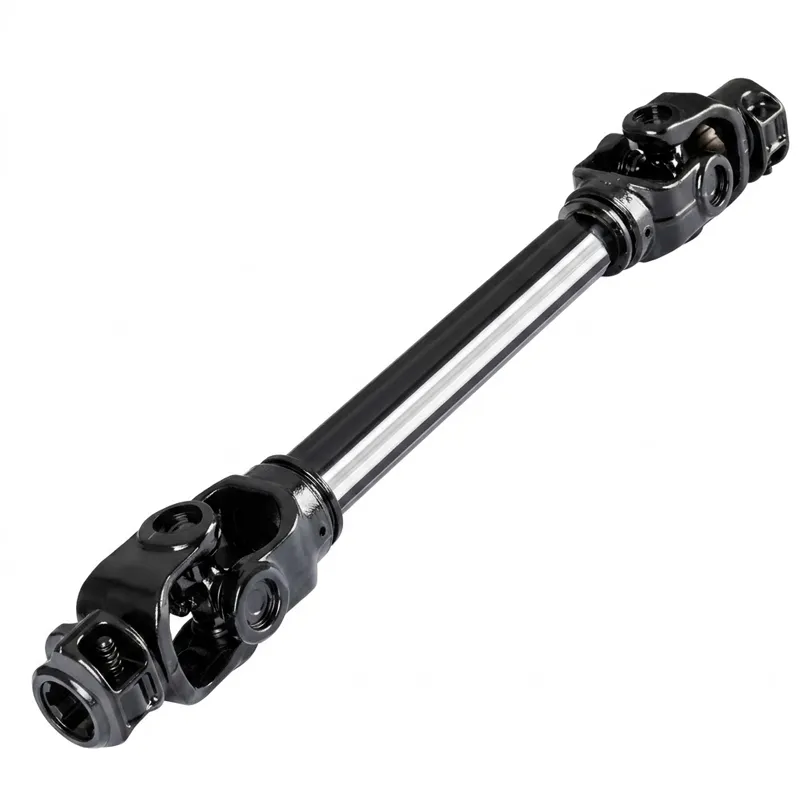
EP-T Series PTO Driveshaft | PTO Shaft
The EP-T Series is a systematically tiered range of pto shaft assemblies that covers every practical power level encountered in tractor-driven agricultural, construction, and municipal equipment — from the compact 12 kW T1 unit suited to light finishing mowers and aerators, through to the heavy-duty T10 at 106 kW (145 HP) for demanding applications like large-capacity wood chippers, forage harvesters, and heavy-duty ground engagement tools.
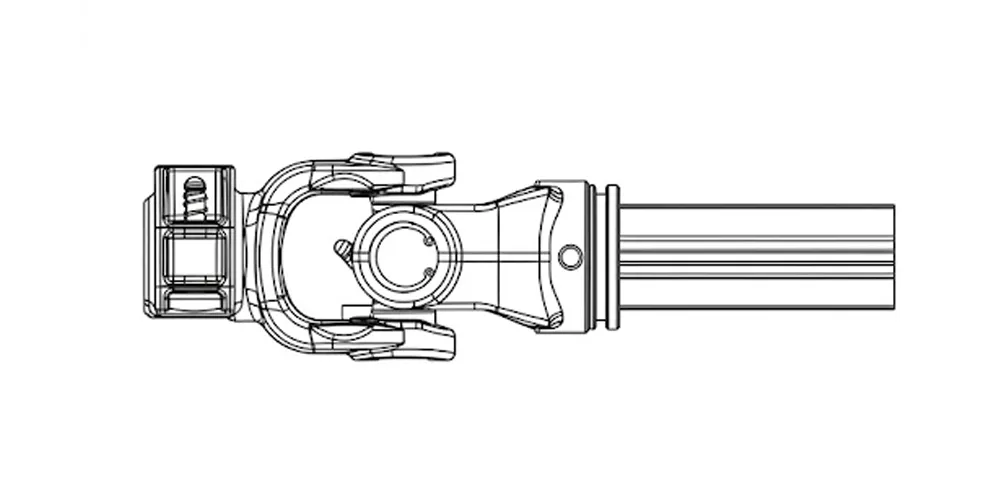
Each assembly in the T Series is built to the same core architecture: a telescoping inner and outer tube profile for adjustable working length, a pair of forged universal joint yokes at each end, cross-and-bearing journal kits assembled to DIN EN 15079 dimensional standards, and a full-length plastic safety guard that meets the protective requirements of EN ISO 5674.
The series is available in standard 540 rpm and 1000 rpm configurations, and every variant ships with matched guard and clutch options to complete the full pto shaft assembly from tractor output stub to implement input flange.
Agricultural Power Transmission Series
EP-T Series PTO Driveshaft
A complete range of universal PTO driveshaft assemblies spanning T1 through T10 — engineered for 540 rpm and 1000 rpm tractor applications across a power band from 12 kW to 170 kW, with torque capacity up to 3500 Nm.
1. Operating Torque & Power Rating Table — T Series
The table below lists the full operating torque specifications for each variant in the EP-T Series pto shaft range at both 540 tr./min and 1000 tr./min PTO speeds. MP (NM) indicates the peak momentary torque capacity of the shaft assembly — a critical figure when specifying for high-inertia start-up loads such as rotary cutters, balers, and slurry pump drives. Select the variant whose rated torque at your operating PTO speed exceeds your implement's maximum demand with a minimum 20% safety margin.
| Series | 540 rpm — kW | 540 rpm — HP | 540 rpm — Nm | 1000 rpm — kW | 1000 rpm — HP | 1000 rpm — Nm | Peak Torque MP (Nm) |
|---|---|---|---|---|---|---|---|
| T1 | 12 | 16 | 210 | 18 | 25 | 172 | 320 |
| T2 | 15 | 21 | 270 | 23 | 31 | 220 | 450 |
| T3 | 22 | 30 | 390 | 35 | 47 | 330 | 640 |
| T4 | 26 | 35 | 460 | 40 | 55 | 380 | 780 |
| T5 | 35 | 47 | 620 | 54 | 74 | 520 | 1050 |
| T6 | 47 | 64 | 830 | 74 | 100 | 710 | 1450 |
| T7 | 55 | 75 | 970 | 87 | 118 | 830 | 1800 |
| T7N | 55 | 75 | 970 | 87 | 118 | 830 | 1800 |
| T8 | 70 | 95 | 1240 | 110 | 150 | 1050 | 2250 |
| T38 | 78 | 105 | 1380 | 123 | 166 | 1175 | 2500 |
| T9 | 88 | 120 | 1560 | 140 | 190 | 1340 | 2800 |
| T10 | 106 | 145 | 1905 | 170 | 230 | 1650 | 3500 |
2. Five Reasons Operators Specify the T Series
① Ten-Variant Power Coverage
With eleven size variants from T1 to T10 (including T7N and T38), the series spans 16 HP to 230 HP at 1000 rpm — meaning there is a precisely-matched pto driveshaft for every tractor-implement pairing in this range. Operators avoid the over-engineering cost of specifying an oversized shaft and the failure risk of running an undersized unit, because the series increments are fine enough to always find the right torque rating for the actual application load.
② Telescoping Tube for Adjustable Length
The inner-outer tube telescoping mechanism in every T Series pto drive shaft accommodates the hitch movement and three-point linkage geometry changes that occur as the tractor turns, reverses, or traverses uneven ground. Properly matched tube overlap prevents both full extension (which could separate the shaft) and full compression (which could damage the implement input shaft or gearbox flange) across the full working range of the implement.
③ Dual-Speed Rated (540 & 1000 rpm)
Every T Series variant is rated for both 540 rpm and 1000 rpm tractor pto drive shaft operation — giving the series genuine dual-application flexibility. The torque capacity at 1000 rpm is naturally lower than at 540 rpm for the same power transfer, and the specification table makes this explicit so operators can confirm their shaft is operating within its design envelope regardless of which PTO speed their tractor's implement output is set to.
④ EN ISO 5674-Compliant Safety Guard
Each assembly ships with a full-length plastic guard system covering the rotating tube and both universal joint yokes. The guard meets EN ISO 5674 requirements — the international standard for PTO shaft protective devices — and is required by law for commercial operation in the EU, UK, Australia, and multiple other jurisdictions. This means your pto shaft assembly arrives compliance-ready, not as a bare mechanical component requiring aftermarket guarding to be used legally.
⑤ OEM-Grade Forged Universal Joints
The universal joint crosses and bearing cups at each end of the T Series pto driveline shaft are forged from alloy steel and heat-treated to achieve the needle bearing contact hardness required for long-service PTO cycling. Forged yokes — rather than stamped or cast alternatives — provide the torsional rigidity and impact resistance that keeps your pto shaft u joint serviceable through seasons of high-load engagement rather than requiring frequent cross-kit replacement.
3. How a PTO Driveshaft Transfers Power from Tractor to Implement
Understanding what a PTO shaft is and how it functions is fundamental to selecting and maintaining one correctly. PTO stands for Power Take-Off — it is the mechanical output point on a tractor that delivers rotational energy from the engine to external implements and attachments. The EP-T Series pto shaft is the intermediate driveline component that bridges the tractor's PTO stub shaft and the input shaft of the implement (gearbox, pump, or rotor) — transmitting torque across a working length that must accommodate variation in distance and angle as the tractor manoeuvres.
The T Series assembly works as follows: the inner splined tube slides inside the outer profile tube, allowing the overall shaft length to extend and compress as the tractor-implement geometry changes. At each end, a forged universal joint yoke connects to a cross-and-bearing journal kit — the pto shaft u joint — which accommodates angular misalignment between the tractor PTO axis and the implement input axis. This angular capacity is what allows a PTO driveshaft to transmit rotational power around corners, across articulated three-point linkage angles, and between implements that are not perfectly co-axial with the tractor PTO output. The 540 pto shaft speed is measured in rpm at the tractor stub shaft, and at 540 rpm the T Series transmits 210 Nm (T1) through to 1905 Nm (T10) of continuous operating torque — rising to 172 Nm through 1650 Nm at 1000 rpm due to the inverse relationship between speed and torque at the same power level.
4. Materials & Component Construction
The performance of any tractor pto shaft is ultimately determined by the material and manufacturing quality of its individual components — the tubes, yokes, cross kits, and guard system. In the T Series, each of these components is selected and produced to a specification that reflects the duty cycles and environmental conditions of real agricultural fieldwork, not just laboratory test bench ratings.
The inner and outer telescoping tubes are drawn from seamless cold-formed steel tube — a process that produces tighter dimensional tolerances and better surface finish than welded tube alternatives, resulting in smoother sliding action and more consistent torque transfer along the spline engagement length. The spline profile is formed to DIN 9611 / ASABE S500 standards, ensuring dimensional interchangeability with OEM tractor PTO stub shafts and standard implement input shafts across the major tractor brands operating in North America, Europe, and Australia. Universal joint yokes are drop-forged from low-alloy steel and heat-treated to achieve the strength-to-weight ratio needed to handle the combined bending and torsional loads at each end of the driveshaft. The cross-and-bearing journal kits — the pto shaft parts most likely to require periodic replacement — use full-complement needle roller bearing cups assembled under controlled conditions to ensure the grease fill and cup retention force are within specification from day one. The plastic guard system is injection-moulded from UV-stabilised high-density polyethylene, providing long-term resistance to sunlight degradation, fertiliser and agrochemical contact, and the mechanical impacts inevitable in field use.
5. Where the T Series PTO Shaft Sees Daily Service
The broad power range and dual-speed rating of the T Series makes it suitable for practically every category of pto shafts for farm equipment and commercial machinery use. Below are the primary application sectors where T Series units are specified and running in the field.
Rotary Cutters & Bush Hog Drives
A pto shaft for bush hog application is one of the most demanding uses in the light-to-mid power range — rotary cutters engage hidden obstacles at full speed, generating severe torque spikes. T3 through T5 variants cover the 22–35 kW range that suits most compact and utility tractor brush hog setups in North America, Europe, and Australasia, and the forged cross kits handle the peak torque (MP) values that accompany sudden obstacle contact.
Baler & Forage Equipment Drives
Round and square balers, forage choppers, and large disc mower-conditioners all demand pto drive shafts for tractors in the T5 through T8 range. The start-up inertia of baler flywheels and rotor drums places extreme momentary demand on the pto shaft assembly at engagement — the MP (peak torque) ratings of the T Series, up to 2250 Nm for T8, accommodate these loads without cross-kit failure on cold-morning start-up.
Construction & Ground Engagement
Construction pto driveshafts for trenchers, augers, stump grinders, and hydraulic pump drives fall primarily in the T6 to T10 range, where the ability to absorb shock loads from ground engagement without driveshaft failure is the key specification criterion. The T Series high MP values — 1450 Nm to 3500 Nm — cover the peak torque events that define these applications in North American and European civil construction and agricultural contracting work.
Irrigation Pumps & Slurry Equipment
Tractor-driven centrifugal irrigation pumps and slurry agitators used across South American soybean regions, Australian dryland cropping areas, and Southeast Asian rice production commonly run at 540 rpm for continuous pumping seasons. The T4–T6 range covers the 26–47 kW continuous load typical of these applications, and the sealed universal joint bearing kits handle the wet, abrasive environments present around pumping stations and slurry lagoons.
Wood Chippers & Biomass Processing
PTO-driven disc and drum chippers are among the most torque-intensive tractor pto shaft applications in forestry and biomass management — the T9 and T10 variants, rated to 88–106 kW at 540 rpm and up to 3500 Nm peak torque, are specifically suited to large tractor-mounted chippers used in European and North American timber and energy crop harvesting operations where consistent high-load cutting is the standard working mode.
6. PTO Shaft Safety Standards & Regional Regulations
A pto driveshaft is one of the most statistically hazardous components in agricultural machinery — rotating at 540 to 1000 rpm in close proximity to operators, it is subject to strict mandatory guarding and safety requirements in virtually every major agricultural market. Understanding these requirements is essential for legal compliance and operator protection in your region.
🇪🇺 EU — EN ISO 5674 & Machinery Directive 2006/42/EC
All PTO driveshafts sold for use within the European Union must carry CE marking under Machinery Directive 2006/42/EC, and PTO shaft guards must conform to EN ISO 5674:2004 — the governing standard for PTO shaft protective devices. Guards must cover the full rotating length of the shaft and the universal joint yokes, and must remain in place and stationary during shaft rotation. The T Series ships with an EN ISO 5674-compliant guard as standard equipment on every assembly.
🇬🇧 UK — PUWER 1998 & UKCA Requirements
UK commercial agricultural operators must comply with the Provision and Use of Work Equipment Regulations 1998 (PUWER), which requires all PTO-driven equipment to be guarded and maintained in a condition that does not pose a risk to operators. Post-Brexit, the UKCA marking scheme applies to new machinery placed on the UK market, and PTO guards must meet the technical requirements previously mandated under EU standard EN ISO 5674. Annual inspection of guard condition and secure retention is strongly recommended under PUWER guidance.
🇺🇸 USA — OSHA 29 CFR 1928 & ASABE Standards
OSHA 29 CFR Part 1928 governs occupational safety in agricultural operations including guarding of PTO shafts on commercial farm equipment. ASABE standards ASAE S203.13 and S207 define the dimensional and performance requirements for tractor pto shaft components and their guards in North America. While PTO guard requirements are not always universally enforced on private farmland, commercial contracting operations and any farm employing hired labour are subject to these OSHA requirements.
🇦🇺 Australia — AS 4024 & Safe Work Australia
Australia's AS 4024 machinery safety series and Safe Work Australia's agricultural industry codes of practice address PTO shaft guarding requirements for commercial farm operations. State-based WHS (Work Health and Safety) regulations apply to all commercial agricultural operations in New South Wales, Queensland, Victoria, Western Australia, and South Australia, requiring PTO driveshafts on hired or contractor-operated equipment to be guarded, serviceable, and documented as part of the site safety management system.
🌏 Brazil, Korea & Southeast Asia — ISO 4254 Alignment
Brazil (ABNT), South Korea (KS), and agricultural markets across Southeast Asia increasingly reference ISO 4254 series standards for agricultural machinery safety, covering PTO shaft connection and guarding requirements that align with the EN ISO 5674 technical framework. Importers and distributors of pto driveshaft replacements in these markets should verify local customs and in-market technical documentation requirements with their country's agricultural machinery regulatory authority before placing orders.
7. Compatible System Components
A pto shaft is the connection point between tractor and implement — but the full drivetrain system includes the implement gearbox at one end and the universal joint cross kits throughout. Specifying all three from the same supplier simplifies cross-rating, warranty management, and spare parts logistics across your operation.
Agricultural Gearboxes
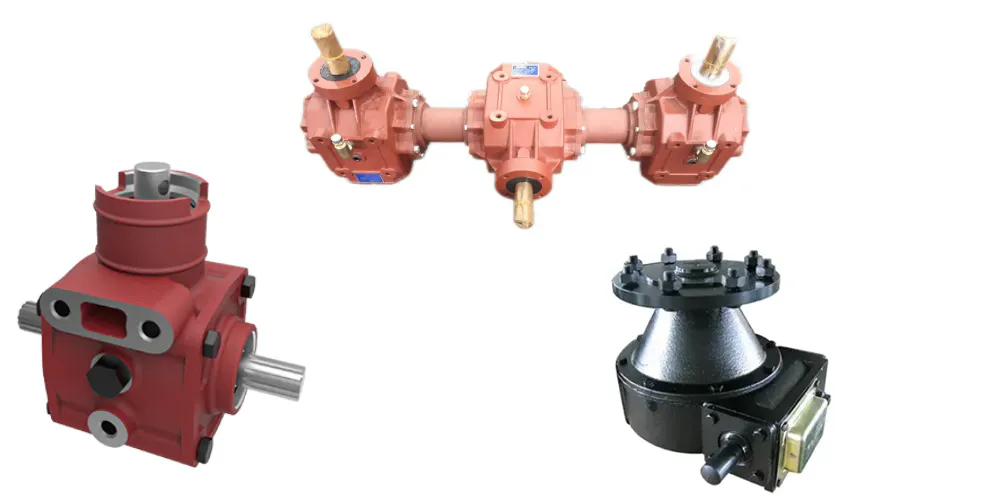
Our Agricultural Gearbox range includes right-angle bevel gearboxes, worm reducers, and helical speed reducers matched to the same 540 rpm and 1000 rpm pto shaft input standard as the T Series driveshafts. Pairing a T Series shaft with a matched agricultural gearbox from the same production facility ensures the torque ratings are cross-referenced across the full driveline — eliminating the risk of specifying a gearbox that is weaker than the driveshaft protecting it.
Universal Joints
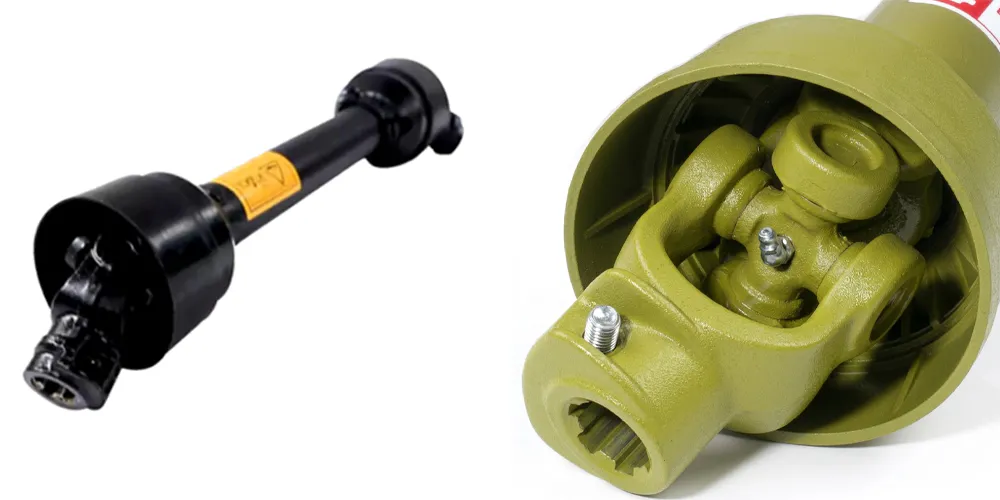
The universal joint cross-and-bearing kits used at each end of the T Series pto driveline shaft are available separately as service replacement parts. Supplying matched cross kits alongside the original driveshaft assembly means your maintenance team always has the correct dimensional specification for u joint for pto shaft replacement — without having to cross-reference part numbers across different supplier catalogues or risk installing an incompatible cross-kit bearing cup diameter.
8. About the Manufacturing Facility
Our engineering and production team carries more than a decade of specialised mechanical engineering experience in agricultural power transmission — covering the design, tooling qualification, and volume manufacture of pto driveshaft assemblies, agricultural gearboxes, worm gear reducers, planetary gear drives, hydraulic cylinders, sprocket chains, and electric motors. The facility operates under ISO 9001:2015 quality management certification, with documented process controls across every stage from raw material incoming inspection through to torque-tested finished assembly and export packaging.
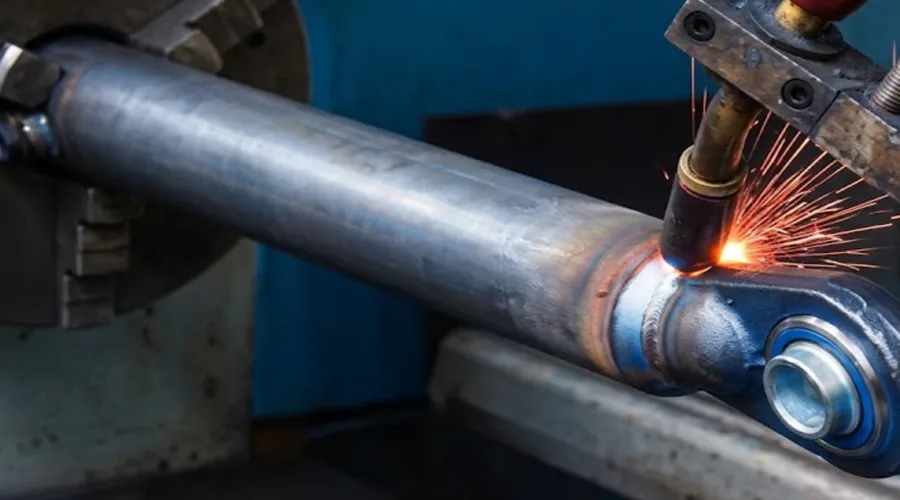
In-house manufacturing capabilities include CNC turning and milling for yoke and tube machining, spline broaching and hobbing to ASABE/DIN dimensional standards, heat treatment (carburising, induction hardening, and quench-and-temper) for universal joint crosses and shaft splines, injection moulding for UV-stabilised guard components, and full assembly and torque verification of completed pto shaft assembly units. Materials processed include alloy steel (20CrMnTi, 40Cr, 42CrMo), medium carbon steel tube, ductile iron, grey cast iron, cast steel, precision investment cast steel, and cast aluminium alloys. Custom shaft lengths, yoke interface configurations, and clutch types are available for OEM and volume orders across all T Series variants, as well as custom pto driveshaft assemblies outside the standard range.
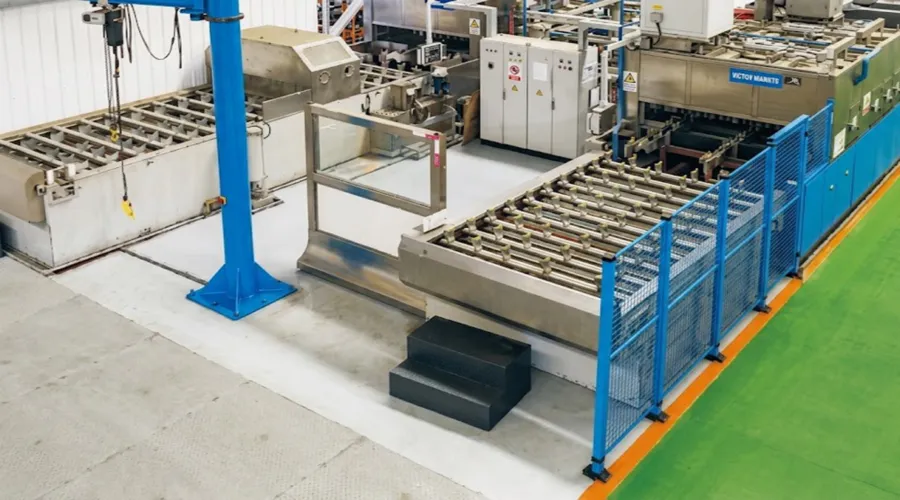
WorkShop

Frequently Asked Questions
Q1. What is a PTO shaft and how does it connect a tractor to farm equipment like a bush hog or baler in North American agricultural operations?
A PTO shaft — short for Power Take-Off shaft — is the rotating driveline component that transmits mechanical power from the tractor's PTO output stub shaft to the input shaft of an attached implement. On most tractors used in North American farming, the PTO stub turns at either 540 rpm or 1000 rpm depending on which speed the operator selects and which the implement requires. The shaft assembly consists of a telescoping tube that adjusts for working length, universal joints at each end to accommodate angular variation, and a plastic safety guard covering all rotating components. For bush hog use, a T3 or T4 variant in the T Series is typically the right match for the 22–35 kW power level common on compact and utility tractors in this application.
Q2. How do I measure a PTO shaft correctly to order the right replacement pto driveshaft for my tractor and implement combination in Australia?
Measuring a tractor pto shaft for replacement requires three key dimensions: (1) the compressed length — measured from the centre of the tractor-end yoke to the centre of the implement-end yoke with the implement at its lowest hitch position; (2) the extended length — measured at the highest hitch position; and (3) the minimum tube overlap remaining at full extension, which should be at least one-third of the inner tube length. For Australian operators, also note whether your tractor PTO stub is 1 3/8 Z6 (540 rpm standard) or 1 3/4 Z20 (1000 rpm standard), as the input yoke specification must match. Contact our technical team with these three measurements and the input/output specifications to identify the correct T Series variant and shaft length.
Q3. Which T Series PTO driveshaft variant is the right choice for a large round baler or disc mower in European commercial farming conditions?
For a large round baler driven by a 60–80 HP tractor at 540 rpm, the T6 or T7 variant is typically the appropriate specification — providing 830–970 Nm continuous torque and 1450–1800 Nm peak torque (MP) to manage flywheel engagement loads. For a disc mower-conditioner in the 40–55 HP class, T5 is usually sufficient. In European commercial farming, where operators often run implements continuously at or near rated load through long mowing or baling seasons, it is important to verify that the selected T Series variant has a continuous torque rating — not just a peak torque rating — that exceeds your implement's stated power demand at the relevant PTO speed.
Q4. How do I remove a PTO shaft from a gearbox safely when servicing a tractor-driven implement in a UK farm workshop?
Always disengage the tractor PTO, shut the engine off, and wait for all implement components to come to a complete stop before touching the pto drive shaft. On most T Series implement-end yokes, a spring-loaded collar or retaining clip holds the yoke onto the implement input shaft spline — push the collar in toward the yoke and pull the shaft straight out while maintaining that pressure. If the yoke is stuck due to corrosion or debris ingress, apply penetrating oil to the spline engagement area and allow it to soak before attempting removal. Never use the PTO shaft as a lever to unstick itself — apply force through the yoke only, not through the shaft tubes or guard, to avoid bending the inner tube or damaging the guard retaining clips.
Q5. What are the different types of PTO shafts available in the T Series and when would a South American agricultural contractor choose a telescoping vs a fixed-length unit?
The T Series is exclusively supplied as a telescoping assembly — inner and outer tube configuration — because fixed-length PTO shafts cannot accommodate the geometric variation that occurs when a tractor moves relative to a three-point-hitch implement. In South American operations where tractors work in row crops, on hillside terrain, or on headland turns with long implements, the telescoping feature is essential to prevent joint over-extension or shaft compression damage. A fixed-length shaft is only appropriate in applications where the tractor and implement are permanently coupled and their PTO axes are rigidly fixed in distance — such as some stationary pump or generator drives — which is not the intended use case for the T Series.
Q6. Where can I find construction PTO driveshafts rated above 100 kW for trenching and ground engagement equipment used in North American civil construction?
The T9 and T10 variants in the EP-T Series are specifically rated for this power band — T9 handles 88 kW (120 HP) at 540 rpm and 140 kW at 1000 rpm, while T10 manages 106 kW (145 HP) at 540 rpm and 170 kW at 1000 rpm, with a peak torque capacity of 3500 Nm to absorb the ground engagement shock loads typical of trenchers, large augers, and stump grinders. These construction pto driveshafts are available with friction clutch, overrunning clutch, or shear bolt overload protection options, depending on the implement's preferred overload response. Contact us with your tractor model, implement input shaft specification, and required working length for a direct recommendation.
Editor: PXY