
Construction & Material Handling
A technical examination of how single-speed worm gear reducers deliver the precise low-speed, high-torque output required by stationary and transit concrete mixer drum drives — covering drum drive mechanics, gear ratio selection, material requirements, sealing strategies, and maintenance practice for global construction equipment applications.
The concrete mixer drum is one of the most straightforward mechanical applications in the construction industry, yet its drive system requirements are more demanding than the simple rotating-drum appearance suggests. A drum containing 3 to 6 cubic metres of mixed concrete — with a wet density of approximately 2,400 kg/m³ — represents a rotating mass of 7 to 15 tonnes including the drum steel. The motor driving that drum must overcome a starting torque that includes the weight imbalance of the concrete charge inside the inclined drum, the friction in the drum support ring and roller bearings, and the hydraulic resistance of the concrete mix as the helical fins inside the drum blade system compress and lift the material at the start of each revolution.
The single speed reducer between the drive motor and the drum provides the fixed, high gear reduction ratio that translates the motor’s rated speed — typically 960 or 1,450 rpm — into the drum rotation speed of 12 to 18 rpm required for efficient concrete mixing without segregation or over-agitation. The worm gear architecture that dominates in this application does so because no other single-stage reduction mechanism provides the same combination of high reduction ratio, right-angle shaft geometry, compact package size, and inherent resistance to back-driving in a cost-effective and maintainable format that suits the construction site environment.
Concrete Mixer Drum Drive Architecture
In a stationary drum-type concrete mixing plant — as used at ready-mix concrete production facilities in the USA, UK, Germany, and Australia — the drum drive system typically comprises a foot-mounted induction motor, a single speed reducer with a right-angle worm gear, and a final drive to the drum using a chain, V-belt, or gear ring arrangement. The single speed reducer is the critical element: it establishes the drum speed through its fixed reduction ratio, provides the torque multiplication that allows a 2.2 to 11 kW motor to turn a loaded drum against its full resistance at startup, and — at ratios above 40:1 — provides the self-locking characteristic that prevents the drum from continuing to rotate under the inertia of the concrete charge when the motor is switched off.
In transit mixer trucks — the vehicles that transport ready-mixed concrete to construction sites — the drum drive is typically hydraulic (driven from the truck’s PTO-powered hydraulic system) rather than electric-motor-driven, and a single speed reducer is not normally the primary reduction stage. However, stationary transit mixer discharge ramps and drum positioning systems at concrete plants do use single speed reducers for ancillary drum-tilting and chute-positioning actuators that require precise, self-locking output to hold the discharge position during concrete delivery.
For smaller portable concrete mixers used on construction sites in India, Southeast Asia, Africa, and Latin America — typically 350 to 750 litre drum capacity — the single speed reducer paired with a single-phase or three-phase induction motor is the dominant drive configuration. The compact package, straightforward electrical connection, and easy single speed reducer replacement during on-site maintenance make this arrangement the practical choice for construction equipment that is regularly moved between sites, exposed to rain and cement dust, and maintained by technicians who are not specialist drive engineers. In these applications, the worm gear speed reducer’s simple oil-bath lubrication, modest maintenance requirements, and robust sealed housing are as important as its mechanical performance.
Gear Ratio Selection for Concrete Mixer Applications
The relationship between drum rotation speed and concrete mix quality is well-established in concrete plant engineering practice: drum speed between 12 and 18 rpm produces efficient mixing without segregation of the aggregate from the cement paste. At speeds below 12 rpm, mixing efficiency drops and batch time extends; at speeds above 20 rpm, centrifugal effects begin to cause segregation and the concrete finish quality deteriorates. This narrow acceptable speed window makes the gear reduction ratio selection in the single speed reducer critical: the selected ratio must bring the motor speed down to within this window at the motor’s rated operating speed.
| Motor Speed (rpm) | Target Drum Speed (rpm) | Single Reducer Ratio | Final Drive | Mixer Type |
|---|---|---|---|---|
| 1,450 rpm (50 Hz) | 14–18 rpm | 40:1 – 60:1 | Gear ring or chain | Stationary plant (large) |
| 960 rpm (50 Hz, 6-pole) | 12–16 rpm | 30:1 – 50:1 | Chain or belt | Stationary plant (medium) |
| 1,750 rpm (60 Hz) | 15–18 rpm | 50:1 – 60:1 | Ланцюг | USA / Canada stationary plant |
| 1,450 rpm (50 Hz) | 12–15 rpm | 20:1 – 30:1 | V-belt secondary | Portable site mixer (350–750 L) |
For site mixers in developing markets — India, Southeast Asia, sub-Saharan Africa — a customised single speed reducer at a specific ratio is often needed to match locally available motor speeds (which may vary with supply frequency tolerance) to the drum speed required for the specific drum diameter and mix design. Single speed reducer manufacturers who can produce non-standard gear ratios between the catalogue options provide a service that is directly valuable for construction equipment OEMs in these markets.
Manufacturing Construction
The manufacturing construction of a single speed reducer for concrete mixer drum service must prioritise sealing integrity above most other design features, because the operating environment of a concrete mixing plant — whether a large ready-mix plant in Germany or a portable site mixer in Nigeria — exposes the reducer housing exterior to a continuous coating of cement powder, aggregate dust, and wash water. Cement dust in particular is chemically aggressive to most seal lip materials, and it combines with moisture to form a hard, abrasive crust around any unsealed joint or shaft exit point. Once this crust works its way past the shaft seal lip, it enters the housing as a contaminant that abrades the worm thread and worm wheel tooth surfaces from within, causing accelerated wear that no amount of correct oil specification can mitigate.
The worm shaft is produced from alloy steel — typically 20CrMnTi or equivalent — processed through carburizing, quenching, and profile grinding to achieve HRC 58–62 surface hardness at the worm thread. For concrete mixer drum service, the shaft seal area on the worm shaft input end is a particularly critical manufacturing dimension: the seal running surface must be ground to a fine finish and held to a tight diameter tolerance to ensure the lip seal makes even contact around the circumference. An uneven contact due to eccentricity or surface roughness at the seal journal creates a periodic leak path that allows cement dust and water ingress with each shaft revolution, and this ingress is progressive — once the seal lip is abraded by cement grit, the leakage rate increases and the rate of internal contamination accelerates.
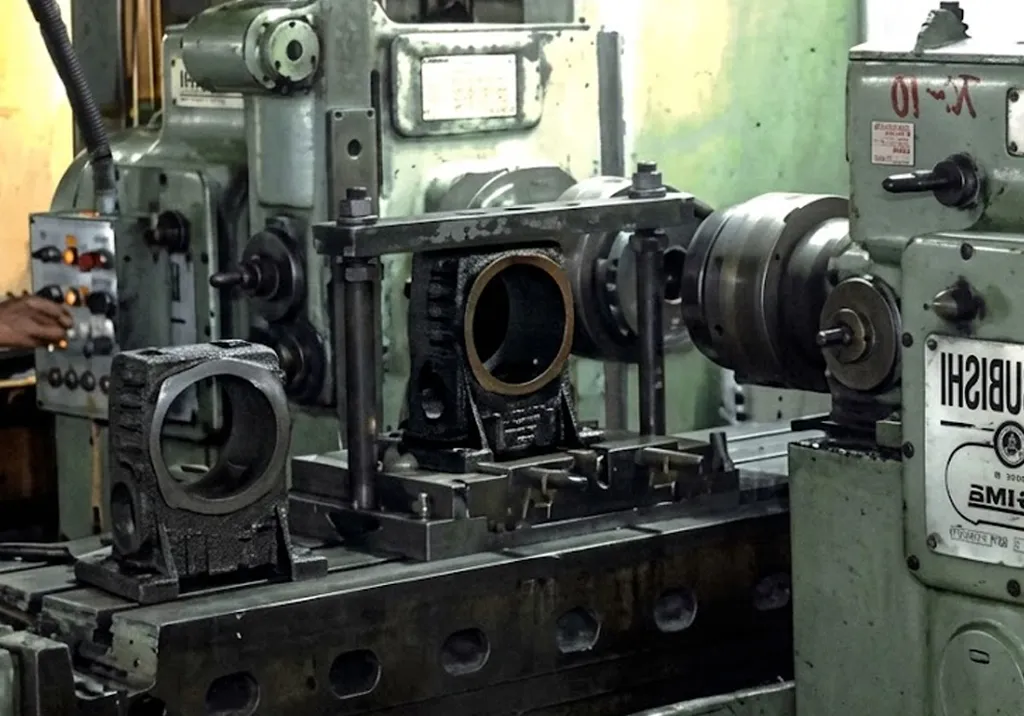
The housing is cast from close-grained grey cast iron, with the joint faces between the upper and lower housing halves machined flat and sealed with a liquid gasket compound during assembly. For concrete mixer applications, the adequacy of the housing joint face seal is confirmed at final inspection by running the assembled reducer at rated speed and checking for any oil weepage at the joint — a test that is more meaningful for concrete mixer service than dimensional inspection alone because the vibration of the mixer drum drive can loosen insufficiently torqued joint bolts over time if the joint face geometry is not accurately flat.
Material System
The material system of a single speed reducer for concrete mixer drum service is defined by the same worm-and-wheel architecture as for other heavy industrial applications, but the environmental exposure demands specific attention to corrosion resistance and seal material compatibility that is not always front-of-mind in the mechanical design of reducers for drier industrial environments.
Worm Shaft: Case-Hardened Alloy Steel
After carburizing and profile grinding to HRC 58–62, the worm thread surface resists the contact fatigue loading of continuous drum drive service, where the drum’s rotational inertia imposes a cyclic torque variation at each revolution as the concrete charge lifts, falls, and is re-engaged by the helical blade system inside the drum. The hardened surface also resists the corrosion that could otherwise initiate at the worm thread if the lubricating oil becomes contaminated with the alkaline wash water characteristic of concrete plant cleaning operations.
Standard across all WP series models for concrete mixer duty
Worm Wheel: Phosphor Bronze
Phosphor bronze (CuSn10P) provides adequate fatigue strength for concrete mixer drum duty loads while maintaining the lower hardness relative to the worm shaft that concentrates wear on the more easily replaced worm wheel rather than the more expensive worm shaft. For alkaline concrete plant wash water environments, phosphor bronze has better resistance to the de-zincification corrosion mode that would affect brass-based alternatives, making it the material of choice for drum drive single speed reducers installed in outdoor concrete batching plant environments in the UK, Germany, USA, and Australia.
WPKZ and WPKA series for mid-frame concrete plant applications
Shaft Seals: Nitrile or Polyacrylate Lip Seals
The shaft seal material is more important in concrete mixer service than in most other single speed reducer applications. Standard nitrile (NBR) lip seals provide adequate oil retention and water exclusion for most construction site environments. For concrete plants where the shaft seal is exposed to the alkaline cement water used in plant wash-down, polyacrylate (ACM) or fluoroelastomer (FKM) lip seal materials provide better resistance to the chemical degradation that NBR seals experience when repeatedly wetted with high-pH water — preventing the seal lip hardening and cracking that allows cement dust ingress to the housing interior.
FKM recommended for daily wash-down environments
Recommended Product for Concrete Mixer Drum Drive Applications
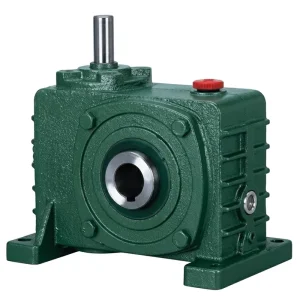
EP-WPKZ 0.4–5.2 L Oil Capacity Single Speed Reducer
The EP-WPKZ single speed reducer covers oil capacities from 0.4 to 5.2 litres across its frame size range, a specification that corresponds to the mid-to-large frame sizes applicable to concrete mixer drum drives in stationary plant and portable site mixer applications. The stated oil capacity range directly corresponds to the sump volume range relevant for concrete mixer duty, where adequate oil volume in the sump is critical for maintaining oil temperature within acceptable limits during the sustained full-load operation of a concrete batching cycle. The sealed cast iron housing and worm-gear architecture of the WPKZ series suit the gear ratio range and self-locking requirement of drum mixer drives at 40:1 to 60:1.
- Oil capacity range: 0.4 to 5.2 litres
- Gear ratio range: 10:1 to 60:1 (single stage)
- Worm shaft: Case-hardened alloy steel, profile ground
- Worm wheel: Phosphor bronze
- Housing: Sealed grey cast iron
- Self-locking: Yes at ratios above approx. 40:1
- Multiple mounting orientations supported
Sealing Strategies and Environmental Protection
Sealing is the most failure-critical maintenance topic for single speed reducers in concrete mixer drum service, and it is the area where most operational failures in this application class originate. Concrete mixing plants generate a persistent fine cement dust that settles on and around all equipment, and this dust is repeatedly wetted during plant operation and wash-down, forming a paste that adheres to reducer housings, shaft seal areas, and venting points. Over time, as this paste accumulates and dries in cycles, it creates conditions where mechanical vibration from the drum drive can gradually work the hardened cement crust past the shaft seal lip, scratching the seal running surface and the lip face simultaneously.
The primary defence is maintaining the shaft seal in serviceable condition through regular inspection and timely replacement before the lip becomes abraded or hardened. For single speed reducers in stationary concrete plant service — where the reducer runs multiple batches per day, five or six days per week — shaft seal inspection at each oil change (recommended every 2,000 to 3,000 hours for mineral ISO VG 220 gear oil) is the minimum frequency that detects developing seal wear before it allows significant contamination. If the seal shows any sign of lip hardening, cracking, or asymmetric contact pattern, replacement should be carried out regardless of whether active leakage has been observed, because visible leakage at this stage means internal contamination is already established.
The housing breather is a secondary sealing concern in concrete mixer environments. The breather prevents pressure build-up inside the housing as oil temperature rises during operation, but it also provides a path for fine cement dust ingress if it becomes immersed in cement slurry or if its filter element is blocked with dried cement. In concrete plant installations, a remote breather arrangement — using a small-bore tube to position the breather outlet above the typical cement dust level and away from direct wash-down spray — significantly reduces the breather ingress risk without requiring any modification to the reducer itself.
Lubrication and Thermal Management in Concrete Mixer Duty
The lubrication requirements of a single speed reducer in concrete mixer drum service are determined by the gear reduction ratio and the thermal load of the application. For drum drives with gear ratios in the 40:1 to 60:1 range — which represent the majority of stationary concrete plant applications — ISO VG 460 is the standard gear oil viscosity grade, providing adequate oil film thickness at the worm-wheel mesh under the sustained torque loading of batching-cycle operation. In tropical construction environments — Southeast Asian and African concrete plant sites where the ambient temperature routinely exceeds 35°C — the sump temperature in continuous batching operation can reach 70–80°C, at which temperature the effective viscosity of ISO VG 460 mineral oil may be marginally adequate. Switching to a synthetic PAO or PAG base stock of the same ISO VG grade maintains better film thickness at elevated sump temperature and reduces thermal oxidation of the oil during sustained operation.
The oil sump volume of the WPZ and WPKZ series single speed reducers — spanning 0.4 to 5.2 litres — directly affects the thermal capacity of the lubrication system. A larger sump volume provides more thermal mass to absorb the heat generated by the worm-wheel mesh friction losses during operation, which is why selecting a frame size with adequate sump volume for the expected duty cycle is as important as selecting a frame with adequate mechanical torque capacity. For concrete plants operating long batching campaigns in hot weather — a pattern common at infrastructure construction sites in the Middle East, India, and Southeast Asia — confirming that the thermal rating of the selected single speed reducer frame is adequate at the expected ambient temperature is an essential specification step that is separate from the torque rating calculation.
WP Series Single Speed Reducer — Concrete Mixer Key Parameters
Compatible Drive System Components
Concrete mixer drum drive systems pair the single speed reducer with an electric motor on the input and a chain, belt, or gear ring drive on the output. Sourcing motor and reducer from the same supply chain ensures that the input shaft dimensions, key-and-keyway geometry, and flange bolt pattern are dimensionally confirmed compatible before equipment is shipped to the plant or construction site, reducing the installation delays that dimensional mismatches cause in time-sensitive concrete plant commissioning schedules.
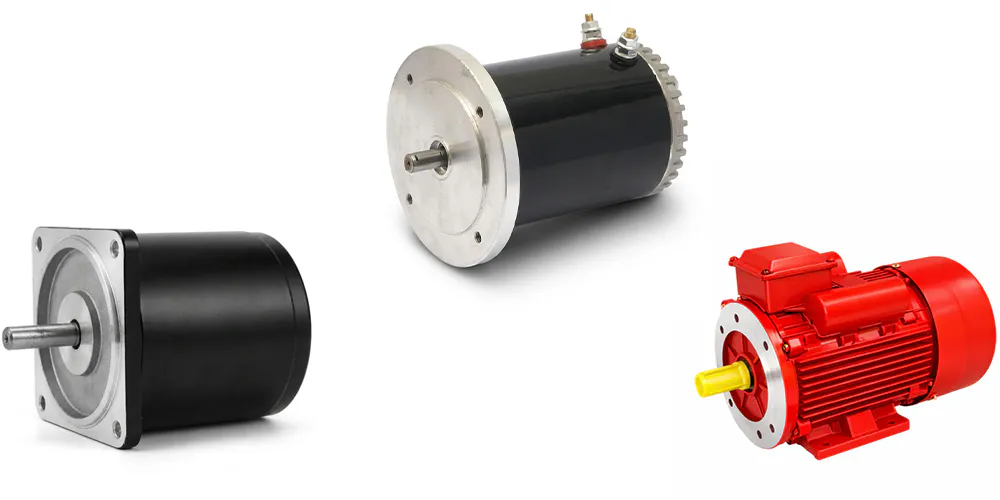
Електродвигуни
We produce electric motors in TEFC enclosures for outdoor concrete plant environments, in power ratings from 0.37 to 15 kW covering the full range applicable to concrete mixer drum drives from small portable site mixers to large stationary ready-mix plant drums. Both 50 Hz and 60 Hz versions are available for global market supply.
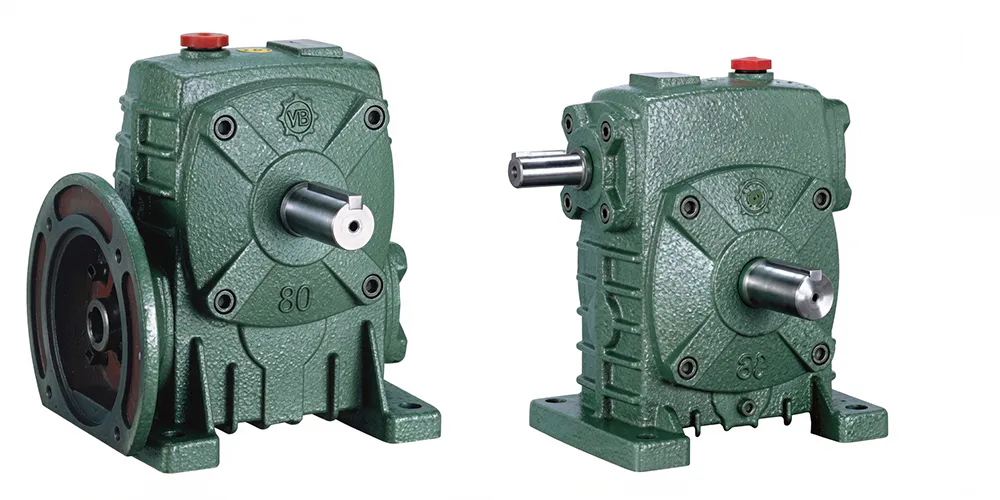
Черв'ячна коробка передач
For concrete plant ancillary drives — discharge chute positioning, drum tilting actuators, or aggregate feeder belt drives — requiring higher reduction ratios or torque levels than a single stage can provide, our worm gearbox provides two-stage and compound configurations to complement the single speed reducer series in full plant drive system supply.
Про нас
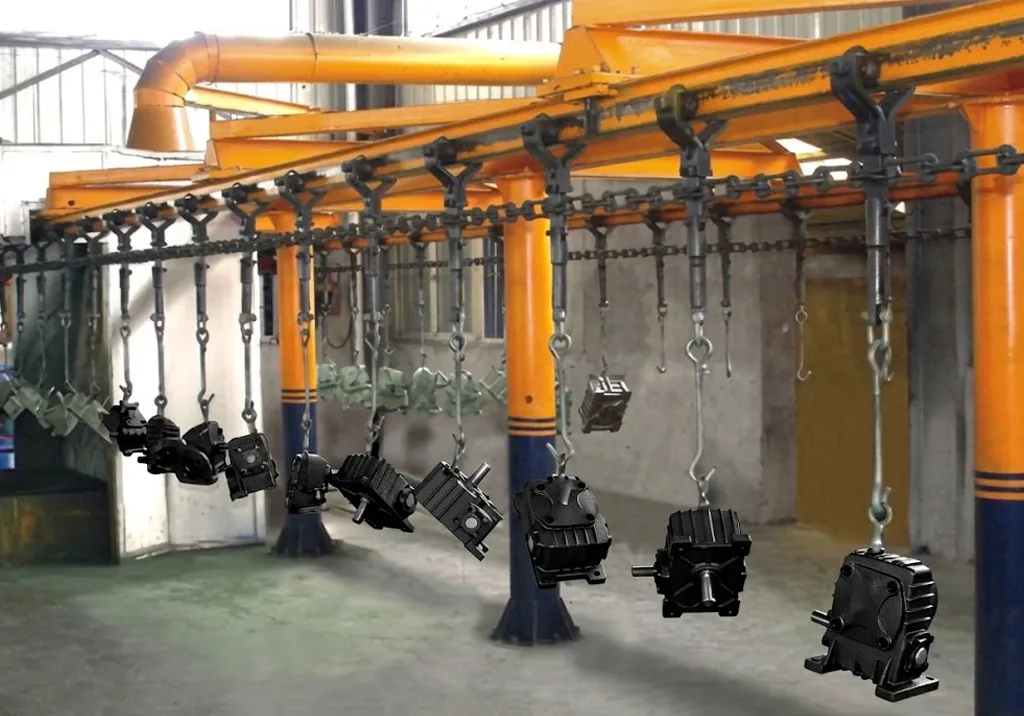
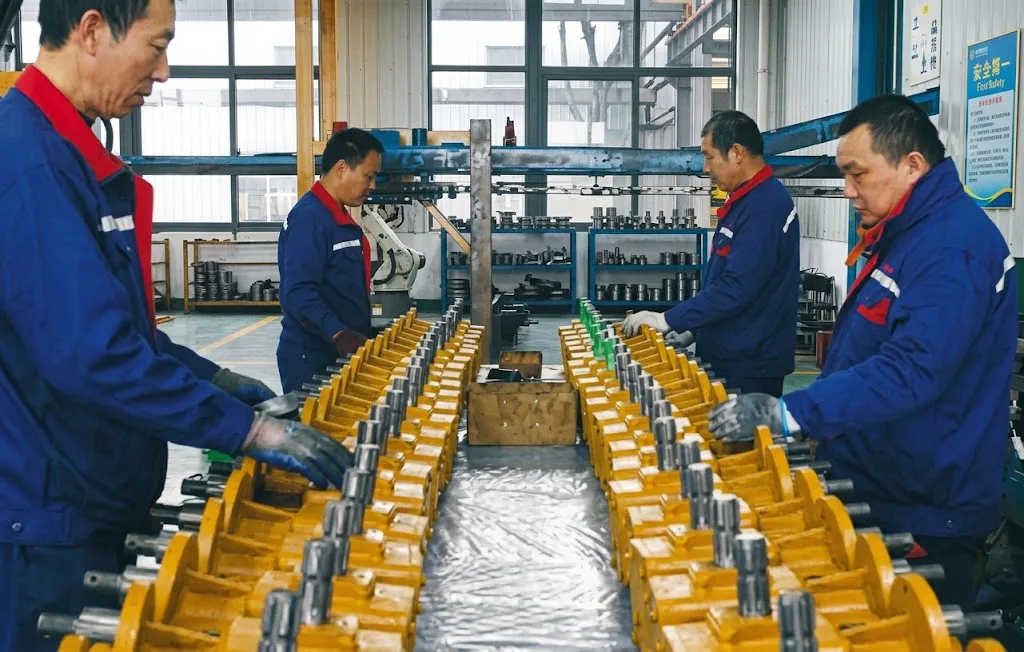
With over ten years of manufacturing and engineering experience, our ISO 9001:2015 certified facility produces worm gear reducers, agricultural gearboxes, planetary drive units, PTO shafts, hydraulic cylinders, precision gears, roller chains, and motors for construction equipment, industrial, and agricultural customers across North America, Europe, Australia, Asia, and Africa. Standard catalogue single speed reducers and custom-specification assemblies are produced in-house using materials including cast iron, ductile iron, cast steel, precision investment-cast steel, and cast aluminium depending on the application’s load, weight, and environmental requirements.
Our technical team provides support at the specification stage for concrete mixer drum drive applications, reviewing the gear ratio cascade from motor speed to drum speed, confirming the thermal rating at the actual ambient temperature of the concrete plant site, and recommending the appropriate shaft seal material for the specific environmental exposure of the installation — whether an indoor protected plant room in northern Europe or an outdoor mixer in a tropical Southeast Asian infrastructure project.
Майстерня

Часті запитання
How often should the gear oil be changed in a single speed worm reducer on a concrete batching plant mixer drum drive in a hot climate in the Middle East?▼
For a concrete batching plant mixer drum drive in the Middle East, where ambient temperatures commonly exceed 45°C during summer production periods, the standard mineral gear oil change interval of 3,000 hours should be reduced to 2,000 hours, or quarterly whichever is sooner. The combination of elevated sump temperature from high ambient and sustained full-load batching operation accelerates thermal oxidation of mineral gear oil, reducing its viscosity below the threshold for adequate worm-wheel mesh film protection before the standard interval has elapsed. Switching to a synthetic PAO ISO VG 460 gear oil extends the interval to 4,000–6,000 hours while providing better viscosity retention at elevated sump temperatures — a practical cost saving for high-throughput concrete plants where minimising maintenance downtime during production is a commercial priority.
What type of shaft seal material should I specify for a worm gear speed reducer on a concrete mixer drum drive at an outdoor Australian ready-mix plant?▼
For an outdoor Australian ready-mix concrete plant where the reducer is exposed to daily wash-down using alkaline cement cleaning water, specifying polyacrylate (ACM) or fluoroelastomer (FKM) lip seal material in place of the standard nitrile (NBR) seal provides significantly better resistance to the high-pH cleaning water that causes NBR seals to harden and crack prematurely in this environment. Australian concrete plant operations typically use pressure wash-down at the end of each batching day, and the direct spray exposure at the reducer shaft seal is more aggressive than the incidental wetting that NBR is rated for. Requesting the upgraded seal material as an option from the reducer supplier — either factory-fitted or as a replacement seal supplied alongside the reducer — is a straightforward specification step that meaningfully extends the maintenance interval between shaft seal replacements in this operating environment.
Редактор: PXY