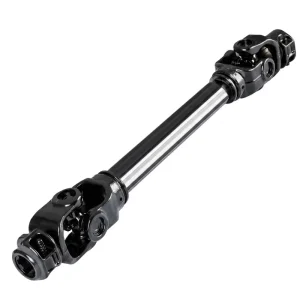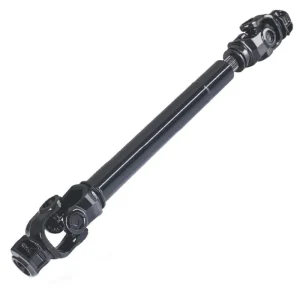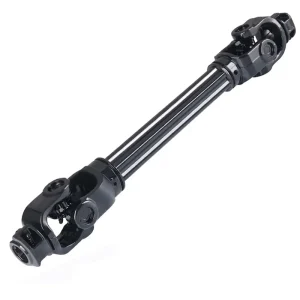
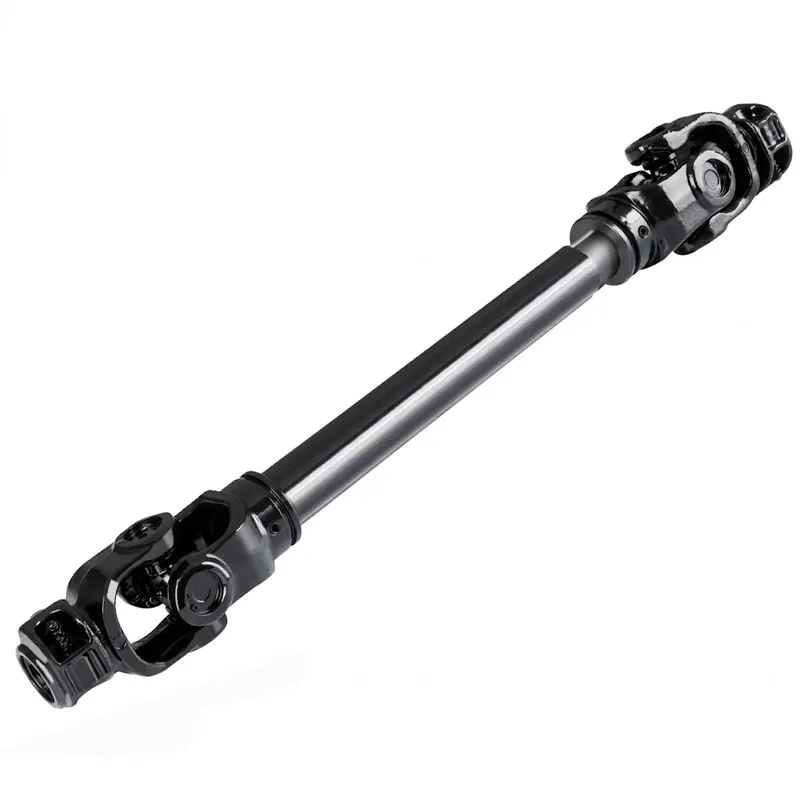
EP-L Series 210–695Nm PTO Driveshaft | PTO Shaft
The EP-L Series PTO Driveshaft offers a versatile range of power transmission solutions, covering operating torques from 210 Nm to 695 Nm at 540 rpm. The series includes models L1 through L5 and L32, designed to handle power inputs ranging from 12 kW (16 HP) up to 39 kW (53 HP) at standard speeds. For higher speed applications at 1000 rpm, the series supports up to 61 kW (83 HP). With maximum torque capacities spanning from 320 Nm to 1200 Nm, these drive shafts ensure reliable performance for various agricultural implements. The L Series combines robust construction with precise engineering to deliver efficient power transfer in demanding field conditions.
EP-L Series 210–695Nm PTO Driveshaft
The EP-L Series is a comprehensive range of agricultural PTO shaft units covering seven distinct torque grades — L1 through L6 and L32 — spanning operating torques from 210 Nm to 695 Nm at 540 rpm and peak torque (MP) ratings from 320 Nm to 1,450 Nm. Designed around the universal double-cross joint architecture that is the global standard for tractor-to-implement power transfer, every shaft in this series is built for the real working conditions of agricultural fields: shock loading, angular misalignment, seasonal outdoor storage, and the kind of incidental contact with soil, fertiliser, and crop debris that would destroy a poorly specified driveline in short order. Whether you are looking for a tractor PTO shaft to drive a rotary mower, a wood chipper, a slurry pump, or a baler, the L Series offers a matched torque rating without the need to over-specify into a heavier and more costly series. Seven models in one catalogue simplify procurement for dealers, distributors, and fleet managers who need a single trusted source for PTO drive shafts across a mixed implement fleet.
1. Technical Specifications — EP-L Series PTO Driveshaft Operating Torque
The table below lists the full operating torque matrix for all seven L Series models at both standard PTO speeds, together with the peak torque (MP) value that the shaft can withstand during shock load events such as implement blade strikes or drive engagement under load. Specify your model by matching the operating torque at your tractor's PTO speed to the implement's rated input torque requirement. When in doubt about the correct model for your application, contact our technical team with details of the implement type and tractor PTO power rating.
| Series | 540 rpm | 1,000 rpm | MP Peak Torque (Nm) | ||||
|---|---|---|---|---|---|---|---|
| kW | Pk (HP) | Nm | kW | Pk (HP) | Nm | ||
| L1 | 12 | 16 | 210 | 18 | 25 | 172 | 320 |
| L2 | 15 | 21 | 270 | 23 | 31 | 220 | 450 |
| L3 | 22 | 30 | 390 | 35 | 47 | 330 | 640 |
| L4 | 26 | 35 | 460 | 40 | 55 | 380 | 780 |
| L5 | 35 | 47 | 970 | 54 | 74 | 520 | 1,050 |
| L6 | 47 | 64 | 830 | 74 | 100 | 710 | 1,450 |
| L32 | 39 | 53 | 695 | 61 | 83 | 580 | 1,200 |
MP = Peak Torque. All Nm values are at the respective shaft speed. Pk = metric horsepower (PS).
2. Five Key Product Advantages
The L Series spans seven models — L1, L2, L3, L4, L5, L6, and L32 — each with a precisely defined operating torque rating at both 540 rpm and 1,000 rpm, plus a documented peak torque (MP) value. This structured range means buyers can select the exact torque grade needed for their implement rather than defaulting to the next size up. Correct torque matching reduces unnecessary component weight on light implements, lowers the inertia the tractor PTO system must accelerate at startup, and ensures the shaft's overload protection mechanism activates at a realistic threshold — all of which extend both shaft and implement service life. A single supplier for the full L1-to-L6/L32 range also simplifies dealer stock management and spare parts supply.
Every model in the L Series carries performance data at both 540 rpm and 1,000 rpm PTO speeds — the two standard tractor PTO outputs used globally. This dual-speed rating is critical for buyers specifying a tractor PTO driveshaft for machines that may be used with either speed class of tractor. Knowing the power capacity at both speeds eliminates the risk of under-specifying a shaft for a higher-speed application. For example, the L5 model rated at 35 kW / 970 Nm at 540 rpm delivers 54 kW / 520 Nm at 1,000 rpm — different power and torque profiles that need to be matched to the specific tractor and implement combination in use.
All L Series units incorporate a telescoping inner/outer tube assembly that allows the shaft to extend and collapse as the distance between the tractor PTO stub and the implement input changes during operation — when the tractor turns, when the implement follows uneven ground, or when the hitch geometry shifts under load. This telescoping PTO shaft function is not optional in agricultural use; it is the feature that prevents the shaft from becoming a rigid strut between tractor and implement, which would cause catastrophic damage to both connections within minutes of field operation. The sliding profile of the telescoping sections is precision-formed to minimise play while allowing smooth extension and retraction across the full working length range.
Every EP-L Series shaft is supplied with a complete full-coverage plastic safety guard — a hard plastic outer tube assembly that encloses the entire rotating shaft body, the universal joints at both ends, and the telescoping section. The guard is retained by bearing rings at each end and includes a retaining chain attachment point on both the tractor-side and implement-side yoke guards. This guard system meets the requirements of EN 12965 (the European standard for PTO shaft safety guards) and satisfies the CE marking technical file requirements for PTO-driven machinery sold in the EU and UK. For buyers in North America, Australia, South Korea, and other regulated markets, the enclosed guard design also satisfies ASABE S203 and equivalent national standards for PTO shaft shielding.
The cross-joints (universal joints / u-joints) at each end of the EP-L Series shaft are the highest-wear components in the assembly and the most common failure point in lower-quality shafts. Each cross-joint is machined from alloy steel, case-hardened, and assembled with needle roller bearing cups retained by internal circlips — the same construction used in OEM agricultural driveline shafts. ISO 9001:2015 production controls ensure that cross-journal dimensional accuracy, bearing cup press-fit tolerances, and needle roller complement are consistent from unit to unit and batch to batch. This repeatability is what dealers and fleet operators need when sourcing replacement PTO shaft units for stocked implement repair programmes.
3. How the EP-L Series PTO Driveshaft Works
Understanding the operating principle of a PTO driveshaft starts with understanding what problem it solves. A tractor's PTO output stub rotates at a fixed shaft centreline — horizontal, aligned with the tractor's longitudinal axis. The implement's gearbox input shaft has its own fixed centreline, which may be slightly offset from the tractor's PTO centreline in height, lateral position, and angular alignment — and that misalignment changes continuously as the tractor moves over uneven ground, turns, and as the three-point hitch height changes. A rigid shaft connecting the two would bind, vibrate, and fracture within minutes. The double-cross-joint design of the EP-L Series is the engineering solution to this problem.
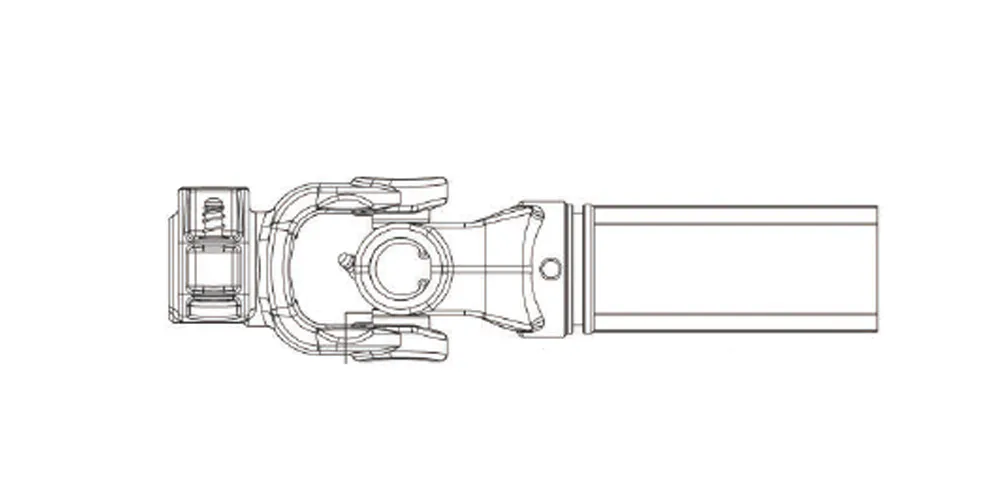
Each end of the EP-L driveshaft terminates in a universal joint (u-joint / cross-joint), consisting of a four-armed cross-shaped journal supported in four needle roller bearing cups retained by circlips within a yoke. When the shaft angle changes, the cross-journal pivots within the bearing cups, allowing the yoke to swing through the required angle without disrupting the rotation. A double-joint configuration — one at the tractor end and one at the implement end — allows the shaft to accommodate simultaneous angular misalignment at both connection points, which is the real operating condition in field use. The double PTO shaft u joint design also cancels the velocity variation that a single joint would introduce at working angles, producing smoother power transmission through a range of operating angles up to approximately 25 degrees at each end.
The telescoping inner and outer tubes connecting the two end yoke assemblies allow the shaft's overall length to change as the geometry between tractor and implement varies during work. The tubes are profiled in a non-circular cross-section — typically a star, triangle, or lemon profile — which transmits rotational torque while allowing free axial sliding. This telescoping action ensures the shaft remains under no compressive or tensile load even as the distance between the PTO stub and the implement input shaft changes continuously during field operation. The outer plastic safety guard surrounds the entire assembly, protecting both the operator from entanglement and the shaft from debris accumulation, while the guard is itself held stationary by friction against the bearing rings at each end while the shaft rotates inside it.
4. Material Specification & Component Construction
The parts of a PTO shaft that most commonly fail in service are the cross-joints and the yoke bores — and in both cases, the failure mode is wear driven by inadequate material hardness, insufficient bearing area, or poorly retained lubrication. The EP-L Series addresses each of these failure modes through deliberate material and design choices.
Cross-joint journals are forged or turned from medium-alloy case-hardening steel — typically 20CrMo, 20CrMnTi, or equivalent — and carburised and quenched to achieve a surface hardness of 58–62 HRC with a tough, ductile core. The high surface hardness resists fretting wear at the needle roller contact lines, which is the primary wear mechanism in cross-joint failure. The needle rollers themselves are through-hardened, precision-ground bearing-quality steel rollers, assembled with the correct complement count for each joint size to distribute load evenly across the full roller length. Bearing cups are pressed into the yoke bores to a controlled interference fit, then retained by internal circlips that prevent axial migration under the cyclic thrust loads that occur during shaft angle changes.
The telescoping tube profiles are formed from seamless or welded steel tube in the appropriate wall thickness for each torque grade. The sliding interface between inner and outer profile tubes is machined or formed to a close running fit, minimising angular play (which causes fretting wear in the profile bore over time) while ensuring the tubes can telescope freely without binding under the compressive pre-load that the implement weight sometimes applies. Each assembly is coated internally at the sliding interface with a grease fill at the factory, with a grease nipple or grease point provided for periodic re-lubrication in service.
Yoke forgings are made from medium-carbon or alloy steel, normalised or quenched-and-tempered for toughness. Input and output yoke connection profiles — typically 1 3/8 Z6 spline for Category 1 PTO and 1 3/8 Z21 or 1 3/4 Z20 spline for Category 2 / higher-torque PTO — are machined to DIN or ISO dimensional standards and provided with the appropriate retaining collar, locking pin bore, or quick-release mechanism depending on the model specification. The outer safety guard is injection-moulded in polyethylene or polypropylene, with a UV-stabilised formulation for outdoor agricultural use, and is designed to survive incidental ground contact and scrub contact without fracturing.
5. Application Scenarios
The EP-L Series covers the torque range from 12 kW / 210 Nm (L1) up to 47 kW / 830 Nm (L6) at 540 rpm, which maps to the majority of common agricultural PTO-driven implements used on sub-100 HP tractors worldwide. The following scenarios illustrate how individual L Series models are matched to specific implement types and field conditions.
Rotary Mowers & Lawn Mower Drives (L1–L3)
Compact and mid-size rotary mowers for pasture topping, golf course rough cutting, and smallholder grass management typically require PTO shafts for farm equipment in the L1-to-L3 torque range (210–390 Nm at 540 rpm). The L1 suits single-blade compact mowers on sub-20 HP tractors common in South-East Asia, Japan, and the Mediterranean region. The L2 and L3 suit larger single-blade and twin-blade decks on 20–35 HP tractors used throughout Europe, Australia, and North America. The 540 PTO shaft speed is standard for all compact mower applications in this torque bracket.
Bush Hog & Brush Cutter Drives (L3–L5)
A PTO shaft for bush hog applications in the US south, brush cutters in Australia, and heavy rotary slashers in South America need a shaft rated for sustained high torque and frequent shock loading. The L3 through L5 cover the torque range for 25–55 HP tractor brush hog applications, with the L5's 1,050 Nm peak torque rating providing the margin needed when the rotary head encounters hardwood stems and embedded debris. A purpose-rated pto shaft for bush hog that operates within its MP rating will outlast an underrated shaft many times over in this demanding duty cycle.
Slurry Pumps & Irrigation Equipment (L2–L4)
Slurry pump drives, irrigation water pumps, and liquid manure handling equipment commonly use the L2-to-L4 torque range depending on pump displacement and drive speed. These applications are characterised by a sustained, steady-state torque load rather than the shock loading of cutting implements — a loading profile that puts different demands on the PTO driveshaft in terms of thermal management and long-duration bearing lubrication. The L2 and L3 are particularly well established in Dutch and Irish dairy farm slurry handling equipment, where these units run for extended pumping sessions during spring and autumn spreading periods.
Wood Chippers & Log Splitters (L4–L6)
Tractor-driven wood chippers, log splitters, and firewood processors present some of the most severe shock load profiles in agricultural PTO use. Each wood piece presented to the chipping drum or splitting ram creates a sharp torque spike — and for hardwood species, those spikes can reach three to five times the steady-state chipping torque. The L4 through L6 torque grades with their 780–1,450 Nm peak torque ratings are the appropriate selection for this category of implement. The tractor drive shaft in a chipper application should be rated at the implement manufacturer's recommended torque grade, with the MP value as the critical specification rather than the operating torque, since peak events determine fatigue life.
Round Balers & Hay Equipment (L4–L32)
Round balers, square balers, and bale wrappers represent some of the highest combined torque and peak load requirements among standard agricultural implements. The L4, L32, and L5 are the models most commonly specified for baler drives in the 35–55 HP tractor class. The L32's intermediate position between L3 and L5 — 695 Nm operating / 1,200 Nm peak at 540 rpm — makes it particularly relevant for mid-size round balers commonly used across central Europe, New Zealand, and the US midwestern hay market, where a single season may involve tens of thousands of baling cycles that cumulatively load the tractor pto shaft and its cross-joints more heavily than most other implement types.
Construction & Industrial PTO Drives (L5–L6)
Beyond agriculture, construction PTO driveshafts are used on tractor-powered compressors, hydraulic power packs, concrete mixers, road-maintenance machinery, and cable-laying equipment. In this industrial context, the duty cycle is typically sustained and predictable rather than shock-loaded, but the consequence of shaft failure is often higher — a breakdown in a construction programme context has schedule and cost implications that dwarf the cost of the shaft itself. The L5 and L6 models in the L Series, with their higher torque ratings and robust cross-joint construction, are well suited to these construction PTO driveshaft applications where continuous duty and reliability are the primary selection criteria.
6. Regulatory & Safety Standards by Region
PTO shaft safety is one of the most regulated areas of agricultural machinery across all major markets. A tractor PTO driveshaft that does not meet the applicable national standard cannot legally be placed on the market in most jurisdictions — and in many cases, using an unguarded or non-compliant shaft is a specific criminal offence under agricultural safety legislation. The following is a region-by-region summary of the standards that apply to PTO shaft procurement and use.
European Union
EN 12965 is the principal harmonised standard for PTO shafts and PTO shaft guards sold within the EU. It specifies guard geometry, material requirements, retention system design, and test procedures for PTO shaft guard assemblies. Compliance with EN 12965 supports CE marking of the PTO shaft under the EU Machinery Directive 2006/42/EC, transitioning to the EU Machinery Regulation (EU) 2023/1230 from January 2027. ISO 11684 (Safety signs for machinery) requirements apply to warning labels on PTO shaft guards. EN ISO 500-1 specifies the PTO stub dimensions and spline profiles used on tractors and their implements throughout the EU.
United Kingdom
The UK Provision and Use of Work Equipment Regulations 1998 (PUWER) require that all PTO shafts used in the workplace — including agricultural operations — are adequately guarded. The Health and Safety Executive (HSE) publishes specific guidance on PTO shaft safety under its Agricultural Safety programme. BS EN 12965 remains in force as the technical standard for PTO shaft guards in the UK post-Brexit, and UKCA marking is required for PTO shafts placed on the Great Britain market. Northern Ireland continues to accept CE marking under the Windsor Framework.
United States & Canada
ASABE Standard S203 specifies PTO shaft dimensions, speeds, and guard requirements for North American agricultural equipment. OSHA 29 CFR Part 1928, Subpart C mandates PTO shaft guarding for agricultural machinery used by employees. The American National Standards Institute (ANSI) B11 machinery safety series provides additional guidance for industrial PTO applications. Canada's provincial occupational health and safety acts enforce equivalent PTO guarding requirements. State-level farm safety programmes in the US — notably those administered by the Northeast Center for Agricultural and Occupational Health (NYCAMH) and similar regional bodies — actively promote PTO shaft guard compliance as a primary farm fatality prevention measure.
Australia & New Zealand
Safe Work Australia's Code of Practice for Managing Risks of Plant in the Workplace covers PTO shaft guarding as a specific hazard. Australian Standard AS 1762.2 addresses PTO shaft safety requirements for agricultural tractors and implements. Safe Work NSW, WorkSafe Victoria, and equivalent bodies in other states issue specific agricultural PTO safety guidance. New Zealand's WorkSafe NZ publishes PTO shaft safety fact sheets under the Health and Safety at Work Act 2015 framework. Both countries' agricultural safety agencies specifically cite PTO entanglement as one of the leading causes of fatal farm accidents, making regulatory compliance directly linked to documented fatality risk reduction.
South Korea & Japan
South Korea's Rural Development Administration (RDA) and Korea Occupational Safety and Health Agency (KOSHA) both issue guidance on PTO shaft safety for agricultural operations. The Korean Industrial Standards (KS) B 6052 series addresses agricultural tractor PTO requirements. Japan's Agricultural Machinery Society (JSAM) and the Japan Agricultural Standards (JAS) framework include PTO shaft safety specifications aligned with ISO standards. Both markets accept ISO 9001:2015 certified PTO shaft products as a starting point for compliance qualification in OEM procurement processes.
Brazil & Latin America
Brazil's Ministry of Labour NR-12 (Safety in Machinery and Equipment) and ABNT NBR standards cover PTO shaft safety requirements. The Brazilian Agricultural Research Corporation (EMBRAPA) publishes technical guidance on PTO shaft selection and maintenance for the Brazilian agricultural sector. Across Latin America more broadly, ISO standards compliance and ISO 9001:2015 quality certification are the primary market access credentials for imported agricultural transmission components.
7. Compatible Products — Complete PTO Drivetrain Supply
A PTO drive shaft is one element in a complete power transmission chain. The quality and compatibility of the implement gearbox and the universal joints within the shaft assembly directly determine the working life of the entire driveline. Sourcing all three elements from one supplier eliminates specification mismatches and simplifies after-sales support across the full system.
Agricultural Gearbox
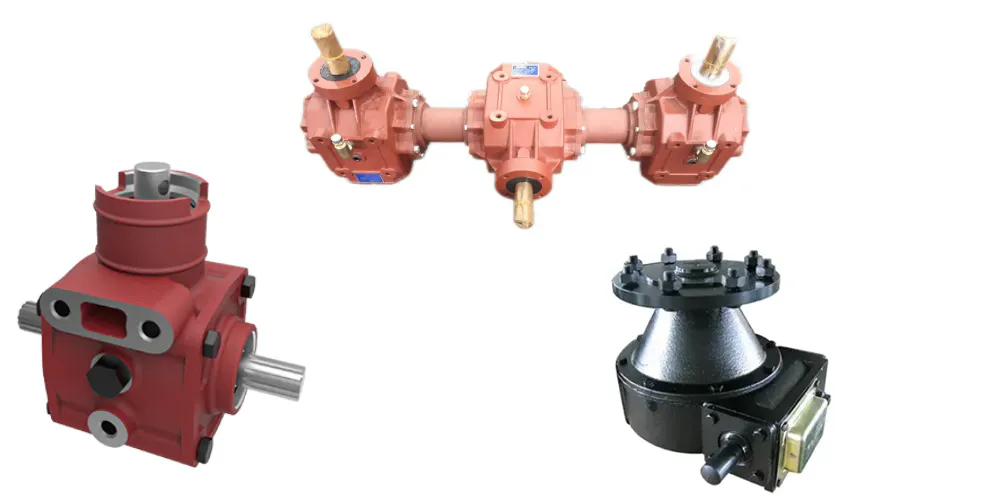
The EP-L Series pto shaft connects the tractor PTO to the implement's input gearbox. Our comprehensive Agricultural Gearbox range — spanning lawn mower gearboxes, baler gearboxes, rotary slasher gearboxes, and orchard mower gearboxes — is designed and sized to accept the L Series shaft input at the appropriate torque grade. Matching the PTO shaft and the driven gearbox from the same source gives you a documented, compatible drivetrain where the torque ratings at each interface are cross-referenced and verified. This single-source approach is particularly valuable for OEM machine builders integrating both components into a new implement design, where interface compatibility needs to be proven before production starts.
Universal Joint
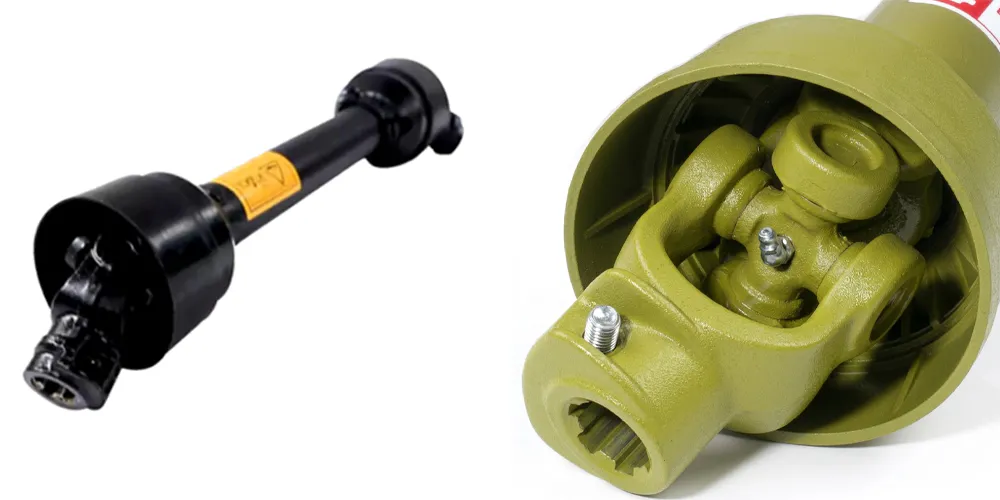
The universal joint is the critical wear component within every PTO shaft assembly. When a PTO shaft fails in service, it is almost always the cross-journal needle roller bearings — the core of the u-joint — that fail first, not the tubes or yokes. Stocking matched replacement universal joints for the L Series ensures that a worn or damaged joint can be replaced without scrapping the entire shaft assembly, which is both the more economical and more environmentally responsible approach to PTO shaft parts management. Our universal joint range is dimensionally matched to each L Series model, covering the journal diameter, bearing cup outside diameter, and overall cross width for each size. Having matched u-joints available on the shelf means a field repair that takes 30 minutes rather than a week waiting for a complete shaft delivery.
8. About Our Manufacturing Operation
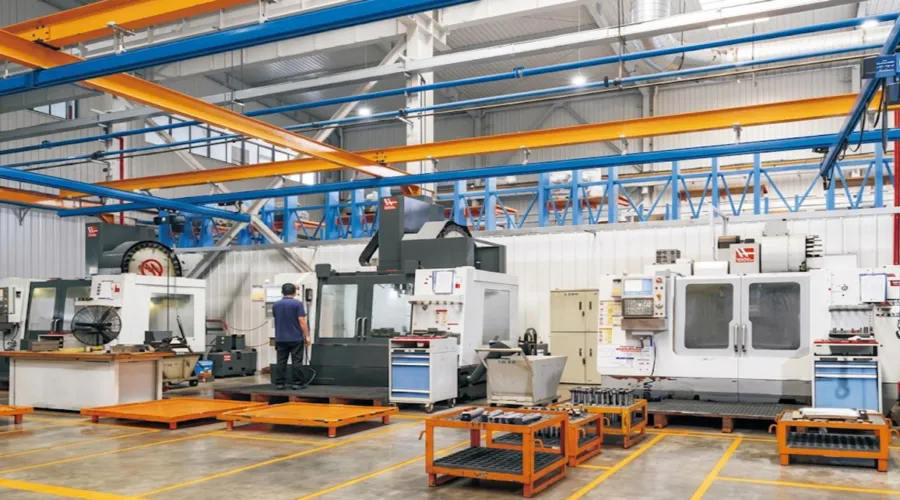
Our engineering team has accumulated over ten years of focused experience in agricultural and industrial mechanical power transmission. The product range we manufacture covers the full spectrum of components needed in a modern agricultural drivetrain: agricultural gearboxes, worm gear reducers, planetary gear units, PTO drive shafts, hydraulic cylinders, precision gears, chain drives, and electric motors. This breadth of manufacturing scope is not incidental — it means our engineers understand the entire power path from tractor PTO to implement working component, and can advise on component interactions that affect drivetrain reliability in ways that a single-product supplier cannot.
Our production facility is ISO 9001:2015 certified, covering every process from incoming raw material inspection through component machining, heat treatment monitoring, assembly, final inspection, and shipping. Housing and structural components are available in ductile iron, grey cast iron, cast steel, precision investment cast steel, and cast aluminium — material selections driven by the specific load environment and weight constraints of each product. Beyond our standard product range, we design and manufacture custom gearboxes, non-standard gear sets, bespoke shaft assemblies, sprockets, worm gears, pulleys, and other special mechanical parts to customer drawings or functional specifications. For buyers seeking a custom PTO driveshaft assembly — whether a modified length, alternative yoke profile, or integrated overload protection device — our engineering team can develop and produce a solution through the same quality-managed production system that produces our standard L Series units.
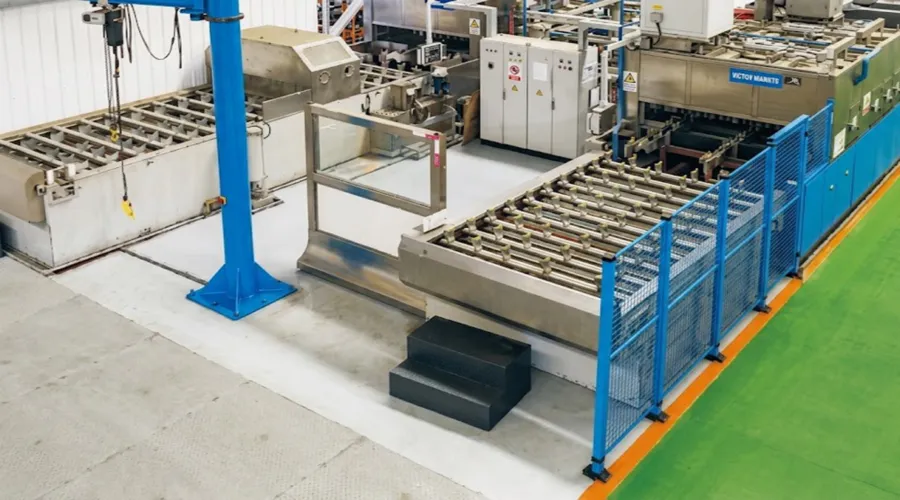
Workshop

Frequently Asked Questions
Q1. How do I measure a PTO shaft correctly to find the right replacement length when fitting a new tractor PTO driveshaft to a rotary mower in the UK or Ireland?
Measuring a pto shaft for replacement requires two critical dimensions: the compressed (shortest) length and the extended (longest) length, both measured from yoke face to yoke face with the plastic safety guard removed. Connect the tractor to the implement at the hitch as it will be used in the field, then measure the distance between the tractor PTO stub face and the implement gearbox input stub face — this gives you the working length. The shaft should be able to compress to a length approximately 25–30% shorter than the working length (to accommodate the tractor turning full lock) and extend to a length that still leaves at least 150 mm of tube overlap in the telescoping section. If you cannot obtain these measurements from the failed shaft, your tractor and implement manufacturer's parts manuals will specify the correct replacement shaft length and series.
Q2. What is the correct way to shorten a PTO shaft when the standard length is too long for a compact tractor setup in Germany, France, or the Netherlands?
Shortening a telescoping PTO shaft is a straightforward process when done correctly, but critical dimensions must be maintained. First, fully compress the shaft and measure how much overlap remains in the telescoping section — you need a minimum of 150 mm overlap when compressed. Mark the cut point on both the inner and outer tube, ensuring equal amounts are removed from each to maintain balanced tube length. Cut using a metal-cutting saw or angle grinder, then deburr the cut edge thoroughly to prevent burrs from damaging the telescoping profile bore during extension and retraction. Clean the tube interior of any swarf before reassembling. Never cut the yoke stubs, and ensure the guard tubes are trimmed to match the new shaft body length after cutting. If in doubt, have the work done by a tractor dealer or implement repair workshop.
Q3. Which EP-L Series PTO shaft model should I choose for driving a mid-size round baler on a 50 HP tractor on a mixed hay farm in New Zealand or southern Australia?
For a mid-size round baler on a 50 HP tractor at 540 rpm PTO, the L32 or L4 model is typically the appropriate selection. The L32 is rated at 39 kW / 695 Nm operating torque at 540 rpm with a peak torque (MP) of 1,200 Nm — well matched to the torque requirements of most mid-size round balers in the 4x4 to 5x4 bale size class. The L4 at 26 kW / 460 Nm operating / 780 Nm peak suits smaller, lighter balers on lower-HP tractors. Check your baler manufacturer's PTO shaft specification in the operator manual — it will state the required shaft series or torque grade. If the baler is designed for a friction or shear-bolt overload coupler on the PTO shaft, ensure the L Series unit you specify is available with the appropriate overload protection fitting, or supply the overload coupler separately and include it between the shaft yoke and the implement input.
Q4. How do I remove a PTO shaft from a gearbox safely when carrying out seasonal maintenance on an agricultural implement in Canada or the northern United States?
Safe PTO shaft removal starts with the tractor engine off and the PTO disengaged — never work on a shaft that is connected to a running or recently running PTO. Engage the tractor parking brake and allow all rotating components to come fully to rest. Disconnect the retaining chain or locking wire from the implement-side guard, then pull the implement-side yoke clear of the gearbox input stub. Most modern quick-release yokes have a collar that must be pulled back while pulling the yoke off the spline — if the yoke is stuck, do not lever against the gearbox housing; instead, use a yoke puller tool or soak the spline connection with penetrating oil and allow time for it to release. Remove the tractor-side yoke from the PTO stub in the same way. Store the shaft with the guard intact and hang it horizontally to prevent the telescoping section from extending under gravity and placing stress on the profile bore.
Q5. What are the warning signs that the universal joint on a tractor PTO drive shaft needs replacement before it fails completely during a busy harvest period in Brazil or Argentina?
The most reliable early warning indicators of a worn PTO shaft u joint are: a clicking or knocking sound that occurs once per revolution of the shaft and is most pronounced when engaging or disengaging the PTO; a visible wobble or vibration in the shaft that was not present when the shaft was new; detectable play when rotating the yoke relative to the cross-journal by hand with the shaft removed; brown or orange rust-coloured grease weeping from the bearing cup seals, indicating the bearings are running dry or contaminated; and roughness or binding when rotating the joint through its angular range by hand. Any of these symptoms in isolation warrants inspection and likely replacement of the affected cross-journal. Continuing to run a worn u-joint past these early warning signs risks catastrophic joint failure at an unpredictable moment — which in a harvest context can mean a complete shaft disintegration that damages the tractor PTO stub, the implement gearbox input, and anyone working nearby.
Q6. Where can a farm machinery dealer in South Korea or Japan source a reliable custom PTO driveshaft assembly with non-standard length for OEM integration into a new agricultural implement design?
For OEM machine builders in South Korea and Japan who need a custom PTO driveshaft in a non-standard length, with a specific yoke profile, or with an integrated overload coupler, we offer custom assembly services based on the EP-L Series component set. Our engineering team can produce assemblies to customer-specified compressed and extended lengths, with the torque series (L1 through L6 or L32) selected to match the implement's rated input torque. Full dimensional drawings in DXF format, material certification, and ISO 9001:2015 production documentation are provided with OEM supply orders. For South Korean buyers, we can support the KC and RDA documentation requirements that apply to agricultural machinery sold through Korean distribution channels. Contact our export sales team with your application torque requirement, tractor PTO speed, and required shaft length range to initiate a custom specification quotation.
Ready to Specify the EP-L Series for Your Application?
Our technical team provides torque series selection guidance, custom length quotations, OEM cross-reference checks, and full production documentation for dealer and distributor orders. We serve buyers across the EU, UK, North America, Australia, South Korea, Brazil, and South-East Asia.
Editor: PXY