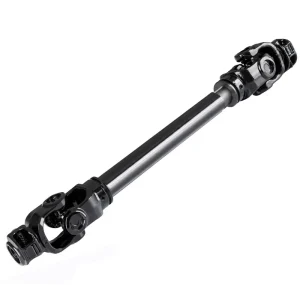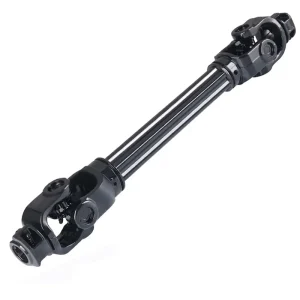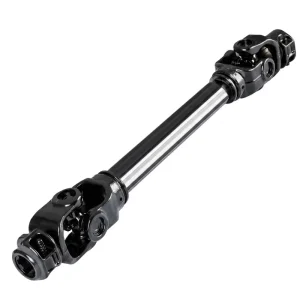
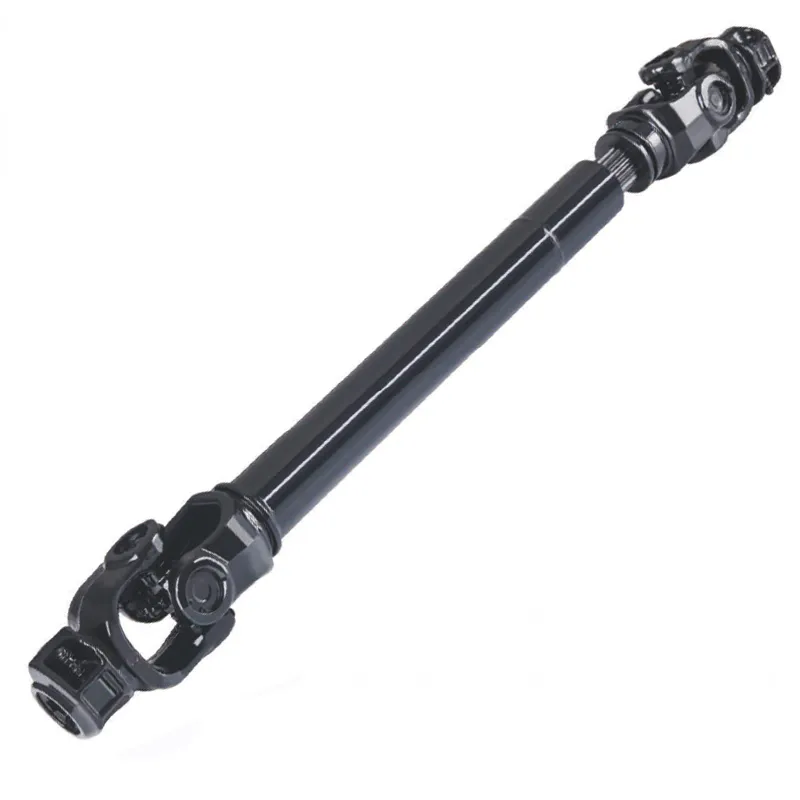
EP-Gシリーズ 220~2,095Nm PTOドライブシャフト | PTOシャフト
The EP-G Series PTO shaft is engineered for heavy-duty agricultural applications, offering a broad torque range from 220 Nm to 2,095 Nm at 540 rpm. The series encompasses models G2 through G50, supporting power inputs from 15 kW (21 HP) up to an impressive 119 kW (162 HP) at standard speeds. At 1000 rpm, the shafts handle up to 182 kW (248 HP). With maximum torque capacities reaching 3,700 Nm, the G Series pto shaft ensures durability under extreme loads. This comprehensive lineup provides reliable, high-efficiency power transmission for large-scale implements like balers and forage harvesters, combining robust construction with superior performance capabilities.
EP-G Series 220–2,095Nm PTO Driveshaft
の EP-G Series is a heavy-duty range of agricultural and industrial PTOシャフト assemblies spanning nine torque grades — G2, G4, G5, G6, G7, G8, G38, G42, and G50 — with operating torques from 270 Nm (G2 at 540 rpm) up to 2,095 Nm (G50 at 540 rpm) and peak torque (MP) ratings reaching 3,700 Nm in the top model. Where the EP-L Series pto shaft covers the light-to-mid duty range for compact tractors and smaller implements, the G Series is designed for the upper tier of agricultural and industrial PTO applications: large balers, heavy mulchers, construction PTO power packs, industrial pump drives, and high-power rotary implements on 55–120 HP tractors. Every model in the series carries a dual-speed specification at both 540 rpm and 1,000 rpm, enabling accurate torque matching across the two standard トラクターPTOシャフト speed classes. Built under ISO 9001:2015 quality management and supplied with a CE-compliant full-coverage safety guard as standard, the EP-G Series is the choice for operators who need a tractor PTO drive shaft that is correctly rated for the work — not a compromise selected because a smaller unit happened to be in stock.
1. Technical Specifications — EP-G Series PTO Driveshaft Operating Torque
The complete operating torque matrix for all nine G Series models pto shaft is presented below. Use the operating torque (Nm) column at your tractor's PTO speed as the primary selection criterion, and verify that the MP peak torque value covers the expected shock load multiplier for your specific implement type. For industrial applications such as 建設用PTOドライブシャフト or generator drives, a safety margin of at least 1.5x above the calculated operating torque is recommended as a starting specification before consulting our engineering team for confirmation.
| PTO Shaft Series | 540回転/分 | 1,000回転/分 | MPピークトルク(Nm) | ||||
|---|---|---|---|---|---|---|---|
| kW | Pk (HP) | Nm | kW | Pk (HP) | Nm | ||
| G2 | 15 | 21 | 270 | 23 | 31 | 220 | 450 |
| G4 | 26 | 35 | 460 | 40 | 55 | 380 | 780 |
| G5 | 35 | 47 | 620 | 54 | 74 | 520 | 1,050 |
| G6 | 47 | 64 | 830 | 74 | 100 | 710 | 1,450 |
| G7 | 55 | 75 | 970 | 87 | 118 | 830 | 1,800 |
| G8 | 70 | 95 | 1,240 | 110 | 150 | 1,050 | 2,250 |
| G38 | 78 | 105 | 1,380 | 123 | 166 | 1,175 | 2,500 |
| G42 | 79 | 107 | 1,400 | 122 | 166 | 1,175 | 2,500 |
| G50 | 119 | 162 | 2,095 | 182 | 248 | 1,740 | 3,700 |
MP = Peak Torque (Nm). Pk = metric horsepower (PS). All operating torque values are continuous-duty rated at the stated shaft speed.
2.製品の5つの主要な利点
Nine torque grades in a single product family give buyers the ability to source the right shaft for each implement from one catalogue, one supplier, and one quality system. The G2 at 270 Nm (540 rpm) suits mid-size mowers and slurry pumps; the G50 at 2,095 Nm covers the heaviest commercial balers, large industrial pump drives, and high-output mulchers on 100+ HP tractors. Between those extremes, the G4 through G42 fill every practical torque requirement in commercial and industrial PTO applications. This structured grading also means that buyers who operate a mixed implement fleet can specify each implement's トラクターPTOドライブシャフト at the correct rating rather than blanket-specifying the largest size — a practice that adds unnecessary weight and cost without improving reliability.
Peak torque (MP) ratings in the G Series range from 450 Nm (G2) to 3,700 Nm (G50) — in many models, the MP value is 1.6 to 1.8 times the operating torque. This wide operating-to-peak ratio reflects engineering designed for agricultural reality: shock loads from blade strikes, baler chamber plugging, and drive engagement under load routinely produce torque spikes at three to five times steady-state operating values. A PTO駆動シャフト with an MP rating that genuinely covers these peaks survives where a shaft with a marginal safety factor fails within a season. The G Series cross-joint design, housing cross-journal and tube section sizing, are all calculated around the MP value rather than treating it as a theoretical limit.
Every G Series model publishes its operating power and torque at both standard トラクターPTOシャフト speeds. At 1,000 rpm, the G50 delivers 182 kW / 1,740 Nm — figures that put it firmly in the industrial machinery class, not just the agricultural implement category. Operators running large-frame tractors with a 1,000 rpm PTO output in demanding applications such as large-diameter irrigation pumps, industrial air compressors, or generator sets need a PTOドライブシャフト specified at their actual operating speed. The G Series dual-speed data table makes that specification straightforward without requiring engineering calculations beyond reading the correct column.
The G Series uses larger cross-joint assemblies than the L Series at equivalent power ratings, reflecting the higher torque and shock load demands of the applications it serves. Cross-journals are progressively larger from G2 through G50, with correspondingly larger needle roller bearing cups, greater spline engagement lengths on the yoke profiles, and heavier-section tube walls in the telescoping body. These are not cosmetic differences — they translate directly into longer cross-joint service intervals, better resistance to brinelling (false-brinelling wear pattern from vibration), and higher fatigue life at sustained high-torque operation that characterises 建設用PTOドライブシャフト and large agricultural implement use.
Every EP-G Series pto shaft unit is produced under ISO 9001:2015 quality management and shipped complete with a full-coverage plastic safety guard meeting EN 12965 requirements. For OEM machine builders integrating the G Series pto shaft into implements destined for the EU, UK, or other regulated markets, the included guard eliminates a separate guard procurement step and ensures the PTO shaft component in the CE technical file is already documented and compliant. For replacement orders, the matching guard supplied with each shaft avoids the situation where a used shaft is re-installed with a cracked or missing guard — one of the most cited regulatory non-compliances found in EU and UK agricultural workplace inspections.
3. How the EP-G Series PTO Driveshaft Works
の EP-G Series operates on the same double-cross-joint and telescoping tube architecture as other agricultural PTOシャフト families, but the engineering is scaled for the higher torque demands of large implements and industrial drive applications. Understanding the operating principle at this power level matters more than it does for lighter-duty shafts, because the consequences of a specification error — selecting a shaft that is too small for the application — are correspondingly more severe.
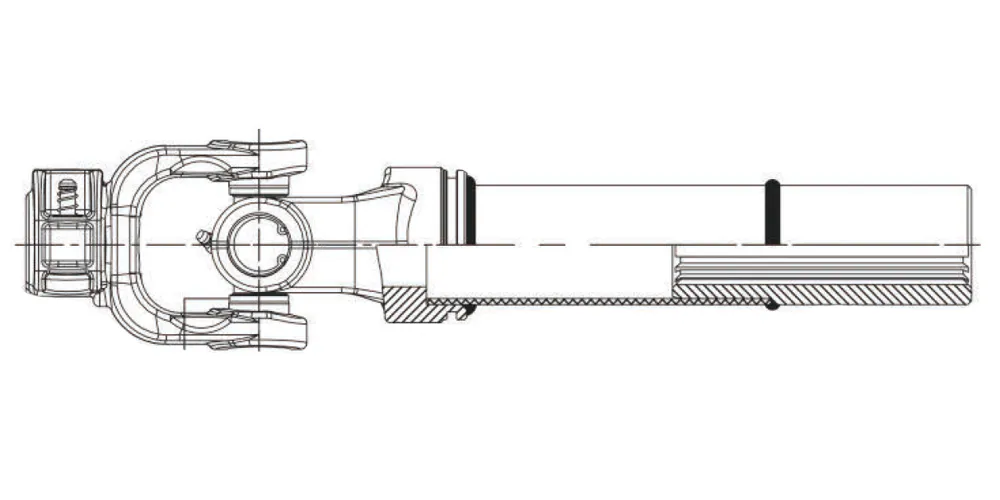
Rotational power from the tractor enters through the input yoke, which connects to the tractor's PTO stub via a 1 3/8 Z6 or 1 3/4 Z20 spline depending on the G Series model and the tractor's PTO class. The input yoke drives through a heavy-duty cross-journal into the telescoping inner tube, which slides within the outer tube to accommodate the length variation that occurs as the tractor manoeuvres. The outer tube carries power through the output cross-joint into the output yoke, which connects to the implement gearbox input stub. The double-cross-joint arrangement — one at each end — allows the shaft to transmit torque smoothly at working angles of up to approximately 25 degrees at each joint, cancelling the velocity irregularity that a single joint would introduce at operating angles above about 5 degrees.
At the torque levels of the upper G Series models — the G7 at 970 Nm, the G8 at 1,240 Nm, and the G50 at 2,095 Nm (all at 540 rpm) — the cross-journal needle roller bearings, yoke bores, and tube wall sections carry substantially higher stresses than in lighter-duty designs. The G Series addresses this through progressively larger cross-journal diameters and bearing cup dimensions from model to model, heavier tube wall thicknesses in the telescoping profile, and greater spline engagement length in both the input yoke connection and the telescoping tube profile. These are the engineering differences that separate a correctly rated tractor PTO drive shaft from an underspecified one at high-power operation, and they are reflected in cross-journal fatigue life calculations that are reviewed against each model's MP peak torque rating during design validation.
The full-coverage plastic safety guard encloses the entire rotating assembly — input yoke, cross-joints, telescoping tube body, and output yoke — while remaining stationary through bearing ring friction contact at each end. This guard is not merely a regulatory requirement; it is also the primary barrier preventing crop debris, soil, and stones from packing into the telescoping profile bore, which would impede the axial sliding function and eventually cause the shaft to seize at a fixed length — a failure mode that then stresses the tractor PTO stub and implement input bearings as the hitch geometry changes during work.
4. Material Specification & Construction Detail
The material and manufacturing decisions in the G Series pto shaft are made against a higher performance target than the lighter L Series — the G50's 3,700 Nm peak torque rating is approaching the torque output of some industrial gearboxes, and the cross-joint and tube assemblies must be sized and manufactured accordingly. Every critical dimension in the G Series pto shaft assembly is validated against the MP value, not just the operating torque, which means the structure is sized for the worst-case shock event the shaft is expected to survive, not just its steady-state running condition.
Cross-joint journals in the G Series are precision-forged from low-alloy carburising steel (20CrMnTi, 18CrMo4, or equivalent grade) and vacuum or gas carburised to a surface hardness of 58–62 HRC with a core hardness in the range of 32–42 HRC. Larger journal diameters in the upper models (G7 and above) use correspondingly larger needle roller bearing cups with a greater needle complement, increasing the load-bearing area proportionally to the higher torque requirements. Bearing cups are press-fitted to controlled interference fits in the yoke bores, then retained by internal circlips. The grease seal at each bearing cup face is a lip seal or O-ring design selected for retention under the centrifugal forces generated at 540–1,000 rpm, as loss of lubricant retention in the cross-joint bearing cup is the single most common cause of premature needle roller failure in agricultural driveline applications.
Telescoping tubes in the G Series are formed from seamless drawn steel tubing with wall thicknesses that increase progressively through the model range from G2 to G50. The non-circular profile — typically star-profile or lemon-profile depending on the torque grade — is formed by cold-drawing or roll-forming to achieve a close but free-sliding fit between inner and outer tube. The internal bore of the outer tube and the external profile of the inner tube are coated with a factory-applied grease fill, and a grease nipple is provided for periodic field re-lubrication. Yoke forgings are medium-carbon or low-alloy steel, normalised or quenched-and-tempered to achieve toughness rather than maximum hardness, since yoke failures in service are almost always due to impact fracture rather than wear — a failure mode best addressed by ductile toughness, not surface hardness.
Safety guard tubes are injection-moulded polyethylene or polypropylene with UV stabilisation for outdoor service life. Guard end bearings — the rings that allow the guard to remain stationary while the shaft rotates — are wear-resistant nylon or UHMWPE, chosen for low friction and resistance to grit contamination. For the upper G Series models pto shaft, the guard end bearing design incorporates a labyrinth seal feature that helps exclude soil from the bearing bore without requiring a precision-fit seal that would add drag and cost.
5. Application Scenarios of PTO Shaft
The G Series covers the upper range of agricultural and industrial PTOシャフト demand, with the G50's 119 kW / 2,095 Nm rating placing it well into commercial and light industrial territory. The scenarios below represent the primary deployment contexts across the nine model range, with the relevant G Series model indicated for each application.
Large Round & Square Balers (G5–G7)
Large-format round balers (5x5 and 5x6) and high-capacity square balers in the 70–100 HP tractor class are among the highest-torque-demand agricultural implements in common use. Bale chamber plugging, high-density crop, and multi-layer hay winding create torque spikes that exceed the steady-state operating value by large multiples. The G5 through G7 — with MP values of 1,050 Nm to 1,800 Nm — provide the peak torque headroom that large baler drives in the US midwest, Canadian prairies, and northern Europe require. For dealers stocking 交換用PTOシャフト units for baler servicing, the G Series pto shaft provides a reliable cross-reference for OEM driveline specifications across multiple baler brands.
Heavy Rotary Mulchers & Flail Mowers (G6–G8)
Trailed and mounted heavy flail mowers and drum mulchers used for land clearance, invasive species control, and roadside vegetation management on 60–90 HP tractors require a PTO駆動シャフト sized for both sustained high torque and frequent severe shock events from hardwood impact. The G6 at 830 Nm and G8 at 1,240 Nm (both at 540 rpm) with MP ratings of 1,450 Nm and 2,250 Nm respectively cover this application range in Australia, South America, and the Mediterranean region where scrub and brush clearance is a significant commercial contracting sector. The robust cross-joint construction of these G Series models translates directly into extended service intervals between cross-journal replacement.
Industrial & Construction PTO Drives (G7–G50)
Construction PTO driveshafts and industrial power take-off applications place different demands on the driveline than agricultural field work: longer continuous duty cycles, more predictable (but sustained high) torque loads, and a requirement for reliable performance over multiple years rather than seasonal cycles. The G7 through G50 serve tractor-driven concrete mixers, road compactors, cable-laying equipment, hydraulic power packs, and portable compressors where the PTOドライブシャフト must handle sustained rated power without the peaks-and-troughs cycle of agricultural use. For construction and civil engineering applications in the EU, UK, and North America, ISO 9001:2015 documentation from a certified construction PTO driveshafts manufacturer is increasingly required in procurement specifications.
Large Irrigation & Slurry Pump Drives (G5–G8)
High-volume irrigation pumps and large-capacity slurry handling equipment on 50–90 HP tractors — common in Dutch, Danish, and US midwest dairy and arable farming — require a トラクターPTOドライブシャフト that handles sustained steady-state torque at both 540 and 1,000 rpm PTO speeds. Pump drives tend to have lower shock loading than cutting implements but longer continuous operating durations per session. The G5 through G8 with their progressive cross-joint sizing and generous tube wall sections are well suited to this duty cycle, and the dual-speed torque data makes it straightforward to specify the correct model whether the tractor PTO operates at the traditional 540 rpm or the higher 1,000 rpm speed common on modern large-frame tractors.
Tractor-Driven Generator Sets (G8–G50)
Emergency and standby generator sets driven by tractor PTO are widely used on large farms across the UK, Germany, Scandinavia, and North America for power backup during grid outages. Generator drives impose a sustained, high steady-state torque with occasional step-load increases when large electrical loads are switched on suddenly. The G8 at 70 kW / 1,240 Nm through G50 at 119 kW / 2,095 Nm (all at 540 rpm) cover the tractor power class used in these applications. A correctly sized PTOシャフトアセンブリ for a generator drive also needs to accommodate slight misalignment between the generator input and the tractor PTO stub — a requirement the double-cross-joint design handles naturally across angular ranges that would bind a rigid coupling.
Custom OEM Integration (All G Series Models)
Machine builders in Italy, Germany, Turkey, Brazil, South Korea, and Australia source heavy-duty PTOドライブシャフト assemblies for integration into specialist implements, industrial machinery, and agricultural equipment under their own brand. The EP-G Series pto shaft is available with custom compressed and extended lengths, alternative input yoke connection profiles (1 3/4 Z20 for Category 2 PTO, metric splines for specific European tractor models), integrated friction or shear-bolt overload couplers, and custom guard colours for private-label supply. Full DXF dimensional drawings, material certification, and ISO 9001:2015 production documentation are provided with all OEM supply programmes. We are an experienced pto driveshafts manufacturer supporting OEM buyers who need consistent quality and complete technical documentation across high-volume production runs.
6. Regulatory & Compliance Overview by Region
A high-power PTOシャフト in the G Series torque range is subject to agricultural and industrial machinery safety regulations in every significant market. The regulatory requirements differ in detail between jurisdictions but are consistent in their fundamental requirement: PTO shafts must be guarded such that entanglement with rotating components is prevented, and the shaft must be sized for the power and torque demands of the application. Non-compliance is not merely a regulatory risk — it is a direct safety risk, as high-torque PTO entanglement incidents are invariably severe.
欧州連合
EN 12965 specifies PTO shaft guard design, test, and marking requirements for the EU market. The Machinery Directive 2006/42/EC (transitioning to EU Machinery Regulation (EU) 2023/1230 from January 2027) requires that PTO-driven machinery carrying CE marking includes a compliant PTO shaft guard as part of the technical file. EN ISO 500-1 specifies tractor PTO dimensions. For industrial applications of high-power G Series shafts, EN ISO 11684 (safety sign requirements) and relevant machinery-specific harmonised standards also apply.
イギリス
The UK Provision and Use of Work Equipment Regulations 1998 (PUWER) and the Machinery Regulations 2008 (SI 2008/1597) govern PTO shaft use and market placement in Great Britain. UKCA marking is required on PTO shafts placed on the GB market post-Brexit. The Health and Safety Executive (HSE) publishes specific agricultural PTO safety guidance (Agriculture Information Sheet AIS23) and enforces compliance through workplace inspections across agricultural and groundscare operations. Northern Ireland accepts CE-marked products under the Windsor Framework.
アメリカ合衆国とカナダ
ASABE Standard S203 (PTO dimensions and shaft specifications) and OSHA 29 CFR Part 1928 (agricultural machinery guarding) are the primary federal-level requirements. For industrial 建設用PTOドライブシャフト applications, OSHA 29 CFR Part 1910.219 (mechanical power transmission equipment) applies to workplace machinery. ANSI B11 machinery safety standards apply to industrial PTO equipment. State-level agricultural safety programmes — including those administered through the National Farm Medicine Center and regional agricultural extension offices — actively enforce PTO guard compliance as part of farm safety audit programmes.
オーストラリアとニュージーランド
Work Health and Safety (WHS) Model Regulations, Safe Work Australia's Code of Practice for Managing Risks of Plant in the Workplace, and Australian Standard AS 1762.2 govern PTO shaft requirements. State SafeWork bodies — including SafeWork NSW, WorkSafe Victoria, and Workplace Health and Safety Queensland — actively inspect PTO shaft guard compliance across agricultural workplaces. New Zealand's WorkSafe NZ enforcement under the Health and Safety at Work Act 2015 is particularly active in dairy and arable farming sectors where high-power PTO equipment is common. Both countries have documented multiple fatalities attributable to unguarded or inadequately guarded PTO shafts in recent years.
韓国と日本
Korea Occupational Safety and Health Agency (KOSHA) Guide M-12 covers agricultural machinery safety including PTO shaft requirements. Korean Industrial Standards (KS B 6052 series) reference ISO PTO shaft specifications. Japan's Labour Standards Act and the Industrial Safety and Health Act (ISHA) govern industrial PTO machinery guarding requirements through Article 101 (rotating shaft guarding). The Japan Agricultural Machinery Association (JAMA) issues guidance on PTO shaft selection and safety for agricultural applications. Both markets require ISO 9001:2015 supplier certification as a baseline procurement qualification for OEM agricultural machinery component supply.
ブラジルとラテンアメリカ
Brazil's NR-12 (Safety in Machinery and Equipment) under the Ministry of Labour governs industrial PTO shaft applications. ABNT NBR 16786 covers agricultural machinery safety. For construction and industrial applications using G Series shafts in Brazil, INMETRO certification may be required for certain product categories. Across other major Latin American markets including Argentina, Colombia, and Chile, ISO standards compliance and ISO 9001:2015 quality certification are the standard market access credentials for imported transmission components in both the agricultural and industrial sectors.
7. 対応製品 — 統合型ドライブトレイン供給
The EP-G Series PTOシャフト is one element in a complete power transmission system. Matching the driveshaft to a correctly rated implement gearbox and sourcing the u-joint replacement parts from the same supplier eliminates the specification uncertainty that causes premature drivetrain failures in high-power applications. The following companion products are designed and rated for use alongside the G Series pto shaft.
農業用ギアボックス
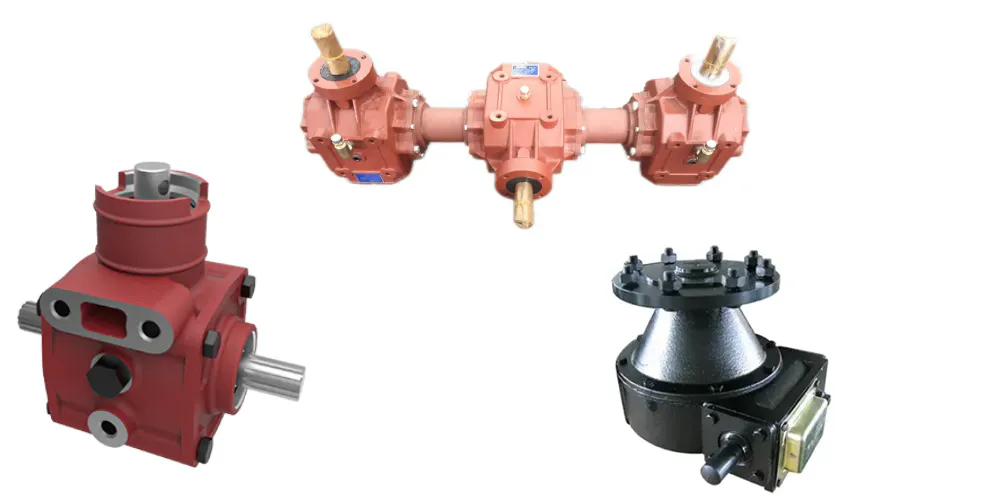
The G Series shaft connects the tractor PTO output to the implement's input gearbox. Our 農業用ギアボックス range — spanning lawn mower gearboxes, baler gearboxes, mulcher gearboxes, and high-power rotary mower drives — is designed and torque-rated for the power classes that the G Series serves. Sourcing both the PTO shaft and the driven gearbox from a single supplier means the torque ratings at the shaft-to-gearbox interface are documented as a matched pair, eliminating the specification mismatch risk that occurs when shaft and gearbox are specified independently from different catalogues. For OEM machine builders, this matched supply approach also simplifies the CE technical file — one supplier, one quality system, full documentation for both driveline components.
ユニバーサルジョイント
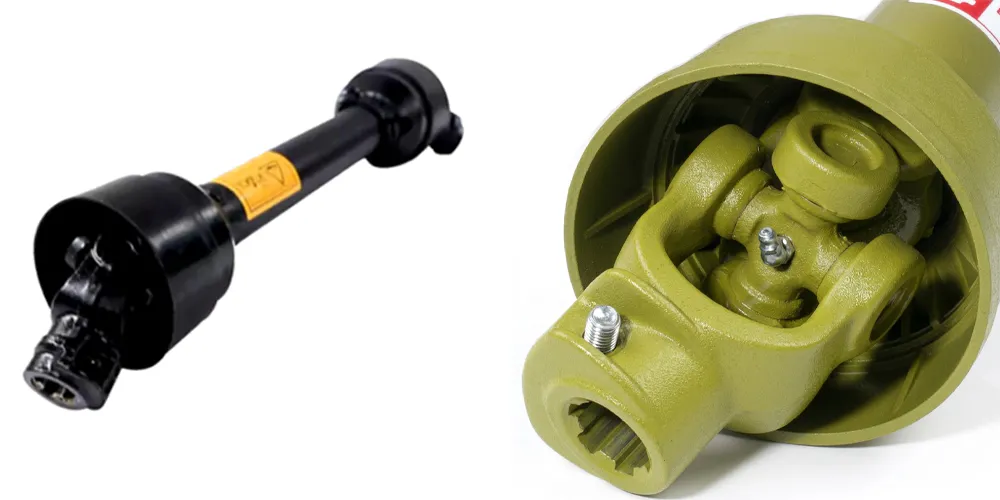
In high-torque G Series applications, the cross-journal universal joint is the highest-stress component in the assembly, and the one most likely to require replacement after extended high-load operation. A ユニバーサルジョイント that is dimensionally matched to the G Series cross-joint size allows field technicians to replace worn cross-journals without replacing the entire shaft — an important cost and lead-time advantage in agricultural and construction contexts where machines need to return to work quickly. Stocking the correct U joint for pto shaft in the right G Series journal size is best practice for dealers serving commercial contractors and OEM machine builders who rely on rapid parts availability to maintain machine availability across their fleets.
8. About Our Manufacturing Background
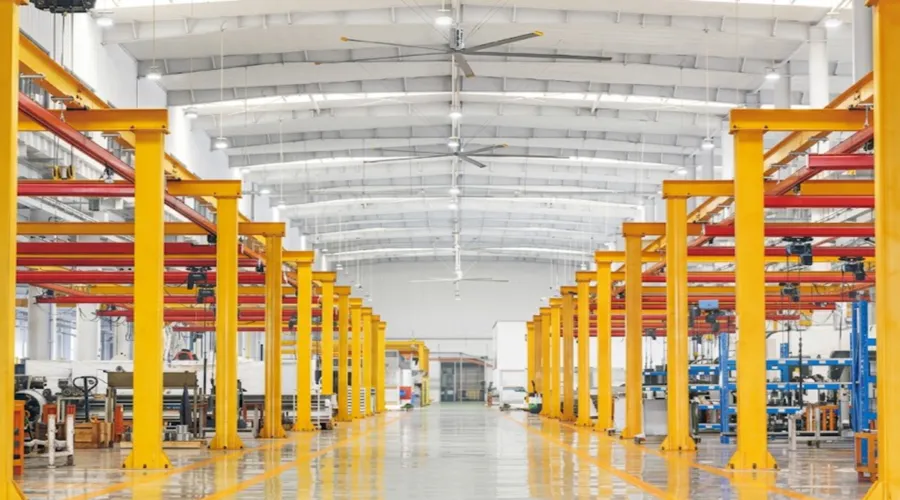
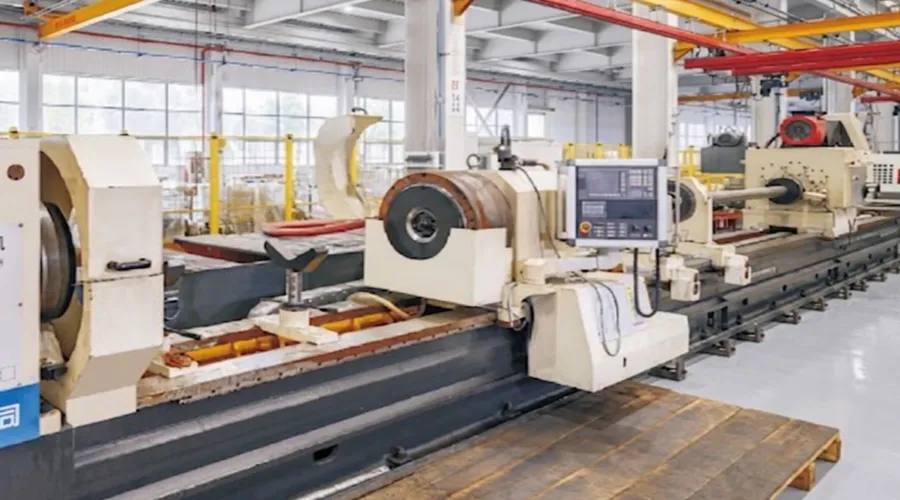
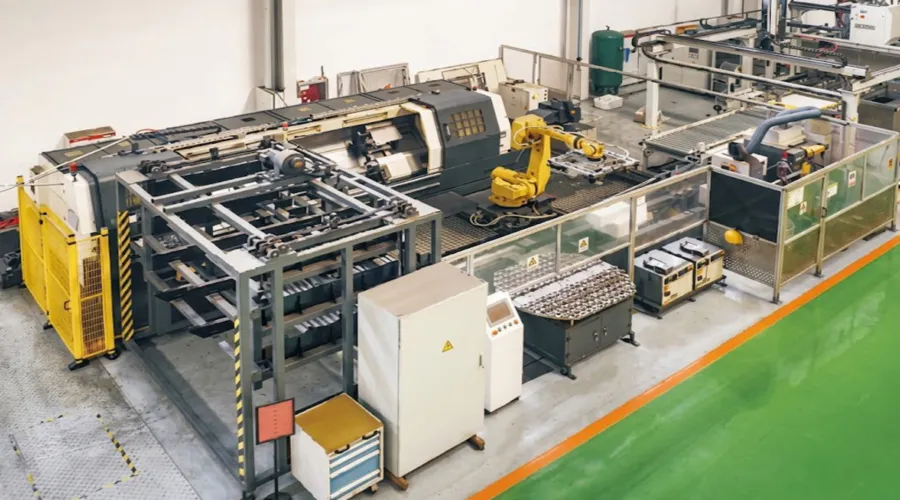
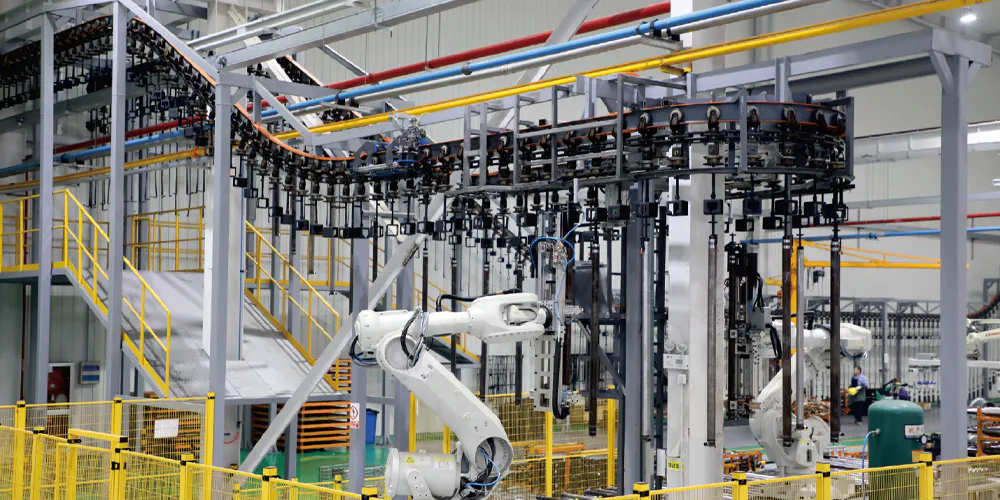
Over more than ten years in mechanical power transmission engineering, our production facility has developed deep expertise across the full range of agricultural and industrial driveline components. Our product scope includes 農業用ギアボックス of all types, worm gear reducers, planetary gear drives, PTO drive shafts, hydraulic cylinders, precision gear sets, chain drives, and electric motors — all designed and produced under a single quality management system. This integrated product scope means our engineers can support buyers who are specifying a complete drivetrain, not just sourcing an individual shaft.
この施設には ISO 9001:2015認証, covering the full production process from raw material incoming inspection through machining, heat treatment, assembly, functional test, and outgoing inspection. Materials used in our housings and structural components span ductile iron, grey cast iron, cast steel, precision investment cast steel, and cast aluminium, with selection based on the load, weight, and thermal requirements of each application. For buyers requiring custom PTO driveshaft assembly solutions — modified shaft lengths, non-standard yoke connections, integrated overload couplers, or special guard configurations — our engineering team handles design and production on the same equipment and under the same documented procedures as our standard catalogue products. We serve pto driveshafts manufacturer requirements for OEM buyers in Europe, North America, Australia, South Korea, and Brazil with consistent quality and lead times across both catalogue and custom programmes.
ワークショップ
よくある質問
Q1. How do I select the correct EP-G Series PTO shaft model for a large square baler on a 90 HP tractor operating on a mixed cereal farm in Germany or France?
Start with the baler manufacturer's specified PTO shaft torque grade, which will be listed in the implement operator manual or parts catalogue. For a large square baler on a 90 HP tractor at 540 rpm PTO, you are typically in the G7 or G8 range — the G7 at 55 kW / 970 Nm operating and 1,800 Nm MP, or the G8 at 70 kW / 1,240 Nm operating and 2,250 Nm MP. If the baler manual does not specify a shaft series, take the tractor's PTO power output (in kW), apply the appropriate torque conversion for your PTO speed, then select the G Series model whose operating torque (Nm) column at your PTO speed is at or above that value. For high-density or variable-chamber balers where chamber plugging events are frequent, bias toward the next model up — the MP value headroom in the larger model better covers the shock torque multiples generated during a plugging event.
Q2. What are the different types of PTO shafts available for heavy-duty agricultural and construction use, and how does the EP-G Series compare to other options on the market in the UK and Ireland?
The main different types of pto shafts for heavy-duty use are: standard double-cross-joint telescoping shafts (such as the G Series), constant-velocity (CV) joint shafts used on high-angle applications like front-mounted implements, wide-angle joint shafts for specific mower attachments, and rigid half-shaft connections used in some close-coupled implement designs. For the majority of heavy agricultural and construction pto driveshaft applications in the UK and Ireland, the standard double-cross-joint design of the G Series pto shaft is the correct choice — it handles the angular range, length variation, and torque levels encountered in these applications, at a lower cost and with simpler maintenance than CV joint alternatives. The G Series pto shaft is competitively specified against equivalent OEM driveline shafts from European suppliers, with ISO 9001:2015 production quality and EN 12965 compliant guards as standard.
Q3. How do I size a PTO shaft correctly for a tractor-driven irrigation pump on an arable farm in the Netherlands or Belgium that operates at both 540 and 1,000 rpm PTO speeds?
Sizing a PTOシャフト for a pump drive that operates at both PTO speeds requires checking the shaft's performance at both speed columns in the torque table — do not simply select based on the 540 rpm column if the tractor will also run at 1,000 rpm. At 1,000 rpm, torque for a given power is lower (since Power = Torque x Speed), but the shaft speed is higher, which increases centrifugal stress in the telescoping profile and accelerates bearing wear in the cross-joints if the unit is not rated for that speed. The G Series dual-speed rating confirms that each model is tested and specified at both speeds. For a pump rated at 55 kW, check both columns: at 540 rpm the G7 (55 kW) fits; at 1,000 rpm the G7 delivers 87 kW, giving power headroom above the 55 kW requirement. That headroom at 1,000 rpm also means the shaft is running at a comfortable fraction of its torque limit, which extends cross-joint life at the higher shaft speed.
Q4. Where can a construction equipment dealer in South Korea or Australia source a certified construction PTO driveshaft supplier for ongoing OEM integration into a new tractor-powered hydraulic power pack range?
For a South Korean or Australian OEM machine builder needing a reliable construction PTO driveshafts supplier for ongoing production supply, the key qualification criteria are: ISO 9001:2015 certification covering the full production process; documented dimensional drawings for cross-reference and integration design; traceable material certification for cross-joint and tube steel; and flexible custom length and yoke configuration capability for OEM-specific requirements. We satisfy all four criteria for the G Series pto shaft and provide a full OEM documentation package — including dimensional DXF files, material certificates, and production inspection records — as standard with our OEM supply programmes. For South Korean buyers, we can support KC compliance documentation where required. Contact our export team with your hydraulic power pack PTO input specifications (torque, speed, and shaft length range) to initiate a custom specification review.
Q5. What is the correct lubrication and maintenance schedule for a G Series PTO shaft on a high-use construction site in Brazil or Argentina operating in dusty, high-temperature conditions?
In dusty, high-temperature construction site environments, lubrication intervals for a G Series PTOドライブシャフト should be shortened compared to clean agricultural field conditions. Re-grease the cross-joint bearing cups every 8–10 operating hours (rather than the standard 50-hour agricultural interval) when operating in airborne dust concentrations above normal agricultural levels. Use an EP (extreme pressure) lithium-complex or calcium-sulfonate grease rated for the ambient temperature range — in Argentine or Brazilian summer conditions above 40°C, a high-temperature grease formulation rated to at least 160°C is preferred. Re-lubricate the telescoping tube profile every 50 hours by injecting grease through the profile grease nipple until new grease emerges from both ends of the sliding contact zone. Inspect the guard end bearing condition every 3 months — dust ingress into the guard bearing accelerates wear and allows guard vibration that can damage the guard tube against the shaft body.
Q6. When should a farm machinery dealer in Canada or the US midwest consider recommending the G50 PTO shaft over the G8 for a customer running a large tractor-driven generator set during winter power outages?
The G50 at 119 kW / 2,095 Nm operating torque at 540 rpm is appropriate when the generator set's rated kVA output requires more than approximately 95–100 kW of input shaft power from the tractor PTO (since the G8 is rated at 70 kW at 540 rpm). If the customer is running a 100 kVA generator at a power factor of approximately 0.8 and mechanical efficiency of around 95%, the PTO input requirement approaches 85–90 kW — within the G8's rating but leaving limited headroom for cold-start inrush current events, which create torque spikes at the generator input shaft. For generator sets above 100 kVA, or where the customer's specific load profile includes large motor starting loads, the G50's additional torque capacity provides the safety margin that prevents shaft and coupling overload during transient events. For Canadian winters specifically, cold-start conditions with stiff lubricants in the shaft joints also temporarily increase drag, consuming some of the normal operating torque margin in the first minutes after startup.
Ready to Specify the EP-G Series PTO Shaft for Your Application?
Our engineering team provides torque grade selection guidance, custom length and yoke configuration quotations, OEM cross-reference checks, and full production documentation. We serve buyers across the EU, UK, North America, Australia, South Korea, Brazil, and South-East Asia.
編集者: PXY