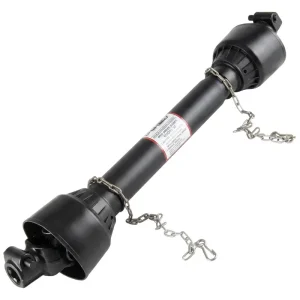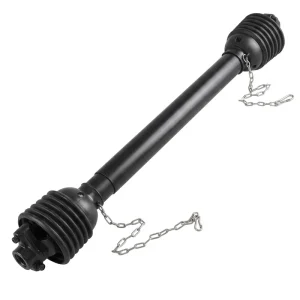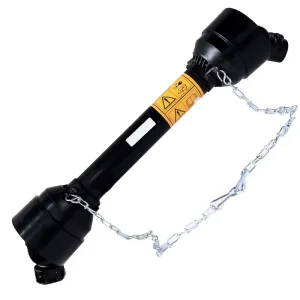
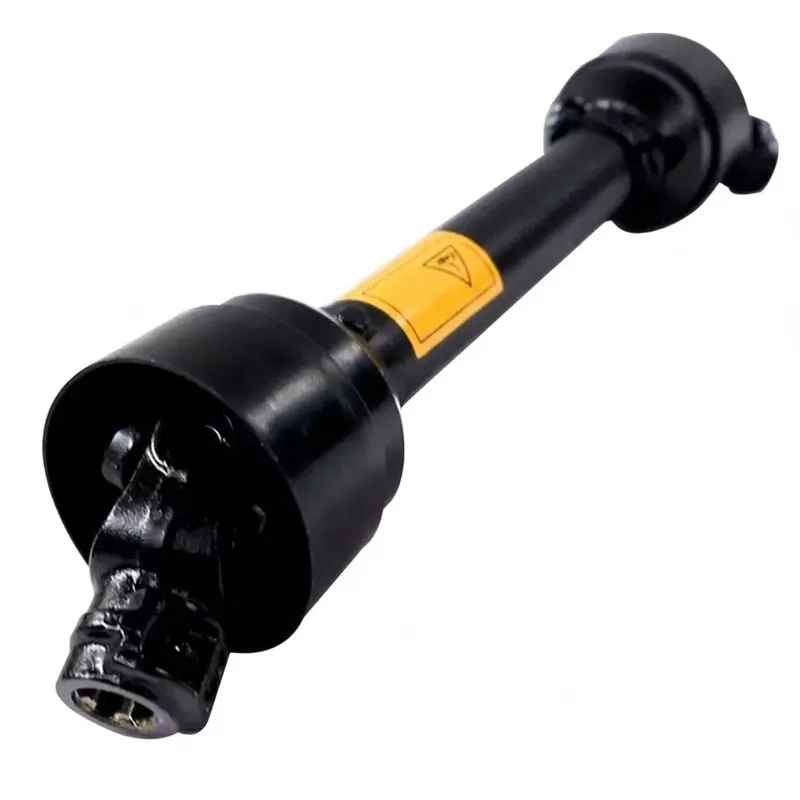
EP-PTO Shaft for New Holland BigBaler Square Balers 330 & 340
The EP-PTO Shaft is a precision-engineered, OEM-compatible replacement for New Holland BigBaler 330 and 340 square balers. It is available in three complete assembly configurations (CS8R121U2WR7000, CS8R121U2WR8000, CH8R121U2WR0000) and four matched yoke options, ensuring compatibility with a wide range of tractor PTO stubs. Its double-cross-joint and telescoping tube design are built to handle the high shock loads and variable working lengths inherent to large square baler operation. Manufactured under an ISO 9001:2015 quality system and supplied with a CE-compliant safety guard, this shaft delivers reliable performance and operator safety.
EP-PTO Shaft for New Holland BigBaler Square Balers 330 & 340
The EP-PTO Shaft for New Holland BigBaler 330 and 340 is a precision-engineered replacement and OEM-compatible PTO shaft assembly designed specifically for the high-torque demands of large-format square baler operation. New Holland BigBaler 330 and BigBaler 340 machines are among the most productive large square balers in service globally — covering wide seasonal workloads across North American grain belts, Australian cereal farms, and European arable operations. A correctly specified and properly rated tractor PTO shaft connecting the tractor to the baler input gearbox is one of the highest-stress components in the entire machine drivetrain, subject to the repeated shock torque spikes that occur every time the baler plunger cycles, every time a flake of crop is compressed, and every time the knotters fire. This product covers three assembly configurations — CAT5/540 with 1.375-6 spline, CAT5/1000 with 1.375-21 spline, and CAT5/1000 with 1.375-20 spline — together with four matched yoke part numbers covering all standard tractor PTO stub interfaces used with these balers. Whether you are sourcing a replacement PTO shaft for a machine already in service or specifying a new driveline for a rebuilt baler, the EP series gives you the OEM-matched interface with documented ISO 9001:2015 production quality.
PTO Shaft Assembly — Part Number Reference
The table below lists all three complete PTO shaft assembly configurations for the New Holland BigBaler 330 and 340, cross-referenced by PTO category, speed, and tractor spline interface. Specify the assembly part number that matches your tractor's PTO stub configuration when ordering. If the tractor's PTO stub specification is unknown, the spline diameter and count can be read from the stub itself or confirmed from the tractor operator manual.
| PTO Category / RPM | Tractor Spline Specification | Assembly Part Number |
|---|---|---|
| CAT5 / 540 rpm | 1.375-6 | CS8R121U2WR7000 |
| CAT5 / 1,000 rpm | 1.375-21 | CS8R121U2WR8000 |
| CAT5 / 1,000 rpm | 1.375-20 | CH8R121U2WR0000 |
PTO Shaft Yokes — Individual Component Reference
The four yoke part numbers listed below cover the individual tractor-side and implement-side yoke components used within the BigBaler 330/340 PTO shaft assemblies. All four carry a 68 mm bore and 133 mm c-e (centre-to-end) length, with splined construction as standard. These yoke part numbers are also useful for field replacement of a single worn or damaged yoke without replacing the complete assembly — an important cost management option for fleet operators running multiple machines across extended harvesting seasons.
| Part Number | Shaft Diameter (in) | No. of Splines | Bore (mm) | c-e Length (mm) | Type |
|---|---|---|---|---|---|
| 5090L0360 | 1.375 | 6 | 68 | 133 | Splined |
| 5090L3760 | 1.375 | 21 | 68 | 133 | Splined |
| 5090L0460 | 1.750 | 6 | 68 | 133 | Splined |
| 5090L3860 | 1.750 | 20 | 68 | 133 | Splined |
How the BigBaler 330/340 PTO Shaft System Works
Understanding the operating principle of a large square baler PTO drive shaft helps clarify why the selection of the right assembly and yoke specification matters so much in practice. The New Holland BigBaler 330 and 340 are flywheel-assisted machines — the tractor PTO drives a heavy flywheel through the input gearbox, and the flywheel in turn drives the plunger crank mechanism. This flywheel design means the instantaneous torque demand at the PTO shaft input varies cyclically and significantly: low when the plunger is travelling freely, and sharply elevated when the plunger is compressing a dense flake of straw or hay against the already-formed bale in the chamber.
The tractor pto drive shaft connecting the tractor PTO stub to the baler input gearbox must transmit this variable, shock-loaded torque across a working length that changes continuously as the tractor moves through headlands, turns, and ground contour variations. The double-cross-joint and telescoping tube design of the EP assembly addresses both requirements simultaneously: the two cross-joints at each end of the shaft accommodate angular misalignment between the tractor PTO centreline and the baler input centreline, while the telescoping tube allows the overall shaft length to vary freely as the hitch geometry changes.
The spline interface at the tractor end — 1.375-6, 1.375-21, or 1.375-20 depending on the tractor model and PTO category — locks the shaft input yoke to the tractor PTO stub through a spring-loaded locking collar. The locking mechanism prevents the yoke from pulling free during operation while allowing quick manual release for disconnection. The baler-side connection interfaces with the baler input gearbox stub through the appropriate yoke bore (68 mm, 133 mm c-e) and retaining arrangement. The complete pto shaft assembly rotates within the outer plastic safety guard, which is held stationary by friction against the bearing rings at each end — protecting the operator from entanglement with the rotating components while the baler is in operation.
Five Key Product Advantages
The EP series covers all three PTO shaft assembly part numbers used with the New Holland BigBaler 330 and 340 across different tractor generations and regional configurations: CS8R121U2WR7000 for CAT5/540 with 1.375-6 spline, CS8R121U2WR8000 for CAT5/1000 with 1.375-21 spline, and CH8R121U2WR0000 for CAT5/1000 with 1.375-20 spline. This complete coverage means a single supplier relationship provides the right pto driveshaft regardless of which tractor model your customer is running with the BigBaler — eliminating the sourcing difficulty that arises when only one or two of the three configurations are available from a competitor's catalogue.
Four PTO shaft parts yoke specifications — part numbers 5090L0360, 5090L3760, 5090L0460, and 5090L3860 — cover the 1.375 and 1.750 diameter stubs with 6, 20, and 21 spline counts in all combinations encountered on tractors paired with the BigBaler 330 and 340. Each yoke carries a 68 mm bore and 133 mm c-e (centre-to-end) length, and all are of splined construction. Stocking all four yoke part numbers alongside the three assembly numbers gives dealers a complete supply capability for every BigBaler 330/340 PTO shaft demand they will encounter — from new machine commissioning to mid-season breakdown replacements.
The New Holland BigBaler 330 and 340 are high-throughput machines that generate intense cyclic torque spikes at the PTO input with every plunger stroke — typically at 38–42 strokes per minute at rated capacity. A tractor pto shaft for this application must be capable of handling not just the continuous operating torque but the peak shock torque during dense crop compression, knotting mechanism actuation, and crop flow surges. The EP series cross-joint and telescoping tube assemblies are sized for this duty cycle, with cross-journal materials and bearing cup specifications chosen to resist the fretting wear and brinelling that cyclic shock loading accelerates in under-specified shafts on baler drives.
Every EP assembly is supplied with a complete plastic safety guard meeting EN 12965 requirements, including guard tubes, end bearing rings, and retaining chains. For BigBaler operators in EU and UK markets, this is not merely a best practice — it is a legal requirement under the Machinery Directive / Machinery Regulation and the UK PUWER 1998 regulations, enforced through farm inspection programmes by HSE and equivalent EU member state authorities. Including the guard as standard with every pto shaft assembly ensures the replacement unit is immediately ready for legal operation rather than requiring a separate guard sourcing exercise that can cause delay during urgent harvest-period replacements.
Cross-reference to OEM part numbers is only useful if the replacement part matches the OEM specification dimensionally and in material performance. ISO 9001:2015 quality management covers every production step from incoming material inspection through yoke bore machining, spline cutting, cross-journal heat treatment verification, and assembly run-in — ensuring the part number cross-reference holds in practice, not just on paper. For dealers stocking the EP series for BigBaler service customers, this consistency means a unit pulled from stock will fit without modification and perform to the same service life expectations as the OEM original.
Understanding the Parts of a PTO Shaft
A complete PTO shaft assembly is made up of several interdependent components, and understanding each one helps operators and service technicians make better decisions about maintenance, replacement priorities, and safety. The following describes the key pto shaft parts in the BigBaler 330/340 application.
Internal Yoke (Drive End)
Located at both ends of the shaft, the internal yoke is welded to the telescoping inner tube and connects to the cross-journal at each end. It provides the structural connection between the telescoping body of the shaft and the universal joint. On the BigBaler 330/340 application, the tractor-side internal yoke carries the splined bore that engages the tractor PTO stub — 1.375 or 1.750 diameter, with 6, 20, or 21 splines depending on configuration.
Universal Joint (Cross-Journal)
The pto shaft u joint is the component most subject to wear in a large square baler driveline. Located at both ends of the shaft, each cross-journal must accommodate angular misalignment between the tractor and baler while transmitting the cyclic shock torque of the plunger drive. Needle roller bearings in each bearing cup of the cross-journal are the highest-frequency wear item in the complete shaft assembly, and their condition should be checked at each seasonal service interval.
External Yoke (Implement End)
The external yoke has the characteristic Y-shape with a female bore that accepts the cross-journal trunnion and retains the bearing cups. On the implement side, the external yoke connects to the baler input gearbox stub. The 68 mm bore and 133 mm c-e length are consistent across all four yoke part numbers in the BigBaler 330/340 range, simplifying the dimensioning of the baler-side connection point.
Safety Chain
The safety chains secure the outer plastic guard tube to the tractor and implement, preventing the guard from rotating with the shaft. Without properly attached safety chains, the guard can begin to co-rotate with the shaft — first obscuring the fact that the shaft is turning, and eventually creating an entanglement hazard. EN 12965 in Europe and ASABE S203 in North America both specify minimum chain retention requirements for PTO shaft guards. Each EP assembly is supplied with chains meeting these requirements.
Safety Shield (Guard Tube)
The full-coverage plastic safety shield encloses the entire rotating shaft body, cross-joints, and telescoping section. Guard material is UV-stabilised polyethylene or polypropylene rated for outdoor agricultural use. The guard end bearing rings allow the guard to remain stationary while the shaft rotates inside it. The shield must be intact and correctly fitted before any PTO-driven operation — operating without the shield in place is both a legal violation in most jurisdictions and a direct entanglement risk to the operator and bystanders.
Telescoping Inner and Outer Tubes
The telescoping pto shaft tubes allow the overall shaft length to vary as the tractor-to-baler hitch geometry changes during headland turns and field undulations. The non-circular tube profile — star or lemon cross-section — transmits torque while allowing free axial sliding. At least one-third overlap between inner and outer tubes must be maintained at all times during operation; a shaft that is too long will bottom out and create a rigid connection that can damage the tractor PTO stub, the baler gearbox input, or both.
PTO Shaft Types — Choosing the Right Configuration for BigBaler Applications
Understanding the different types of pto shafts available helps BigBaler operators and service technicians make the right replacement or upgrade decision. Three primary configurations exist, each suited to different operating conditions and protection requirements.
Slip Clutch PTO Shaft
A slip clutch integrated into the PTO shaft assembly allows the shaft to slip momentarily when a sudden overload occurs — for example, when the baler chamber becomes completely blocked with a tightly-packed slug of wet straw, or when the knotter mechanism jams and the plunger cannot complete its stroke. The clutch absorbs the energy of the sudden stop without transmitting it to the tractor PTO stub or the baler gearbox input. For BigBaler 330/340 operations in high-yield, variable-moisture crops, a slip clutch configuration significantly reduces the frequency of gearbox damage events that result from sudden drive arrest.
Shear Pin PTO Shaft
A shear pin configuration uses a sacrificial pin in the yoke assembly to protect the drivetrain from severe overloads. When the torque exceeds the pin's rated shear load, the pin breaks — disconnecting drive and preventing propagation of the overload torque into the gearbox or tractor PTO stub. The shear pin approach provides a defined, consistent protection threshold and is the preferred overload protection method for applications where the operator can quickly stop, replace the pin, and resume work. Pin replacement is faster and lower-cost than cross-journal replacement after a shock load failure in an unprotected shaft.
Non-Shear (Standard) PTO Shaft
The non-shear, standard yoke-to-yoke configuration transmits torque continuously without an integrated overload protection mechanism. This type is appropriate for baler applications where the machine's own flywheel and mechanical shear protection provides adequate overload management within the baler drivetrain, and where the operator's primary concern is maximum power transmission continuity. The CS8R and CH8R assemblies in the BigBaler 330/340 range are supplied in the standard non-shear configuration as OEM-matched specifications, with slip clutch or shear pin variants available as options for operators who want additional drivetrain protection.
Material Specification & Component Quality
The pto driveshaft parts in the BigBaler 330/340 EP series are manufactured to the material and dimensional standards required for sustained high-cycle baler drive service — a duty cycle that places more cumulative fatigue loading on the cross-joints than almost any other agricultural PTO application.
Cross-journal bodies are forged or turned from alloy case-hardening steel (20CrMnTi, 20CrMo, or equivalent) and carburised to achieve a surface hardness of 58–62 HRC with a ductile, tough core. The high surface hardness resists the fretting wear at needle roller contact lines that is the primary failure mechanism in baler PTO cross-joints; the tough core resists the bending fatigue at the trunnion root that develops under sustained cyclic loading at high stroke rates. Needle rollers are through-hardened precision-ground bearing quality, assembled with the correct complement count for the cross-joint size to distribute contact load evenly across the full roller length.
Yoke forgings in the 5090L series are medium-carbon or low-alloy steel, normalised or quenched-and-tempered for toughness rather than maximum hardness — yoke fractures in service are impact events, not wear events, and are best prevented by ductile material behaviour rather than high hardness. Splined bores are machined to DIN or ISO dimensional standards with surface finish and accuracy specified to ensure smooth engagement with the tractor PTO stub and repeatable seating depth. Telescoping tubes are seamless drawn steel with wall thickness appropriate for the torque rating of the assembly and the cyclic loading characteristic of baler drive use.
The full-coverage plastic guard is injection-moulded in UV-stabilised polyethylene. Guard end bearing rings are wear-resistant nylon or UHMWPE, selected for low running friction and resistance to grit and crop dust ingress during field operation. All safety chains supplied with each assembly meet the retention load requirements specified in EN 12965 and equivalent national standards.
Practical Guide: Sizing, Cutting, and Removing a BigBaler PTO Shaft
How to Measure PTO Shaft Length
To confirm the correct shaft length for the BigBaler 330/340 with your specific tractor, hitch the baler to the tractor in the standard working configuration and lower the drawbar or hitch to the typical field position. Disconnect the existing shaft and measure the straight-line distance from the tractor PTO stub face to the baler gearbox input stub face. This is the working length. The shaft must be able to compress to approximately 75% of this working length (to accommodate full-lock turns) and extend freely without the inner tube pulling completely out of the outer tube. As a practical rule, maintain at least one-third overlap between inner and outer tube at maximum extension. The tractor pto shaft length marked in the last digits of the part number (e.g. "27" in part number 14006127) refers to the tip-to-tip measurement of the assembled shaft before any cutting.
How to Cut a PTO Shaft to Length
If the standard-length assembly is too long for the tractor-to-baler distance, the shaft can be shortened by cutting. Separate the inner and outer tube sections, and cut equal amounts from both the inner tube and the outer tube to maintain balanced tube overlap in the final assembled position. Use a hacksaw or reciprocating saw — avoid angle grinders on the telescoping profile bore as sparks and heat can damage the internal surface finish needed for smooth sliding. Deburr the cut edge carefully and clean all metal swarf from the tube bore before reassembly. The guard tubes must be cut to the same reduced length as the shaft body. After cutting, reassemble and verify that at least one-third tube overlap is maintained at the fully compressed length and that the shaft extends freely to the working length without bottoming out. For guidance on how to shorten a pto shaft specific to BigBaler applications, our technical team can provide detailed instructions based on your tractor model and hitch dimensions.
How to Remove a PTO Shaft from a Tractor
Safe removal of the pto shaft from the tractor begins with: placing the transmission in PARK, engaging the parking brake, switching off the ignition, and confirming the engine has stopped — do not work on or near the PTO shaft while any residual rotation is possible. Facing the rear of the tractor, locate the tractor-side yoke where it engages the PTO stub. Reach under the safety guard, locate the spring-loaded locking collar or push-button on the yoke, and press or pull it to release the locking mechanism. Shake the yoke gently while pulling rearward until it separates from the PTO stub splines. Disengage the safety chains from the tractor. The baler-side connection is released at the baler gearbox input by the same locking mechanism. Never attempt to separate the shaft while the tractor engine is running or while the PTO is engaged. Once separated, store the shaft horizontally to prevent the telescoping sections from extending under gravity.
Application Scenarios
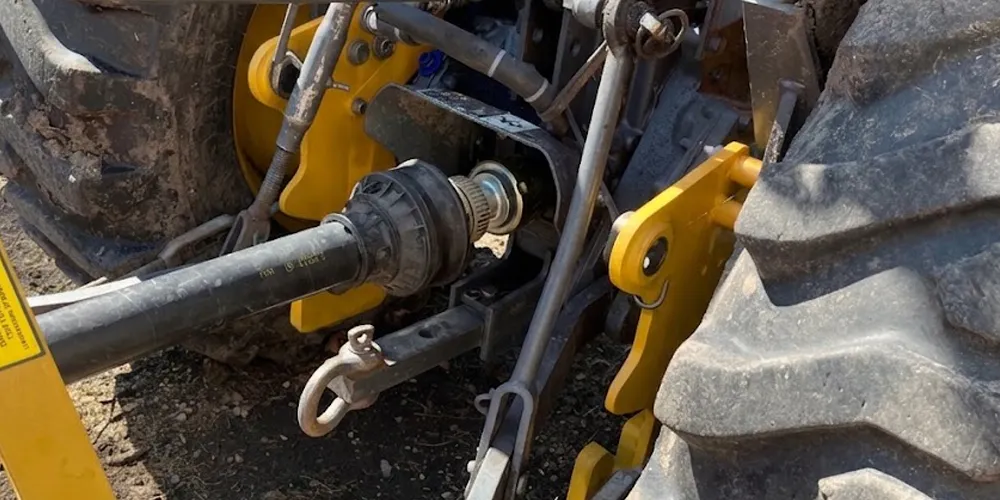
The EP-PTO Shaft for New Holland BigBaler 330 and 340 is specifically designed for large square baler drive applications, but the pto shafts for farm equipment in the same family serve related high-torque agricultural applications. The following scenarios illustrate the contexts in which operators source this product.
Wheat & Barley Straw Baling — UK, France & Germany
The BigBaler 330 and 340 are extensively used for wheat and barley straw baling following combine harvest across the English and French cereal belts and the German grain-producing regions. High-output baling under time pressure — with contractors working through limited weather windows to bale and clear straw before the next rotation — places maximum sustained load on the PTO driveline. Having the correct replacement pto shaft part number (CS8R121U2WR7000 or CS8R121U2WR8000 depending on tractor model) in dealer stock across the UK, France, and Germany is essential for keeping contractor fleets operational through peak harvest weeks.
Hay & Silage Baling — Ireland, New Zealand & Australia
Large square balers including the BigBaler 340 are used for high-density hay baling on large pastoral properties in Australia and New Zealand, and for high-quality hay and silage bales on Irish dairy farms. The variable moisture content and dense material properties of these crops generate some of the highest peak torque demands encountered in baler operation. A correctly rated and properly maintained tractor pto driveshaft is the first line of defence against these torque spikes reaching the tractor PTO stub or the baler flywheel shaft — both of which are expensive to repair if damaged by an under-specified shaft failure.
Corn Stover & Soybean Residue Baling — US Midwest & Canada
Large square balers are widely used for corn stover and soybean residue collection across the US midwest and Canadian prairies, where baled residue is an increasingly important feedstock for biomass energy and bedding markets. Corn stover in particular is abrasive and high-volume, placing sustained load on the baler drivetrain across long daily operating windows. The CAT5/540 assembly CS8R121U2WR7000 suits older 540 rpm PTO tractors common in smaller operations, while CS8R121U2WR8000 and CH8R121U2WR0000 cover the 1,000 rpm PTO configurations of larger modern tractors typically used on high-volume stover collection contracts.
Reed & Energy Grass Baling — Netherlands, Poland & Baltic Region
Large square balers are the preferred format for energy grass and reed baling across the Netherlands, Poland, and the Baltic states, where biomass for combustion is a significant agricultural income stream. Reed and miscanthus crops are particularly demanding on PTO drivelines due to their dense, fibrous stems and the variable feed rates that occur when the baler encounters patches of tangled or lodged material. The high peak-to-average torque ratio in these crops makes a correctly specified pto shaft adapter and overload protection arrangement an important element of the BigBaler 330/340 setup in this application context.
Dealer Aftermarket & Service Stock
Agricultural equipment dealers and service workshops in North America, Europe, Australia, and South Korea that service BigBaler 330 and 340 fleets need all three assembly part numbers and all four yoke part numbers in stock heading into the harvest season. A single mid-harvest PTO shaft failure on a contractor running multiple BigBalers can result in days of lost productivity and significant financial exposure against a fixed-price baling contract. Pre-season dealer stock of the EP series assemblies provides the service coverage that keeps contractor relationships solid and creates dealer loyalty through fast-response parts availability when it matters most.
PTO Shaft Safety — Essential Operating Guidelines
Safe operation of any pto shaft on a tractor begins before the engine starts. The following guidelines apply specifically to BigBaler 330/340 PTO shaft operation and should be observed by all operators, regardless of experience level.
Disengage before starting. Always ensure the tractor PTO is disengaged before starting the engine. If the PTO is engaged when the engine starts, the baler drivetrain — including the flywheel — will begin rotating immediately, creating an unexpected and dangerous sudden motion in the baler mechanism.
Never mix 540 rpm and 1,000 rpm equipment. Never connect a 540 rpm rated shaft or implement to a 1,000 rpm PTO output or vice versa. Operating at the wrong speed causes severe overloading of the shaft, gearbox, and all implement components within the drive path.
Guard must be in place and chains attached. The safety shield and retaining chains must be correctly fitted before any PTO-driven operation. A rotating unshielded shaft is a recognised major cause of fatal entanglement accidents across all agricultural markets. Periodic inspection of guard condition and chain attachment points should be part of every pre-season and mid-season service check.
Wear close-fitting clothing. Loose clothing, long hair, and jewellery are entanglement hazards around any rotating shaft. Wear snug-fitting work clothing, secure long hair, and remove any jewellery before working near an operating PTO shaft.
Never step over the shaft while running. Do not step over or reach across an operating PTO shaft. If the shaft separates during operation, disengage the PTO immediately and stop the power source before approaching the equipment.
Regional Regulatory Requirements for PTO Shaft Operation
Regulatory requirements for pto shaft use and PTO-driven machinery vary by jurisdiction. The following provides a summary of the key frameworks relevant to BigBaler 330/340 PTO shaft procurement and operation across major global markets.
European Union
EN 12965 specifies guard geometry, material, retention chain, and test requirements for PTO shaft assemblies in the EU. The EU Machinery Directive 2006/42/EC (transitioning to EU Machinery Regulation (EU) 2023/1230 from January 2027) requires PTO shaft guards meeting EN 12965 to be included in the CE technical file for any PTO-driven implement. EN ISO 500-1 specifies tractor PTO stub dimensions and spline profiles across all EU member states.
United Kingdom
The Provision and Use of Work Equipment Regulations 1998 (PUWER) require all PTO shafts used in the workplace to be adequately guarded. The Health and Safety Executive (HSE) enforces compliance through farm inspection programmes. BS EN 12965 remains the applicable technical standard for PTO shaft guards in Great Britain post-Brexit. UKCA marking is required for PTO shafts placed on the GB market.
United States & Canada
ASABE Standard S203 governs PTO shaft dimensions and safety requirements in North America. OSHA 29 CFR Part 1928 Subpart C requires PTO shaft guarding on agricultural equipment used by employees. State farm safety programmes — particularly those in major BigBaler-using states such as Iowa, Illinois, Indiana, Kansas, and Nebraska — actively enforce PTO guard compliance through farm safety audit programmes.
Australia & New Zealand
Safe Work Australia's Code of Practice for Managing Risks of Plant in the Workplace and Australian Standard AS 1762 series govern PTO shaft requirements. WorkSafe NZ enforces equivalent requirements under the Health and Safety at Work Act 2015. Both countries have documented PTO-related fatalities as a persistent category in agricultural workplace statistics, driving active enforcement focus on PTO shaft and guard compliance.
South Korea & Japan
KOSHA (Korea Occupational Safety and Health Agency) and the Rural Development Administration (RDA) govern PTO shaft requirements in South Korea. JIS B 9700 and JIS D 4401 apply in Japan. ISO 9001:2015 supplier certification is a standard qualification requirement for OEM agricultural machinery component procurement in both markets.
Compatible Products — Complete Drivetrain Supply
A BigBaler 330/340 pto shaft replacement is most effective when paired with correctly rated implement gearbox components and matched universal joints. Sourcing all elements of the driveline from a single supplier simplifies the cross-referencing process and ensures compatibility is documented rather than assumed.
Agricultural Gearbox
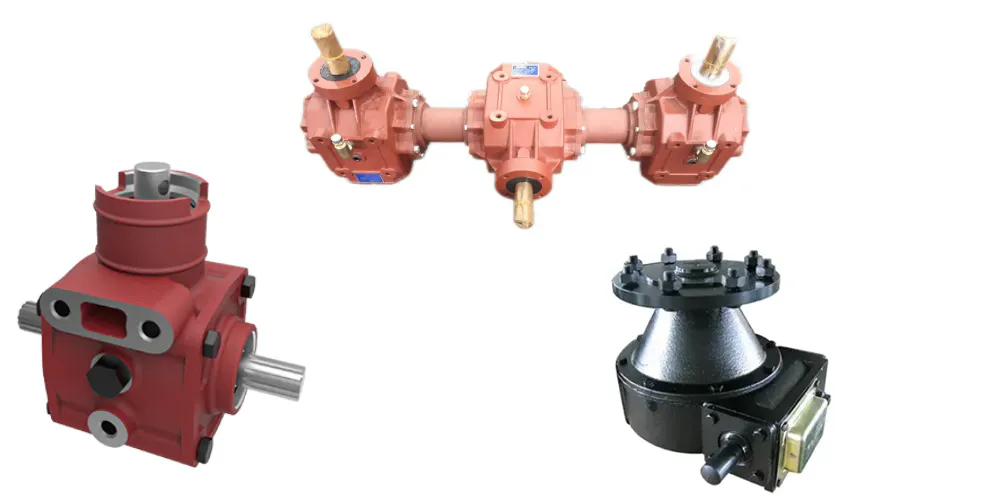
The EP-PTO Shaft drives the baler's input Agricultural Gearbox — and when the gearbox input bearings or seals fail concurrently with a PTO shaft replacement event, sourcing both from the same supplier streamlines the repair. Our agricultural gearbox range covers the torque classes and input interface specifications used across the BigBaler 330/340 driveline, with ISO 9001:2015 quality documentation available for both components. A complete drivetrain service from one source is the most efficient approach for service workshops running tight harvest-season maintenance schedules.
Universal Joint
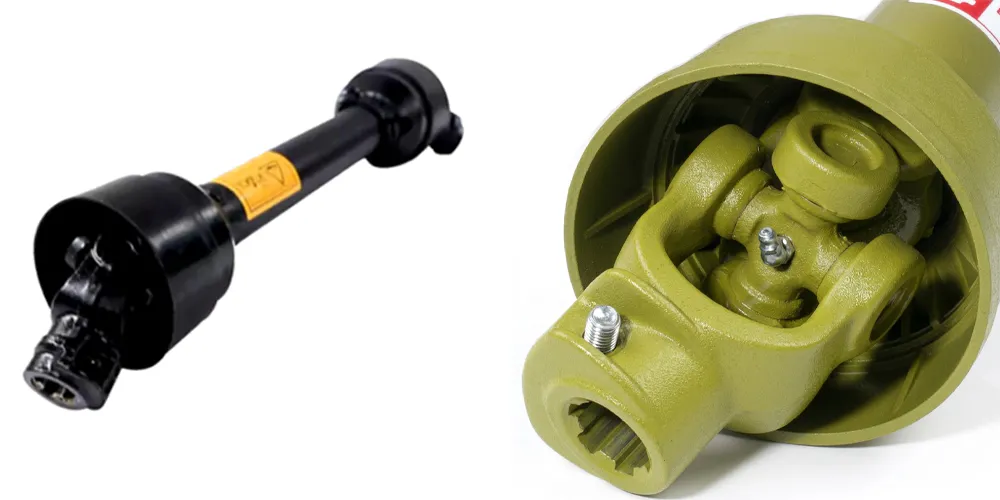
The cross-journal universal joint is the highest-wear component in the BigBaler PTO shaft assembly. A correctly sized replacement u joint for pto shaft matched to the EP assembly cross-journal dimensions allows worn cross-journals to be replaced without discarding the entire shaft assembly — a straightforward field repair that restores the shaft to full operating condition at a fraction of the cost of a complete replacement. Stocking matched universal joints alongside the three assembly part numbers and four yoke specifications gives dealers a complete BigBaler PTO driveline service capability in a single product family.
About Our Production Background
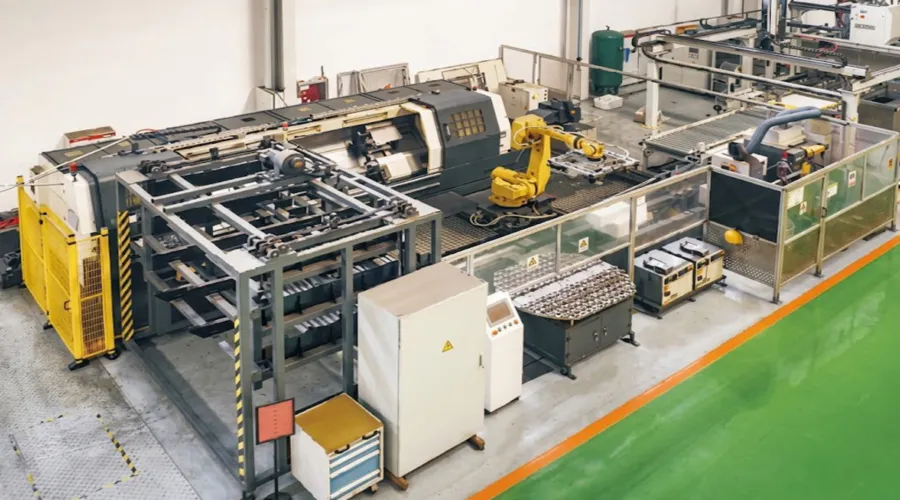
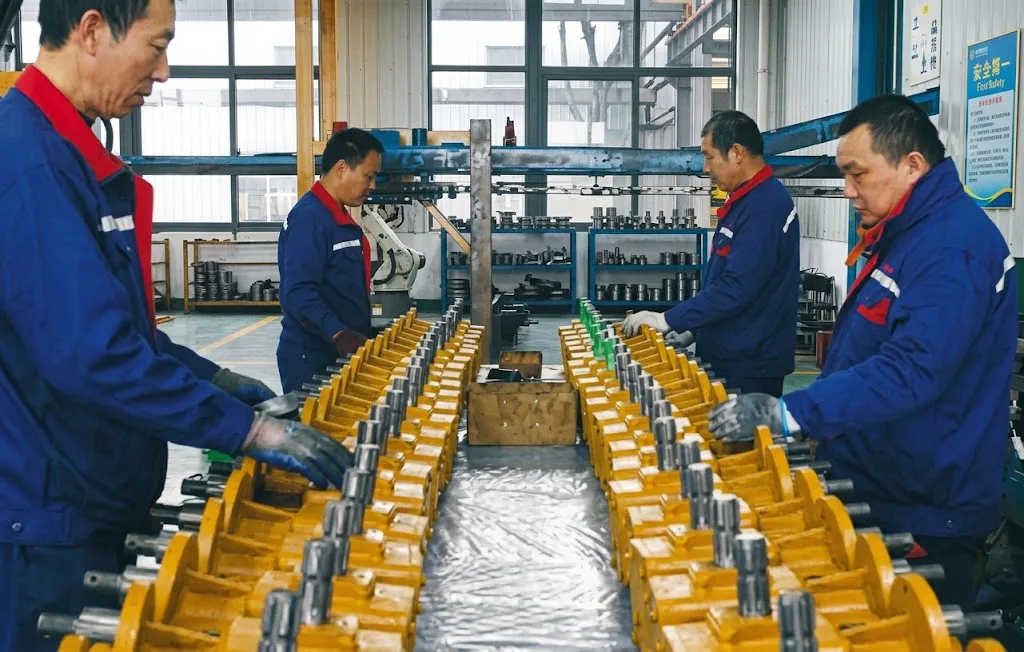
With more than ten years of specialist engineering in mechanical power transmission, our production facility manufactures a comprehensive range of agricultural gearboxes, worm gear reducers, planetary gear drives, PTO drive shafts, hydraulic cylinders, precision gear sets, chain drives, and electric motors — all within a single ISO 9001:2015 certified quality management system. This breadth of product scope reflects the demands of customers who need a single trusted supplier for multiple drivetrain components rather than managing separate supplier relationships for each part category.
Our engineering team handles custom pto shaft assembly requirements including modified lengths, alternative yoke spline configurations, integrated overload protection devices, and OEM-specific part marking — all produced on the same equipment and under the same documented procedures as our standard catalogue products. Housing and gear materials span ductile iron, cast iron, cast steel, precision investment cast steel, and cast aluminium, with material selection driven by the specific load environment and weight constraints of each application. For dealers, distributors, and OEM buyers sourcing the EP-PTO Shaft for New Holland BigBaler 330 and 340 applications, our technical team provides cross-reference confirmation, dimensional drawings in DXF format, and lead time estimates within one working day of inquiry.
Workshop


Frequently Asked Questions
Q1. How do I identify the correct PTO shaft part number for a New Holland BigBaler 330 or 340 when I don't know which tractor spline configuration my customer is running in the UK or Ireland?
The quickest way to confirm the correct assembly part number is to check the tractor's operator manual for the PTO stub specification — it will state the stub diameter (1.375 in or 1.750 in), the number of splines (6, 20, or 21), and the PTO speed class (540 rpm or 1,000 rpm). If the manual is not available, the spline count can be determined visually by counting the splines on the tractor's exposed PTO stub, and a vernier caliper confirms the stub diameter. Most modern tractors in the UK and Ireland used with BigBaler 330/340 machines run 1,000 rpm PTO at 1.375-21 spline (CS8R121U2WR8000) or 1.375-20 spline (CH8R121U2WR0000). Older or smaller tractors at 540 rpm use the 1.375-6 stub (CS8R121U2WR7000). Our technical team can also confirm the correct assembly from the tractor make and model if the stub specification is uncertain.
Q2. What is the recommended maintenance schedule for the PTO shaft on a New Holland BigBaler 340 running a high-volume wheat straw baling contract in Germany or France during harvest season?
For a high-volume baling contract running the BigBaler 340 across 10–12 hour daily shifts during German or French wheat harvest, the PTO shaft cross-joint bearing cups should be re-greased every 8 hours of operation — many contractors do this at fuel fill stops. The telescoping tube profile grease nipple should be serviced every 25–30 hours. At the end of each working day, inspect the safety shield for cracks or damage, check that both retaining chains are attached and intact, and look at the cross-journal seal faces for any discolouration or grease leakage that would indicate a failing bearing cup seal. A complete cross-journal inspection — rotating each end of the shaft by hand and feeling for roughness, clicking, or detectable play — should be carried out at the midpoint and end of each harvest campaign. Catching a cross-journal in the early stages of wear is substantially less expensive than dealing with a field failure during peak contract days.
Q3. Where can a farm machinery dealer in Iowa or Kansas source a reliable replacement PTO shaft for New Holland BigBaler 330 that covers both the 540 rpm and 1000 rpm tractor configurations without stocking multiple part numbers?
The reality for dealers serving BigBaler 330 customers in the US midwest is that they need all three assembly part numbers in stock, because the tractors paired with these balers span multiple generations and configurations — older 540 rpm PTO machines (1.375-6 spline, CS8R121U2WR7000) and modern 1,000 rpm PTO tractors in both 1.375-21 (CS8R121U2WR8000) and 1.375-20 (CH8R121U2WR0000) configurations. Stocking all three assemblies and all four yoke part numbers (5090L0360, 5090L3760, 5090L0460, 5090L3860) gives complete coverage of every BigBaler 330 PTO shaft demand the dealer will encounter across their territory. Contact our North America trade sales team to discuss stock-and-supply arrangements with short lead times for the harvest season window.
Q4. How do I safely remove a PTO shaft from a tractor when servicing a New Holland BigBaler 340 on an Australian cereal farm, and what safety precautions should I take?
Safe pto shaft removal on an Australian farm follows the same fundamental steps as anywhere: stop the tractor engine completely and confirm it is not running, engage the handbrake, and wait until all rotation has ceased before approaching the shaft. Moving to the rear of the tractor, reach under the plastic guard at the tractor-side yoke and press or pull the spring-loaded locking collar or push-button on the yoke to release the locking mechanism. Shake the yoke gently while pulling rearward to separate it from the PTO stub splines. Disengage the safety chain from the tractor bracket before allowing the shaft to drop. On the baler side, follow the same sequence at the baler gearbox input yoke. Store the shaft horizontally with the guard intact. In Australian summer conditions, the locking collar may be stiff from dust ingress — do not force it; apply penetrating lubricant and allow time for it to release rather than using a lever that could damage the yoke or collar.
Q5. What are the signs that the universal joint on a BigBaler 330 tractor PTO driveshaft needs replacement before starting the hay baling season in New Zealand or South Africa?
The early indicators of a worn universal joint for pto shaft on a BigBaler 330 driveline include: a clicking or knocking sound that occurs once per revolution of the shaft and is most noticeable when engaging or disengaging the PTO; visible wobble or vibration in the shaft body during rotation at low PTO speed; detectable play when rotating one yoke relative to the cross-journal by hand — more than 2–3 degrees of rotational free play suggests worn needle roller bearings; brown or orange grease weeping from the bearing cup seals; and resistance or roughness when manually moving the joint through its angular range. In New Zealand and South African hay baling contexts where the season is concentrated into a short spring-summer window, a pre-season cross-journal inspection in late winter — together with re-greasing and guard integrity check — gives enough lead time to source and fit replacement parts (yoke part numbers 5090L0360, 5090L3760, 5090L0460, or 5090L3860 as applicable) before the critical baling period begins.
Q6. How should a contractor in the Netherlands or Poland select between a slip clutch and a non-shear PTO shaft configuration for BigBaler 340 operation in high-yield energy grass and reed crops?
For BigBaler 340 operation in dense energy grass (miscanthus, giant reed) or reedbed crops in the Netherlands and Poland, a slip clutch configuration is generally the more appropriate choice over a standard non-shear pto shaft assembly. Energy grass and reed crops are prone to creating sudden chamber blockages when a bolus of tangled material enters the baler mouth together, producing torque spikes that can exceed the rated capacity of the input gearbox or the flywheel shaft couplings. A slip clutch rated just above the continuous operating torque — but below the destructive peak torque — absorbs these events without damage, allowing the operator to clear the blockage and resume baling without needing a field repair. In standard straw or hay crops with consistent feed rates, the non-shear CS8R and CH8R assemblies perform well without additional overload protection, as the crop variability is lower and sudden arrest events are less frequent. Discuss your specific crop type and tractor power rating with our technical team to confirm the right configuration before the season begins.
Ready to Order the EP-PTO Shaft for New Holland BigBaler 330/340?
Our team provides assembly part number confirmation, cross-reference verification, and full documentation for dealer and distributor stock orders. We serve buyers across the EU, UK, North America, Australia, New Zealand, South Korea, and beyond with competitive lead times year-round.
Editor: PXY