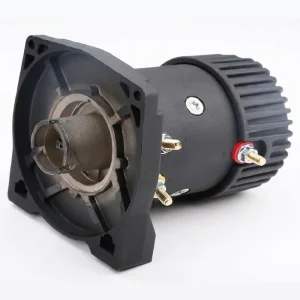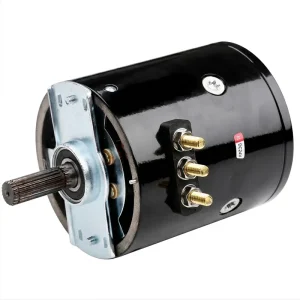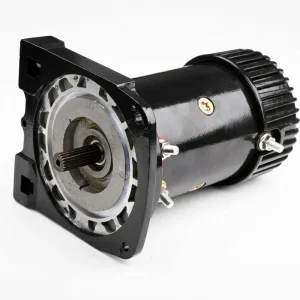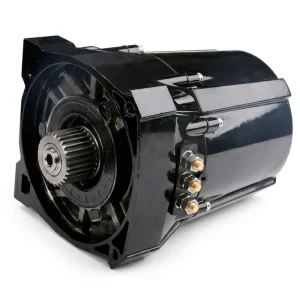
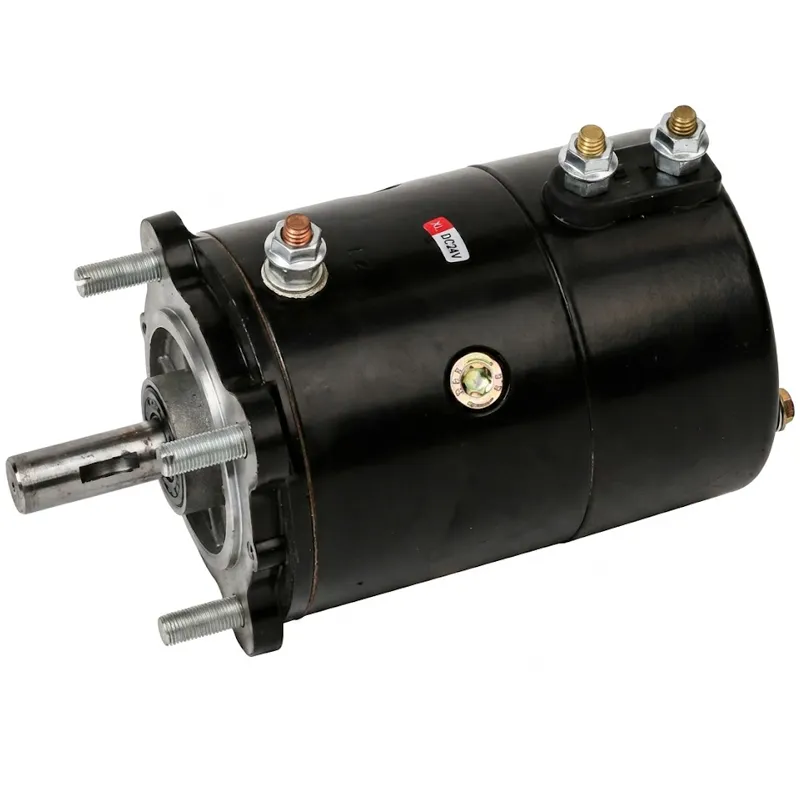
EP-NVW-2000W 24V 8 N·m Winch Motor
The EP-NVW-2000W winch motor steps beyond the 12V / 1750W segment to address winch applications where higher system voltage, greater power output, and substantially more torque are required from a single motor unit. Rated at 2000W and 24V DC with a maximum current draw of 125A, model NVW12000A delivers a continuous output torque of 8 N·m — double the torque per amp compared to typical 12V winch designs of similar wattage.
The move from 12V to 24V is significant for operators asking what is the difference between a 12V and a 24V winch. At the same power level, a 24V motor draws half the current of its 12V equivalent.
Industrial-Grade 24V High-Torque Winch Drive
EP-NVW-2000W 24V 8 N·m Winch Motor
Model NVW12000A — a 2000W, 24V محرك الرافعة الكهربائية delivering 8 N·m rated torque, IP67 full weatherproof sealing, and bidirectional operation across a compact Ø101.6 mm housing designed for high-load industrial and commercial winch platforms worldwide.
Technical Specifications — Model NVW12000A Winch Motor
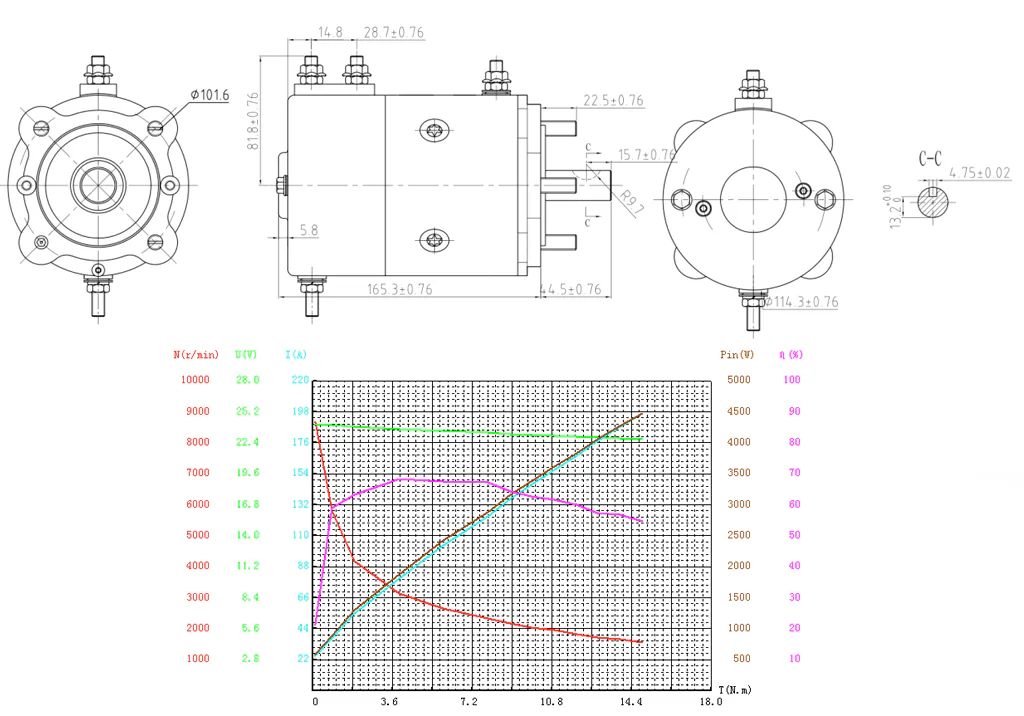
All parameters are verified under rated operating conditions per Class F insulation standards. Dimensional data is extracted directly from the NVW12000A motor outline drawing.
| Winch Motor Parameter | قيمة | ملحوظات |
|---|---|---|
| طراز المحرك | NVW12000A | 24V Heavy-Duty Winch Motor Series |
| الجهد المقنن | 24 فولت تيار مستمر | Electric winch motor 24V standard |
| القدرة المقدرة | 2000 W | ذروة الطاقة الكهربائية المدخلة |
| التيار المقنن | ≤125 A | Half the current of equivalent 12V models |
| عزم الدوران المقدر | 8 N·m | عزم دوران خرج مستمر |
| دورة التشغيل | S2 دقيقتان - 7% ED | تصنيف متقطع قصير المدى |
| فئة العزل | الفئة F | أقصى درجة حرارة لللف 155 درجة مئوية |
| تصنيف الحماية | IP67 | Full submersion sealed |
| عدد الأسنان | 1 | Drive pinion configuration |
| اتجاه الدوران | Bidirectional | CW and CCW via polarity reversal |
| نطاق التطبيق | الرافعات | Industrial, commercial, off-road |
| Body Outer Diameter | Ø101.6 mm | Motor housing outer diameter |
| Mounting Flange Dia. | Ø114.3 ± 0.76 mm | Flange outer diameter |
| الطول الإجمالي | 165.3 ± 0.76 mm | Full axial motor length |
| Drive End Length | 44.5 ± 0.76 mm | Shaft protrusion / drive end |
| Commutator End Length | 22.5 ± 0.76 mm | Non-drive end protrusion |
| Terminal Housing Width | 81.8 ± 0.76 mm | Terminal block side dimension |
| Mounting Bolt Spacing | 14.8 mm / 28.7 ± 0.76 mm | Flange bolt pattern dimensions |
| قطر عمود الإخراج | Ø4.75 ± 0.02 mm (C–C section) | Drive end shaft detail |
| Terminal Connection | A1, D2 (+ field winding) | Four-terminal bidirectional wiring |
How the NVW12000A Winch Motor Works
The NVW12000A operates on the مبدأ عمل محرك التيار المستمر ذو المغناطيس الدائم, in which direct current applied to the armature winding generates a rotating electromagnetic field around the armature core. This field interacts with the fixed permanent magnets in the stator housing, producing the torque that drives the output shaft and, through the winch drum gear train, tensions the rope or cable under load. The motor is rated at a continuous 8 N·m torque output — and it gets there at 24V by drawing up to 125A, which is roughly the same electrical load that a standard 12V equivalent would need 250A to achieve. This current halving is why the electric winch motor 24v configuration matters so much to commercial operators focused on wiring system reliability and long-term solenoid contact life.
فهم how does a winch motor work in practice means looking at the duty cycle. The S2 2min–7%ED rating defines the acceptable operating pattern: the motor runs at full load for up to 2 minutes, then requires a cooling interval before the next full-power pull. This intermittent duty profile matches the actual usage of a winch in most commercial and off-road contexts — each pull cycle is a short, high-demand event followed by rigging or repositioning time. Within this operating pattern, the Class F winding insulation maintains safe temperatures even in 40°C ambient environments common across Middle Eastern, Australian, and African markets where heavy commercial vehicles operate year-round.
Bidirectional control is achieved through the standard four-terminal solenoid wiring arrangement. The A1 and D2 terminals control armature current direction; reversing polarity through the solenoid control box reverses the shaft's rotation and switches the winch drum between haul-in and pay-out. The IP67 sealed terminal block design keeps this critical electrical interface protected against water ingress even when the motor body is temporarily submerged — the failure point where many nominally waterproof نظام ونش بمحرك designs allow moisture tracking into the winding.
Five Advantages That Define the NVW12000A Winch Motor
① 24V Architecture — Cleaner, More Efficient System
Running at 24V halves the current demand compared to a 12V motor of the same output power. At ≤125A maximum, the NVW12000A is compatible with lighter-gauge cabling, smaller terminal lugs, and standard commercial solenoid relays — reducing installation cost and eliminating the overheating risk that undersized 12V wiring causes when sustaining 200A+ under heavy pulls. For commercial vehicle operators, this matters: a wiring harness that stays cooler under load lasts longer and demands less routine inspection.
② 8 N·m Continuous Torque — Step-Change Pulling Force
The 8 N·m continuous torque rating represents a significant step up from the 6 N·m class of standard محرك ونش 12 فولت products, while the 2000W power band supports winch platforms in the 13000–18000 lb line-pull category. This is the performance range needed for larger commercial trucks, heavy recovery vehicles, and industrial pulling equipment that 1750W motors cannot serve without working consistently at or above their thermal limit. The NVW12000A operates in this band as a properly rated unit, not a stretched one.
③ IP67 Throughout — Including Terminal Interface
IP67 sealing on the NVW12000A covers not just the motor housing but the terminal block assembly — the interface point where many competing designs allow moisture ingress due to inadequate sealing between the external connection and the motor interior. Temporary submersion to 1 metre depth is within this motor's specification, making it suitable for boat ramp winches, under-bumper recovery winch positions that submerge during river crossings, and wash-down zone industrial installations where the motor is regularly exposed to directed water streams.
④ Compact Ø101.6 mm Envelope for the Power Class
Delivering 2000W and 8 N·m from a motor body of Ø101.6 mm outer diameter is a high power-density achievement for this voltage class. The compact housing allows the NVW12000A to fit winch drum architectures that were previously served by higher-current 12V motors — enabling platform builders to upgrade motor output and voltage simultaneously without designing a new drum housing. The Ø114.3 mm mounting flange maintains dimensional compatibility with standard winch drum flange patterns in this power bracket.
⑤ Class F Insulation — Service Life in Hot Climates
Class F winding insulation rated to 155°C gives the NVW12000A a thermal headroom that extends service life particularly in high-ambient-temperature operating regions. Operators running commercial winch equipment in the Middle East, sub-Saharan Africa, Australian outback locations, or tropical South American environments find that lower-insulation-class motors begin degrading their winding integrity within the first season of summer use — a failure mode that Class F directly addresses. Brush and commutator service intervals extend accordingly when winding temperatures remain well below the insulation limit.
معايير المواد والتصنيع
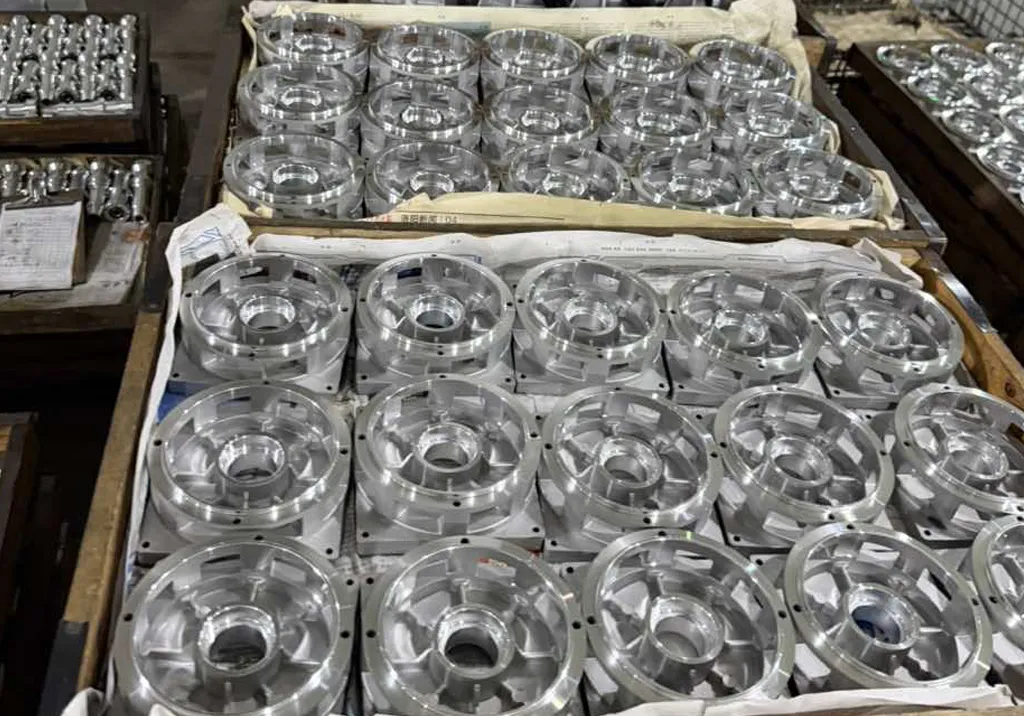
The NVW12000A Winch Motor is engineered from a material set chosen for durability under the specific combination of stresses that define heavy-duty winch service: high peak torque at low speed, sustained elevated current, vibration from the vehicle or host machinery, and direct environmental exposure. The motor housing is precision die-cast from high-strength aluminium alloy, chosen over the steel alternatives for its superior corrosion resistance in the salt-air coastal environments where marine and boat-trailer winch applications frequently operate, while retaining adequate structural rigidity to carry the combined weight of the drum assembly cantilevered from the motor flange.
The stator core laminations are produced from cold-rolled silicon steel, with tightly controlled lamination stack pressure to maintain consistent magnetic flux path geometry as the motor heats and cools through operating cycles. The permanent magnets are sintered neodymium-iron-boron (NdFeB), selected for high remanent flux density — the property that allows 8 N·m of continuous torque to be developed in a Ø101.6 mm housing rather than a significantly larger and heavier iron-core construction. NdFeB magnetic properties are stable across the 0–60°C ambient temperature range that outdoor winch installations routinely experience, without the progressive flux degradation that higher-temperature operation causes in lower-grade magnet materials.
Armature windings are applied using high-purity enamelled copper wire rated to Class F temperature. Winding tension and turn count are precisely controlled by CNC winding equipment to maintain balanced resistance across all armature poles — imbalance being a primary cause of brush sparking and commutator surface erosion at high current densities. The commutator itself is machined from oxygen-free copper to minimise internal resistance at the brush contact interface, ground concentric to the shaft centreline, and dynamically balanced with the assembled rotor to reduce bearing load from rotational imbalance at the high no-load speeds typical of this motor class.
The full production process operates under ISO 9001:2015 certified quality management, with documented traceability for every material lot and controlled process parameters at each assembly stage. Outgoing inspection includes insulation resistance measurement, no-load current and speed verification, IP67 water ingress testing, and dimensional check of the flange and shaft interfaces before each motor is approved for release. These controls are what give the NVW12000A the reliability credentials that محرك كهربائي عالي العزم applications in commercial and industrial contexts require.
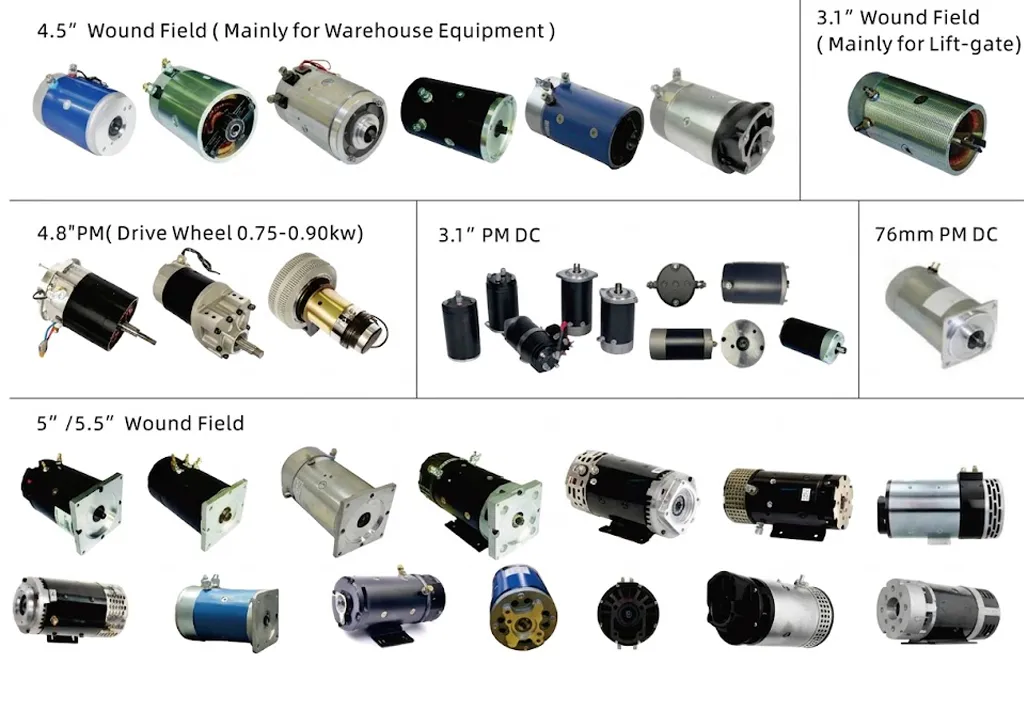
Winch Motor Application Scenarios
The NVW12000A محرك الرافعة operates at the boundary between heavy commercial and light industrial — above the off-road recovery winch class and below the full hydraulic-motor territory. It fills this gap with an electric winch motor 24v configuration that delivers the power and torque of heavier solutions while retaining the simplicity, cost-effectiveness, and 24V compatibility of DC electric drive. Below are the primary environments where this motor's output, voltage, and protection specifications align with real application requirements:
Heavy Recovery & Commercial Tow Trucks
Commercial breakdown and recovery vehicles in the 13000–18000 lb winch category — medium trucks, transit buses, construction equipment — require a نظام ونش بمحرك with more torque than standard off-road winches provide. At 8 N·m rated output and 2000W, the NVW12000A matches this performance bracket directly. The 24V supply is standard on commercial vehicle electrical systems in this weight class across North America, Europe, and Australia, making integration straightforward without custom voltage conversion.
Marine & Offshore Deck Winches
Offshore support vessels, fishing boats, and commercial harbour craft run 24V auxiliary electrical systems for deck equipment. The NVW12000A's IP67 rating handles continuous salt spray, washing down with seawater, and occasional green water on deck without requiring motor removal or protective covering between uses. For marine operators across UK, Norwegian, and New Zealand commercial fishing fleets, specifying a motor with factory-verified IP67 is a significantly lower-risk procurement decision than retrofitting sealing to an IP54-rated alternative.
Construction Hoist & Scaffold Winch Systems
Construction sites use electric winches for material lifting — mortar, bricks, equipment — on scaffold platforms and temporary hoisting rigs. The 24V DC supply can be sourced from site battery banks or generator-fed rectifiers without the heavy copper wiring that 12V would require at these power levels. The NVW12000A's IP67 housing tolerates the rain exposure and cement wash-down that construction site motors regularly encounter, extending the service interval between motor replacements on active building sites across Germany, the Netherlands, and Canada.
Forestry & Skidding Winch Machines
Log skidders, forwarders, and cable yarding equipment in commercial timber harvesting carry onboard 24V winch systems for log extraction. The high peak torque of the NVW12000A — and its resistance to mud, water, and organic contamination via IP67 sealing — makes it well-suited for the sustained, high-load pulling cycles of forestry skidding. Canadian, Finnish, and New Zealand forestry contractors operating electric winch equipment in high-moisture temperate forests benefit particularly from the IP67 submersion protection when equipment fords streams or works in standing water.
Utility Vehicle & Infrastructure Maintenance Winches
Electricity network, telecoms, and pipeline maintenance vehicles carry winch equipment for cable pulling, pole installation, and pipeline segment handling. These applications operate on the 24V systems standard to medium-duty utility vehicles, cycle the winch multiple times per shift, and require motors that last a full service period without maintenance-related downtime. The Class F insulation and IP67 protection of the NVW12000A are directly specified against these operational requirements — not overspecified from a consumer product, but correctly rated for the duty.
خصائص أداء المحرك
The NVW12000A performance curve plots speed N (r/min), voltage U (V), and current I (A) against output torque T (N·m) and efficiency η (%). The motor runs at approximately 9000–10000 RPM at no load, drawing around 22A idle current from the 24V supply. As winch line tension builds toward the 8 N·m rated torque point, current rises toward 125A and speed drops to approximately 3000–3500 RPM. Efficiency peaks in the mid-torque band between 4–6 N·m, where output mechanical power is maximised relative to the resistive losses in the armature winding. The محرك تيار مستمر عالي السرعة no-load performance is a feature of the permanent magnet design — the same property that gives the motor its strong speed-torque slope and makes it responsive to control signals throughout the operating range.
The performance curve shape is consistent with a compound-wound or permanent magnet series-style مبدأ عمل محرك التيار المستمر: speed falls linearly with increasing load while current rises proportionally. For winch operators, this means the motor naturally slows when rope tension increases — providing a built-in overload signal (visible as increased current draw on a battery ammeter) before thermal limits are reached. Staying within the S2 2min–7%ED operating window keeps winding temperatures inside Class F limits and prevents accelerated commutator wear under sustained high-current operation.
| نقطة التشغيل | السرعة (دورة في الدقيقة) | التيار (أ) | عزم الدوران (نيوتن متر) | الطاقة (واط) |
|---|---|---|---|---|
| بدون حمولة | ~9500 | ~22 | 0 | ~530 |
| Light Load (3 N·m) | ~7200 | ~50 | 3.0 | ~2260 |
| Mid Load (5.5 N·m) | ~5000 | ~88 | 5.5 | ~2880 |
| Rated Load (8 N·m) | ~3200 | ≤125 | 8.0 | ~2680 |
نبذة عن منشأة التصنيع الخاصة بنا
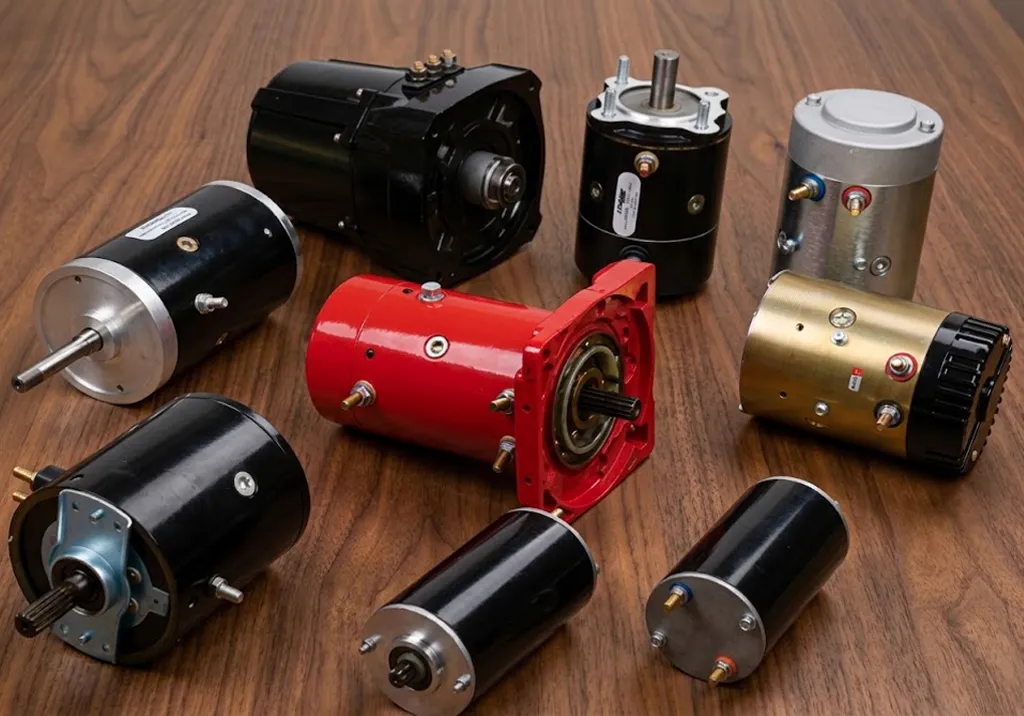
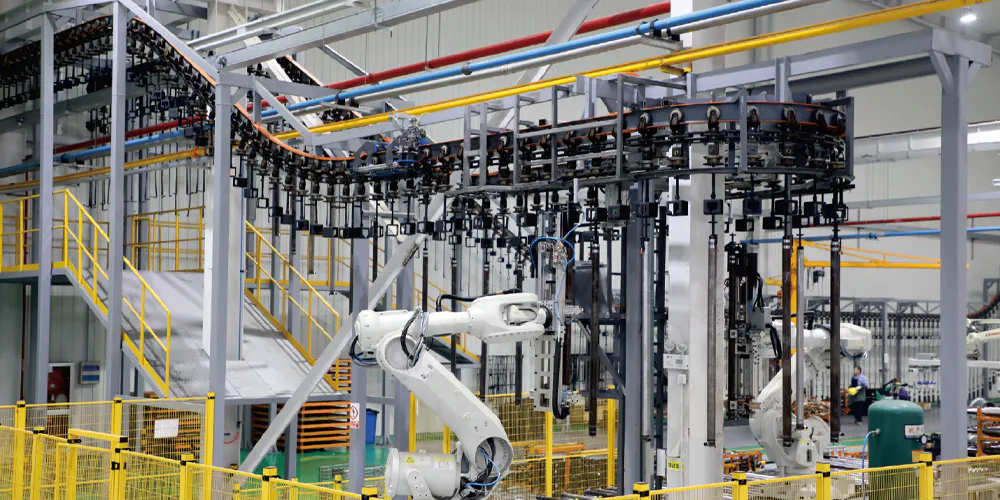
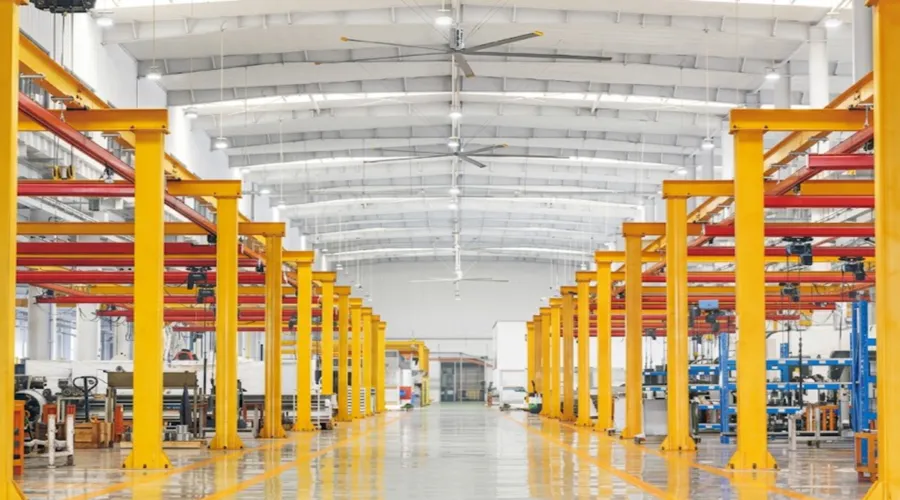
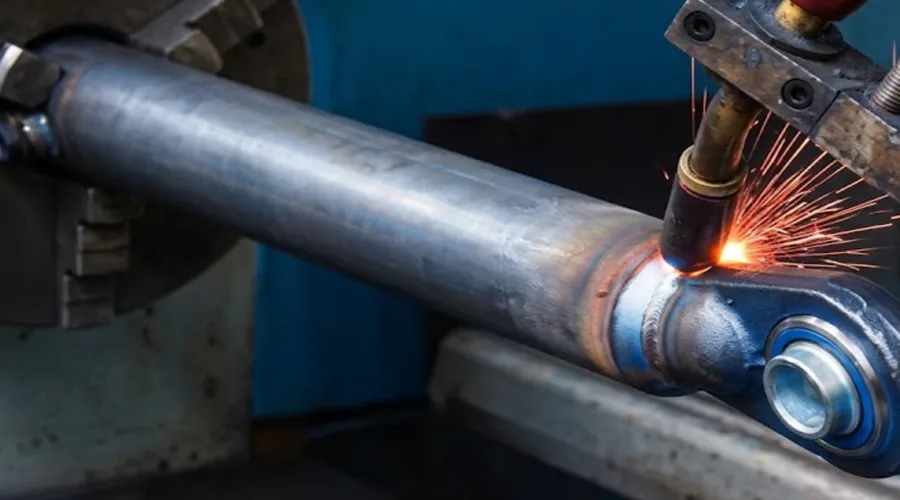
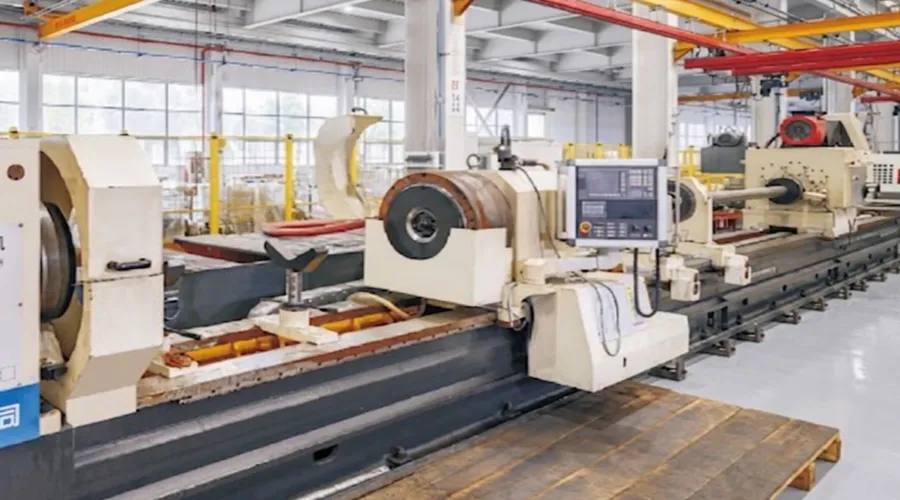
Our facility has been producing mechanical power transmission components for over ten years, with engineering capability spanning agricultural gearboxes, worm gear reducers, planetary gear drives, PTO shafts, hydraulic cylinders, gears, chains, and DC electric motors. This breadth of drivetrain production experience directly informs how we design motors — not as isolated electrical components but as mechanically integrated units that must work reliably within a broader transmission system across a vehicle's or machine's service life.
The production facility carries ISO 9001:2015 certification, with documented process controls across motor winding, commutator machining, gear cutting, CNC machining, heat treatment, and assembly and test. Materials processed include ductile iron, cast iron, cast steel, precision investment cast steel, and cast aluminium across both catalogue and custom-specification products. Standard and non-standard gearboxes, gears, sprockets, worm gears, pulleys, worms, shafts, and other mechanical assemblies are produced alongside the motor range for customers requiring complete drivetrain supply from a single source. Engineering documentation is issued in English for international OEM and aftermarket procurement teams.
Export markets include Australia, the UK, Canada, Germany, the Netherlands, Norway, New Zealand, Brazil, South Korea, South Africa, and Colombia, with full logistics and documentation support for standard commercial terms. The NVW12000A sits in a محرك الرافعة development programme informed by field feedback from commercial vehicle operators, marine equipment integrators, and industrial equipment builders across these markets — not derived from consumer product specifications and scaled up, but designed from the outset for the duty cycle and environmental exposure of professional winch use.
ورشة عمل
المنتجات ذات الصلة - مورد أنظمة القيادة المتكاملة
The NVW12000A winch motor operates most effectively as part of a matched drive system. We produce the complementary components — electric motors across the full power and voltage range, and worm gearbox reducers for additional speed reduction and torque multiplication — from the same ISO-certified facility, with compatible mounting interfaces and consistent quality documentation across the product family. Sourcing motor and gearbox from a single supplier removes the specification alignment risk that comes with mixing components from multiple manufacturers.
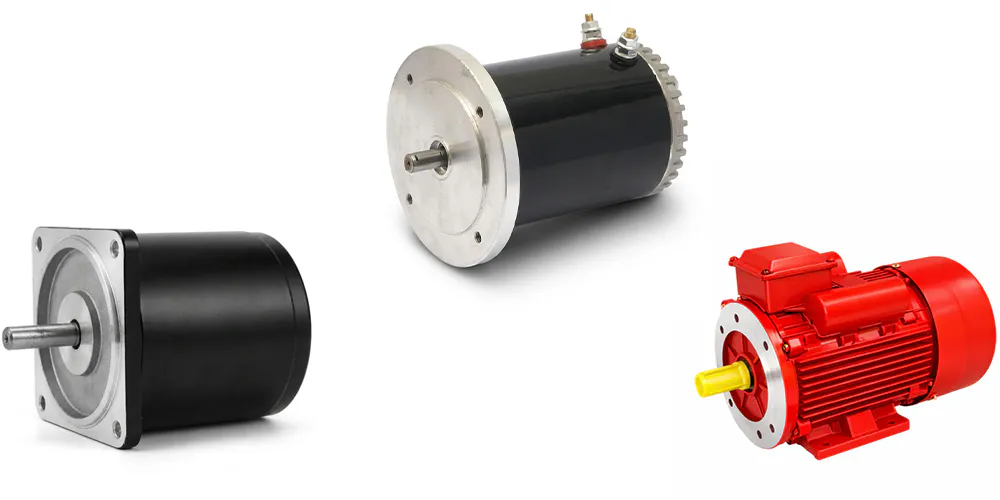
المحركات الكهربائية
ملكنا محركات كهربائية تعمل بالتيار المستمر range covers configurations from compact محرك تيار مستمر صغير units for auxiliary winch accessories through to محرك تيار مستمر عالي العزم builds for primary drive applications. Both brushed permanent magnet types and محرك التيار المستمر بدون فرش variants are available, with mounting interfaces dimensionally consistent across voltage classes — simplifying platform design when the application requires multiple motor specifications within the same equipment build.
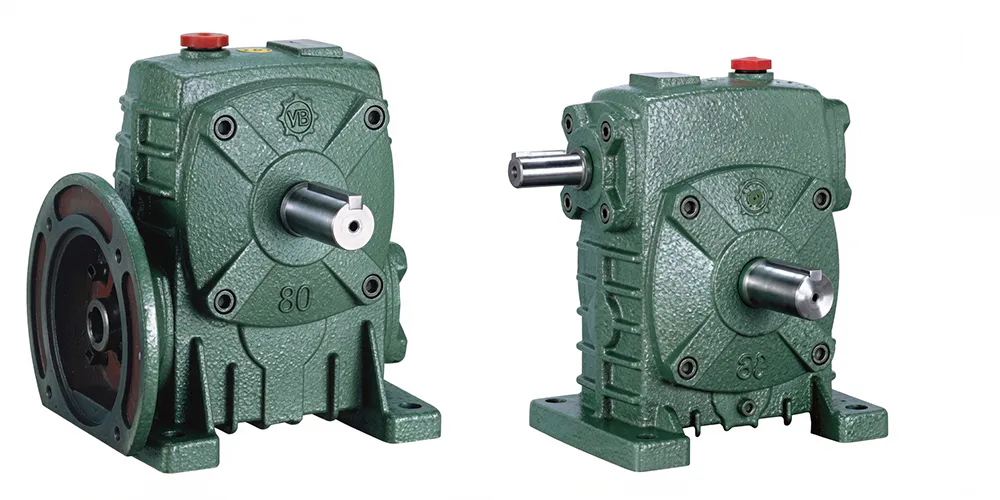
علبة تروس دودة
For installations requiring gear reduction outside the winch drum — to lower drum speed, increase line pull, or achieve a self-locking hold under power-off conditions — our worm gearbox range provides catalogue ratios and input flange configurations compatible with the NVW12000A output geometry. The self-locking property of worm gearing is particularly useful for vertical load-holding winch applications where the load must remain stationary when the motor is de-energised between operations.
الأسئلة الشائعة
What is the difference between a 12V and a 24V winch motor for heavy commercial truck recovery operations in Australia?
The primary practical difference is current draw. A 2000W motor at 12V would require over 160A, while the same power at 24V draws ≤125A. Lower current means lighter wiring, less heat in the cable harness, reduced voltage drop across long cable runs on large trucks, and longer solenoid contact service life. For heavy commercial truck recovery in Australia — where vehicles can be large rigids and B-doubles — the 24V system is standard fitment, and using a 24V winch motor like the NVW12000A winch motor keeps the entire electrical system operating within its designed parameters rather than pushing 12V components above their comfortable rating.
How does a 24V electric winch motor maintain performance during extended marine operations on commercial fishing vessels in Norwegian waters?
The NVW12000A is rated IP67, meaning it tolerates temporary submersion and continuous salt spray — the conditions a deck-mounted winch motor on a commercial fishing vessel experiences routinely. The 24V supply typical of commercial fishing vessel auxiliary systems means the motor integrates without voltage conversion. In cold Norwegian waters where ambient temperatures are low, the motor's Class F insulation actually has additional thermal headroom compared to warm-water operation, which extends both winding life and the interval between brush inspections.
Which winch motor is best for a construction site material hoist operating on 24V battery systems across multiple building projects in Germany?
The NVW12000A fits this application well. Its 2000W / 8 N·m output covers material hoist loads in the typical scaffold lifting range, the 24V supply matches site battery or generator-fed DC power systems, and IP67 keeps the motor operational through rain exposure and the cement wash-down cycles that construction sites require. For operators running equipment across multiple sites in Germany, the motor's compact envelope and standard flange mounting make it practical to transfer between hoist rigs without modification. The S2 duty cycle should be respected across the day's lifting schedule — the motor is not rated for continuous running, which most material hoist patterns naturally avoid through loading and unloading time between lifts.
When should a winch operator in Canada's forestry industry consider upgrading from a standard electric winch motor to a 2000W 24V model for skidder operations?
The clearest upgrade trigger is a pattern where the current motor is repeatedly tripping thermal protection during log extraction pulls, or where current brush wear rate is higher than expected — both signs the motor is being used at or above its thermal rating. If the winch drum and gear set are rated for higher pulls than the motor can sustain, upgrading to a higher-power motor is the correct fix rather than replacing the same-spec unit again.
How does the duty cycle rating of a heavy duty electric winch motor affect daily winch usage on utility maintenance vehicles operating across the UK infrastructure sector?
The S2 2min–7%ED duty cycle means the motor is rated for 2 minutes at full load within a duty period where the on-time represents 7% of the cycle length. In practical terms for a UK utility maintenance crew — pulling cable, installing poles, or repositioning equipment — each winch operation typically runs well under 2 minutes, followed by rigging time, positioning, or other non-winch activity that provides the required rest interval. Operating within this pattern is how the motor's winding temperature stays inside Class F limits through a full working shift.
المحرر: PXY