
Sugar Industry Application — Cane Processing
A technical reference covering worm gear drive construction, torque output requirements, material selection, and operational considerations for single speed reducers in sugarcane crushing and milling operations across tropical and subtropical producing regions worldwide.
Sugarcane processing is one of the most mechanically demanding applications in the agricultural food industry. A cane crusher roller set — whether running a three-roller, four-roller, or tandem mill configuration — applies compressive forces measured in hundreds of kilonewtons to raw cane stalks to extract juice, and the drive system behind those rollers must sustain this torque delivery continuously across an entire crushing season that often runs 24 hours a day for four to six months without scheduled downtime. In this context, the reduktor kecepatan tunggal is not merely a convenience component — it is the critical interface between the electric motor and the crushing machinery, responsible for stepping down rotational speed, multiplying torque to the level the rollers require, and doing so without variation that would alter juice extraction rates or damage the crushing surfaces.
Sugar mill operators across Brazil, India, Thailand, Australia, Colombia, Mexico, the Philippines, and South Africa have long recognized that worm gear single speed reducers offer a combination of torque characteristics, mechanical simplicity, and dimensional compactness that suits both the primary crusher drives and the secondary juice extraction conveyor drives in the milling complex. The worm gear single stage speed reducer architecture — one worm shaft engaging one worm wheel in a right-angle configuration — eliminates intermediate gear stages and their associated bearing preload requirements, reducing the number of failure-prone components in a drive chain that must operate with minimal access for maintenance during the crushing season.
This article examines the technical basis for that preference, covering gear construction, material specifications, torque and ratio selection guidance, installation considerations, and maintenance scheduling adapted to the sugar processing operating cycle.
Drive Requirements of Cane Crusher and Auxiliary Mill Conveyors
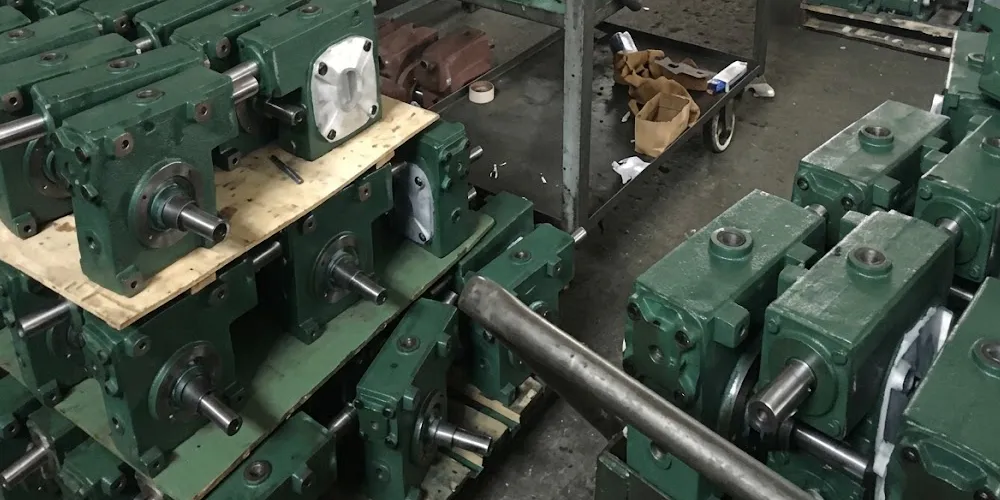
The crushing roller in a sugarcane mill operates at very low rotational speed — typically 3 to 8 RPM at the roller shaft — while receiving power input from motors running at 960 to 1450 RPM depending on pole count and regional supply frequency. This disparity creates a speed reduction requirement in the range of 1:120 to 1:400 for the primary roller drive, which is typically handled by a combination of a large gear mill stand and one or more reduktor kecepatan tunggal stages on the drive side. For the auxiliary conveyor drives within the milling complex — bagasse conveyors, juice transport belts, cane carrier conveyors, and imbibition water pump drives — the speed reduction requirement falls within the standard WP series range of 1:10 to 1:60, making these conveyor positions the primary application zone for WP worm single speed reducers in a sugar mill installation.
The torque characteristic of a worm gear drive is particularly valuable in sugar mill auxiliary conveyor applications because cane bagasse — the fibrous residue remaining after juice extraction — is a highly variable material in terms of bulk density and moisture content. Conveyor belt loading on bagasse transport systems fluctuates significantly as production rate changes, and drive systems without adequate torque reserve stall or slow when a slug of wet, dense bagasse reaches the belt. The high output torque of a correctly sized reduktor roda gigi cacing kecepatan tunggal — determined by the service factor multiplied against the rated output torque for the selected ratio — provides sufficient reserve to absorb these load fluctuations without speed variation or motor overload tripping.
The humid, sugary, fiber-laden environment of a sugar mill also places specific demands on drive component materials and sealing. Cane juice and molasses residue that reaches reducer housings creates highly corrosive conditions at pH levels between 5.0 and 6.5, while steam and condensate from evaporation stations in the process building elevate ambient humidity to near-saturation in many areas. Drive components not protected by adequate sealing and corrosion-resistant coatings deteriorate rapidly in these conditions, leading to shortened service life and increased unplanned downtime during the crushing season.
Featured Product
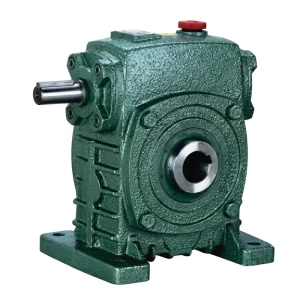
EP-WPKS Single Speed Reducer (4–365 kg)
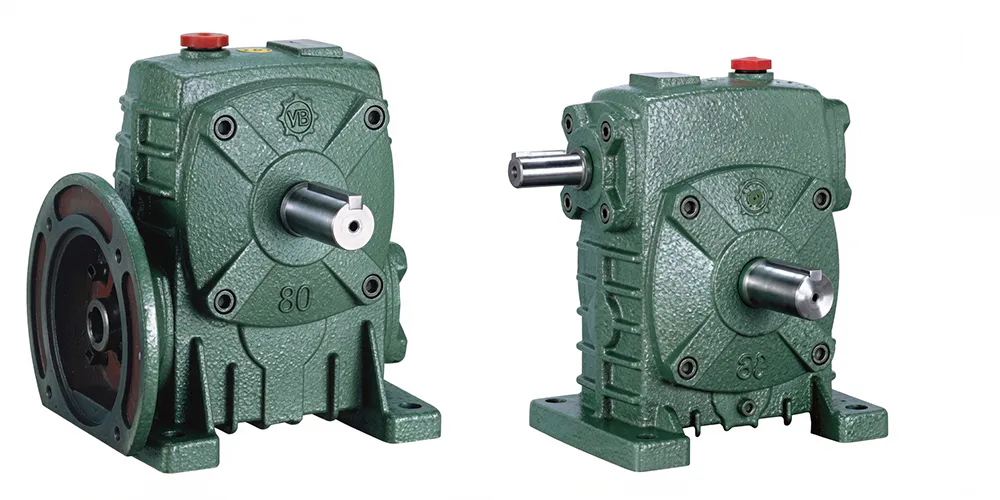
The EP-WPKS is a flange-mounted, single-stage worm gear speed reducer with a solid output shaft, engineered for high radial and axial load capacity in demanding industrial applications. Its load range of 4 to 365 kg and reinforced output shaft bearing arrangement make it a strong candidate for sugar mill bagasse conveyor drives, cane carrier belt head pulleys, and juice trough conveyor drives — positions where sustained high belt tension loads are imposed on the output shaft in addition to the drive torque requirement.
| Model | EP-WPKS |
| Load Range | 4 – 365 kg |
| Gear Stage | Single-stage worm drive |
| Rentang Rasio | 1:10 to 1:60 |
| Mounting | Flange (solid output shaft) |
| Perumahan | Cast iron HT200 |
| Roda Cacing | Phosphor bronze / tin-bronze alloy |
| Quality Standard | ISO 9001:2015 certified production |
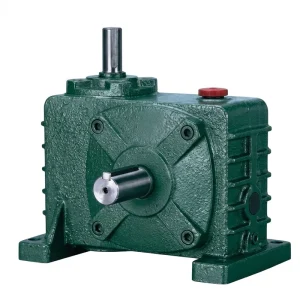
EP-WPZ Single Speed Reducer (0.4–5.2 L Oil Capacity)
Sugar mill crushing seasons run continuously for four to six months in tropical and subtropical producing regions such as northeastern Brazil, Maharashtra in India, Khon Kaen province in Thailand, and Queensland in Australia. The EP-WPZ extended-oil-capacity variant — offering sump volumes from 0.4 to 5.2 liters — is suited to these extended-run scenarios because the larger lubricant volume delays thermal oil degradation under sustained high-load operation. When filled with ISO VG 220 industrial gear oil of appropriate quality grade, the WPZ sump supports oil change intervals that align with inter-season maintenance windows rather than requiring mid-season stoppages, which carry high production-loss cost during the constrained crushing window.
Manufacturing Construction: Components Engineered for Heavy Agricultural Duty
The WP series reduktor kecepatan tunggal is built around a worm-and-wheel gear set housed in a precision-cast iron body. Each component in the assembly performs a specific mechanical role, and the engineering choices behind each element reflect the sustained high-torque, high-humidity, low-maintenance-access operating conditions typical of sugar mill auxiliary drives. Understanding how each component is constructed helps mill maintenance teams correctly assess service life, identify early-warning signs of wear, and specify replacement parts without over-engineering the replacement selection.
20CrMnTi alloy steel, carburized and case-hardened to 58–62 HRC, thread profile precision-ground to DIN tolerance standards. The high surface hardness withstands the sliding contact and boundary lubrication conditions that prevail at startup on cold tropical mornings when lubricant viscosity is temporarily elevated.
Centrifugally cast phosphor bronze or tin-bronze alloy. The sacrificial bronze wear surface protects the steel worm from abrasive damage, with wear progression detectable through periodic oil particle analysis — giving maintenance teams advance notice of approaching wheel service life before catastrophic failure occurs in the middle of the crushing season.
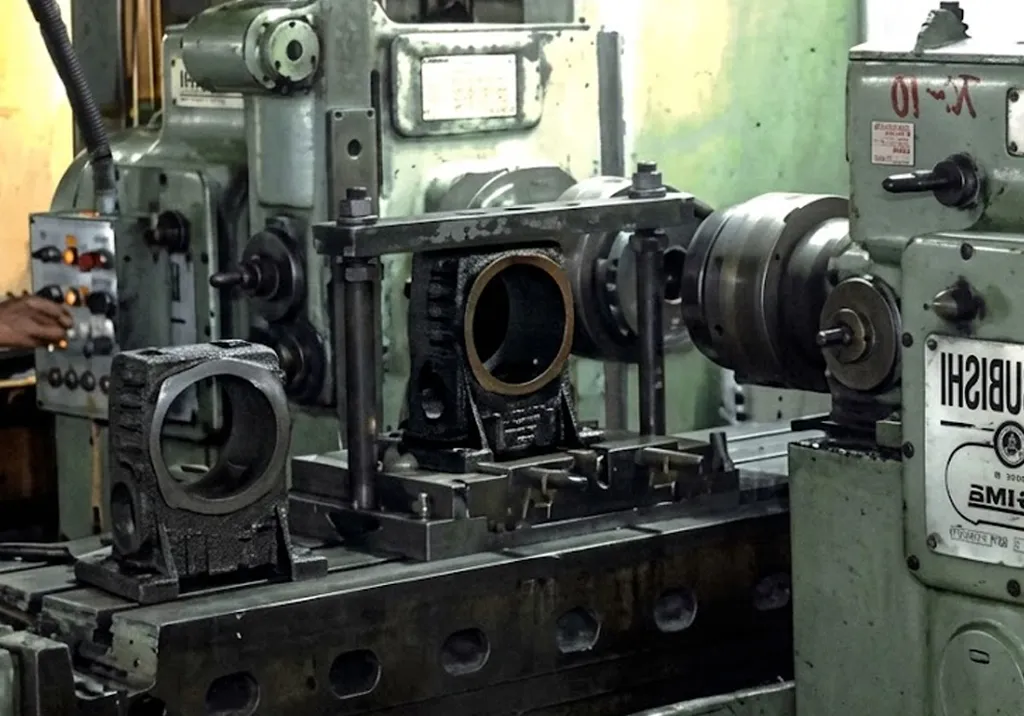
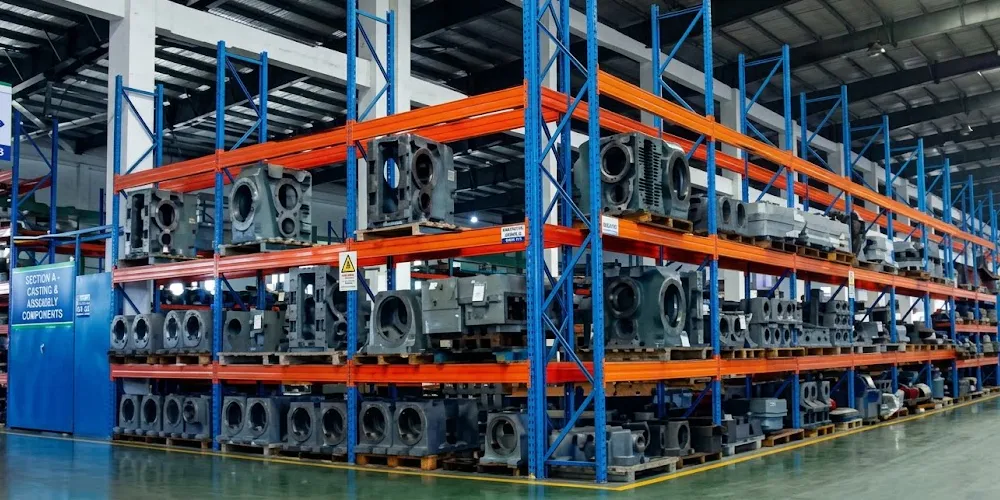
Gray cast iron HT200, with machined mounting faces and precision bearing bores. The ribbed exterior profile provides thermal dissipation area without creating enclosed pockets that would accumulate sugary condensate from the mill environment. All external surfaces are accessible for cleaning and inspection during scheduled maintenance stops between crushing shifts.
Tapered roller bearings on the worm shaft for combined radial and axial load handling; deep groove ball or tapered roller bearings on the output shaft depending on model and size. Pre-selected for the combined radial loads imposed by belt tension and the axial loads generated by the worm gear meshing thrust component during full-torque operation.
Double-lip rotary shaft seals prevent lubricant loss and exclude environmental moisture. For drives positioned near evaporation stations or juice channels, FKM elastomer seals are recommended over standard NBR, as FKM retains seal integrity against organic acid exposure from cane juice and against elevated temperature from steam line proximity.
45# medium-carbon steel, induction hardened and ground. Keyway dimensions conform to ISO 773 / DIN 6885A, accepting standard sprockets, drive pulleys, and flexible coupling hubs. For heavy-duty bagasse conveyor drive positions, the WPKS reinforced-shaft variant provides a larger shaft diameter for direct sprocket mounting without the need for intermediate coupling adapters.
Material System: Corrosion and Load Resistance in the Sugar Mill Environment
The sugar mill environment presents a materials challenge that differs from standard industrial conveyor applications. Organic acids from fermenting cane residue, high ambient humidity, condensate from evaporation stages, and sugary process liquids that coat nearby surfaces all act as corrosion accelerants on inadequately protected drive components. The material system of the WP series is selected to balance mechanical performance requirements with this environmental exposure, without requiring exotic materials that would complicate spare parts procurement in remote or developing-country mill locations where procurement lead times can be long.
| Component | Material Specification | Sugar Mill Relevance | Operational Benefit |
|---|---|---|---|
| Worm shaft | 20CrMnTi, 58–62 HRC surface | Hardened surface is not susceptible to the mild acid corrosion that affects unhardened steel shafts in juice-adjacent environments | Sustained gear profile accuracy across full crushing season run, maintaining consistent output RPM |
| Worm wheel | Phosphor bronze / tin-bronze | Bronze has inherent corrosion resistance in mildly acidic environments; not reactive to the organic acid compounds present in cane juice and bagasse moisture | Wear progression is gradual and detectable — no sudden catastrophic failure mode typical of heavily loaded steel gear pairs |
| Perumahan | Cast iron HT200, painted or primed | Food-safe alkyd or epoxy primer systems available; required in juice-contact zones of certified sugar mills | Cast iron provides damping mass that reduces vibrational resonance from bagasse conveyor belt tensioning cycles |
| Shaft seals | NBR (standard) / FKM (upgraded) | FKM retains sealing performance against cane juice pH range (5.0–6.5) and elevated temperature near evaporators | Oil retention at shaft exits prevents lubricant loss onto cane bagasse — a fire risk in high-bagasse-dust environments |
| Lubricant | ISO VG 220 industrial gear oil | Viscosity grade suited to the 25–40°C ambient temperatures common in tropical crushing regions; synthetic grade extends interval in 24-hour operation scenarios | Adequate film thickness at worm wheel contact zone prevents scoring under the start-up shock loads of a loaded conveyor belt |
| Output shaft | 45# steel, induction hardened | Sufficient torsional and bending strength for the combined drive torque and belt tension radial load in bagasse conveyor head drum positions | ISO keyway compatibility with standard sprockets simplifies replacement hardware procurement in remote mill locations |
One material consideration specific to bagasse handling conveyors is the fire risk from hot oil dripping onto dry bagasse. Cast iron housings with precision-machined oil seal seats and double-lip FKM seals provide the oil containment standard needed to eliminate this risk from the drive position risk assessment, which is a formal requirement under the fire safety management plans of certified sugar mills in Australia (under the Sugar Research Australia framework) and in Brazil under UNICA industry standards.
Explore the complete WP series reduktor kecepatan tunggal catalog — including extended oil sump variants and heavy-load flange models suited for sugar mill conveyor drive applications.
Ratio Selection Across Sugar Mill Auxiliary Conveyor Positions
Auxiliary conveyor drives within a sugar mill cover a wide range of belt speeds, from slow-moving cane unloading table conveyors at 5–10 m/min to fast juice pan feeds and packaging output conveyors at 20–35 m/min. Each position in the mill requires its own ratio selection calculation, and the WP series 1:10 to 1:60 standard range covers the majority of these requirements from a single product family. The table below maps typical sugar mill auxiliary conveyor positions to their characteristic speed requirements and recommended ratio ranges, based on standard 4-pole motor input at 50 Hz (1450 RPM) or 60 Hz (1750 RPM) grid frequency.
| Sugar Mill Conveyor Position | Typical Belt Speed | Ratio Range (50 Hz) | Recommended WP Model |
|---|---|---|---|
| Cane unloading / table feeder | 5–10 m/min | 1:40 to 1:60 | WPKS or WPZ (heavy, extended oil) |
| Cane carrier (slat or belt) | 10–18 m/min | 1:25 to 1:40 | WPKA or WPKS |
| Bagasse output conveyor | 15–25 m/min | 1:20 to 1:30 | WPKS (reinforced shaft) |
| Juice trough / transfer belt | 8–15 m/min | 1:30 to 1:50 | WPA or WPKA |
| Sugar drying / cooling conveyor | 3–8 m/min | 1:40 to 1:60 | WPA or WPZ |
| Sugar bagging / packing line | 20–35 m/min | 1:10 to 1:20 | WPKA or WPA |
For 60 Hz grid supply (common in North American and parts of Latin American sugar industries), multiply the 50 Hz ratio by 1.21 to find the equivalent ratio for the same output speed from a 1750 RPM motor input. A 1:30 ratio at 50 Hz becomes equivalent to approximately 1:36 at 60 Hz for the same target belt speed — meaning the next-lower standard ratio step (1:30) can be used directly without requiring a non-standard ratio, simplifying procurement.
Seasonal Maintenance Schedule Aligned to the Crushing Calendar
The sugar mill operating cycle — an intensive 4–6 month crushing season followed by an off-season overhaul period — creates a maintenance scheduling structure that differs from year-round continuous production facilities. For WP series single speed reducers on sugar mill auxiliary conveyors, this seasonal structure allows maintenance activities to be concentrated in the off-season window rather than requiring unscheduled interventions during crushing, provided the drive is sized with adequate service factor and the lubricant is selected to sustain the full season interval.
Before crusher startup: verify oil level at the correct fill port for the installed mounting orientation, inspect shaft seal condition for cracking or lip deformation from the off-season storage period, check mounting bolt torque values, and rotate the output shaft by hand to confirm smooth rotation without rough bearing feel or gear backlash variation.
At approximately the halfway point of the crushing season (typically 60–90 days into operation), draw oil samples from high-load positions and submit for particle count, viscosity verification, and water content analysis. Bronze particle elevation above the baseline established at commissioning indicates accelerated wheel wear and flags those positions for priority overhaul in the off-season.
At season close: drain and flush all reducers, remove covers and inspect worm wheel bronze condition visually and by measurement where access permits, replace shaft seals as a scheduled consumable, re-coat any housing surface where paint adhesion has failed due to condensate or juice exposure, and refill with fresh ISO VG 220 gear oil.
During extended off-season storage in humid tropical environments, leave reducers filled with fresh oil rather than drained to prevent internal corrosion from condensation. Rotate shafts periodically (monthly) to redistribute oil film over bearing and gear surfaces, preventing dry spots that can cause pitting corrosion on bearing raceways during storage.
Complete Drive System Components for Sugar Mill Applications
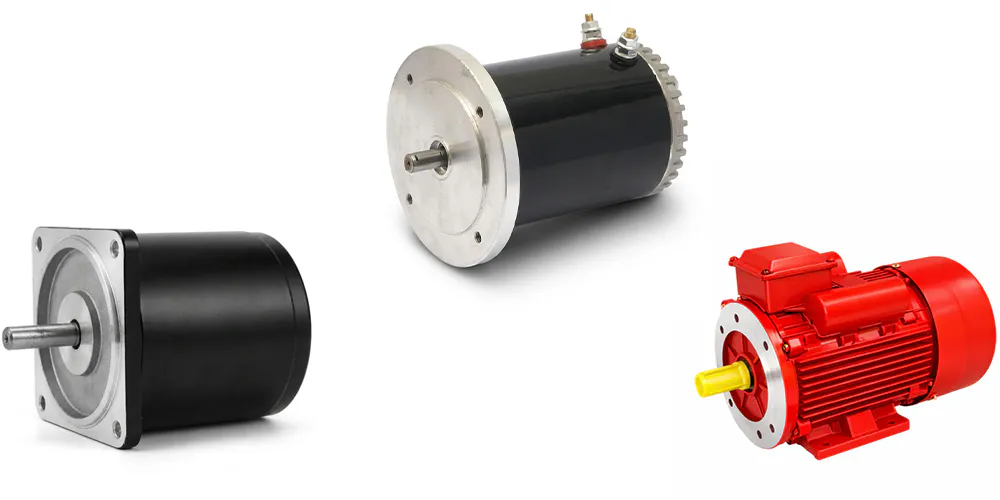
A reduktor kecepatan tunggal performs to specification only when matched correctly to the motor input and the downstream drive elements. The following complementary product lines are available for complete sugar mill conveyor drive system procurement from a single supplier:
Tentang Produsen
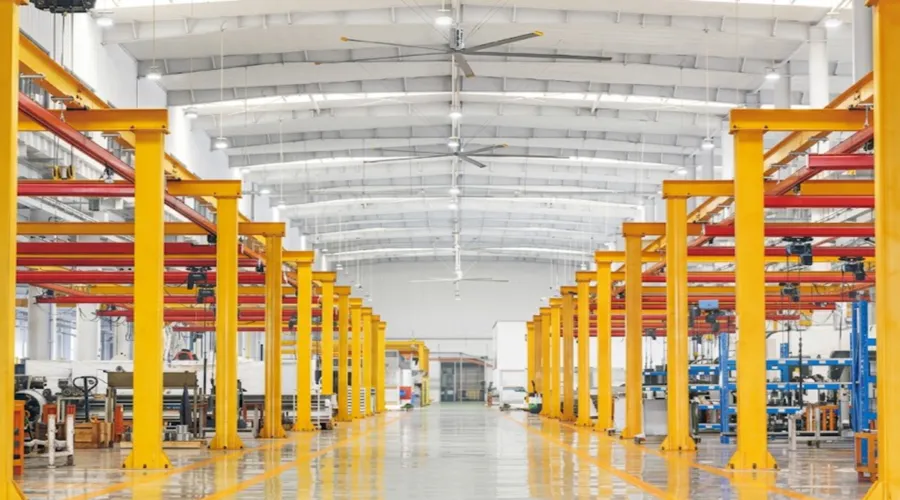
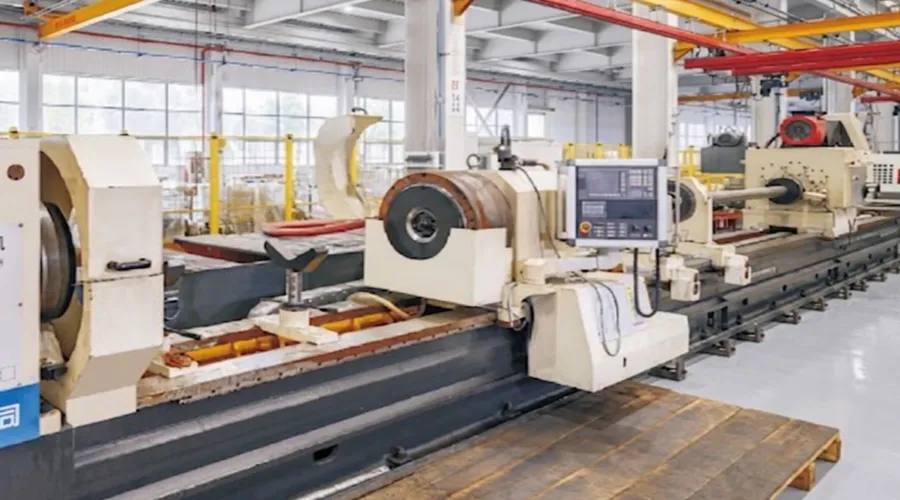
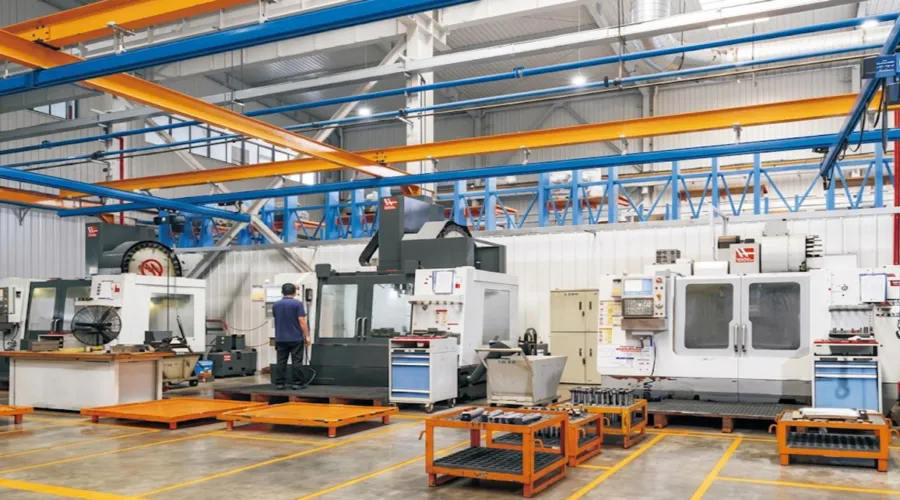
The production facility behind the WP single speed reducer series operates under ISO 9001:2015 certification with a manufacturing scope covering agricultural gearboxes, worm gear reducers, planetary gear drives, power take-off shafts, hydraulic cylinders, gears, chains, and motors. This breadth of product range supports sugar mill engineers who need to source multiple drive system components under a single vendor qualification — particularly valuable in remote mill locations in countries such as India, Thailand, Brazil, or Colombia where multi-vendor procurement logistics carry significant lead time and administrative overhead.
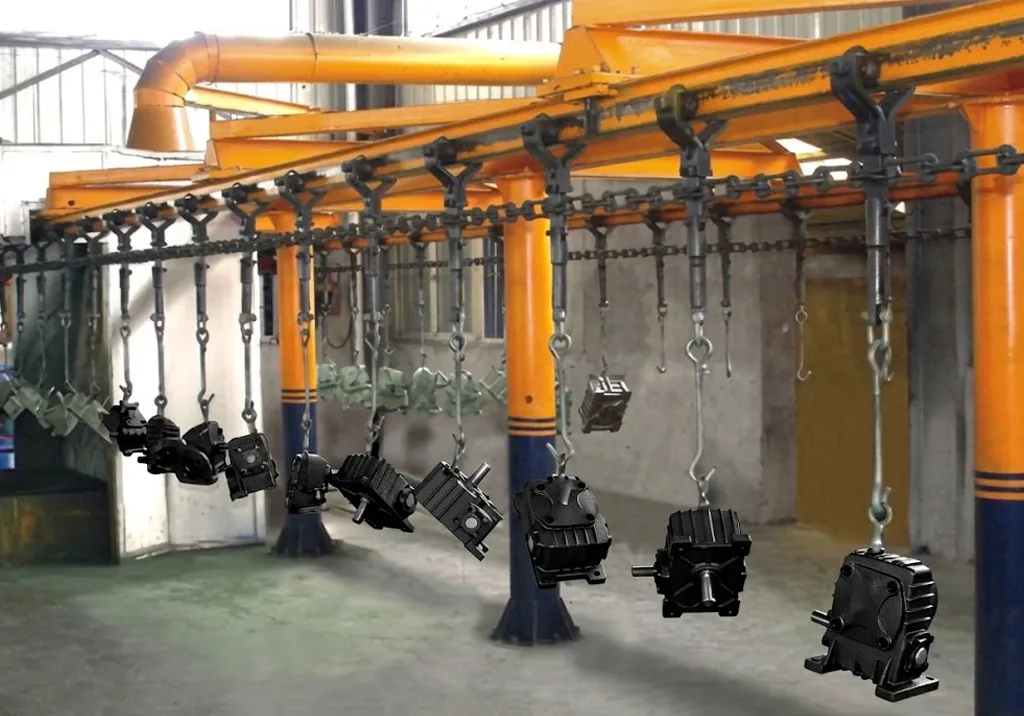
Production capabilities include CNC gear hobbing, precision bore machining, heat treatment, assembly, and factory acceptance test running of completed reducer assemblies prior to shipment. Material range extends across ductile iron, cast iron, cast steel, precision cast steel, and cast aluminum, enabling both standard catalog WP series units and OEM-specification non-standard reducers for sugar machinery original equipment builders who require specific shaft sizes, mounting configurations, or operating ratios outside the standard product range.
Bengkel
Pertanyaan yang Sering Diajukan
What single speed reducer ratio is best for a bagasse conveyor in a Brazilian sugar mill operating at 50 Hz grid supply? ▼
Which single stage speed reducer model works best for cane carrier conveyor drives in Indian sugar mills with high seasonal dust exposure? ▼
Where can I find a reliable single speed reducer supplier for sugar mill conveyor upgrades in Thailand and Southeast Asia? ▼
How do I get a quote for a customized single speed reducer for a non-standard cane table feeder drive in a Queensland sugar mill? ▼
What are the main disadvantages of worm gear speed reducers for sugar mill cane crusher auxiliary drives and how are they managed? ▼
Editor: PXY