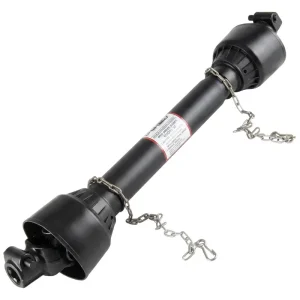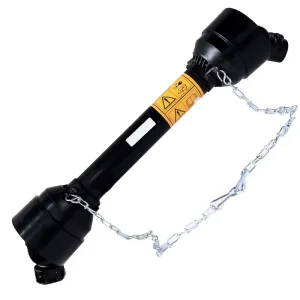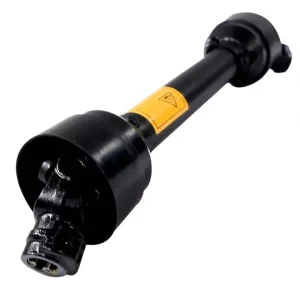
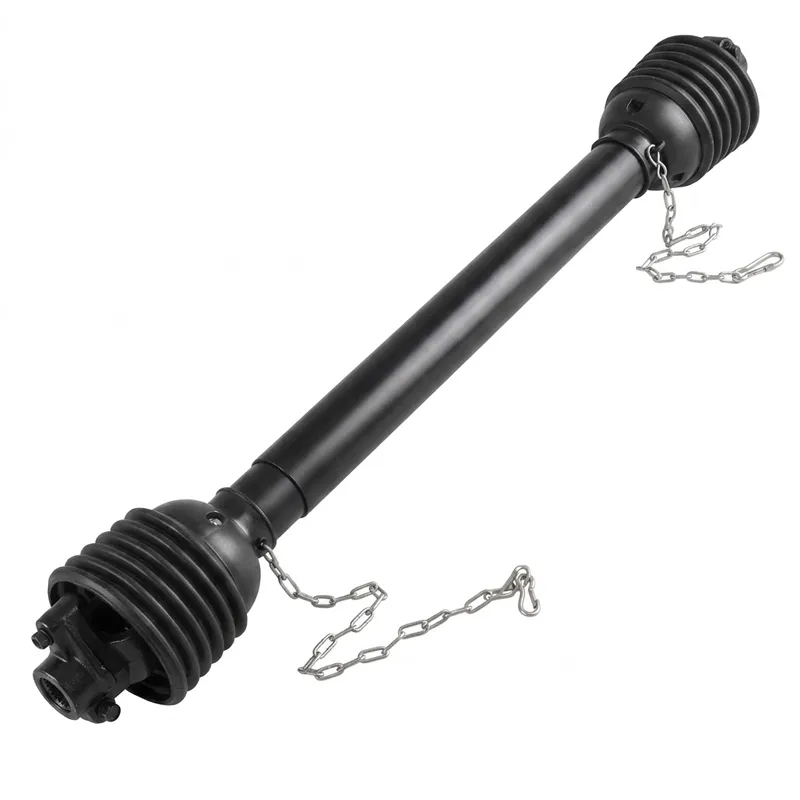
Вал отбора мощности для пресс-подборщика EP- Square для John Deere
The EP-square baler pto shaft, offering CAT5 and CAT6 torque ratings across 18 part numbers. Available in three configurations—complete CV assemblies, half-shafts with guards, and Walterscheid replacements—it supports three tractor output specs: 540 rpm (1-3/8″ x 6 spline), and 1000 rpm (1-3/8″ x 21 spline or 1-3/4″ x 20 spline).
A key feature of this square baler pto shaft is the tractor-side CV joint, which eliminates torque pulses caused by angle variations to protect the baler gearbox. The baler end is equipped with a friction-clutch safety slip device that slips during jams to prevent driveline overload damage.
Square Baler Drivetrain Series
EP-PTO Shaft for John Deere Square Balers
A precision-engineered Вал отбора мощности квадратного пресс-подборщика range covering CAT5 and CAT6 configurations with Complete CV Assembly, CV 1/2 Shaft with Shield, and Walterscheid-replacement half-shaft options — cross-referenced across three tractor output shaft specifications for direct fitment on John Deere square baler operations worldwide.
Complete Part Number Reference - Square Baler PTO Shaft
The tables below cover all eighteen part numbers in the EP Вал отбора мощности квадратного пресс-подборщика range, organised by tractor output shaft configuration and assembly type. The CV 1/2 shaft with shield is 42 inches in length. The Walterscheid replacement half-shafts use a 1-11/16 inch 20-spline hardened output interface. Select the row matching your tractor's PTO stub specification and the assembly type that suits your replacement requirement.
540 RPM — 1.375 inch × 6 Spline Tractor Output Shaft
| Assembly Type | CAT Rating | Номер детали |
|---|---|---|
| Complete CV Assembly (no implement yoke or UJ) | CAT5 | 14503548 |
| Complete CV Assembly (no implement yoke or UJ) | CAT6 | 14505548 |
| CV 1/2 Shaft with Shield (42 inch) | CAT5 | 19503506 |
| CV 1/2 Shaft with Shield (42 inch) | CAT6 | 19505506 |
| Walterscheid Replacement 1/2 Shaft | CAT5 | 4GZM139 |
| Walterscheid Replacement 1/2 Shaft | CAT6 | 4GYM140 |
1000 RPM — 1.375 inch × 21 Spline Tractor Output Shaft
| Assembly Type | CAT Rating | Номер детали |
|---|---|---|
| Complete CV Assembly (no implement yoke or UJ) | CAT5 | 14603548 |
| Complete CV Assembly (no implement yoke or UJ) | CAT6 | 14605548 |
| CV 1/2 Shaft with Shield (42 inch) | CAT5 | 19603521 |
| CV 1/2 Shaft with Shield (42 inch) | CAT6 | 19605521 |
| Walterscheid Replacement 1/2 Shaft | CAT5 | 4GZM239 |
| Walterscheid Replacement 1/2 Shaft | CAT6 | 4GYM240 |
1000 RPM — 1.750 inch × 20 Spline Tractor Output Shaft
| Assembly Type | CAT Rating | Номер детали |
|---|---|---|
| Complete CV Assembly (no implement yoke or UJ) | CAT5 | 14703548 |
| Complete CV Assembly (no implement yoke or UJ) | CAT6 | 14705548 |
| CV 1/2 Shaft with Shield (42 inch) | CAT5 | 19703520 |
| CV 1/2 Shaft with Shield (42 inch) | CAT6 | 19705520 |
| Walterscheid Replacement 1/2 Shaft | CAT5 | 4GZM339 |
| Walterscheid Replacement 1/2 Shaft | CAT6 | 4GYM340 |
What Sets This John Deere Square Baler PTO Shaft Range Apart from Generic Replacements
А Вал отбора мощности квадратного пресс-подборщика designed specifically for John Deere square balers is a fundamentally different product from a generic farm PTO shaft — not in basic mechanical principle, but in the precision of the dimensional cross-reference, the CV (constant velocity) joint configuration selected for baler kinematics, and the breadth of tractor output shaft configurations covered. The EP John Deere square baler range addresses all three dimensions of that specification challenge, offering eighteen part numbers across three assembly types — Complete CV Assembly (no implement yoke or universal joint included), CV 1/2 Shaft with Shield, and Walterscheid-replacement 1/2 Shaft — each available in CAT5 and CAT6 for three tractor output shaft specifications: 1.375-inch 6-spline at 540 rpm, 1.375-inch 21-spline at 1000 rpm, and 1.750-inch 20-spline at 1000 rpm. The CV joint at the tractor-side end of a large square baler PTO driveline is not merely a convenience feature — it is a functional necessity in high-speed square baling operations where the working angle between tractor and baler input can vary significantly during field manoeuvres. A standard Cardan (cross-type) joint transmits torque with angular velocity variation at any working angle; a CV joint maintains constant output velocity regardless of operating angle, eliminating the cyclic torque pulse that damages the baler flywheel input gearbox bearing and shortens детали вала отбора мощности service life in high-throughput John Deere baling operations in North America, Europe, Australia, and South America.
Engineering Advantages of the EP Square Baler PTO Shaft
① CV Joint — Constant Velocity Power Delivery
The CV (constant velocity) ball-and-socket joint at the tractor-side of the EP John Deere assembly maintains a constant output angular velocity regardless of the operating angle between tractor and baler — eliminating the torque pulse that a standard Cardan joint produces at any working angle above zero degrees. In John Deere square baling operations where the tractor frequently changes headland angle while the baler continues running, this constant velocity delivery protects the baler gearbox input bearings from the cyclic load variation that progressively fatigues Cardan-jointed вал отбора мощности пресс-подборщик drivelines under the same operating conditions.
② Three Assembly Types — Full Flexibility
The EP square baler pto shaft range covers the complete CV assembly (no implement yoke or universal joint) for operators replacing only the tractor-side CV shaft, the CV 1/2 shaft with shield for installations requiring a guarded half-shaft, and the Walterscheid-replacement 1/2 shaft for direct cross-reference to existing Walterscheid-equipped John Deere machines. This three-configuration approach means the EP square baler pto shaft range is the correct Замена вала отбора мощности квадратного пресс-подборщика solution regardless of whether you are replacing the full driveline or only the worn half of an existing assembly.
③ CAT5 & CAT6 Coverage Across All Three Stub Specs
Both CAT5 (mid-range torque) and CAT6 (high-torque) driveline ratings are available for every tractor output shaft configuration in the range — 1.375-6 spline (540 rpm), 1.375-21 spline (1000 rpm), and 1.750-20 spline (1000 rpm). This CAT5/CAT6 dual-availability means operators running John Deere balers behind either standard or high-horsepower tractors can specify the correct torque-class вал отбора мощности трактора for their actual operating power level, without having to accept an over-specified CAT6 unit where a CAT5 would be the correctly rated choice.
④ Slip Clutch Overload Protection
Он Вал отбора мощности для пресс-подборщика квадратных тюков John Deere range incorporates a slip clutch mechanism on the baler-side input — a friction disc assembly that slips when torque at the baler input shaft exceeds a preset threshold. This protection serves two functions: it prevents baler gearbox and flywheel damage when a foreign object (wire, stone, or dense crop mass) causes a sudden torque spike, and it protects the CV joint and cross kits in the driveline assembly from the structural overloads that would otherwise fracture yoke ears or shear cross journals in a blocked-baler event during commercial hay production.
How the Square Baler PTO Shaft System Works
Understanding why a Вал отбора мощности квадратного пресс-подборщика uses a CV (constant velocity) joint rather than a standard Cardan cross joint at the tractor side requires understanding the kinematics of square baler operation. When a tractor drives a square baler in field conditions, the baler hitch pivots laterally as the tractor manoeuvres — creating a working angle at the tractor PTO stub that varies continuously between zero degrees (straight ahead) and the maximum angle encountered during headland turns and field adjustments. A standard Cardan joint transmits torque with an angular velocity variation of twice the joint operating angle per revolution — at 10 degrees working angle, the output shaft momentarily accelerates and decelerates by approximately 3% twice per shaft revolution. At 540 or 1000 rpm baler PTO speeds, this pulse creates a cyclic torque variation in the baler flywheel input gearbox that progressively fatigues input shaft bearings and cross-kit needle rollers across a high-throughput baling season.
The CV ball-and-socket centre joint in the EP John Deere assembly eliminates this velocity variation — the output shaft rotates at the same angular velocity as the input regardless of working angle, delivering smooth, constant torque to the baler flywheel input across the full range of tractor-to-baler angular positions encountered in field operation. The telescoping inner-outer tube body of this карданный вал отбора мощности assembly accommodates the working length change between the tractor PTO stub and the baler input shaft that occurs as the hitch geometry shifts during turns and terrain following.
How to Connect the PTO Shaft to a John Deere Square Baler
Correctly connecting a square baler pto shaft on a John Deere machine is a procedure that requires attention at each step to ensure both secure engagement and operator safety. Incorrect connection — particularly a partially engaged yoke locking collar or misaligned splines — can result in shaft separation during baling operation, which is one of the most dangerous failure modes in PTO driveline use.
Step 1 — Park & Secure
Park the tractor adjacent to the John Deere baler with the transmission in neutral and the parking brake engaged. Switch off the engine and confirm the PTO is disengaged before approaching the rear of the tractor.
Step 2 — Align the Baler Input Shaft
Rotate the baler's input shaft by hand until it is in a position that allows the PTO shaft yoke splines to engage cleanly. Forced spline engagement without alignment damages both the yoke bore and the baler input shaft spline profile on the first connection.
Step 3 — Attach Tractor-Side Yoke
Slide the tractor-side CV assembly yoke onto the tractor PTO stub shaft, aligning the splines and pushing firmly until the locking pin audibly clicks into the retaining groove. Tug the yoke back firmly to confirm engagement before proceeding.
Step 4 — Connect Baler-Side Yoke
Connect the implement-side yoke to the baler input shaft, engaging the splines and securing the locking collar. For slip clutch-equipped assemblies, verify that the clutch assembly is correctly positioned between the yoke and the baler input shaft and that the friction discs are correctly seated before applying the locking collar.
Step 5 — Check Overlap & Guard
Before starting, lift the baler hitch to maximum height and confirm that the telescoping tube inner section still overlaps the outer section by at least 40% of the inner tube length. Verify that the guard rotates freely around the shaft body without contact, and that all guard retention chains are secured to fixed tractor frame points.
Step 6 — Engage Gradually
Engage the PTO gradually from idle, not at full throttle. Gradual engagement allows the baler flywheel to reach operating speed without imposing the full engine-torque inertia spike on the slip clutch, CV joint, and telescoping tube assembly simultaneously — the combination most likely to cause clutch slip-setting migration or cross-kit overload on first engagement.
Materials & Durability Standards of Square Baler PTO Shaft
The structural demands on a Вал отбора мощности квадратного пресс-подборщика in John Deere high-throughput baling service are among the most severe in the agricultural PTO driveline category — combining sustained high rotational speed, significant working angles, frequent engagement-disengagement cycling, and periodic overload events from blocked bale chambers. The material and process specification of the EP square baler pto shaft assembly reflects this duty profile throughout every component.
The CV joint centre ball and socket — the component that delivers constant velocity transmission at working angle — is precision-machined from case-hardened alloy steel with the surface finish quality required for the rolling contact between ball and socket to remain low-friction across thousands of operating hours. CV joint balls in agricultural PTO service typically operate with a grease lubricant retained by a non-rotating guard bushing, and the material hardness of the EP CV joint components is specified to resist the Hertzian contact stress at the ball-to-socket rolling interface under CAT5 and CAT6 torque loading. The telescoping tubes are cold-drawn seamless alloy steel in the wall thickness appropriate for the tube series diameter and torque rating, splined to DIN 9611 or ASABE S500 standards. Yoke forgings are drop-forged from 42CrMo4 alloy steel, normalised and stress-relieved after machining to the spline and bore profile.
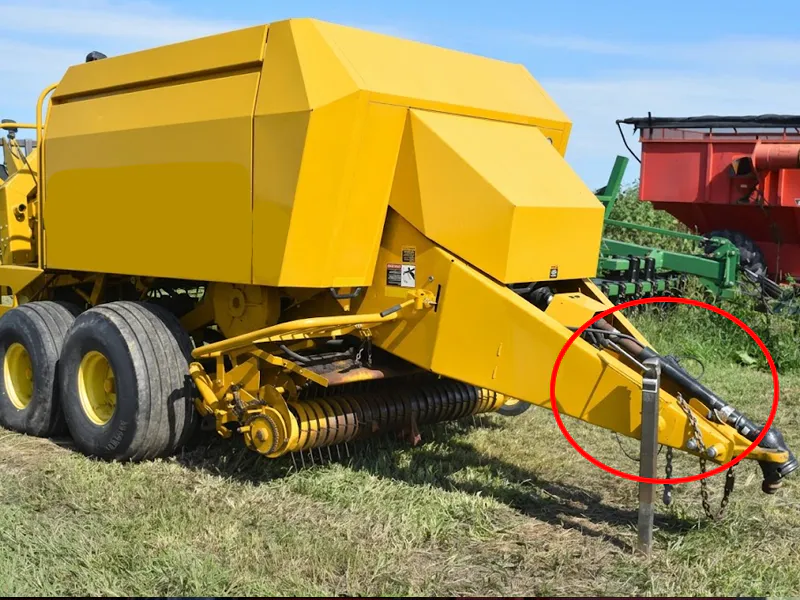
Square Baler PTO Shaft Design Features
The EP range incorporates the design features that define a purpose-built квадратный вал отбора мощности пресс-подборщика versus a generic agricultural PTO shaft.
Adjustable Implement-Side Length
The implement-side telescoping tube accommodates a range of John Deere square baler models with different tractor-to-input-shaft distances. The standard tractor-side CV assembly maintains a fixed connection geometry, while the implement side adjusts to the correct working length for the specific baler model in use — eliminating the need to source a model-specific fixed-length shaft for each baler in a mixed-fleet contracting operation.
High-Speed PTO Rating
Both CAT5 and CAT6 configurations in this range are rated for continuous 1000 rpm operation — the PTO speed used by high-horsepower John Deere tractors in European and North American cereal straw baling. The CV joint and telescoping tube assembly are balanced and dimensioned to operate within acceptable vibration limits at 1000 rpm, a criterion that eliminates several generic square baler pto shaft components from consideration for John Deere 1000 rpm baling applications.
Mechanical Overload Protection
The slip clutch mechanism provides mechanical overload protection calibrated to the square baler gearbox input shaft rating. When torque exceeds the clutch's preset threshold — as occurs when a blockage in the bale formation chamber stalls the plunger mechanism — the clutch slips before the overload reaches the gearbox input, protecting both the baler driveline and the карданный вал ВОМ assembly from structural overload damage.
Complete the John Deere Baler Drivetrain
Он Вал отбора мощности квадратного пресс-подборщика is the connection between tractor and baler, but the quality of every other driveline component determines whether the full system delivers a complete baling season without service interruption.
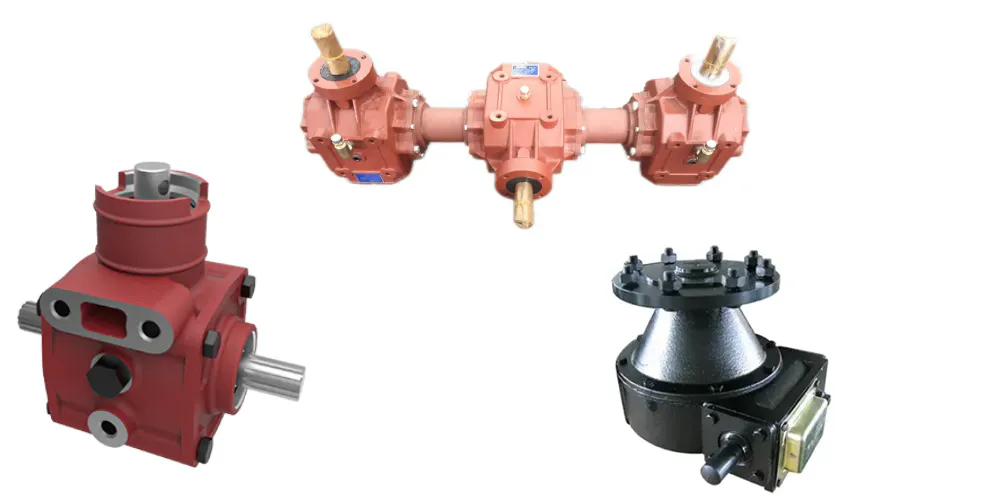
Сельскохозяйственные коробки передач
Наш Сельскохозяйственная коробка передач range covers baler input gearboxes, right-angle bevel drives, and planetary gear units — all rated for the same 540 rpm and 1000 rpm карданный вал ВОМ трактора input that the EP John Deere assembly delivers.
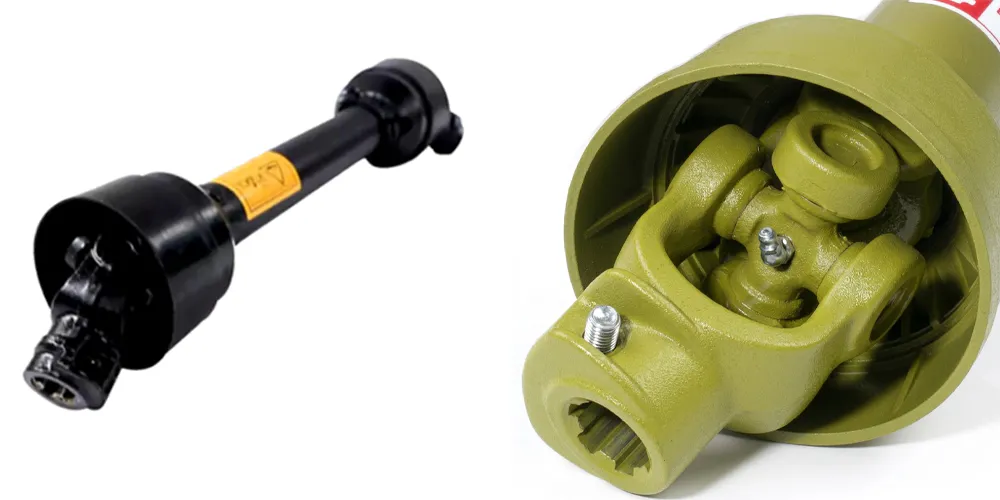
Universal Joints & Cross Kits
Он универсальный шарнир cross-and-bearing kits used in the EP John Deere square baler range are available as separate service replacement parts. In high-throughput baling operations, the implement-side Cardan cross kits are typically the highest-wear component in the driveline.
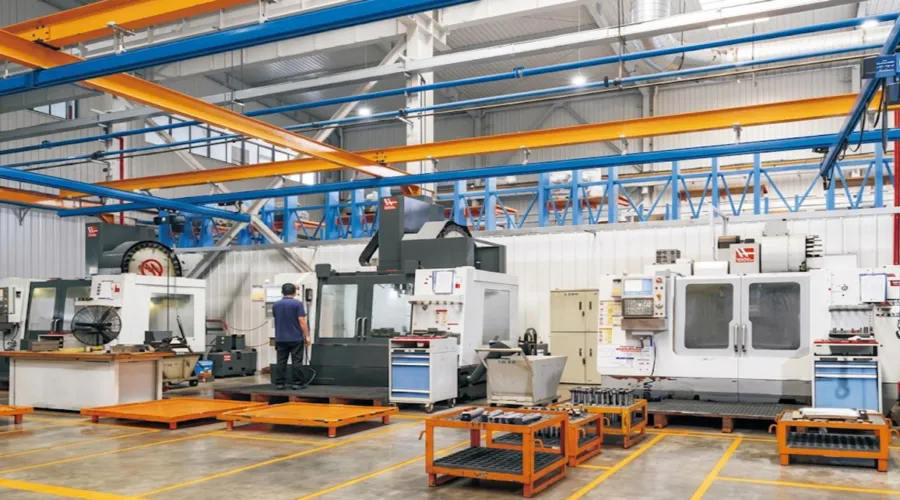
Engineering Expertise Behind the EP Square Baler PTO Shaft
More than ten years of focused agricultural power transmission engineering experience underpins the EP square baler PTO shaft range and every other product in our catalogue. We manufacture вал отбора мощности assemblies in all CAT classifications, agricultural gearboxes, worm gear reducers, planetary drives, hydraulic cylinders, roller chains, sprockets, and electric motors — the full mechanical drivetrain of professional agricultural and construction equipment — under a single ISO 9001:2015 certified quality management system with documented process controls from raw material receipt to finished assembly functional testing.
Мастер-класс

Часто задаваемые вопросы
Q1. What is the correct square baler PTO shaft part number for a John Deere square baler running on a 1.375-inch 6-spline 540 rpm tractor PTO in North American hay production?
For a 1.375-inch 6-spline 540 rpm tractor PTO configuration — the standard PTO stub on 80–120 HP tractors commonly used for hay baling in North America — the correct complete CV assembly is part number 14503548 (CAT5) or 14505548 (CAT6). If you need only the CV 1/2 shaft with shield (42 inch length), order 19503506 (CAT5) or 19505506 (CAT6). If replacing a Walterscheid 1/2 shaft, the cross-reference part numbers are 4GZM139 (CAT5) or 4GYM140 (CAT6).
Q2. How do I choose between CAT5 and CAT6 when specifying a square baler PTO shaft replacement for a machine in European cereal straw baling operations?
CAT5 covers the majority of square baler PTO driveline applications in European cereal straw baling at tractors up to approximately 150–160 HP. CAT6 is the correct specification when the tractor PTO output exceeds the CAT5 torque ceiling — typically when running John Deere balers behind 180 HP and above tractors in heavy straw baling conditions where the driveline may be operating at or near its rated capacity for extended daily periods.
Q3. What is the function of the CV joint in a John Deere square baler PTO shaft and why does it matter in Australian high-output baling operations?
The CV (constant velocity) joint at the tractor side of the square baler вал отбора мощности в сборе maintains a constant output angular velocity regardless of the operating angle between the tractor PTO axis and the baler input shaft axis. In Australian high-output baling operations where tractors make frequent headland turns while the baler continues running, the working angle at the tractor PTO changes continuously between zero and the maximum turn angle. A standard Cardan joint produces a cyclic torque pulse at any non-zero working angle — at 1000 rpm, this pulse repeats 2000 times per minute and progressively fatigues the baler input gearbox bearings.
Q4. How does the slip clutch on this square baler PTO shaft protect the baler gearbox during blocked bale formation events in South American baling operations?
The slip clutch in the EP квадратный вал отбора мощности пресс-подборщика assembly is a friction disc mechanism preset to slip — releasing the driveline connection — when the torque at the baler input shaft exceeds a pre-calibrated threshold. When a blockage in the bale formation chamber suddenly stalls the plunger mechanism, the full inertia of the flywheel, the baler gearbox input shaft, and the PTO driveline is converted instantaneously into a torque spike at the baler gearbox input. Without the slip clutch, this spike would fracture the gearbox input shaft, shear cross-kit journals, or strip the карданный шарнир вала отбора мощности yoke ears. With the slip clutch engaged, the clutch absorbs the overload by slipping — protecting the gearbox — while the operator disengages the PTO, clears the blockage, and re-engages.
Q5. How do I remove a PTO shaft from a tractor safely at the end of a North American baling season when disconnecting a square baler?
To safely disconnect the карданный вал ВОМ трактора from a square baler at the end of a North American baling season: place the tractor in Park, engage the parking brake, and switch the engine off completely — confirm by listening and checking the oil pressure gauge before leaving the cab.
Редактор: PXY