
Oil, Gas & Chemical Processing
Application of Single-Speed Gear Reducers
in Petrochemical Agitator and Mixer Drives
A technical reference for process and mechanical engineers specifying worm gear speed reducers for agitator and inline mixer drives in petrochemical plant environments — covering drive structure, material selection, torque performance, and application-specific configuration across global refining and chemical processing facilities.
Agitator and Mixer Drives in Petrochemical Plants — The Drive Train Challenge
Petrochemical processing relies on continuous and batch mixing at nearly every stage of production — from crude distillate blending tanks and naphtha treating vessels to polyolefin slurry reactors and lubricant base-stock blending systems. Each of these applications places a distinct set of demands on the drive train: variable viscosity as product composition changes, density differences between immiscible layers during blending, and the mechanical shock of gas bubble breakup in gas-liquid dispersion contactors. Managing these conditions without mechanical failure or process upset requires a drive element that delivers steady torque output, absorbs transient load peaks, and maintains its performance characteristics over years of continuous service.
The single speed reducer addresses this challenge by converting the high-speed, low-torque output of a standard electric motor into the low-speed, high-torque drive that agitator and mixer impellers require. Unlike a variable-frequency drive system — which adjusts speed electronically — the single stage speed reducer delivers a fixed mechanical ratio with the load-compliance characteristics of a worm gear mesh: smooth output, natural shock damping, and a self-locking tendency at high ratios that prevents impeller coast-down when the motor is de-energized. These three properties make the single speed worm gear reducer the preferred drive element in petrochemical mixing applications where process stability, low maintenance burden, and compact installation footprint are the governing design criteria.
Petrochemical plants across the Gulf Coast, the Rotterdam refining corridor, the Middle East petrochemical hubs of Saudi Arabia and the UAE, and the integrated chemical complexes of South Korea, Singapore, and India have all standardized on WP-series worm gear speed reducers for this class of agitator and mixer service — a distribution that reflects the reliability track record and global availability of catalog-standard WP-series units.
Manufacturing Structure
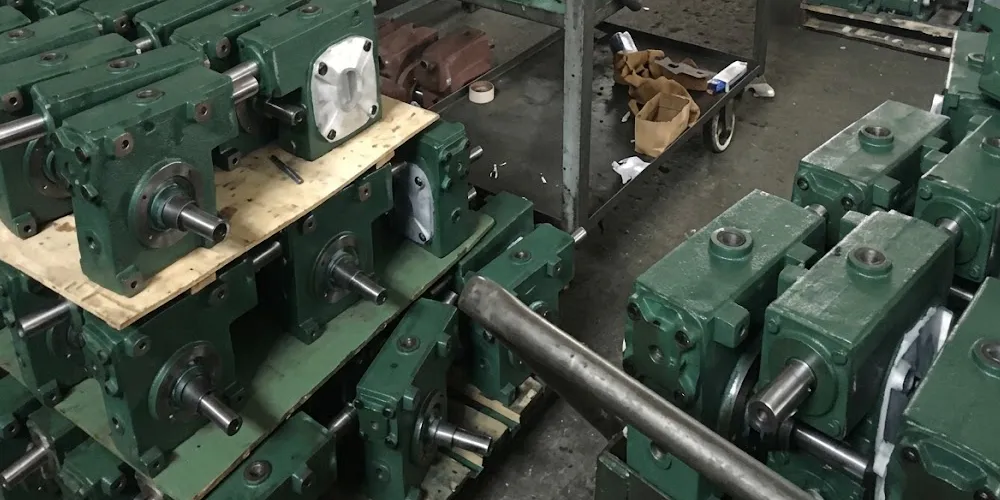
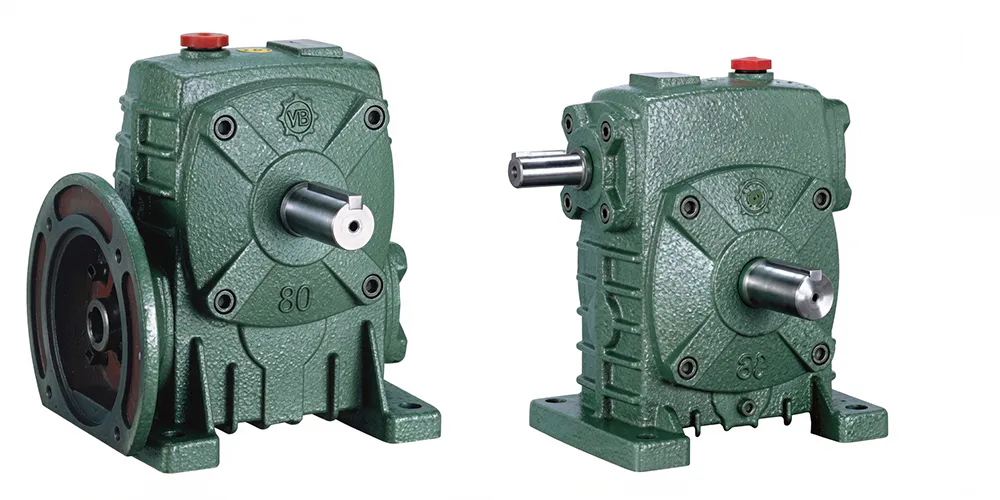
The WP-series single speed gear reducer is built around a matched worm shaft and worm wheel enclosed in a precision-machined cast housing. The worm shaft — manufactured from case-hardened alloy steel and ground to tight lead-accuracy tolerances — meshes with a phosphor-bronze worm wheel whose bronze alloy is selected for its inherent lubricity against steel counterfaces and its fatigue resistance under the cyclic loading profiles that agitator drives generate through long continuous-duty mixing cycles.
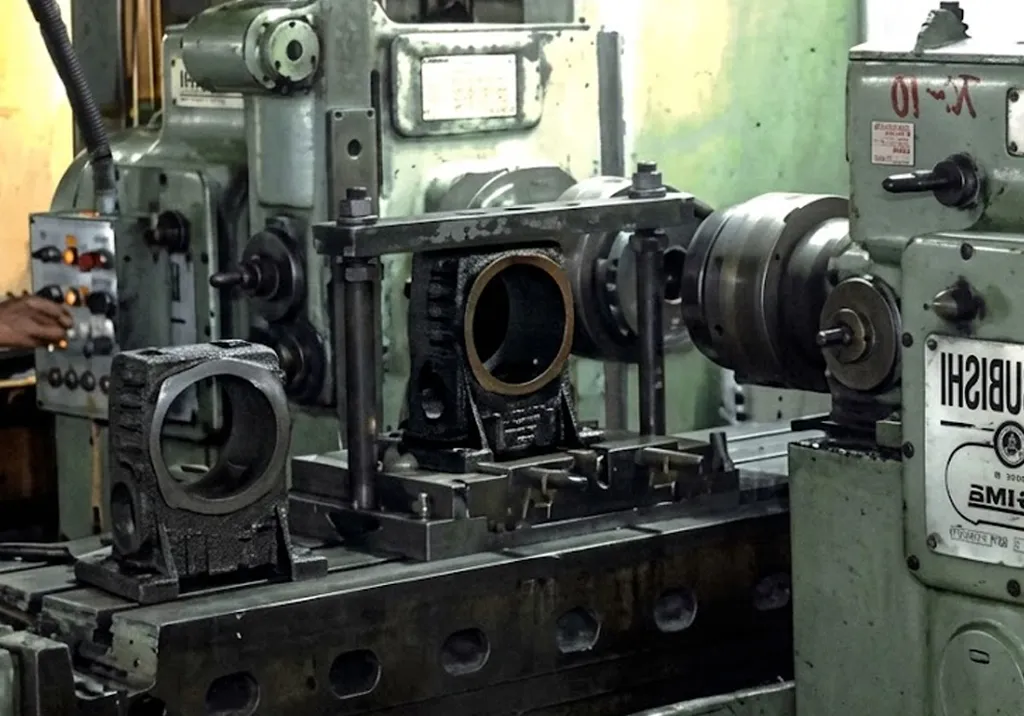
Both bearing housings are bored in a single machining setup on the assembled housing casting. This matched-bore approach guarantees the worm-to-wheel center distance and gear-mesh geometry remain within tolerance throughout the housing’s thermal cycle, preventing the progressive misalignment that causes premature bearing and seal failures on long-running petrochemical plant agitator drives. Taper roller or deep-groove ball bearings are selected depending on the axial-to-radial load ratio that the specific agitator shaft geometry produces — taper rollers for heavily cantilevered impeller assemblies, ball bearings for lighter inline mixer shaft configurations where radial loading dominates.
Output shaft configurations within the WP series cover horizontal and vertical mounting orientations, solid and hollow-bore output, and single or dual foot-mounting bases. The EP-WPDS and EP-WPKA variants, for example, offer flange-and-foot combinations that accommodate both top-entry and side-entry mixer nozzle geometries on petrochemical vessel heads without requiring custom machining of the agitator support structure.
20CrMnTi alloy steel, precision ground. Maintains lead accuracy under sustained agitator torque loading without progressive flank wear.
ZCuSn10Pb1 alloy ring on cast-iron hub. Inherent lubricity reduces mesh friction heat in continuous-duty mixer drives — a primary factor in bearing and oil service life.
Both bearing bores machined in single setup. Preserves center-distance geometry through thermal cycling in heated process plant environments.
Multiple output shaft face options and mounting configurations cover top-entry, side-entry, and bottom-entry agitator and mixer nozzle geometries without custom machining.
Material System for Petrochemical Service
Petrochemical plant environments expose agitator drive equipment to a combination of corrosion mechanisms that do not occur simultaneously in most other industrial settings: process vapor contact at the shaft seal, atmospheric exposure to hydrogen sulfide in refinery amine treater and sour-water stripper areas, solvent vapor from hydrocarbon processing units, and thermal cycling from steam-tracing systems on cold-climate storage tanks. Each mechanism requires a different material response — and the WP-series offers a range of housing materials, shaft alloys, and seal types that allow the single speed reducer to be configured appropriately for each specific service.
Gray cast iron is the standard housing material and provides excellent vibration damping — a genuine advantage on agitator drives where blade unbalance and process fluid inhomogeneity generate cyclic excitation forces at the drive train. Ductile iron increases impact toughness for mixer drives on vessel heads subject to mechanical shock during cleaning or maintenance access. Cast aluminum alloy eliminates iron surface corrosion in chloride-bearing or halogen-rich process atmospheres, and its 40–60% lower weight compared to equivalent iron castings reduces the structural load on vessel nozzles — relevant on thin-walled pressure vessels where nozzle load limits govern agitator support design.
| Компонент | Standard Material | Petrochemical Alternative | Selection Driver |
|---|---|---|---|
| Жилье | Gray cast iron | Ductile iron / Cast aluminum | Aluminum eliminates chloride surface attack; ductile iron absorbs mechanical shock in cleaning and maintenance cycles |
| Червячный вал | 20CrMnTi alloy steel | SUS304 / SUS316 stainless steel | 316-grade stainless resists H₂S pitting in sour-service amine treater and sour-water stripper mixer applications |
| Червячное колесо | Phosphor bronze ZCuSn10Pb1 | Aluminum bronze | Aluminum bronze provides higher fatigue strength for high-torque, high-cycle blending service on large crude tankage agitators |
| Input Shaft Seal | NBR lip seal | FKM (Viton) lip seal | FKM resists aromatic hydrocarbons, BTEX vapors, and naphtha solvents common in refinery agitator environments |
| Output Shaft Seal | NBR lip seal | PTFE-lipped FKM | PTFE running lip lowers torque friction and extends seal life on slow-turning agitator output shafts that generate abrasive contact wear on NBR lips |
| Смазка | ISO VG 220 mineral gear oil | PAG synthetic, ISO VG 220 or 320 | PAG fluids are compatible with phosphor-bronze worm wheels and extend drain intervals on continuous-duty mixer drives in Middle East and South Asian ambient conditions above 40°C |
Recommended for Petrochemical Agitator and Mixer Service
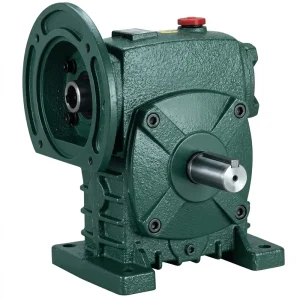
EP-WPDS Single Speed Reducer (0.12–15 kW Input Power)
The EP-WPDS covers an input power range of 0.12 to 15 kW — a span that addresses the majority of auxiliary petrochemical agitator and inline mixer applications, from small chemical dosing mixer drives at pilot-plant scale to mid-range blending agitators on atmospheric storage tanks and treating vessels. Its coaxial worm shaft arrangement and foot-plus-flange mounting pattern integrate directly with standard IEC electric motor frames, eliminating the need for intermediate adapters and reducing the number of alignment points in the drive train.
Reduction ratios from 1:10 to 1:60 cover the full range of agitator impeller speed requirements encountered in petrochemical mixing — from high-speed dispersers running at 200–300 rpm for gas dispersion in hydrotreater contactors, to slow paddle agitators running at 15–30 rpm in bitumen blending tanks. At ratios above 35:1, the self-locking characteristic of the single reduction worm mesh prevents impeller coast-down when the drive motor is shut down between batch cycles, removing the requirement for a separate mechanical brake in many low-risk mixing applications.
- Input power: 0.12–15 kW — covers dosing, treating, blending, and dispersion mixer services
- Foot-plus-flange mounting — compatible with IEC motor frames globally
- Ratios 1:10 to 1:60 — single-unit coverage for high-speed dispersers to slow paddle agitators
- Self-locking at ratios above 35:1 — passive impeller hold on motor stop
- FKM seal and aluminum housing options for refinery atmospheric and solvent-vapor environments
Torque Delivery and Mixing Performance in Petrochemical Drives
The quality of mixing in a petrochemical vessel is directly determined by the consistency of the torque delivered to the agitator shaft over time. Any variation in drive torque translates to a variation in impeller tip speed, which alters the shear rate applied to the fluid, disrupts droplet or bubble size distribution in dispersed-phase systems, and — in reactive mixing processes — can shift selectivity away from the desired reaction pathway.
The worm gear mesh in a single speed reducer delivers torque with a high contact ratio — meaning multiple tooth pairs are always simultaneously in mesh — which spreads the transmitted load across the gear face and reduces the torque ripple that would otherwise appear at the agitator shaft with each individual tooth engagement. This multi-tooth contact characteristic makes the worm speed reducer inherently smoother in output torque than an equivalent spur-gear single reduction stage, where the contact ratio is typically below 2.0 and individual tooth loading is more pronounced.
In petrochemical applications where the fluid viscosity changes significantly during the mixing cycle — polyolefin slurry thickening, bitumen emulsification, or crude-oil demulsifier treatment — the worm gear mesh also provides passive compliance to viscosity-induced torque surges. The sliding contact between the worm thread and the wheel tooth creates a self-regulating lubrication film behavior: as load increases, the elastohydrodynamic film thickens slightly, increasing the effective compliance of the drive and absorbing the torque surge before it reaches the motor shaft. This is the mechanical behavior that petrochemical plant engineers observe as the absence of motor overcurrent trips on mixing drives subjected to batch charging events.
Selection Parameters for Petrochemical Agitator and Mixer Drives
The table below covers the principal parameters relevant to specifying a single speed gear reducer for petrochemical agitator and mixer service across different vessel types, process fluids, and installation configurations encountered in global refining, olefins, aromatics, and specialty chemical plant environments.
| Параметр | Typical Range (WP Series) | Notes for Petrochemical Agitator Service |
|---|---|---|
| Input Power | 0.12–15 kW (WPDS series) | Covers dosing mixer drives at 0.12 kW through mid-range crude blending agitators at 11–15 kW |
| Reduction Ratio | 1:10 to 1:60 (single stage) | Higher ratios (40–60:1) deliver self-locking — removes impeller brake requirement in many auxiliary and treating vessel services |
| Mounting Load | 5–365 kg (WPKA/WPKS/WPDKA) | Accounts for impeller shaft weight, impeller assembly mass, and fluid reaction forces acting upward on propeller-type impellers in low-viscosity services |
| Oil Capacity | 0.4–5.2 L (WPKZ/WPKDZ variants) | Extended oil reservoir reduces drain frequency on continuous blending services where access requires scaffolding or confined-space permits |
| Ambient Temperature Range | −20°C to +40°C standard | Middle East and South Asian petrochemical plant ambients regularly exceed 40°C — synthetic PAG lubricant and enhanced ventilation of the agitator drive enclosure are standard specification for these regions |
| IP Sealing | IP54 standard; IP65 optional | IP65 required on agitator drives in outdoor tank farm and loading bay environments exposed to precipitation and fire-suppression wash-down |
| Efficiency | 70–90% (ratio-dependent) | Lower ratios approach 90% efficiency; at 60:1 efficiency falls to 50–60% — heat balance of the agitator drive room must be verified for drives at high ratios in confined enclosures |
Matching the Single Speed Reducer to Petrochemical Mixer Types
Petrochemical plants use a wider variety of agitator and mixer configurations than most other process industries — a direct consequence of the diverse rheology of petroleum fractions, polymer melts, emulsions, and reactive slurries that appear at different stages of the production chain. Matching the single speed gear reducer ratio and mounting configuration to the agitator type is central to reliable mixing performance.
Propeller and turbine agitators used in low-viscosity hydrocarbon blending — crude oil tank homogenization, fuel blending, and naphtha treating — typically run at 60–180 rpm at the impeller, requiring reduction ratios of 8:1 to 25:1 from a standard 1,450 rpm or 1,500 rpm motor. At these lower ratios, the worm gear speed reducer operates at its highest efficiency range, minimizing heat generation and extending oil drain intervals in the drive unit.
Anchor and helical ribbon agitators in high-viscosity polyolefin, synthetic rubber, and lubricant base-stock blending services run at 10–40 rpm, requiring ratios of 35:1 to 60:1. At these ratios, the single speed worm gear reducer enters its self-locking range, providing passive impeller hold on motor de-energization. The lower efficiency at high ratios generates more heat in the worm mesh, making lubricant selection and ambient temperature assessment more important at this end of the ratio range.
Inline static and dynamic mixers used in additive injection services — corrosion inhibitor, demulsifier, drag reducer, and scale inhibitor dosing — typically use smaller single speed reducer units at the low end of the power range (0.12–1.5 kW), where the compact EP-WPDS frame provides a dimensionally appropriate drive with standard IEC motor mounting and minimal installation footprint in crowded pipeline header areas.
Low-viscosity crude, naphtha, and fuel blending. Ratios 8:1–25:1. Single speed reducer at peak efficiency range — low heat, long oil service life.
High-viscosity polyolefin, rubber, and lube blending. Ratios 35:1–60:1. Self-locking range — passive impeller hold on motor stop, synthetic lubricant recommended.
Hydrotreater and amine contactors. Mid-range ratios 15:1–30:1. High contact ratio of worm mesh damps gas-bubble breakup impulse loads at the impeller.
Corrosion inhibitor, demulsifier, and drag-reducer dosing. Low power 0.12–1.5 kW. Compact WPDS frame with minimal footprint in congested pipeline header bays.
Global Petrochemical Plant Application Contexts
Petrochemical agitator and mixer drives face different predominant challenges depending on the region and process type. On the US Gulf Coast — covering Texas, Louisiana, and the broader PADD 3 refining cluster — the primary specification driver is compliance with API 671 coupling standards and the ability to supply material certifications traceable to ASTM standards for welding fabrication documentation packages submitted to downstream engineering procurement and construction contractors. WP-series single speed reducers with ASTM-traceable material documentation for housing and shaft materials support this requirement in standard procurement practice.
In the Rotterdam and Antwerp refining corridor of Northwestern Europe, agitator drive specifications frequently invoke ATEX Directive 2014/34/EU for mixer drives located in classified zones around crude tank vents, wastewater treatment basin covers, and solvent recovery units. The single speed reducer housing is passive and not itself an ignition source under ATEX classification, but the motor and coupling must be ATEX-rated to the zone classification, and the reducer seal material — FKM versus NBR — must be specified to prevent lubricant leakage into the classified atmosphere.
In the Middle East — Saudi Arabia, UAE, Kuwait, and Qatar — the combination of high ambient temperatures (regularly 45–50°C in summer) and the prevalence of continuous-production petrochemical complexes running three-shift 365-day schedules means that agitator drive thermal performance and lubricant drain-interval management are the dominant specification concerns. Synthetic PAG lubricants at ISO VG 320, combined with extended oil-capacity WPKZ variants of the single speed reducer, are the standard specification for mixer drives in these environments. Indian and Southeast Asian petrochemical clusters — including the Jamnagar, Dahej, and Mundra complexes in India, and Jurong Island in Singapore — similarly specify synthetic lubricants and IP65 sealing as baseline requirements rather than optional upgrades.
Related Products for Petrochemical Drive Systems
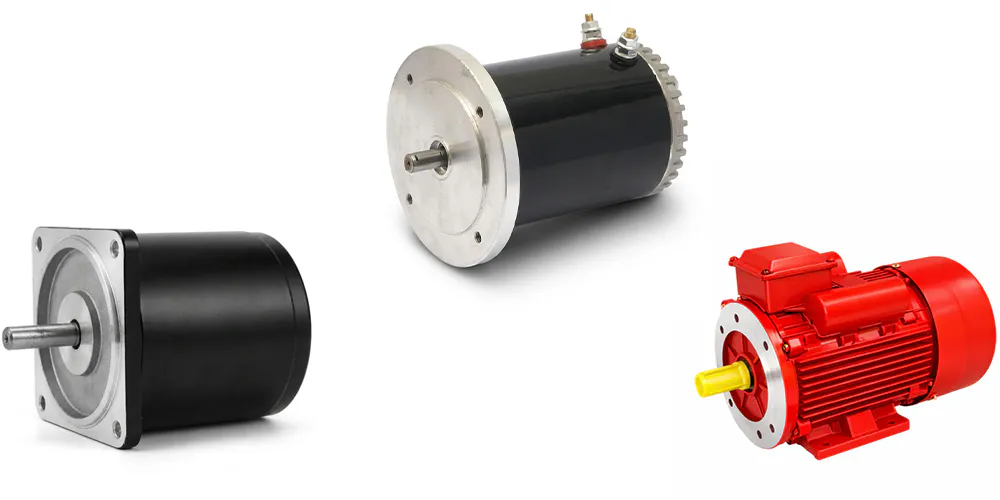
Petrochemical mixer and agitator drive packages benefit from sourcing the reducer, motor, and associated drive components from a single supplier — reducing the number of vendor qualification audits, harmonizing documentation formats for submission to engineering procurement and construction review, and ensuring dimensional compatibility across the entire drive train without custom machining at assembly.
О нас
The product lineup encompasses agricultural gearboxes, worm gear reducers, planetary gear drives, power take-off shafts, hydraulic cylinders, gears, chains, and motors — manufactured within an ISO 9001:2015 certified production environment. Engineering capability spans catalog-standard configurations and duty-specific variants developed to customer process requirements, including petrochemical-grade material specifications and specialist seal packages.
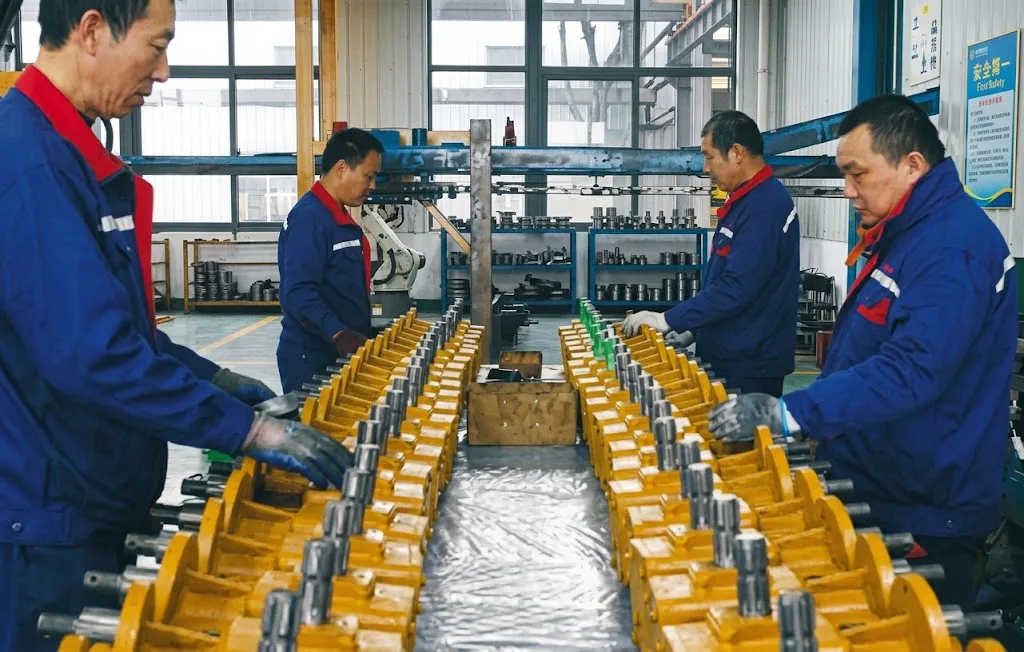
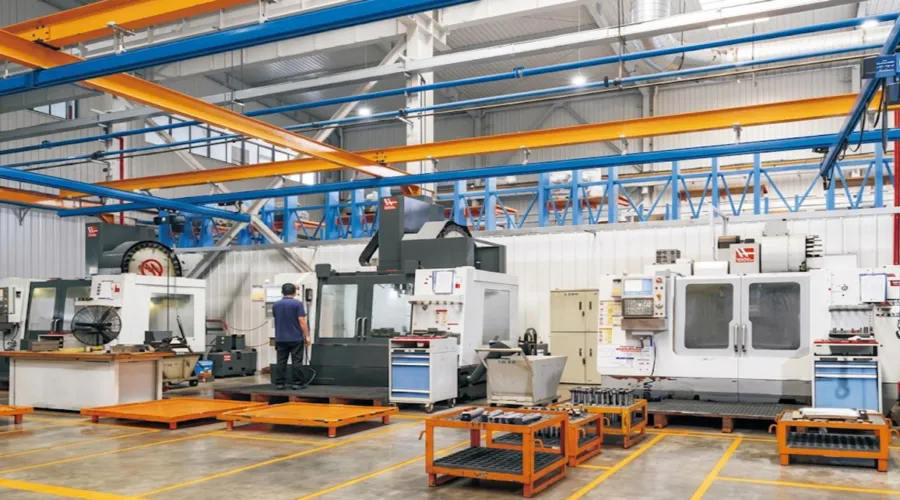
Production scope covers housing materials in ductile iron, cast iron, cast steel, precision cast steel, and cast aluminum. Component manufacturing extends across precision-cut gears, roller sprockets, worm wheels, worm shafts, pulleys, and an extensive range of standard and non-standard mechanical parts serving OEM and project engineering clients globally. Petrochemical plant engineering and procurement teams can consolidate reducer, motor, and mechanical drive component requirements under a single technical supplier, supporting simplified EPC documentation packages and unified vendor qualification processes across multi-vessel agitator drive procurement programs.
Мастер-класс
Часто задаваемые вопросы
Редактор: PXY