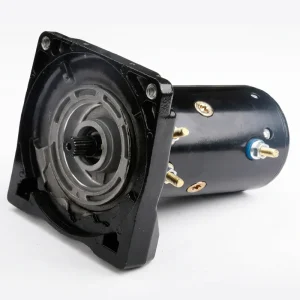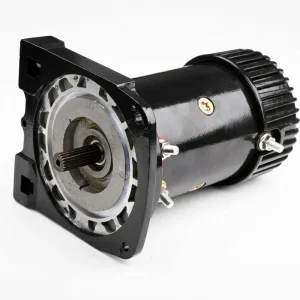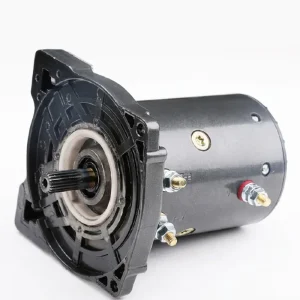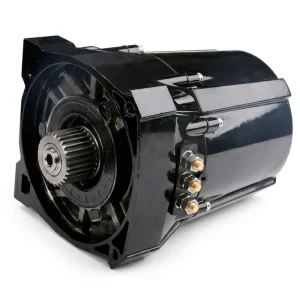
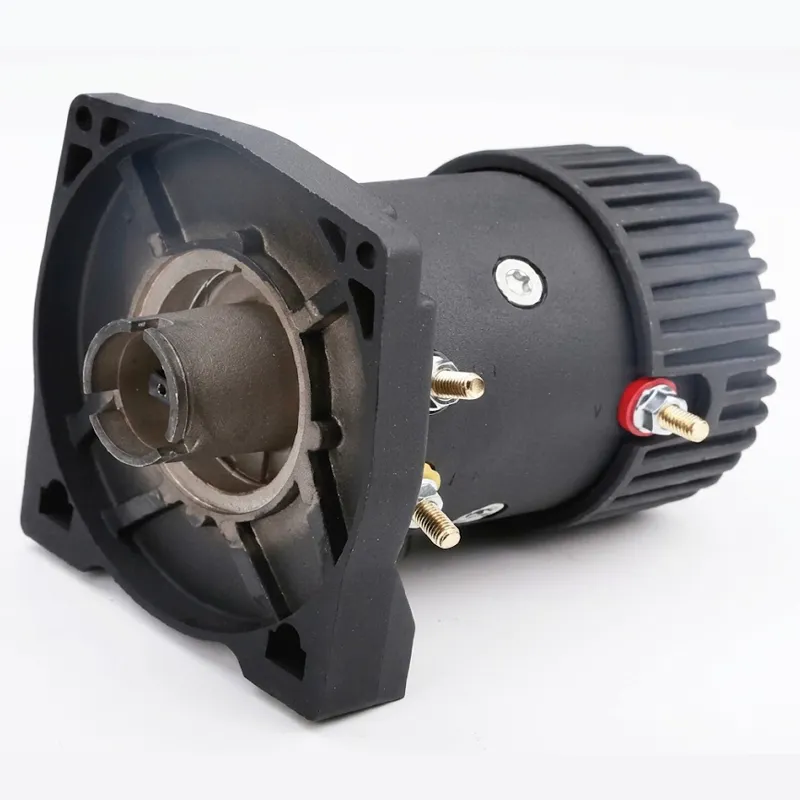
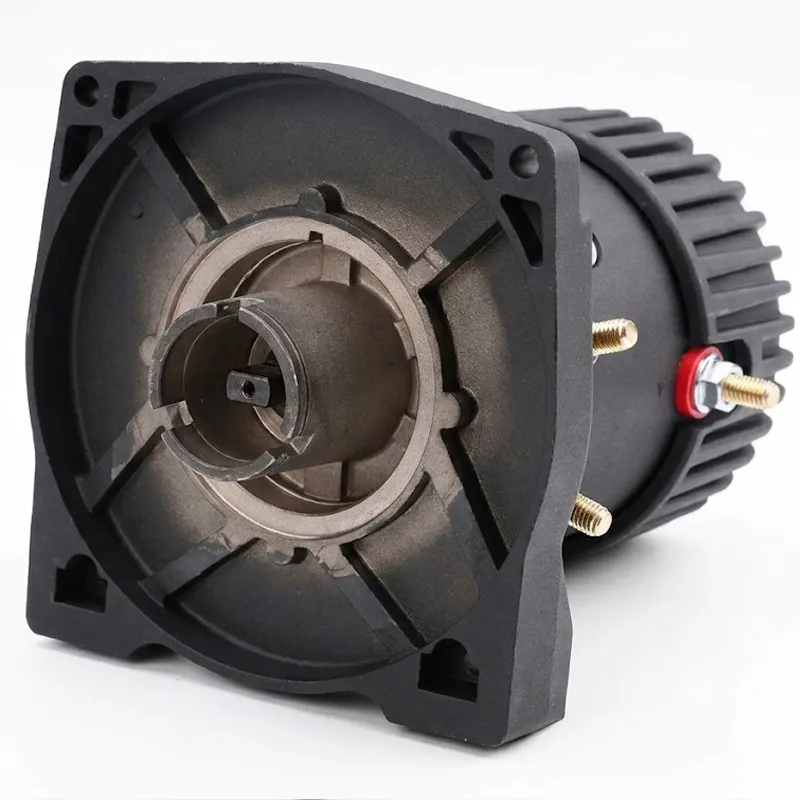
Лебедочный двигатель EP-PLS-1750W 12V 6 Н·м
The EP-PLS-1750W winch motor is a high-performance, planetary-output DC electric motor purpose-built for demanding winch applications where maximum torque density, superior weatherproofing, and reliable bidirectional control are non-negotiable. Designated model XL12000PLS, this unit delivers 1750W at 12V DC through a planetary gear interface, drawing up to 240A at full load and producing a continuous rated torque of 6 N·m — parameters that align directly with commercial off-road recovery winches, marine deck winches, and heavy-duty industrial pulling systems.
Heavy-Duty 12V Planetary Winch Drive
Лебедочный двигатель EP-PLS-1750W 12V 6 Н·м
Model XL12000PLS — an upgraded IP67-sealed, planetary-output 12-вольтовый двигатель лебедки rated at 1750W with 6 N·m torque, bidirectional rotation, and a 2-tooth planetary drive interface engineered for the most demanding commercial and off-road winch platforms worldwide.
Technical Specifications — Model XL12000PLS Winch Motor
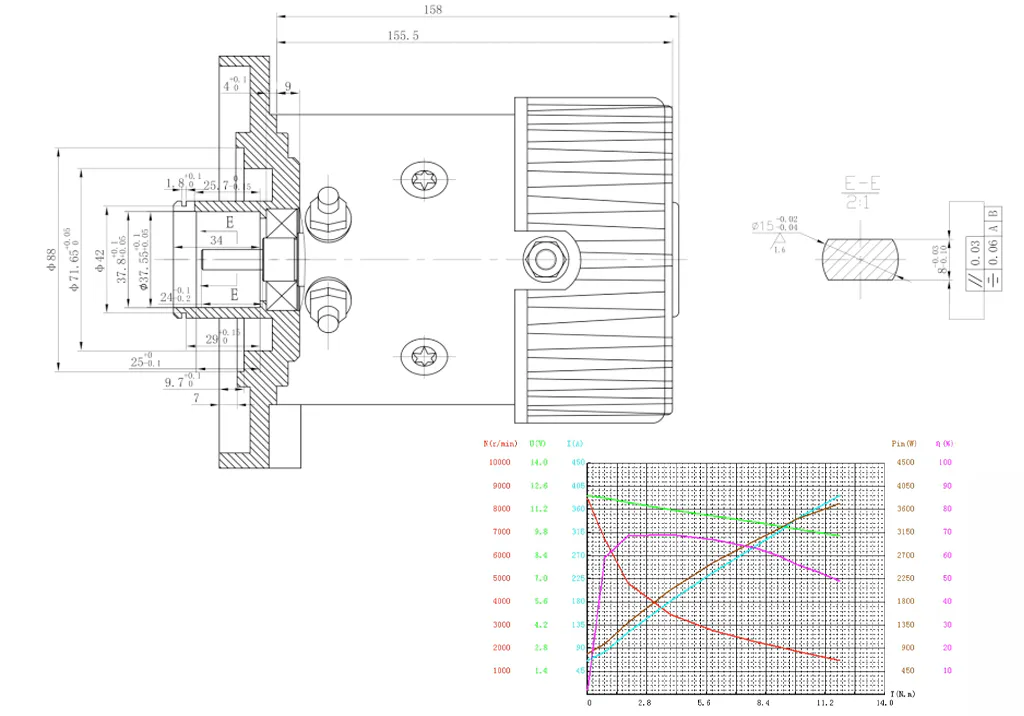
All parameters are recorded under rated operating conditions per Class F insulation classification. Dimensional data is extracted from the XL12000PLS Winch Motor outline drawing. The upgrade from IP54 to IP67 is the key distinguishing specification versus the standard XL12000R variant.
| Параметры двигателя лебедки | Ценить | Примечания |
|---|---|---|
| Модель двигателя | XL12000PLS | Planetary-output Winch Motor Series |
| Номинальное напряжение | 12 В постоянного тока | Standard 12 volt winch motor |
| Номинальная мощность | 1750 Вт | Пиковая потребляемая электрическая мощность |
| Номинальный ток | ≤240 А | Maximum full-load current draw |
| Номинальный крутящий момент | 6 Н·м | Непрерывный выходной крутящий момент |
| Рабочий цикл | S2 2 мин – 7% ED | Кратковременный прерывистый рейтинг |
| Класс изоляции | Класс F | Максимальная температура обмотки 155°C |
| Степень защиты | IP67 | Fully waterproof — submersion rated |
| Количество зубов | 2 | Планетарная приводная шестерня |
| Направление вращения | Двунаправленный | По часовой и против часовой стрелки путем изменения полярности. |
| Область применения | Лебедки | Off-road, marine, commercial |
| Общая длина | 198 mm | Полная осевая длина |
| Длина тела (указана в качестве эталонной) | 155.6 mm | Motor body to mounting face |
| Mounting Spigot Depth | 34 mm | Front face register depth |
| Bolt Circle Reference | 25.4 mm / 9.77 mm | Mounting bolt pattern dimensions |
| Терминальное соединение | A1, D2 (+ обмотка возбуждения) | Согласно схеме подключения |
How the XL12000PLS Winch Motor Works
The XL12000PLS operates on the принцип работы двигателя постоянного тока с постоянными магнитами, converting DC electrical energy into rotational mechanical force through the interaction between the energised armature winding and the fixed permanent magnet stator assembly. When current is supplied through the A1 and D2 terminals — combined with the field winding — a powerful electromagnetic field is generated around the armature core. The stator magnets oppose and attract this field, driving the armature into rotation at the output shaft.
What the PLS designation adds to this standard принцип работы двигателя постоянного тока is a planetary gear drive interface at the output end. Rather than a simple spur pinion, the motor's drive face is configured to engage directly with the planetary gear carrier inside the winch drum housing. This interface geometry — represented by the 2-tooth drive configuration in the specification — distributes the torque load across multiple gear contact points simultaneously, reducing per-tooth stress and extending the gear engagement life compared to a single-engagement spur pinion design. The result is a высокомоментный двигатель постоянного тока drive that manages the peak load spikes of vehicle recovery pulls more smoothly.
Bidirectional operation works identically to other series-wound двигатель лебедки постоянного тока designs: reversing the current polarity at the solenoid relay box immediately reverses the armature rotation direction, spooling the winch rope in or out depending on the switch position. The wiring diagram shows the four-terminal layout — A1, D2, and both field winding connections — which is the standard arrangement for compatibility with aftermarket solenoid control boxes across the main winch brands. IP67 sealing of the terminal block itself prevents moisture tracking through the connection points, which is one of the most common ingress failure paths in waterproof motor designs that cut corners at the terminal area.
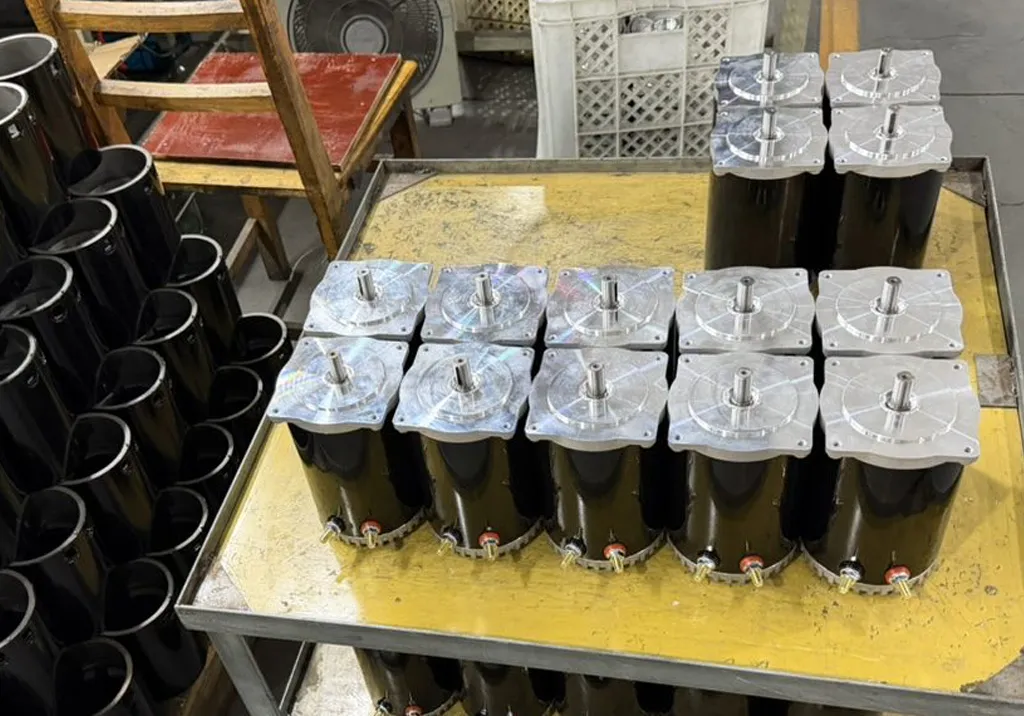
Five Reasons to Specify the XL12000PLS
① IP67 — Genuine Submersion Rating
Upgrading from IP54 to IP67 changes not just the sealing specification but the range of installations the motor can reliably handle. Where IP54 stops at water splash protection, IP67 certifies the motor against temporary water immersion to 1 metre depth. For winches mounted in under-bumper positions that go underwater during river crossing recovery, or boat-ramp trailer winches routinely submerged during launch and retrieval, this rating is the difference between a motor that survives and one that doesn't. Every sealed joint — including the terminal block — meets IP67 in this build.
② Planetary Drive Interface — Distributed Load
The 2-tooth planetary drive pinion engages multiple planet gear teeth simultaneously inside the winch drum's planetary carrier. This distributed load geometry reduces the peak stress on any individual gear tooth during high-torque recovery pulls — the moment when line tension spikes sharply as a stuck vehicle starts to move. Compared to a single-engagement spur pinion of the same size, the planetary interface extends gear set life and reduces the risk of tooth failure under the shock loads that off-road recovery regularly generates.
③ 1750W / 6 N·m — Full Recovery-Class Output
At 1750W input and 6 N·m output torque, the XL12000PLS sits in the power band required by winches rated in the 9500–13000 lb line-pull class — the segment covering most light to medium commercial 4WD recovery winches. The up-to-240A current capacity and robust armature design handle the peak surge current drawn at motor stall without triggering thermal protection on the first recovery pull, which can happen with undersized motors matched incorrectly to a winch rated above their comfortable operating range.
④ Class F Insulation — Extended Thermal Margin
Class F insulation sets the maximum continuous winding temperature at 155°C — considerably above the actual operating temperature under S2 2min–7%ED duty cycle conditions even in 40°C ambient temperatures common to Australian outback, Middle Eastern, and African off-road markets. This margin means the motor does not degrade its insulation integrity progressively through normal use, as would happen with a Class B motor pushed toward its limit in hot climates. Long service life between brush replacements is a direct downstream benefit.
⑤ Замена двигателя лебедки без доработок
The XL12000PLS mounting face geometry and planetary drive pinion dimensions are matched to the most widely deployed winch drum housings in the 9500–13000 lb category. For workshops and fleet operators carrying out a замена двигателя лебедки, this means the motor installs without adapters or machining — a critical factor when a vehicle is off-road and turnaround time matters. The four-terminal wiring layout also preserves existing solenoid box connections without rewiring.
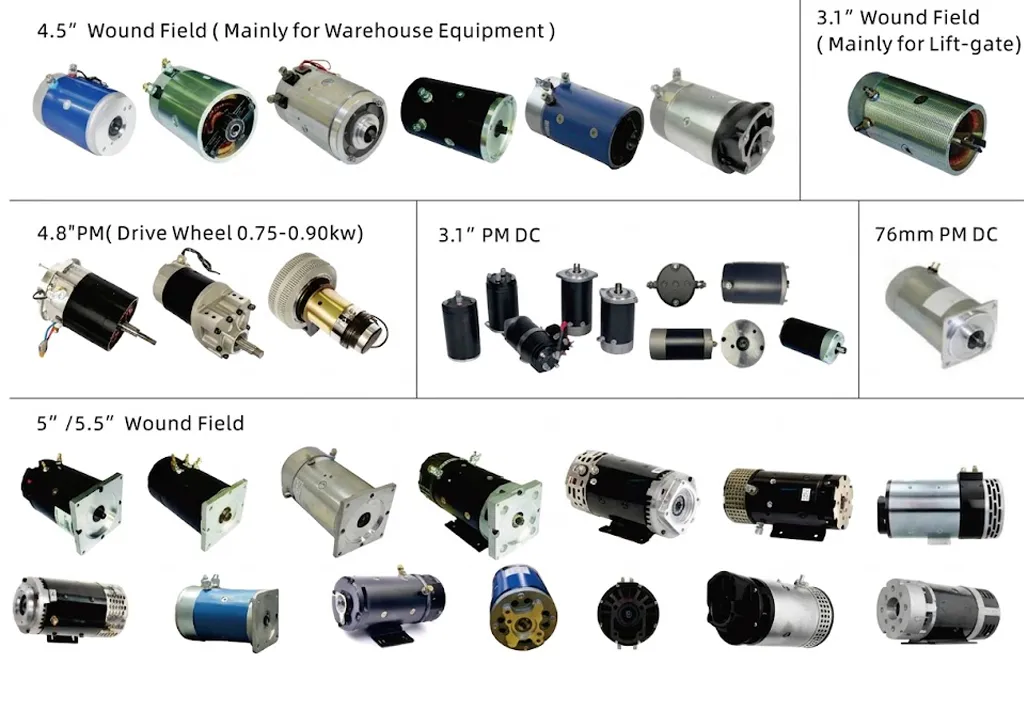
Качество материалов и строительства
The XL12000PLS is built around a material specification refined for the environmental and mechanical extremes of heavy-duty winch service. The motor housing is pressure die-cast from high-grade aluminium alloy — chosen for its combination of structural strength, corrosion resistance in saltwater environments, and thermal conductivity that helps dissipate heat generated during sustained high-current pulls. The housing geometry includes integral ribbing on the outer surface to maximise surface area for passive heat transfer without increasing the overall envelope dimensions.
Stator laminations are produced from cold-rolled silicon steel, cut to tight dimensional tolerances and stacked with controlled interlaminar pressure to maintain consistent magnetic circuit geometry across the motor's operating temperature range. The permanent magnets are sintered neodymium-iron-boron (NdFeB) grade — chosen over cheaper ferrite alternatives specifically for their high energy density, which allows the full 1750W output to be developed in a compact housing that fits standard winch drum architectures. NdFeB maintains its magnetisation characteristics through tens of thousands of thermal cycles without measurable flux degradation, which is the property that makes it the default choice for высокомоментный электродвигатель designs in demanding intermittent-duty applications.
The armature winding uses high-purity enamelled copper wire, Class F rated, applied with precision CNC winding equipment to maintain consistent pole-to-pole resistance balance. The commutator segments are machined from oxygen-free copper, ground concentric to the armature shaft centreline and dynamically balanced as part of the assembled rotor. Electrographite brushes — chosen for controlled contact resistance and low commutator wear rate at high current densities — are installed with a spring pressure set to maintain reliable contact through the motor's full operating temperature range without micro-arcing.
All motor output from this production line is verified through a final inspection protocol covering insulation resistance, no-load current and speed, brush contact integrity, and IP67 immersion seal verification before each unit is released for shipment. Production is conducted under ISO 9001:2015 certified quality management, with full batch traceability from raw material intake to finished motor inspection record. This is the documented quality infrastructure that separates a reliable электродвигатель лебедки from a similar-looking alternative without these controls behind it.
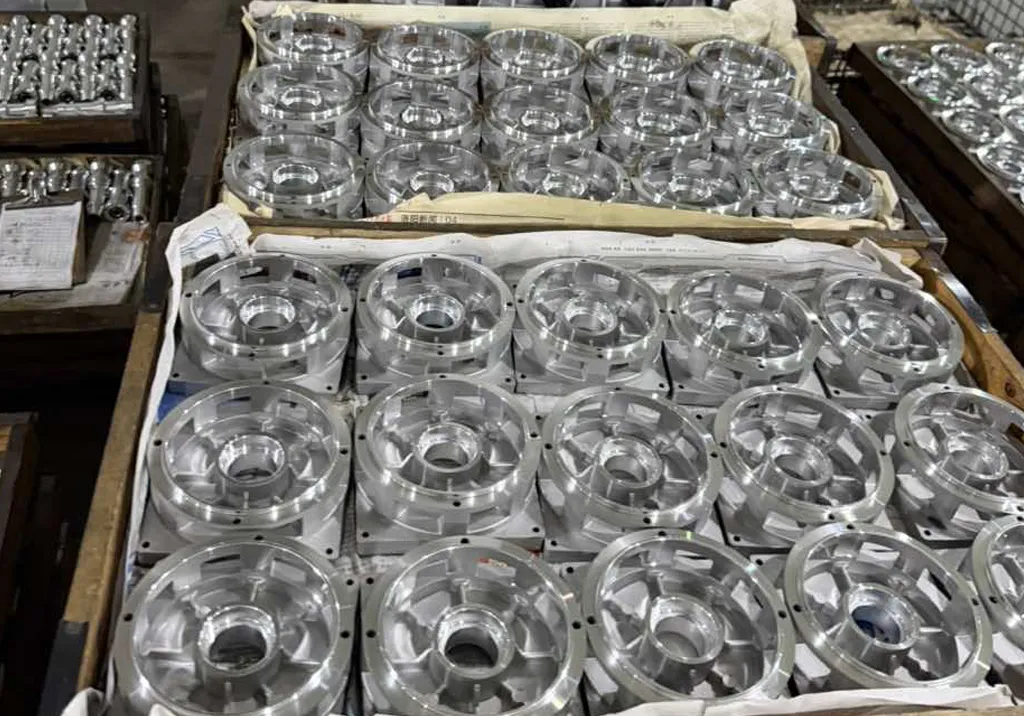
Сценарии применения
The XL12000PLS мотор лебедки is targeted at applications where standard IP54 protection is insufficient, torque consistency under peak load matters, and direct compatibility with planetary winch drum architectures is required. Below are the primary environments where this motor's upgraded specification provides tangible performance and durability advantages over lower-grade alternatives:
Off-Road 4WD Recovery — Water Crossing Situations
In river crossing recovery scenarios, the winch motor is frequently partially or fully submerged when the anchor vehicle hooks up to a stranded vehicle mid-stream. IP67 protection means the XL12000PLS keeps pulling in these conditions where an IP54 motor would be at immediate risk of water ingress through the seals. This is the real-world use case that the IP67 upgrade was specified for — not as a marketing claim but as an engineering response to a documented failure mode.
Boat Trailer & Marine Launch Winches
Boat ramp winches are submerged every time a boat is launched or retrieved. The motor takes on water splash, submersion, and salt spray in a single operational sequence. In Australian and New Zealand coastal markets where aluminium trailer winches are standard fitment, the XL12000PLS is the natural motor choice when upgrading from a manual or low-spec электродвигатель лебедки — the IP67 rating eliminates the corrosion-related failures that shorten the life of unrated or IP54 motors in these conditions within a single season.
Commercial Vehicle Recovery & Towing Equipment
Heavy-duty tow trucks and breakdown recovery vehicles carry winch systems that see high-cycle use throughout a working shift — sometimes in the rain, sometimes on flooded roads. The S2 2min–7%ED duty cycle of the XL12000PLS suits this operational pattern, and the IP67 housing means wet-weather recovery calls don't compromise motor integrity. For towing operators across the UK, Canada, and South Africa running motorised winch equipment, the PLS is a step up from standard двигатель лебедки постоянного тока fitments that aren't rated for this environment.
Industrial Material Handling — Wash-Down Areas
Factory and processing plant areas where equipment is routinely pressure-washed — food processing, chemical handling, or wet mineral processing — need motors rated to handle directed water streams without ingress. The IP67 XL12000PLS can be hosed down as part of standard facility hygiene protocols without motor removal or protective covering, reducing maintenance time and cost in these environments compared to using standard электродвигатели лебедок that require manual protection at each wash-down event.
Forestry & Agriculture — Remote, High-Humidity Environments
Logging and forestry winch equipment operates in permanently high-humidity forest environments where condensation, rain exposure, and occasional stream crossings are routine. Agricultural skid-steer and tractor-mounted winches in irrigated farming regions face similar conditions. The XL12000PLS delivers the высокомоментный двигатель постоянного тока performance these applications need without the maintenance burden of a motor that requires regular seal inspection and regreasing to maintain water resistance in the field.
Данные о производительности лебедочного двигателя
The XL12000PLS winch motor performance curve plots speed N (r/min), voltage U (V), and current I (A) against output torque T (N·m) and output power P (W) across the operating load range. The shape of the curve is characteristic of a series-wound двигатель постоянного тока с постоянными магнитами — speed falls steadily as load increases, while current rises in proportion. At the 6 N·m rated torque point, the motor draws up to 240A from the 12V supply and produces maximum output power in the 1500–2000W range, with motor speed dropping to approximately 3000–3500 RPM from the no-load value near 9000–10000 RPM.
The peak efficiency window — where the ratio of mechanical output to electrical input is highest — occurs in the mid-torque band between 2–4 N·m. For operators using the winch on lighter tasks such as positioning loads or terrain scouting pulls rather than maximum-effort recovery, staying in this efficiency range extends battery capacity between charges and reduces heat generation in the motor winding — the primary factor in determining brush and commutator service life over time. Understanding принцип работы двигателя постоянного тока behaviour helps fleet operators and workshop technicians make informed decisions about when the motor is being used within its rated envelope and when it is being pushed beyond it.
| Операционная точка | Скорость (об/мин) | Ток (А) | Крутящий момент (Н·м) | Мощность (Вт) |
|---|---|---|---|---|
| Нет нагрузки | ~9500 | ~45 | 0 | ~540 |
| Легкая нагрузка (2 Н·м) | ~7000 | ~90 | 2.0 | ~1080 |
| Средняя нагрузка (4 Н·м) | ~5000 | ~160 | 4.0 | ~2090 |
| Номинальная нагрузка (6 Н·м) | ~3200 | ≤240 | 6.0 | ~2010 |
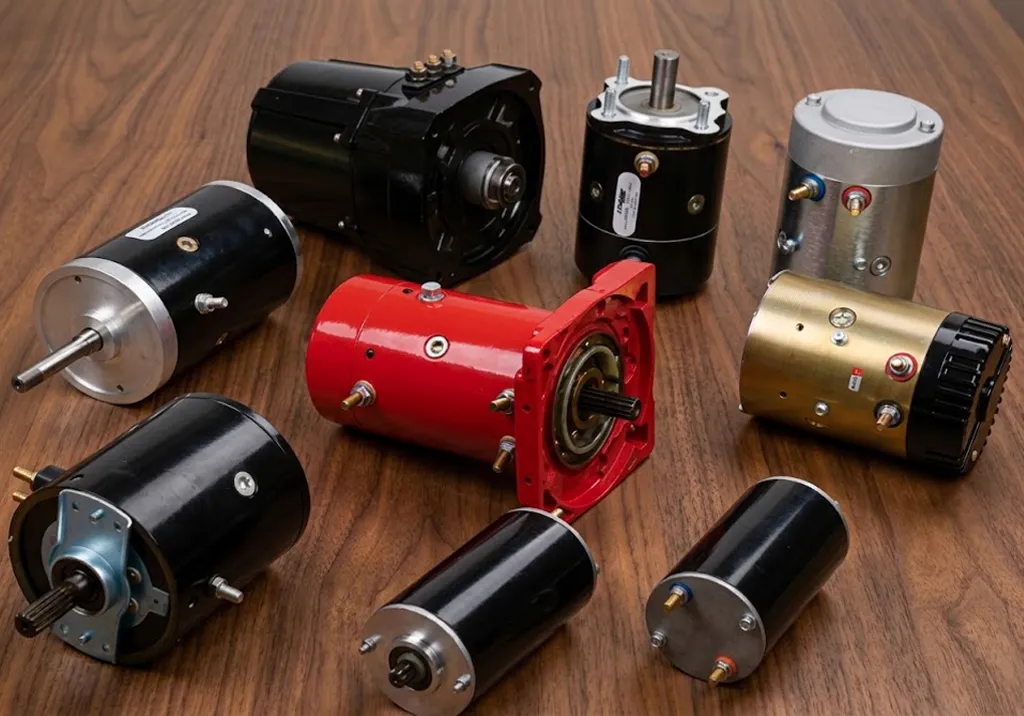
О нашем производственном предприятии
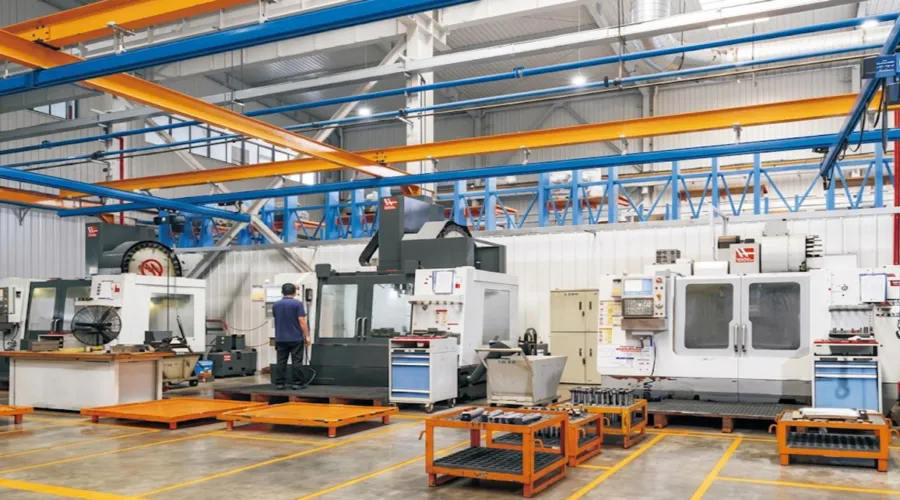
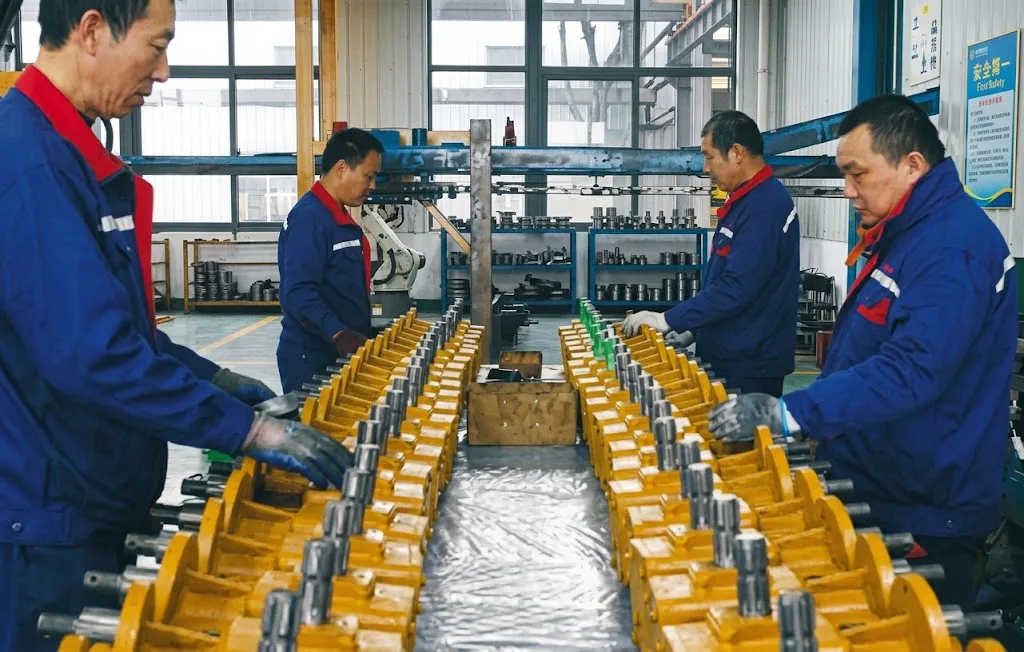
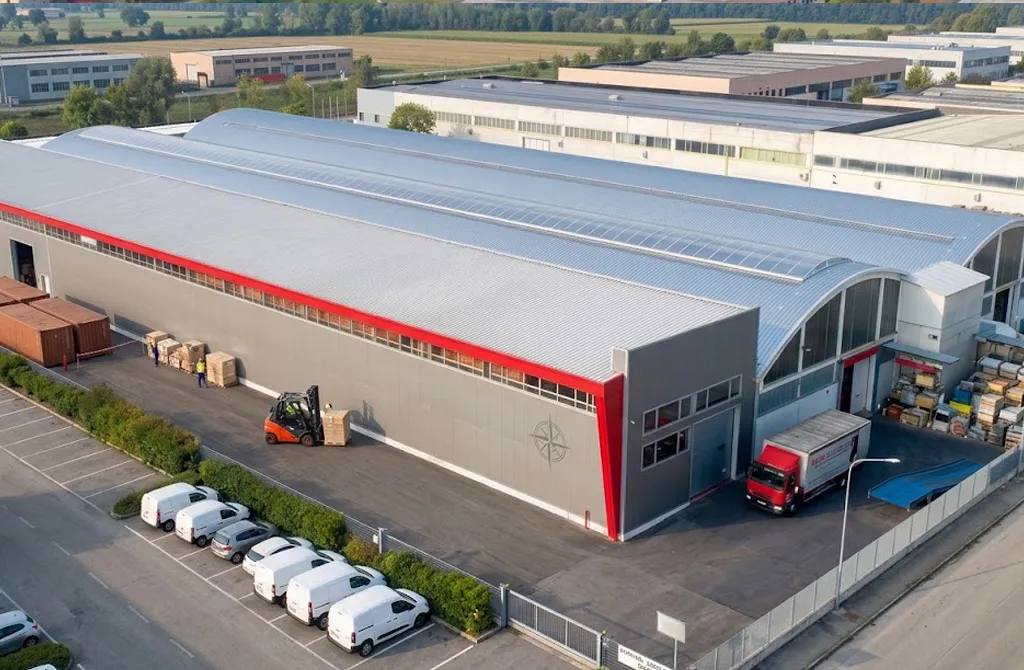
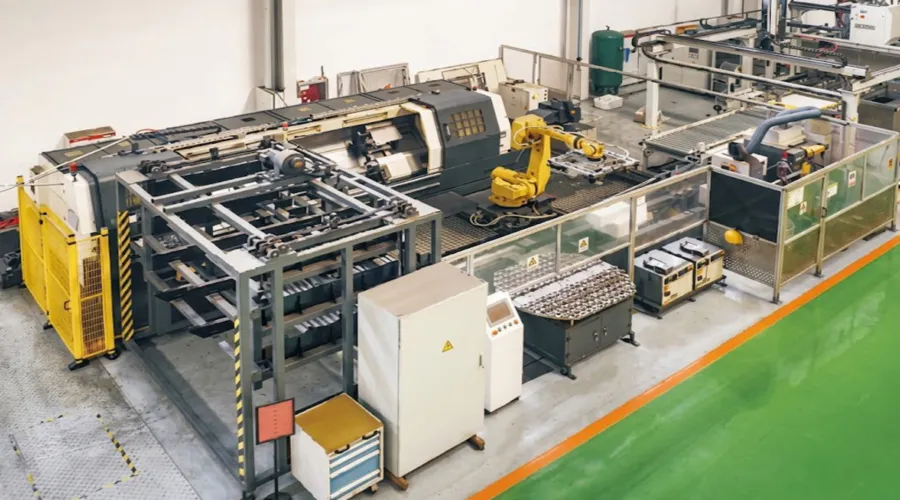
Our production facility brings together more than ten years of engineering experience in mechanical power transmission, focused specifically on the application-matched design of drive components for industrial, commercial vehicle, and agricultural equipment markets. The product portfolio spans agricultural gearboxes, worm gear reducers, planetary gear drives, PTO shafts, hydraulic cylinders, transmission gears, chains, and DC electric motors — covering the complete mechanical drivetrain that surrounds the motors we produce, which directly informs our application engineering decisions.
All manufacturing operations are conducted under ISO 9001:2015 certified quality management. Dedicated production lines cover motor winding, commutator machining, precision gear cutting, CNC turning and milling, heat treatment, and fully instrumented assembly and test. Custom gearbox and mechanical assembly production is available in ductile iron, cast iron, cast steel, precision investment cast steel, and cast aluminium — for both catalogue and non-standard specifications. Engineering documentation for international OEM and aftermarket clients is provided in English, including dimensional drawings, material certifications, and test data sheets.
We export to markets including Australia, the United Kingdom, South Africa, Canada, New Zealand, the Netherlands, Brazil, South Korea, and Colombia, with logistics and documentation handling for standard international commercial terms. The XL12000PLS is one product in a broader электродвигатель лебедки development programme driven by direct field feedback from winch OEMs, off-road equipment operators, and commercial vehicle service workshops across these markets — not a catalogue item specified by approximation.
Мастер-класс
Сопутствующие товары — Комплектация приводных систем
A winch motor performs as part of a wider electrical and mechanical system. Sourcing the motor, reducer, and related drive components from a single production facility ensures matched specifications, consistent quality documentation, and simplified after-sales support — the one-stop supply advantage that integrators and fleet procurement teams increasingly require. Two complementary product lines are available alongside the XL12000PLS:
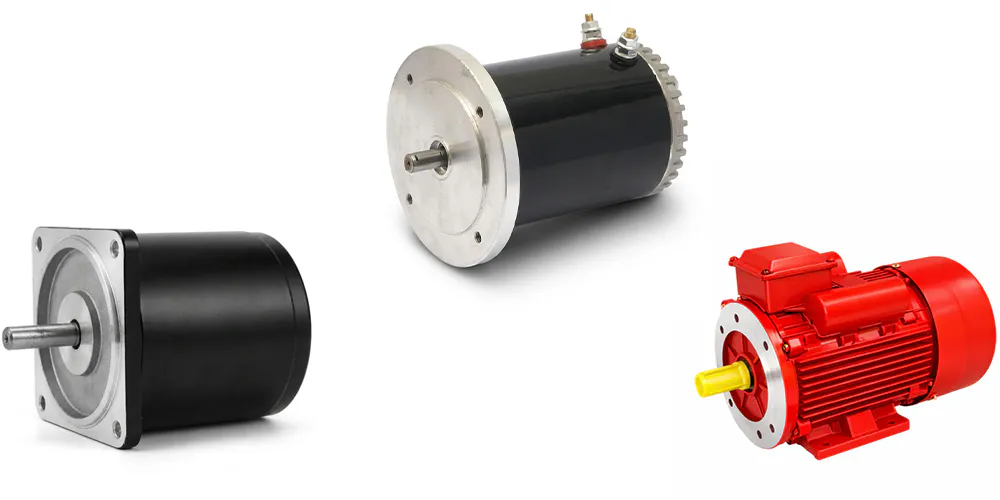
Электродвигатели
The full range of электродвигатели постоянного тока covers configurations from compact небольшой двигатель постоянного тока units through to high-output высокомоментный двигатель постоянного тока builds, including both brushed permanent magnet types and бесщеточный двигатель постоянного тока или бесщеточный двигатель variants where extended brush-free service intervals are the priority. Mounting interface dimensions are consistent across the range, simplifying system design for integrators specifying multiple motor types within the same product family.
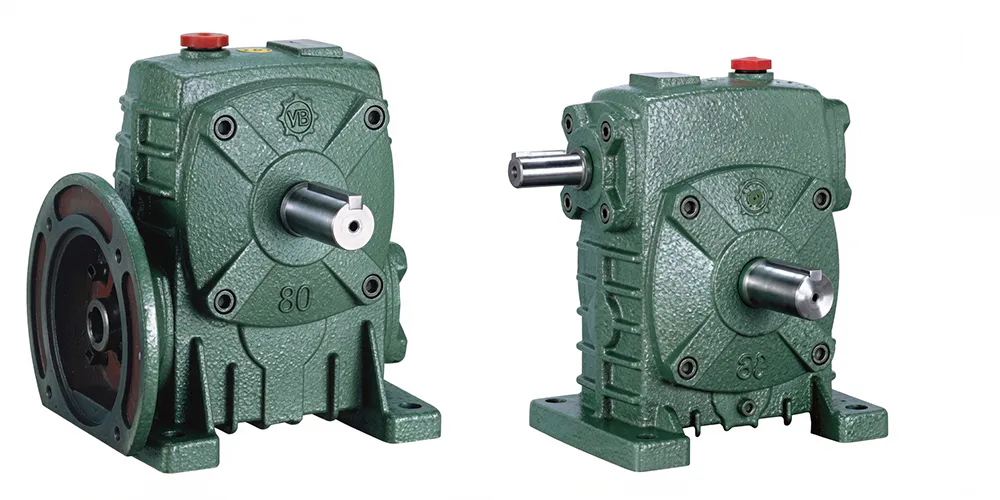
Червячная коробка передач
For winch builds where a separate reduction stage is preferred outside the drum housing — adding further gear ratio to slow the drum speed and increase line pull without changing the motor — our worm gearbox range provides catalogue ratios and input flanges compatible with the XL12000PLS output geometry. The self-locking property of worm gearing also provides load-holding without a mechanical brake, useful in certain suspended-load winch configurations where static hold is required under power-off conditions.
Часто задаваемые вопросы
What makes an IP67 winch motor a better choice than a standard IP54 rated motor for off-road 4WD recovery in river crossing situations across Australia?
IP67 certifies the motor against temporary immersion to 1 metre depth — the condition that occurs when a recovery vehicle hooks up to a stranded vehicle mid-stream in Australian river crossings. An IP54 motor protects against water splash from any direction but is not rated for immersion, and the seals can be overwhelmed when the housing is submerged, drawing water into the motor through pressure differential as the housing cools after a pull. For operators working technical river crossings in Queensland, Northern Territory, or Western Australia, the IP67 upgrade on the XL12000PLS winch motor is a meaningful protection difference, not a specification upgrade made on paper only.
How does a planetary drive winch motor interface differ from a standard spur pinion motor when replacing winch motor components in commercial tow truck equipment?
A spur pinion engages a single gear tooth at each mesh point, concentrating the full load on that contact. A planetary interface engages multiple planet gear teeth simultaneously, distributing the same load across more contact points and reducing peak stress per tooth. For commercial tow truck winches running high-cycle duty across a shift — recovering multiple vehicles per day — this distributed load means slower gear wear and lower peak-torque failure risk during shock loads when a stuck vehicle suddenly breaks free. The XL12000PLS planetary output is designed specifically to match planetary drum carrier geometry used in the major commercial winch brands.
When should a winch operator in South Africa consider replacing the OEM winch motor with a heavy duty electric winch motor rated at IP67 rather than the standard replacement?
The clearest signal is a pattern of repeated OEM motor failures involving water ingress — corrosion on the commutator, water in the terminal housing, or insulation resistance failures during routine inspection. These failures almost always occur because the OEM motor was not sealed to IP67 and the installation environment regularly subjects it to conditions beyond its rating.
What is the duty cycle rating on a 12 volt winch motor and how does it affect how I should use my winch during a vehicle recovery in a remote Canadian location?
The S2 2min–7%ED duty cycle means the motor is rated to pull at full load for up to 2 minutes, after which it should rest for a cooling period before the next full-load pull. In the 2min on, roughly 26min off pattern that 7%ED implies at maximum, the motor's winding temperature stays within Class F limits. In a remote Canadian recovery context — where you may be pulling across difficult terrain through multiple anchor points — this means spacing recovery pulls with cooldown time between them rather than continuously running the winch until the motor trips thermal protection.
Which type of DC winch motor is most suitable for a boat trailer launch winch operating in saltwater marina environments in New Zealand coastal areas?
For saltwater marina use, the priority requirements are IP67 sealing (to survive submersion during launch and retrieval), corrosion-resistant housing material (aluminium alloy performs well in salt air), and Class F insulation (to handle the elevated temperatures that can build up in an enclosed trailer winch housing on a hot summer day). A brushed permanent magnet DC motor like the XL12000PLS covers all three requirements and is controllable through a standard 12V solenoid switch — the same electrical interface used on most trailer winch installations in New Zealand.
Редактор: PXY