
General Buyer Guides & Comparison
A structured maintenance reference for technicians, plant engineers, and procurement managers responsible for keeping مخفض سرعة أحادي units in continuous-duty service — covering oil change intervals, seal inspection criteria, bearing checks, and the environmental factors that shift standard schedules in real operating conditions.
Why a Defined Maintenance Schedule Matters for Worm Gear Reducers
أ مخفض سرعة أحادي built on a worm gear architecture has a different maintenance profile from a helical or planetary gearbox of comparable output torque. The worm gear mesh produces heat through sliding contact rather than rolling contact — which means the lubricant in a مخفض سرعة الدودة undergoes faster thermal ageing than in units where rolling-contact efficiency dominates. At high reduction ratios, a worm مخفض سرعة أحادي المرحلة operating at 70–80% efficiency converts 20–30% of its input power to heat within the housing, and that thermal load accelerates oil oxidation, base oil viscosity breakdown, and additive depletion at a rate proportional to operating temperature.
A maintenance schedule that treats a مخفض تروس دودي identically to a helical unit — applying a flat annual oil change regardless of duty cycle and ambient temperature — routinely results in either premature bronze worm wheel wear from degraded lubricant, or unnecessary downtime from over-servicing a lightly loaded intermittent-duty unit that genuinely does not need an annual change. The schedule presented in this guide uses the factors that actually determine lubricant condition — operating temperature, daily running hours, ratio, and ambient environment — to produce service intervals calibrated to real field conditions rather than calendar dates.
Lubricant Selection for Single Speed Worm Gear Reducers
The correct lubricant for a مخفض سرعة واحد للتروس الدودية is not interchangeable with the oil used in helical or bevel gearboxes of the same power range. Bronze worm wheel alloys are sensitive to sulphur-based extreme-pressure additives — the EP additive package that extends gear life in ferrous helical units can cause accelerated corrosive attack on ZCuSn10Pb1 phosphor-bronze worm wheels. The standard lubricant specification for WP-series مخفض سرعة أحادي السرعة housings is ISO VG 220 compounded worm gear oil, which uses fatty acid-type lubricity additives compatible with bronze rather than the sulphur-phosphorus EP chemistry used in general industrial gear oils. In climates with wide ambient temperature swings — such as outdoor agricultural equipment in Canada or industrial drives in northern European facilities — a synthetic ISO VG 220 worm gear fluid provides more stable viscosity across the operating temperature range and extends the oil change interval by 30–50% compared with mineral equivalents.
| Lubricant Type | Viscosity Grade | Suitable Ambient Temp. | Typical Change Interval | Bronze Wheel Compatible |
|---|---|---|---|---|
| Mineral compounded worm gear oil | ISO VG 220 | 0°C to 40°C | 2,000 hours or 12 months | نعم |
| Synthetic polyglycol worm gear oil | ISO VG 220 | −10°C to 50°C | 3,000–4,000 hours or 24 months | Yes — confirm seal compatibility |
| Synthetic PAO worm gear oil | ISO VG 220 | −20°C to 55°C | 4,000 hours or 24 months | نعم |
| Industrial gear oil with S-P EP additive | ISO VG 220 | أي | N/A | No — causes bronze corrosion |
| Mineral worm gear oil, cold-climate grade | ISO VG 150 | −20°C to 25°C | 1,500 hours or 12 months | نعم |
Note: Polyglycol synthetic oils must not be mixed with mineral or PAO oils — flush the housing completely before switching. Confirm seal material compatibility with the fluid supplier before filling with polyglycol.
The Critical First Oil Change: Why 200–500 Hours Matters
Every new مخفض سرعة أحادي — regardless of lubricant type or operating duty — requires an early oil change after the initial run-in period. During the first 200 to 500 operating hours, the bronze worm wheel teeth and the hardened worm shaft thread flanks undergo a controlled surface-conditioning process: microscopic high points on both surfaces wear progressively until the tooth contact pattern spreads to cover the designed contact zone. This run-in wear produces fine bronze and iron particles that remain suspended in the oil throughout the early operating period. If these particles are not removed promptly, they circulate through the gear mesh under load, acting as an abrasive that accelerates wear beyond the intended run-in rate.
The first oil change at 200–500 hours removes this particle-laden charge and replaces it with clean fluid that supports the now-bedded-in contact surfaces. Skipping the first-interval change is among the most common causes of premature worm wheel wear seen in مخفض تروس دودي units that otherwise appear correctly specified and installed. For the EP-WPKS series — which is built for heavy loads up to 365 kg — the first oil change timing is particularly important because the higher contact stress during run-in produces more conditioning particles than a lightly loaded frame of the same size would generate. Performing the first change at 200 hours rather than waiting for 500 is advisable in high-load, high-ambient-temperature applications in Australia and South Africa.
Related Product
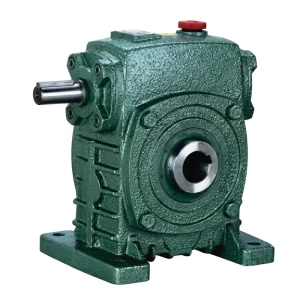
EP-WPKS 4–365 kg Single Speed Reducer
The EP-WPKS series is a heavy-duty foot-and-flange-mount مخفض سرعة أحادي rated to 365 kg unit weight, designed for demanding continuous-duty industrial applications where correct lubricant maintenance directly determines service life. The higher load capacity of the WPKS housing means more frictional heat generation per unit time — reinforcing the importance of following an oil change schedule calibrated to the actual operating temperature and daily running hours rather than a flat annual calendar interval.
Oil Change Intervals: Hours vs. Calendar Time
Two parameters determine which oil change trigger — hours of operation or calendar time — applies first to a given مخفض سرعة أحادي السرعة. High-duty units that accumulate operating hours rapidly will hit the hours threshold long before the calendar date; lightly loaded intermittent-duty units may reach the calendar limit while still well under the hours target. The rule is always to apply whichever limit is reached first. For a علبة تروس مخفضة السرعة ذات الدودة running two 8-hour shifts per day, five days a week, the annual hours total is approximately 4,160 hours — meaning a standard 2,000-hour interval requires two oil changes per year rather than one, regardless of calendar schedule.
| Duty Condition | Oil Temp. at Housing (Est.) | Mineral Oil Change | Synthetic Oil Change | Applicable Regions / Applications |
|---|---|---|---|---|
| Intermittent, light load, cool ambient | < 50°C | 2,000 hrs or 24 months | 4,000 hrs or 36 months | Indoor packaging lines (UK, Netherlands) |
| Continuous, moderate load, moderate ambient | 50–70°C | 2,000 hrs or 12 months | 3,000 hrs or 24 months | Conveyor drives, agitators (Canada, South Korea) |
| Continuous, high load, warm ambient | 70–85°C | 1,000–1,500 hrs or 6 months | 2,000 hrs or 12 months | High-ratio worm drives in warm climates (Australia, Brazil) |
| Continuous, high load, hot ambient or outdoor | > 85°C | 500–1,000 hrs — plus oil sampling | 1,500 hrs — plus oil sampling | Agricultural field equipment, mining drives (Colombia, Australia) |
| Initial run-in, all conditions | أي | 200–500 hrs regardless of oil type | 200–500 hrs regardless of oil type | All new or rebuilt units — mandatory first change |
Seal Inspection: What to Look For and When to Act
Radial shaft seals on a مخفض سرعة أحادي housing perform two functions simultaneously: they prevent gear oil from migrating along the shaft to external machine surfaces, and they exclude airborne contaminants — dust, moisture, and chemical vapour — from entering the housing and contaminating the oil charge. Both functions depend on the seal lip maintaining continuous, lightly loaded contact with the shaft surface. As the seal lip ages under heat and oil exposure, the elastomer hardens, the lip-to-shaft contact load diminishes, and the sealing function degrades progressively rather than failing abruptly. Field experience with worm مخفض سرعة دودة التروس units consistently shows that seal degradation precedes visible oil leakage by hundreds of operating hours — the seal is already failing before the first oil stain appears on the housing exterior.
Seal inspection should be a standing item at every scheduled oil change and at every 1,000 hours of operation between oil changes for high-duty units. Inspection requires no special tooling: visually examine the shaft exit zone for oil sheen or wetting of the shaft surface within 25 mm of the seal lip, press lightly on the housing adjacent to the seal with a clean rag to check for seepage under pressure, and examine the seal lip face — accessible through the oil drain port during the drain procedure — for hardening, cracking, or deformation. On a مخفض سرعة التروس الدودية with a vertical output shaft (WPEO or WPZ variants), the downward-facing output seal should receive additional attention, as gravity assists oil travel toward the lip continuously during operation.
Manufacturing Structure & Material System — How Build Quality Shapes Maintenance Intervals
The maintenance interval a مخفض سرعة أحادي can realistically sustain between servicing events is not purely a lubricant chemistry question — it also depends on the dimensional accuracy and material quality of the housing, gear set, and sealing system. A precisely bored housing maintains the geometric relationship between the worm shaft and worm wheel axis across operating temperature cycles, preventing the contact pattern from shifting under thermal expansion and producing localised overload on the wheel tooth face. A poorly bored housing allows progressive contact pattern drift that accelerates wear independently of lubricant condition.
Housing — HT250 Cast Iron
Grey cast iron with high thermal conductivity per unit surface area. Larger fin geometry on the housing exterior extends the oil-change interval by improving natural convection cooling — the same gear set in a well-finned housing runs 8–12°C cooler than in a smooth-wall casting, which roughly doubles the lubricant service life at the gear contact zone according to the Arrhenius rule of thumb for lubricant oxidation.
Worm Shaft — 20CrMnTi Steel, HRC 56–62
The hardened thread flank surface finish directly affects wear particle generation during run-in. A CNC thread-ground worm shaft produces finer, more consistent surface roughness than a hobbed shaft, which means less abrasive debris in the oil during the first 200–500 hours — supporting a slightly longer first-change interval in lightly loaded applications. Both finishes require the mandatory first change.
Worm Wheel — ZCuSn10Pb1 Bronze
The bronze alloy composition determines the unit’s tolerance to lubricant degradation. Higher tin content (ZCuSn10Pb1 at approximately 10% tin) provides better resistance to oil starvation at the tooth contact face than lower-tin alloys. Even with correct lubricant type, a degraded oil charge with oxidation products raises the friction coefficient at the bronze-steel mesh interface, which is why oil condition — not just volume — matters at every inspection.
Seals — Double-Lip Radial Shaft Seals
The primary lip retains oil; the secondary dust-exclusion lip prevents ingress. NBR elastomer is the standard material for ambient temperatures up to 100°C oil temperature; FKM (fluoroelastomer) should be specified for applications where the housing surface temperature regularly exceeds 80°C or where chemical vapour ingress is a risk. Seal replacement at every second oil change — or at 4,000 hours regardless of visible condition — is a conservative but reliable practice in تركيب مخفض تروس دودي environments with abrasive dust or moisture.
Bearing Condition Checks: What to Measure and How Often
The bearings in a مخفض سرعة أحادي السرعة are grease-packed at assembly and sealed — they are not re-greased during normal service unless the housing is opened for a full rebuild. Bearing condition is therefore monitored indirectly through vibration signature and operating temperature rather than through direct lubrication. A correctly running WP-series علبة تروس مخفضة السرعة ذات التروس الدودية produces a consistent low-frequency vibration signature from the worm mesh engagement; deviations from the baseline signature — particularly the emergence of higher-frequency bearing defect frequencies — indicate developing fatigue damage in the inner or outer bearing race before visible noise or temperature rise confirms it.
The practical bearing inspection protocol for a مخفض سرعة أحادي in continuous-duty service involves three parallel checks at each scheduled maintenance event. An infrared surface temperature measurement at the bearing positions on the housing exterior (comparing the drive-side and opposite-side worm shaft positions, and the output shaft positions) identifies localised heating from a developing bearing defect before vibration analysis is possible. A hand-held vibration pen or accelerometer at the same housing positions provides a secondary check. Auditory inspection — listening through a vibration stethoscope placed at each bearing position during operation — remains a valid and practical method for identifying the characteristic roughness or intermittent click of a bearing at early-stage fatigue, particularly in field maintenance environments in Colombia or Brazil where vibration analysis equipment is not always available on-site.
Complete Maintenance Schedule Summary
The following schedule consolidates all maintenance tasks for a مخفض سرعة دودة أحادي السرعة in continuous-duty industrial service under moderate ambient conditions. Adjust oil change intervals upward for intermittent light-duty applications or downward for high-ratio, high-ambient-temperature continuous service as described in the interval table above.
Daily
- Check for oil leakage around shaft seals and housing joint
- Confirm operating temperature is within expected range
- Listen for abnormal noise — roughness or intermittent clicking
Monthly
- Check oil level at the sight glass or dipstick — top up only with the same oil grade and brand
- Inspect housing exterior for new oil stains or corrosion at seal exit zones
- Confirm mounting bolts and coupling set-screws are at specified torque
200–500 Hours
- First oil change — drain, flush with clean oil of the same grade, refill to correct level
- Inspect drained oil for metallic particles and colour
- Record oil change date and hours in the unit maintenance log
1,000 Hours
- Infrared temperature check at bearing positions on housing exterior
- Vibration or auditory bearing inspection
- Inspect vent plug — clean if blocked
- Confirm oil level and condition — check colour and odour at dipstick
2,000 Hours / 12 Months
- Full oil change — drain and refill
- Inspect shaft seals for lip hardening, cracking, or leakage wetting
- Check output shaft for axial and radial play
- Inspect housing paint for corrosion, especially in coastal or chemical environments
4,000 Hours
- Replace shaft seals as a precautionary measure regardless of visible condition
- Full bearing assessment — consider replacement in high-ambient-temperature or wet environments
- Visually inspect worm wheel tooth face for pitting, scoring, or deformation
- Consider oil sampling and laboratory analysis for continuous-duty high-load units
Vent Plug Maintenance and Correct Oil Fill Procedure
The pressure-equalising vent plug on a علبة تروس دودة مخفضة السرعة housing is one of the most frequently overlooked items on maintenance schedules, yet its failure mode — blocked vent leading to pressure build-up — is a leading cause of shaft seal blowout in the field. During normal operation, the oil in the housing heats and expands, then cools during idle periods. A functioning vent plug allows this pressure differential to equalise with atmosphere; a blocked vent forces the pressure differential across the shaft seal lips, which progressively deforms the seal contact geometry and eventually causes sudden oil ejection when the accumulated pressure exceeds the seal’s pressure rating.
Vent plug inspection and cleaning should occur at every 1,000-hour service event. Remove the plug, verify that the filter element (a sintered bronze or steel mesh in most WP-series housings) is free of accumulated oil vapour residue and external dust. In dusty environments — grain processing in Canada, mineral screening operations in Australia — the vent may require cleaning every 500 hours rather than 1,000. Correct oil fill procedure after a change requires filling slowly to the level mark on the housing face that corresponds to the installed mounting position, then allowing 5–10 minutes for the oil to distribute to all internal passages before confirming the level is stable at the mark.
Compatible Products for Complete Drive Systems
ال مخفض سرعة أحادي operates as part of a larger drivetrain. The following products are dimensionally matched to the WP-series worm reducer platform and are available from the same production source — supporting verified system compatibility and simplified single-source maintenance procurement.
المحركات الكهربائية
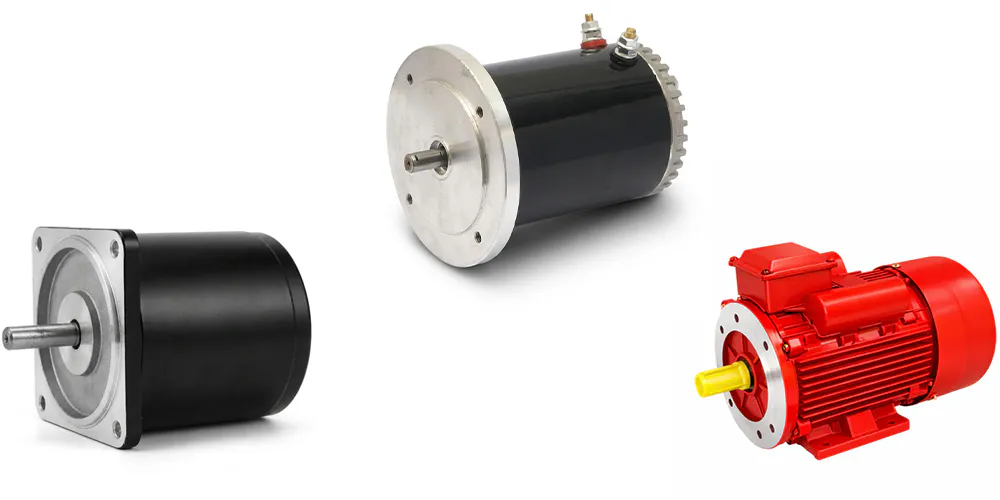
IEC and NEMA frame electric motors matched to WP-series input bore dimensions. A correctly matched motor ensures the input power does not exceed the reducer’s thermal rating — which, as described above, is the factor most directly determining how quickly lubricant degrades. Verified motor-reducer pairings eliminate the most common cause of shortened oil-change intervals: a motor oversized for the gearbox thermal capacity.
علبة تروس دودة
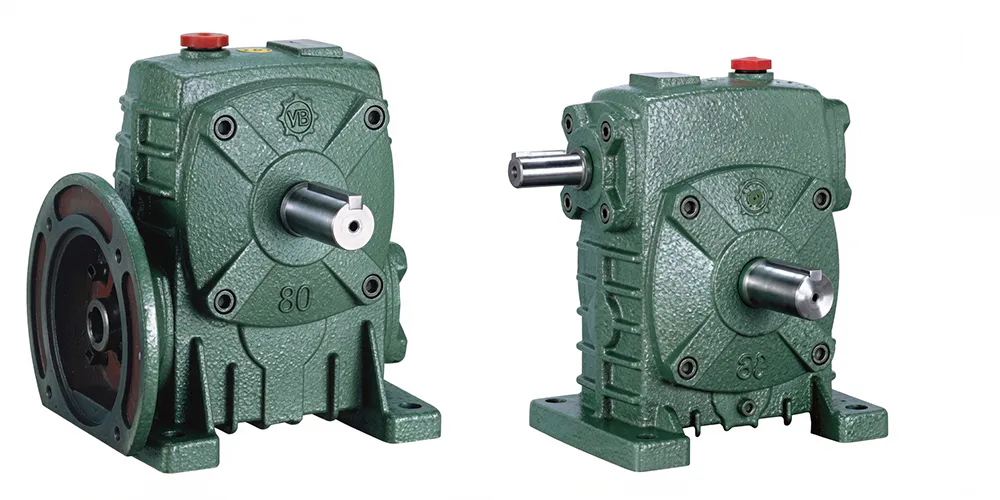
The full range of علبة تروس مخفضة السرعة ذات التروس الدودية units — from compact NMRV frames through to heavy WP-series housings — shares the same lubricant specification and maintenance philosophy. For applications requiring ratios beyond 1/60, two-stage worm gearbox units from the same platform use the same ISO VG 220 compounded worm gear oil as the single-stage units, with independent oil sumps per stage that must be serviced separately on the same interval schedule.
About This Manufacturing Facility
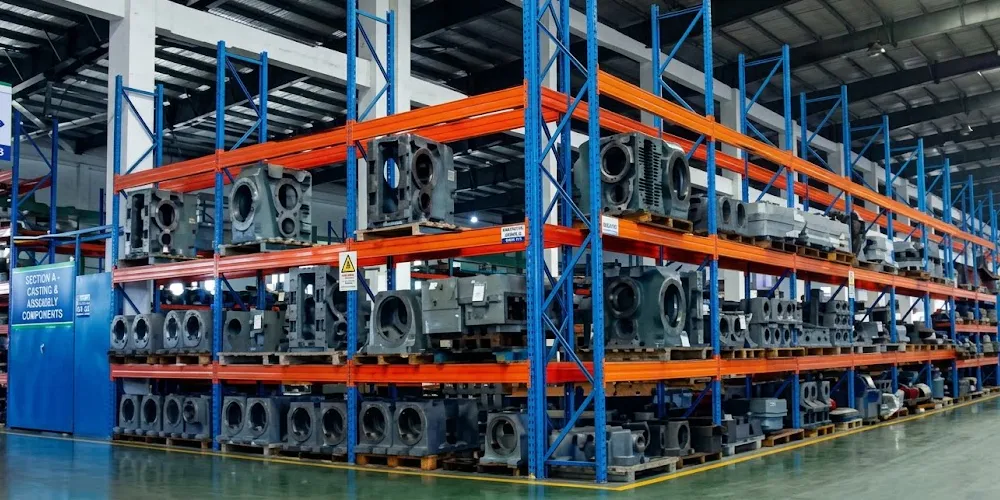
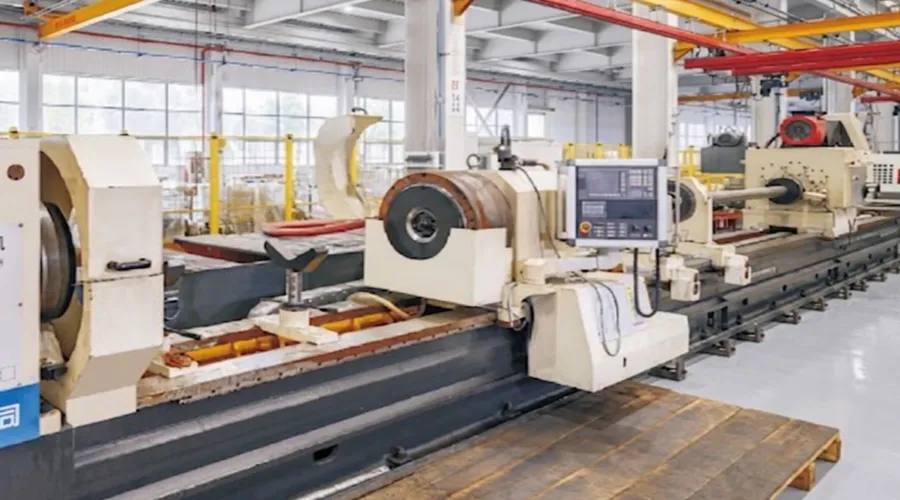
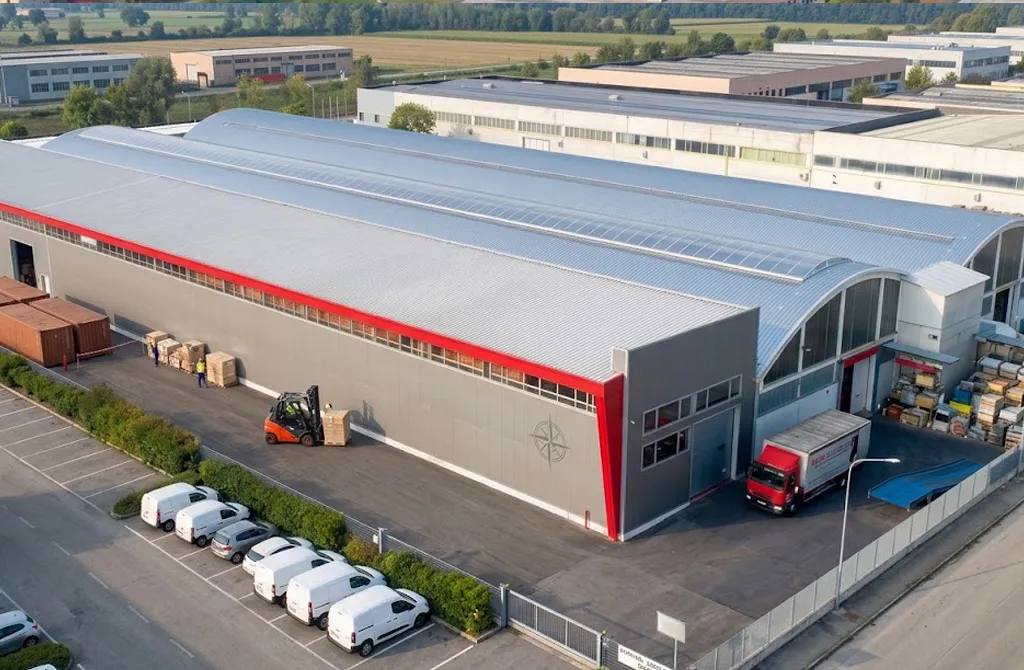
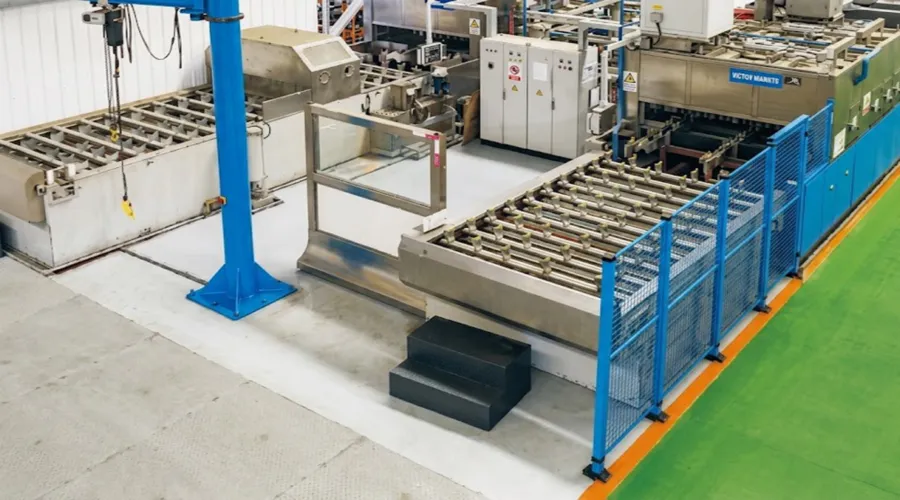
This production facility manufactures a comprehensive range of power transmission components: agricultural gearboxes, مخفضات التروس الدودية, planetary gear drives, PTO shafts, hydraulic cylinders, gears, roller chains, and electric motors. The facility is ISO 9001:2015 certified, with in-house capability covering gear cutting, heat treatment, housing boring, and assembly. Housing materials span ductile iron, cast iron, cast steel, precision cast steel, and cast aluminium. Engineering and production of worm gears, sprockets, pulleys, shafts, and non-standard mechanical components are performed within the same facility, ensuring full material traceability from incoming raw material through to finished unit inspection.
ورشة عمل

الأسئلة الشائعة
المحرر: PXY