
CONTRACTOR MAINTENANCE REFERENCE
A season-by-season maintenance reference for hay contractors running high-utilisation round baler fleets — covering round baler PTO shaft inspection schedules, lubrication protocols, component replacement triggers, and parts inventory planning across multiple cutting cycles.
For hay contractors operating multiple round balers across extended cutting seasons — often covering hundreds or thousands of baling hours per year — the round baler PTO shaft is one of the components with the highest maintenance frequency relative to its cost. A shaft that works without issue for a first-cut owner-operator running 80 hours per year may fail twice in a single season on a contractor’s machine completing 400 hours across five cuts. The difference is not component quality alone; it is the absence of a structured maintenance schedule that maps service tasks to operating hours rather than to calendar periods or visible symptoms.
This guide is written for contractors running John Deere, CASE IH, Krone, or New Holland round balers at commercial throughput rates — specifically the common scenario where multiple balers run simultaneously or in close succession and where each machine’s maintenance history is tracked across employees and seasons. The service intervals, inspection criteria, and parts planning guidance in this guide are calibrated for high-utilisation round baler pto shaft applications rather than the lighter duty cycles of typical owner-operator maintenance references.
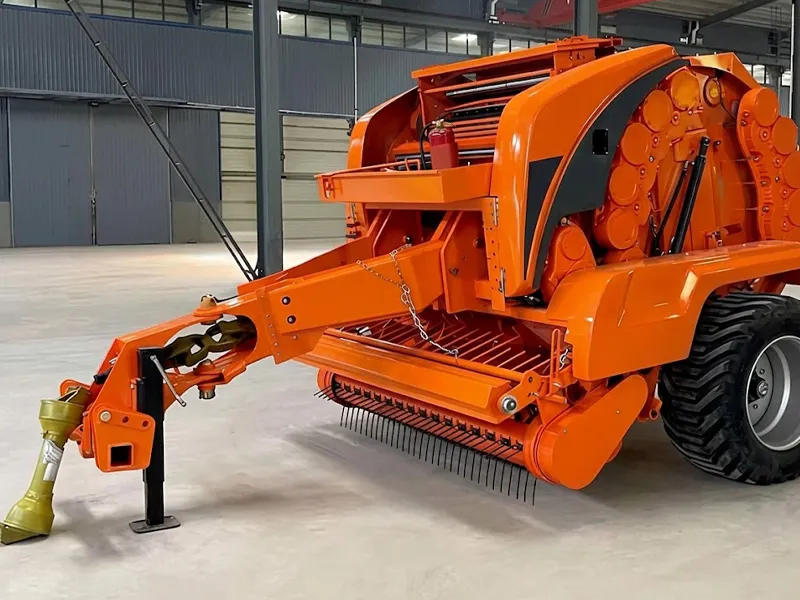
Why Contractor-Grade Maintenance Differs from Owner-Operator Practice
A hay contractor’s round baler runs in conditions that compound component wear far beyond what standard operator’s manual intervals were designed for. First, accumulated operating hours per season are typically three to five times higher than an owner-operator machine — 300–600 hours versus 80–150 hours. Second, the baler moves between multiple farms with different crop types, windrow densities, and ground conditions, meaning the shaft experiences a wider range of peak torque loads than a single-farm machine does. Third, maintenance is often performed by different employees across a season, increasing the risk of missed service tasks or incorrect lubricant specification if there is no documented system.
The U-joint cross kit is the component most sensitive to these compounding factors. At 1000 RPM, a cross completes approximately 2,000 bending cycles per minute. Over a 300-hour contractor season — 18,000 operating minutes — that is 36 million bending cycles per cross, compared to approximately 9 million cycles on an 80-hour owner-operator machine. Grease intervals that are adequate for 80 hours per season are demonstrably insufficient at 300 hours; a contractor who applies the owner-operator interval without adjusting for utilisation is effectively running dry U-joint crosses through the final third of each season and wondering why cross kits are replaced twice annually rather than once in two years.
Manufacturing Construction: Components That Define Maintenance Frequency
Understanding which components in the round baler PTO shaft assembly drive the maintenance schedule — and why — allows contractors to focus attention where it produces the most return. The shaft assembly is not a single-wear-rate device; some components require attention every few operating hours, while others remain serviceable across multiple seasons if the high-frequency tasks are performed correctly. The following breakdown maps each component to its maintenance driver and typical contractor-grade service life under high-utilisation conditions.
U-joint Crosses and Bearing Cups
The highest-frequency service point. Cross kits on contractor machines running 300+ hours per season typically require replacement every 150–200 hours under correct lubrication, or every 80–100 hours under real-world contractor lubrication practice where intervals are sometimes extended due to scheduling pressure. The 20CrMnTi carburised cross can absorb millions of cycles before fatigue failure — but only if the 52100 bearing cup needle rollers remain lubricated throughout.
Telescoping Tube Profiles
The Q345 cold-drawn tubes require grease replenishment on the sliding spline surfaces every 20 hours under high-utilisation dry conditions, every 10–15 hours in wet or silage conditions. Contractor machines that move between farms frequently are more likely to be operated on different ground levels and articulation angles than single-farm machines, increasing the sliding frequency in the telescoping zone. Tube profiles that bind will force the shaft to operate at a higher effective angle, accelerating both cross wear and CV head wear simultaneously.
Slip Clutch Assembly
The sintered bronze or organic composite friction disc stack requires inspection every 40–50 hours for an owner-operator but every 25–30 hours on contractor machines where blockage frequency is higher and different operators may engage the PTO against partially jammed balers. Glazed discs on a contractor machine are a maintenance error, not a component failure — they develop from nuisance slipping that was not corrected promptly at the first 25-hour check.
Guard Assembly
The UV-stabilised HDPE guard tubes and cones on contractor machines accumulate physical impact damage from crop material, fence posts, and field obstacles more rapidly than single-farm machines. A cracked guard cone that is left in service collects crop material against the rotating shaft, which can ignite during dry hay season. Guard inspection is a pre-shift task, not a seasonal one, on high-utilisation machines.
Material System Reference for Replacement Parts Procurement
| عنصر | Correct Material | Contractor Service Life | Replacement Trigger |
|---|---|---|---|
| U-joint cross (Series 6) | 20CrMnTi carburised, 58–62 HRC | 150–200 hrs (correct lube interval) | Any detectable radial play at bearing cup |
| Bearing cups (Series 6) | 52100 bearing steel, precision ground | Replace with cross as matched set | Pitting, spalling, or scoring visible in bore |
| Telescoping tubes | Q345 cold-drawn, galvanised | 2–4 seasons with correct lubrication | Binding after greasing; wall corrosion through-section |
| Slip clutch friction discs | Sintered bronze or organic composite | 100–150 hrs (contractor usage) | Glazed surface; thickness below 80% of new spec |
| Clutch springs | Chrome-silicon spring steel | 1–2 seasons (contractor) | Free height reduced below 95% of new spec |
| Guard tube / cones | UV-stabilised HDPE | 1–2 seasons (impact dependent) | Any crack or missing cone; discolouration from heat |
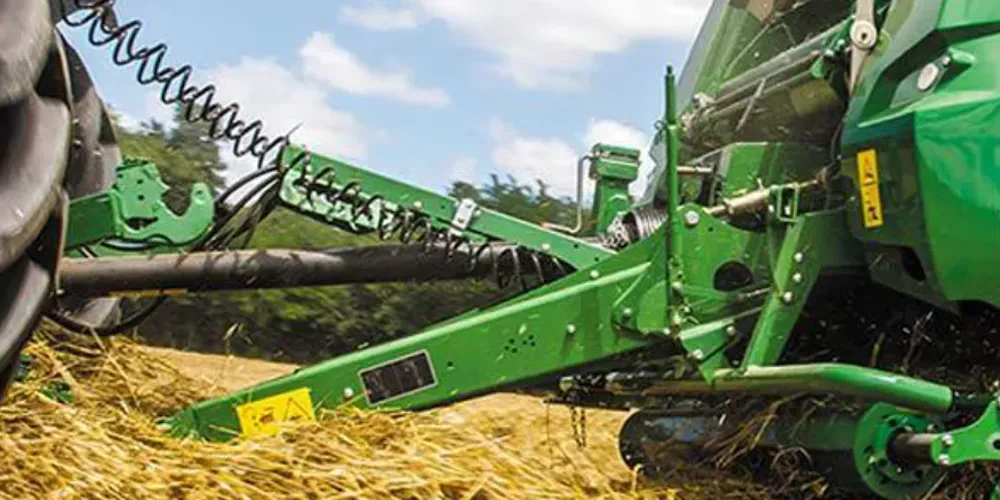
Contractor-Grade Maintenance Schedule: Hours-Based, Not Calendar-Based
The most common maintenance failure on contractor machines is applying a calendar-based service schedule to a component whose wear rate is determined entirely by operating hours and load cycles. A round baler PTO shaft on a machine that completes 50 hours between June and August is not equivalent to a shaft on a machine that completes 50 hours in a single week of intensive first-cut baling — the second machine’s shaft has experienced the same cumulative fatigue in a fraction of the time and under conditions where heat in the clutch and U-joint bearing cups does not fully dissipate between shifts.
| فاصلة | مهمة | Responsible | Record in Log? |
|---|---|---|---|
| Pre-shift (daily) | Guard integrity check; lockback collar function; visual cross play check | Operator | No (visual only) |
| Every 6–8 hours | Grease U-joint crosses through nipple until grease appears at all four seal faces | Operator | Yes — date, hours, machine ID |
| Every 15–20 hours | Grease telescoping tube splines; confirm smooth manual extension through full travel | Operator / mechanic | نعم |
| Every 25–30 hours | Slip clutch: confirm collar position against spec; check disc face condition; functional release test | Mechanic | Yes — setting, disc condition noted |
| Every 50 hours | Cross radial play check (hand test, shaft stationary); weld seam visual inspection; guard tube full inspection | Mechanic | Yes — play measurement or pass/fail noted |
| Every 100–150 hours | Full cross kit replacement (proactive, before play develops); spring free-height check; disc thickness measurement | Mechanic / workshop | Yes — parts used, hours logged |
| End of season | Full shaft removal, tube cleaning and regreasing, cross inspection, guard replacement if cracked, clutch disc replacement if below 80% thickness | ورشة عمل | Yes — full condition report per machine |
The Case for Proactive Cross Kit Replacement on Contractor Machines
The standard maintenance approach for a U-joint cross is condition-based — replace when radial play develops. For owner-operator machines completing 80–120 hours per season, this is economically rational; cross kits are not expensive and a single cross kit lasts one to two seasons in lighter use. For contractor machines, the condition-based approach creates a constant risk of in-field failure because the point at which play first becomes detectable by hand is close to the point of fatigue failure — particularly on machines where the 50-hour cross inspection has been performed inconsistently.
On contractor machines completing 300 hours or more per season, proactive cross kit replacement at 100–150 hour intervals — regardless of measured play — eliminates this risk entirely. The economics are straightforward: a cross kit costs a fraction of the downtime, labour, and secondary damage cost of a mid-season cross fracture that damages the yoke ear bore and requires a full shaft replacement. Contractors who track their cross kit consumption per machine per season quickly find that proactive replacement at planned intervals reduces total annual maintenance cost per machine compared to reactive replacement after failure, because yoke ear damage is avoided at every replacement event. Logging replacement hours on each machine allows this interval to be refined to match the actual wear rate observed across the fleet.
Contractor-Ready: EP Round Baler PTO Shaft for CASE IH Models
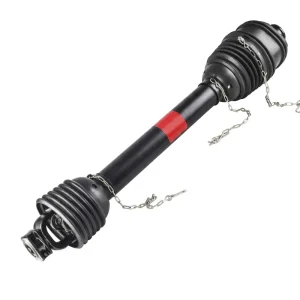
EP Round Baler PTO Shaft for CASE IH Models
Built to the correct series, spline, and length specification for CASE IH round baler platforms — a direct-fit round baler PTO shaft replacement that allows contractors to carry a pre-specified spare shaft for each CASE IH baler in the fleet without measuring or verifying dimensions on each replacement event. The 20CrMnTi carburised crosses with precision-ground 52100 bearing cups are sized for the Series 6 torque envelope required by CASE IH large baler platforms at both 540 RPM and 1000 RPM input depending on model. The UV-stabilised HDPE guard carries CE certification. Lockback collars on both ends match the CASE IH input shaft specification, allowing field swap without modification. Suitable for CASE IH baler fleets operating in North America, Europe, and Australasia.
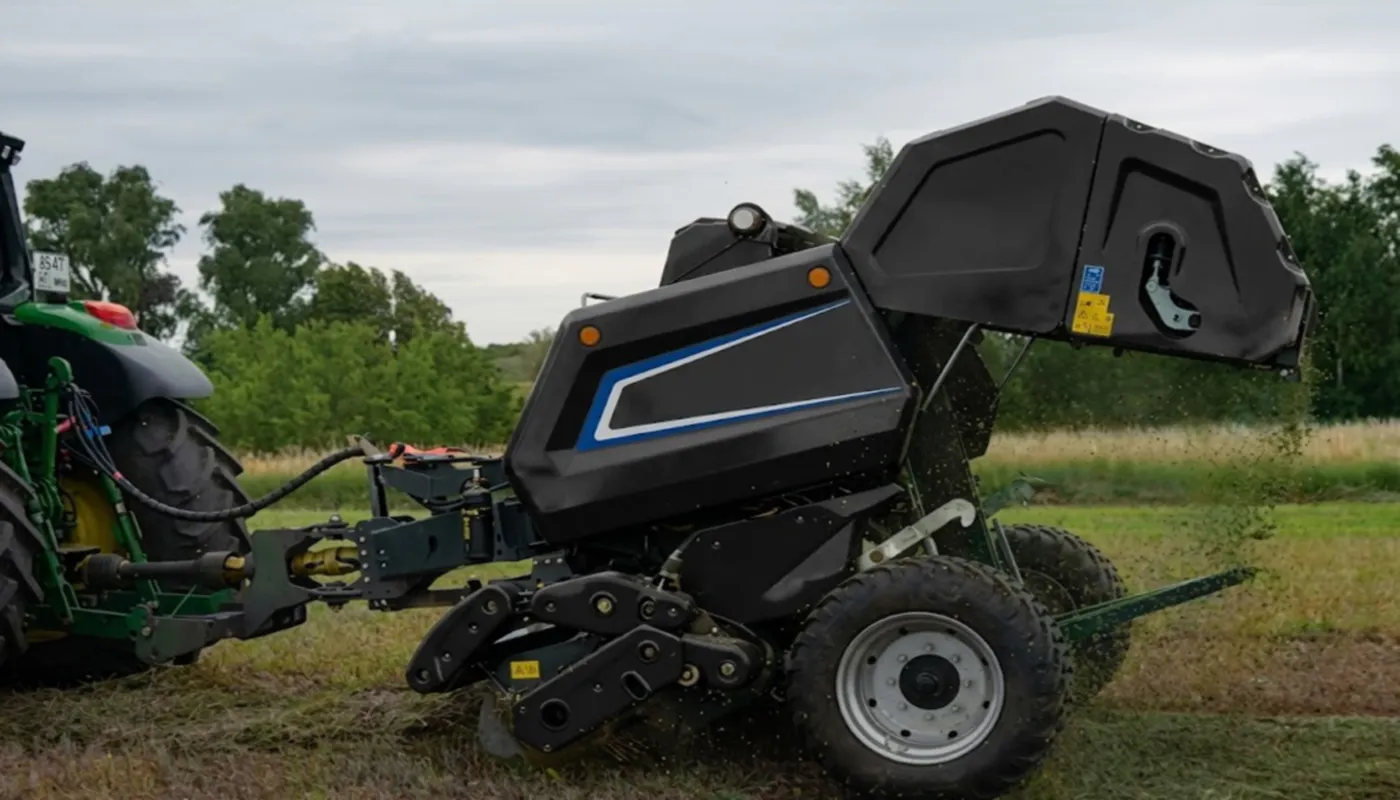
Parts Inventory Planning for Multi-Baler Contractor Fleets
The largest avoidable cost for contractors is not the parts themselves but the downtime incurred when a part fails and is not in stock. A Series 6 cross kit that could have been replaced during a planned 100-hour service event becomes a two-day delay when it fails in the field if the nearest stocking distributor cannot supply the specific series and cup OD same-day. Parts inventory planning for a contractor fleet running three or four round balers is straightforward once the baler models, shaft series, and annual consumption rate are documented.
Cross Kit Stock Level
For each baler model in the fleet, stock one complete cross kit per shaft per 100 operating hours planned for the season. A fleet of three machines each running 300 hours requires nine cross kits — three per machine. Pre-season sourcing at this quantity simplifies mid-season procurement and ensures parts are on-hand for proactive replacement without waiting for supply.
Spare Shaft Assembly
One spare shaft assembly per baler model in the fleet is the highest-ROI parts decision for contractors. A shaft failure that can be resolved in twenty minutes by swapping a pre-specified spare eliminates a repair event that would otherwise require dismantling the shaft, assessing damage, ordering the correct shaft, and waiting for delivery — a sequence that typically costs one to two baling days during the season.
Clutch Disc Kits
Stock one friction disc kit per machine for the season. Clutch disc glazing on contractor machines can develop within a single intensive cutting period if blockage frequency is high; having a disc kit in the workshop allows same-day replacement without waiting for parts, and the removed disc set can be assessed during a planned downtime slot to confirm whether glazing was caused by over-loose collar setting or by a blockage frequency that warrants revisiting the crop management approach.
Guard Replacement Parts
Stock two sets of end cones and one complete guard tube per machine per season. Guard cones crack at a higher rate on contractor machines due to debris impact and are the most commonly replaced guard component. A cracked cone that is removed and not replaced prevents the shaft from meeting CE guarding requirements, meaning the machine cannot legally operate until the cone is replaced. End-of-season guard replacement as a routine fleet-wide task eliminates this as a mid-season issue.
Driveline Components for Contractor Fleet Management
Contractors managing multiple balers benefit from sourcing the round baler PTO shaft and its adjacent driveline components from a coordinated range. When the shaft, gearbox, and universal drive components are specified together, spare parts interchangeability across the fleet is maximised and procurement can be consolidated into fewer orders at higher volume.
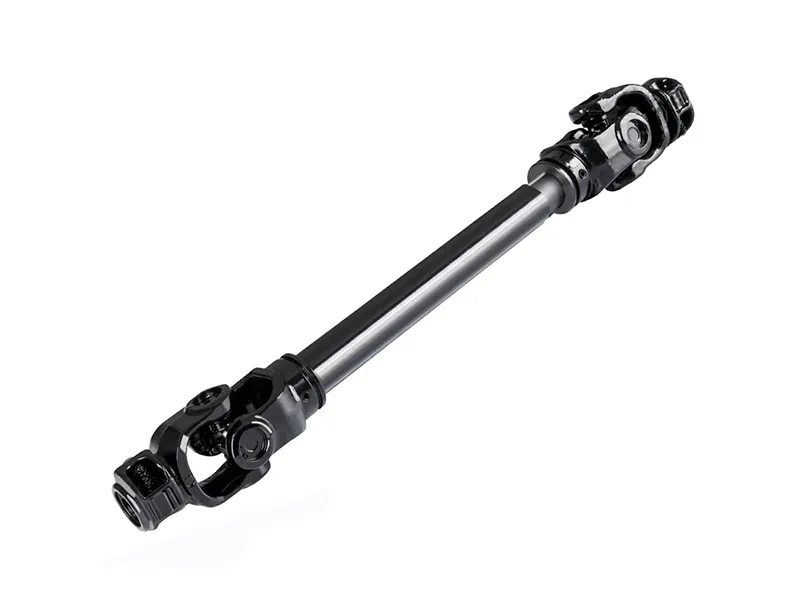
For contractors running mixed baler fleets across different brands and model years, a universal PTO driveshaft stocked in the correct series and length provides a single spare assembly that covers multiple balers. All cross kits, guard components, and slip clutch parts remain interchangeable within the same series group, meaning the parts inventory can be consolidated rather than duplicated for each model variant in the fleet. This is particularly relevant for contractors in markets — such as the US Great Plains, Canadian prairies, or eastern Australia — where single operators run two or three different baler brands across the same season.
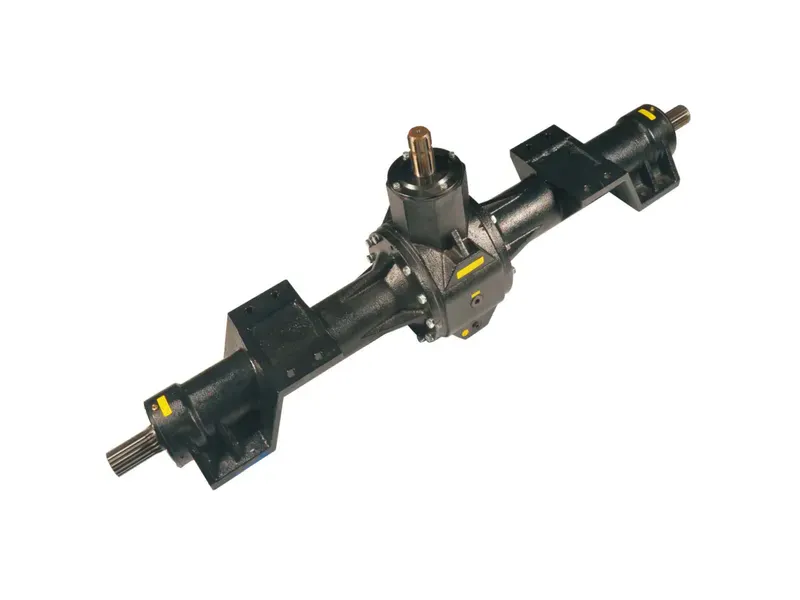
The baler input gearbox is the component most likely to develop secondary damage on a contractor machine where the slip clutch has been run with glazed discs or an over-tight setting for an extended period. Including a gearbox input bearing inspection in the end-of-season full service — when the round baler PTO shaft is removed for cross kit replacement — catches gearbox wear before it progresses to housing damage and allows a bearing replacement during planned downtime rather than an emergency gearbox swap during peak season. Sourcing the gearbox from the same supply chain as the shaft simplifies the input spline and torque rating verification.
نبذة عن الشركة المصنعة
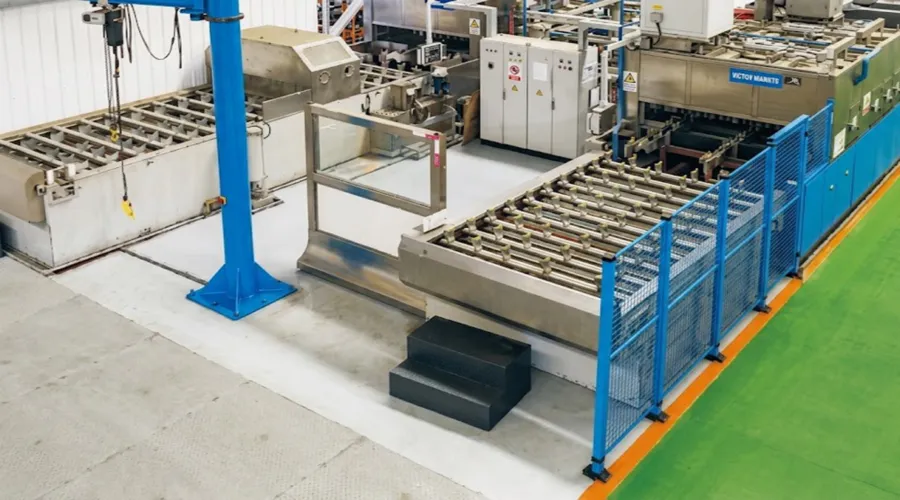
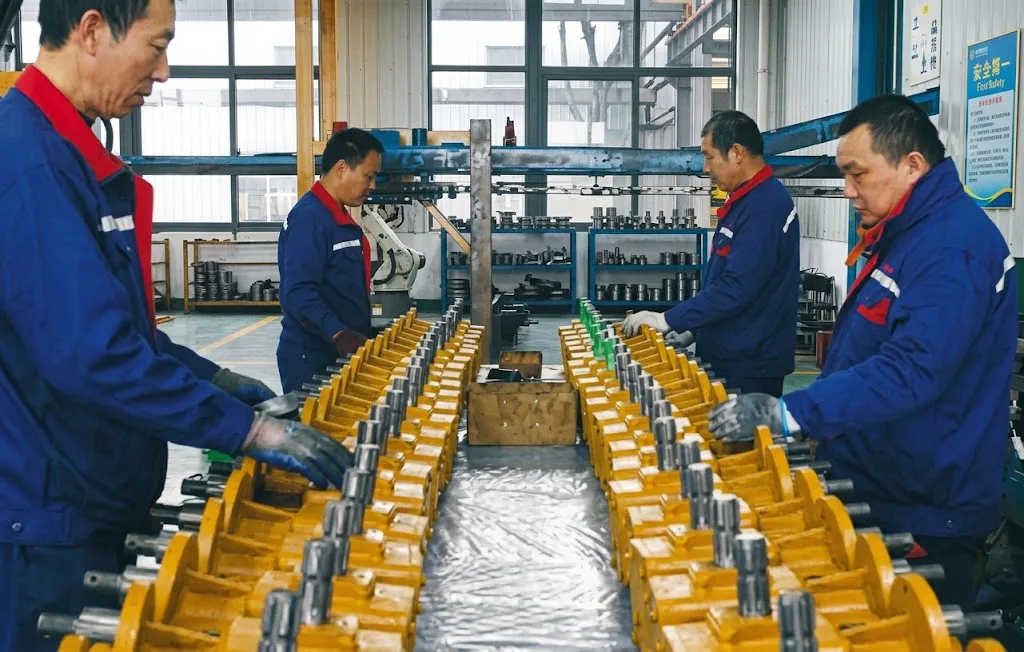
The manufacturing portfolio covers agricultural gearboxes, worm gear reducers, planetary gear drives, power take-off shafts, hydraulic cylinders, gears, chains, and motors — produced under ISO 9001:2015 certification applied at each stage from incoming material inspection through CNC machining, assembly, and final testing. Structural assemblies are produced in ductile iron, cast iron, cast steel, precision cast steel, and cast aluminium, with grade selection matched to each application’s structural and thermal demands. Custom components — sprockets, worm gears, precision shafts, pulleys, and complete assemblies — are manufactured to customer drawings or application descriptions, with written technical quotation returned within 24 hours of inquiry.
ورشة عمل
الأسئلة الشائعة
المحرر: PXY