
Packaging & Logistics | Cold Chain Distribution
A technical reference for cold storage facility engineers, frozen food packaging OEMs, and logistics procurement teams evaluating worm gear speed reducer selection, lubrication strategy, and cold-start performance for sub-zero packaging line drive systems.
Refrigerated and frozen food distribution facilities impose a set of operating conditions on mechanical drive components that ambient-temperature packaging lines never encounter. A conveyor drive in a -25°C blast freezing tunnel, a cartoning machine in a +2°C dairy processing room, or a palletising system in a cold-store distribution centre in Canada, Australia, or the Netherlands must start reliably from sub-zero temperatures, maintain consistent output speed across multi-hour continuous operation, and survive without corrosion in the humid, condensation-prone atmosphere that cold rooms generate during defrost cycles. The 단일 속도 감속기 — particularly the WP-series worm gear type — is the standard transmission element in these environments, but selecting and configuring the right model requires attention to lubrication, seal performance, material response at low temperature, and housing protection beyond what ambient-temperature specifications demand.
This reference covers the engineering decisions behind choosing a 웜 기어 감속기 for cold chain packaging drive applications, from the material system and lubrication grade selection through to installation practices that protect the reducer against the cyclic thermal stress of freeze-thaw environments in global cold chain operations.
Why Cold Chain Environments Challenge Standard Drive Components
The primary mechanical challenge of cold chain packaging drives is not the steady-state operating temperature — most well-designed gear reducers handle continuous low ambient temperatures adequately — but the combination of cold-start viscosity, thermal cycling, and condensation exposure that characterises real cold chain facility operation. A 단일 단계 감속기 in a -18°C frozen vegetable packing line sits stationary overnight when the production shift ends. When the line restarts in the morning, the gear oil inside the reducer has thickened considerably from its rated operating viscosity. If a mineral ISO VG 460 oil is used, its viscosity at -18°C may be ten to twenty times higher than at 40°C — creating high churning resistance that overloads the motor during start-up and generates shock loading in the worm gear mesh before the oil warms to its functional viscosity range.
The second challenge is moisture. Cold room machinery cycles between production temperature and ambient temperature during defrost periods, causing the reducer housing to act as a condensation surface. If the shaft seals allow atmospheric air exchange during the cooling phase, humid ambient air enters the oil space and moisture accumulates in the lubricant — leading to emulsification, corrosion of internal surfaces, and accelerated bearing wear. A correctly specified 단일 속도 웜 기어 감속기 addresses both challenges through synthetic lubricant selection, superior seal specification, and a housing vent arrangement that permits pressure equalisation without allowing bulk air ingress.
Gear oil thickens at low temperatures, increasing start-up resistance. Synthetic low-temperature grades maintain pumpability down to -30°C or below.
Repeated contraction and expansion of housing metal and gear components introduces micro-movement at seal interfaces, accelerating seal wear relative to constant-temperature installations.
Humidity migrating into the lubricant during defrost cycles causes emulsification and internal corrosion. Moisture-trapping vent filters and superior lip seals are the primary countermeasures.
Cleaning with high-pressure water jets and food-safe sanitisers is routine in cold chain facilities. Housing protection coatings and sealed vent designs limit external corrosion on reducer surfaces.
Manufacturing Structure
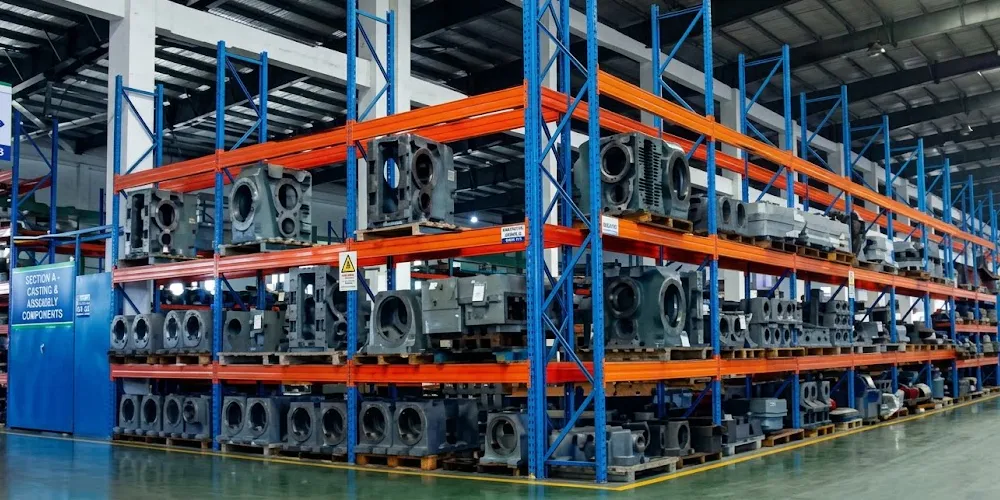
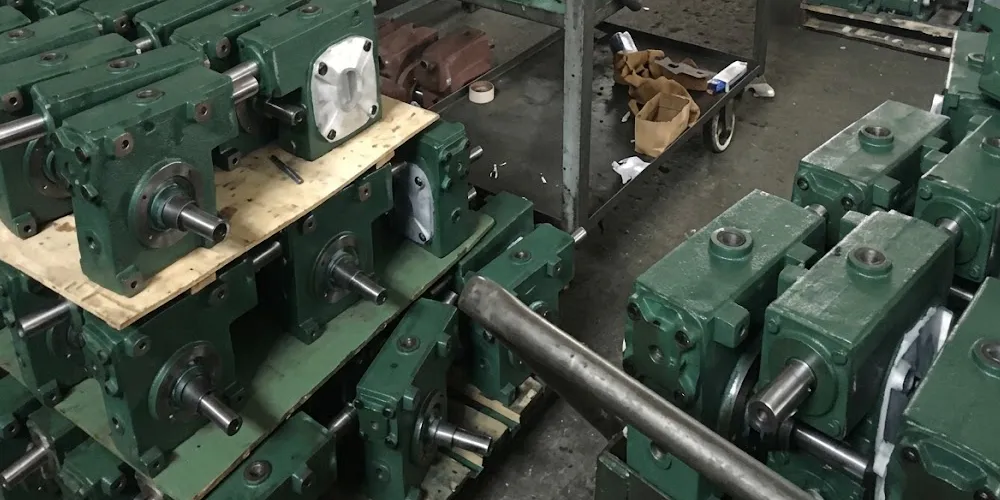
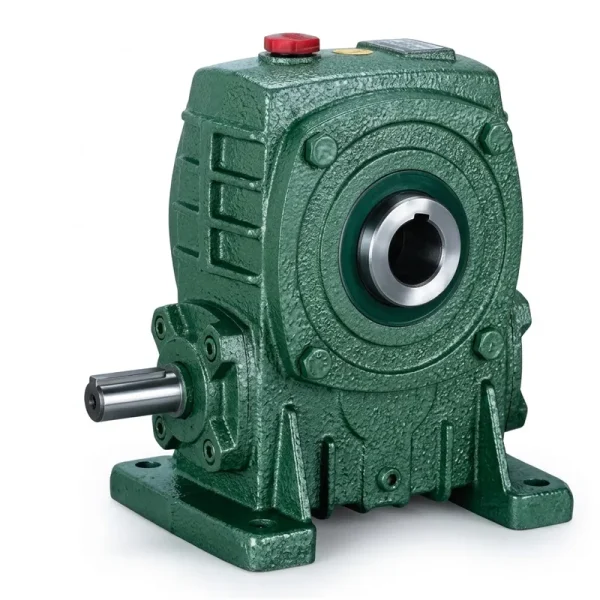
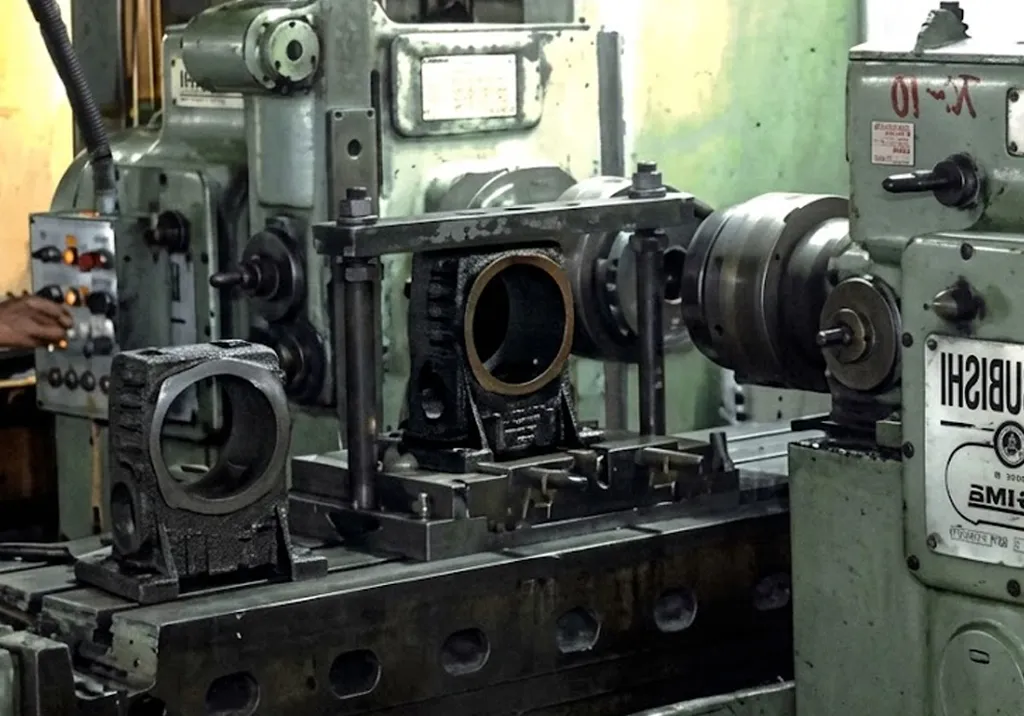
The WP-series 단일 속도 기어 감속기 is constructed around a one-piece integral cast iron housing that encloses the worm shaft and worm wheel in a single sealed cavity. In cold chain packaging environments, this mono-block architecture provides a structural advantage over split-casing designs: there are no mating faces between housing halves that can develop micro-gaps as the housing contracts at sub-zero temperatures and re-expands during defrost warm-up cycles. Even small joint-face openings admit condensation and allow oil to seep outward onto machine surfaces — a contamination risk that food industry standards in the UK, Australia, and Canada do not tolerate on packaging equipment.
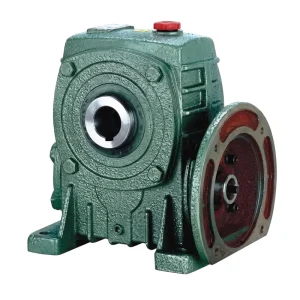
The worm shaft and worm wheel are perpendicular within the housing — a right-angle drive configuration that packaging machine designers use to position the motor alongside or beneath conveyor frames rather than in-line, keeping the drive assembly within the narrow vertical profile of cold room conveyor structures. Flange-input connections allow direct motor coupling without intermediate brackets. Output shaft options span solid single shaft, double shaft, and hollow bore, accommodating the variety of cold chain conveyor drive arrangements from direct chain-sprocket output to shaft-insertion drum drives on spiral conveyors used in freezing tunnels.
Material System for Cold Chain Service
Material selection in a 웜 기어 감속기 for refrigerated and frozen food packaging must account for the behaviour of metals, elastomers, and lubricants at temperatures well below the standard rated ambient range. The following table outlines the material specification for each major component and its specific relevance to cold chain drive service conditions.
| 요소 | 재료 | Cold Chain Service Relevance |
|---|---|---|
| 주택 | Die-cast Iron | Cast iron retains structural integrity across the full cold chain temperature range; corrosion-resistant surface coating provides protection against food-grade sanitiser spray; high thermal mass buffers rapid temperature changes during defrost cycles |
| 웜 샤프트 | Case-hardened Alloy Steel | Hardened steel maintains surface geometry at low temperature; ground thread profile provides precise mesh accuracy essential for smooth cold-start under increased oil viscosity resistance |
| 웜 휠 | Tin Bronze | Bronze retains adequate ductility at low temperature without brittleness; self-lubricating tendency provides a degree of boundary lubrication protection during the cold-start period when oil viscosity is highest |
| 샤프트 씰 | Low-Temperature NBR / PTFE Lip Seals | Standard NBR hardens at temperatures below -20°C, losing sealing effectiveness; low-temperature NBR or PTFE grades maintain lip flexibility down to -40°C, preventing both oil loss and moisture ingress at operational cold room temperatures |
| 문장 | Deep Groove / Taper Roller (C3 clearance grade) | C3 internal clearance grade accommodates thermal contraction of the bearing ring and rolling element at low temperature without generating preload that accelerates raceway wear at start-up |
| 윤활유 | Synthetic PAO Gear Oil (ISO VG 100 / 150 low-temp grade) | Synthetic polyalphaolefin base oils maintain pumpable viscosity at temperatures as low as -40°C; pour point typically below -45°C; significantly lower viscosity increase at cold sump temperature compared with mineral gear oil grades; oil capacity 0.4 – 5.2 L by model size |
Performance Parameters for Cold Chain Packaging Drive Selection
The specification ranges below apply to the WP-series 단일 속도 웜 감속기 in cold chain packaging and distribution drive applications. Notes highlight how cold environment operation affects the selection of each parameter.
| 매개변수 | Specification Range | Cold Chain Application Notes |
|---|---|---|
| 입력 전력 | 0.12 – 15 kW | Cold-start motor current demand increases due to high oil viscosity resistance — select motor with adequate starting torque for the cold sump condition, not just rated running torque |
| Input Speed | 750 – 2000 rpm | Compatible with 50 Hz (1440 rpm) motors in EU, AU, UK and 60 Hz (1728 rpm) in CA — confirm rated ambient range against cold room temperature |
| Single-Stage Reduction Ratio | 1/10 – 1/60 | Frozen food blast freezer spiral conveyor drives: 1/20 – 1/40; cold room case conveyor drives: 1/10 – 1/25; palletiser infeed drives: 1/15 – 1/30 |
| Output Torque | 6 – 6050 N·m | Select with a 1.25–1.5× service factor above calculated running torque to account for cold-start peak torque from viscous oil resistance and frozen product accumulation on conveyor |
| Housing Model Size | Size 40 – 250 | Size 60–120 covers the majority of cold room case conveyor and palletiser drives; size 120–175 for heavy frozen bulk product conveyors |
| 오일 용량 | 0.4 – 5.2 리터 | Larger oil volume in bigger models provides more lubricant mass to warm during start-up, moderating the cold-start viscosity spike; also extends oil change intervals in cold service |
| Rated Ambient Temperature | -40°C to +40°C | The rated range covers all standard frozen food facility operating temperatures; confirm seal material specification is suitable for the lower end of the facility’s actual operating temperature |
| Protection Level | IP54 / IP65 (application dependent) | IP54 covers normal cold room conveyor installations; IP65 or higher for washdown zones where high-pressure cleaning jets are directed at the machine and drive components |
Recommended Models for Cold Chain Packaging Drive Applications
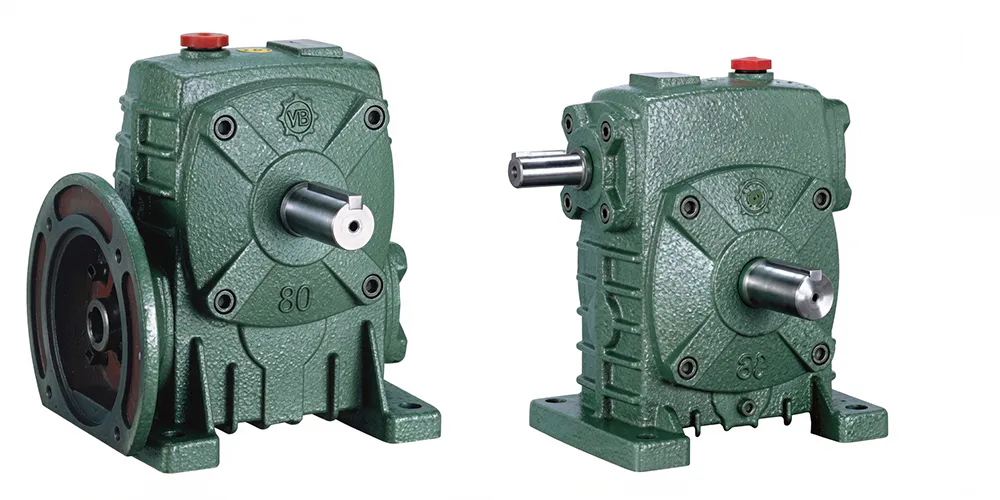
Two WP-series models align particularly well with the power and physical size requirements of cold chain packaging line drives. Both are built around the same worm gear single reduction architecture but target different points in the cold chain distribution drive system.
Lubrication Strategy for Sub-Zero Packaging Drive Systems
The lubricant grade is the single most consequential specification decision for a single reduction worm reducer deployed in a frozen food packaging environment. Standard mineral-based ISO VG 460 worm gear oil — the default recommendation for WP-series reducers in ambient-temperature service — is unsuitable for installations where the sump temperature drops below -10°C. Its viscosity at -18°C exceeds the threshold at which the worm mesh can be adequately lubricated during start-up, and at -25°C, many mineral VG 460 grades approach their pour point and cannot reliably drain back to the sump between cycles, leaving the mesh partially starved at the next start.
The correct solution for cold chain packaging drives is a synthetic polyalphaolefin (PAO) gear oil with a low-temperature viscosity grade. An ISO VG 100 or VG 150 synthetic PAO maintains a pumpable viscosity down to approximately -40°C while providing adequate film thickness at the worm mesh operating temperature — which may reach 30–50°C above ambient due to friction heat during steady-state operation. The lower base viscosity at operating temperature also reduces churning losses and improves thermal efficiency compared with a mineral VG 460 in warm-room service. Oil change intervals for synthetic grades in cold chain service can typically be extended to 3000–4000 hours compared with the 1500-hour interval recommended for mineral oil in standard service.
Where a frozen food facility in the UK or Netherlands follows HACCP food safety management principles, confirming that the selected gear lubricant carries an H2 or H1 food-grade certification ensures that incidental lubricant contact with product or packaging materials does not create a compliance issue during audits. H1 certified lubricants are formulated for incidental food contact and are generally available in PAO grades suitable for cold chain worm gear service.
Installation and Commissioning Guidance for Cold Room Drive Systems
Do not use the mineral gear oil supplied as factory fill for cold chain installations. Drain and refill with the correct synthetic PAO grade before running in the cold environment.
Confirm with the supplier that the installed shaft seals are low-temperature NBR or PTFE grade rated for the facility’s minimum operating temperature before commissioning.
Fit a moisture-trapping breather vent rather than a plain open vent plug. This allows pressure equalisation during thermal cycling without bulk air and moisture exchange into the oil space.
Use a service factor of 1.25–1.5 over calculated running torque when sizing the model for cold chain applications to provide margin for cold-start peak torque loads.
Check oil colour and consistency at the first 500-hour mark in cold service. Milky or cloudy oil indicates moisture ingress requiring immediate seal inspection and oil replacement.
During high-pressure washdown procedures, deflect the water jet away from shaft seal areas using a splash guard if the installed IP rating is lower than the washdown pressure requires.
Single Speed Reducer Selection Across Global Cold Chain Markets
Cold chain infrastructure requirements vary by region according to the dominant frozen and refrigerated product categories, local electrical standards, and food safety regulatory frameworks. The table below maps these factors to 단일 속도 기어 감속기 specification considerations for each market.
| Region | Dominant Cold Chain Product | Motor Standard | Reducer Specification Note |
|---|---|---|---|
| Australia | Meat processing, seafood, dairy | 415 V, 50 Hz | H2 food-grade lubricant preferred in meat processing areas; IP65 in high-pressure washdown zones |
| 영국 | Ready meals, frozen vegetables, dairy products | 400 V, 50 Hz | HACCP compliance; H1 or H2 food-safe lubricant; CE machinery directive compliance for packaged drive units |
| Netherlands | Export frozen food, cheese, meat | 400 V, 50 Hz | 24/7 multi-shift port cold chain operations; long oil change intervals; synthetic lubricant essential; larger oil capacity model preferred |
| South Korea | Kimchi, seafood, frozen snacks | 380 V, 60 Hz | 60 Hz: 1728 rpm motor input — recalculate output speed against ratio to confirm conveyor belt speed; adjust ratio if overspeed risk exists |
| 캐나다 | Frozen meat, fish, dairy, ice cream | 600 V / 480 V, 60 Hz | Harshest cold chain temperatures in global markets (-25°C to -35°C blast freezers); synthetic PAO low-temperature lubricant mandatory; low-temperature seal grade essential |
| Brazil / Colombia | Frozen poultry, seafood, tropical fruit export | 380–440 V, 60 Hz | Large temperature differential between cold room and ambient; condensation risk high during door openings; high-IP housing and moisture-trapping vent critical |
Complementary Products for Cold Chain Drive Systems
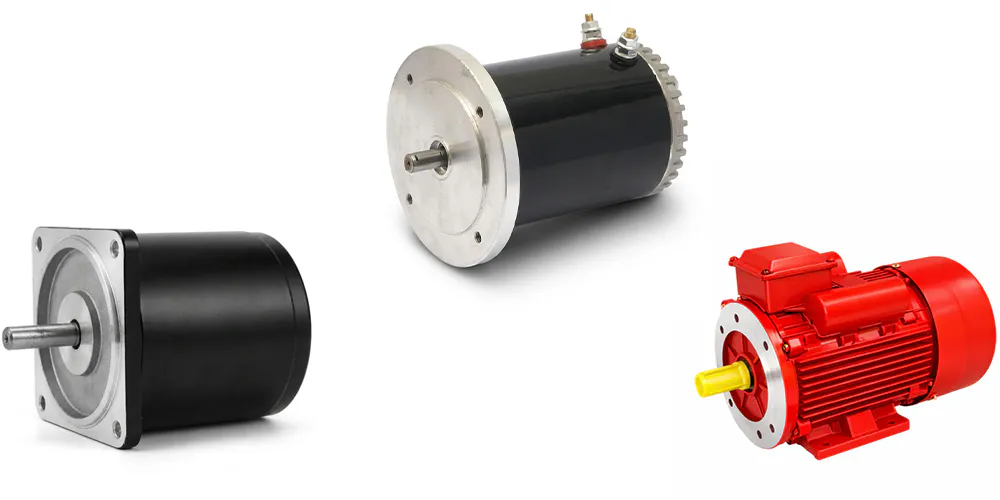
A complete cold chain packaging line drive system requires matched motor and gearbox components that are specified and sourced with the cold chain environment in mind. Two complementary product categories extend the same manufacturing platform to support the full drive chain in frozen and refrigerated food distribution facilities.
제조업체 소개
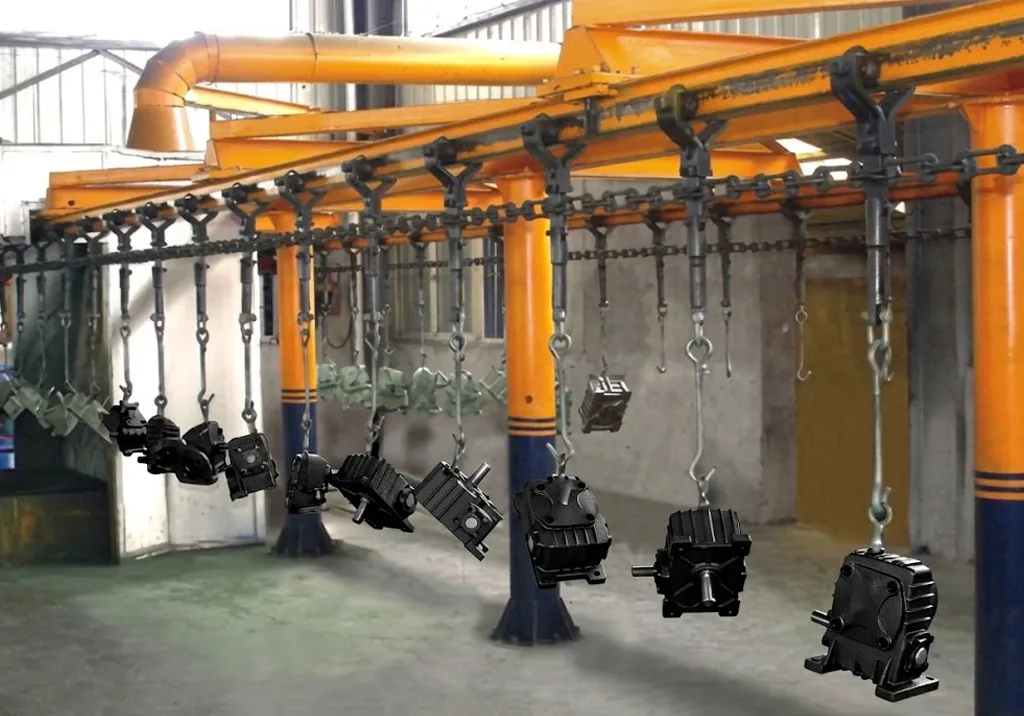
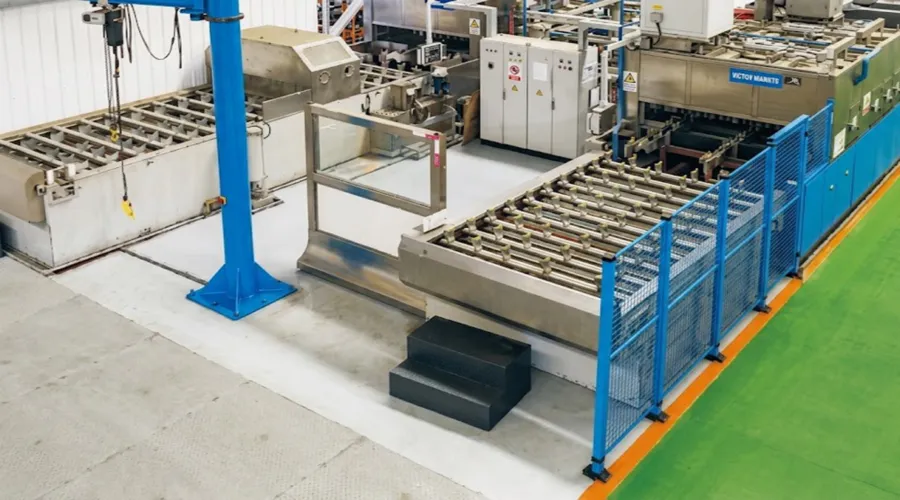
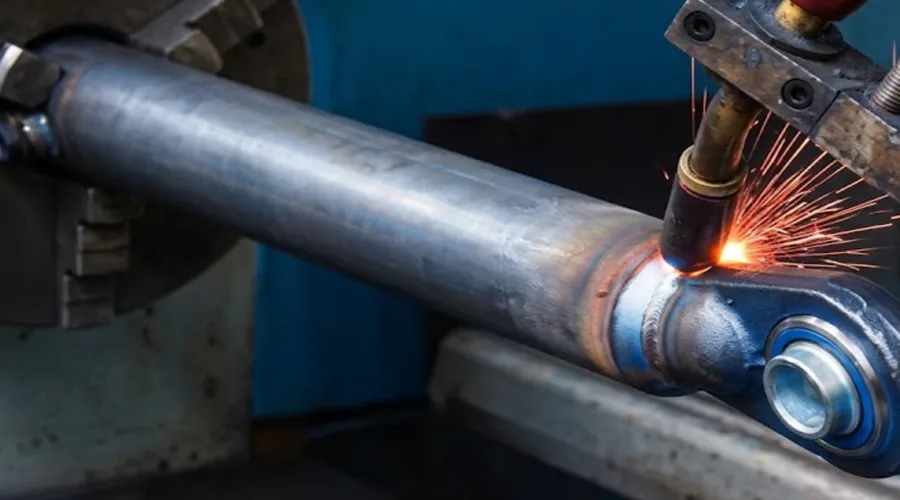
The manufacturing scope covers worm gear reducers, planetary gear drives, agricultural gearboxes, power take-off shafts, hydraulic cylinders, electric motors, gears, chains, and sprockets — all produced within an ISO 9001:2015 certified facility. Design and fabrication capabilities extend to industrial and agricultural gearboxes and assemblies in ductile iron, cast iron, cast steel, precision cast steel, and cast aluminium. Non-standard and standard mechanical components — including worm gears, pulleys, shafts, and worms — are manufactured to support direct OEM supply and long-term replacement parts availability for cold chain packaging machine builders and food distribution facility operators across global markets.
작업장

자주 묻는 질문
편집자: PXY