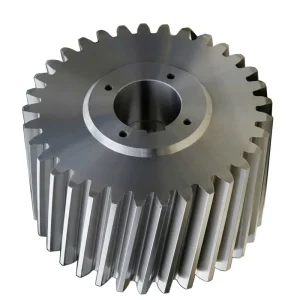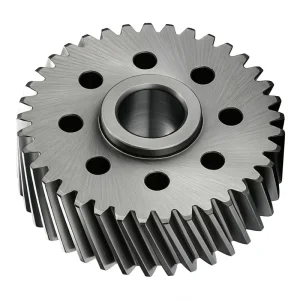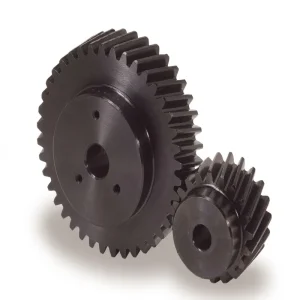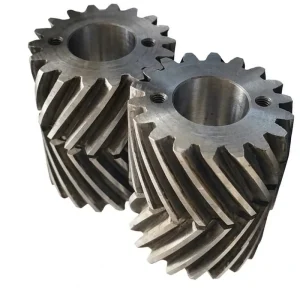
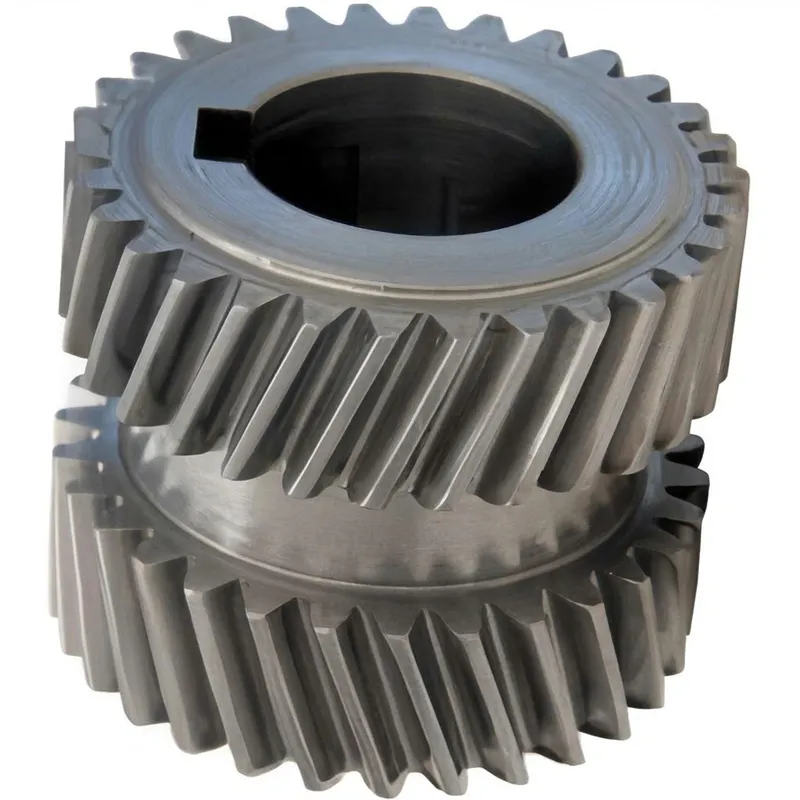
EP-Medical Double Helical Gear
The EP-Medical Double Helical Gear is a precision miniature gear component produced across a dimensional range of Φ3 mm to Φ120 mm with a minimum module of M0.2 in the standard series and M0.15 in the meshing-grade certified series. The product is specifically positioned for sectors where the consequences of gear failure extend beyond mechanical downtime — medical devices, military systems, aircraft actuators, and precision industrial instruments all fall within the stated application scope.
The double helical gear tooth form is selected for this product family rather than a simple spur or single helical configuration for specific engineering reasons. In miniature drive systems — the kind found in surgical robotics, dental handpieces, portable medical pumps, and precision positioning systems — the axial forces generated by a single helical gear can represent a significant fraction of the bearing’s radial load capacity. At the diameters covered by this series, even modest helix angles generate axial force components that affect bearing preload settings, shaft deflection, and ultimately the positional accuracy of the driven mechanism. The double helical geometry eliminates this problem entirely, allowing the gear designer to specify higher helix angles — and therefore higher overlap ratios and smoother operation — without introducing axial force management complexity into the bearing and housing design.
Precision Miniature Gear Engineering
Engineered for applications where miniaturization, dimensional accuracy, and material purity are non-negotiable — the EP-Medical double helical gear delivers the axial-thrust-free, low-noise meshing performance that precision instruments, surgical devices, and aerospace actuators demand. With diameters from Φ3 mm to Φ120 mm and modules from M0.15 to M2.0, this series covers the micro-gear segment that most heavy industrial gear producers cannot serve.
Technical Specifications — Medical Double Helical Gear
The following table presents the verified product data for the EP-Medical Double Helical Gear series. All parameters reflect the certified production specification and are available for review in the product qualification documentation package supplied with sample orders.
| पैरामीटर | विनिर्देश |
|---|---|
| Dimension Range | Φ3 mm – Φ120 mm |
| Standard Module | M0.2 |
| Module Range (Certified Series) | M0.15 – M2.0 |
| Toothed Portion Shape | Double Helical Gear |
| Material Type | Metal, Steel, Stainless, Copper, Brass, and Alloy as customized |
| Meshing Grade | ISO6, JGMA 1, JIS 6, AGMA 13, DIN 6, DIN 5, AGMA 12 |
| Application Sectors | Automotive, Military, Aircraft, Mechanical, Industrial, Medical |
| Customized | ODM / OEM |
| Sample | Sample available |
| Modes of Packing | Vacuum-packed with Plastic Tray |
| Modes of Delivery | DHL, UPS |
| Certificate | ISO 9001:2008 / TS 16949 |
How the Medical Double Helical Gear Works
The operating principle of the EP-Medical double helical gear follows the same fundamental mechanics as its larger industrial counterparts, but the engineering significance of each characteristic is amplified by the miniature scale. At module M0.15 to M2.0 and diameters below Φ120 mm, the tooth dimensions are measured in fractions of a millimetre. A profile error of even a few micrometres represents a significant percentage of the total tooth height, making helical gear measurement and production accuracy at this scale a genuinely demanding engineering discipline, not a trivial scaling-down of standard gear production.
The helical tooth form — teeth cut at an angle relative to the gear axis — produces the classic progressive engagement characteristic: contact begins at one edge of the tooth and sweeps across the face width as rotation continues. This is in contrast to a spur gear, where the entire tooth width engages instantaneously. At the speeds common in medical device actuators and precision instrumentation (often 1,000 to 30,000 rpm), the impulsive load of spur gear engagement generates vibration and acoustic emission that degrades measurement accuracy, affects servo bandwidth in closed-loop positioning, and — in implantable or patient-adjacent devices — produces unacceptable noise and mechanical disturbance. The helical tooth solves this by spreading the load transition over a rotation angle determined by the overlap ratio, effectively filtering out the tooth passing frequency from the transmitted force.
The double helical gear design extends this benefit by pairing two opposing helical rows on a single gear body. The left-hand and right-hand rows generate equal and opposite axial forces that cancel within the gear, so no net axial load reaches the shaft. In a Φ12 mm gear at M0.15–M2.0, this matters because the micro-bearings used at this scale often have axial load capacities comparable to — or lower than — their radial load ratings. Eliminating axial thrust is not a convenience at this scale; it is frequently a prerequisite for achieving the specified bearing life and positional accuracy in the assembled mechanism.
Helical Gear Material — Multi-Material Capability for Critical Applications
The material range for the EP-Medical series is deliberately broad because no single helical gear material serves all the application sectors covered by this product. Medical device applications may require 316L stainless steel for its combination of corrosion resistance and biocompatibility, while dental handpiece gears typically specify cobalt-chromium or titanium alloys for their hardness and inertness. Military and aircraft applications often specify aerospace aluminum alloys or case-hardened alloy steels for their strength-to-weight advantage. Industrial and automotive applications within the module range covered here typically use standard alloy steels such as 20CrMo or 42CrMo, heat-treated to the required surface hardness.
The production facility supports all of these material selections because the helical gear machining process — CNC hobbing and milling at micro-module dimensions — is fundamentally independent of the workpiece material as long as the cutting parameters and tooling are adjusted appropriately. Brass and copper alloys are used extensively in instrument gear trains where conductivity or low magnetic permeability is required. Stainless steel helical gears are the standard choice for food and pharmaceutical machinery where cleaning-in-place with aggressive chemicals is routine. Custom alloys specified by the customer — including precipitation-hardening stainless steels, beryllium copper, and aerospace aluminum grades — are accommodated through the ODM/OEM customization workflow, with material certification provided as a standard deliverable.
Every material lot used in production is accompanied by a mill certificate. Heat treatment, where applied, is documented with time-temperature records and hardness test results. These traceability documents are part of the standard shipment package for certified orders and support the design history file requirements of medical device quality systems under ISO 13485 and FDA 21 CFR Part 820. For aerospace procurement, material and process documentation supports AS9100 supplier qualification without additional data collection effort.
Five Key Advantages of the EP-Medical Double Helical Gear
Micro-Scale Precision Down to M0.15
Producing a double helical gear at module M0.15 with correct helix geometry and certified meshing grade requires machine capability and process control that most gear producers simply do not have. The EP-Medical series achieves ISO6 and AGMA 13 accuracy at these dimensions, delivering tooth profile and pitch deviations measured in single-digit micrometres — the precision level that surgical robotics and aircraft actuator designers require but rarely find in standard catalog gear products.
Zero Axial Thrust at Miniature Scale
At gear diameters of Φ3 mm to Φ120 mm, micro-bearing axial load capacity is often the binding constraint on helix angle selection in single helical gear designs. The double helical gear eliminates this trade-off entirely — any helix angle can be used without generating net axial shaft loads, freeing the designer to optimize overlap ratio for noise and smoothness without compromising bearing life. This is among the most practically significant advantages of double helical gear design at the precision miniature scale.
Multi-Standard Meshing Grade Certification
Medical device, aerospace, and military procurement teams operate under different national standards systems. The EP-Medical double helical gear is certified across ISO6, JGMA 1, JIS 6, AGMA 13, DIN 6, DIN 5, and AGMA 12 — a breadth of certification that eliminates re-qualification when the same gear design is sourced for a US aerospace program, a Japanese precision instrument, or a European medical device. Buyers from the UK, Germany, South Korea, Japan, the USA, and Australia can all reference their local accuracy standard against a single production specification.
Broad Material Selection Including Stainless and Biocompatible Alloys
Stainless steel helical gears for medical and food processing, brass for instrument drive trains, copper alloys for low-magnetic applications, and custom aerospace alloys — the material flexibility of this series means the gear geometry can be fixed while the material is tailored to the specific chemical, mechanical, and regulatory requirements of each application. All material selections are available with mill certification and lot traceability as standard deliverables, supporting quality system documentation under ISO 13485, AS9100, and IATF 16949.
Vacuum Packaging and Expedited International Delivery
Precision micro-gears at M0.15–M2.0 are susceptible to surface damage from contact, humidity, and contamination between production and installation. Vacuum packing in dedicated plastic trays is the packaging standard for the EP-Medical series — a protection level appropriate for class-I and class-II medical device component supply. DHL and UPS delivery modes are standard, enabling reliable transit to medical device OEM assembly facilities in Germany, South Korea, the UK, Australia, Canada, and the USA within lead times that support agile production scheduling. Samples of every new specification are available prior to production commitment, allowing full dimensional and material verification before the production order is placed.
Meshing Grade Standards — What the Certifications Mean
The EP-Medical Double Helical Gear is certified across seven gear accuracy standards from four different national and international standards bodies. Understanding what each grade means in practical terms helps engineers select the correct specification for their application without over- or under-specifying accuracy, both of which have cost and lead-time implications in custom made helical gears.
| मानक | Grade | Typical Application |
|---|---|---|
| ISO 1328 | ISO 6 | Precision instrument gears, medical device actuators |
| JGMA | JGMA 1 | Japanese precision machinery, aerospace instruments |
| JIS B 1702 | JIS 6 | South Korean and Japanese industrial precision drives |
| AGMA 2000 | AGMA 13 | US aerospace, military, and high-precision medical |
| DIN 3962 | DIN 6 | German precision machinery, automotive sub-assemblies |
| DIN 3962 | DIN 5 | High-precision German instrument and measurement systems |
| AGMA 2000 | AGMA 12 | US and Canadian precision industrial and military drives |
It is worth noting that the direction of the accuracy numbering differs between standards: ISO and DIN use lower numbers for higher accuracy (ISO 3 is more precise than ISO 8), while AGMA uses higher numbers for higher accuracy (AGMA 13 is more precise than AGMA 10). This means AGMA 13 and ISO 6 / DIN 6 represent broadly equivalent precision tiers — the upper end of the accuracy range covered by the EP-Medical series — both of which are appropriate for medical device and aerospace applications requiring tight pitch and profile control.
Application Scenarios — Where the EP-Medical Double Helical Gear Is Used
The double helical gear applications served by the EP-Medical series span a wide range of high-precision sectors. Each application listed below has different requirements, but all share the common need for very small gear dimensions, high accuracy grades, and material or surface quality appropriate for the operating environment.
Medical Devices & Surgical Robotics
Surgical robot joint actuators, infusion pump drive systems, and powered surgical tools use miniature gear trains where backlash, noise, and positional error are measured in microns. The double helical gear form, with its high overlap ratio and zero axial thrust, reduces the compliance and vibration in these drive chains to levels that allow closed-loop position control at the precision required for minimally invasive procedures. Stainless steel and titanium alloy options support biocompatibility requirements for body-adjacent applications.
Military & Defence Optronics
Stabilized sighting systems, night-vision device actuators, and targeting mechanism drives require micro-gears that maintain angular accuracy under vibration, temperature cycling, and shock loads encountered in field deployment. AGMA 13 and ISO 6 accuracy grades ensure that gear errors do not contribute measurably to the pointing accuracy budget. Custom alloy options including aircraft-grade aluminum and high-strength steel support weight and reliability requirements in airborne and vehicle-mounted systems used by Australian, UK, and German defence equipment buyers.
Aircraft Avionics & UAV Actuation
Flight control actuators, trim tab mechanisms, and UAV payload positioning systems specify gear components that meet aerospace accuracy grades and can be traced back to raw material certification. The module M0.15–M2.0 range of this series covers the size envelope of many avionics actuator gear trains. The combination of available AGMA 13 certification and aerospace material grades (6061-T6, 7075-T6, 17-4PH stainless) make this series suitable for AS9100-qualified aerospace supply chains in Canada, the UK, South Korea, and Germany.
Precision Industrial Instruments
Flow meters, analytical instruments, coordinate measuring machine probe drives, and spectroscopy positioning systems all rely on miniature gear trains that must move smoothly with minimal velocity ripple. The low dynamic load and high contact ratio of the double helical gear at small modules means that the tooth passing frequency disturbance to the measurement system is minimized — a requirement that DIN 5 and DIN 6 accuracy grades are specifically designed to ensure in the German precision instrument manufacturing tradition.
Automotive Precision Subassemblies
Electric power steering systems, variable valve timing actuators, and transmission shift control mechanisms use small-module helical gears that must meet TS 16949 quality system requirements throughout the supply chain. The EP-Medical series carries ISO 9001:2008 / TS 16949 certification and is supplied with the PPAP-compatible documentation expected by Korean, German, and Japanese OEM automotive procurement teams. Brass and alloy steel material options cover the range of application environments encountered in this sector.
Dental & Laboratory Equipment
Dental handpiece turbines, micromotor drives, and laboratory centrifuge gear stages operate at high rotational speeds with strict requirements on vibration, heat generation, and resistance to sterilization protocols. The smooth, low-dynamic-load meshing of the double helical gear at miniature modules reduces heat generation compared to spur gears of equivalent pitch, extending lubrication service intervals and improving patient comfort in clinical settings. Stainless steel material with autoclave-compatible surface finish is the preferred option for this sector.
Related Products — Complete Miniature Drive System Supply
Precision miniature drives rarely consist of a single gear pair. Complete gear trains, rack-and-pinion linear stages, and multi-stage reduction assemblies require consistent accuracy and material standards across all components. Sourcing the full complement of drive components from a single manufacturer eliminates compatibility uncertainty, simplifies qualification documentation, and reduces procurement overhead for medical device OEMs and aerospace integrators managing complex component qualification programs across development and production phases.
Precision Helical Gear शृंखला
Our single helical gear range in the same micro-module sizes complements the double helical series in multi-stage gear trains where the first reduction stage uses a double helical gear for its axial-thrust-free characteristic and subsequent stages use single helical gears where the lower part count simplifies the shaft and housing design. Both series share the same material options, accuracy grade certifications, and quality documentation standards, making mixed-series assemblies straightforward to qualify and procure. Available in stainless, brass, alloy steel, and custom alloys throughout the M0.15–M2.0 module range.
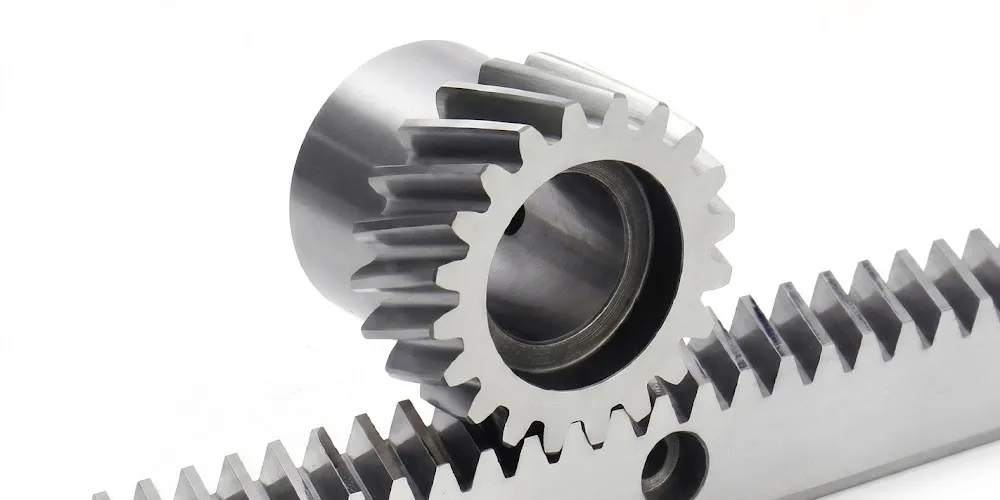
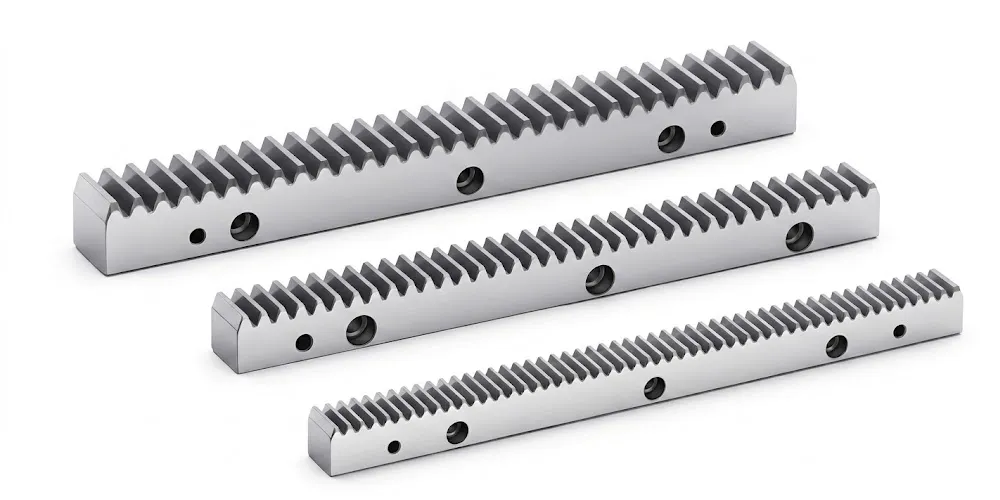
Precision गियर रैक — Linear Stage Integration
Linear positioning stages in medical imaging equipment, laboratory automation, and semiconductor inspection systems use precision helical gear racks meshing with small-module helical pinions. The same helical tooth geometry that gives the double helical gear its smooth rotary transmission extends to the linear domain in the rack-and-pinion arrangement, delivering smooth traversal with the reduced velocity ripple that optical and measurement applications demand. Our gear rack range is produced to matching accuracy grades and material standards, ensuring direct dimensional compatibility with the EP-Medical helical pinion series without custom adaptation tooling or fitting allowances.
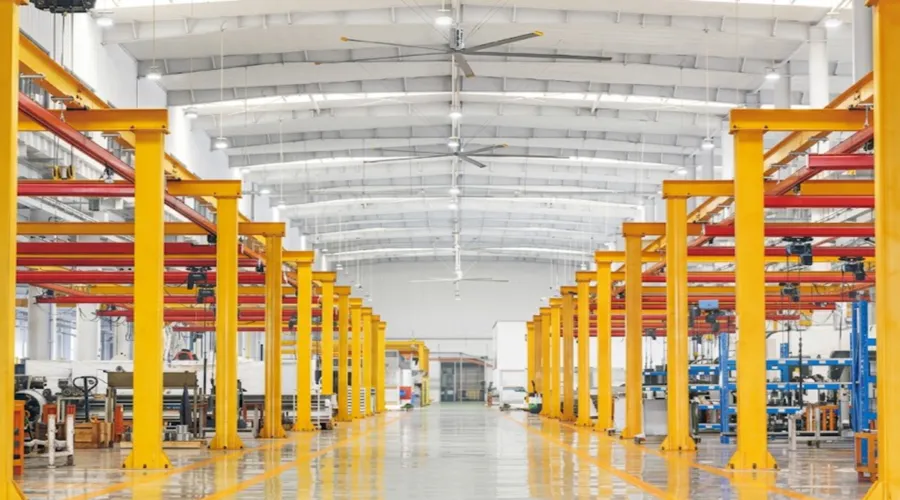
About Our Production Facility — Precision Gear Manufacturing Since Over a Decade
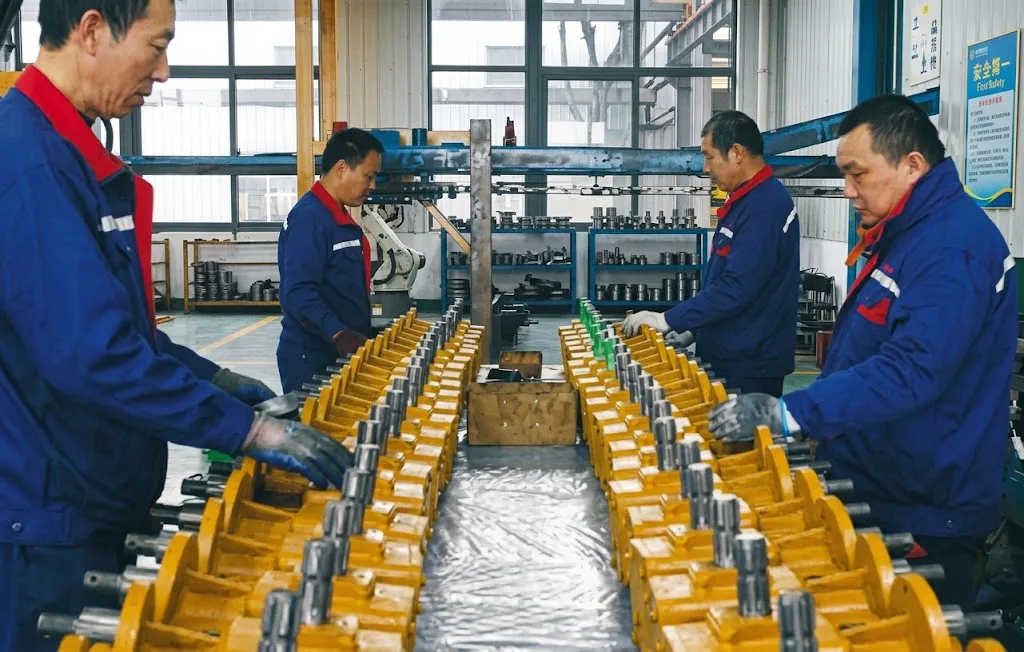
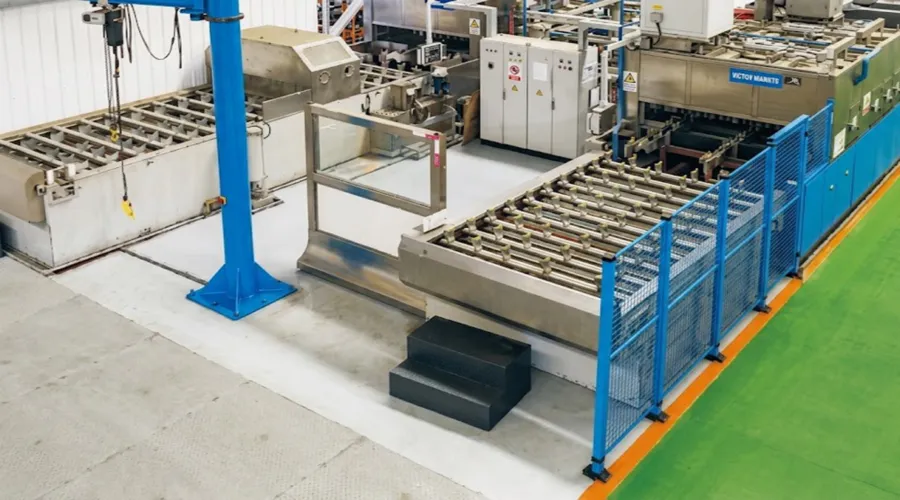
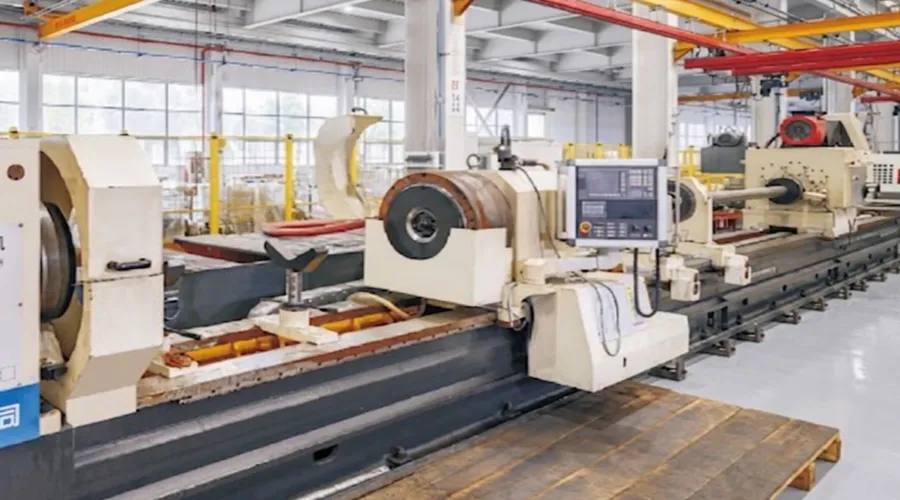
With more than ten years of experience in mechanical transmission component manufacturing, our facility has developed the production capability and quality management infrastructure to serve the most demanding segments of the gear market — from standard agricultural gearboxes to the certified miniature double helical gears in the EP-Medical series. We operate as a direct manufacturer, which means engineering queries are handled by the people who run the production process, not intermediaries, and documentation requests are answered from the actual production records rather than from estimates.
Our product range covers agricultural gearboxes, worm gear reducers, planetary gear drives, power take-off shaft assemblies, hydraulic cylinders, precision gears across a wide module range, roller chains, sprockets, worm gears, pulleys, worm shafts, and custom mechanical assemblies to customer specification. Gearbox and housing casting materials include ductile iron, cast iron, cast steel, precision cast steel, and cast aluminum — giving OEM customers genuine design flexibility rather than forcing adaptation to a fixed catalog. The facility holds आईएसओ 9001:2015 certification covering all production and inspection processes, with the EP-Medical series additionally supported by TS 16949 certification for automotive-sector customers and quality documentation packages compatible with ISO 13485 medical device quality systems.
कार्यशाला
अक्सर पूछे जाने वाले प्रश्नों
Request a Sample or Production Quotation
Provide your module, outer diameter, material specification, accuracy grade, and application description to receive a detailed manufacturing proposal for your double helical gear requirement. Samples with full dimensional and material inspection reports are dispatched internationally via DHL and UPS.
संपादक: पीएक्सवाई