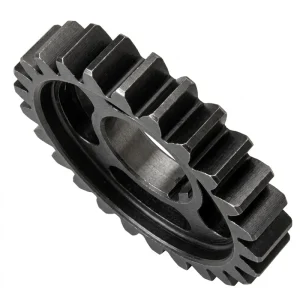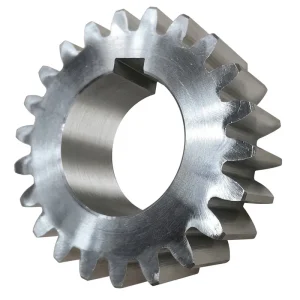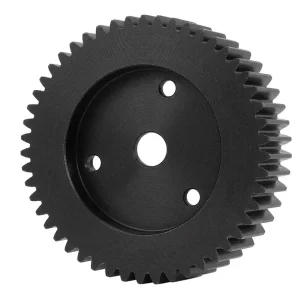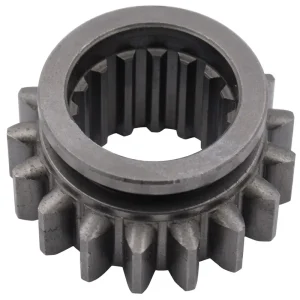
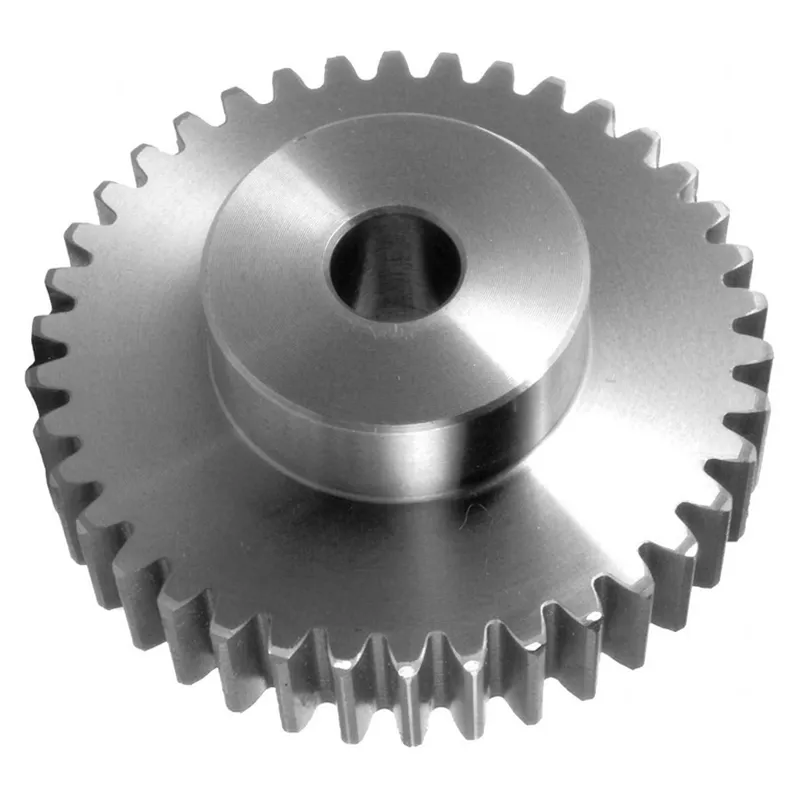
EP-Medical Stainless Spur Gear
The EP-Medical Stainless Spur Gear series provides high-precision transmission components engineered for critical applications in medical, automotive, military, aircraft, and mechanical fields. Available in dimensions from Φ3mm to Φ120mm, this series covers modules ranging from M0.15 to M2.0, including specific ranges like M0.25-M0.8 and M1.0<M<2.0. Manufactured primarily from Stainless Steel to meet strict hygiene and durability standards, these gears achieve superior meshing grades conforming to ISO 6, JGMA 1, JIS 6, AGMA 13, DIN 6, DIN 5, and AGMA 12. Produced under ISO 9001:2008 and TS16949 certification, we offer full ODM/OEM customization with samples available. Each unit is securely vacuum-packed in plastic trays to prevent contamination and shipped via DHL or UPS, ensuring reliable global delivery for sensitive equipment.
Medical-Grade Precision Transmission
Miniature-to-mid-range stainless steel spur gear components engineered for medical instruments, aerospace drives, and high-hygiene automation. Dimension range Φ3 mm – Φ120 mm, module from M0.15, with meshing grades covering ISO 6, JGMA 1, JIS 6, AGMA 13, DIN 6, DIN 5, and AGMA 12.
EP-Medical Stainless Spur Gear — Product Specifications
Module series M0.15 through M2.0 · Dimension Φ3 mm – Φ120 mm · ISO 9001:2008 / TS16949 Certified
| 매개변수 | 사양 |
|---|---|
| Dimension Range | Φ3 mm – Φ120 mm (Φ5 mm baseline reference) |
| Module Series | M0.15, M0.2, M0.25–M0.8, M0.8–M1.0, M1.0–M1.5, M1.5–M2.0 |
| 재료 | Stainless steel (grade as customer required) |
| Meshing Grade | ISO 6, JGMA 1, JIS 6, AGMA 13, DIN 6, DIN 5, AGMA 12 |
| Application Sectors | Automotive, Military, Aircraft, Mechanical |
| 압력각 | 20° (standard); 14.5° available on request |
| Tooth Form | Involute, full-depth profile per applicable standard |
| Customisation | ODM / OEM (bore, keyway, face width, tooth count) |
| Sample Availability | Sample available |
| Packing | Vacuum-packed with plastic tray |
| Delivery Method | DHL, UPS |
| Quality Certification | ISO 9001:2008 / TS16949 |
What Sets a Medical Stainless Spur Gear Apart?
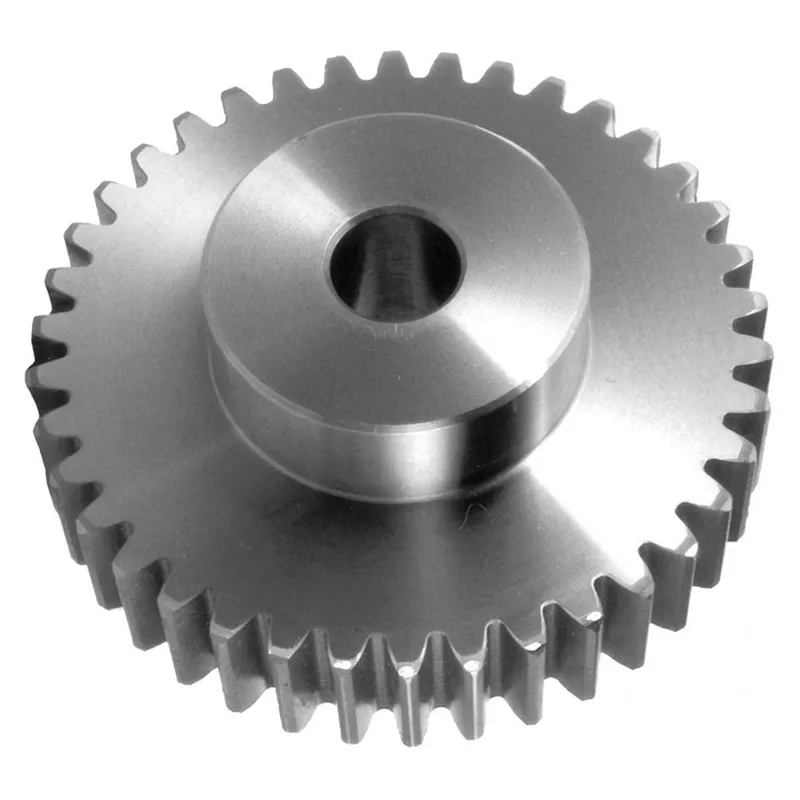
A spur gear is the most direct and mechanically transparent of all parallel-shaft gear forms: straight teeth cut radially on a cylindrical blank, meshing with a mating pinion or spur gear across a common pitch line. The involute spur gear tooth profile maintains a constant velocity ratio throughout the arc of engagement, which is exactly the characteristic that precision instruments rely on — consistent angular output without the velocity ripple that worn or imprecise gearing introduces.
What elevates the EP-Medical variant above a general-purpose steel spur gear is the combination of material purity, dimensional miniaturisation, and certified meshing accuracy. Medical robotics, diagnostic imaging drives, surgical tool motors, and implant manufacturing equipment all demand spur gear components that will not corrode under repeated sterilisation, that tolerate the ultra-small module sizes dictated by compact device housings, and that carry internationally recognised precision grades — ISO 6, AGMA 12/13, JGMA 1 — so device OEMs can integrate them directly into regulatory submissions without additional characterisation testing.
Starting from a minimum module of M0.15 and an outer diameter as small as Φ3 mm, these small spur gears occupy the territory where standard catalogue items and custom spur gears intersect. ODM and OEM customisation are both supported, allowing medical device engineers to specify bore diameter, keyway, face width, and tooth count to exactly match their mechanism geometry rather than designing around whatever the nearest standard module happens to offer.
Five Performance Advantages of EP-Medical Stainless Spur Gears
Corrosion-Free Service Life
Stainless steel spur gears resist oxidation without protective coatings, surviving autoclave sterilisation, chemical disinfectant immersion, and salt-spray environments that would deteriorate carbon steel alternatives within weeks. No post-process coating means dimensional integrity is preserved to the manufactured tolerance.
Ultra-Fine Module Range
The module series begins at M0.15 and covers M0.2, M0.25–M0.8, M0.8–M1.0, M1.0–M1.5, and M1.5–M2.0. This granularity lets designers of handheld surgical instruments and laboratory analysers select the exact involute spur gear geometry their kinematic requirements demand rather than compromising on the nearest available standard.
Multi-Standard Meshing Grades
Certified to ISO 6, JGMA 1, JIS 6, AGMA 13, DIN 6, DIN 5, and AGMA 12 simultaneously, each spur gear set can be referenced against whichever standard governs a given regional regulatory authority — essential for medical device OEMs shipping into the EU, North America, Japan, and Australia within the same product family.
Vacuum-Pack Cleanliness Assurance
Every shipment is vacuum-packed on plastic trays, eliminating particulate contamination during transit — a requirement in cleanroom assembly environments where a single metal chip or fingerprint residue can trigger a product rejection. This packing method also prevents micro-oxidation on cut tooth surfaces during long transit or storage periods.
ODM / OEM Customisation
Beyond catalogue modules, we manufacture custom spur gears to customer drawings, covering non-standard tooth counts, bespoke bore and keyway configurations, and face widths outside the standard range. This is the capability that distinguishes a true spur gear manufacturer from a catalogue reseller — we machine from billet, not from stock blanks.
How a Miniature Stainless Gear Transmits Motion
The operating principle of an external spur gear is straightforward: two gears mounted on parallel shafts mesh at their pitch circles, and tooth-to-tooth contact transfers rotational force from the driving shaft to the driven shaft. The involute tooth form ensures that the line of action remains constant as the tooth pair rotates through engagement, producing a theoretically perfect velocity ratio. In practice, the ratio of output speed to input speed equals the inverse ratio of tooth counts — a 20-tooth gear driving a 60-tooth spur gear delivers a 3:1 reduction with no slippage or compliance introduced by the gear mesh itself.
At miniature scale — modules from M0.15 upward — manufacturing precision becomes the dominant design variable. A pitch error that would be inconsequential on an M5 gear represents a large fraction of tooth thickness on an M0.25 gear. This is why the meshing grades cited for these components (AGMA 13, ISO 6, JGMA 1) sit at the top of their respective accuracy hierarchies: achieving them at small module requires dedicated hobbing or profile grinding on machines with sub-micron positioning capability, followed by 100% dimensional verification under optical comparators.
The absence of axial thrust — the defining mechanical characteristic that distinguishes a straight spur gear from a helical spur gear — simplifies bearing selection in compact medical device actuators. Radial needle bearings or simple bronze bushings handle the load without the thrust faces that helical drives require, which is a meaningful advantage when a surgical robot joint has a radial envelope measured in millimetres. When quiet operation is also required, the difference between spur gear vs helical gear becomes a noise versus simplicity trade-off that the application engineer must resolve; for positioning accuracy and zero axial load, the gear wins.
Material Selection for Regulated Industries
Stainless steel spur gears are not a single material decision — they are a family. The three grades most commonly specified in medical and aerospace applications are 303, 304, and 316L stainless. Grade 303 (with added sulphur for machinability) is the most economical choice for complex tooth profiles in miniature modules, where material removal volume is high relative to finished gear size. Grade 304 is the general-purpose austenitic grade, offering a good balance of strength, corrosion resistance, and weldability. Grade 316L adds molybdenum, giving it measurably better resistance to chloride pitting and crevice corrosion — the reason it dominates implant-adjacent tooling and pharmaceutical processing equipment.
For military and aircraft applications listed in the product datasheet, 17-4PH precipitation-hardened stainless is the typical choice: it combines the corrosion resistance of austenitic grades with a yield strength approaching low-alloy carbon steel, achieved through age-hardening rather than carburising. This makes it a viable alternative in small spur gears where case-hardened carbon steel would require a coating to match the corrosion performance and the coating thickness would compromise tooth accuracy.
Across all material grades, our manufacturing process controls surface finish on the tooth flanks to Ra values consistent with the specified meshing grade. A DIN 6 spur gear tooth demands ground flanks; a DIN 8 or AGMA 12 part may be achievable by precision hobbing alone. Customers specifying stainless steel spur gears for food, pharma, or medical end-use routinely request material test reports (MTRs) with each order, which we provide as standard documentation alongside dimensional inspection records.
산업 응용 분야
Medical Instruments & Robotics
Surgical robot joints, endoscope drive mechanisms, infusion pump actuators, and diagnostic imaging gantries rely on miniature stainless steel spur gears for repeatable angular positioning under sterilisation conditions. M0.15–M0.8 modules are typical for handheld device drives, while M1.0–M2.0 gears suit larger surgical robot arm segments. Cleanroom-packed, ISO-certified components move directly from incoming inspection to assembly without additional cleaning steps.
Aerospace & Defence Mechanisms
Flight control actuators, weapons system traverse drives, radar antenna positioning mechanisms, and avionics instrument drives specify spur gear components to AGMA 13 or JGMA 1 grade, the highest entries on those standards' accuracy tables. Military ground vehicles and aircraft similarly need a pinion and spur gear set that tolerates wide operating temperature swings, vibration shock loads, and the absence of lubrication maintenance that field service implies. Our 17-4PH stainless option addresses precisely this requirement.
Laboratory Automation & Analytical Equipment
Liquid handling robots, PCR thermal cyclers, automated microscopy stages, and chromatography sample carousels use small spur gears in the M0.25–M1.0 range to convert stepper or servo motor output into precise linear or rotational sample positioning. The absence of axial thrust means the load frame can be lightweight, and the inherent velocity accuracy of involute gearing removes one potential source of position error from the instrument's error budget.
Food, Pharma & Semiconductor Processing
Wherever product contact or proximity requires materials that can survive aggressive washdown chemistry — NaOH, hydrogen peroxide, isopropanol, HCl cleaning cycles — grade 316L stainless steel spur gears are the defensible material choice. Semiconductor fab environments add electrostatic and particle cleanliness requirements that vacuum packaging directly addresses. These applications also frequently require full material traceability, which our MTR documentation programme supports.
Precision Automotive & EV Subsystems
Electric vehicle thermal management systems, active suspension actuators, camera-based ADAS mechanisms, and advanced driver-assistance sensor servos use metric spur gears and stainless spur gears where corrosion in wheel-well and under-bonnet environments would disqualify standard carbon steel. The TS16949 certification referenced in the product datasheet aligns directly with automotive supplier quality requirements, simplifying supplier approval in IATF 16949-governed supply chains.
Marine & Offshore Instrumentation
Navigation instrument drives, subsea valve actuators, and oceanographic instrument winches encounter sustained salt-spray exposure that grades 304 and 316L stainless handle without protective coatings. spur gears canada and spur gears near me sourced for coastal or offshore applications benefit from this corrosion resistance as much as from the precision accuracy grades, since a mechanically accurate but corroded gear tooth changes effective pressure angle as rust material builds up on the flank surfaces.
A Decade-Plus of Precision Transmission Manufacturing
Over more than ten years in the mechanical transmission industry, our ISO 9001:2015 certified facility has developed manufacturing depth across a wide product range: agricultural gearboxes, worm gear reducers, planetary gear drives, power take-off shafts, hydraulic cylinders, gears, roller chains, and motors. That breadth means customers seeking stainless steel spur gears for a medical device project can also source complementary drive components — sprockets, worm gears, pulleys, worms, and precision shafts — from the same audited facility, reducing their supplier count and simplifying their incoming quality process.
Engineering and design capability extends well beyond standard drawings. Custom spur gears, non-standard gearboxes, and bespoke assemblies are produced in ductile iron, cast iron, cast steel, precision cast steel, and cast aluminium alongside the stainless steel and alloy steel grades central to the EP-Medical range. Our process engineering team can review customer drawings for manufacturability and suggest modifications that improve gear tooth accuracy or reduce lead time without changing the functional specification.
Customers in the United Kingdom, the Netherlands, Australia, South Korea, Canada, Brazil, and Colombia are among the global B2B accounts we serve. Factory visits and quality audits are welcomed; dimensional inspection reports, material test certificates, and process records are issued with every shipment as standard rather than as an optional extra.
호환 가능한 드라이브 시스템 구성 요소
이중 나선형 기어
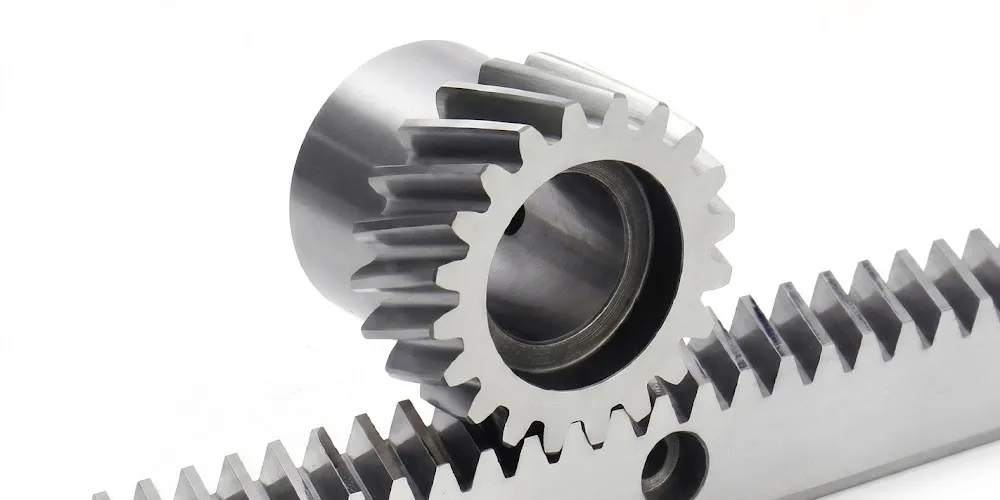
When a high-speed or noise-sensitive stage needs higher contact ratio than an external spur gear can deliver, a double helical gear — herringbone geometry — provides the answer with no net axial thrust. Both gear types share the same parallel-shaft mounting arrangement, so transitioning from a spur to a helical stage within an existing housing is achievable with minimal re-engineering.
기어랙
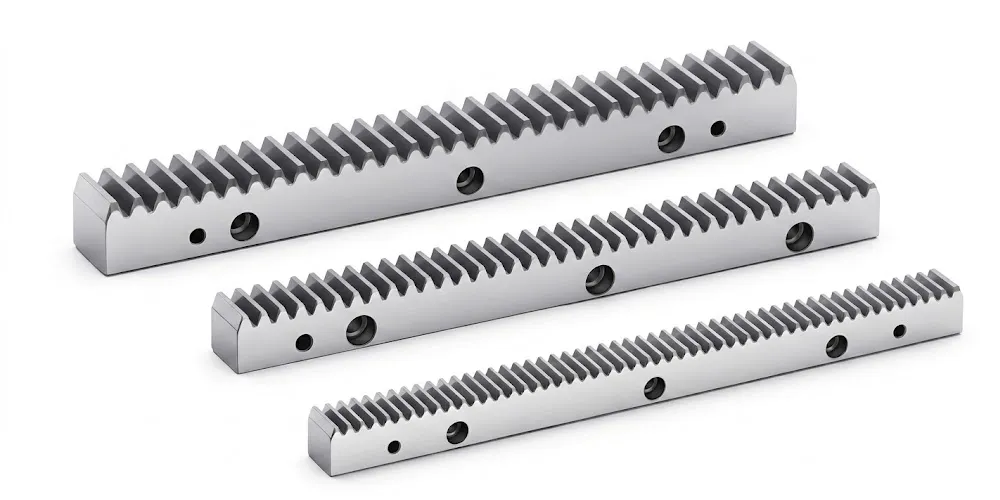
Mating a spur gear to a gear rack converts rotary motor output into linear travel — the core kinematic principle behind laboratory XY stages, biopsy needle drives, and imaging table travel mechanisms. Because rack tooth form is the same involute profile as the mating spur gear tooth, pitch accuracy at the mesh interface is governed by the same standard.
Order & Delivery Terms
Minimum Order
Standard stainless spur gear items carry a baseline MOQ. Mixed modules can be combined to reach approximately USD 1,500 as a single consolidated order. For new-customer evaluation, 1–5 pcs samples are available at sample pricing. Very small quantities (1–2 pcs) can be accepted, though unit cost reflects the short-run setup involved. Custom spur gears: MOQ depends on drawing, material, tolerance, machining process, and batch size.
Lead Time
Standard items in stock: 3–7 working days
Standard stainless spur gears (production run): 10–25 working days
Custom / OEM spur gears: 20–45 working days
High-precision ground tooth: 30–60 working days
Samples (1–5 pcs): 7–25 working days
Trade Terms
Standard components ship on EXW, FOB, CIF, or DAP terms. FCA, CFR, CPT, CIP, and DDP are negotiable for specific project requirements. Urgent sample shipments or spare part orders travel via DHL or UPS express on EXW or DDP basis. For cleanroom-packed medical spur gears, special handling instructions can be added to the shipping documentation.
Payment & Packing
Payment via T/T or L/C. Each spur gear shipment is vacuum-packed on plastic trays to prevent contamination and micro-oxidation during transit. Outer carton labelling can include customer part numbers and lot traceability codes for incoming inspection integration. Material test reports and dimensional inspection records accompany every order.
자주 묻는 질문
Which stainless steel grade should I specify for a spur gear used inside an MRI-compatible surgical robot operating in a UK hospital?
How do I select the right module for a miniature spur gear driving a biopsy needle mechanism in a compact Australian medical device?
What is the difference between a spur gear and a helical gear when designing a compact laboratory automation stage that needs to run quietly in an open-plan Canadian research facility?
Where can I find a stainless steel spur gear manufacturer that can supply custom OEM metric spur gears certified to both AGMA and DIN standards for an aerospace programme in the Netherlands?
How should I evaluate the advantages and disadvantages of using a small stainless spur gear versus a plastic spur gear in a handheld diagnostic device intended for tropical field environments in South Korea and Southeast Asia?
편집자: PXY