
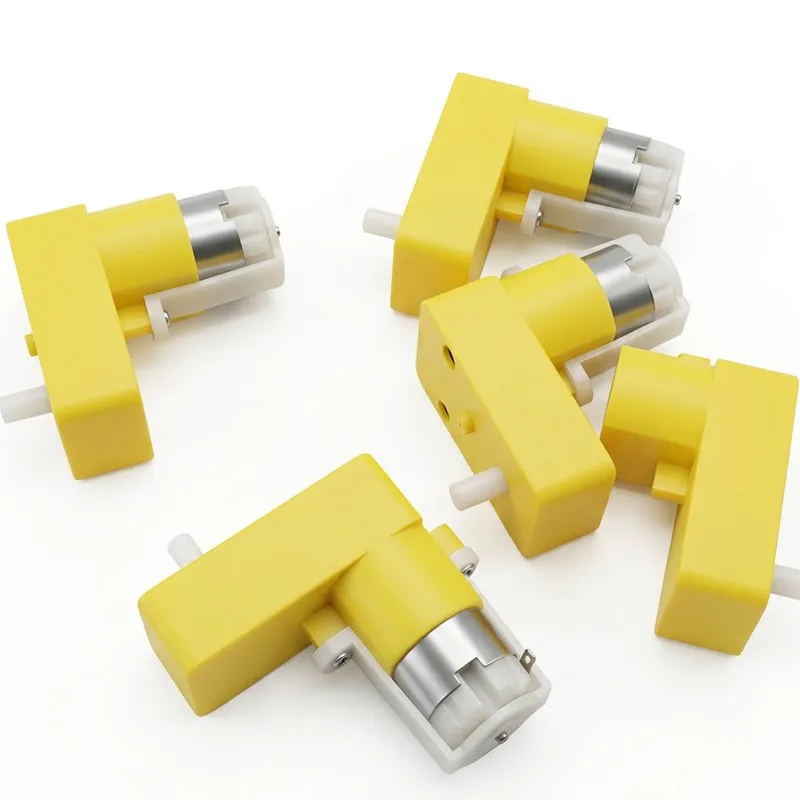
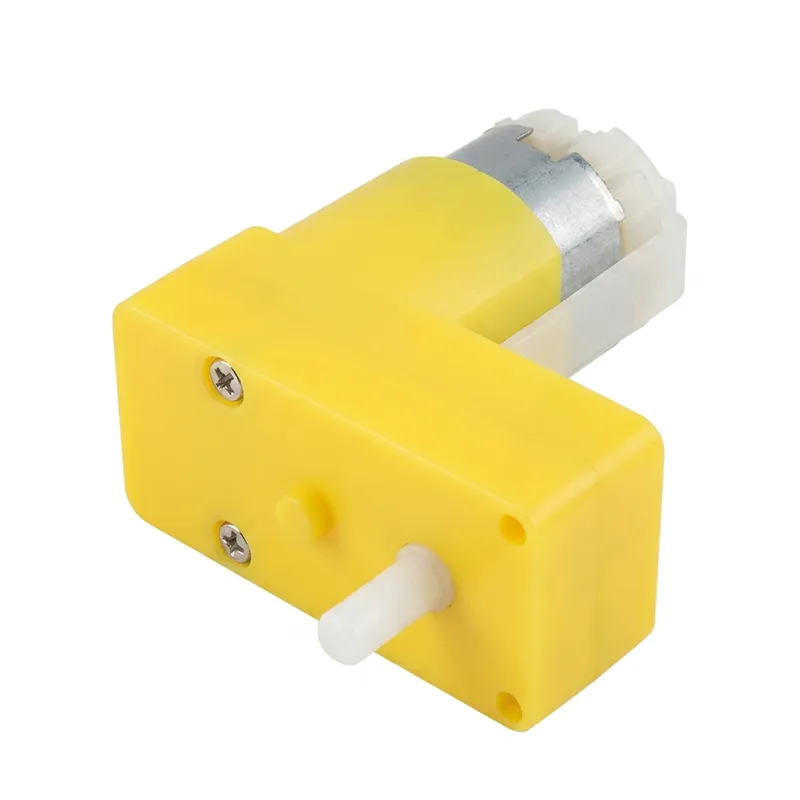
EP-Mini DC Motor for Toy Car
This EP-Mini DC motor, designed specifically for toy cars, is a standard TGP DC motor—a TT-type plastic gearbox motor—which has become one of the most well-known drive units in the global amateur robotics, educational kits, and consumer toy car market. Featuring a striking yellow polypropylene gearbox housing and a compact 130-class brushed DC motor core, this mini geared motor offers wide voltage compatibility (3V to 9V DC), considerable torque output commensurate with its size, and low-noise operation, perfectly meeting the needs of battery-powered toy applications.
The motor’s widespread use in toy cars is due to its simple design. Two terminals allow connection to any standard AA, AAA, or lithium battery pack, and simply reversing the polarity instantly changes the drive direction. The L-shaped plastic gearbox output shaft is sized to match the 66mm toy wheel hub diameter most commonly found in RC car chassis kits and robot platform components. Whether driving the wheels of a homemade Arduino smart car, powering the tracks of a miniature robot, or driving the axles of a battery-powered toy car in a children’s playroom, this motor can handle it all.
The core of the miniature DC motor inside the gearbox uses a permanent magnet brushed DC motor—the mainstream choice for motors in small toy cars worldwide, because it does not require an electronic commutation controller, can be directly powered by battery output, and can be reversed with just a simple toggle switch or H-bridge integrated circuit.
DC Gear Motor Series — Hobby & Toy Drive
EP-Mini DC Motor for Toy Car
A compact, plastic-gearbox mini dc motor with 3V–9VDC wide operating range, high torque output, and low noise — designed for toy cars, robot chassis, remote control vehicles, and educational DIY kits shipped to hobby builders worldwide.
Technical Specifications Toy Car Mini DC Motor
The table below covers the complete electrical and mechanical parameters for the EP-Mini DC Motor (TT Gear Motor / DC TGP Motor). All values represent standard operating conditions for the brushed permanent magnet DC motor with integrated plastic gearbox assembly.
| Toy Car Mini DC Motor Parameter | قدر | نوٹس |
|---|---|---|
| Motor Type | DC TGP Motor (TT Gear Motor) | Plastic gearbox motor, hobby grade |
| Operating Voltage | 3V – 9V DC | Wider range than most toy motors |
| Recommended Voltage | 4.5V – 6V DC | Optimal balance of speed and torque |
| No-Load Speed | ~200 RPM (at 4.5V) / ~300 RPM (at 6V) | After gear reduction |
| گیئر کا تناسب | 1:48 (standard) / optional 1:120 | Higher ratio = more torque, lower speed |
| Stall Torque | ~0.8 kg·cm (at 4.5V) | High torque for size class |
| No-Load Current | ~130 mA | At 4.5V no load |
| Stall Current | ~500 mA | At 4.5V stall condition |
| Motor Core Class | 130 brushed DC (permanent magnet) | Reliable, reversible, no controller |
| Gearbox Material | Yellow polypropylene (PP) housing | Lightweight, durable plastic gearbox |
| آؤٹ پٹ شافٹ قطر | Ø5 mm (D-shaped cross-section) | Fits standard TT wheel hubs |
| Gearbox Dimensions (L×W×H) | Approx. 70 mm × 22 mm × 37 mm | Including motor, L-shaped profile |
| گردش کی سمت | دو طرفہ | Reversed by polarity reversal |
| شور کی سطح | Low noise design | Plastic gear mesh, lower than metal |
| Compatible Wheel | 65–66 mm TT rubber wheel | Standard smart car / robot platform |
| درخواست | Robots, toy cars, RC models, DIY kits | Wide hobby and educational use |
How the Mini DC Gear Motor Works
At its heart, the EP-Mini DC Motor operates on the fundamental ڈی سی موٹر کام کرنے کا اصول — electromagnetic force conversion. When current is supplied to the two motor terminals from a battery or DC power source within the 3V–9V operating range, it flows through the wound armature coil. This creates a magnetic field that interacts with the fixed permanent magnets inside the 130-class motor casing, generating a rotational force on the armature shaft. The motor core spins at several thousand RPM at no load — far too fast for direct drive of a toy wheel.
This is where the integrated plastic gearbox stage becomes the critical component. The gearbox steps down the motor's high-speed, low-torque output through a spur gear reduction train — typically at a 1:48 ratio in the standard configuration — multiplying torque while reducing output shaft speed to approximately 200–300 RPM at the recommended operating voltage. This geared output speed is what moves the attached wheel at a useful, controllable pace for a toy vehicle or robot platform, rather than spinning the wheel impossibly fast with no traction. The gear reduction also significantly increases the load the motor can handle: a motor that would stall pushing a small vehicle chassis directly from its shaft can pull the same load comfortably through the gear reducer.
دی مستقل مقناطیس ڈی سی موٹر core in the TGP motor is a simple, self-commutating design — brushes in contact with the commutator switch current direction as the shaft rotates, maintaining continuous torque without external electronics. This is why a mini dc toy motor of this type needs nothing more than battery power and a switch to operate. Reversing the current polarity — swapping which battery terminal connects to which motor lead — immediately reverses the shaft direction, making forward/reverse control as simple as a DPDT switch or a small H-bridge IC for microcontroller-based projects. It is the most beginner-accessible form of ڈی سی موٹر ڈرائیو available, which is central to why this motor type dominates educational robotics kits in the UK, USA, Germany, Japan, and Australia.
Five Reasons Makers Choose This Toy Car Mini DC Motor
① 3V–9V Wide Operating Range
Most toy motors are optimised for a single battery configuration. This mini dc motor operates across 3V to 9VDC — covering 2×AA (3V), 3×AA (4.5V), 4×AA (6V), and lithium single-cell packs (3.7V). This flexibility allows it to be used across a wider range of existing battery compartments and power management boards without needing a dedicated voltage regulator, which simplifies kit design and makes it far more adaptable for different project configurations than narrow-range alternatives.
② High Torque for Size — Moves Real Loads
The 1:48 gear reduction gives this high torque mini dc motor a stall torque approaching 0.8 kg·cm at 4.5V — enough to drive a 250–350g robot chassis up a gentle incline on smooth flooring. For a motor running from two or three AA batteries, this torque output is meaningfully higher than direct-drive coreless motors of the same price range, and it is the property that makes this motor actually move things rather than just spinning freely in the air.
③ Lower Noise Than Metal Gear Alternatives
The plastic gear train inside the plastic gearbox motor housing inherently produces less mesh noise than equivalent steel or brass gear sets. For kids toy car motor applications where the motor operates continuously during play — and at close proximity to young users — this acoustic advantage matters. The polypropylene gear surfaces also have a natural low-friction characteristic that reduces the whine common in metal gear motors of similar size under load.
④ Universal TT Format — Fits Standard Platforms
The TT (or TGP) format is the most widely adopted toy car motor standard in maker and educational robotics. The Ø5 mm D-shaft output fits the universal 66 mm TT wheel hub used across virtually every smart car chassis sold for Arduino, Raspberry Pi, and STEM robotics kit projects worldwide. This means no adapter, no machining, and no compatibility research needed — the motor drops into a compatible chassis and the wheel slides onto the shaft. For toy remote control car motor builders and educators running classroom robotics, this interchangeability is a significant time saving.
⑤ No Controller Required — Direct Battery Drive
Unlike برش کے بغیر ڈی سی موٹر یا bldc موٹر units that require an electronic speed controller (ESC) to operate, this brushed permanent magnet DC motor runs directly from battery voltage. For toy car builds, beginner robot projects, and educational kits, this simplicity eliminates one of the most common failure points and cost items in the drivetrain. A beginner can wire two motors to a battery pack and a toggle switch and have a working vehicle in under ten minutes — no firmware, no ESC calibration, no additional electronics.
Toy Car Mini DC Motor Materials & Construction
The EP-Mini DC Motor is built from a material combination selected specifically for the cost-performance demands of high-volume toy and hobby motor production, where consistency across large batch quantities matters as much as individual unit performance. The gearbox housing is injection-moulded from yellow polypropylene — a material chosen for its impact resistance, dimensional stability across the temperature range that toy applications encounter (roughly -10°C to 50°C ambient), and its ability to be moulded at close dimensional tolerances to ensure consistent gear mesh alignment across production batches. The lighter colouring of the housing also functions as a visual inspection aid during assembly: misaligned components show clearly against the uniform yellow surface.
The internal gear train consists of spur gears moulded from nylon composite — a material that balances the load capacity needed to transmit motor torque through a 1:48 reduction ratio against the low-noise, self-lubricating properties that plastic gearing provides over metal alternatives. Nylon gears absorb minor shock loads (such as sudden direction reversals or wheel impacts during toy car play) without the brittle fracture risk that acetal or polycarbonate gear materials would present under impact conditions. The gear teeth are moulded with generous root radius geometry to distribute bending stress and minimise the stress concentration that causes gear tooth failure under sustained load.
The motor core is a 130-class brushed DC motor with a ferrite permanent magnet stator. While NdFeB magnets offer higher field density, the ferrite specification is appropriate here — it delivers the flux density needed for the 200–300 RPM output and 0.8 kg·cm stall torque targets within the 3V–9V operating window, at the temperature stability and cost structure that toy and hobby motor production requires. The wound armature uses enamelled copper wire on a three-pole laminated iron core, commutated by carbon brushes bearing against a copper commutator. The brushes in a basic dc toy motor of this class are the primary wearing component, with a typical service life of 100–300 hours of continuous running — well beyond the usage patterns of most toy vehicle and robot kit applications.
All motor batches are subject to electrical function testing — no-load speed, current draw, and bidirectional rotation verification — before shipment. Our production facility holds ISO 9001:2015 certification, with documented process controls covering moulding tolerances, gear mesh inspection, and motor assembly. For buyers specifying this motor for consumer toy product production lines, this quality framework provides the batch consistency that retail product liability and repeat purchase quality expectations demand.
Toy Car Mini DC Motor Application Scenarios
The EP-Mini DC Motor is designed for battery-powered, low-voltage mobile platforms where compact size, wide voltage range, and direct battery compatibility are the primary requirements. Below are the main applications where this small mini dc motor with integrated plastic gearbox is used by makers, educators, and toy manufacturers globally:
DIY Smart Car & Robot Chassis Kits
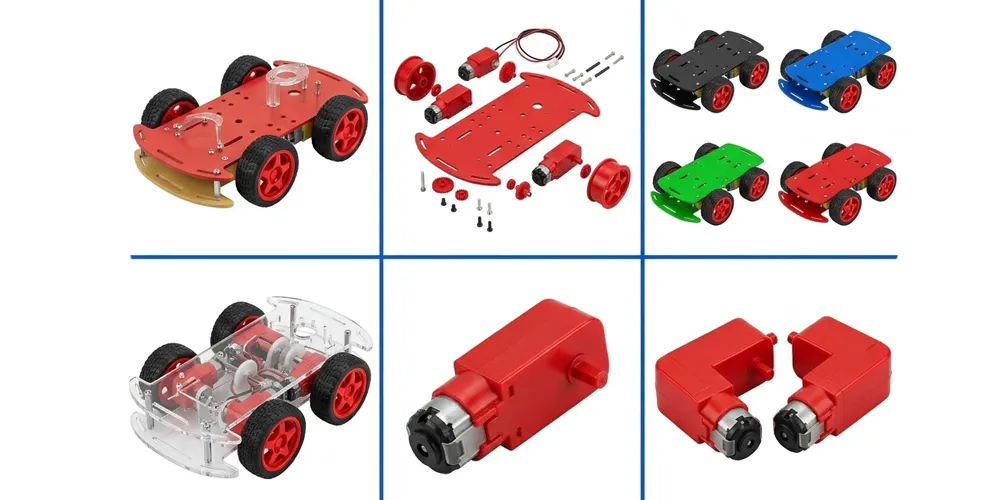
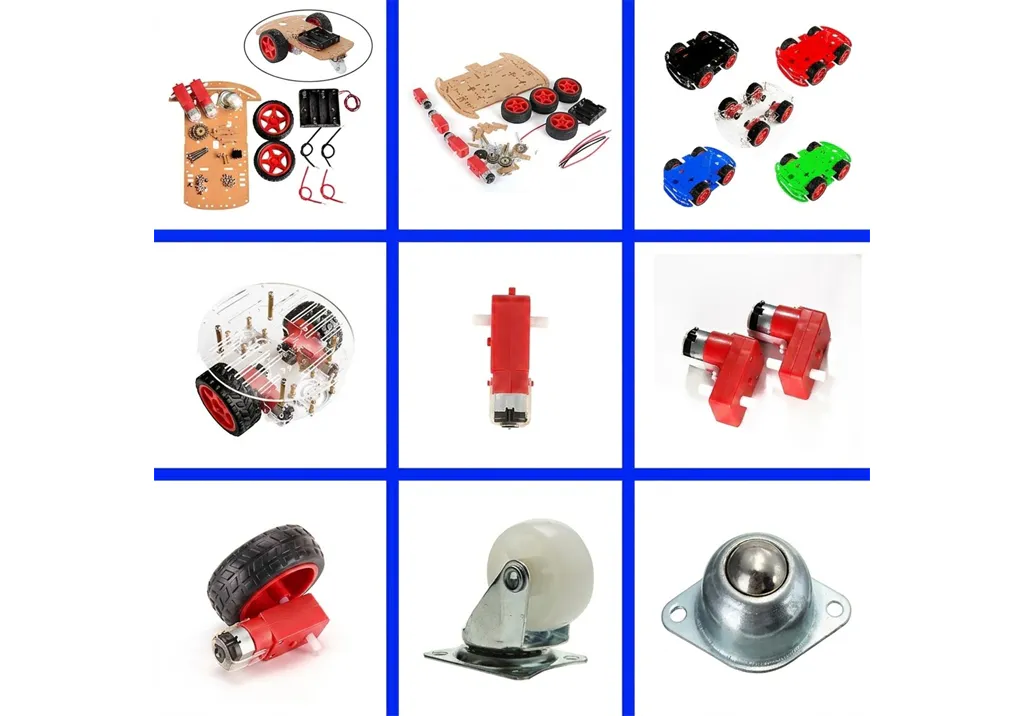
The most common use for this motor worldwide. Arduino and Raspberry Pi smart car kits use two or four of these mini geared motors mounted on acrylic or PCB chassis plates, paired with the compatible TT rubber wheels. The 4.5V–6V operating range aligns with 3×AA or 4×AA battery packs used across most entry-level robot chassis kits sold on maker platforms in the USA, UK, Germany, and Japan. The L-shaped gearbox format provides both drive and a mounting face for the motor bracket in the same component.
Battery-Operated Toy Cars & Vehicles
Consumer toy cars powered by AA batteries — ride-on toys, push-and-go cars, and battery-activated novelty vehicles — use this class of toy car motor because it provides enough torque to move a loaded toy vehicle on smooth flooring while drawing current that standard alkaline batteries can supply for a reasonable play duration. The lower noise characteristic of the plastic gear mesh is also a comfort feature for parents of young children using battery toys in home environments.
Remote Control Toy Cars & RC Platforms
Entry-level toy remote control car motor builds — particularly those using simple 27 MHz or 2.4 GHz 2-channel radio systems without proportional speed control — use the TGP motor for the rear drive axle or the steering servo assembly. The motor's instant response to polarity reversal through the receiver relay output means basic bidirectional control is available without PWM or ESC hardware, which keeps the electronics simple for beginner RC builders and toy-grade remote control vehicles in the Australian and UK toy markets.
STEM Education & Classroom Robotics
STEM curriculum robotics kits used in schools across the UK, South Korea, and the Netherlands specify the TT gear motor because it illustrates core engineering concepts — ڈی سی موٹر کام کرنے کا اصول, gear reduction, torque multiplication, and speed-torque trade-offs — in a physically observable, hands-on format. Students can connect the motor directly to batteries to understand basic motor behaviour, then add H-bridge control ICs to explore bidirectional control, then add encoders for closed-loop positioning — all with the same affordable, replaceable motor at the centre.
Mini Conveyor Belts & Light Automation Demos
Small tabletop conveyor belt models, sorting demonstrations, and product-movement exhibits used in trade shows and educational displays use this motor class for low-voltage, low-noise operation from a USB power bank or AA battery pack. The 1:48 gear ratio provides output shaft speed slow enough to move items smoothly across a short conveyor surface without requiring additional speed reduction hardware, and the plastic gearbox format slots neatly into compact display enclosure designs where a larger motor would not physically fit.
Performance Across the Operating Voltage Range
Unlike fixed-voltage industrial motors, the high speed mini dc motor TGP format is specified across a range rather than a single operating point. The table below shows how key parameters shift across the 3V–9V operating envelope. Builders should choose the supply voltage based on whether their priority is battery runtime (lower voltage, lower current) or speed and torque (higher voltage, higher output at the cost of shorter battery life).
| Supply Voltage | No-Load Speed | No-Load Current | Stall Torque (approx) | Typical Use |
|---|---|---|---|---|
| 3V DC | ~100 RPM | ~70 mA | ~0.4 kg·cm | 2×AA, ultra-light loads |
| 4.5V DC | ~200 RPM | ~130 mA | ~0.8 kg·cm | 3×AA, recommended range |
| 6V DC | ~280 RPM | ~170 mA | ~1.1 kg·cm | 4×AA or NiMH pack |
| 9V DC | ~430 RPM | ~250 mA | ~1.6 kg·cm | 9V block, max range |
ہماری مینوفیکچرنگ سہولت کے بارے میں
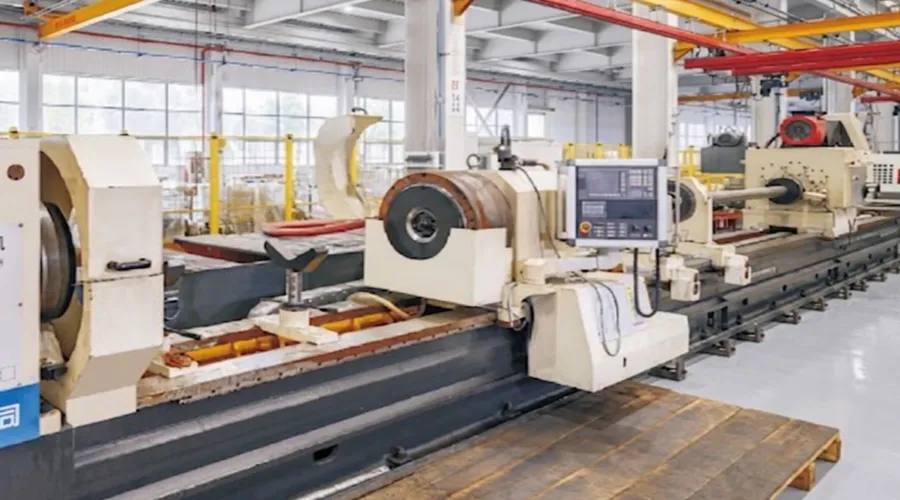
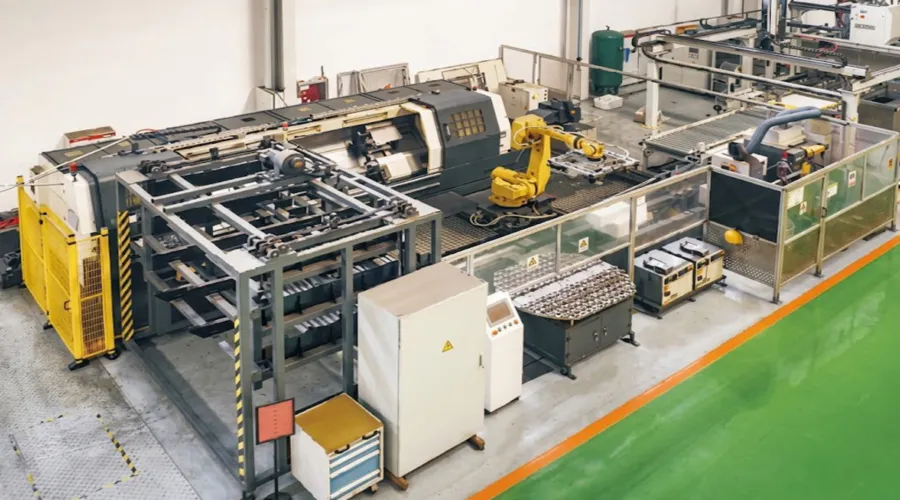
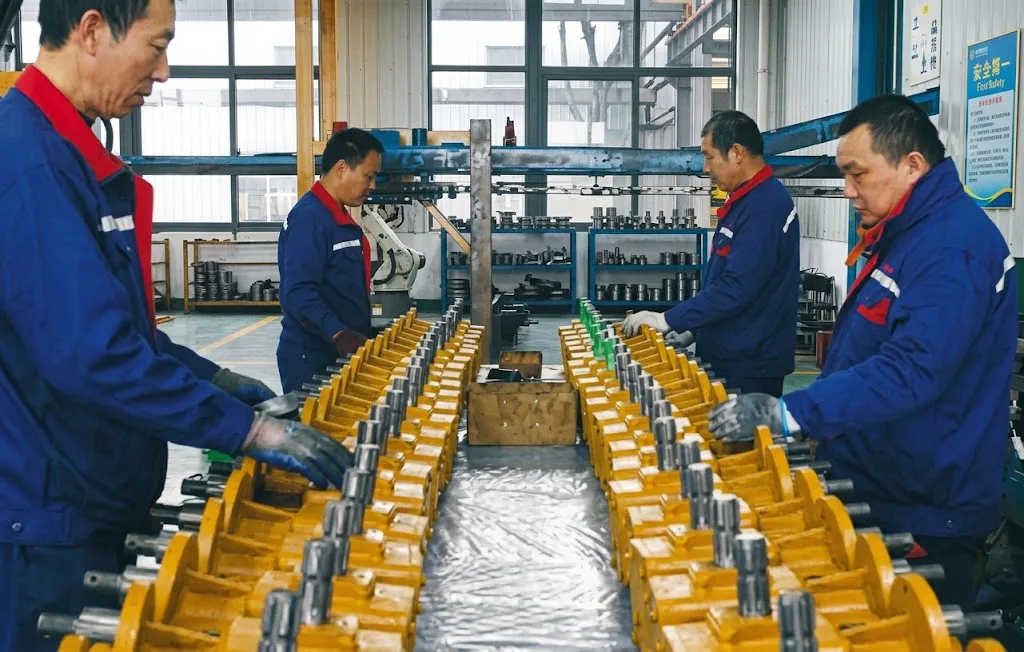
Our production facility has been active in mechanical power transmission and motor manufacturing for over ten years. Our product range spans agricultural gearboxes, worm gear reducers, planetary gear drives, PTO shafts, hydraulic cylinders, precision gears, roller chains, and DC electric motors — covering the full spectrum from large industrial drive assemblies down to compact hobby and toy motor units like the EP-Mini DC Motor. This breadth gives our engineering team a first-hand understanding of gear design, motor selection, and transmission matching that purely motor-focused suppliers often lack.
We operate under ISO 9001:2015 certified quality management, with controlled production processes covering injection moulding, gear cutting, motor winding and assembly, and finished product testing. Custom gearbox and mechanical component production is available in ductile iron, cast iron, cast steel, precision investment cast steel, and cast aluminium for customers requiring non-standard specifications. We produce both catalogue products and custom designs for OEM customers, with English-language engineering documentation provided for international clients including dimensional drawings and test data.
Our export experience covers the USA, UK, Germany, Australia, Japan, South Korea, Brazil, the Netherlands, Canada, and a growing number of other markets. For buyers sourcing electric toy car motor اور ڈی سی موٹر کٹ components in volume for toy production, educational kit assembly, or maker platform supply, our established export logistics and quality documentation make procurement straightforward.
ورکشاپ

Related Products — One-Stop Motor Supply
We produce a complete range of DC electric motors and mechanical drive components alongside the mini geared motor. For projects that have outgrown the toy and hobby bracket and require higher power, more precise control, or industrial-grade drive systems, our broader motor and gearbox range provides the next step up — all from the same ISO-certified production facility.
الیکٹرک موٹرز
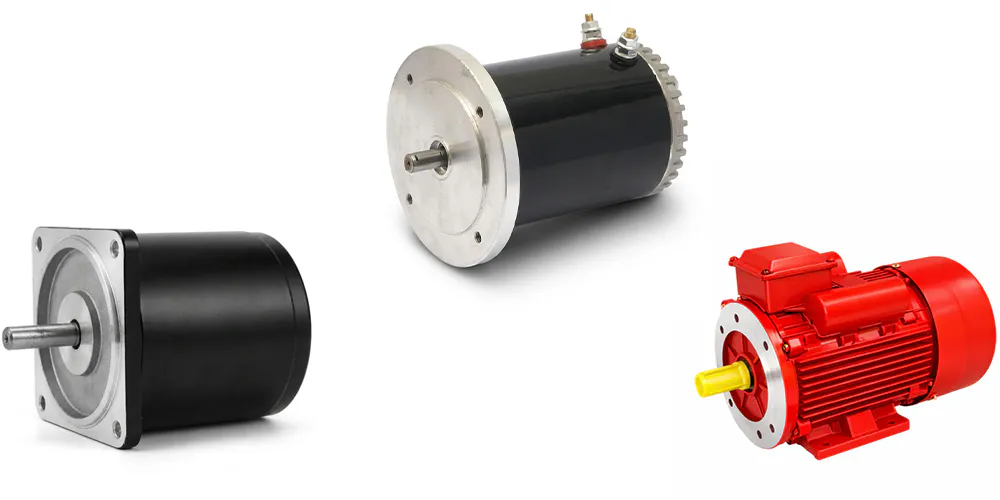
Our full range of ڈی سی الیکٹرک موٹرز covers configurations from compact چھوٹی ڈی سی موٹر units through to high-power ہائی ٹارک ڈی سی موٹر builds for industrial and vehicle applications. The range includes brushed permanent magnet types, برش کے بغیر ڈی سی موٹر configurations, and bldc موٹر variants for extended service life — with the same manufacturer quality documentation behind every unit, regardless of power class. Suitable for the step up from hobby-grade to professional-grade motor applications.
ورم گیئر باکس
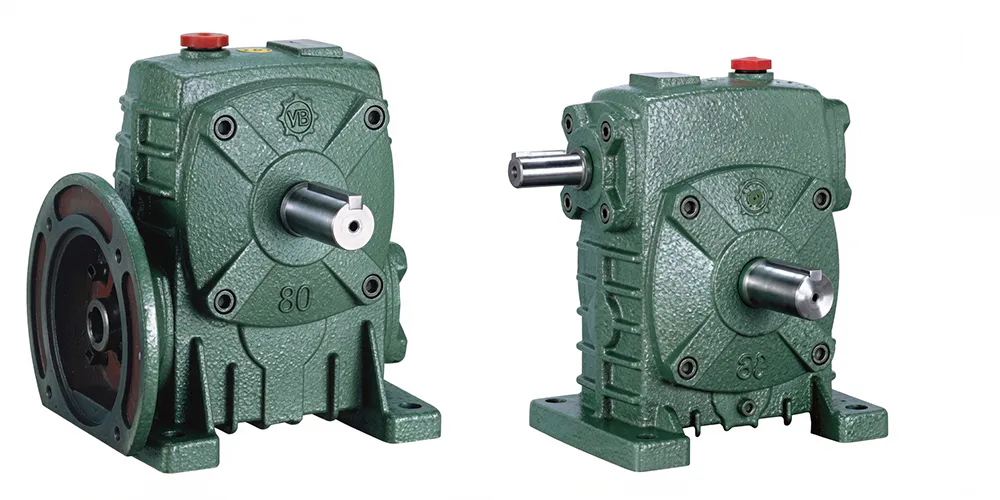
When a project grows beyond battery-operated toy scale and requires a proper gear reduction stage — for a higher-power DC motor driving a conveyor, a small hoist, or an automated mechanism — our worm gearbox range provides catalogue ratios and compact enclosed housings suitable for light industrial and semi-industrial applications. The self-locking characteristic of worm gearing also provides passive load-holding when the motor is de-energised, which has useful applications in vertical-lift or gate-drive mechanisms.
اکثر پوچھے گئے سوالات
What type of motor is used in toy cars and why is the mini DC gear motor the most common choice for hobby robot builds in the UK and USA?
The TT format mini geared motor — also called the DC TGP motor or plastic gearbox motor — is the dominant choice because it hits the ideal intersection of affordability, simplicity, and availability. It runs directly from standard AA or AAA batteries without any electronic controller, it reverses direction with a simple switch or H-bridge, and its D-shaft output fits the standard 65–66 mm TT rubber wheel hub that virtually every smart car chassis kit is designed around. For educators in UK STEM programmes and US maker clubs, the ability to source, replace, and understand this motor without specialist knowledge or equipment makes it the practical default for classroom robotics and beginner robot builds.
How do I choose between a 1:48 and a 1:120 gear ratio mini DC motor for a toy car project aimed at German STEM school robotics competitions?
The choice depends on what you're optimising for. The 1:48 ratio (standard) gives higher speed with moderate torque — around 200–300 RPM at 4.5–6V — suitable for driving a wheeled robot across a smooth competition floor at a responsive pace. The 1:120 ratio is significantly slower (around 80–100 RPM at 6V) but delivers roughly 2.5 times more torque — useful for pushing or lifting tasks, climbing inclines, or platforms where the drive wheels need to hold position against resistance without stalling. For typical German robotics competition tracks with line-following tasks and obstacle navigation, the 1:48 ratio is the better starting point unless the task specifically involves loaded pulling or graded surfaces.
Where can toy car manufacturers in Australia source small DC gear motors in bulk quantities for battery-operated toy vehicle production lines?
We export the EP-Mini DC Motor directly to Australia through standard international sea and air freight with full commercial documentation. For toy production line sourcing, we provide batch quantity supply with consistent specification across shipments, lot-traceability records, and functional test certification for each batch. Australian toy product regulations requiring documentation of component electrical specifications can be accommodated through our standard quality documentation package. Contact our export team with your target unit quantities, voltage specification requirements, and delivery timeline for a supply discussion.
How does a mini DC motor work differently from a brushless DC motor when used in a toy remote control car for children in Japan?
ایک برش mini dc motor like this one uses physical carbon brushes pressing against a copper commutator to switch current direction in the armature as it rotates — no electronics needed, just direct battery current. A برش کے بغیر ڈی سی موٹر replaces those brushes with electronic commutation via an ESC (electronic speed controller), which detects rotor position and switches the current sequence electronically. For children's toy RC cars in Japan, the brushed type wins on simplicity and durability: no ESC to program, no calibration, and the plastic gearbox absorbs minor mechanical shocks from children's use patterns better than high-speed brushless setups. Brushless motors are faster and more efficient but add cost and electronics complexity that children's toy grade products typically don't justify.
When should a South Korean maker community member use a high torque mini DC motor over a high speed variant for their four-wheel robot chassis build?
Use the high-torque (lower gear ratio, e.g. 1:120) variant when the robot needs to carry a payload heavier than about 300g, climb inclined surfaces, or push objects rather than just drive across a flat floor. Use the high speed mini dc motor (1:48 ratio) variant for line-following, maze-solving, or general navigation on flat smooth surfaces where response speed and straight-line performance matter more than load capacity. For South Korean maker fair competition robots that need to navigate obstacle courses with varied terrain, the 1:48 ratio at 6V provides a good general-purpose balance — but if the challenge includes a climbing section or load-carrying task, the 1:120 is worth the speed penalty for the torque gain it provides.
ایڈیٹر: PXY