
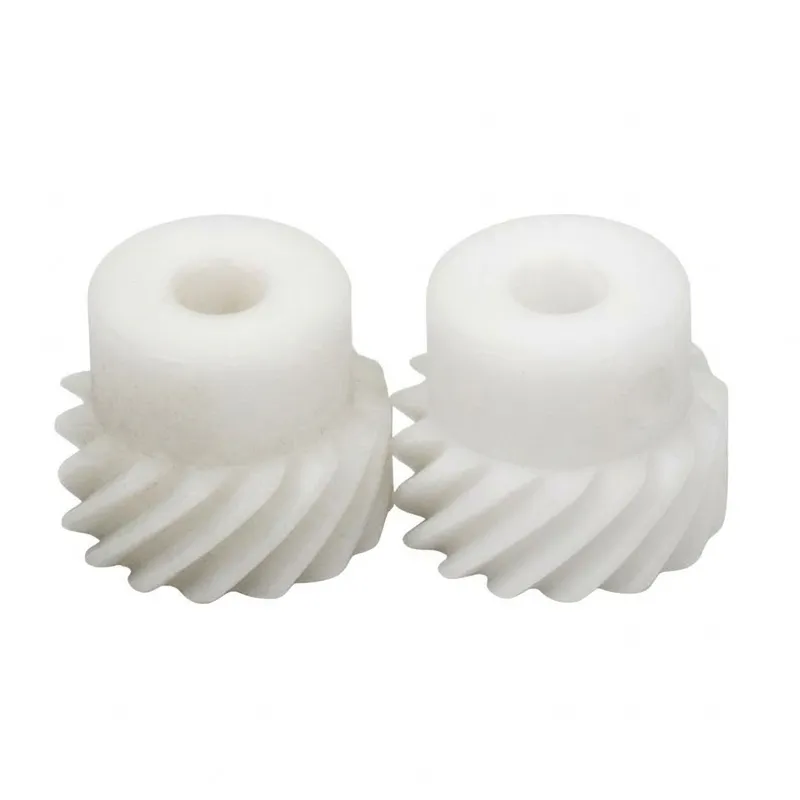
EP-Plastic Helical Gear
The EP-Plastic Helical Gear is a precision-engineered transmission component designed for lightweight and quiet operation. Manufactured from high-quality Polyacetal (POM) or Nylon, these gears offer excellent wear resistance and self-lubricating properties. Available in modules ranging from M0.1 to M2.0, they feature flexible outer diameters (Ø10.0mm–Ø50.0mm) and face widths (2.0mm–10.0mm) to suit diverse applications. With bore sizes starting from Ø1.40mm, these gears are ideal for compact mechanisms in laser printers, digital cameras, medical equipment, and household appliances. HZPT provides both handmade and machined custom options, allowing for prototype testing before mold creation to ensure perfect fit and function. This versatility makes them a cost-effective solution for specialized products requiring reliable motion control.
EP-Plastic Helical Gear
Material: Polyacetal (POM) / Nylon | Module: M0.1 – M2.0 | Outer Diameter: Ø10.0 – Ø50.0 mm
Face Width: 2.0 – 10.0 mm | Bore: Ø1.40 – Ø3.05 mm (Flexible) | Fully Customizable
تکنیکی وضاحتیں
The table below presents the standard range parameters for the EP-Plastic plastic helical gear, including the D-hole configuration reference model. All dimensions marked flexible can be adjusted to customer specification. Please provide gear specifications when enquiring for custom configurations.
| پیرامیٹر | Standard / Reference Value | Customizable Range |
|---|---|---|
| گیئر کی قسم | Plastic Helical Gear (D-hole) | Round bore also available |
| مواد | Polyacetal (POM) / Nylon (PA) | POM, PA6, PA66, custom polymer |
| ماڈیول | M0.1 – M2.0 | Non-standard module on request |
| Reference Model Module | M0.6 | M0.1 – M2.0 |
| Number of Teeth (reference) | 16T | Custom tooth count per design |
| Outer Diameter (OD) | Ø10.0 – Ø50.0 mm | Flexible per specification |
| Face Width (L) | 2.0 – 10.0 mm | Flexible per specification |
| Bore Diameter | Ø1.40 / Ø1.90 / Ø2.05 / Ø2.40 / Ø2.55 / Ø2.90 / Ø3.05 mm | Flexible, D-hole available |
| Unit Weight (reference) | 0.95 g / pcs (M0.6, 16T, D-hole) | Varies with geometry |
| Pressure Angle | 20° | 14.5° on request |
| Manufacturing Process | Injection molding / CNC machining | Prototype machining before mold |
| درخواست | Any product with transmission design | - |
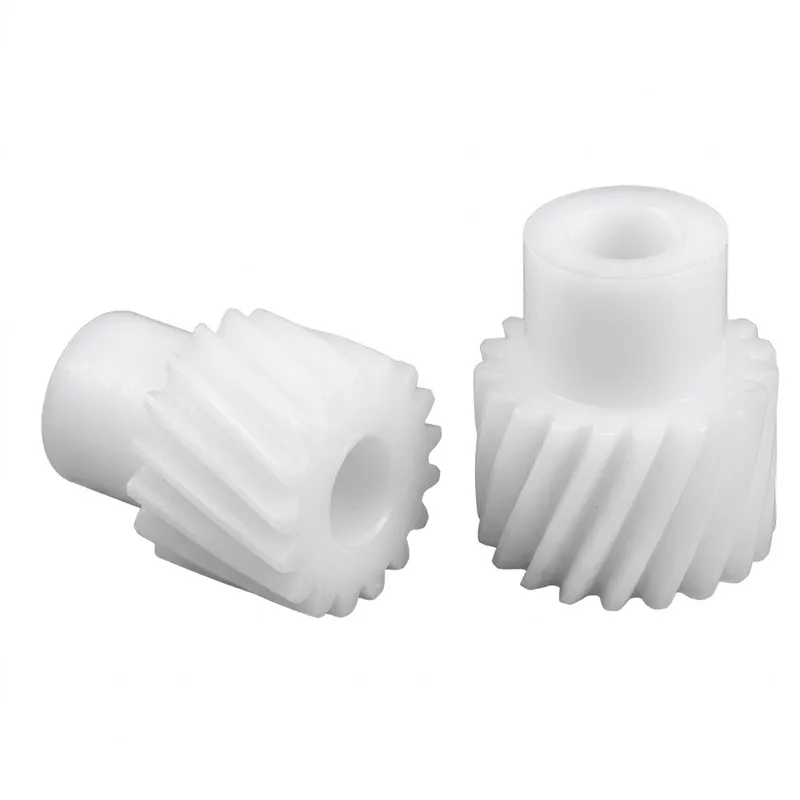
What Is the EP-Plastic Helical Gear?
The EP-Plastic plastic helical gear is a precision-molded or machined polymer gear featuring the angled tooth geometry characteristic of all helical gear types. Unlike spur gears where tooth engagement is abrupt across the full face width, the helical tooth profile enters mesh gradually — one end first — and exits the same way. This progressive contact reduces the dynamic load impact at each mesh cycle, making the plastic helical gear quieter, smoother-running, and longer-lasting than a plastic spur gear of comparable size. The result is a component well suited to any product with a transmission design that demands low noise, compact dimensions, and resistance to corrosion without the cost or weight penalty of a metal gear.
Manufactured from Polyacetal (POM) or Nylon — two of the most established engineering thermoplastics for gear applications — our EP plastic helical gear covers module sizes from M0.1 to M2.0, outer diameters from Ø10.0 mm to Ø50.0 mm, and face widths from 2.0 mm to 10.0 mm. Bore sizes span Ø1.40 mm to Ø3.05 mm with D-hole or round configurations available. This dimensional range places the EP plastic helical gear squarely in the precision light-duty segment: laser printers, digital cameras, scanning equipment, stepping motor drives, medical devices, vending machines, household appliances, gear pumps, watchmaking, and toy drivetrains are all established application domains. Custom gear specifications can be supplied from drawings, samples, or performance requirements, and prototype machined samples are available before mold tooling is committed.
Five Key Advantages of the EP-Plastic Helical Gear
Self-Lubricating & Low Noise
Both POM and Nylon have inherently low coefficients of friction, which means the EP plastic helical gear can operate in many light-duty applications with minimal or no external lubrication. Combined with the smooth, progressive tooth engagement that helical geometry delivers, these materials produce a quiet-running gear stage — critical in consumer electronics, office equipment, and medical devices where audible noise is a product quality metric. The absence of metal-on-metal contact also eliminates the sharp gear whine associated with steel spur gears at equivalent pitch-line velocities.
Lightweight & Corrosion-Free
At a unit weight of approximately 0.95 g per piece (D-hole M0.6 / 16T configuration), the plastic helical gear contributes negligibly to product mass — a meaningful advantage in portable consumer devices, handheld medical instruments, and any application where weight is a design constraint. Polymer gears also resist the moisture, mild chemicals, and humidity-driven oxidation that degrade uncoated metal gears over time, making them the preferred choice for equipment used in humid environments across Southeast Asia, coastal regions, and food-adjacent applications worldwide.
Wide Module & Bore Range
The M0.1 to M2.0 module range covers micro-precision applications at the fine end through to compact instrument drives at the larger end. Bore configurations — from Ø1.40 mm to Ø3.05 mm in round and D-hole profiles — accommodate the thin motor shafts common in stepping motors, gear pumps, and miniature drive systems found in printers, scanners, and vending machines globally. This dimensional breadth means a single product family addresses the majority of light-duty plastic helical gear requirements without the need for special tooling on every order.
Prototype Before Mold — Risk-Free Development
One of the practical advantages we offer is machined or handmade prototype plastic helical gears ahead of injection mold commitment. Gear design involves iterative testing — tooth count, helix angle, face width, and bore geometry all interact with the mating gear, housing clearances, and load cycle — and having a dimensionally accurate prototype in the correct material before investing in plastic gear tooling reduces development risk significantly. This prototyping service is particularly valued by European and North American OEM design teams who need to validate fit, form, and function before volume production authorization.
Broad Application Compatibility
The EP plastic helical gear is designed to serve any product with a transmission design requirement — a deliberately broad scope that reflects the versatility of the gear form. Laser printers, digital cameras, CD-ROMs, fax machines, medical equipment, watches, toy drivetrains, and gear pump stages all represent established end uses from the product's application history. This track record across such diverse product categories is a strong indicator of the dimensional consistency and material quality that injection molded and machined plastic gears from our facility deliver to customers worldwide.
How the Plastic Helical Gear Works
The working principle of the plastic helical gear follows the same involute geometry as its metal counterparts, with the tooth flanks machined or molded to an involute profile that ensures constant velocity ratio throughout the mesh cycle. The helix angle — the angle at which the teeth are cut relative to the gear axis — is what differentiates helical from spur gears. As the driving gear rotates, a helical tooth begins engagement at one end of the mating tooth and the contact line travels along the tooth diagonally until it exits at the opposite end. At any point during that travel, at least one tooth pair is in contact, and for much of the rotation two pairs are simultaneously engaged. This higher effective contact ratio spreads the transmitted load over more tooth material than a spur gear achieves, reducing peak contact stress and enabling a smaller gear to handle a given load.
کے لیے plastic helical gears in light-duty applications — the segment this product serves — the implications are straightforward: the gear runs more quietly than a spur gear of the same module because there is no abrupt tooth impact at engagement, and it runs cooler because the distributed contact reduces the localized pressure that generates frictional heat. POM (Polyacetal) is particularly effective at managing this frictional heating because it combines low surface friction with reasonable thermal conductivity for a polymer. Nylon absorbs minor misalignments through elastic deformation better than POM and is slightly tougher under shock loads, which is why it is often preferred in toy and appliance applications where occasional overloads are expected.
The D-hole bore configuration available in this product makes shaft-to-gear torque transmission secure without requiring a keyway or set screw in very small gear sizes — a design feature well adapted to the miniature stepping motors and DC micro-motors that drive laser printer paper feeds, camera autofocus mechanisms, and scanner carriage assemblies. The flat face of the D-bore contacts the corresponding flat on the motor shaft, preventing rotation without any additional fastening hardware, keeping the overall gear stage compact and assembly-friendly.
Material Properties & Quality Standards
The material choice for a plastic helical gear has more engineering consequence than it might first appear. Polyacetal (POM) and Nylon (PA6 or PA66) are the two standard options for this product, and each has a distinct performance profile that makes it more suitable for certain applications. POM — also called Delrin or acetal — has a denser crystalline structure than Nylon, which translates to higher stiffness, lower moisture absorption (typically under 0.2% by weight), and dimensional stability across temperature and humidity cycles. These properties make POM the best plastic for gears in precision applications where tooth-to-tooth spacing must remain tight regardless of environmental conditions: office equipment in air-conditioned facilities, digital cameras, and laboratory instruments are typical POM-gear environments.
Nylon (PA) absorbs moisture more readily — up to 8% by weight in some grades at full saturation — which causes the gear blank to swell slightly and changes the effective tooth clearances. In most practical applications this is managed by allowing adequate backlash in the gear design and by using the appropriate grade of Nylon for the humidity environment. The benefit Nylon brings is a higher impact resistance than POM and a somewhat lower coefficient of friction in dry-running conditions, which means Nylon gears wear more gradually under intermittent shock loads. Toy drivetrains, vending machine mechanisms, and household appliance gear stages — all of which experience infrequent but sharp load spikes — tend to specify Nylon plastic helical gears for this reason. When lubrication is added, grease for nylon gears should be selected carefully: lithium-complex or silicone-based greases are compatible, while petroleum-based greases can attack some Nylon grades over time.
Our manufacturing process for the EP plastic helical gear covers both injection molded plastic gears — for high-volume production where mold tooling investment is justified by part quantity — and machined plastic gears from rod or sheet stock for low volumes, prototypes, and custom configurations that cannot be achieved by injection molding alone. The dimensional inspection process checks outside diameter, root diameter, tooth profile, lead accuracy, and bore dimensions against the declared tolerances. ISO 9001:2015 certification governs our quality management system across all product lines, including plastic gear production.
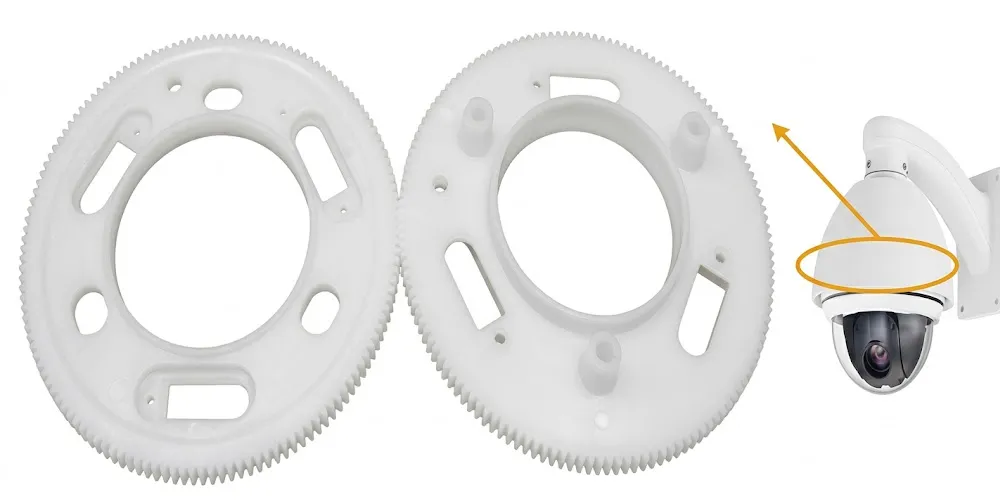
Plastic Helical Gear Manufacturing Process
دی plastic gear manufacturing route chosen for a given order depends on volume, dimensional complexity, and the lead time available. For production quantities where per-piece cost justifies the tooling investment, injection molded plastic gears are the standard approach. The gear tooth profile, bore geometry, and any draft angles are incorporated into a precision steel mold — plastic gear tooling — and the part is produced by injecting molten POM or Nylon into the mold cavity under controlled pressure and temperature. Injection molding delivers excellent repeatability once the mold is set, and the short cycle times make it highly cost-effective at volumes of several thousand pieces or more.
Plastic gear injection molding for helical gears presents a specific design challenge that spur gear molding does not: the helical tooth geometry requires the mold to rotate slightly as it opens to release the part, or the cavity must be designed with a split-line that allows the gear to be ejected axially without stripping the helical teeth. For small-module plastic helical gears in the M0.1 to M2.0 range, the tooth helix angle is typically modest — 10° to 20° — which keeps the ejection rotation manageable and allows the mold to be built without excessive mechanical complexity. Our tooling team has designed and produced molds for plastic helical gears across this module range, and the prototype machining service means the tooth form and bore geometry can be verified in the actual production material before the mold is cut.
For low-volume or prototype orders, CNC machining of plastic gears from POM or Nylon rod stock is the practical alternative to injection molding. Gear hobbing or milling of polymer materials on CNC gear cutting equipment produces accurate involute profiles with surface quality comparable to molded gears. Machined plastic helical gears are dimensionally stable immediately after machining — no mold-related shrinkage compensation is needed — and they are well suited to one-off replacement gears for discontinued products where the original mold no longer exists. This capability is frequently used by repair and maintenance operations in Japan, Germany, and the US who need replacement plastic gears for legacy office equipment or industrial control systems.
Plastic Helical Gear Application Scenarios
The EP plastic helical gear is specified across a remarkably wide range of product categories precisely because the combination of helical tooth geometry, polymer material, and miniature dimensions addresses a set of requirements — low noise, light weight, no corrosion, no lubrication, compact form factor — that appear repeatedly in consumer and light-industrial product design worldwide. The following scenarios represent the most frequent end uses.
Office Equipment — Printers, Scanners & Copiers
Laser printers and document scanners are among the highest-volume consumers of plastic helical gears globally. Paper feed mechanisms, scanner carriage drives, and toner cartridge gear trains all use small-module POM helical gears driven by stepping motors. The near-silent operation and dimensional precision of injection molded plastic helical gears in the M0.3 to M1.0 range match the performance requirements of office equipment used in North America, Europe, and the Asia-Pacific region, where user noise perception directly influences product ratings and brand loyalty.
Digital Cameras & Optical Instruments
Autofocus drives, zoom mechanisms, and image stabilization systems in digital cameras require gear stages that are lightweight, backlash-controlled, and completely silent during operation. POM plastic helical gears in the sub-1.0 mm module range — particularly with D-hole bores that interface directly with micro-motor shafts — are standard in these assemblies. The dimensional stability of POM across the temperature range experienced inside a camera body (typically −10°C to +50°C) ensures the gear mesh clearance stays consistent across the product's operating environment.
Medical Equipment & Diagnostic Devices
Medical device designers in Germany, the US, and Japan increasingly specify plastic helical gears in infusion pump drives, sample handling robots, and diagnostic imaging equipment because polymer gears eliminate the contamination risk that metal debris would introduce in clinical environments. POM and Nylon are both biocompatible in their standard grades and can be sterilized by certain methods, making them suitable for devices that require periodic decontamination. The precision bore sizes in this product — down to Ø1.40 mm — interface with the miniature motors used in portable diagnostic equipment.
Vending Machines & Dispensing Equipment
Vending machine product selection mechanisms, coin handling systems, and dispensing arms rely on plastic drive gears that can withstand intermittent loading, temperature cycling, and extended unattended operation without lubrication maintenance. Nylon plastic helical gears are common in this application because their toughness and self-lubricating behavior suit the start-stop duty cycle of a vending mechanism — a combination of light continuous duty and occasional shock as a product drops. The wide availability of replacement plastic gears from our catalog simplifies the MRO sourcing for vending machine operators across Europe and the Americas.
Household Appliances & Toy Drivetrains
Kitchen appliance drive trains, electric toothbrushes, robot vacuum carriage gears, and toy mechanisms all draw on plastic helical gears for their combination of quiet running, low cost at production volumes, and safety — polymer gears are not a cut hazard in consumer products handled by end users. Injection molded nylon plastic gears are particularly common in toy drivetrains because Nylon absorbs the impact of rough handling better than the stiffer POM, and the slightly higher elongation at break of Nylon reduces the likelihood of brittle failure when a toy is dropped or overloaded.
Gear Pumps & Fluid Handling
Small gear pumps used in fuel dispensing, ink systems, and chemical metering applications benefit from plastic helical gear sets because the gear material can be matched to the fluid being pumped for chemical compatibility. POM gears handle most fuels, lubricants, and mild solvents; Nylon gears are preferred in some water-glycol and aqueous media. The helical tooth profile improves the volumetric efficiency of the pump compared to spur gears by reducing the pulsation in flow output — a meaningful performance benefit in precision metering and inkjet ink delivery systems used globally.
Plastic Helical Gear vs Other Plastic Gear Types
Understanding where the plastic helical gear fits among the broader range of plastic gear types helps in selecting the right configuration for a given application. The main alternatives within a polymer gear portfolio are plastic spur gears, plastic bevel gears, and nylon timing gears, each suited to a different motion or load scenario.
Plastic spur gears are the simplest and most cost-effective gear form — teeth are cut parallel to the gear axis, making the mold geometry straightforward for plastic gear injection moulding. Their limitation is that tooth engagement is abrupt, producing more vibration and noise than a helical gear at equivalent speed. For applications where cost is the primary driver and noise is acceptable — simple toy mechanisms, basic appliance drives — plastic spur gears are adequate. Once noise or smoothness becomes a differentiating specification, the plastic helical gear is the next step up, delivering the quiet progressive mesh of the helical tooth form without the material or weight cost of a metal gear.
Plastic bevel gears and plastic bevel gear variants are used where the drive direction changes — typically 90° — between shafts. They are common in small robotic joint drives, handheld power tools, and differential mechanisms in wheeled toys. Nylon timing gears (toothed belt pulleys) serve synchronous drive applications where precise position maintenance matters more than torque transmission. The EP plastic helical gear occupies the parallel-shaft, smooth-running segment where helical teeth and polymer material combine to deliver the quietest, lightest, most maintenance-free gear stage available for low-to-medium torque transmission in compact product designs.
Related Products — One-Stop Gear Supply
Beyond the EP plastic helical gear, our product range covers the metal gear and linear motion components that typically appear alongside plastic gears in complete drivetrain assemblies. Sourcing complementary components from a single supplier simplifies documentation, ensures dimensional compatibility, and reduces procurement administration for engineering and purchasing teams worldwide.
ہیلیکل گیئر
Our metal helical gear range extends from small-module precision gears for instrument drives through to large-module industrial gear stages in carbon and alloy steel. Where a plastic helical gear stage drives a metal gear on a high-torque output shaft, or where a product requires a mixed-material gear train, our helical gear catalog covers the metal mating components to the same dimensional standards. Metric and inch module configurations, matched mating pairs, and helical pinion gear sets with documented tooth contact patterns are all available as catalog or custom items. The entire helical gear range — plastic and metal — is manufactured under ISO 9001:2015 quality certification and supported by dimensional inspection documentation on request.
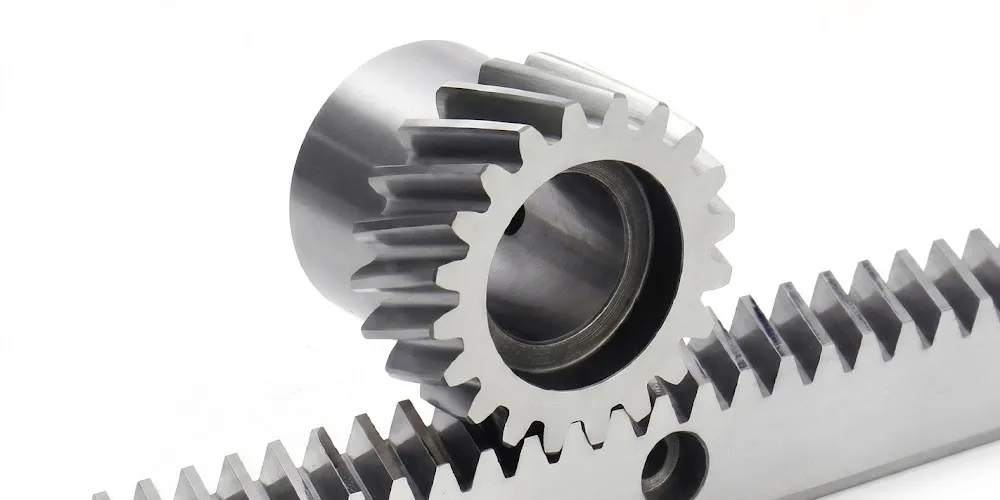
گیئر ریک
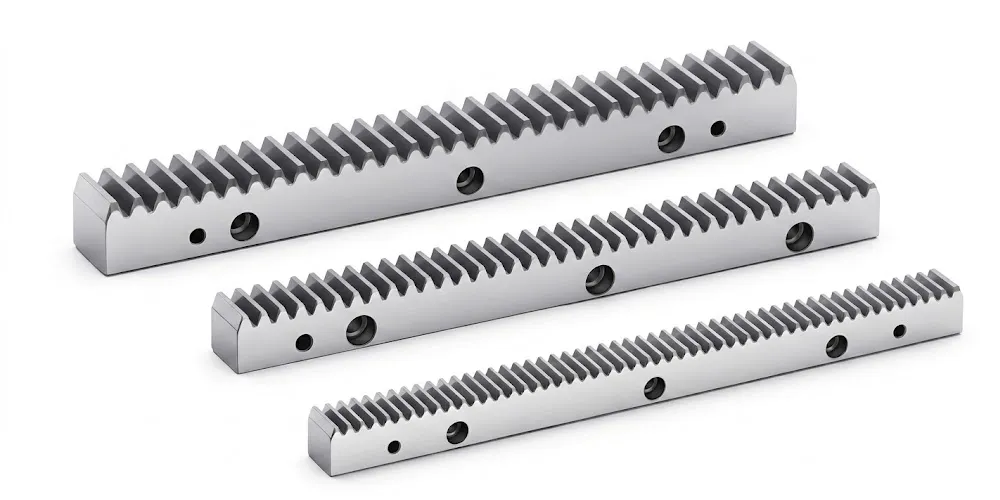
When a product's drivetrain includes a linear motion stage downstream of the gear reduction, our precision gear rack range provides the mating linear component for helical rack and pinion systems. Manufactured in carbon steel and stainless steel with hobbed or ground tooth profiles in metric module, the gear rack is dimensionally compatible with our helical gear pinion sizes. Applications include CNC positioning systems, automated guided vehicle drives, conveyor indexing mechanisms, and linear actuators — all environments where a plastic helical gear reduction stage might feed into a rack-driven linear output stage. Supplying both the plastic gear and the downstream gear rack from a single source ensures consistent module specification and pressure angle across the assembly, eliminating the compatibility checking that multi-supplier sourcing requires.
ہماری مینوفیکچرنگ سہولت کے بارے میں
With over a decade of engineering experience in mechanical power transmission and precision component manufacturing, our facility produces a comprehensive portfolio that includes agricultural gearboxes, worm gear reducers, planetary gear drives, power take-off shafts, hydraulic cylinders, gears, chains, and motors. Our production scope extends to the design and manufacture of industrial and agricultural gearbox assemblies in ductile iron, cast iron, cast steel, precision cast steel, and cast aluminum, alongside machined gears, sprockets, worm gears, pulleys, shafts, and a broad range of standard and non-standard mechanical parts.
Our factory operates under ISO 9001:2015 certification, and the quality management framework covers plastic gear manufacturing as well as metal gear production and gearbox assembly. Customers sourcing EP plastic helical gears benefit from factory-direct supply, transparent inspection documentation, and the engineering support of a team experienced across both polymer and metal gear technologies. We serve OEM programs and MRO replacement customers in Europe, North America, Australia, Japan, Southeast Asia, and the Middle East, offering prototype machined samples before mold commitment and first-article inspection reports as part of the standard delivery process for new product programs.
اکثر پوچھے گئے سوالات
ایڈیٹر: PXY