
Natural Gas & Compression Infrastructure
Selection of Single-Speed Gear Reducers
for Auxiliary Drive Systems in Natural Gas Compression Stations
A technical reference for compression station engineers and procurement teams selecting worm gear speed reducers for auxiliary drive systems — covering mechanical structure, material specification, station service environments, and selection criteria for gas transmission, gathering, and storage facilities worldwide.
Auxiliary Drive Systems at Natural Gas Compression Stations
A natural gas compression station is, in mechanical terms, far more than the main compressor package at its center. Around that package sits a dense network of auxiliary systems — lube-oil circulation pumps, seal-gas booster drives, cooling-water circulation pumps, fuel-gas metering pump drives, glycol dehydration circulation pumps, condensate transfer pumps, and instrument-air compressor units — each of which requires its own drive train. These auxiliary drives run continuously alongside the main compressor, and any failure among them can initiate a station shutdown that halts gas delivery across a pipeline segment and triggers contractual supply obligations.
The single speed reducer is the element in each of these auxiliary drive trains that converts the electric motor’s standard operating speed into the lower shaft speed the pump or compressor impeller requires. By accomplishing this conversion in a single worm gear mesh stage, the single stage speed reducer keeps the drive train compact, the alignment requirement minimal, and the spare-parts inventory simple — all critical factors at compression stations where maintenance is typically performed by a small team working within tight shutdown windows on a 24/7 unmanned or semi-manned facility.
Compression stations on major gas transmission corridors — including the European gas grid infrastructure through Germany, Austria, and the Balkans; the US mid-continent gathering systems across the Permian Basin, the Appalachian Basin, and the Gulf of Mexico shelf; the Central Asian export corridors through Russia and Kazakhstan; and the LNG plant auxiliary systems in Qatar, Australia, and Mozambique — all share a common requirement for auxiliary drive reducers that combine long service life, passive load-holding capability, and compatibility with the classified electrical environments that natural gas facilities impose.
Manufacturing Structure
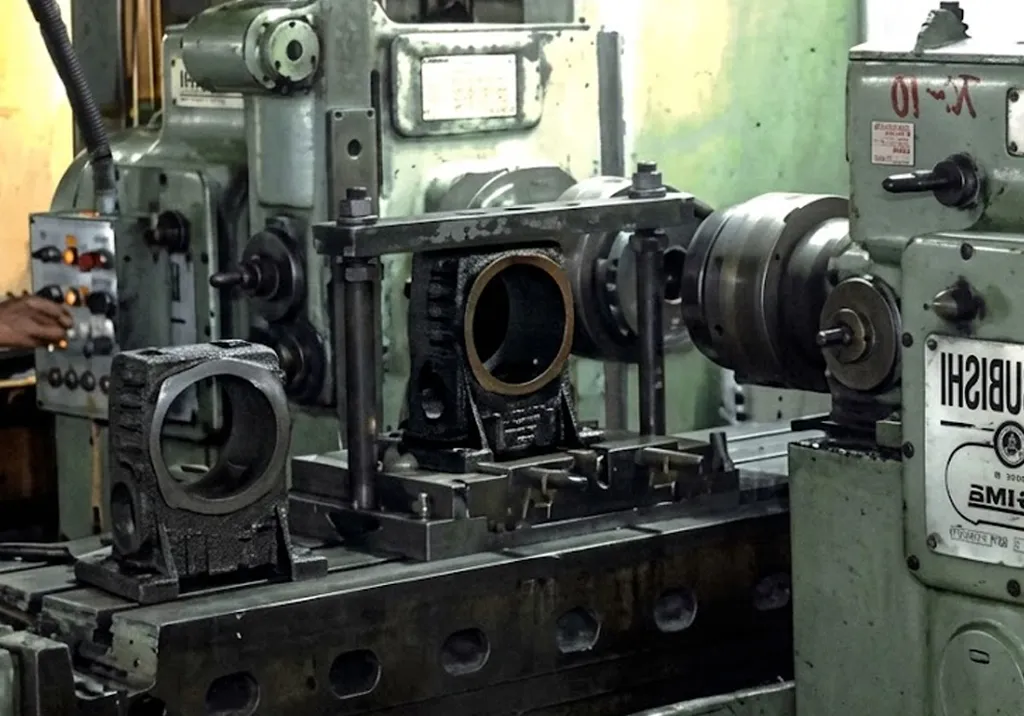
The WP-series single speed gear reducer is built on a precision-matched worm shaft and worm wheel assembly, enclosed within a rigid cast housing that is machined in a single setup to ensure consistent bearing-bore alignment through the thermal cycling that compression station environments impose. The worm shaft is manufactured from case-hardened alloy steel — typically 20CrMnTi — surface-ground to close lead accuracy tolerances. The worm wheel combines a phosphor-bronze alloy tooth ring with a cast iron hub, the bronze providing inherent lubricity at the sliding mesh interface while the cast-iron hub maintains the structural rigidity needed to transmit high torque at low output speeds without housing deflection.
Taper roller bearings are fitted on the output shaft in configurations where the auxiliary pump shaft imposes significant axial loads — common on screw-type lube-oil pumps where the helical rotor generates an axial thrust reaction. Deep-groove ball bearings handle the input shaft in most configurations, where the loading is predominantly radial from the coupling. Bearing preload is set at assembly and locked by a tab washer arrangement rather than by friction alone, preventing preload loss through the vibration that adjacent reciprocating compressor units transmit through the station floor.
Oil-bath splash lubrication is standard across the WP series, with the oil level reference point accessible externally through a plug or sight glass so that lube checks can be performed without shutting down the drive. The extended-reservoir WPKZ variant raises oil capacity from the standard 0.4 L to 5.2 L, which is the key specification upgrade for compression stations where auxiliary drive maintenance access is restricted by insulated pipe boxing, confined spaces, or operational constraints on the main compressor package.
20CrMnTi alloy steel, surface-ground for lead precision. Sustains continuous-duty torque transmission under 24/7 station operating schedules without progressive flank wear.
ZCuSn10Pb1 phosphor-bronze tooth ring on cast-iron hub. Lubricious against steel worm — reduces heat generation in the mesh during continuous gas station auxiliary service.
Taper roller on output shaft for axial-loaded screw pump drives; deep-groove ball on input. Preload locked to resist vibration transmission from adjacent reciprocating compressors.
WPKZ variant: 0.4–5.2 L capacity. Critical for unmanned or semi-manned stations where routine lubrication access requires scheduled outage windows.
Material System for Gas Station Environments
Natural gas compression stations present a combination of environmental challenges that require careful material selection for every mechanical component in the auxiliary drive train. Methane-bearing atmospheres create classified electrical zone requirements and place constraints on potential ignition sources; station building atmospheres may contain glycol mist from dehydration units, condensate vapors from slug catchers, or amine solution aerosols from gas treating contactors. External surfaces in outdoor compression stations in northern climates experience freeze-thaw cycling, salt-spray from road de-icing in colder months, and UV exposure on south-facing equipment faces.
The housing material selection for the single speed reducer on a gas station auxiliary drive must therefore balance corrosion resistance, structural rigidity, weight, and compatibility with the station’s protective coating system. Cast gray iron is the baseline material — its vibration damping coefficient is higher than either aluminum or steel, which matters on auxiliary drives located on or near the compressor module structural frame where vibration levels can be significant. Ductile iron variants provide improved fracture toughness where impact risk from maintenance tools or dropped equipment is a concern. Cast aluminum alloy eliminates ferrous corrosion risk in coastal or high-humidity station environments and reduces drive weight on turbine-driven compressor modules where topsides weight budgets are tightly managed.
| Component | Standard Material | Gas Station Alternative | Specification Driver |
|---|---|---|---|
| Housing | Gray cast iron | Ductile iron / Cast aluminum | Aluminum eliminates corrosion in coastal or humid station environments; ductile iron for impact resistance on compressor module decks |
| Surface Coating | Alkyd oil-resistant enamel | Epoxy primer + polyurethane topcoat | Epoxy systems resist glycol, amine, and condensate contact; required by many gas company station engineering standards |
| ورم شافٹ | 20CrMnTi alloy steel | SUS316 stainless steel | 316-grade resists H₂S-related sulfide stress corrosion on drives near sour gas stream inlet separators and slug catchers |
| ورم وہیل | Phosphor bronze ZCuSn10Pb1 | Aluminum bronze | Aluminum bronze for higher-cycle lube-oil pump drives at stations running on 8,000+ hour annual operating schedules |
| Shaft Seals | NBR lip seal | FKM with secondary dust lip | FKM resists glycol, amine, and light hydrocarbon condensate contact at input and output shaft sealing points |
| Lubricant | ISO VG 220 mineral gear oil | PAG synthetic ISO VG 220/320 | PAG handles wide temperature range from −30°C cold-climate station starts to +45°C Middle East and Central Asian summer ambients; extends drain interval on unmanned stations |
Recommended for Gas Station Auxiliary Drive Service
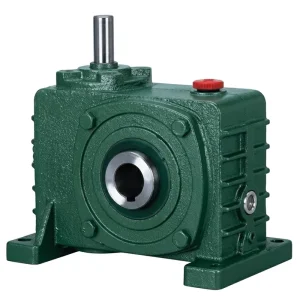
EP-WPKZ Single Speed Reducer (0.4–5.2 L Oil Capacity)
The EP-WPKZ is an extended oil-capacity variant of the WP-series single speed reducer, offering a reservoir of 0.4 to 5.2 L compared to the standard-volume housings. This increased oil capacity is specifically valuable at natural gas compression stations where auxiliary drive maintenance access is infrequent — either because the station operates unmanned with remote monitoring, or because access to the auxiliary drive bay requires shutting down adjacent systems or entering confined-space areas that require permit-to-work procedures before a maintenance crew can enter.
The right-angle worm gear output delivers the low output speed and high torque that lube-oil circulation pumps, glycol dehydration pumps, and cooling-water circulation drives require, while the extended oil reservoir — combined with a synthetic PAG lubricant — extends the drain interval to match the typical 4,000–8,000 hour maintenance cycle of the main compressor package. Self-locking at reduction ratios above 35:1 provides passive pump hold on motor trip without a secondary brake.
- Oil capacity: 0.4–5.2 L — extends drain interval to match compressor maintenance cycles
- Right-angle worm output for lube-oil, glycol, and cooling-water pump drives
- Self-locking at ratios above 35:1 — pump holds position on motor trip without brake
- FKM seal option for amine, glycol, and condensate vapor environments
- ISO standard mounting — compatible with IEC motor flanges used globally at gas stations
Auxiliary Drive Services and Reducer Selection at Compression Stations
Each auxiliary service at a natural gas compression station places a distinct combination of demands on the single speed gear reducer in its drive train. Understanding which service is being driven is the starting point for correct reducer selection — the required reduction ratio, load rating, mounting orientation, and material specification all flow from the characteristics of the driven equipment rather than from a single generic station specification.
Lube-oil circulation pumps on reciprocating compressors run continuously at a closely controlled flow rate and pressure, typically at 200–400 L/min delivery, requiring pump shaft speeds of 300–600 rpm from a 1,450 or 1,500 rpm motor. The reduction ratio requirement is 3:1 to 5:1 — at the low end of the worm gear single stage range, where mesh efficiency is highest and heat generation is minimal. The worm speed reducer at these ratios does not self-lock, so the pump check valve prevents backflow on motor stop rather than the reducer mesh — an acceptable and standard arrangement for lube-oil services.
Glycol dehydration circulation pumps and regeneration reboiler feed pumps run at lower flow velocities and typically require shaft speeds of 40–150 rpm, giving reduction ratios of 10:1 to 35:1. At the upper end of this range, the single speed reducer begins to approach self-locking territory — useful for preventing glycol drain-back through the pump on standstill without relying solely on the check valve, which can leak over time in glycol service.
Instrument-air compressors at smaller unmanned stations are frequently driven through a single speed reducer from a standard IEC motor at a ratio of 4:1 to 10:1, depending on the compressor rotor design. The compact EP-WPDS series covers this service across its 0.12–15 kW input power range, with foot-and-flange mounting that bolts directly to the motor frame without requiring a separate baseplate or coupling guard enclosure on small skid packages.
Ratios 3:1–5:1. Highest worm mesh efficiency range. Continuous-duty; check valve handles backflow prevention. EP-WPDS or EP-WPKA frame.
Ratios 10:1–35:1. FKM seals for glycol vapor environment. Extended oil reservoir (WPKZ) for unmanned stations. Partial self-locking at upper ratios.
Ratios 5:1–15:1. IP65 sealed housing for outdoor station cooler locations exposed to precipitation and wash-down. Aluminum housing where weight limits apply.
Ratios 4:1–10:1. EP-WPDS 0.12–15 kW covers entire small-station instrument-air range. Compact foot-flange mount. No separate baseplate needed on small skids.
Selection Parameters for Gas Station Auxiliary Single Speed Reducers
The table below covers the principal selection parameters for single speed gear reducers in natural gas compression station auxiliary service. Parameters are referenced to WP-series units as typically specified at compression stations on transmission and gathering systems in North America, Europe, the Middle East, Central Asia, and Asia-Pacific LNG infrastructure.
| Parameter | Typical Range (WP Series) | Gas Station Auxiliary Service Notes |
|---|---|---|
| Reduction Ratio | 1:10 to 1:60 (single stage) | Lube-oil pumps: 3–5:1; glycol pumps: 10–35:1; instrument-air compressors: 4–10:1; slow-speed condensate screw pumps: 40–60:1 |
| Input Power | 0.12–15 kW (WPDS); up to 365 kg load (WPKS) | Most gas station auxiliary drives fall within 0.37–11 kW — the core of the WPDS operating range |
| Oil Capacity | 0.4–5.2 L (WPKZ/WPKDZ) | Extended reservoir essential for unmanned stations targeting 4,000–8,000 hour drain intervals aligned to main compressor maintenance schedule |
| Operating Temperature | −20°C to +40°C standard | Cold-climate stations in Canada, Russia, Kazakhstan, and Scandinavia require synthetic PAG lubricant rated for cold-start down to −40°C; hot-climate Middle East and Central Asian stations need PAG at ISO VG 320 |
| IP Sealing | IP54 standard; IP65 optional | IP65 mandatory for outdoor cooler-circuit drives and condensate transfer pump drives exposed to precipitation; IP54 adequate for indoor compressor building auxiliary drives |
| Self-Locking | Active at ratios 35:1 and above | Passive pump hold useful on condensate transfer and glycol services; not required on lube-oil circulation where pump check valves handle backflow |
| Efficiency | 70–90% (ratio-dependent) | High-ratio (40–60:1) drives at unmanned stations require adequate heat dissipation in the station building HVAC design; synthetic lubricant reduces mesh temperature at all ratio levels |
Global Compression Station Contexts and Regional Specification Requirements
Natural gas compression station auxiliary drive specifications vary significantly between regions, driven by differences in ambient operating conditions, gas composition, pipeline operator engineering standards, and the regulatory frameworks that govern mechanical equipment in gas infrastructure. Understanding these regional differences helps engineering teams avoid the cost of non-conforming equipment arriving at a station that requires specification upgrades or full replacement before commissioning.
In North America — particularly on the US Permian Basin gathering systems, the Appalachian Marcellus Shale pipeline infrastructure, and the Canadian WCSB gas transmission corridors — station operators follow ASME B73 and API 671 coupling standards for rotating equipment. Single speed reducers for auxiliary drives in these systems are typically sourced to AGMA service factor requirements with material certifications traceable to ASTM standards, and the motor-reducer-pump assembly is submitted as a unit for vendor data review by the EPC engineering team. Cold-climate Alberta and British Columbia stations specify synthetic lubricants rated for cold-start at −40°C as standard practice rather than optional enhancement.
European gas transmission operators — including those managing compression stations on the Yamal-Europe, Nord Stream replacement, and Trans-Adriatic pipeline corridors — typically specify mechanical equipment to EN and ISO standards with ATEX Directive compliance for drives in classified zones near gas-in and gas-out manifolds. Russian and Central Asian pipeline operators at compression stations on the major export corridor infrastructure specify equipment to GOST standards, though international operators working on new developments increasingly accept EN/ISO equivalent documentation. LNG plant compression station auxiliary drives in Qatar, Australia, and Mozambique require DNV or Lloyd’s Register material certification packages as part of module vendor documentation, with the single speed reducer included in the drive train equipment list submitted for class review.
Installation, Lubrication, and Maintenance at Unmanned Compression Stations
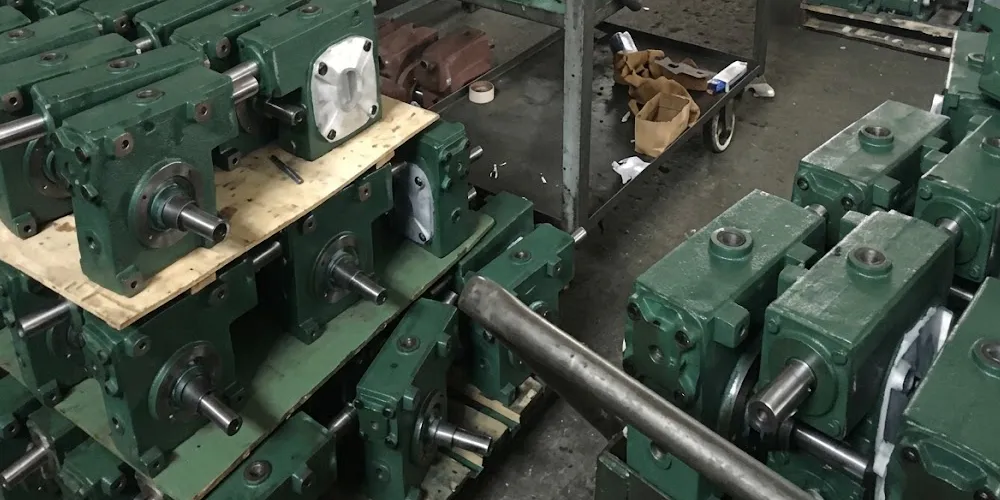
Installation of a single speed gear reducer into a compression station auxiliary drive skid follows the same alignment fundamentals as any other rotating equipment installation — but with one additional complication specific to compression station environments: the floor of a compressor building or outdoor module transmits significant vibration from the main reciprocating or centrifugal compressor package. This transmitted vibration, if uncorrected, loosens foundation bolts, shifts motor-reducer-pump alignment, and can prematurely unseat bearing preload. Anti-vibration mounts between the drive skid and the station floor, combined with Nord-Lock or serrated flange fasteners on the reducer mounting bolts, address this compression-environment specific challenge.
For unmanned compression stations — increasingly common on remote pipeline gathering systems in the Permian Basin, Canadian WCSB, and Central Asian export corridors — the priority is eliminating routine maintenance visits as completely as possible between planned annual or biannual outages. The combination of an extended oil-capacity WPKZ variant of the single speed reducer with synthetic PAG lubricant and FKM seals targets exactly this objective: the PAG lubricant resists oxidation and viscosity breakdown for significantly longer than mineral gear oils, the FKM seals resist the amine, glycol, and light hydrocarbon vapors present in station atmospheres, and the 5.2 L reservoir avoids the intermediate top-up visits that standard-volume reducers require between major maintenance windows.
Oil sampling via a small drain valve fitted at the lowest housing point allows maintenance teams to collect oil samples during brief station inspection visits without requiring a full drain and refill. Wear-metal analysis on these samples — iron from the worm shaft bearing races, bronze from the worm wheel tooth face — provides early warning of gear mesh degradation before it progresses to bearing damage or housing failure, enabling condition-based maintenance decisions that preserve equipment reliability on facilities where an unplanned shutdown carries significant commercial and contractual consequences.
Related Products for Compression Station Drive Systems
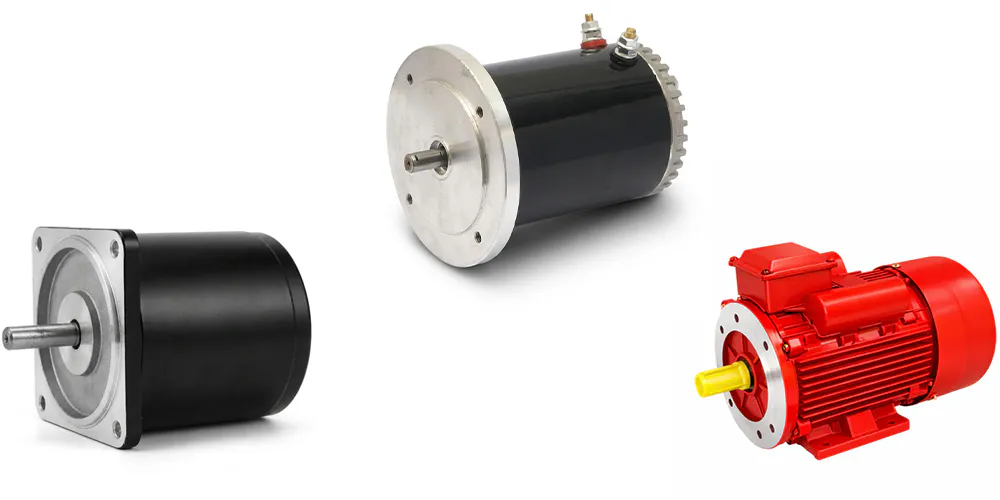
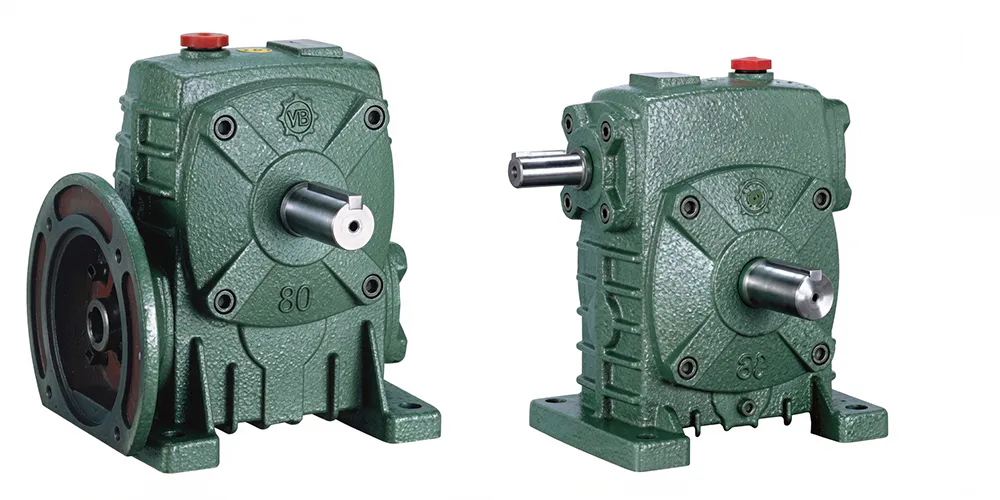
Gas station auxiliary drive packages sourced from a single supplier reduce the number of vendor qualification audits, harmonize dimensional interfaces across the drive train, and simplify the documentation packages required for pipeline operator and classification society review. The components below are routinely specified alongside the single speed reducer to form complete, pre-verified drive assemblies.
ہمارے بارے میں
The product range covers agricultural gearboxes, worm gear reducers, planetary gear drives, power take-off shafts, hydraulic cylinders, gears, chains, and motors — produced within an ISO 9001:2015 certified facility with engineering capability spanning both catalog-standard and application-specific configurations. Duty-specific variants for gas infrastructure service — including extended oil reservoir, specialist seal materials, and enhanced housing coatings — are available within the standard catalog framework without requiring fully bespoke design programs.
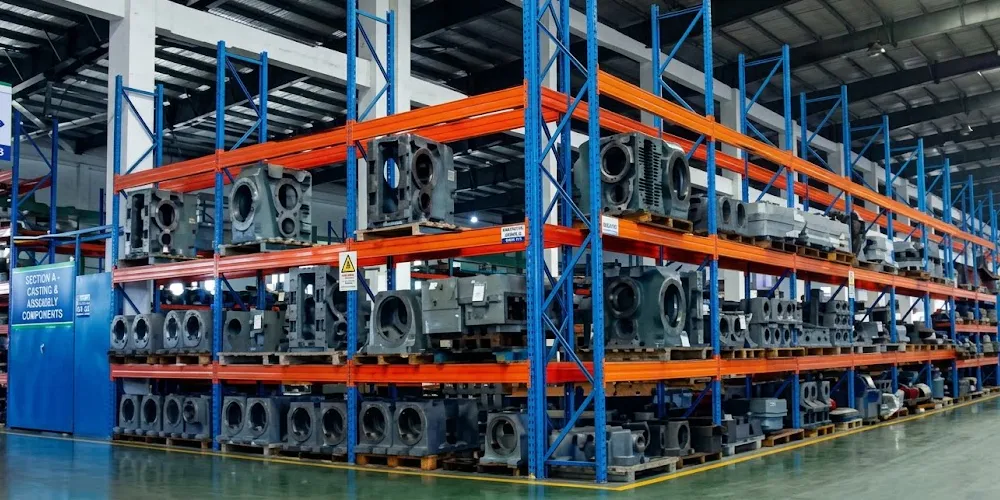
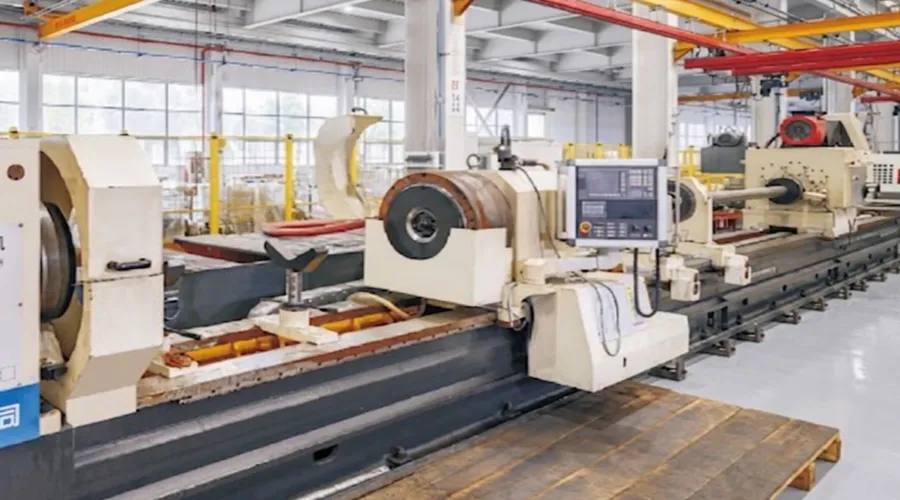
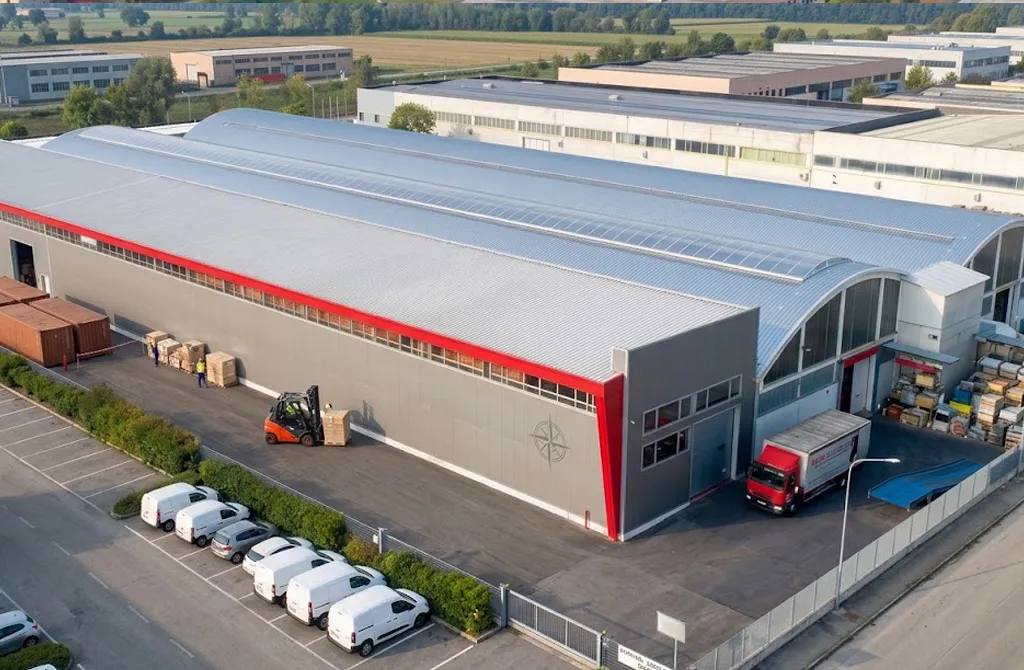
Production scope includes housing castings in ductile iron, cast iron, cast steel, precision cast steel, and cast aluminum. Component manufacturing covers precision gears, sprockets, worm wheels, worm shafts, pulleys, and a broad portfolio of standard and non-standard mechanical parts serving OEM and project engineering clients on gas infrastructure, offshore, petrochemical, and power generation projects worldwide. Single-supplier procurement for reducer, motor, and associated mechanical components reduces vendor management overhead for pipeline engineering procurement and construction contractors managing multi-station development programs across multiple countries.
ورک شاپ
اکثر پوچھے گئے سوالات
ایڈیٹر: PXY