
ROUND BALER DRIVELINE KNOWLEDGE GUIDE
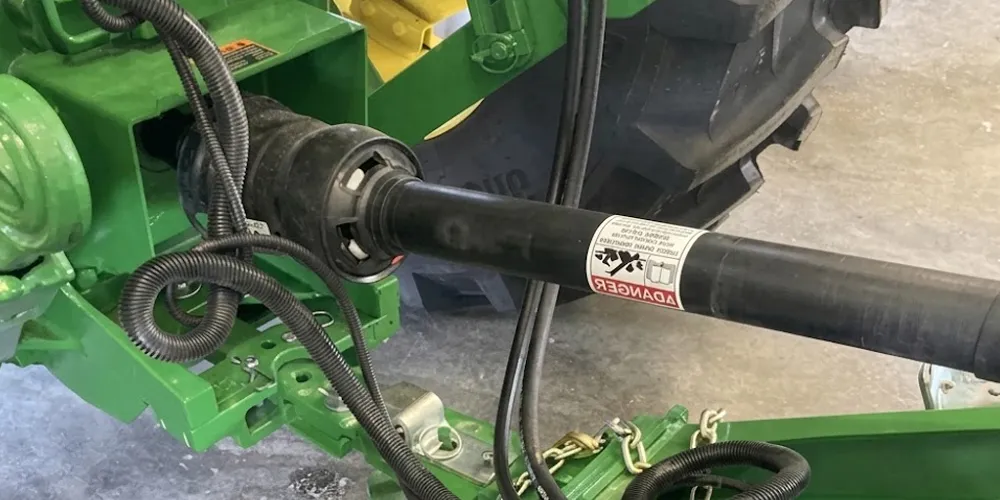
A damaged guard is one of the most visible warning signs on a Round Baler PTO Shaft, but the risk is not limited to the plastic shield itself. Cracks, missing bell sections, seized guard bearings, broken retaining chains, distorted tubes, and impact damage can indicate that the driveline has been rubbing, bottoming out, running at excessive angles, or operating with poor telescoping movement. A guard is intended to separate people, clothing, crop residue, and loose objects from the rotating PTO driveline while still allowing the shaft underneath to transmit torque and change length as the tractor-baler geometry moves. When that protective envelope is incomplete, the machine should be taken out of service until the Round Baler PTO Shaft and its guard system are inspected together. This guide explains construction, materials, damage patterns, inspection logic, replacement decisions, compatibility checks, and practical maintenance for operators, workshops, contractors, and agricultural equipment service teams working in different climates and field conditions around the world.
Why Guard Damage Deserves Immediate Attention
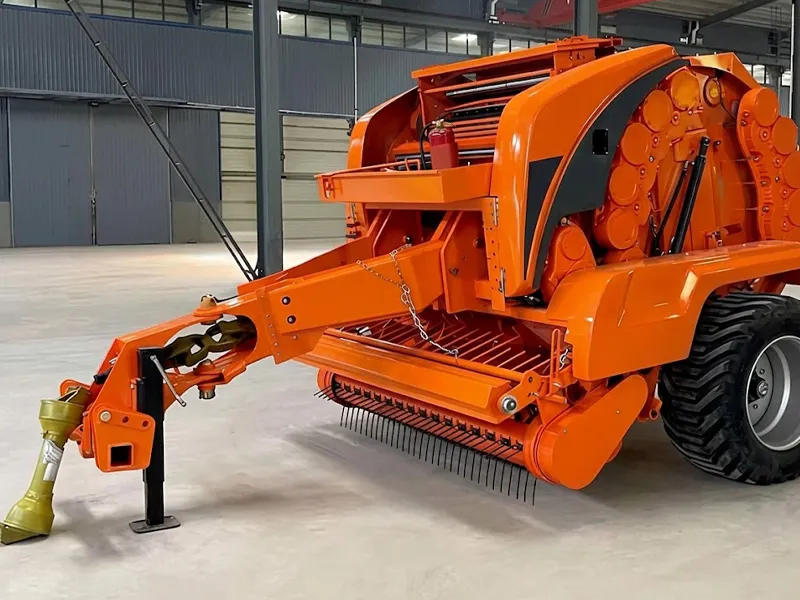
The rotating core of a Round Baler PTO Shaft works close to the tractor drawbar, baler tongue, crop windrows, hydraulic hoses, and operator access areas. A healthy guard forms a protective envelope around that driveline and should not simply spin with the shaft. Once the shield is split, shortened, missing an end bell, or rotating freely, its protective function is compromised. The damage may also reveal a mechanical problem underneath. A polished patch on one side can indicate contact with the drawbar or baler frame. A crushed shield can result when a Round Baler PTO Shaft bottoms out during a tight turn, a dip, or an incorrectly set hitch position. A guard that repeatedly breaks loose may point to damaged support bearings, poor restraint, excessive angular movement, or incorrect shaft length. Crop wrapping can add heat, imbalance, and hidden loading around the joint. Guard inspection is therefore more than a cosmetic check. Inspect the Round Baler PTO Shaft as a complete system, including yokes, cross kits, telescoping members, clutch, locking devices, guard supports, retaining chains, and clearance through the full operating range.
Manufacturing Structure of a PTO Guard System
A Round Baler PTO Shaft guard is a layered assembly rather than a single plastic cover. The torque-carrying driveline sits at the center, usually with inner and outer telescoping members so working length can change as the tractor and baler move relative to one another. Universal joints or a constant-velocity joint handle angular movement. Around that rotating core, two telescoping shield tubes provide coverage through the changing shaft length, while enlarged bell sections cover the joint areas. Low-friction guard supports allow the Round Baler PTO Shaft to rotate inside the shield without forcing the shield to turn with it. Retaining chains or another anti-rotation method secure the shield to fixed points on the tractor and implement. Correct geometry is critical: shield sections need adequate overlap, bell sections need to cover exposed joint zones, and the guard must not bind when the driveline changes angle. A replacement that is too short, too tight, or mismatched to the profile can fail quickly. Guard selection should therefore be based on measured Round Baler PTO Shaft dimensions, operating stroke, and hitch geometry rather than visual similarity alone.
Material System: Shield, Bearings, Steel Driveline, and Wear Interfaces
The material system around a Round Baler PTO Shaft must balance impact resistance, weather resistance, sliding performance, stiffness, and fatigue strength. Guard tubes and bell sections are commonly made from tough outdoor-grade thermoplastics because the shield needs to tolerate dust, crop contact, sunlight, moisture, repeated flexing, and moderate impact without becoming dangerously brittle. The shield does not transmit torque; its role is separation and coverage, so a cracked or missing area cannot be compensated for by the strength of the steel driveline underneath. Guard support rings or bearings usually rely on low-friction interfaces so the rotating Round Baler PTO Shaft can move independently from the stationary shield. Inside, the torque-carrying yokes, crosses, telescoping members, and clutch interfaces are steel parts designed for torsion, shock loading, and cyclic bending. Lubrication is equally important because contaminated or dry telescoping surfaces can bind. When sliding resistance rises, axial forces increase and the guard can be crushed during hitch movement. Material condition should therefore be assessed as one system: fitting a new shield over a corroded, distorted, or binding Round Baler PTO Shaft can lead to another failure soon after repair.
Common Damage Patterns and What They Usually Indicate
Damage to a Round Baler PTO Shaft guard often leaves a pattern that helps identify the cause. A clean fracture near an end bell may follow a direct impact, hitch interference, or excessive joint angle. Long polished areas on one side of the shield usually suggest continuous rubbing against the drawbar, frame, or another fixed part. Spiral scoring can appear when the guard begins rotating with the driveline because a support has seized or the retaining system has failed. A crushed telescoping section is especially important because it may mean the Round Baler PTO Shaft has bottomed out at the shortest hitch position. Repeated cracking at the same location suggests that working length, shaft angle, or shield overlap should be checked before another guard is installed. Sun exposure and cold weather can reduce the impact tolerance of aged plastic, while crop fibre packed around the joint can hide damage and displace the shield. The visible defect is therefore only the starting point. Any significant guard damage should trigger inspection of the underlying driveline and the tractor-baler geometry that produced the load.
| Observed Condition | Possible Cause | Inspection Priority |
|---|---|---|
| Cracked or missing end bell | Impact, excessive joint angle, aged shield | Joint clearance, bell coverage, hitch geometry |
| Guard rotates with shaft | Seized support, missing chain | Guard bearing and restraint system |
| Shield crushed at midsection | Shaft bottoming out | Compressed length and telescoping travel |
| One-sided abrasion | Contact with drawbar, frame, hose bracket | Operating clearance through full steering range |
Inspection Workflow Before Repair or Replacement
Start with the tractor shut down, the key removed, and all rotating parts fully stopped. Inspect the Round Baler PTO Shaft only after the machine is secured against movement. Record cracks, missing guard sections, chain problems, heat marks, impact damage, and any evidence that the shield has rotated with the driveline. Check both end bells for complete joint coverage, then inspect yokes, cross kits, the clutch area, and locking devices for looseness, corrosion, distortion, or abnormal wear. If the service procedure allows removal, move the telescoping section through its range and confirm that it slides smoothly without binding. Verify adequate overlap at maximum extension and enough compression travel at the shortest hitch position. Reconnect the tractor and baler only for static geometry checks with the engine off, then observe clearance through the expected steering and articulation range. If a Round Baler PTO Shaft guard failed because of rubbing, excessive angle, or bottoming, replacing the shield alone will not remove the cause. A proper repair restores both complete guarding and correct driveline geometry before the baler returns to work.
Do not operate a baler with an incomplete or freely rotating PTO guard.
If the correct guard kit, shaft dimensions, clutch arrangement, or locking method cannot be confirmed, identify the baler model and driveline configuration before returning the machine to service.
Repair the Guard or Replace the Complete Driveline?
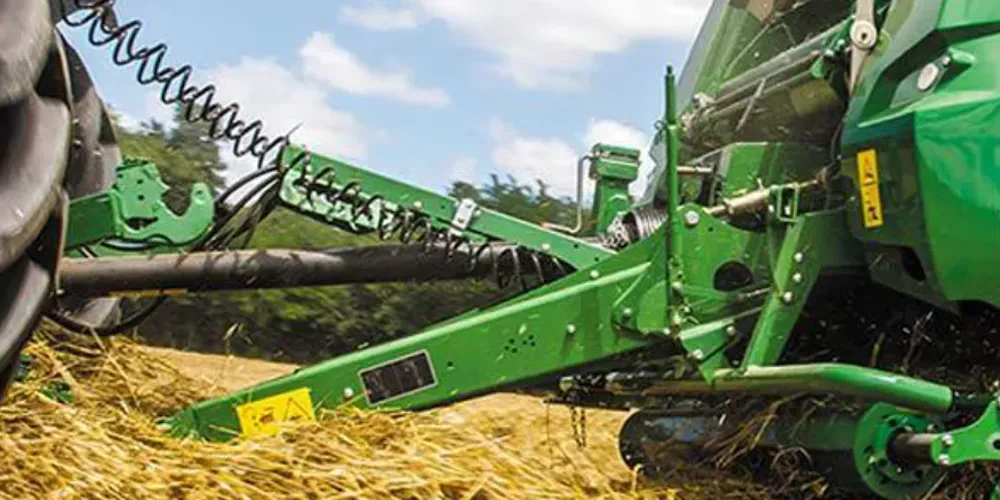
A guard-only repair is reasonable when the Round Baler PTO Shaft underneath is straight, correctly sized, properly lubricated, free to telescope, and mechanically sound, and when damage is confined to replaceable shield components. A complete driveline replacement becomes more appropriate when the failure is accompanied by bent tubes, worn splines, damaged yokes, loose or seized universal joints, repeated clutch problems, severe corrosion, incorrect shaft length, or evidence that previous repairs changed the original geometry. A Round Baler PTO Shaft that bottomed out hard enough to crush a guard may also have transferred axial force into yokes, bearings, or the baler input. Those parts should be inspected before any new shield is fitted. Tape, cable ties, improvised sleeves, and partial covers are not permanent guarding solutions because they do not restore designed coverage or controlled clearance. When selecting replacement parts, match the actual tractor connection, baler input, PTO speed, clutch arrangement, working length, shaft category, and guard dimensions. Measurement and mechanical condition are more reliable than simply copying the appearance of the old Round Baler PTO Shaft.
Manufacturing Capabilities Behind Agricultural Driveline Components
Our manufacturing scope covers agricultural gearboxes, worm gear reducers, planetary gear drives, PTO drivelines, hydraulic cylinders, gears, chains, motors, and other power-transmission components used in agricultural and industrial machinery. Production is managed under an ISO 9001:2015 quality system, with inspection and process control applied from incoming materials through machining, assembly, and final verification. Gearbox and mechanical assembly capabilities include housings and structural parts produced from ductile iron, cast iron, cast steel, precision cast steel, and cast aluminum. The same manufacturing base also supports gears, sprockets, worm gears, pulleys, worms, shafts, and standard or non-standard mechanical parts made to application requirements or customer drawings. This broader component knowledge is useful when a Round Baler PTO Shaft problem is connected with the implement input, clutch interface, gearbox, or another transmission part rather than the shaft alone. It also supports coordinated sourcing where a baler driveline, matched gearbox, and related mechanical components need to be evaluated as one transmission system instead of unrelated replacement items. This manufacturing breadth also supports Round Baler PTO Shaft service and replacement projects where interface compatibility matters.
Related Driveline Products
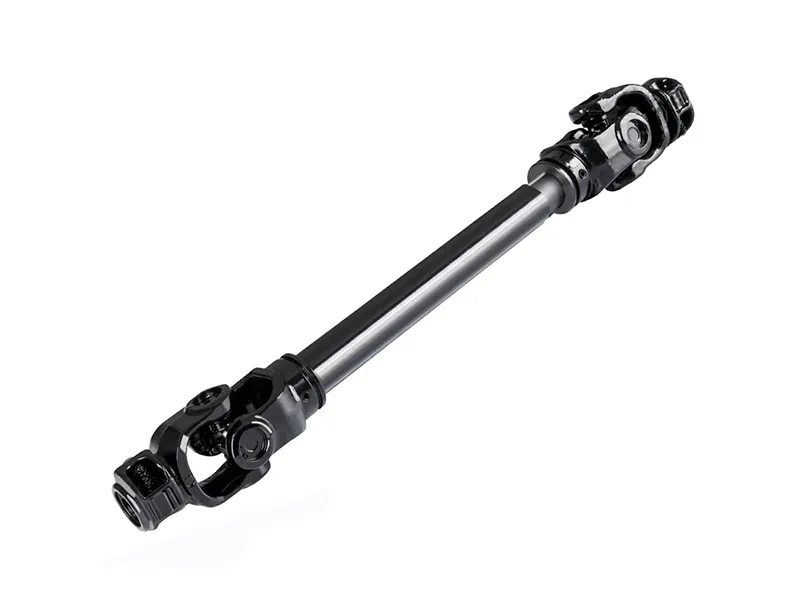
A Round Baler PTO Shaft works within a larger power path, so connected components should be reviewed together during wider repairs. A 通用動力輸出軸 can support mixed-fleet replacement planning, while a matched Round Baler Gearbox addresses the baler input side. Worm gearbox families are also available for other transmission duties. Coordinated sourcing helps reduce interface mismatch and keeps Round Baler PTO Shaft compatibility checks focused on the complete driveline.
通用動力輸出軸
Round Baler Gearbox
常見問題解答
Q1. How should Midwest hay contractors inspect a damaged Round Baler PTO Shaft guard?
A1. Shut the tractor down and inspect the shield, end bells, chains, supports, yokes, joints, telescoping movement, and hitch clearance. If the Round Baler PTO Shaft has rubbed, bottomed out, or seized at a guard support, correct that cause before replacement.
Q2. What guard damage matters most for European silage baler operators?
A2. Missing bell sections, rotating shields, crushed tubes, and deep cracks need immediate attention. Wet residue can hide corrosion and restrict movement, so a Round Baler PTO Shaft used in silage should be cleaned and checked before work resumes.
Q3. Which checks help Australian baling farms prevent repeat PTO guard failure?
A3. Check shaft length, guard overlap, turning clearance, chains, lubrication, and UV aging. Repeated damage can mean the Round Baler PTO Shaft is too long, poorly aligned, or contacting the hitch, so correct the geometry before fitting another shield.
Q4. Where should Canadian round baler fleets look for cold-weather guard problems?
A4. Inspect older plastic around end bells, support points, chain anchors, and prior impact areas. Confirm the Round Baler PTO Shaft guard is complete, restrained from rotation, and clear of the drawbar through the expected steering range.
Q5. When should South American contractors replace the complete Round Baler PTO Shaft assembly?
A5. Consider complete replacement when guard damage appears with bent tubes, worn splines, loose joints, severe corrosion, clutch defects, incorrect length, or repeated bottoming. Guard-only repair is suitable only when the Round Baler PTO Shaft is mechanically sound.
編輯:PXY