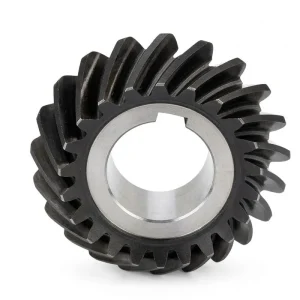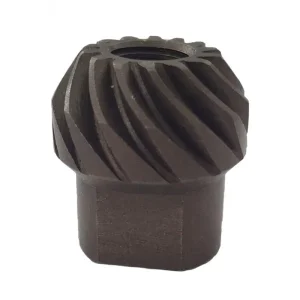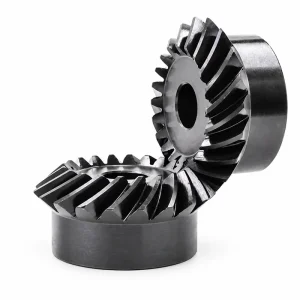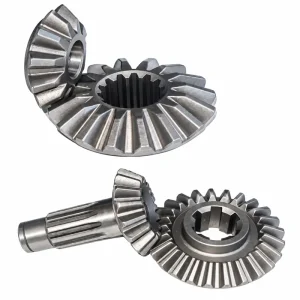
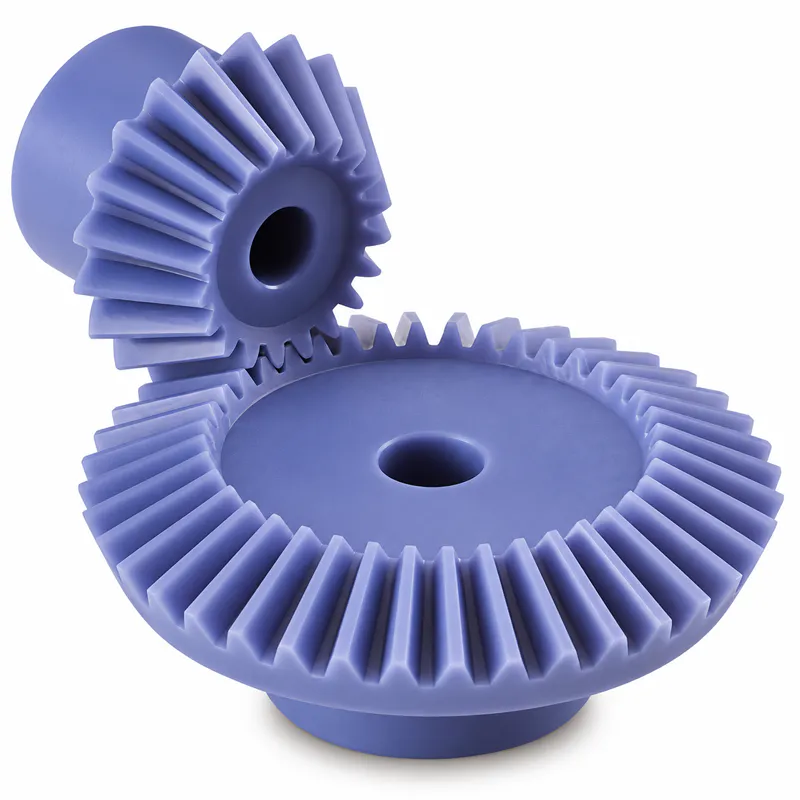
EP-Plastic Bevel Gear
The EP-Plastic Bevel Gear series delivers precision polymer drive components engineered for applications demanding oil-free operation, non-magnetic performance, corrosion resistance, and lightweight construction. Offering outside diameters from Φ3 mm to Φ120 mm and a module range of M0.15–M2.0, the series provides five standard gear ratios: 1:1, 2:1, 3:1, 4:1, and 5:1. Available in POM, PA (Nylon), PPA, PBT, and PEEK materials, each variant is selected to optimize mechanical properties, thermal stability, and chemical resistance for specific operating environments. The standard operating temperature range is −40 °C to +80 °C, with PPA and PEEK options extending beyond. Meshing grades conform to GB 6, ISO 6, JGMA 1, JIS 6, AGMA 13, DIN 6, and DIN 5, ensuring compatibility with major international standards. Suitable for medical, industrial, automotive, military, aircraft, and mechanical applications, the series is manufactured under ISO 9001:2008 and TS16949 certification, with ODM/OEM full drawing-to-production service and pre-production samples available.
EP-Plastic Bevel Gear — Engineered Polymer Angular Drives for Precision and Lightweight Applications
There are many situations where metal is simply the wrong material for the job. Environments that demand oil-free operation, non-magnetic components, corrosion resistance, or a dramatic mass reduction all push designers toward polymer-based gear solutions — and the plastic bevel gear is the angular drive component that answers those requirements. The EP-Plastic series spans outside diameters from Φ3 mm to Φ120 mm, module range M0.15 through M2.0, and five standard gear ratios from 1:1 through 5:1.
Material choices across POM, PA, PPA, PBT, and PEEK allow engineers to tune mechanical properties, thermal range, and chemical resistance to match the specific operating environment — from a humidity-exposed agricultural sensor head to a sterile surgical instrument drive. Meshing grades conforming to GB 6, ISO 6, JGMA 1, JIS 6, AGMA 13, DIN 6, and DIN 5 ensure compatibility with housings and mating gears designed to any major international standard. ODM/OEM customization, sample availability before commitment, and vacuum-pack delivery round out a product offering designed for global OEM supply programs.
General Product Specification — EP-Plastic Bevel Gear
Key parameters covering the standard product range. Custom material, module, and bore profile available on request.
| 範圍 | Plastic Bevel Gear Specification |
|---|---|
| Dimension Range | Φ3 mm – Φ120 mm |
| 模組 | M0.15, M0.2, M0.25–M0.8, M0.8<M<M1.0, M1.5<M<M2.0 |
| EP-Plastic Reference Dimension | Φ12 mm (standard reference unit) |
| EP-Plastic Reference Module | M0.25 |
| Material Type | POM, PA (Nylon), PPA, PBT, PEEK — or customer-specified |
| Meshing Grade | GB 6 / ISO 6 / JGMA 1 / JIS 6 / AGMA 13 / DIN 6 / DIN 5 |
| Gear Ratios | 1:1, 2:1, 3:1, 4:1, 5:1 |
| Operating Temperature | −40 °C to +80 °C (PPA/PEEK extend beyond) |
| Application Sectors | Medical, Industrial, Automotive, Military, Aircraft, Mechanical, Auto |
| Customization | ODM / OEM — full drawing-to-production service |
| Sample Policy | Sample available before bulk order |
| 包裝 | Vacuum-packed with plastic tray |
| Delivery Carriers | DHL / TNT / FedEx / UPS |
| Quality Certificate | ISO 9001: 2008 / TS16949 |
Dimensional Data — EP-Plastic Bevel Gear Sets (All Dimensions in mm)
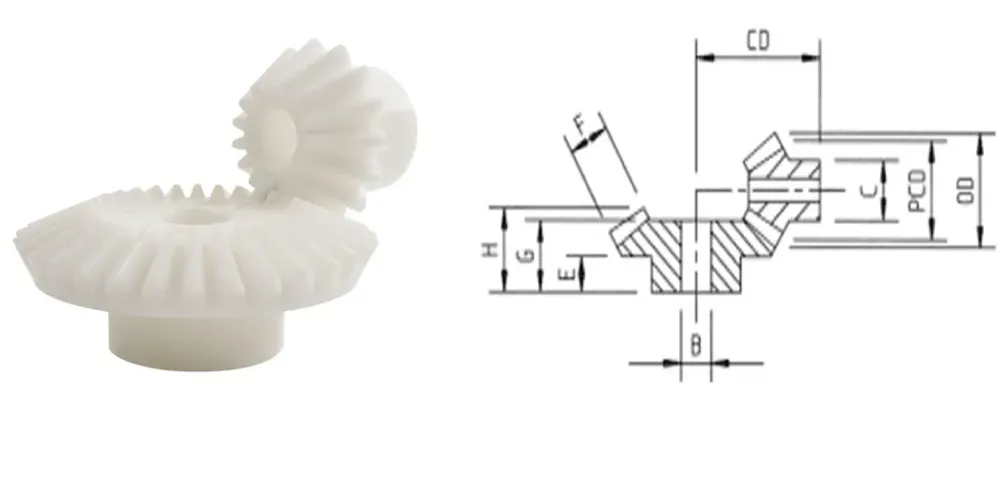
Standard part numbers across 1:1 through 5:1 ratio configurations. BS suffix indicates metric bore. Scroll right on mobile to see all columns.
| Part No. | Pitch (mod) | No. of Teeth | Outside Dia. | Pitch Dia. | Bore Dia. "B" | 'CD' | Hub dia 'C' | Boss Length 'E' | Tooth Width 'F' | Length 'G' | Length 'H' |
|---|---|---|---|---|---|---|---|---|---|---|---|
| 1:1 Ratio | |||||||||||
| GB05M016 | 0.5 | 16 | 8.7 | 8.0 | 3.0 | 10.5 | 7.0 | 6.0 | 2.0 | 8.0 | 8.0 |
| GB1M016 | 1 | 16 | 17.6 | 16 | 5.0 | 18.4 | 12.0 | 8.0 | 4.7 | 13.6 | 13.6 |
| GB1M016BS | 1 | 16 | 17.6 | 16 | 5.0 | 18.4 | 16.0 | 8.0 | 4.7 | 13.6 | 13.6 |
| 2:1 Ratio | |||||||||||
| GB1M215030 | 1 | 15 | 16.8 | 15.0 | 5.0 | 26.4 | 12.2 | 10.6 | 6.6 | 17.0 | 17.0 |
| 1 | 30 | 31.1 | 30.0 | 8.0 | 20.9 | 18.0 | 9.1 | 6.6 | 14.8 | 16.2 | |
| GB1M215030BS | 1 | 15 | 16.8 | 15.0 | 5.0 | 26.4 | 16.0 | 10.6 | 6.6 | 17.0 | 17.0 |
| 1 | 30 | 31.1 | 30.0 | 4.0 | 20.9 | 18.0 | 9.1 | 6.6 | 14.8 | 16.2 | |
| 3:1 Ratio | |||||||||||
| GB1M315045 | 1 | 15 | 16.6 | 15.0 | 5.0 | 34.3 | 12.3 | 11.0 | 9.2 | — | 20.4 |
| 1 | 45 | 46.1 | 45.0 | 10.0 | 22.7 | 23.4 | 9.6 | 9.2 | 16.5 | 18.2 | |
| GB1M315045BS | 1 | 15 | 16.6 | 15.0 | 5.0 | 34.3 | 16.0 | 11.0 | 9.2 | — | 20.4 |
| 1 | 45 | 46.1 | 45.0 | 6.0 | 22.7 | 23.4 | 9.6 | 9.2 | 16.5 | 18.2 | |
| 4:1 Ratio | |||||||||||
| GB1M410040 | 1 | 10 | 12.0 | 10.0 | 4.0 | 30.1 | 7.8 | 9.3 | 8.2 | — | 17.7 |
| 1 | 40 | 40.8 | 40.0 | 10.0 | 20.1 | 23.4 | 10.8 | 8.2 | 15.7 | 17.0 | |
| GB1M410040BS | 1 | 10 | 12.0 | 10.0 | 4.0 | 30.1 | 12.7 | 9.3 | 8.2 | — | 17.7 |
| 1 | 40 | 40.8 | 40.0 | 6.0 | 20.1 | 23.4 | 10.8 | 8.2 | 15.7 | 17.0 | |
| 5:1 Ratio | |||||||||||
| GB1M512060 | 1 | 12 | 13.7 | 12.0 | 4.0 | 40.5 | 9.5 | 10.0 | 9.5 | — | 20.3 |
| 1 | 60 | 60.4 | 60.0 | 10.0 | 21.0 | 20.5 | 11.0 | 9.5 | 15.5 | 17.4 | |
| GB1M512060BS | 1 | 12 | 13.7 | 12.0 | 4.0 | 40.5 | 14.3 | 10.0 | 9.5 | — | 20.3 |
| 1 | 60 | 60.4 | 60.0 | 6.0 | 21.0 | 20.5 | 11.0 | 9.5 | 15.5 | 17.4 | |
| GB1M512* | 1 | 12 | 13.7 | 12.0 | 4.0 | 40.5 | 9.5 | 10.0 | 9.5 | — | 20.3 |
| GB1M512BS* | 1 | 12 | 13.7 | 12.0 | 4.0 | 40.5 | 14.3 | 10.0 | 9.5 | — | 20.3 |
* NB: These gears match with 60-tooth bevel gear only. Geometry is not compatible with other gears.
How a Plastic Bevel Gear Works — Mechanism and Polymer Advantage
Like all bevel gears, the plastic bevel gear operates on the principle of two conical pitch surfaces rolling against each other without slipping. When a pinion and wheel are mounted so their respective pitch cones share a common apex, rotational motion is transmitted between the two shafts at the angle defined by the cone geometry — most frequently 90°. The involute tooth profile, cut along the conical surface, ensures that as each tooth pair moves through mesh, the instantaneous velocity ratio between pinion and wheel remains constant — a condition known as conjugate action that is the foundation of smooth, vibration-free power transfer.
The distinction between a plastic bevel gear and a metal counterpart lies in the material response at the tooth contact. Polymer materials deflect elastically under contact stress, creating a self-conforming surface that distributes peak Hertzian pressure over a slightly larger contact patch than a rigid metal tooth produces. This compliance acts as a built-in vibration absorber, reducing the noise floor of the drive system without any additional damping components. The combination of conical gear geometry and polymer material compliance is what makes plastic bevel gear sets the preferred choice for medical instruments, audio equipment drives, and semiconductor handling systems where acoustic quietness is a hard design requirement.
這 gear ratio of bevel gear sets is straightforward to calculate: divide the tooth count of the driven wheel by the tooth count of the driving pinion. In the 1:1 miter gear configuration, both members are identical in tooth count and cone angle — useful when changing the drive axis without changing speed. Ratios of 2:1, 3:1, 4:1, and 5:1 are standard across this product line, covering the majority of speed-reduction and torque-multiplication requirements encountered in compact electromechanical sub-assemblies. The operating temperature range of −40 °C to +80 °C covers most indoor industrial and instrument applications; PPA and PEEK variants extend the upper thermal limit considerably for elevated-temperature environments.
Engineers evaluating the difference between helical and bevel gear configurations should note that helical gears redirect speed and torque between parallel shafts with progressive tooth contact, while bevel gears redirect the drive axis entirely. Where the design calls for both axis change and reduced vibration, the polymer bevel gear's inherent material damping compensates for the abrupt-contact characteristic of straight-tooth bevel geometry, effectively delivering both benefits within a single compact component.
Five Defining Strengths of the EP-Plastic Bevel Gear
Inherent Self-Lubrication
POM and PA polymer chains release a minute quantity of surface lubricant during mesh engagement, enabling these nylon bevel gears and POM variants to operate dry for thousands of hours without external oil or grease. This property is indispensable in food processing lines, pharmaceutical filling machines, and optical instruments where lubricant migration onto the product or surrounding surfaces would cause rejection or contamination failures.
Multi-Standard Meshing Compliance
Conformance to GB 6, ISO 6, JGMA 1, JIS 6, AGMA 13, DIN 6, and DIN 5 means that a single plastic bevel gear set sourced from this product line can be qualified against any of the major regional gear standards — eliminating the need for separate vendor qualification processes for North American, European, and Asian market variants of the same machine design. This multi-standard capability is a practical cost-saver for global OEM programs.
Weight Reduction vs Metal
Polymer materials weigh 60–80% less than equivalent steel or brass gears of the same envelope. For UAV platforms, portable medical devices, hand-held test instruments, and wearable technology drives, every gram counts. Small plastic bevel gears in POM or aluminum-filled PA allow the total drivetrain mass to be reduced below the threshold that would force a heavier motor, larger battery, or reinforced structural frame — compounding the savings throughout the design.
Broad Material Flexibility
Five polymer families — POM, PA, PPA, PBT, and PEEK — span a wide range of mechanical stiffness, thermal tolerance (−40 °C to well above +80 °C for PPA and PEEK), and chemical resistance profiles. This breadth means that a single product line covers applications from cost-sensitive consumer goods through demanding aerospace instrument drives, with material substitution possible without changing the gear geometry or mating tooling.
ODM/OEM Customization with Sample Support
Every bore diameter, hub length, tooth count, and module can be specified to a customer drawing. Samples are available before mass order commitment — a significant risk-reduction advantage for engineering teams validating new machine designs. All precision bevel gear samples are vacuum-packed in plastic trays before dispatch to prevent moisture uptake during transit, ensuring that the sample received accurately represents production-intent dimensional quality.
Material Selection — Matching Polymer Properties to the Application
The material specification is the most consequential decision in plastic bevel gear design. Unlike metal, where grade selection primarily influences hardenability and fatigue life, polymer material choice affects not only load capacity and wear rate but also the gear's behavior in the presence of moisture, chemicals, UV radiation, and temperature excursions. Getting the material right on the first design iteration avoids the field failures and recall costs that follow from an under-specified selection.
POM (Polyoxymethylene) is the standard choice for the majority of dry-running plastic bevel gear applications. Its combination of high stiffness, low friction coefficient, and minimal moisture absorption — less than 0.2% even under extended humid exposure — means that gears retain their dimensional specification throughout the service life. POM's natural white or black coloring also makes it easy to distinguish mating parts in assembly. In food equipment, laboratory automation, and pharmaceutical machinery, POM's FDA-compliant grades remove the need for additional lubrication clearance verification during installation.
PA (Polyamide / Nylon) forms the basis of our nylon miter gears and nylon bevel sets. Nylon absorbs moisture from the atmosphere — typically 1–3% under ambient humidity — which introduces a measured dimensional swell that engineers must account for in bore-to-shaft interference fits. In return, the absorbed moisture provides lubrication at the sliding contact surfaces, reducing friction-generated wear rates significantly under cyclic loading. PA is the preferred material for nylon bevel gears in robotic joint drives, powered hand tools, and solar tracker adjustment mechanisms where impact loads from direction reversals would fatigue a stiffer POM gear prematurely.
PPA (Polyphthalamide) extends service temperature to approximately 120 °C continuous and adds resistance to automotive fluids, hydraulic oils, and industrial cleaning agents. It fills the performance gap between standard PA and the premium PEEK tier, making it cost-effective for under-bonnet automotive sensor drives and industrial washdown-duty conveyors where standard nylon would soften unacceptably. PEEK represents the performance ceiling: continuous service to 250 °C, autoclaving compatibility, and resistance to virtually all industrial solvents make it the specification for medical device drives requiring repeated steam sterilization and for process industry applications involving aggressive chemical contact.
PBT (Polybutylene Terephthalate) rounds out the range with strong electrical insulation, good UV stability, and resistance to surface crazing — properties that fit outdoor sensor housings, automotive connector drives, and electrical equipment where POM or PA would degrade under UV exposure or suffer surface cracking from cleaning solvents. All five materials are available across the full module and ratio range of the EP-Plastic series.
Bevel Gear vs Spur Gear — Choosing Correctly for Your Drive Layout
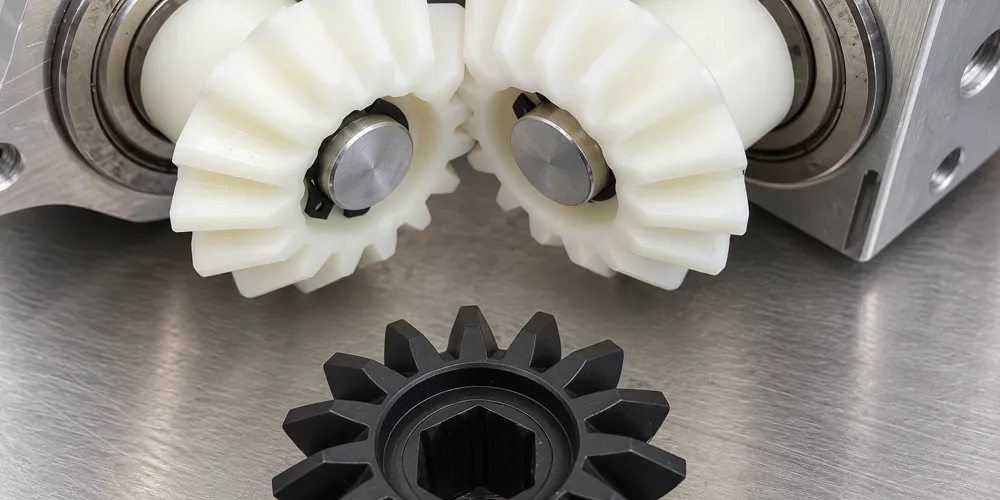
這 bevel gear vs spur gear decision comes down to shaft geometry. Spur gears handle parallel shafts efficiently and at lower manufacturing cost; whenever the drive must change direction — particularly the 90° right-angle layout that dominates compact electromechanical sub-assemblies — a bevel gear is the engineered solution. Among the notable bevel gear advantages in polymer form is the acoustic quietness: polymer tooth compliance damps the impact of each tooth engagement cycle, which spur gears — even helical variants — cannot fully achieve at the same contact frequency.
這 bevel gear pressure angle in the EP-Plastic series follows the 20° standard consistent with ISO and AGMA recommendations. A 20° pressure angle balances tooth strength against smooth engagement, and matching the pressure angle of the plastic gear to any metal mating gear of the same module is essential to avoid localized edge loading at the heel or toe of the tooth face. Mismatched pressure angles — a common assembly error when mixing standards — produce contact stress concentrations that will prematurely fatigue a polymer tooth even when the gear is otherwise correctly sized for the torque.
When comparing the EP-Plastic range against precision forged bevel gears in metal, the trade-off is straightforward: forged metal gears carry substantially higher continuous torque but require lubrication, generate more operating noise, add significant mass, and cannot be used in environments where metal contamination or magnetic presence is unacceptable. The plastic bevel gear occupies a distinct application space where those constraints eliminate metal from consideration regardless of load rating.
Where EP-Plastic Bevel Gears Are Deployed
這 plastic bevel gear is found wherever a clean, lightweight, or chemically inert right-angle drive is required. Below are the primary application sectors served by this product line, each with specific performance requirements that guided material and tolerance grade selection.
⚕ Medical Instruments
Surgical robot wrist joints, diagnostic imaging arm drives, and rehabilitation equipment actuators all use angular drive stages where lubricant migration and particle generation are unacceptable. POM and PEEK plastic bevel gear sets run dry, clean, and can be sterilized according to the device manufacturer's validated cleaning protocol — making them compliant with ISO 13485 medical device quality system requirements when appropriately documented.
✈ Aircraft & Military Systems
UAV camera gimbal drives, flight control surface actuators, and portable field instrument mechanisms all benefit from the mass advantage of small plastic bevel gears over brass or steel alternatives. The non-magnetic behavior of all polymer grades is also important in proximity to avionics and electronic warfare systems, where a ferromagnetic gear body would introduce sensor interference that metal gears — even aluminum — can produce under vibration.
🔬 Scientific Instruments
Coordinate measuring machines, motorized microscope stages, and spectrometer filter wheels require extremely low backlash and minimal transmission error across repeated positioning cycles. The tight meshing grades of this product line — ISO 6 and AGMA 13 — ensure that the angular positioning scatter contributed by gear geometry is below the level that would appear in the instrument's measurement uncertainty budget, maintaining calibration validity across thousands of operational cycles.
🚗 Automotive Actuators
Mirror adjustment motors, seat position drives, and sunroof actuators in passenger vehicles all use compact bevel gear sets where NVH performance is validated against customer noise targets. The inherent damping of PA and POM materials at the tooth mesh interface reduces radiated noise levels in cabin actuators by 5–10 dB compared to metal gear trains — a meaningful improvement for premium vehicle OEMs designing to Class A NVH specifications in European and North American markets.
⚙ Industrial Automation
Pick-and-place arm joints, barcode scanner pivot drives, label applicator heads, and packaging machine crossover conveyors all incorporate plastic bevel gear sets at their axis-change points. Corrosion resistance is particularly valuable in food-grade and pharmaceutical packaging lines where daily washdown with detergent and sanitizing agents would quickly rust uncoated metal gears but leaves POM and PPA gears completely unaffected over multi-year service cycles.
☀ Solar & Renewable Energy
Single-axis and dual-axis solar tracker systems use plastic miter gears and bevel sets at the tilt adjustment axis intersection. PBT's UV resistance and PPA's thermal stability make both materials suitable for outdoor tracker installations across Australian desert, Brazilian cerrado, and South Korean coastal environments where UV intensity, temperature swings, and salt-air exposure would degrade less weather-stable polymer grades over the 25-year tracker design life.
About Our Manufacturing Facility — 10+ Years of Gear Engineering
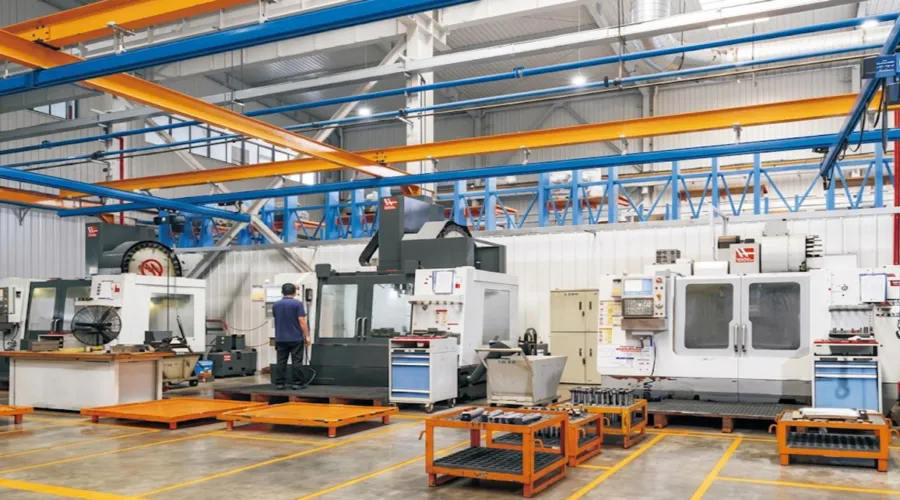
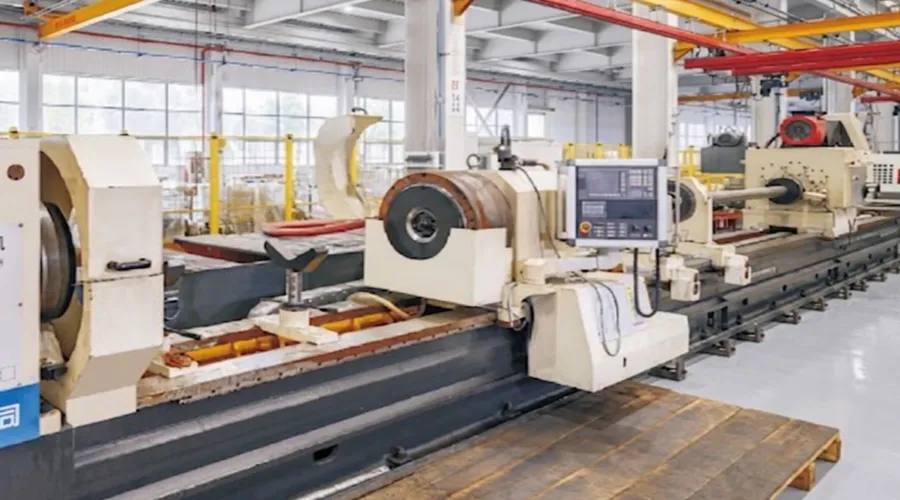
With more than a decade of continuous manufacturing experience in mechanical power transmission, our production operations cover a scope that few single-site gear facilities can match. The product portfolio extends across agricultural gearboxes, worm gear reducers, planetary gear drives, PTO shafts, hydraulic cylinders, transmission gears, roller chains, and electric motors — a breadth that gives our engineering team deep familiarity with the real-world conditions that gear components must survive in field service, not just the theoretical parameters that appear in design calculations.
Manufacturing runs under ISO 9001:2015 quality management certification, applied to the complete process from incoming material inspection through final dimensional verification and packing. We also design and produce a comprehensive range of custom gearbox assemblies in ductile iron, cast iron, cast steel, precision-cast steel, and cast aluminum. Sprockets, worm gear sets, pulleys, worm shafts, and both standard and non-standard mechanical components are within our manufacturing scope, providing global buyers with a credible single-source option across multiple drivetrain categories.
為了 precision bevel gear manufacturers buyers in Japan, South Korea, Germany, Canada, and Australia seeking documented quality systems, ODM design capability, and efficient export logistics, we ship via DHL, TNT, FedEx, and UPS, with vacuum-packed plastic tray packaging ensuring that dimensional integrity is maintained from production floor to incoming inspection at the buyer's facility.
工作坊


Related Products — Full Drivetrain from One Source
The EP-Plastic plastic bevel gear fits into broader drivetrains that may include parallel-shaft stages or linear actuation elements. We produce the following compatible gear types to the same quality and dimensional standards.
雙螺旋齒輪
For drivetrain stages running on parallel shafts adjacent to the plastic bevel gear angular pair, double helical gears eliminate axial thrust forces while achieving very quiet mesh. Sourcing both the plastic bevel stage and the double helical stage from one facility ensures that module and pressure angle are matched across the complete assembly, simplifying the engineering validation process and consolidating the supplier approval documentation required under ISO 9001 or IATF 16949 purchasing procedures.
齒條
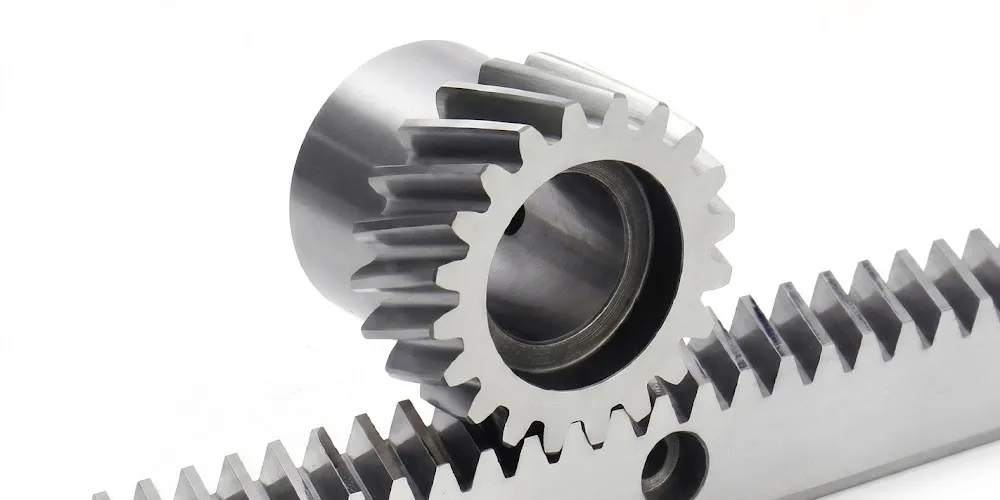
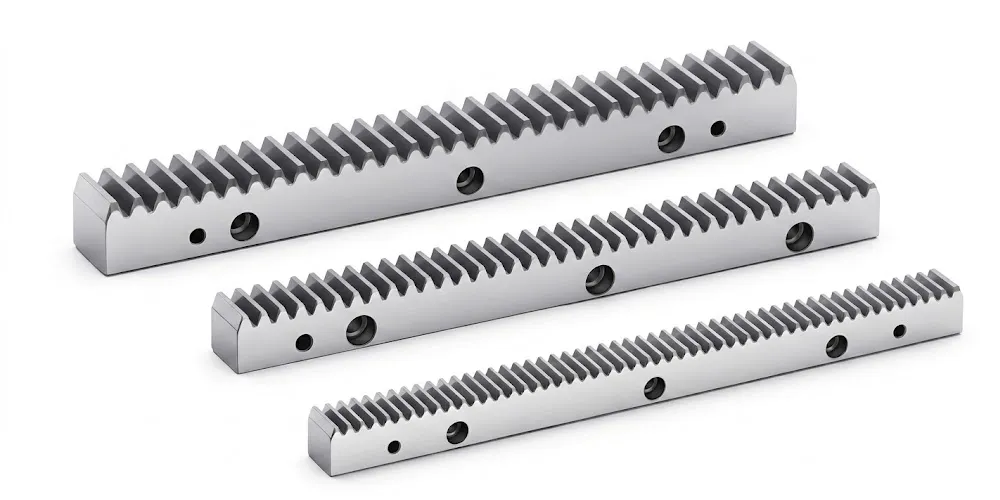
Linear actuation stages that interface with the output of a plastic bevel gear rotary drive need a gear rack matched in module and pressure angle to the pinion. Our gear rack range covers the standard modules used throughout the EP-Plastic bevel series, serving solar tracker linear stages, laboratory instrument slides, medical bed positioning mechanisms, and industrial XY gantry systems. Specifying the rack and the bevel set from the same source removes cross-supplier tolerance ambiguity that can cause pre-load problems during final drive commissioning.
Frequently Asked Questions — EP-Plastic Bevel Gear
Q1. What plastic material is best for a bevel gear operating in a food processing machine in Australia or New Zealand that needs daily washdown with caustic cleaning agents?
For food processing applications subject to daily caustic washdown in Australia or New Zealand, POM (acetal) is generally the first recommendation. POM resists dilute alkali solutions, including caustic soda concentrations typical in dairy and meat processing washdown protocols, maintains dimensional stability through repeated wet-dry cycles, and carries FDA food-contact approval in its natural and black grades. If the cleaning agent concentration is higher — common in clean-in-place circuits for beverage equipment — PPA (polyphthalamide) provides superior resistance to concentrated alkaline solutions while retaining the dry-running capability that eliminates lubrication contamination risk. For the tightest hygienic compliance requirements, such as those that follow EU Regulation 10/2011 or FDA 21 CFR Part 177 for food-contact materials, always verify the specific polymer grade certification with us before order confirmation, as additive packages vary between standard and food-grade formulations of the same base polymer.
Q2. How do I correctly install a plastic bevel gear pair in a medical instrument drive to achieve proper tooth contact without damaging the polymer teeth during assembly?
安裝 plastic bevel gear pair correctly starts with confirming the shaft intersection angle in the housing matches the gear cone angle specification — angular errors shift the contact patch off-center and concentrate stress on the heel or toe of the tooth, which will produce accelerated wear or fatigue cracking in a polymer tooth within a much shorter time than the same misalignment would cause in metal. After fitting the gear pair, rotate by hand and apply a light coat of non-contaminating blue compound to check the contact pattern: it should appear centrally on the tooth height and cover approximately 50% of the face width. Use only the fastener torques specified in the housing drawing when securing the shaft retaining elements — over-torquing bearing housings on a plastic-gear shaft can introduce enough bore out-of-roundness to shift the gear apex position and alter the contact pattern. Never use impact tools during assembly, as the shock load can chip polymer tooth tips even without the gear being in mesh.
Q3. Which gear ratio of bevel gear set is appropriate for a solar tracker dual-axis adjustment drive used in large utility-scale installations across South Korea or Japan?
For dual-axis solar tracker adjustment drives, the 3:1 or 4:1 gear ratio of bevel gear pairs from this product line are the typical selections. The elevation axis (tilt adjustment) generally requires more torque than the azimuth axis because it must move the panel weight against gravity, so a 4:1 or even 5:1 ratio is often used there to allow a smaller, more energy-efficient motor to do the work within the available duty cycle. The azimuth axis, which tracks the sun's horizontal movement during the day, needs less torque but greater angular travel per day, making a 2:1 or 3:1 ratio a better fit for keeping tracking speed achievable. PBT or PPA material is recommended for outdoor solar tracker plastic bevel gear applications in both South Korean coastal climates and Japanese highland installations, where UV exposure, salt air, and temperature cycling from −10 °C to +70 °C are routine seasonal conditions.
What is the difference between nylon bevel gears and POM bevel gears and which one should automotive engineers in Germany specify for a seat adjustment actuator?
The key practical difference between nylon bevel gears (PA grade) and POM bevel gears lies in moisture behavior and impact response. POM absorbs less than 0.2% moisture, so gear dimensions remain stable across ambient humidity changes — important when bore-to-shaft fit is specified with tight clearance for minimal backlash in a seat positioning drive. PA absorbs 1–3% moisture depending on ambient conditions, causing measurable bore swell that must be accommodated in the housing design. In return, PA offers significantly better impact energy absorption, which translates to fewer tooth fractures under the sudden directional reversals that occur when a seat actuator reaches its mechanical end stop. For German automotive applications under IATF 16949 supplier requirements, either material is acceptable provided the performance is validated against the OEM's specific duty cycle test; PA is typically preferred in dynamic actuator applications, POM in static or slow-moving positioning stages where dimensional precision under varying cabin humidity is the priority.
Where can precision bevel gear manufacturers be found who supply small plastic bevel gears with multi-standard meshing grades and ODM sample support for robotics engineers in Europe or North America?
Robotics engineers in Europe and North America sourcing small plastic bevel gears with multi-standard meshing certification and ODM engineering support can work directly with our export program. We supply precision bevel gear sets conforming to GB 6, ISO 6, JIS 6, AGMA 13, DIN 6, and DIN 5 — a coverage breadth that satisfies regional compliance requirements across the EU machinery directive environment and the ANSI/AGMA standards referenced in North American robotics OEM purchasing specifications. Sample units are available before bulk order commitment, shipped vacuum-packed in plastic trays via DHL or FedEx to ensure dimensional integrity on arrival. A drawing review before production begins at no additional charge confirms that module, bore tolerance, meshing grade, and material are correctly specified for the robot joint duty cycle. Lead time for custom-profile plastic bevel gear samples is typically competitive with European or North American local tooling options, while the ODM flexibility to adjust tooth count, bore profile, or helix modifications is broader than most catalogue-only gear distributors can offer.
編輯:PXY