EP-S45C Helical Gear Rack Quenching & Tempering HB20–25°
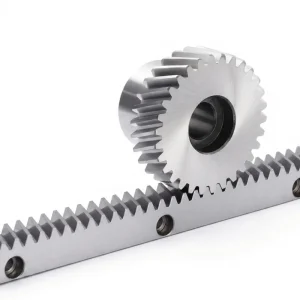
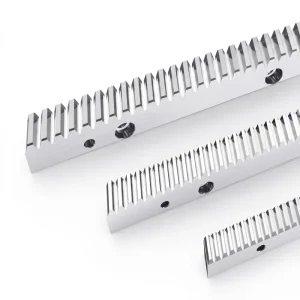
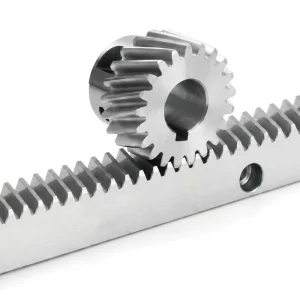
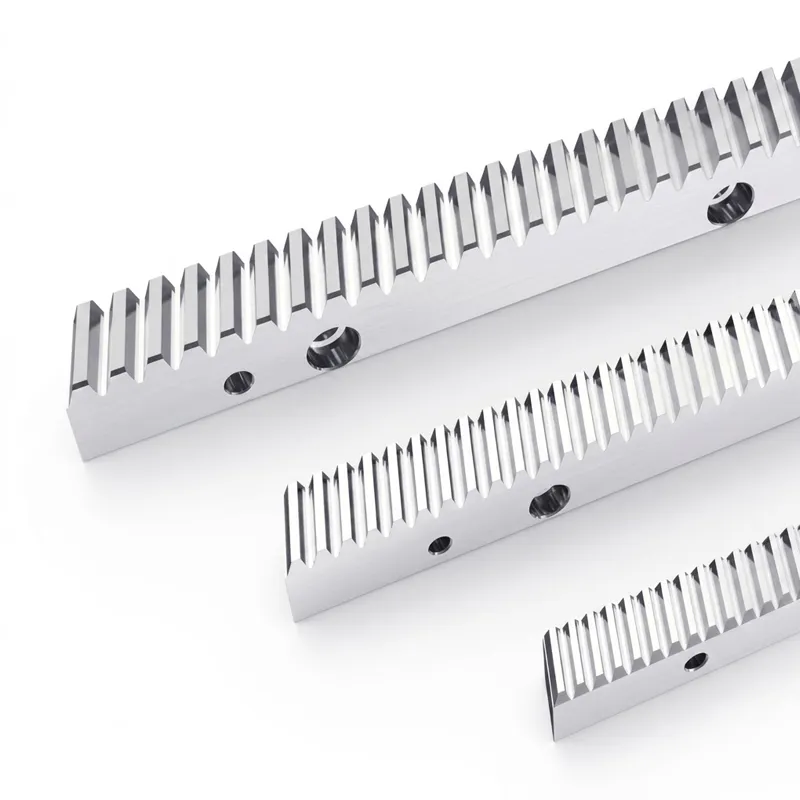
The EP-S45C Helical Gear Rack is a high-precision linear transmission component manufactured from S45C steel and processed via quenching and tempering to achieve a hardness of HB20–25°. Featuring a 19°31’42” right-hand helix angle, this rack ensures smooth engagement and reduced noise compared to spur gears. Produced with four-side flat grinding and fine cutting, it meets DIN8 (International Grade 7) accuracy standards. Available in modules ranging from M1.5 to M12 with standard lengths of 500mm to 1000mm, it offers versatile mounting options with pre-drilled holes or solid backs (suffix “N”). Ideal for CNC machinery, automation systems, and heavy-duty industrial applications requiring durable, precise linear motion.
Precision Mechanical Transmission
EP-S45C Helical Gear Rack
Quenching & Tempering HB20–25° · DIN8 International Level 7 · Right Helix Angle 19°31′42″
Spesifikasi Teknis
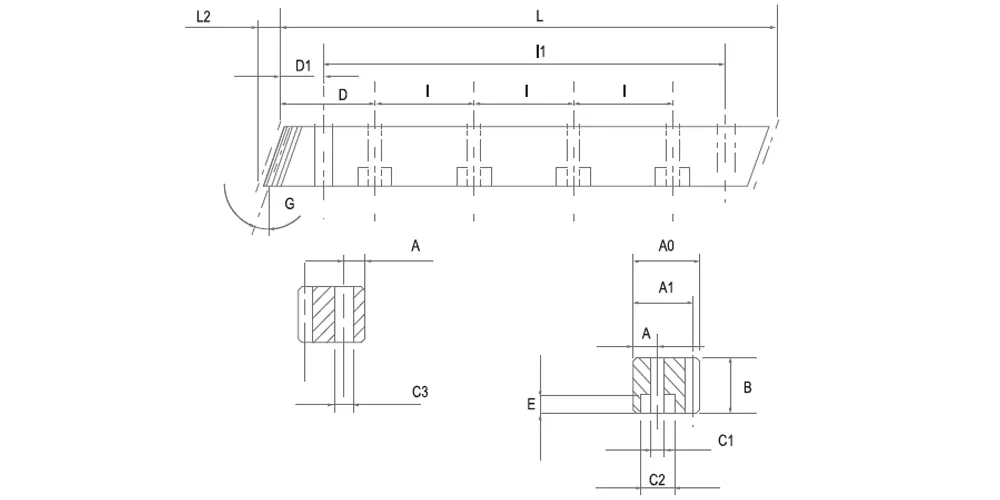
Unit / Dimension: mm | End pitch Pe = Module × π / COS(19°31′42″) | Fp = Total pitch error
| Code | Modul | Pt | L | L2 | Tooth No. | B | A0 | A1 | D | I | Hole No. | A | C1 | C2 | E | D1 | I1 | C3 | Fp |
|---|---|---|---|---|---|---|---|---|---|---|---|---|---|---|---|---|---|---|---|
| 662 010 050 | 1.5 | 4.9999 | 500.00 | 6 | 100 | 17 | 17 | 15.5 | 62.5 | 125 | 4 | 7 | 6 | 9.5 | 7 | 31.7 | 436.6 | 5.7 | 0.066 |
| 662 010 100 | 1.5 | 4.9999 | 1000.00 | 6 | 200 | 17 | 17 | 15.5 | 62.5 | 125 | 8 | 7 | 6 | 9.5 | 7 | 31.7 | 936.6 | 5.7 | 0.074 |
| 662 015 050 | 1.5 | 4.9999 | 500.00 | 6.74 | 100 | 19 | 19 | 17.5 | 62.5 | 125 | 4 | 8 | 7 | 11 | 7 | 31.7 | 436.6 | 5.7 | 0.066 |
| 662 020 050 | 2 | 6.6666 | 500.00 | 8.5 | 75 | 24 | 24 | 22 | 62.5 | 125 | 4 | 8 | 7 | 11 | 7 | 31.7 | 436.6 | 5.7 | 0.066 |
| 662 030 050 | 3 | 9.9999 | 500.00 | 10.3 | 50 | 29 | 29 | 26 | 62.5 | 125 | 4 | 9 | 10 | 15 | 9 | 35.0 | 430.0 | 7.7 | 0.066 |
| 662 030 100 | 3 | 9.9999 | 1000.00 | 10.3 | 100 | 29 | 29 | 26 | 62.5 | 125 | 8 | 9 | 10 | 15 | 9 | 35.0 | 930.0 | 7.7 | 0.072 |
| 662 040 050 | 4 | 13.3333 | 506.67 | 13.8 | 38 | 39 | 39 | 35 | 62.5 | 125 | 4 | 12 | 10 | 15 | 9 | 33.3 | 433.0 | 7.7 | 0.072 |
| 662 050 050 | 5 | 16.6666 | 500.00 | 17.4 | 30 | 49 | 39 | 34 | 62.5 | 125 | 4 | 12 | 14 | 20 | 13 | 37.5 | 425.0 | 11.7 | 0.072 |
| 662 060 050 | 6 | 19.9999 | 500.00 | 20.9 | 25 | 59 | 49 | 43 | 62.5 | 125 | 4 | 16 | 18 | 26 | 17 | 37.5 | 425.0 | 15.7 | 0.072 |
| 662 080 050 | 8 | 26.6667 | 480.00 | 28.0 | 18 | 79 | 79 | 71 | 60.0 | 120 | 4 | 25 | 22 | 33 | 21 | 120 | 240.0 | 19.7 | 0.08 |
| 662 100 100 | 10 | 33.3333 | 1000.00 | 35.11 | 30 | 99 | 99 | 89 | 62.5 | 125 | 8 | 32 | 33 | 48 | 32 | 125 | 750.0 | 19.7 | 0.09 |
| 662 120 100 | 12 | 39.9999 | 1000.00 | 42.56 | 25 | 120 | 120 | 108 | 40 | 125 | 8 | 40 | 39 | 58 | 38 | 125 | 750.0 | 19.7 | 0.09 |
Racks without holes are also available — append "N" to the model code (e.g. STOER010N). Custom dimensions and materials can be supplied based on engineering drawings.
How the Helical Rack and Pinion Works
The working principle of a helical rack and pinion system is straightforward but mechanically elegant. A circular pinion gear rotates about a fixed axis, and its teeth engage the angled tooth profile of the stationary or sliding gear rack. Because the helix angle (here 19°31′42″) causes each tooth to enter mesh gradually rather than all at once, load is distributed across a contact line that sweeps across the full tooth face during engagement. This dramatically reduces the impulse force per unit time, translating into lower vibration, quieter operation, and higher sustainable torque for any given cross-section compared to an equivalent spur gear rack.
Motion transmission in a rack and pinion gear assembly is governed by a simple relationship: linear travel per pinion revolution equals the rack's circular pitch multiplied by the number of pinion teeth. This predictable gear ratio of rack and pinion allows designers to select module and tooth count to achieve precise feed rates in machine tools, accurate positioning in rack and pinion linear slide assemblies, and reliable stroke control in industrial presses. The four-side flat-grinding finish on the EP-S45C ensures mounting faces are geometrically true, simplifying integration with linear guide rail systems or structural extrusions.
What Is a Helical Gear Rack?
A gear rack is a flat or straight bar with teeth machined along one face, designed to mesh with a rotating pinion gear and convert rotary motion into precise linear displacement. The EP-S45C is a helical-tooth variant — meaning the tooth profile is cut at an angle (right helix angle 19°31′42″) rather than parallel to the axis — which produces significantly smoother engagement, lower vibration, and higher load capacity compared to a straight spur gear rack. Because multiple teeth share the load simultaneously, the helical gear rack tolerates heavy-duty cyclic forces without the impact shock that plagues spur profiles. This makes the EP-S45C the preferred choice wherever quieter operation and extended service life are non-negotiable requirements.
The raw bar stock is S45C medium-carbon steel, chosen for its reliable machinability and excellent response to heat treatment. After the four-side flat-grinding and fine-cutting production process, each linear gear rack receives a quenching and tempering hardness treatment reaching HB20–25°, locking in a tough, wear-resistant surface that maintains dimensional stability across a wide operating temperature range. The result is a rack and pinion gear component that engineers can integrate into CNC gantry systems, automated logistics lines, heavy-duty shelves, and machine tool slides with confidence in long-term precision retention.
Conforming to DIN8 International Level 7 accuracy standards, the EP-S45C sits firmly in the precision segment of the gear rack and pinion market — tight enough for high-repeatability automation yet commercially practical for industrial-scale procurement. Custom lengths, hole patterns, and alternative materials are available on request; racks without holes are also supplied (suffix "N" appended to the model code, e.g. STOER010N).
Five Key Advantages
Smooth, Quiet Engagement
The helical tooth geometry creates a rolling contact line rather than a full-width impact at every mesh cycle. This progressive load entry reduces noise and vibration, making the EP-S45C well-suited to environments where acoustic quality matters — automated warehouses, medical imaging gantries, and precision grinding machines.
High Load Capacity
With teeth cut from S45C medium-carbon steel and hardened to HB20–25° through quenching and tempering, this duty gear rack handles elevated tangential and axial forces without plastic deformation. Multiple teeth share the load simultaneously, so peak contact stress stays within safe limits even under sudden dynamic loads typical of industrial portal robots.
DIN8 Level 7 Precision
Every bar is produced to DIN8 International Level 7 tolerance, meaning tooth-to-tooth and cumulative pitch errors are tightly controlled. For applications such as rack and pinion linear slide positioning or multi-axis CNC routing, this accuracy grade ensures repeatable positioning without backlash compensation becoming a constant maintenance burden.
Flexible Length Options
Standard bars come in 500 mm and 1,000 mm lengths across a full module range from M1.5 to M12. Because the tooth pitch is precise across the entire bar, multiple bars can be butted end-to-end to form an extended linear rack and pinion drive without detectable step errors at the joints — a key feature for long-travel machine axes.
Custom-Ready Design
Hole-free variants (suffix "N"), alternative alloy steels, special coatings, and non-standard cross-sections are all available on request. The four-side ground mounting datum planes allow the rack to bolt directly to precision-machined sub-plates or extrusion-profile systems without shimming, accelerating installation on the shop floor.
Material & Heat Treatment
S45C is a JIS-standard medium-carbon steel (roughly equivalent to AISI 1045 and DIN C45) that balances machinability, tensile strength, and heat-treatment response in a commercially available grade. With carbon content around 0.42–0.48%, it machines cleanly to fine-tooth geometry while accepting quench-and-temper heat treatment to achieve the targeted surface hardness of HB20–25°. The quenching step rapidly cools the steel from austenitizing temperature, producing a hard martensitic structure, while the subsequent tempering cycle reduces internal stress and restores enough toughness to withstand shock loading — the precise balance needed for a heavy-duty shelves gear rack or a high-cycle automation axis.
The four-side flat-grinding and fine-cutting production process removes material symmetrically, maintaining straightness and eliminating residual bending stress induced during the heat treatment stage. Each ground face serves as a reference datum, which is why the EP-S45C can be mounted without the surface preparation steps typically required for rolled or milled rack stock. This production discipline is where the DIN8 Level 7 accuracy actually comes from — controlled tooth geometry achieved not just through the hobbing or milling step, but by the entire sequence of operations that follows it.
Skenario Aplikasi
CNC Machine Tools
Large-format CNC routers, plasma cutters, and gantry milling centres rely on a rack and pinion gear drive for their primary X and Y axes. The EP-S45C provides the combination of long-travel capability, bidirectional repeatability, and structural rigidity that linear ball-screw drives cannot economically match beyond a few metres of travel.
Industrial Robots & Gantries
Portal robots and overhead gantry pick-and-place systems in automotive and electronics manufacturing deploy this linear gear rack to achieve metre-per-second traverse speeds while maintaining sub-millimetre positioning accuracy. The helical profile's smooth torque transfer eliminates jerk that would otherwise disturb delicate end-effectors.
Rack and Pinion Press
Benchtop and floor-standing rack and pinion press designs use a gear rack to convert handle rotation into controlled downward thrust. The S45C material is hard enough to withstand the Hertzian contact stress at the tooth root during full-load pressing strokes, while the tempered core remains tough enough to absorb the end-of-stroke impact without cracking.
Automated Storage & Retrieval
High-bay warehouse cranes and stacker-retriever systems use a gearbox rack and pinion drive for vertical and horizontal travel. Long rack assemblies — formed by precision end-butting of 1,000 mm bars — allow continuous travel across tens of metres without speed-reducing mechanical joints.
Stage & Broadcast Equipment
Broadcast camera pedestals, studio lighting rigs, and theatrical stage lifts rely on the quiet operation of a helical rack tooth profile. Where servo-driven axes must track subjects smoothly and silently, the EP-S45C's low transmission error makes it the go-to solution for broadcast-quality motion control equipment.
Ready to Source Your Gear Rack?
Browse the complete series — modules M1.5 through M12, standard and hole-free configurations.
Produk Terkait
Helical Gear
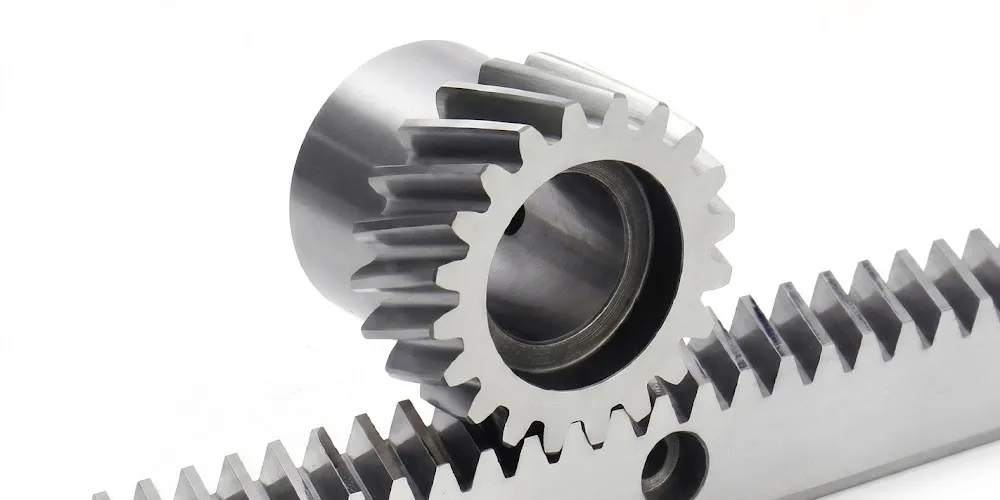
Pair the EP-S45C with a precision-matched Helical Gear pinion to complete a low-noise, high-load drive system. Our full helical gear range covers modules from M1 to M12 in multiple bore and key configurations, ensuring system compatibility and one-stop sourcing for linear axes. The matched helix angle guarantees correct axial thrust orientation and smooth, vibration-free mesh throughout the service life.
Rak Gigi Plastik
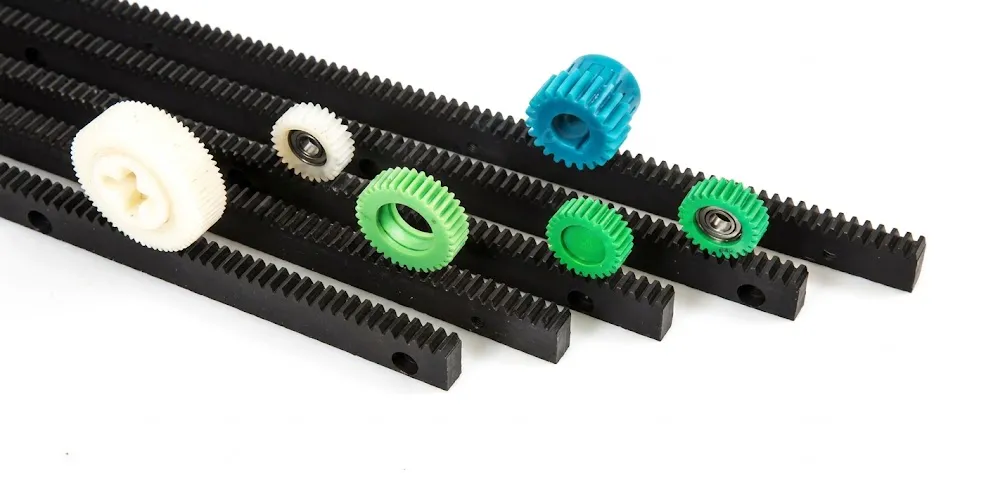
For applications where weight saving, corrosion immunity, or reduced noise at light loads are priorities, our plastic gear rack series offers a reliable alternative. Available in POM and nylon formulations, these racks are dimensionally interchangeable with our steel series for quick substitution during prototyping. They can also operate without lubrication in food-processing, cleanroom, or medical-equipment environments where oil contamination is unacceptable.
About Our Factory
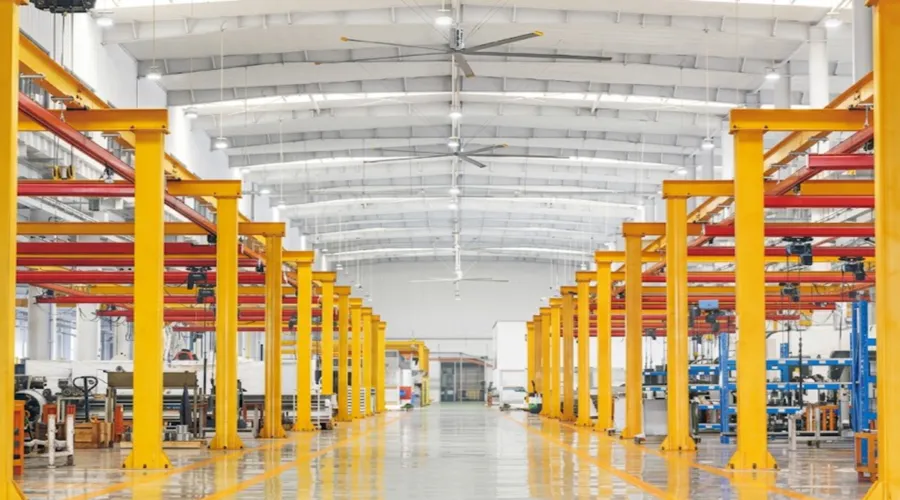
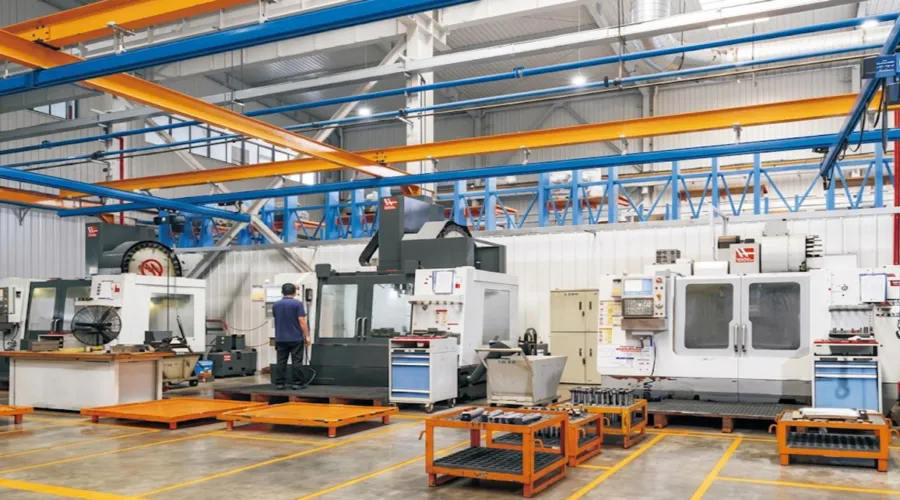
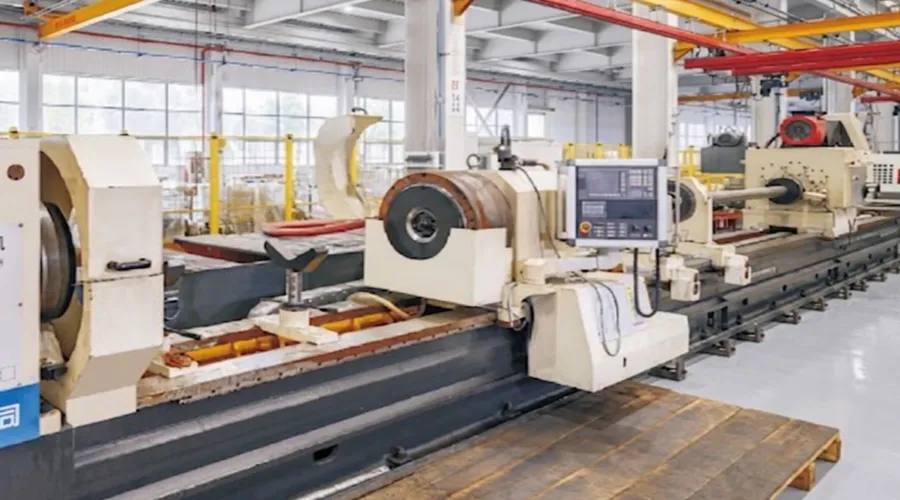
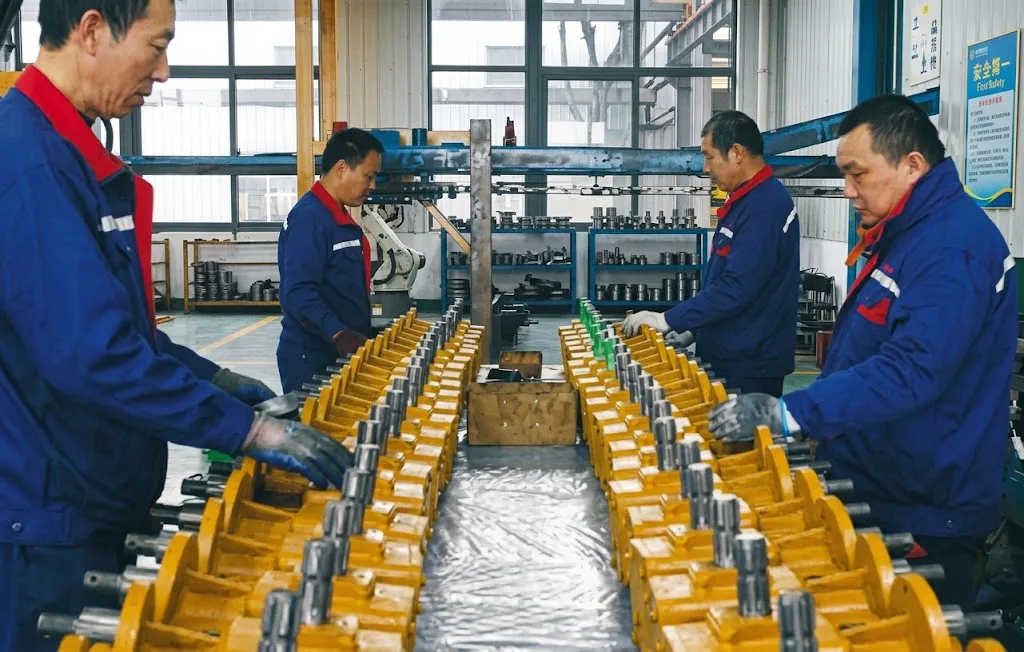
With over a decade of hands-on experience in mechanical power transmission manufacturing, our team has spent more than ten years engineering and producing drive components that hold up in the world's most demanding industrial environments. Our ISO 9001:2015 certified facility produces a comprehensive range of mechanical products: agricultural gearboxes, worm gear reducers, planetary gear drives, power take-off shafts, hydraulic cylinders, gears, sprockets, worm gears, pulleys, shafts, and both standard and custom mechanical assemblies.
Every product — from a small gear rack for a benchtop instrument to a large-module custom gear rack for an industrial portal crane — passes through the same quality-controlled process flow. Castings are sourced in ductile iron, grey cast iron, cast steel, precision investment-cast steel, and cast aluminium depending on application requirements. Our in-house machining centre capabilities cover turning, milling, grinding, hobbing, and heat treatment, which is how we maintain short lead times without compromising the dimensional tolerances our customers specify.
Bengkel
Pertanyaan yang Sering Diajukan
Editor: PXY