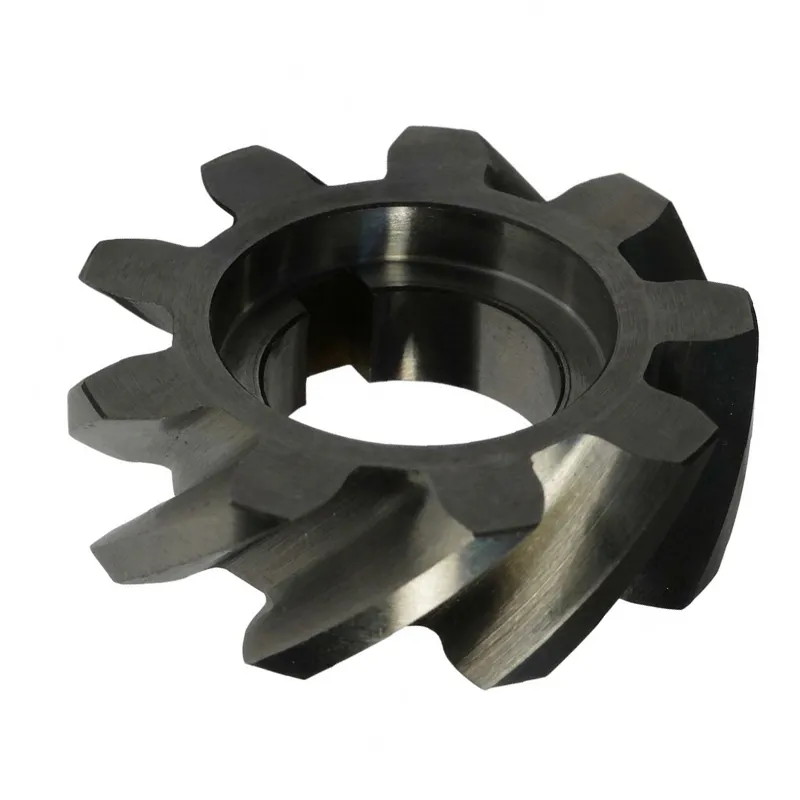
EP-Beverage Packing Machinery Helical Gear — High-Precision Helical Gear for Beverage and Food Packaging Drives
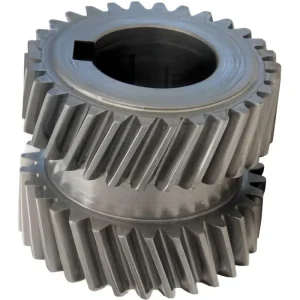
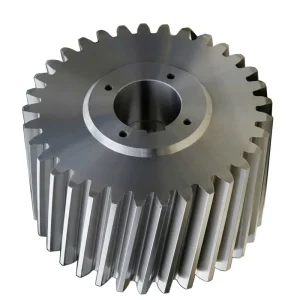
O EP-İçecek Paketleme Makineleri Helisel Dişli is a high-performance transmission component engineered for demanding packaging applications. Manufactured from 20CrNiMoA steel via forging, carburizing, and tooth grinding, it ensures exceptional durability and wear resistance. This left-handed gear features a normal module of 3.35, 9 teeth, a 15° pressure angle, and a steep 45° helix angle, meeting AGMA Class 8 standards. Capable of handling large diameters up to 2500 mm and face widths up to 1480 mm, it supports high-precision grinding (Ra 0.6) for smooth, quiet operation. Ideal for high-speed beverage filling lines and rotary packaging systems requiring reliable torque transmission and precise synchronization.
EP-Beverage Packing Machinery Helical Gear — High-Precision Helical Gear for Beverage and Food Packaging Drives
The EP-Beverage Packing Machinery Helical Gear is purpose-engineered for the demanding transmission environments found inside bottling lines, can-filling equipment, labelling carousels, and multi-lane packaging conveyors. Every aspect of this gear's specification — from the choice of 20CrNiMoA alloy steel to the 45° helix angle and AGMA Class 8 quality rating — reflects the operating realities of high-speed, continuous-duty packaging machinery where noise levels, vibration, and unplanned downtime directly affect production output. This is not a general-purpose off-the-shelf helical gear; it is a component that has been designed from the outset for a specific family of drives.
What Is the EP-Beverage Packing Machinery Helical Gear?
Beverage packaging machinery represents one of the more challenging gear application categories in the industrial world. A typical bottling or canning line runs continuously for 16 to 24 hours per day, cycling through millions of rotations annually. The helical gear sets embedded in these drives must deliver consistent velocity ratio and low transmission error across the entire production window, because even a minor variation in output speed — the kind generated by a worn or poorly-finished gear — will cause product mis-registration, label skew, or fill-level inconsistency that triggers line shutdown and waste.
The EP-Beverage Packing Machinery Helical Gear addresses these requirements through a combination of material selection, a precisely defined helical tooth geometry, and a multi-stage manufacturing process that includes forging, carburising, line cutting, and tooth grinding. The involute tooth form — the standard for modern industrial helical gears — ensures a theoretically perfect conjugate action between the mating helical gear pair. The 45° helix angle (β = 45°) is substantially higher than the 20°–25° angles commonly seen in general-purpose helical gear sets, and this is intentional: a higher helix angle dramatically increases the overlap contact ratio, spreading transmitted load across more tooth flanks simultaneously and producing the near-silent operation that beverage OEMs and line integrators require.
The gear is specified as Mn = 3.35, Z = 9, α = 15°, β = 45°, left-handed — a combination that positions it as a compact, high-contact-ratio component suited to input stages in compact gearheads and drive modules fitted to filling carousels, cap-torqueing heads, and indexing platforms. Understanding what a helical gear is used for in this context means recognising that the helical tooth geometry is not just about efficiency — it is the primary acoustic and dynamic performance differentiator in machinery that runs in noise-controlled production environments.
Five Key Advantages of This Helical Gear for Packaging Applications
AGMA Class 8 Quality — Verified Accuracy
AGMA Class 8 is a recognised benchmark for precision industrial gearing. At this quality level, tooth-to-tooth composite error and total composite error are controlled to values tight enough to support high-speed, low-noise operation in filling line drives. This is the accuracy level that separates gears suitable for packaging machinery from commodity components used in general conveying applications.
45° Helix Angle — Maximum Overlap Contact Ratio
The β = 45° helix angle provides the highest practical overlap contact ratio for a spur-type parallel shaft arrangement. With more tooth area continuously engaged, the instantaneous load per tooth is reduced and the meshing force variation — the root cause of gear whine — is minimised. This makes the EP-Beverage series one of the quietest helical gear options available for compact packaging gearheads.
20CrNiMoA Alloy Steel — Strength and Fatigue Resistance
20CrNiMoA is an alloy structural steel with excellent carburising response. After the carburising and tooth-grinding sequence, the tooth surface achieves high hardness while the core retains good toughness — a combination that resists both pitting fatigue and tooth root bending failure. For a gear running millions of cycles per year in a continuous packaging line, this material choice directly translates to longer overhaul intervals.
Tooth Grinding to Ra 0.6 µm — Smooth, Lubrication-Retentive Surface
The final tooth-grinding operation brings the surface finish to Ra 0.6 µm — the threshold at which elastohydrodynamic lubrication film formation is reliable under typical gear oil viscosities. A smooth, accurately-formed tooth surface retains the oil film more consistently across the meshing cycle, reducing metal-to-metal contact and the associated thermal generation that degrades grease in sealed gearheads.
Compact Module 3.35 Profile — High Torque in a Small Envelope
With only 9 teeth (Z = 9) at module 3.35, this gear transmits a high torque-per-tooth load in a physically small pitch diameter, enabling compact gearhead designs that fit within the tight spatial constraints of multi-lane filling machines and rotary carousel heads. The low tooth count combined with the high helix angle is a design approach used specifically to maximise torque density in packaging drive modules.
How Does This Helical Gear Work in a Beverage Packaging Drive?
The operating principle of a helical gear begins with the involute tooth profile — a mathematically defined curve that guarantees conjugate action between a gear pair regardless of small centre-distance variations. As the driving gear rotates, each tooth enters mesh at the leading edge and exits at the trailing edge in a smooth, progressive sequence. Because the teeth are cut at the helix angle β = 45° to the gear axis, the line of contact sweeps diagonally across the tooth face rather than engaging the full face width simultaneously as a spur gear would. This diagonal engagement is what creates the overlap — multiple tooth pairs share the load at every instant in the rotation cycle.
In a beverage line filling carousel or indexing drive, this overlap is essential. The output shaft must maintain a near-constant angular velocity even as the load fluctuates during product handoff events. A helical gear set with a high overlap contact ratio produces far less velocity ripple (transmission error) than a spur gear under the same conditions, which is why how a helical gear works in precision packaging drives differs meaningfully from how it works in a simple conveyor drive. The 45° helix angle here gives an overlap ratio substantially above 1.0 — meaning at least one full tooth pair is always in mesh, eliminating the brief load-gap that occurs in low-overlap gearing.
The 15° pressure angle (α = 15°) — lower than the more common 20° used in general industrial helical gears — reduces the separating force between meshing teeth. This lowers the radial bearing load on the shafts, extending bearing service life in sealed gearhead units where bearing replacement requires line stoppage and re-alignment. The left-hand helix direction generates an axial thrust force directed toward the bearing end of the shaft, which must be accounted for in the bearing arrangement design, but which also provides a self-centering effect in some gearhead configurations.
Material, Manufacturing Process & Surface Quality
The material specified for the EP-Beverage Packing Machinery Helical Gear — 20CrNiMoA — is a chromium-nickel-molybdenum alloy case-hardening steel widely used in precision gear manufacturing across Europe, Asia-Pacific, and North America. Its composition provides a favourable combination of core toughness and surface hardenability. The nickel content contributes to core impact toughness, reducing the risk of sudden tooth root fracture under shock loading. The molybdenum content refines the grain structure during heat treatment and improves hardenability uniformity across the tooth cross-section — particularly important for gears with small tooth counts like this Z = 9 component where each tooth carries a proportionally higher peak load.
The manufacturing sequence — forging, carburising, line cutting, tooth grinding — is one of the more involved production routes in gear manufacturing, and it is chosen here for good reason. Forging aligns the grain flow with the tooth geometry, improving fatigue strength compared to a gear cut from bar stock. Carburising introduces carbon into the surface layer to a controlled case depth before quenching, producing the hard surface with tough core that is the metallurgical hallmark of a well-engineered power transmission helical gear. Line cutting establishes the pre-grind tooth geometry. Tooth grinding is the final operation, correcting all accumulated errors and achieving the Ra 0.6 µm finish specified for this part.
The result is a gear whose tooth flanks are both geometrically accurate and metallurgically robust — a combination that is not achievable through hobbing alone and which distinguishes this component from the lower-cost hobbed helical gear options commonly available from general-purpose helical gear suppliers.
Technical Specifications — EP-Beverage Packing Machinery Helical Gear
Gear Basic Data
| Parametre | Değer |
|---|---|
| Gear Tooth Shape | Involute |
| Dişli Malzemesi | 20CrNiMoA alloy structural steel |
| Manufacturing Process | Forging → Carburising → Line Cutting → Tooth Grinding |
| Pressure Angle (α) | 15° |
| Quality Level | AGMA Class 8 |
| Dişli Tipi | Mn = 3.35, Z = 9, α = 15°, β = 45°, Left-Handed |
Manufacturing Capabilities — Internal Gears & Internal Splines
| Parametre | Milling | Shaping | Tooth Grinding |
|---|---|---|---|
| Maximum O.D. | 2500 mm | 2500 mm | 2500 mm |
| Minimum I.D. | 650 mm | 50 mm | 100 mm |
| Maximum Face Width | 500 mm | 500 mm | 500 mm |
| Maximum Diametral Pitch | D.P. 1 | D.P. 1 | DP 0.5 |
| Maximum Module | 26 mm | 26 mm | 45 mm |
| AGMA / DIN Level | DIN Class 8 | DIN Class 8 | DIN Class 4 |
| Tooth Surface Finishing | Ra 3.2 | Ra 3.2 | Ra 0.6 |
| Maximum Helix Angle | ±22.5° | ±22.5° | ±45° |
Manufacturing Capabilities — External Gears & External Splines
| Parametre | Hobbing | Milling | Tooth Grinding |
|---|---|---|---|
| Maximum O.D. | 1250 mm | 2500 mm | 2500 mm |
| Minimum O.D. | 20 mm | 200 mm | 20 mm |
| Maximum Face Width | 500 mm | 500 mm | 1480 mm |
| Maximum Diametral Pitch | D.P. 1 | D.P. 1 | DP 0.5 |
| Maximum Module | 26 mm | 26 mm | 45 mm |
| AGMA / DIN Level | DIN Class 8 | DIN Class 8 | DIN Class 4 |
| Tooth Surface Finishing | Ra 3.2 | Ra 3.2 | Ra 0.6 |
| Maximum Helix Angle | ±45° | ±45° | ±45° |
Helical Gear Types in Packaging Machinery — Context and Comparison
Packaging machinery designers and procurement engineers regularly encounter the question of which helical gear type is most appropriate for a given drive position. The answer depends on speed, load, noise constraints, and spatial envelope. In beverage bottling equipment specifically, the gearing found in carousel drives, cap-tightening heads, labelling turrets, and transfer star-wheels all have distinct requirements that influence module, helix angle, material, and quality grade selection.
When comparing helical gear vs spur gear performance in these applications, the case for helical geometry is well established. A helical spur gear running at typical filling carousel speeds of 600–1,200 rpm generates substantially less audible noise and measurably lower dynamic bearing loads than a spur gear of equivalent module and face width. The higher overlap contact ratio of the helical design is the mechanical explanation: load transfer is distributed over a larger effective tooth area at every point in the mesh cycle. The question of are helical gears stronger than straight cut gears can be answered affirmatively for bending fatigue in most practical configurations — the gradual engagement reduces the impact load that initiates fatigue crack growth at the tooth root fillet.
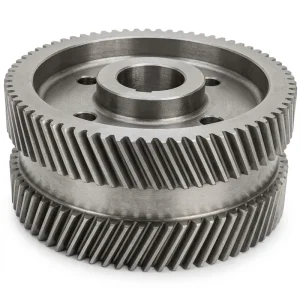
Among the different helical gear types relevant to packaging: standard parallel-shaft helical gears (as in this EP-Beverage series), double helical gear arrangements for high-power stages where axial thrust elimination is required, and crossed helical gear stages used occasionally in motion transfer between non-parallel shafts in indexing systems. The EP-Beverage Packing Machinery Helical Gear falls squarely in the first category — a precision parallel-shaft external helical gear designed for integration into compact gearheads and servo drives that power the rotating assemblies of modern high-speed packaging lines globally, from German OEM equipment to Japanese-designed lines operating in Southeast Asian and Australian beverage plants.
Application Scenarios — Where This Helical Gear Performs
The EP-Beverage Packing Machinery Helical Gear is built for the specific performance conditions of beverage and food packaging equipment. The following scenarios represent the most common deployment environments where its AGMA Class 8 accuracy, high helix angle, and carburised tooth surface deliver consistent returns on specification investment.
Rotary Filling Carousels
The central carousel drive in a rotary bottle or can filling machine requires a helical gear set that maintains consistent angular velocity under the fluctuating torque imposed as each filling head cycles through liquid metering. The high overlap contact ratio of the β = 45° helical gear directly addresses this requirement by smoothing out the torque pulsation that would otherwise cause fill-level variation across a high-speed multi-head carousel.
Cap Torqueing & Capping Heads
Capping head gearboxes experience repeated high-torque impulses as each cap is spun down to its specified torque value. The forged 20CrNiMoA tooth body provides the impact toughness needed to survive these torque spikes without tooth root cracking, while the carburised surface resists the accelerated pitting that affects softer gears in this duty cycle. This helical gear shaft assembly is a natural fit for servo-driven torque-controlled capping heads used across European and North American beverage lines.
Labelling & Sleeve-Application Turrets
Labelling machines require smooth, predictable rotation of the label transfer drum and container grippers. Any velocity irregularity in the driving helical gear set produces label misregistration — a visible defect that triggers rejection. The AGMA Class 8 quality level of the EP-Beverage gear ensures the transmission error remains within the narrow band required for consistent label placement at production speeds above 40,000 containers per hour.
Transfer Star-Wheels & Conveyor Handoff Points
The star-wheel drives that transfer containers between machine sections — from filler to capper, capper to labeller — rely on helical gear pinion sets for the precise angular indexing that prevents container tipping and jamming. A misaligned or worn helical gear pinion at this point in the line causes cascading container handling failures. The carburised tooth surface of the EP-Beverage series provides the wear resistance needed to maintain indexing accuracy across a full production shift without adjustment.
Compact Servo Gearheads in Multi-Format Packaging Lines
Modern packaging lines designed for rapid format changeover use servo-driven axes with compact in-line helical gear reducers. The module 3.35, Z = 9 geometry of this gear provides the tooth strength and compact pitch diameter combination needed to build small-diameter gearhead stages that fit within the servo motor flange envelope while delivering the continuous torque rating needed for sustained high-speed operation. These gearheads appear in Australian, South Korean, and Dutch packaging OEM equipment destined for global beverage and pharmaceutical markets.
Related Products — One-Stop Helical Drive System Supply
A beverage packaging drive is a system — not a collection of isolated components. We supply the full range of helical gear and linear motion components needed to complete the drivetrain, so procurement teams can consolidate sourcing and eliminate the tolerance mismatches that arise from mixing components from multiple helical gear suppliers.
Helical Gear — Complete Series
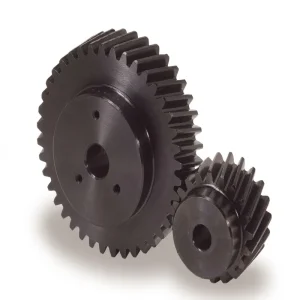
Our broader helical gear series spans module 0.5 through module 6, covering both right-hand and left-hand configurations across a full range of tooth counts. Whether you need a matched helical gearset for a new gearhead design or a replacement helical pinion gear for an existing drive, the series is engineered for full interchangeability within module families. All quality grades from hobbed general purpose through ground AGMA Class 8 are available.
Gear Rack — Helical Rack and Pinion Systems
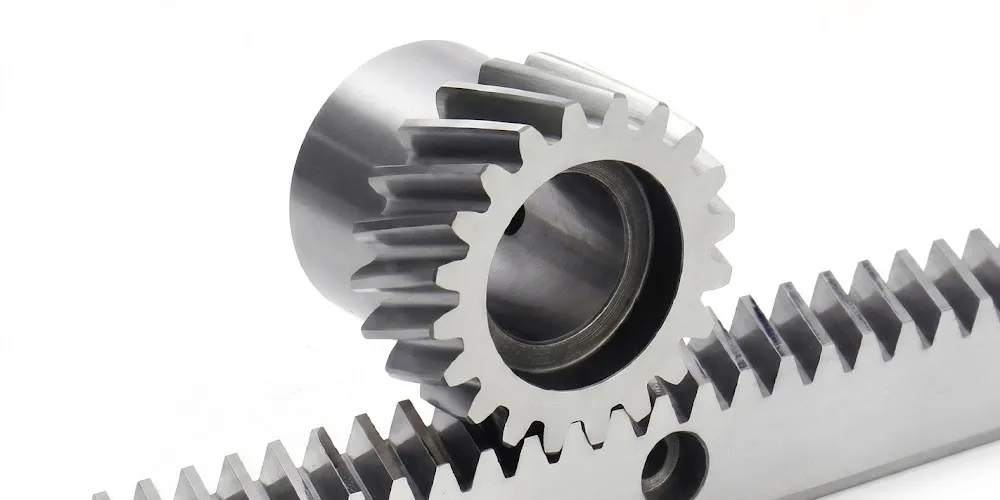
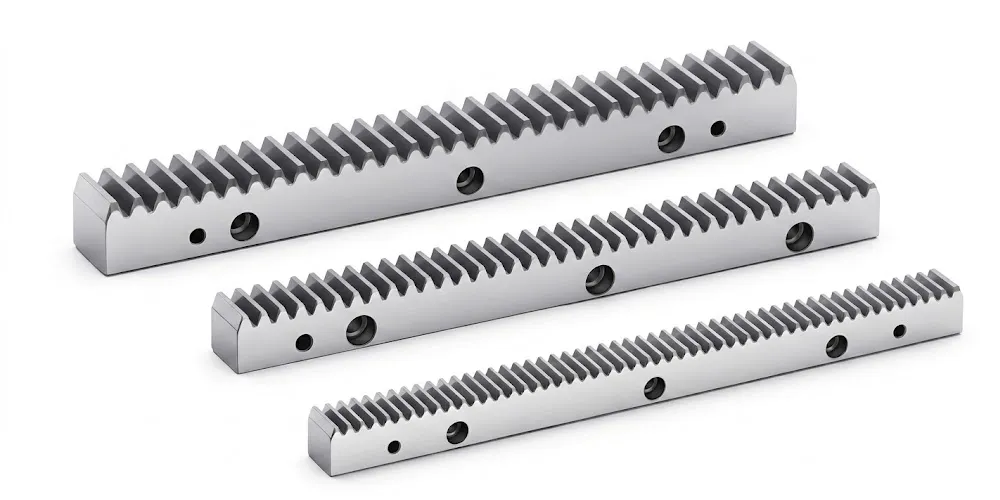
For the linear motion axes in packaging machinery — format adjustment slides, height-adjustment columns, infeed guide positioning systems — our helical rack and pinion range provides smooth, low-noise linear drive that is compatible with our helical gear pinion sets. The helical rack tooth geometry mirrors the helix angle of the mating helical gear, ensuring full face contact and the quiet engagement characteristic that is the primary reason packaging OEMs specify helical geometry over spur rack and pinion.
Üretim Operasyonumuz Hakkında
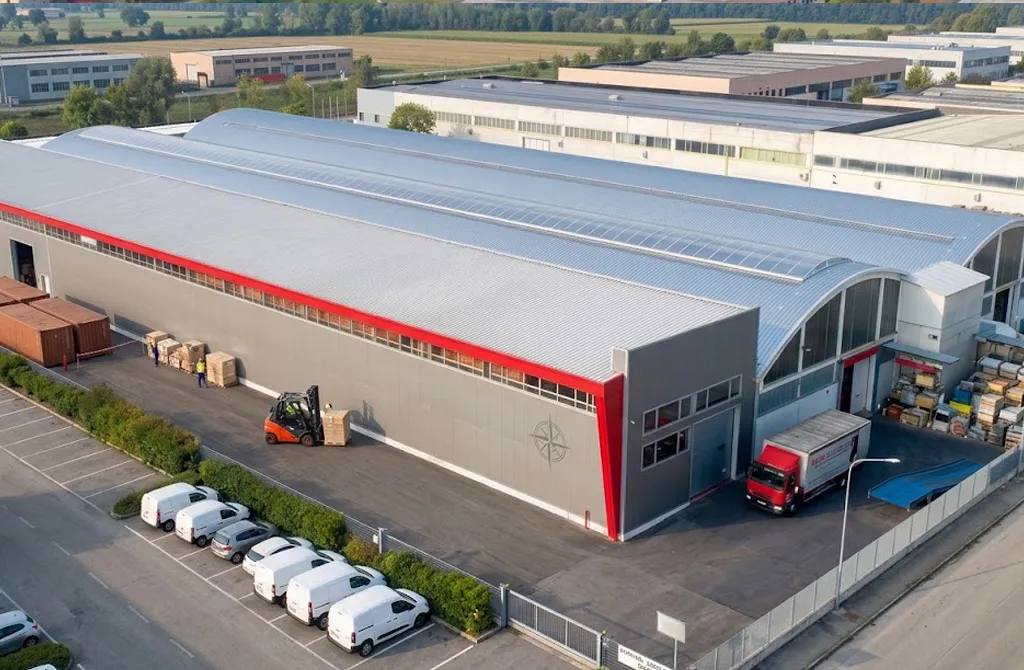
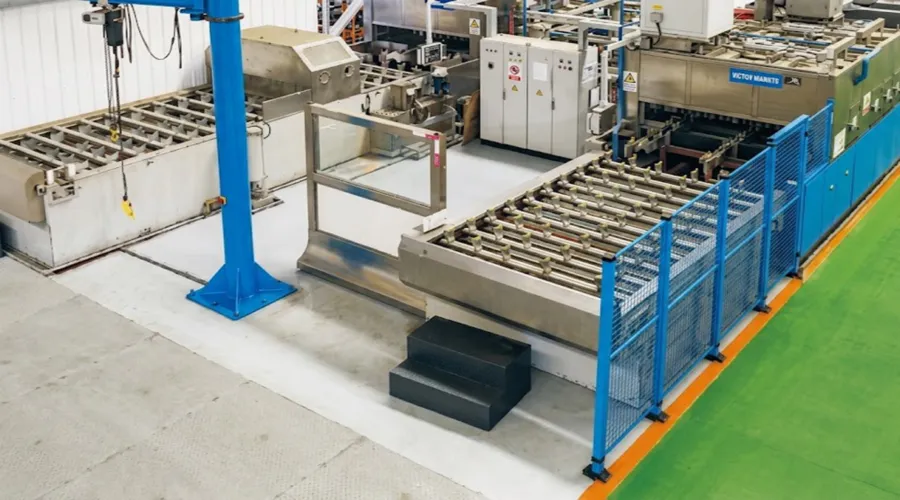
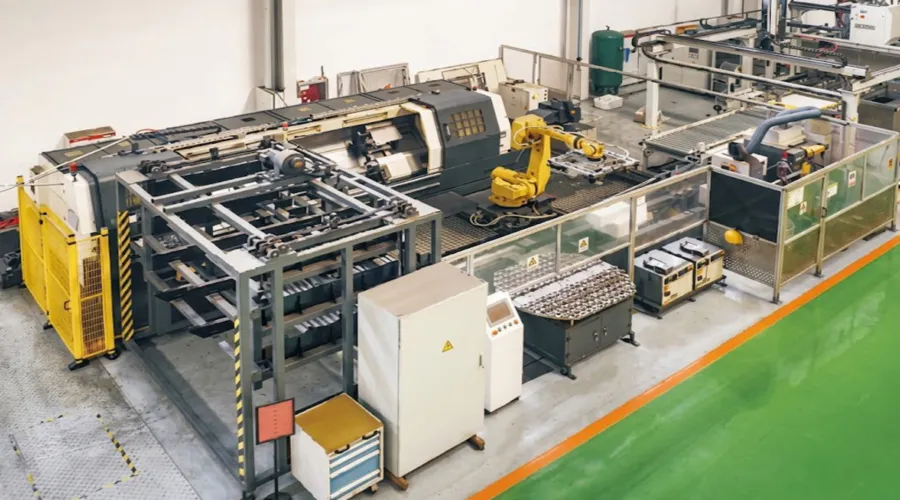
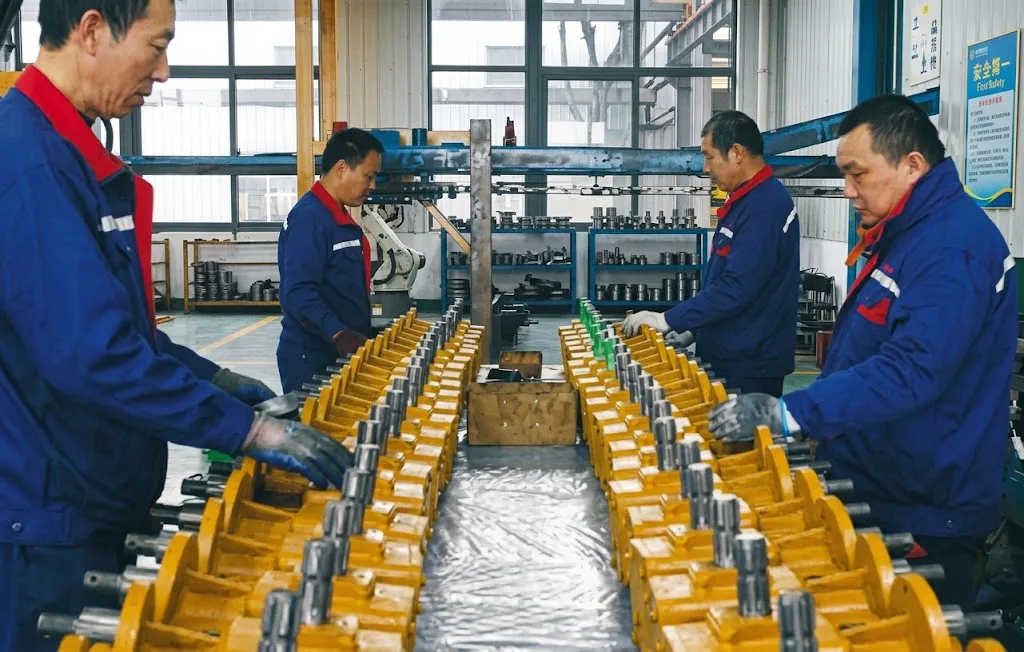
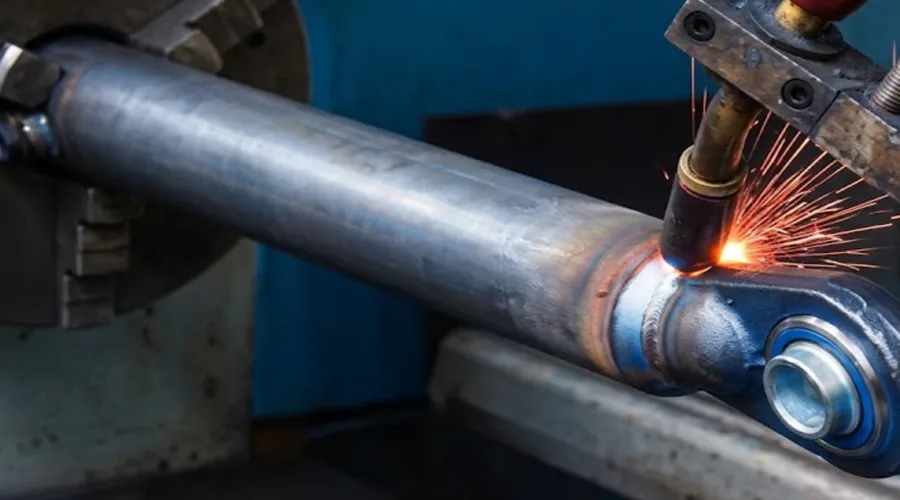
With more than ten years of hands-on experience in mechanical power transmission manufacturing, our production facility combines in-house engineering design, precision forging and machining, carburising heat treatment, gear grinding, and dimensional inspection — all under one roof. Our product range spans agricultural gearboxes, worm gear reducers, planetary gear drives, power take-off shafts, hydraulic cylinders, gears, chains, and motors.
The entire operation is ISO 9001:2015 certified, covering every stage from raw material traceability through to final inspection and despatch documentation. We manufacture a broad portfolio of industrial and agricultural gearboxes and mechanical assemblies using ductile iron, cast iron, cast steel, precision cast steel, and cast aluminium, alongside gears, sprockets, worm gears, pulleys, worms, shafts, and custom non-standard mechanical parts produced to customer-supplied drawings or reverse-engineered samples.
Our international sales and engineering support team works regularly with machine builders, line integrators, and MRO procurement teams across Australia, the United Kingdom, the Netherlands, Canada, South Korea, Brazil, Colombia, and the wider North American market — providing technical drawings, material certifications, and customs documentation as required.
Çalıştay
Sıkça Sorulan Sorular
Editör: PXY