
General Buyer Guides & Comparison
A technical reference for engineers and plant maintenance teams selecting the correct gear oil viscosity grade for tek hızlı redüktör units in service — covering the physics of viscosity-temperature behaviour, the specific chemistry requirements of worm gear bronze wheel contacts, and the operating conditions that shift the standard ISO VG 220 recommendation up or down the viscosity ladder.
Why Viscosity Selection Is the Most Consequential Lubrication Decision for a Worm Gear Reducer
Of all the lubricant properties that affect service life in a tek hızlı redüktör, viscosity at operating temperature is the single parameter with the largest influence on gear mesh film thickness — and film thickness determines whether the worm shaft thread and worm wheel tooth surfaces are separated by a continuous hydrodynamic film or intermittently in metal-to-metal contact. A viscosity grade that is too low for the operating temperature allows the film to thin below the combined surface roughness of the two contacting surfaces, producing micro-asperity contact that generates bronze wear debris and progressive tooth-face pitting. A viscosity grade that is too high for a cold start generates excessive churning losses in the oil sump, raises operating temperature above the thermal limit, and prevents the oil from being carried into the mesh contact zone quickly enough during the first minutes of operation.
The standard viscosity recommendation for worm gear tek hızlı dişli redüktörü units — ISO VG 220 — is calibrated for an operating oil temperature of approximately 50–70°C at an ambient temperature around 20°C. This standard applies to most indoor industrial drives in temperate climates: conveyor lines in the UK, packaging machinery in Canada, and agitator drives in the Netherlands. Applications outside this temperature envelope require adjustment, and the operating temperature of a running sonsuz vida hız düşürücü is determined by the combination of ambient temperature, reduction ratio (which controls heat generation through efficiency losses), duty cycle, and housing surface area — not by the ambient temperature alone. Understanding how these factors interact is the basis for selecting the correct viscosity grade before specifying a lubricant for any specific installation.
How Operating Temperature Controls Effective Viscosity at the Gear Mesh
Lubricant viscosity is not a fixed number — it changes continuously with temperature, following a relationship described by the viscosity index (VI). A high-VI oil maintains more of its nominal viscosity as temperature rises than a low-VI oil of the same nominal grade. ISO VG 220 mineral worm gear oil with a VI of 90–100 will have a kinematic viscosity at 40°C of approximately 198–242 cSt (the nominal grade bounds) and approximately 19–22 cSt at 100°C. The working viscosity at the gear contact zone — which operates at the local oil temperature, which is always higher than the bulk oil temperature measured at the sump — is somewhere between these extremes and is the figure that actually controls film thickness.
The practical consequence for a tek kademeli hız düşürücü is that selecting a viscosity grade by looking at the ISO VG number alone tells only half the story. A worm sonsuz dişli redüktörü operating in a warm climate — outdoor agricultural drives in Brazil or mining equipment in Australia where ambient temperatures regularly exceed 35–40°C — reaches a sump temperature significantly above the 50–70°C range the ISO VG 220 grade was sized for. At sump temperatures of 80°C and above, the working viscosity of a mineral ISO VG 220 oil falls below the minimum needed to maintain adequate film thickness at the bronze-steel worm mesh contact. Moving up one viscosity grade to ISO VG 320 restores the working film thickness at the elevated temperature while remaining within an acceptable viscosity range for cold-start conditions in warm climates.
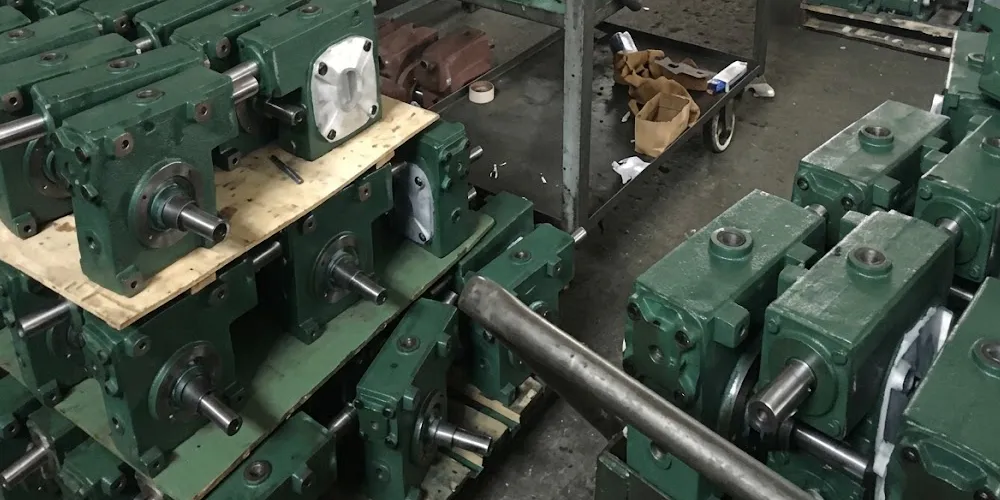
Viscosity Grade Selection by Operating Temperature and Ambient Conditions
The table below provides viscosity grade recommendations for sonsuz dişli hız düşürücüler across the range of ambient and operating conditions encountered in industrial and agricultural applications globally. The governing temperature used for viscosity selection is the estimated steady-state sump oil temperature — not the ambient air temperature. Sump temperature can be estimated as ambient temperature plus the temperature rise generated by the gearbox’s heat output at the operating point. For a tek hızlı sonsuz dişli redüktör at ratio 1/40 running at 1.5 kW input and 75% efficiency, the heat output is 0.375 kW; for a compact frame-60 housing, this generates a sump temperature rise of approximately 20–30°C above ambient. In a 30°C ambient, the estimated sump temperature is therefore 50–60°C, which places the unit comfortably within the standard ISO VG 220 range.
| Ambient Temp. Range | Estimated Sump Temp. | Mineral Oil Grade | Synthetic Oil Grade | Typical Regions / Applications |
|---|---|---|---|---|
| Below −10°C | 15–35°C (low-load start) | ISO VG 100 | ISO VG 150 PAO | Cold-climate outdoor drives, northern Canada, Scandinavia |
| −10°C to +10°C | 30–50°C | ISO VG 150 | ISO VG 220 PAO | Cool indoor environments, unheated facilities, UK/Netherlands winter |
| +10°C to +30°C | 40–70°C | ISO VG 220 | ISO VG 220 PAO or PG | Standard indoor industrial use, most temperate regions — standard recommendation |
| +30°C to +45°C | 60–85°C | ISO VG 320 | ISO VG 320 PAO | Warm outdoor drives, Australia, Brazil, Colombia, South Korea summer |
| Above +45°C | 80–100°C+ | ISO VG 460 or auxiliary cooling | ISO VG 320–460 PG + cooling fan | High-ratio continuous-duty drives in tropical climates, mining operations |
Sump temperature estimates assume moderate-load continuous duty at standard reduction ratios. High-ratio units (1/40–1/60) generate more heat per kW input and may require one grade higher than shown for the same ambient condition.
Worm Gear Chemistry: Why Standard Industrial Gear Oil Is the Wrong Choice
The most consequential lubricant selection error for a sonsuz dişli redüktörü is specifying a standard industrial gear oil — such as AGMA 5 or ISO VG 220 GL-4 gear oil intended for helical gearboxes — instead of a compounded worm gear oil. The difference is not viscosity grade; both products may carry the same ISO VG 220 designation. The difference is additive chemistry. Standard industrial gear oils use sulphur-phosphorus extreme-pressure additive packages, which function by reacting with the ferrous metal surfaces of gear tooth contacts under high-load conditions to form protective iron sulphide films. These same additive chemicals react with the zinc and tin in ZCuSn10Pb1 phosphor-bronze worm wheels, producing a corrosive attack on the bronze tooth surface that manifests as pitting and surface erosion on the worm wheel face — distinct from the sliding wear seen with correct lubricant but underoiled conditions.
A correctly formulated worm gear oil uses fatty acid-based lubricity additives — typically animal-fat derived or synthetic ester compounds — that provide boundary lubrication at the bronze-steel contact without the corrosive sulphur chemistry. These fatty acid compounds adsorb onto both the bronze worm wheel surface and the hardened steel worm shaft flank, reducing metal-to-metal contact friction during the mixed-lubrication regime that occurs at low sliding speeds near the pitch line. For a tek hızlı redüktör operating at the low peripheral speeds common in high-ratio worm drives, this fatty acid boundary film is the primary load-bearing mechanism at the mesh contact during heavy-load periods — making additive chemistry, not just viscosity, the critical selection parameter.
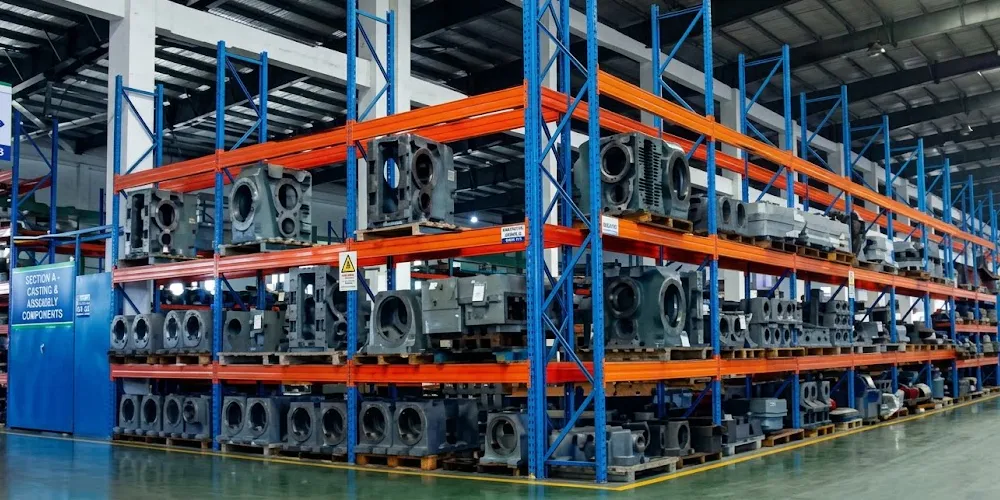
Manufacturing Structure & Material System — How Build Quality Affects Lubricant Requirements
The viscosity grade required to maintain adequate film thickness at a given operating temperature is not purely a function of the ambient conditions and duty cycle — it is also influenced by the surface finish quality of the worm shaft thread and worm wheel tooth face. A CNC thread-ground worm shaft with a surface roughness Ra below 0.4 µm generates a hydrodynamic oil film at lower viscosity than a hobbed shaft with Ra of 0.8–1.2 µm, because the smoother surface requires less oil film thickness to maintain the same film-to-roughness ratio. Understanding the material and manufacturing specification of a tek hızlı redüktör helps buyers interpret whether the nameplate viscosity recommendation already accounts for the specific surface quality of that product line, or whether they are applying a generic recommendation that may be conservative for precision-finished units or inadequate for commodity-finish units.
Housing — HT250 Cast Iron
The housing material and fin geometry determine the thermal equilibrium temperature at a given operating point. A well-finned HT250 grey cast iron housing dissipates heat more effectively than a smooth-wall casting of the same dimensions, lowering the steady-state sump temperature and allowing the standard ISO VG 220 grade to function at higher input power than a less-ventilated housing of the same frame size. When comparing viscosity recommendations across products from different sources, confirm whether the housing thermal performance is factored into the published recommendation.
Worm Shaft — 20CrMnTi, HRC 56–62
The hardness of the worm shaft thread flank — HRC 56–62 for carburised 20CrMnTi alloy steel — is significantly harder than the opposing bronze worm wheel. This hardness differential means the worm shaft surface is effectively incompressible at the contact zone, and the oil film must bear the full Hertzian contact stress without allowing the shaft surface to deform into the film gap. Higher shaft hardness supports the use of a slightly lower viscosity grade at the same contact load, because the non-deforming geometry is more predictable for film formation calculations.
Worm Wheel — ZCuSn10Pb1 Bronze
The 10% tin content of ZCuSn10Pb1 gives this alloy moderate hardness (HB 80–100) and good conformability. Under boundary-lubrication conditions — when the oil film has thinned below full hydrodynamic separation — the bronze surface deforms slightly to increase the contact area and reduce peak contact stress, a mechanism called elastic accommodation. This self-protecting behaviour partially compensates for an under-viscous oil film during short-duration transient events, but cannot sustain prolonged under-film conditions caused by a systemically incorrect viscosity grade for the operating temperature.
Seals — NBR / FKM Options
Seal material compatibility must be checked when switching from mineral to synthetic lubricants. Standard NBR (nitrile rubber) seals are compatible with mineral worm gear oils and PAO synthetics, but polyglycol-base synthetic oils can swell and degrade NBR elastomers, causing seal lip failure and oil leakage within weeks of the switch. FKM (fluoroelastomer) seals are compatible with all lubricant types and should be specified when polyglycol-base oils are required for their superior viscosity-temperature performance in very high-ambient-temperature applications.
Related Product
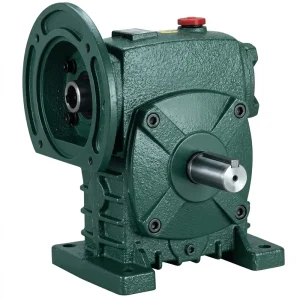
EP-WPDS 0,12 - 15 kW Giriş Gücü Tek Hızlı Redüktör
The EP-WPDS series covers an input power range from 0.12 kW through 15 kW — a span that encompasses both the low-heat-generation compact drives where ISO VG 150 or 220 mineral oil is fully adequate, and the higher-power continuous-duty configurations where sump temperature rises significantly above the standard 50–70°C envelope and viscosity grade selection becomes a more consequential decision. The broad input power range of this tek hızlı redüktör series makes it a practical reference product for understanding how input power affects heat generation and therefore the correct operating viscosity grade at any given ambient temperature.
How the Gear Reduction Ratio Changes the Required Viscosity Grade
O sonsuz dişli azaltma oranı affects required viscosity grade through two independent mechanisms. The first is heat generation: as ratio increases, worm gear mesh efficiency decreases — a 1/60 ratio unit converts approximately 25–30% of its input power to heat, while a 1/10 ratio unit loses only 10–15%. This means a high-ratio tek kademeli indirgeme sonsuz dişli redüktör operating at the same input power as a low-ratio unit of the same frame size runs significantly hotter. At the higher operating temperature, a lower effective viscosity results from the same oil grade, which may push the unit below its minimum required film thickness. Moving up one viscosity grade — from ISO VG 220 to ISO VG 320, for example — compensates for the higher operating temperature at high ratios.
The second mechanism is contact sliding speed. Higher worm gear ratios correspond to lower worm wheel peripheral speeds at the mesh contact, because the wheel turns more slowly per worm shaft revolution. At lower sliding speeds, the hydrodynamic film-forming capacity decreases — the mechanism that pumps oil into the contact zone operates less effectively at lower speed. This pushes the lubrication condition further into the boundary or mixed regime, where additive chemistry rather than hydrodynamic viscosity carries the load. For a tek hızlı redüktör at ratio 1/60 in the WP frame series, the combination of high heat generation and low sliding speed means the oil specification carries more engineering consequence than at ratio 1/10 in the same frame — both additive type and viscosity grade must be matched to the combined effect of high ratio and operating temperature.
Mineral vs. Synthetic Worm Gear Oil: When the Upgrade Pays Off
Synthetic worm gear oils — particularly PAO-base and polyglycol-base (PG) formulations — offer a measurably flatter viscosity-temperature curve than mineral equivalents of the same ISO VG grade. A synthetic ISO VG 220 PAO oil retains approximately 24–26 cSt at 100°C compared with 18–20 cSt for a mineral grade of the same designation, meaning the synthetic oil maintains a thicker film at the high-temperature end of the operating range while also pouring more freely at cold ambient temperatures. This characteristic directly benefits sonsuz dişli hız düşürücüler in applications with wide ambient temperature swings — outdoor drives in South Korea, where summer ambient may exceed 35°C and winter ambient drops below 0°C, or agricultural machinery in Colombia where daytime and night-time temperatures differ by 20°C or more.
The polyglycol-base synthetic offers a further advantage specific to worm gear bronze contacts: PG-base lubricants exhibit lower metal-to-metal friction at the worm mesh contact than either mineral or PAO oils at equivalent viscosity grades, which reduces the gear mesh heat generation rate and lowers steady-state sump temperature. A sonsuz dişli redüktör şanzımanı running on ISO VG 220 PG oil at the same load and ratio as one filled with mineral ISO VG 220 may run 5–10°C cooler — which in turn allows the standard 2,000-hour oil-change interval to be extended to 3,000–4,000 hours. This extended service interval offsets the higher product cost of synthetic oil over a typical 3–5 year gearbox service cycle in most industrial applications. The principal restriction on PG use is seal material: NBR seals must be replaced with FKM seals before switching, and PG oils must not be mixed with mineral or PAO oils under any circumstances.
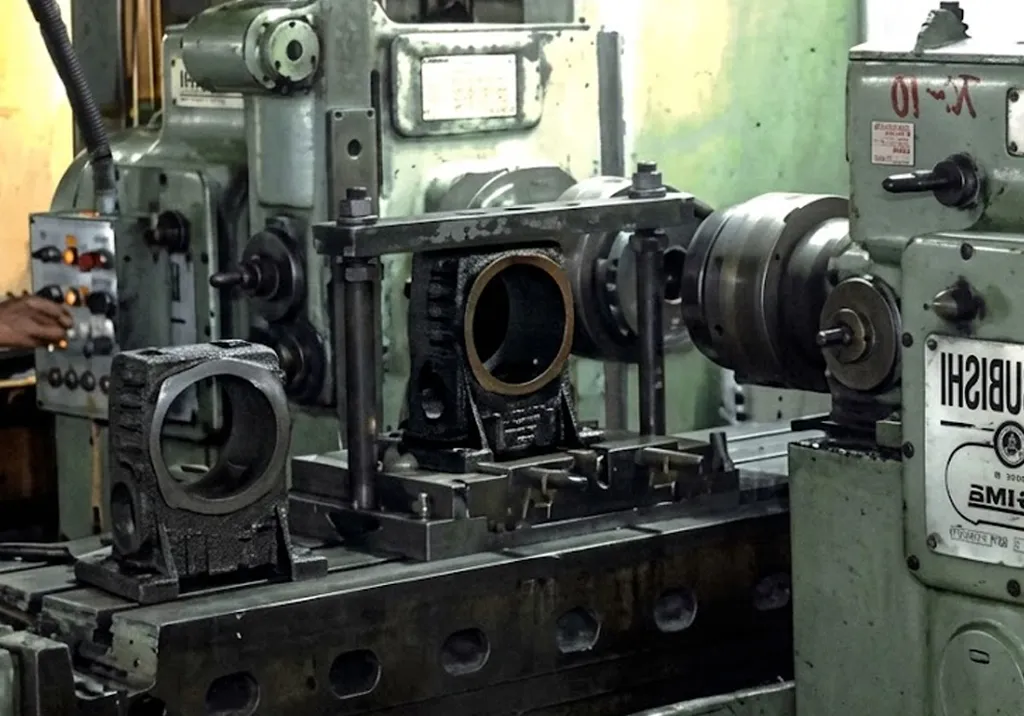
Oil Fill Level and Mounting Position: The Variables That Interact With Viscosity
Viscosity grade selection assumes that the oil is filled to the correct level for the installation’s mounting position. An under-filled housing runs hotter because the worm wheel carries less oil into the mesh per revolution, reducing both cooling and film thickness simultaneously — which can make a correctly-graded oil behave as if it were under-viscous. An over-filled housing increases churning losses as the worm wheel ploughs through excess oil, raising temperature and further degrading effective viscosity. The EP-WPZ series specifies oil capacities ranging from 0.4 litres at size 50 through 5.2 litres at size 135, with the fill level mark on the housing face keyed to the declared mounting position. When changing mounting position, the fill level must be re-established against the mark for the new orientation — the volume that fills the housing to the correct level for a horizontal installation differs from the volume required for a vertical shaft-down installation of the same unit.
İçin tek hızlı redüktör units operating in very high ambient temperatures where sump temperature approaches or exceeds 85°C on mineral oil, adding auxiliary cooling — a housing-mounted fan kit or a compact oil cooler in a recirculation loop — reduces the steady-state sump temperature by 15–25°C and allows the standard ISO VG 220 mineral oil specification to remain valid instead of requiring an upgrade to a higher-viscosity or synthetic grade. The fan kit option, available for the larger WP frame sizes, draws cool ambient air over the housing fin surface and approximately doubles the natural convection cooling rate. For installations where noise or debris accumulation makes a fan impractical — indoor cleanroom environments in the Netherlands or enclosed mining machinery in Australia — the oil cooler recirculation approach achieves equivalent temperature reduction with no moving external components.
Compatible Products for Complete Drive Systems
O tek hızlı redüktör operates within a broader drivetrain that includes the motor input and the driven load coupling. Correctly matching all components from the same dimensionally verified platform reduces integration time and removes the risk of compatibility mismatches that lead to premature lubricant degradation through vibration, misalignment, or overload.
Elektrik Motorları
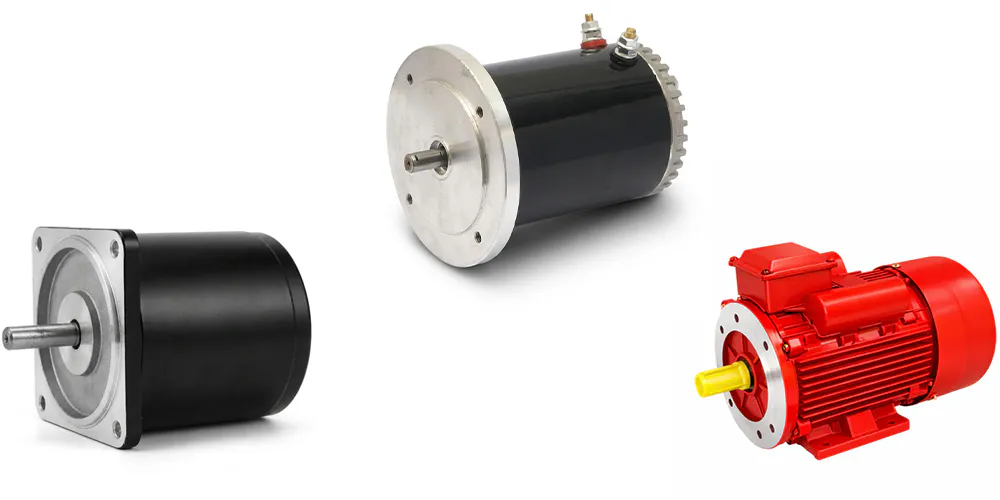
Correctly matched electric motors ensure the input power to the tek hızlı redüktör does not exceed the unit’s thermal rating — which, as described throughout this guide, is the primary determinant of steady-state sump temperature and therefore the required viscosity grade. A motor oversized for the gearbox thermal capacity raises operating temperature beyond the nameplate limit and accelerates lubricant degradation independently of which oil grade is selected.
Sonsuz Dişli Kutusu
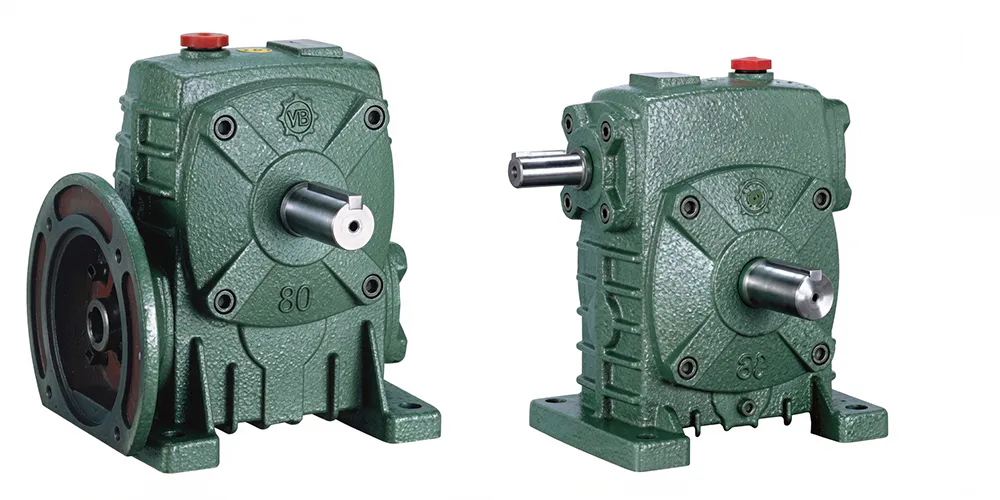
The full range of sonsuz dişli redüktör şanzımanı units from the same production platform shares the same lubricant specification principles as the single-stage WP-series units. For two-stage worm reducer applications requiring compound ratios above 1/60, the independent oil sumps per stage follow the same viscosity selection logic independently — each stage’s viscosity grade is determined by that stage’s operating temperature, which may differ between primary and secondary stages in the same two-stage housing.