
GENERAL BUYER GUIDE & COMPARISON
Selecionando um redutor de velocidade única involves more than matching a motor’s output shaft to a gearbox input bore. Seven specification parameters — from transmission ratio to thermal power rating — determine whether the unit will perform reliably in service or fail prematurely. This guide covers each one in the context of WP series worm gear architecture, with practical guidance for engineers and procurement teams worldwide.
Why Getting the Parameters Right Matters
UM redutor de velocidade única that is incorrectly specified — even by a small margin on a single parameter — can fail within a fraction of its intended service life, or simply fail to drive the connected machine correctly. Common specification errors include selecting a ratio that produces the wrong output RPM, choosing a frame size rated for the steady-state torque but not the peak torque, or specifying a mounting configuration that puts excessive overhung load on bearings not rated for it.
The seven parameters described in this guide cover the full specification decision path for a redutor de velocidade única in a worm gear configuration, from the first engineering calculation through to installation interface details. Each parameter is described with the physical reasoning behind it, so the redutor de velocidade única selection process is informed by understanding rather than catalog lookup alone. These principles apply directly to WP series redutores de velocidade de estágio único used in industrial applications across the USA, UK, Australia, Canada, and other global markets.
The 7 Key Selection Parameters
1. Transmission Ratio (Reduction Ratio)
The transmission ratio of a redutor de velocidade única is the number of input shaft revolutions required to produce one output shaft revolution. For WP series worm gear units, the standard single-stage ratio range is 10:1 to 60:1. Calculate the required ratio as: Ratio = Motor RPM / Required Output RPM. For a 1450 RPM motor driving a conveyor output shaft at 29 RPM, the required ratio is 50:1. Selecting the nearest available catalog ratio — typically 50:1 in the WP series — and accepting the resulting actual output RPM of (1450/50) = 29 RPM is correct practice. Avoid selecting a ratio that gives a calculated output RPM more than 5% above the required value, as this translates to belt or chain speed errors in conveyor applications. Also note that the efficiency of the worm gear stage varies with ratio: lower ratios (10:1–20:1) typically achieve 80–90% mechanical efficiency, while higher ratios (50:1–60:1) drop to 60–75%, which affects the thermal power rating discussed in parameter 5.
2. Rated Output Torque (with Service Factor)
The rated output torque of a redutor de velocidade única is the maximum continuous output torque the gearbox can sustain at rated speed without exceeding the worm wheel’s fatigue limit. When selecting a unit, the required rated torque is calculated as: T_required = (Motor Power × 9550 × Efficiency) / Output RPM, then multiplied by the appropriate service factor for the application shock class. For a moderate shock application at 16 hours per day, a service factor of 1.75 is typical. A redutor de engrenagem de velocidade única whose published rated output torque is less than this service-factor-adjusted value will experience premature worm wheel surface fatigue. This is the most consequential selection parameter — an undersized rated torque is the leading cause of early worm wheel failure in industrial redutor de velocidade da rosca sem-fim applications worldwide.
3. Input Power and Input Speed
The input power and input speed of the motor driving the redutor de velocidade única determine which frame size and ratio combination will function within its thermal limit. WP series redutores de velocidade única are rated for input powers from 0.12 kW to 15 kW depending on frame size and ratio — the EP-WPDS series covers this full range explicitly. Input speed matters because the worm shaft’s surface sliding velocity at the mesh — which drives friction heat generation — increases directly with input RPM. At 1450 RPM input (standard four-pole 50 Hz motor), a WP series unit operates within its design thermal envelope for most ratios; at 2900 RPM (two-pole motor), thermal management becomes the binding constraint on many frame sizes, and the thermal rating must be checked separately from the mechanical torque rating before finalizing the specification.
4. Mounting Configuration and Shaft Direction
The WP series offers five shaft direction configurations — A, B, C, D, and E — that govern the relative orientation of the input and output shaft axes. This parameter determines how the redutor de velocidade única fits into the machine frame, whether the motor mounts above, to the side, or in line with the driven equipment, and whether a foot-mounted or shaft-mounted configuration is used. The mounting type — foot-mounted configurations like the WPDS series, or hollow-bore shaft-mounted configurations like the WPKA and WPKS series — determines whether the gearbox carries its own load on a baseplate or transfers the housing load onto the driven shaft’s bearings as an overhung mass. In shaft-mounted applications, the overhung load must be verified against the driven shaft’s bearing ratings before the configuration is finalized. Procurement teams in Dutch greenhouse automation and Canadian agricultural equipment facilities frequently specify shaft direction B or C for horizontal motor mounting where ceiling space is limited.
5. Thermal Power Rating
Worm gear drives generate more friction heat per unit of transmitted power than helical or spur gear drives, because the worm-wheel mesh contact is a sliding rather than a rolling interface. The thermal power rating of a redutor de velocidade única is the maximum continuous input power the gearbox can dissipate as heat through its housing surface area and oil volume without the steady-state housing temperature exceeding a safe limit — typically 90–95°C surface temperature. This rating is independent of and often lower than the mechanical torque rating, particularly at higher ratios where efficiency is lower. For WP series units in ambient temperatures above 35°C — common in Australian mining or South American processing facilities — the effective thermal rating is further reduced, and either a larger frame or an external fan cooling kit must be selected. Oil capacity, which in the WPZ and WPKZ series ranges from 0.4 L to 5.2 L, acts as a thermal buffer that moderates temperature rise under intermittent load cycles.
6. Output Shaft Dimensions and Interface
The output shaft diameter, length, and keyway dimensions determine whether the redutor de velocidade única can connect to the driven machine shaft or coupling hub without custom machining. For foot-mounted WP series units, the output shaft is solid with a standard keyway; for hollow-bore shaft-mounted units like the WPKA (5 kg to 260 kg) and WPKS (4 kg to 365 kg), the bore diameter and keyway dimensions must match the driven shaft specification exactly. In retrofit applications — where a redutor de velocidade única is being replaced on an existing machine in UK manufacturing or Brazilian food processing facilities — measuring the driven shaft diameter and keyway dimensions before ordering is essential to avoid the delay and cost of returned units that do not dimensionally interchange with the existing drive layout. The output flange bolt pattern (ZxL specification in the WPWE series) must also be verified for direct-flange-mount applications.
7. Oil Capacity and Lubrication Requirements
The oil capacity of a redutor de velocidade única directly affects maintenance interval planning and thermal behavior. WP series units range from 0.4 L in compact 40-frame models to 5.2 L in the larger WPZ and WPKZ frames. A larger oil volume moderates operating temperature under cyclic load by absorbing and dissipating heat over a larger thermal mass, and extends the usable oil change interval relative to a smaller sump that reaches degradation temperature faster. The oil viscosity grade — standard recommendation ISO VG 220 for most ambient temperature ranges — must be confirmed against the actual operating temperature and duty cycle. For South Korean processing facilities with continuous three-shift operation, synthetic ISO VG 220 gear oil is recommended because its oxidation stability allows extended oil change intervals of 5,000–8,000 hours, reducing planned maintenance stops per year. The lubricant grade and oil change interval are specification parameters that should be documented at commissioning alongside the ratio and mounting configuration of each installed redutor de velocidade única.
Quick-Reference Specification Table
The table below summarizes the seven parameters and the key questions or data needed to determine the correct value for each. Engineers specifying a redutor de velocidade única can use this as a checklist to confirm that all critical parameters are resolved before placing an order — a step that avoids the expensive delays that arise when a redutor de engrenagem de velocidade única arrives on site and a critical interface dimension or rating is discovered to be incompatible with the machine design.
| Parâmetro | What You Need to Know | WP Series Range |
|---|---|---|
| Transmission ratio | Motor RPM and required output RPM | 10:1 – 60:1 (single stage) |
| Rated output torque | Load torque × service factor | 6 – 6,025 N·m (frame dependent) |
| Input power and speed | Motor kW and RPM | 0.12 – 15 kW at 1450/1750 RPM |
| Mounting and shaft direction | Machine geometry, floor space, driven shaft access | Directions A–E; foot or hollow-bore |
| Thermal power rating | Ambient temperature, duty cycle, enclosure type | 0.12 – 33 kW (frame and ratio dependent) |
| Output shaft dimensions | Driven shaft or coupling hub dimensions | Solid or hollow bore; frame-specific dimensions |
| Oil capacity and grade | Operating temperature, duty hours, maintenance interval target | 0.4 – 5.2 L; ISO VG 220 standard |
Manufacturing Structure and Material System
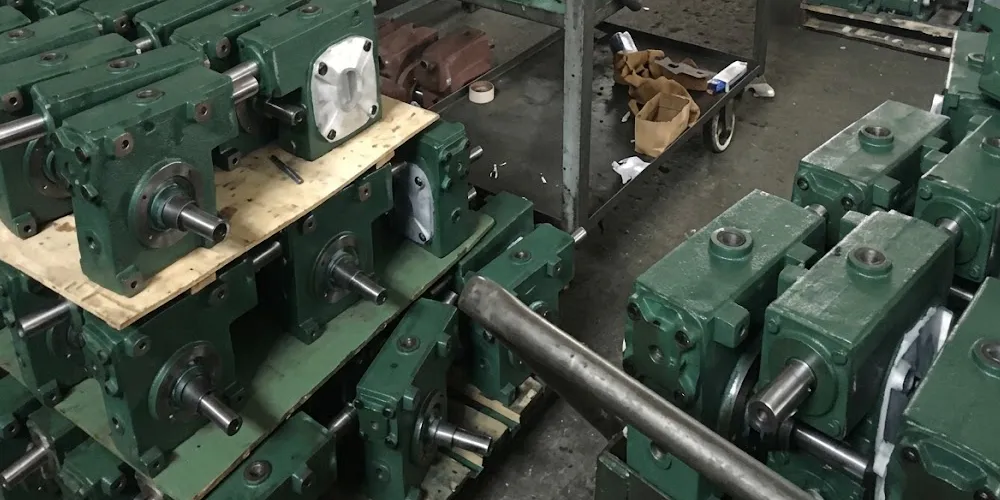
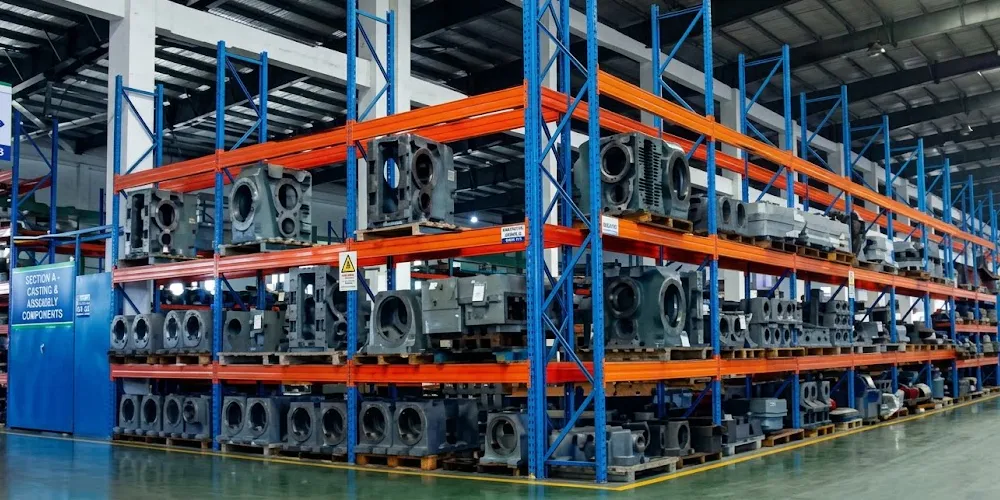
The seven selection parameters above are only as useful as the engineering accuracy behind the published ratings that the parameter values are checked against. For a redutor de velocidade única in the WP series, those ratings are derived from materials and manufacturing processes that have been stable across decades of industrial use. The housing is produced from HT250 grey cast iron, machined on CNC centers with bearing bore concentricity maintained in a single fixturing setup — a process step that ensures the worm and wheel remain in precise mesh alignment throughout the unit’s service life rather than accumulating alignment error from sequential re-fixtured operations.
The worm shaft is 20CrMnTi alloy steel, case-carburized and hardened to 58–62 HRC on the thread flanks, with a precision-ground final thread form. The worm wheel is centrifugally cast ZCuSn10Pb1 tin bronze, machined to tooth form accuracy sufficient for the sliding contact velocities generated at the WP series’ standard input speeds. The bearing selection throughout the WP range is designed for L10 lives that meet or exceed the worm wheel’s expected service life under rated load — meaning the first planned maintenance event is a worm wheel inspection, not a bearing replacement. These material and process choices are what allow the published torque ratings, thermal ratings, and oil capacities to carry engineering meaning rather than serving as catalog filler — and they are the technical foundation that makes the seven parameters described in this guide meaningful when applied to WP series redutor de velocidade única selection.
Ready to Specify Your Single Speed Reducer?
The complete WP series redutor de velocidade única catalog — with published rated output torque, thermal power ratings, oil capacity, and dimensional data for all frame sizes — is available for engineering review and OEM inquiry.
Product Reference: Two Models That Cover the Common Parameter Ranges
The two WP series models below cover the most commonly specified parameter combinations for light-to-medium industrial drive applications. Both are referenced here because they address different requirements across the seven parameters — one prioritizing input power flexibility, the other prioritizing output interface versatility for shaft-mounted applications.
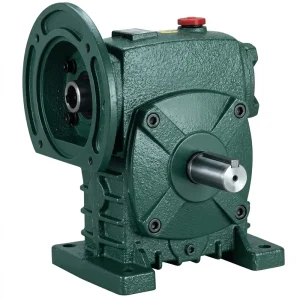
EP-WPDS — 0.12 to 15 kW Single Speed Reducer
The WPDS covers the 0.12 kW to 15 kW input power range in a foot-mounted configuration with a flange-face (DS) input for direct IEC B5 motor coupling. Across its frame range, it addresses parameters 1 through 5 comprehensively: the full 10:1–60:1 ratio range is available, the solid output shaft simplifies parameter 6 specification, and the cast-iron housing thermal mass addresses parameter 5 thermal performance for standard duty cycles. For US and Australian applications where the redutor de velocidade única needs to accept a standard four-pole motor without an adapter bracket, the WPDS is a practical starting point for any parameter-driven selection exercise in the 0.12–15 kW input power window.
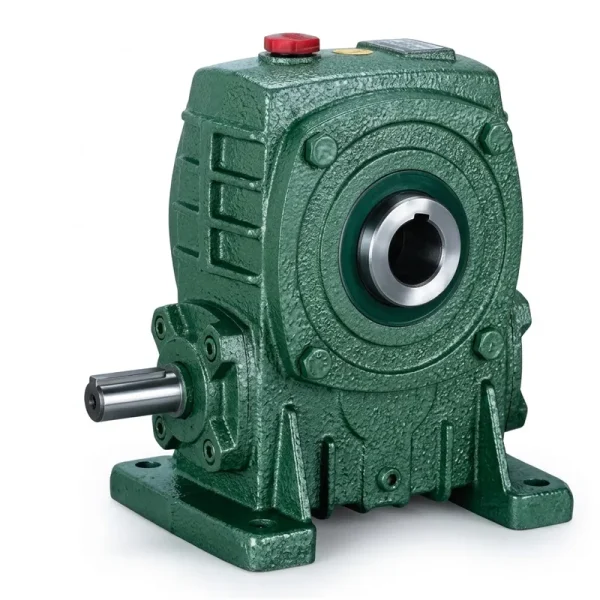
EP-WPKA — Redutor de velocidade única de 5 a 260 kg
The WPKA series spans 5 kg to 260 kg in a hollow-bore shaft-mounted configuration, directly addressing parameter 4 (mounting) and parameter 6 (output shaft interface) for applications where a coupling is impractical. The hollow bore eliminates the coupling assembly and reduces axial drive length, which is the primary reason maintenance engineers in UK conveyor systems and Netherlands agricultural automation specify the WPKA when retrofitting an existing driven shaft. Parameters 1–3 and 5 are addressed across the same WP series frame range as the foot-mounted variants — the ratio range, torque ratings, input power, and thermal ratings are consistent with the equivalent frame sizes in the solid-shaft line of the redutor de velocidade única catalog.
Compatible Drive System Components
A correctly specified redutor de velocidade única delivers full value when it is integrated with properly matched upstream and downstream drive components. The motor and any additional gearing in the drive chain should be specified alongside the gearbox to ensure parameter compatibility across the full system — shaft dimensions, power ratings, and interface geometry all carry the same importance as the redutor de velocidade única specification itself.
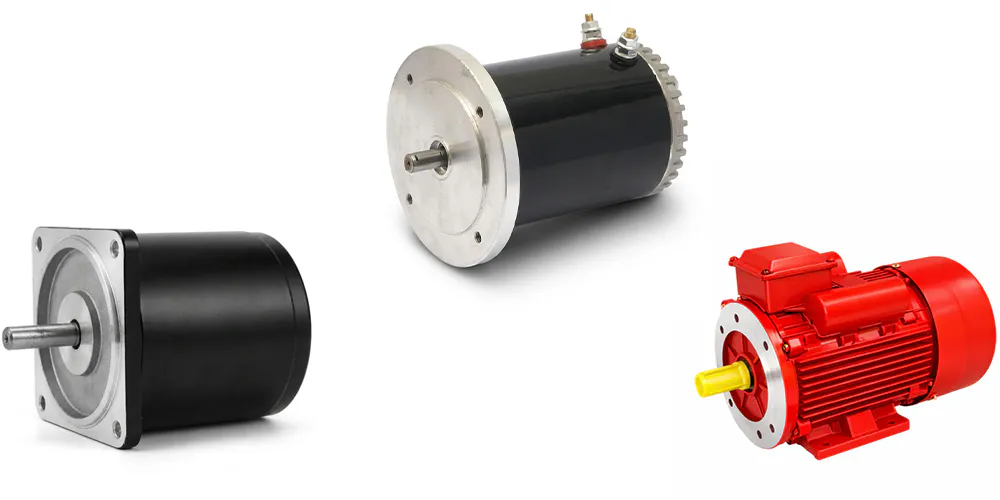
Motores elétricos
Parameters 3 and 4 of the redutor de velocidade única selection — input power, input speed, and input shaft interface — are determined entirely by the motor specification. Sourcing a matched motor elétrico from the same supply chain as the gearbox confirms dimensional compatibility at the input interface, motor torque curve alignment with the gearbox efficiency curve, and consistent IEC frame dimensions that allow the flange coupling in the DS series to fit without field modification.
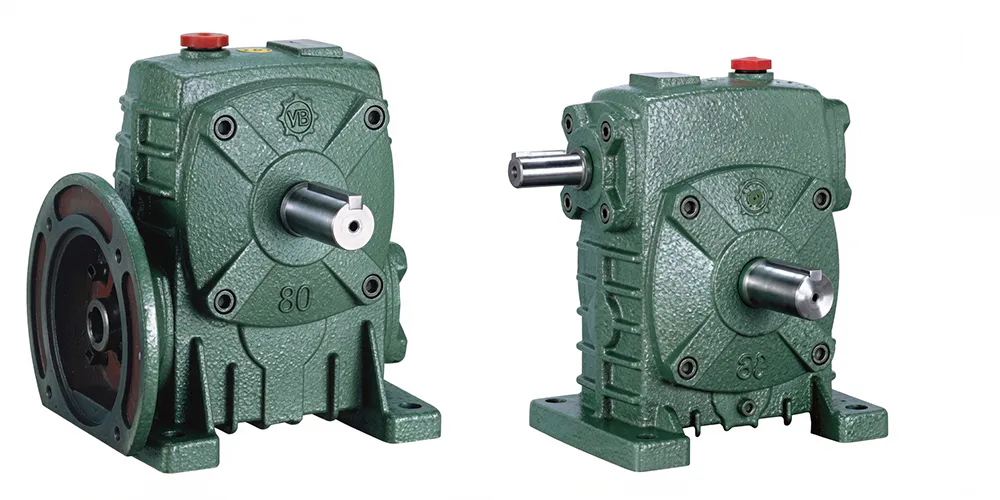
Caixa de engrenagens sem-fim
When parameter 1 — the required transmission ratio — falls above 60:1, a single-stage unit cannot provide it. A caixa de engrenagens sem-fim in a double-stage configuration extends the ratio range to 1/900, covering applications that demand extremely low output speeds from standard motor inputs. The same seven parameters apply to the two-stage selection process, with the added consideration that each stage’s thermal rating must be sufficient for its share of the total input power after accounting for the efficiency of the preceding stage.
Sobre a Unidade de Fabricação
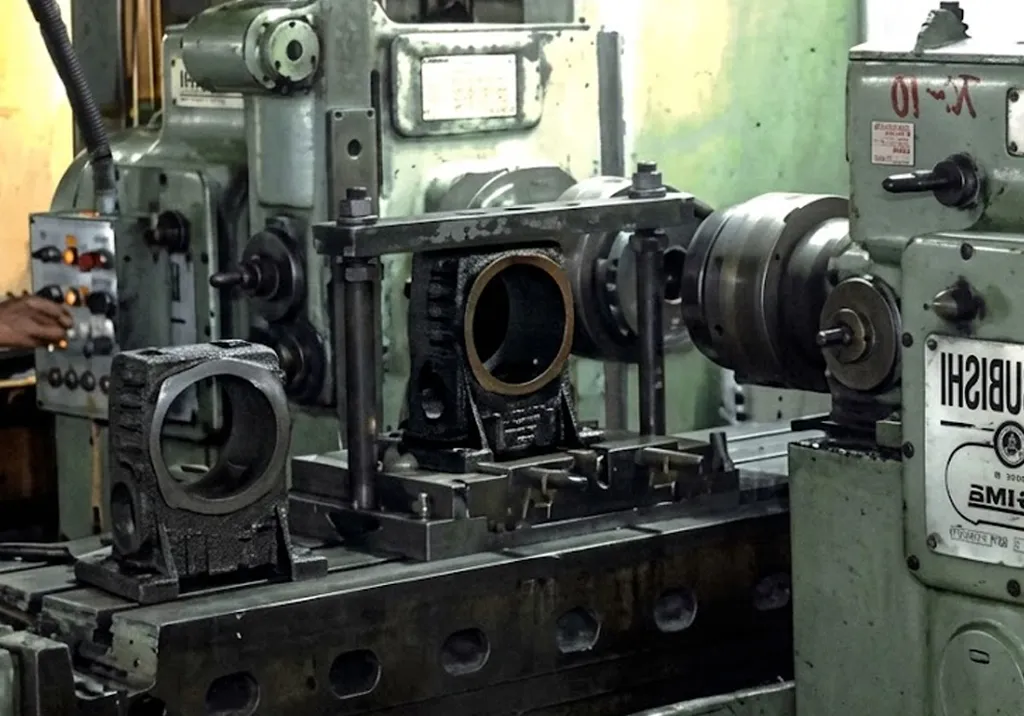
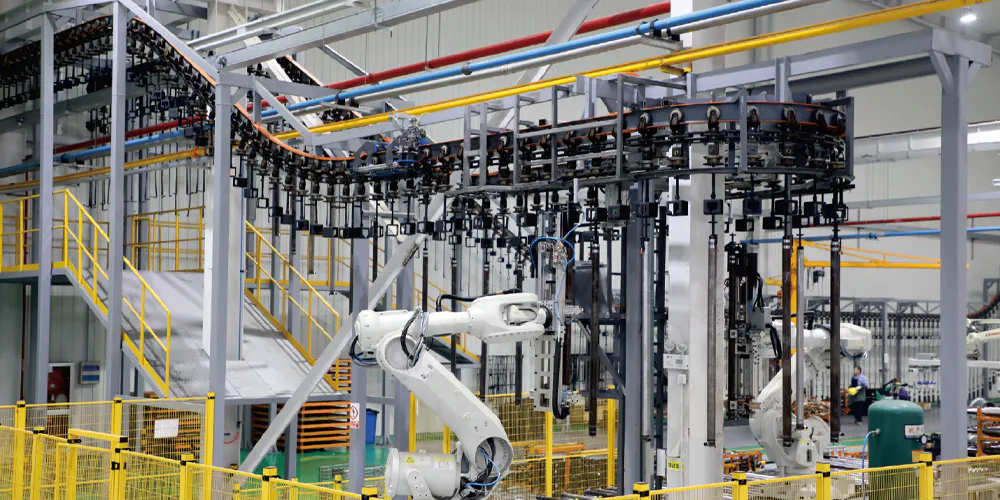
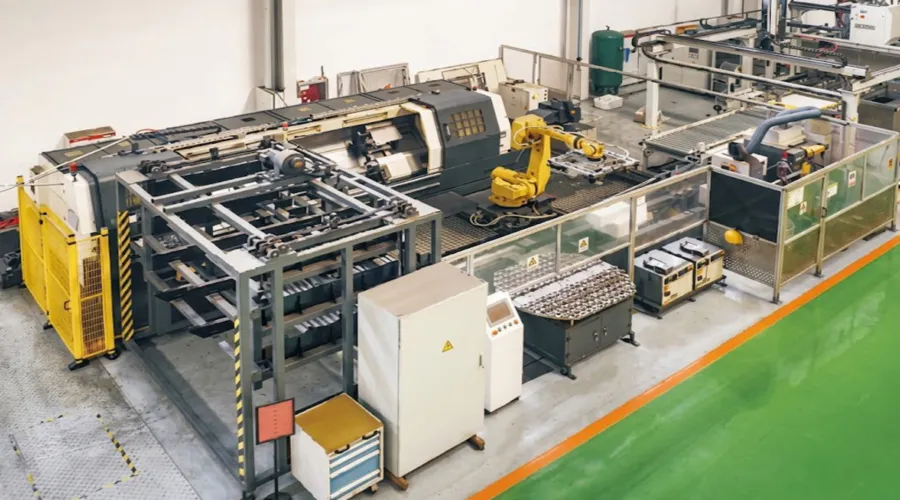
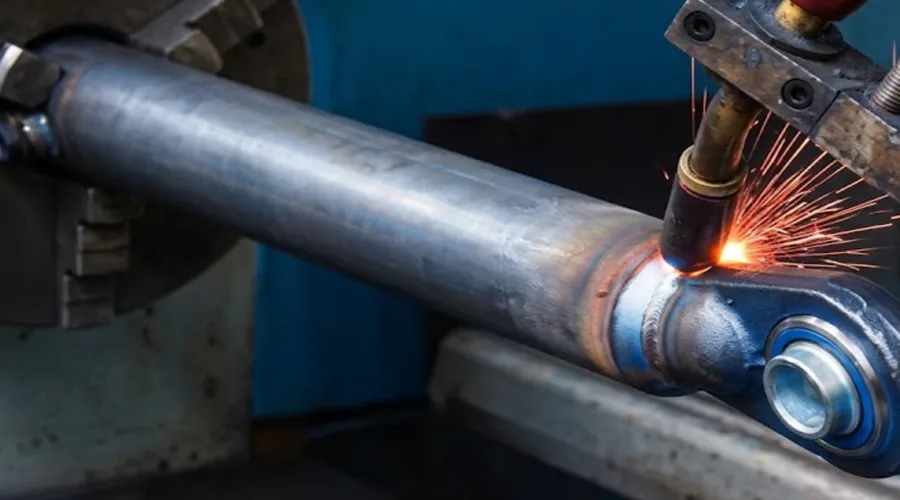
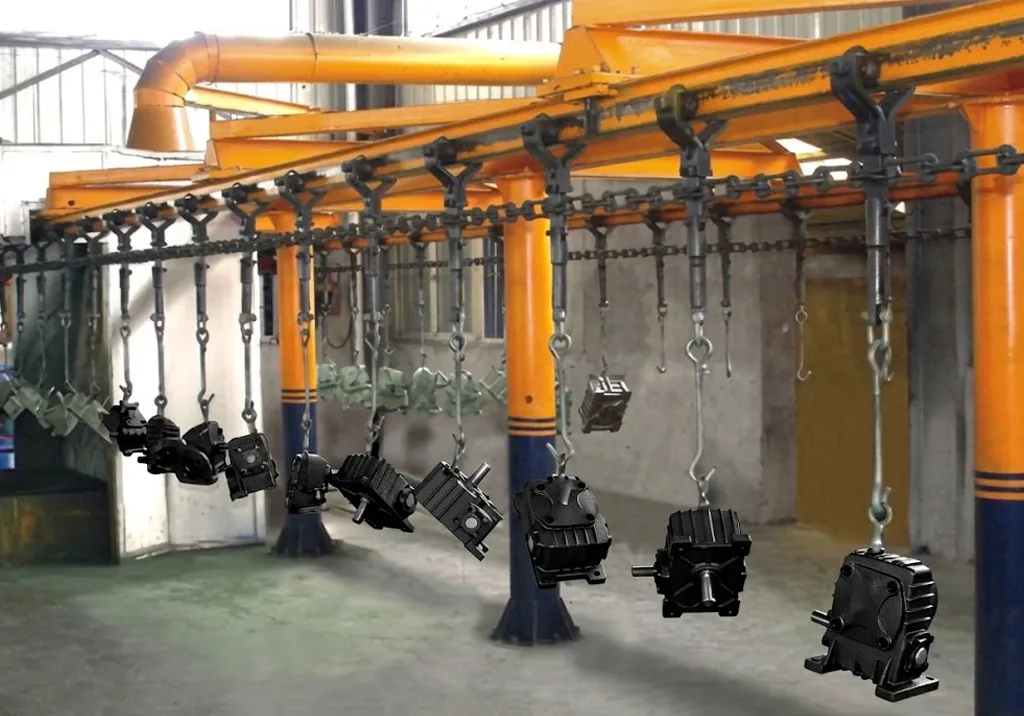
Our production facility manufactures a broad range of industrial and agricultural power transmission equipment — worm gear reducers, planetary gear drives, agricultural gearboxes, power take-off shafts, hydraulic cylinders, gears, sprockets, chains, and motors. The redutor de velocidade única series covers both foot-mounted and shaft-mounted configurations across the full WP family of frame sizes. Housing castings are produced in ductile iron, grey cast iron, cast steel, precision cast steel, and cast aluminum. Gears, sprockets, worm gears, pulleys, worms, and shafts — both standard catalog dimensions and non-standard parts to customer drawings — are manufactured in-house under ISO 9001:2015 quality management certification. As a single speed reducer manufacturer, we serve customers in the USA, UK, Australia, Canada, the Netherlands, Brazil, South Korea, Colombia, and other international markets with OEM customization, private-label supply, parameter-specific technical consultation, and dimensional documentation for engineering review packages.
Oficina
Perguntas frequentes
How do I calculate the correct transmission ratio for a single speed reducer driving a conveyor in a US food processing facility at a specific output speed?
Divide the motor’s synchronous speed (typically 1450 RPM for a 50 Hz four-pole motor, or 1750 RPM for a 60 Hz four-pole motor used in US facilities) by the required conveyor output shaft RPM. For a US food processing conveyor requiring an output shaft speed of 35 RPM from a 1750 RPM motor, the required ratio is 1750/35 = 50:1. Select the nearest available ratio in the WP series catalog — typically 50:1 is available as a standard catalog ratio — and verify that the resulting actual output RPM (1750/50 = 35.0 RPM) is within the process tolerance for belt or chain speed. For the EP-WPDS redutor de velocidade única covering 0.12 kW to 15 kW, the full ratio range of 10:1 to 60:1 is available across frame sizes 40 through 250, so a 50:1 ratio is a standard selection that does not require custom manufacturing.
What is the difference between mechanical torque rating and thermal power rating when selecting a single stage speed reducer for an Australian mining conveyor?
The mechanical torque rating tells you the maximum output torque the worm wheel and housing can sustain without gear or bearing fatigue failure. The thermal power rating tells you the maximum continuous input power the housing can dissipate as heat without the oil bath exceeding its safe temperature limit. For Australian mining conveyors in high ambient temperature environments, the thermal rating is often the binding constraint — a redutor de velocidade de estágio único selected correctly on torque alone may still overheat if its thermal power rating at the actual ambient temperature is insufficient for the continuous duty cycle. Worm gear efficiency drops at higher ratios, meaning more input power is converted to heat for the same output torque. Always confirm the thermal rating at your specific ambient temperature — not the catalogue value at 20°C — before finalizing the frame size selection.
Which single speed reducer mounting configuration is most commonly used in Dutch greenhouse automation systems and why is shaft direction selection important?
In Dutch greenhouse automation — curtain drive and vent systems in particular — the hollow-bore shaft-mounted WPKA configuration in shaft direction B or C is the most frequently specified because it allows the motor to mount horizontally along the ceiling rail while the output bore slides directly onto the curtain drive shaft. Shaft direction selection is important because it determines whether the motor hangs above, to the side, or in-line with the output shaft axis — and in a ceiling-mounted greenhouse installation, incorrect shaft direction results in a motor that either protrudes into the growing area or conflicts with the curtain rail structure. The self-locking characteristic of the redutor de velocidade única at high ratios holds curtain positions without a separate brake, which is the key functional requirement for Dutch greenhouse climate control that motivates the specification of a worm gear unit over alternatives.
How does oil capacity affect the maintenance interval of a single speed worm gear reducer in a South Korean food processing plant running three shifts?
In a South Korean food processing plant running three shifts — approximately 6,000 operating hours per year — the oil capacity of the installed redutor de engrenagem helicoidal de velocidade única meaningfully affects how frequently the oil must be replaced to prevent lubrication failure. A larger oil sump (3–5 L in the larger WPZ frames) reaches its steady-state operating temperature more slowly than a compact 0.4 L sump in a small frame, which reduces the time-at-peak-temperature that drives oxidation of the gear oil. Combined with a switch to synthetic ISO VG 220 worm gear oil rated for 5,000–8,000 hour intervals, a large-sump WP series redutor de velocidade única may require only one oil change per year at a three-shift duty cycle, versus two or more changes per year for a small-sump unit on mineral oil. Documenting the selected oil grade and change interval at commissioning is the starting point for this planning calculation.
Editor: PXY