
TECHNICAL SPECIFICATION GUIDE
A clear breakdown of how tractor PTO output speed affects shaft series selection, torque loading, spline specification, and overload protection requirements on round baler drivelines.
The round baler PTO speed question — 540 RPM or 1000 RPM — is the single most consequential specification decision in round baler driveline selection. It determines not only the spline count on the front yoke and the gear ratio inside the baler gearbox, but also the torque load the round baler PTO shaft must carry for every horsepower delivered by the tractor. At 540 RPM, a given power output requires nearly twice the shaft torque compared to the same power at 1000 RPM. This difference in torque demand directly sets the minimum shaft series that the application requires — and explains why the same baler model paired with a 540 RPM tractor output places a fundamentally different stress on the driveline than when paired with a 1000 RPM output.
This guide works through the physics of the two operating speeds, maps them to the shaft series specifications in current use on major baler platforms, and explains the manufacturing, material, and overload protection differences that follow from the speed selection. The reference data covers John Deere, CASE IH, New Holland, and Krone round balers — the platforms with the widest global distribution — alongside the principal tractor types paired with each.
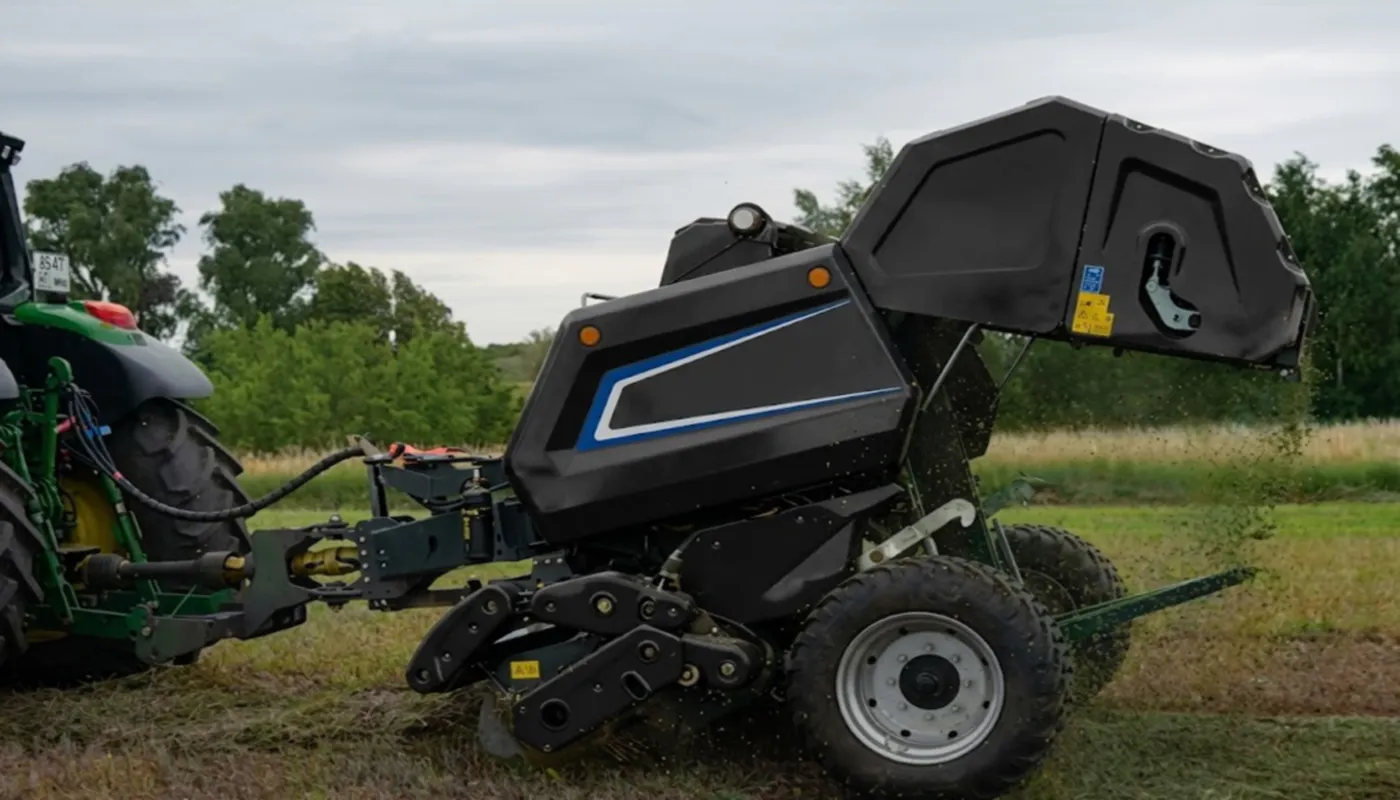
Why PTO Speed Changes Everything About Shaft Torque
Torque and rotational speed are inversely related for a given power output. The relationship is expressed as: torque (Nm) = power (W) ÷ angular velocity (rad/s). At 540 RPM — which equals 56.5 rad/s — a 60 kW (80 HP) PTO output produces a mean shaft torque of approximately 1,062 Nm. The same 60 kW at 1000 RPM — 104.7 rad/s — produces only 573 Nm. The shaft carrying 540 RPM operation therefore handles nearly twice the torque for the same power as one running at 1000 RPM. Peak blockage torques at 540 RPM can reach 3,000 Nm or more before the slip clutch releases, while the equivalent 1000 RPM peak sits around 1,500–2,100 Nm on the same baler platform.
This difference has a direct consequence for shaft series selection. A Series 6 round baler PTO shaft — rated to approximately 2,100 Nm peak — is adequate for most 1000 RPM baler applications at up to 100 PTO HP. The same Series 6 shaft operating at 540 RPM with a 100 HP tractor may be marginal; at 540 RPM that power level requires sustained torque close to the Series 6 limit, and blockage peaks frequently exceed it. Understanding round baler PTO speed as a torque multiplier — not simply a speed label — is the first step in selecting the correct shaft series for a given tractor-baler combination.
540 RPM vs. 1000 RPM: Key Driveline Differences at a Glance
| Parâmetro | 540 RPM Operation | 1000 RPM Operation |
|---|---|---|
| Mean torque at 80 PTO HP | ~1,050 Nm | ~570 Nm |
| Typical peak blockage torque | 2,500–3,500 Nm | 1,400–2,200 Nm |
| Standard front spline (tractor end) | 1-3/8 in. × 6 spline | 1-3/8 in. × 21 spline or 1-3/4 in. × 20 spline |
| Minimum recommended shaft series | Series 6 (many applications require Series 8) | Series 6 for most platforms up to 100 HP |
| CV joint head requirement | Standard wide-angle U-joint often adequate | CV head recommended or required on most platforms |
| Typical slip clutch release torque | 1,500–2,800 Nm depending on series | 800–1,600 Nm depending on baler class |
| Typical baler platforms | Older / smaller round balers; New Holland 630 / 648 | JD 469 / 569, CASE IH large balers, Krone Comprima, New Holland BR7000 |
540 RPM Round Baler PTO Shaft: Series Requirements and Spline Specification
Round balers designed for 540 RPM input — primarily older fixed-chamber models and smaller variable-chamber machines including the New Holland 630 and 648 series — place the highest torque demand on the driveline for a given tractor power rating. A tractor delivering 70–80 PTO HP at 540 RPM generates between 930 and 1,060 Nm of mean shaft torque. Blockage events in dense windrows or when baling straw in dry conditions can spike the torque to 2,800 Nm or above in a fraction of a second before the slip clutch releases.
For this load environment, a Series 6 round baler PTO shaft is the minimum appropriate specification. Series 6 provides a peak torque capacity of approximately 2,100 Nm — which covers routine operation but sits below the extreme blockage peaks possible on higher-HP tractors in heavy crop conditions. On 540 RPM applications with tractors above 90 PTO HP or in crops known to generate severe slug loads — corn stover, heavy first-cut grass, compressed silage swaths — a Series 8 shaft should be evaluated. The 540 RPM front spline is standardised at 1-3/8 in. × 6 splines regardless of tractor brand or power class. The implement end connection varies by baler model and should be confirmed against the baler’s parts manual rather than assumed from the tractor end specification.
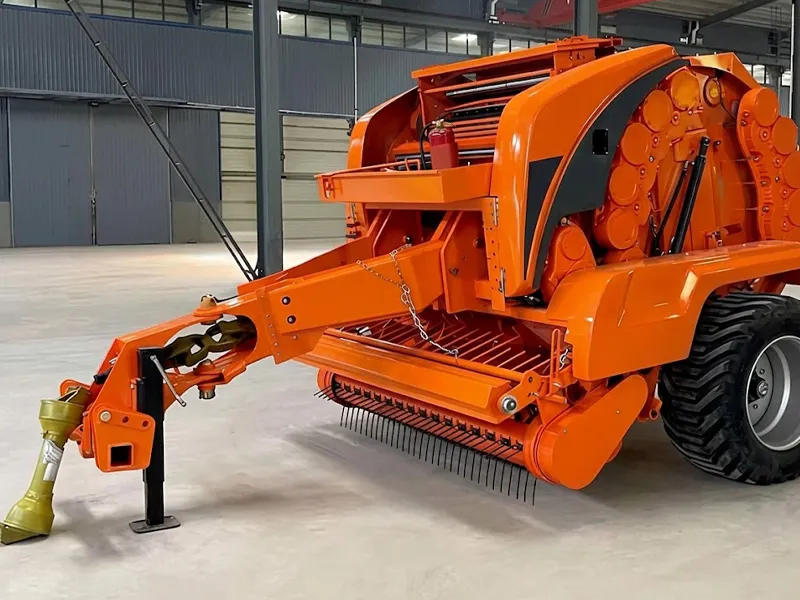
1000 RPM Round Baler PTO Shaft: CV Head, Series 6, and Higher Throughput
The move to 1000 RPM PTO input on modern round balers was driven by the need to increase baler throughput without proportionally increasing the shaft torque that the driveline must handle. By doubling the input speed, baler manufacturers were able to step down to lower gear ratios inside the gearbox, distributing the drive more efficiently to the pickup rotor, belt or roller bale formation system, and wrapping mechanism — while halving the torque load on the shaft for the same power delivered. John Deere 9-Series round balers including the 469 and 569, CASE IH large round baler platforms, Krone Comprima and KR series, and New Holland BR7050 through BR7070 all specify 1000 RPM operation as standard.
At 1000 RPM, Series 6 is the appropriate shaft specification for tractor power ratings up to approximately 100 PTO HP. The front spline at 1000 RPM is either 1-3/8 in. × 21 splines or 1-3/4 in. × 20 splines depending on the tractor power class and model year — a critical detail that must be confirmed against the tractor’s operator’s manual, as both configurations appear on tractors from the same manufacturer across different production years. The 1000 RPM round baler PTO shaft also requires a constant-velocity joint head — either CAT4 or CAT5 category depending on the baler platform — at the front of the assembly. Without the CV head, the velocity variation introduced by a standard U-joint at operating angles greater than 5° creates cyclic loading on the baler gearbox input bearing that progressively damages it across a season.
Manufacturing Construction: How Series Design Changes Between Speed Ratings
The shaft series number is not an abstract classification — it corresponds directly to physical dimensions in the assembly that scale with the torque rating. Moving from Series 4 to Series 6 to Series 8 increases the outer tube diameter, tube wall thickness, U-joint cross body diameter, bearing cup bore size, and yoke ear section thickness. Each of these dimensions is set by the series standard and cannot be mixed between series; a Series 6 cross does not fit a Series 4 yoke, and a Series 8 guard tube does not fit over a Series 6 tube body.
For 540 RPM applications, where the peak torque demand pushes toward or beyond the Series 6 limit, the telescoping tube wall section and cross body size are the primary structural constraints. A Series 6 lemon-profile inner tube has sufficient wall section to resist the torsional deflection at 2,100 Nm peak, but thinner walls characteristic of substandard or undersized shafts sold as Series 6 equivalents fail to maintain tube profile under repeated overloads. For 1000 RPM applications, the CV joint head geometry becomes the additional construction variable — the CAT4 and CAT5 categories define the articulation angle capacity and the velocity equalisation mechanism in the wide-angle joint, both of which must match the baler’s operating geometry and input speed requirement.
Material System: Component Specifications Across Both Speed Ratings
| Componente | Material | 540 RPM Demand | 1000 RPM Demand |
|---|---|---|---|
| U-joint cross | 20CrMnTi carburised, 58–62 HRC | Higher cyclic bending stress; larger cross body required | Lower peak torque; CV head replaces front joint |
| Telescoping tubes | Q345 cold-drawn, galvanised | Thicker wall section needed for Series 8 torque | Series 6 wall section adequate up to 100 HP |
| CV / wide-angle joint | Forged alloy steel balls and races | Standard wide-angle U-joint typically adequate | CAT4 / CAT5 CV head required on most platforms |
| Bearing cups | 52100 bearing steel, precision ground | Higher load per needle roller; grease interval critical | Standard Series 6 cup specification adequate |
| Front yoke spline | SAE 1045 forged | 1-3/8 in. × 6 spline universal | 1-3/8 in. × 21 or 1-3/4 in. × 20 spline |
| Slip clutch disc material | Sintered bronze or organic composite | Higher release torque setting; more frequent glazing risk | Standard Series 6 clutch range adequate |
Quick Reference: PTO Speed and Series by Baler Platform
John Deere 469 / 569
PTO Speed: 1000 RPM
Front Spline: 1-3/8 in. × 6 or 21 spline
Shaft Series: Series 6
Joint Type: CAT4 / CAT5 CV head, 80° wide-angle slip clutch
New Holland 630 / 648
PTO Speed: 540 RPM
Front Spline: 1-3/8 in. × 6 spline
Shaft Series: Series 4–6 (Series 6 recommended)
Joint Type: Standard wide-angle U-joint; shear bolt or slip clutch
New Holland BR7050 / BR7060
PTO Speed: 1000 RPM
Front Spline: 1-3/8 in. × 21 spline
Shaft Series: Series 6
Joint Type: CV head, friction slip clutch
Krone Comprima / KR Series
PTO Speed: 1000 RPM
Front Spline: 1-3/8 in. × 21 spline
Shaft Series: Series 6
Joint Type: Wide-angle CV head, friction slip clutch
CASE IH RB344 / RB454 / RB564
PTO Speed: 540 or 1000 RPM (model dependent)
Front Spline: 1-3/8 in. × 6 or 21 spline
Shaft Series: Series 6
Joint Type: Friction slip clutch; CV head on 1000 RPM variants
Claas Rollant 354 / 374 / 455
PTO Speed: 1000 RPM
Front Spline: 1-3/8 in. × 21 spline
Shaft Series: Series 6
Joint Type: Wide-angle CV, friction slip clutch
Model-Matched: EP PTO Shaft for CASE IH Round Balers
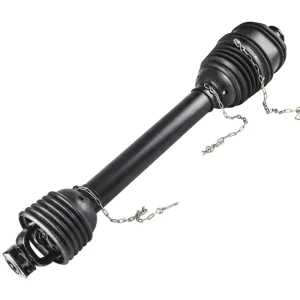
EP PTO Shaft for CASE IH Round Balers
A direct-fit round baler PTO shaft for CASE IH round baler platforms, specified to the correct series, spline configuration, and CV head category for each CASE IH model designation — covering both 540 RPM and 1000 RPM variants depending on the platform. The U-joint crosses are 20CrMnTi carburised steel with precision-ground 52100 bearing cups; telescoping tubes are Q345 cold-drawn with corrosion-resistant coating; front yokes are SAE 1045 forged. The friction slip clutch is factory-assembled within the CASE IH platform’s specified release torque range. The UV-stabilised HDPE guard assembly carries CE certification compliant with ISO 5674 guarding requirements. Available for CASE IH operations across North America, Europe, and Australia.
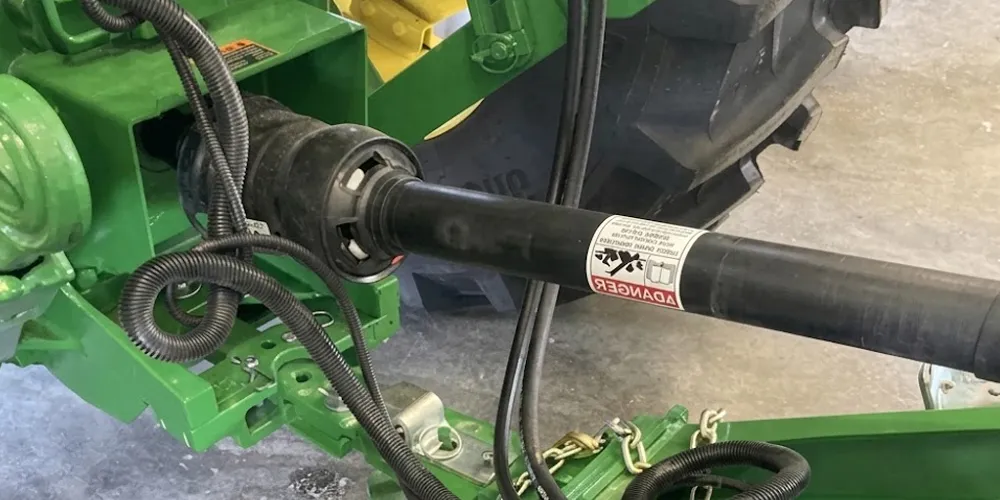
Overload Protection: How the Slip Clutch Setting Differs Between Speed Ratings
The slip clutch release torque must be calibrated to protect the baler gearbox input shaft — and that protection threshold differs significantly between 540 RPM and 1000 RPM operations. At 540 RPM, the gearbox input shaft carries the higher torque for the same transmitted power, which means the clutch must be set to release at a higher absolute torque value to protect the same gearbox internal components. On a 540 RPM baler with a 90 HP tractor, a correctly set clutch may release at 2,200–2,600 Nm — within the Series 6 clutch capacity but close to its upper adjustment range. On the 1000 RPM equivalent with the same baler mechanism and tractor, the same gearbox protection is achieved with a clutch set to release at 900–1,400 Nm — comfortably within the middle of the Series 6 clutch adjustment range and leaving more margin between normal operating torque and the release point.
This difference means that 540 RPM round baler PTO shaft clutches operate with less margin between normal load and release threshold, which increases the frequency of nuisance slipping during dense crop passes and accelerates friction disc wear relative to an equivalent 1000 RPM clutch. Operators using 540 RPM platforms in heavy crop conditions should inspect clutch disc condition more frequently — every 30–35 operating hours rather than the 40–50 hour interval typical for 1000 RPM applications — and should confirm the clutch setting at the start of each cutting period rather than only pre-season.
System Components That Work with the Round Baler PTO Shaft
Selecting the correct round baler PTO shaft for the operating PTO speed is the central decision. The adjacent driveline components — the baler input gearbox and the universal driveshaft for mixed-fleet or multi-baler operations — also need to be coordinated with the speed and series selection to eliminate compatibility gaps across the drivetrain.
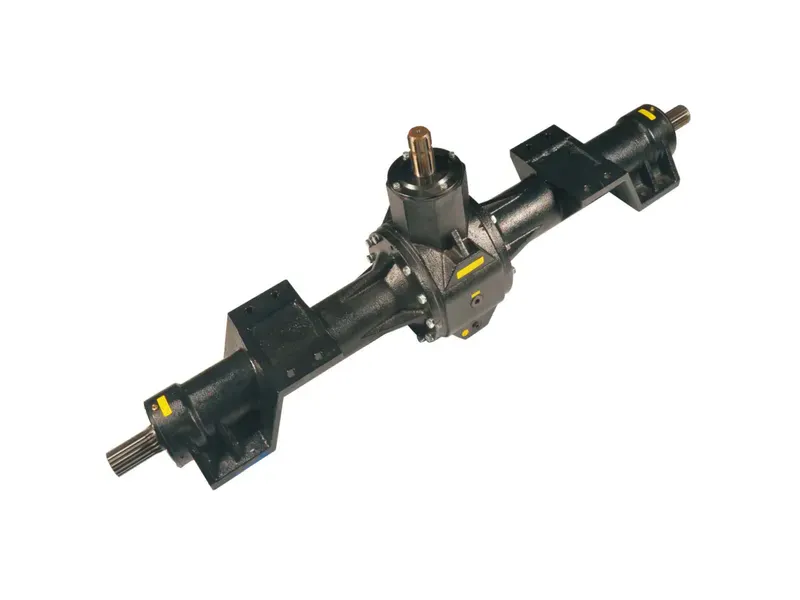
The baler input gearbox’s internal gear ratios are designed for a specific input speed — either 540 RPM or 1000 RPM. Connecting a 540 RPM shaft to a gearbox designed for 1000 RPM input runs the internal gears at half the design speed, increasing the torque on each gear mesh by a factor of nearly two and overloading the gearbox beyond its rated input torque. When replacing a round baler PTO shaft, confirm that the gearbox input speed rating matches the shaft’s operating speed — not just that the spline profiles fit. Sourcing both from a coordinated engineering range ensures that speed, torque, and spline specifications are pre-matched.
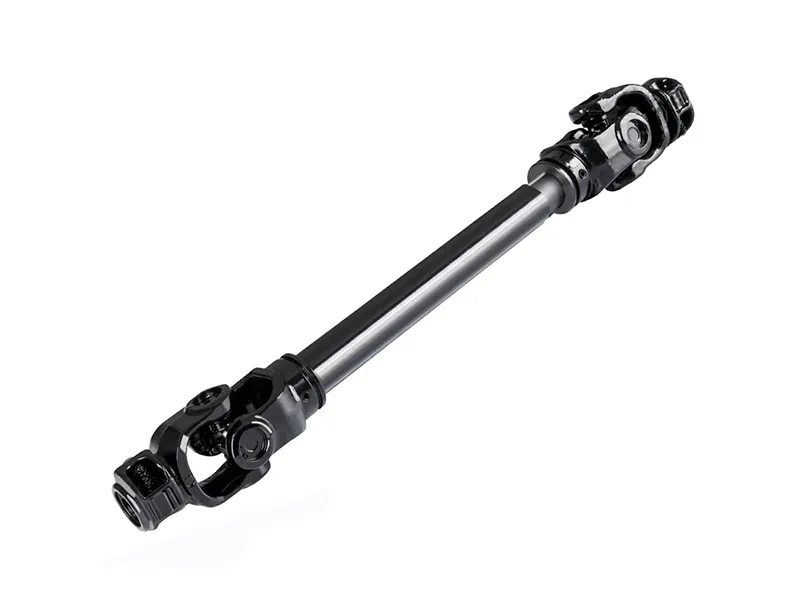
Eixo de transmissão universal da tomada de força
For operations that run a mix of 540 RPM and 1000 RPM balers on the same tractor fleet, a universal PTO driveshaft available in both 6-spline and 21-spline front yoke configurations — and in both Series 6 standard and Series 6 CV-headed variants — provides a single-source solution for both speed categories. The Series 6 cross kits, guard components, and slip clutch disc sets remain interchangeable within the series group regardless of the front yoke spline, simplifying the spare parts inventory needed to cover both operating speeds during a mixed baling season.
Sobre o fabricante
The product range encompasses agricultural gearboxes, worm gear reducers, planetary gear drives, power take-off shafts, hydraulic cylinders, gears, chains, and motors — all manufactured under ISO 9001:2015 certification across every production stage from raw material inspection through final assembly and load testing. Gearbox housings and structural assemblies are produced in ductile iron, cast iron, cast steel, precision cast steel, and cast aluminium, with grade selection tied to the load, thermal, and environmental demands of each application. Custom and non-standard components — sprockets, worm gears, precision shafts, pulleys, and custom assemblies — are engineered and produced to customer drawings or application descriptions, with written quotation returned within 24 hours of a technical inquiry or submitted component photograph.
Oficina
Perguntas frequentes
Editor: PXY