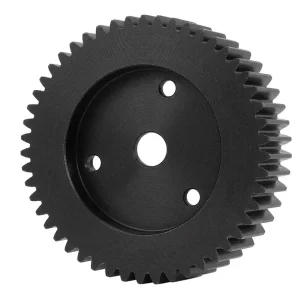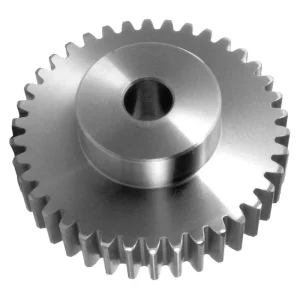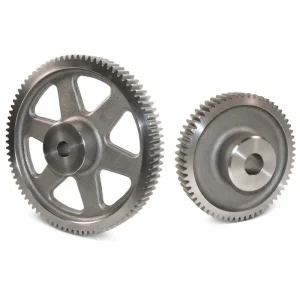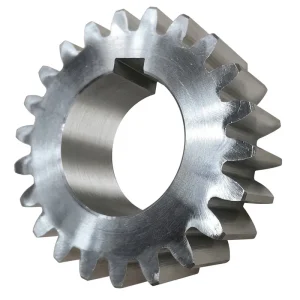
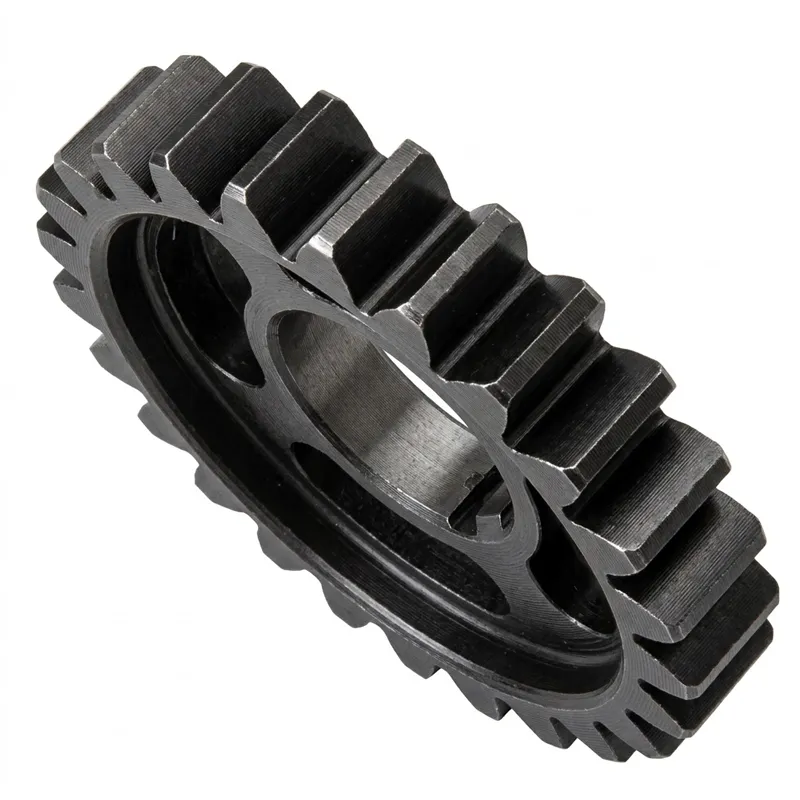
EP-Forging Spur Gear
The EP-Forging Spur Gear series delivers high-strength precision components available in standard sizes from M6 to M32. Manufactured from durable materials including C45 steel, Brass, Stainless steel, Copper, POM, Aluminum, and Alloy, these gears are engineered for demanding industrial applications. They achieve strict precision grades of DIN6, DIN7, DIN8, and DIN9, with tight tolerances ranging from 0.001mm to 0.1mm. Comprehensive surface treatments such as Zinc-plating, Nickel-plating, Anodization, Geomet, Dacromet, and Black Oxide ensure superior corrosion resistance, while teeth are Hardened, Milled, or Ground for optimal performance. Compliant with ISO, DIN, ANSI, JIS, and BS standards, production lead times are 20 business days for samples and 25 days for bulk orders. Samples range from $2 to $100, with secure packing in plastic bags, cartons, or wooden cases.
EP-Forging Spur Gear — Hot and Cold Forged Large-Module Steel Spur Gears for Heavy Industrial and Mining Drive Systems
The EP-Forging Spur Gear series brings together the structural integrity of precision forging with the dimensional repeatability of post-forge machining, heat treatment, and surface hardening to produce large-module steel spur gears capable of sustaining the continuous high-load drive duties demanded by mining equipment, heavy construction machinery, wind turbine gearboxes, and large industrial drive systems globally. Available in model numbers M6, M8, M12, M16, M20, M25, M32 and additional modules, and produced in materials including Brass, C45 steel, Stainless steel, Copper, POM, Aluminum, and Alloy grades, this spur gear series covers the torque and size requirements of large parallel-shaft drives that standard stock gears cannot address. Precision grades DIN6 through DIN9 are available, with tooth treatments of hardening, milling, or grinding applied as appropriate to each application's speed, load, and service life requirements. For procurement engineers and equipment designers in Australia, Brazil, Germany, Canada, South Korea, and the United States sourcing large spur gears for heavy-duty drives, the EP-Forging series provides ISO, DIN, ANSI, JIS, and BS standards-compliant components with complete surface treatment and finish options, produced to tolerances from 0.001 mm through 0.1 mm depending on the precision grade selected. Production lead time is 20 business days for sample and 25 days for bulk, with T/T and L/C payment terms and plastic bag + carton or wooden packing formats available to suit international freight requirements.
Technical Specifications — EP-Forging Gear Series
All parameters in the table below represent verified production standards for the EP-Forging Gear series. Tolerance values of 0.001 mm, 0.01 mm, and 0.1 mm correspond to DIN6, DIN7, and DIN8–DIN9 grade requirements respectively at representative module sizes. Engineers specifying a forging gear for a new application should confirm the tolerance band against the required pitch error class before finalising the module and tooth count combination.
| Complete Technical Specification | |
|---|---|
| Parâmetro | Value / Detail |
| Model Numbers | M6, M8, M12, M16, M20, M25, M32 and etc. |
| Material | Brass, C45 steel, Stainless steel, Copper, POM, Aluminum, Alloy, and so on |
| Tratamento de superfície | Zinc-plated, Nickel plated, Passivation, Oxidation, Anodization, Geomet, Dacromet, Black Oxide, Phosphatizing, Powder Coating, Electrophoresis |
| Padrão | ISO, DIN, ANSI, JIS, BS, and Non-standard |
| Precisão | DIN6, DIN7, DIN8, DIN9 |
| Teeth Treatment | Hardened, Milled, or Ground |
| Tolerance | 0.001 mm – 0.01 mm – 0.1 mm |
| Finish | Shot/sandblast, heat treatment, annealing, tempering, polishing, anodizing, zinc-plated |
| Items Packing | Plastic bag + Cartons or Wooden Packing |
| Payment Terms | T/T, L/C |
| Production Lead Time | 20 business days for sample; 25 business days for bulk |
| Samples | Sample available; express shipping cost covered by client |
The model number in the EP-Forging series designates the module size: M6 through M32 covers the large spur gear range where forging's structural advantages over machining-from-bar are most pronounced. At M32, each tooth has a height of approximately 72 mm and a pitch of approximately 100 mm — dimensions at which the forged grain structure in the tooth root adds bending fatigue resistance that no surface treatment or post-machining process can replicate once the cutting tool has severed the bar stock grain flow.
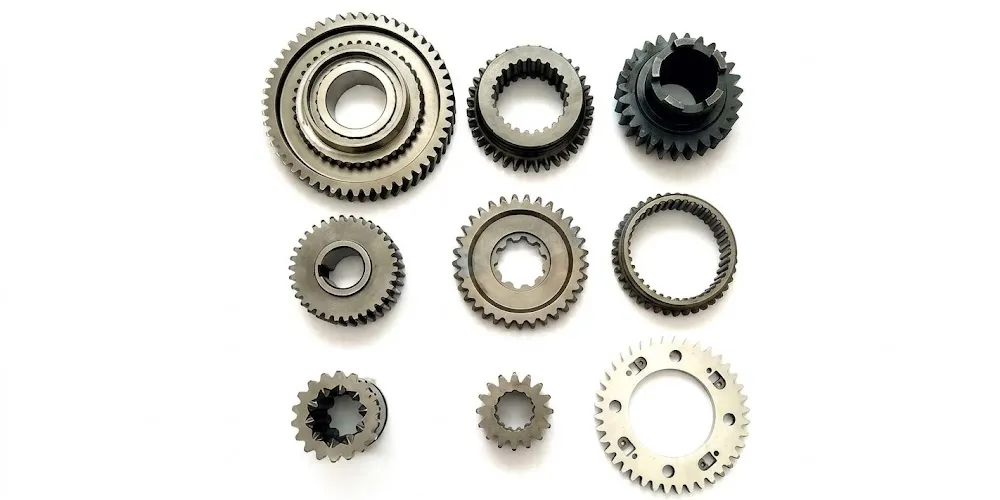
What Is a Forging Spur Gear and How Does the Forging Process Elevate Its Performance?
A spur gear transmits power between two parallel shafts through straight, radially-oriented involute teeth on a cylindrical pitch surface. The involute tooth profile maintains a constant velocity ratio — the ratio of the driven shaft speed to the driving shaft speed equals the inverse ratio of the tooth counts — throughout each engagement cycle. This predictable, jerk-free power delivery is why the involute spur gear is the default parallel-shaft gear choice across all scales of mechanical engineering, from miniature instrument drives to the largest mining mill drive spur gears weighing several tonnes. What the forging process adds to this fundamental mechanical performance is structural superiority: when the steel billet is pressed, hammered, or rolled under high compressive force in a die shaped to the gear's approximate profile, the crystalline grain structure of the alloy is forced to flow parallel to the tooth contour rather than being severed by the subsequent machining operations. This retained grain flow is not cosmetic — it directly increases the tooth root bending fatigue strength of the spur gear by 20–35% compared to an equivalent gear machined from bar stock of the same material grade, because the aligned grain boundaries resist crack propagation at the tooth root fillet, where the highest bending stress in the gear is concentrated during power transmission.
For large-module forging spur gears in the M6–M32 range — the size class represented by the EP-Forging series — this structural advantage is not a marginal improvement but a fundamental enabler of the application. A mining crusher pinion spur gear in M20 or M25 operating at continuous full torque loading cannot be reliably manufactured from machined bar stock and expected to meet a 100,000-hour service life target: the tooth root fatigue life at those cyclic stress amplitudes requires the grain-flow-enhanced bending strength that only forging delivers. The difference between spur gear and helical gear selection at this module and size scale is also worth noting. While helical spur gear designs provide noise advantages at higher pitch line velocities, the dominant engineering criteria for large spur gears in heavy industrial applications are tooth strength, ease of inspection, and absence of axial thrust: straight spur gears satisfy all three simultaneously, whereas helical gear pairs at the same module introduce a net axial force proportional to the tangent of the helix angle that requires additional axial bearing capacity in an already heavily loaded shaft system.
Five Key Advantages of the EP-Forging Spur Gear
① M6–M32 Large Module Coverage
Seven standard module sizes — M6, M8, M12, M16, M20, M25, M32 — plus additional module options on request cover the complete range of large industrial spur gear applications from medium-duty conveyor head shafts at M6 through to the largest mill pinion spur gears at M25–M32. This span within a single forging spur gear programme allows procurement teams to source multiple drive ratio stages from a single qualified supplier, consolidating quality documentation and reducing the vendor management burden across a multi-stage gearbox project.
② Forging-Enhanced Tooth Root Strength
The forging process aligns the steel grain structure with the tooth contour, increasing tooth root bending fatigue strength by 20–35% over machined-from-bar equivalents. For large spur gears in mining, cement, and power generation drives where cyclic torque loading is continuous and scheduled maintenance windows are infrequent, this structural improvement translates directly into extended service intervals and reduced unplanned downtime — outcomes that carry substantial economic value per operating hour in these industries.
③ Eleven Surface Treatment Options
Zinc-plating, Nickel plating, Passivation, Oxidation, Anodization, Geomet, Dacromet, Black Oxide, Phosphatizing, Powder Coating, and Electrophoresis are all available, ensuring that each forging spur gear can be protected against its specific operating environment. Offshore and coastal industrial sites in Australia and the Netherlands require Geomet or Dacromet coatings; underground mining environments in Canada and Brazil need Phosphatizing or Black Oxide for long-term corrosion protection; clean-environment gear sets in food processing and pharmaceutical facilities use Nickel plating or stainless steel base material.
④ DIN6–DIN9 Accuracy with Full Tooth Treatment
Precision grades DIN6, DIN7, DIN8, and DIN9 are available, with tooth treatments of hardening, milling, or grinding applied post-forge. DIN6 ground tooth spur gears at large module sizes achieve pitch errors below 6 µm, enabling smooth, low-noise operation in speed ranges that lower accuracy grades cannot sustain. For large spur gear applications in South Korea's steel mill drives and Germany's heavy machinery sector, DIN6 accuracy with profile grinding is the standard specification demanded by OEM machine builders.
⑤ Multi-Standard Compliance — ISO, DIN, ANSI, JIS, BS
The EP-Forging Spur Gear is produced to ISO, DIN, ANSI, JIS, and BS standards, as well as non-standard custom specifications. This multi-standard capability means a single gear design validated to one national standard can be re-certified to another without design change — allowing OEM equipment builders designing globally-distributed product lines to specify a single forging spur gear part number that satisfies procurement standards across European, North American, and Asian market documentation requirements simultaneously.
Material Engineering — Selecting the Right Steel for Large Forging Spur Gears
Material selection for a large forging spur gear in the M6–M32 module range is inseparable from the forging process selection and the subsequent heat treatment programme. The three decisions — alloy grade, forging method, and heat treatment cycle — must be made as an integrated system, not as independent choices, because the achievable case depth, core toughness, and dimensional stability after hardening are all determined by the interaction between the alloy chemistry and the thermal processing sequence.
C45 carbon steel is the entry-level material for the EP-Forging Spur Gear series and the appropriate choice for medium-duty large spur gear applications — conveyor head shafts, cement plant bucket elevator drives, and light industrial crane travel drives — where the primary design criterion is tooth bending strength rather than contact fatigue life at very high Hertzian stress. In the normalised or quenched-and-tempered state, forged C45 delivers tensile strength of 700–800 MPa at M12–M20 section sizes, with adequate toughness for moderate impact loading. Induction hardening of the tooth flanks achieves 50–55 HRC surface hardness to a case depth of 2–4 mm on large module teeth, providing a meaningful contact fatigue life improvement over a through-normalised gear without the distortion risk of through-hardening at these section sizes. Alloy steel grades — 42CrMo4, 34CrNiMo6, and 18CrNiMo7-6 — are specified for the most demanding large forging spur gear applications: mining mill drives, offshore crane final drive pinions, and wind turbine main gearbox spur gear stages. 42CrMo4 combines good through-hardenability (effective case depth to 60 mm section), high tempered strength (900–1100 MPa tensile), and adequate toughness for shock load events. 18CrNiMo7-6 is the carburising alloy of choice for heavy case-depth applications where contact fatigue resistance across the full tooth face must be sustained for more than 100,000 hours of operation — the specification of choice for large steel spur gears used in Australian mining hoist drives and Brazilian iron ore processing mill pinions. Stainless steel spur gears at large module sizes serve marine and offshore platform applications where saltwater corrosion would rapidly penetrate a carbon steel tooth surface coating. Brass and aluminum at the upper end of the module range are less common for structural drives but serve bearing and instrument industry applications where the large spur gear blank is machined to deliver a light, corrosion-resistant drive element rather than a high-load torque transmission component. The eleven finish options — from Black Oxide for underground mining gear sets to powder coating for above-ground outdoor industrial installations in Canada and Australia — complete the environmental protection layer that makes the material-heat treatment-surface treatment system a complete, site-specific solution rather than a generic gear part.
Forging Spur Gear Application Scenarios — Where Large-Module Structural Gears Are Specified
What the spur gear is used for in the large-module, forged steel context is fundamentally different from the compact automotive or instrument-grade applications: these are structural drive components whose failure modes are bending fatigue and contact fatigue under continuous high-load operation, not noise or positional error. The following application scenarios reflect the primary sectors where the EP-Forging series is produced and supplied.
⛏ Mining & Mineral Processing
Ball mill and SAG mill drives, crusher pinion spur gear sets, and conveyor tripper drives in mining operations are among the highest-load large spur gear applications in global industrial use. Australian iron ore, Chilean copper, and Canadian potash mining operations specify M16–M32 forging spur gears with 18CrNiMo7-6 carburised alloy steel construction and DIN6 ground tooth accuracy for their primary mill drive pinions, where gear replacement costs are secondary to achieving the longest possible run time between scheduled shutdowns.
🌬 Wind Turbine Gearboxes
Onshore and offshore wind turbine main gearboxes use parallel-shaft spur gear stages at the intermediate speed ratio positions, where the torque level from the low-speed planetary stage has been reduced enough for spur gear geometry to be efficient. A large spur gear set in M8–M12 alloy steel with DIN6 ground tooth accuracy operates in these gearboxes for the turbine's 20-year design life — essentially without maintenance access — requiring the tooth root fatigue resistance that only a carburised, case-hardened forging spur gear construction can reliably deliver in Northern European offshore and Australian onshore wind installations.
🏗 Heavy Construction & Crane Drives
Portal crane travel drive gearboxes, tower crane slewing ring pinion spur gear sets, and bridge crane cross-travel final drives all use large spur gears in the M6–M16 range where straightforward parallel-shaft geometry, simple bearing arrangement, and no axial thrust make the spur gear the preferred engineering choice over helical alternatives. Construction site conditions in Germany, South Korea, Brazil, and the United States expose these gears to dust, rain, and temperature cycling — making the Black Oxide or Phosphatizing surface treatments of the EP-Forging series relevant to extending corrosion protection between service intervals.
⚙ Cement & Bulk Material Processing
Cement rotary kiln drive spur gear rings, bucket elevator head drive pinions, and screw conveyor gearbox output spur gears are typical applications in cement and bulk material processing plants. These large spur gears operate in high-dust environments with abrasive fine particles in the atmosphere — a condition that accelerates tooth surface wear if surface hardness is inadequate. DIN7 or DIN8 accuracy grade with milled or hardened tooth treatment at M12–M20 module is the standard specification for cement plant auxiliary drives in Australia, Brazil, and across the Middle East where cement demand is highest.
🔋 Power Generation & Energy
Hydroelectric turbine gearboxes, pump turbine speed increaser gearboxes, and biomass fuel feed drive systems use large spur gear sets in M8–M20 at precision grades DIN6–DIN7 where the combination of high power density and long service intervals between planned maintenance windows requires the fatigue life only forging spur gear construction provides. Power generation equipment in Canada's hydroelectric sector and South Korea's industrial energy complex specifies forging spur gears with full material traceability and heat treatment documentation for regulatory compliance purposes.
🚢 Marine & Offshore Drives
Marine propulsion reduction gearboxes, offshore drilling rig rotary drive spur gear sets, and ship crane final drive pinions are large spur gear applications where stainless steel or Geomet-coated alloy steel construction must resist continuous saltwater exposure while sustaining the high torque levels of propulsion-class power transmission. The EP-Forging series' stainless steel material option at M6–M12 and the Geomet/Dacromet surface treatment options for alloy steel large spur gears address the dual requirements of structural strength and marine corrosion resistance that offshore oil and gas operators in the North Sea and Australian waters require.
Order & Trade Terms — EP-Forging Spur Gear
MOQ & Sample Policy
Large forging spur gear MOQ depends on drawing, material, tolerance, machining process and batch size. Forged and cast large gears may be limited by process batch size requirements. New customers may request 1–5 pcs samples for qualification. Orders of 1–2 pcs of large forging gears can be evaluated, though unit cost will be proportionally higher.
Lead Time
Production lead time: 20 business days for sample; 25 business days for bulk orders. Large forging spur gear / heavy parts (M20–M32, large gear blanks, cast or forged components): 45–90 working days. High-precision / heat-treated large spur gears (DIN6 ground tooth): 30–60 working days. Custom OEM orders are quoted on a project basis after drawing review.
Trade Terms
Standard forging spur gear parts: EXW / FOB / CIF / DAP recommended. Large and heavy gear components (M20–M32): FOB / CIF recommended. Custom OEM spur gear components: EXW / FOB / CIF / DAP. Samples and test pieces (1–5 pcs): EXW / FCA / DAP / DDP available. Payment terms: T/T, L/C.
OEM / Custom Orders
Custom forging spur gear orders with non-standard module sizes (beyond M32), modified bore and keyway geometry, alternative alloy grades, or special heat treatment specifications are accepted. Customer engineering drawings and project specifications are the accepted basis for quotation. Mixed spur gear model orders can be combined to reach approximately USD 1,500 order value minimum.
About Our Facility — Over a Decade of Heavy Gear Manufacturing Experience
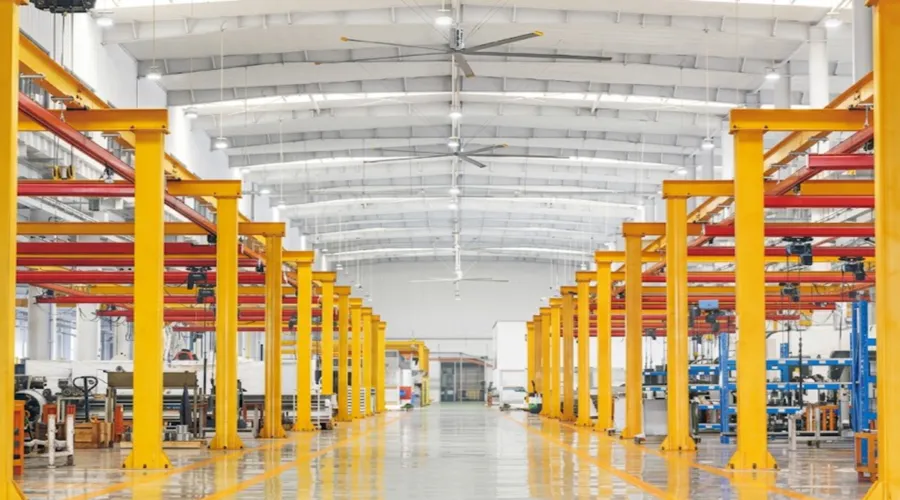
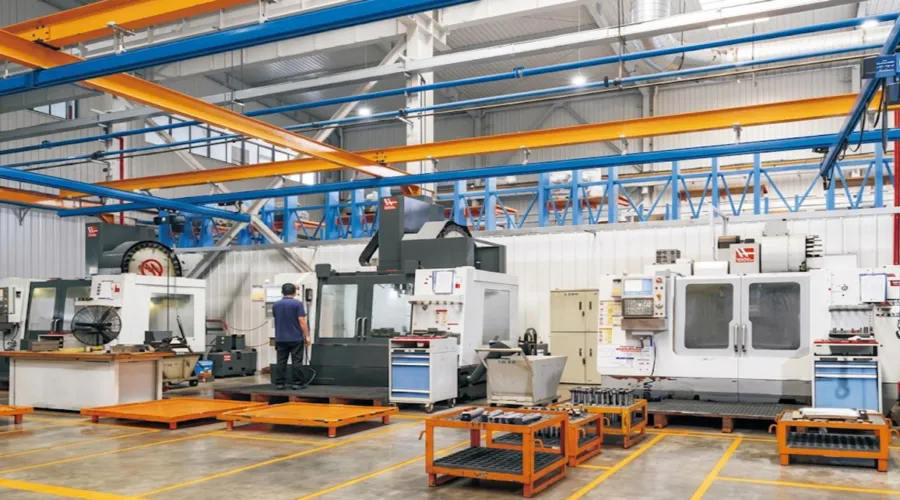
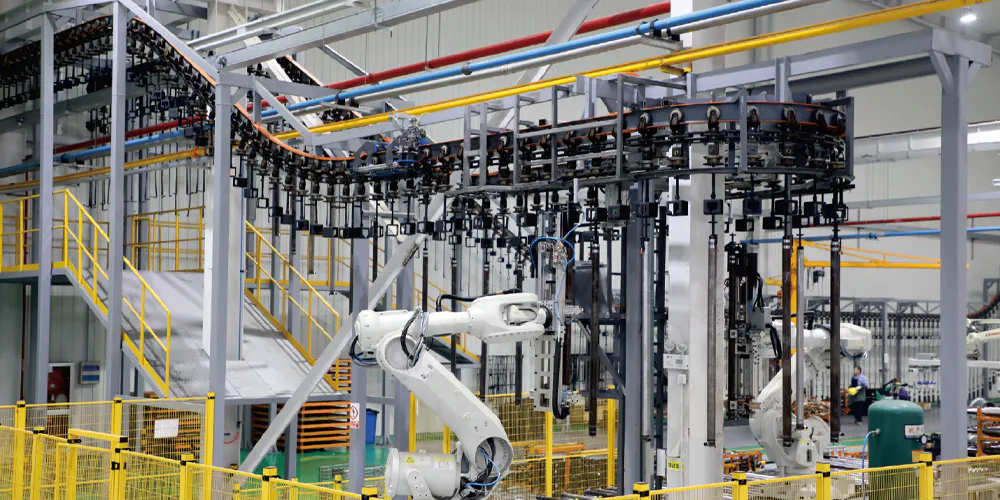
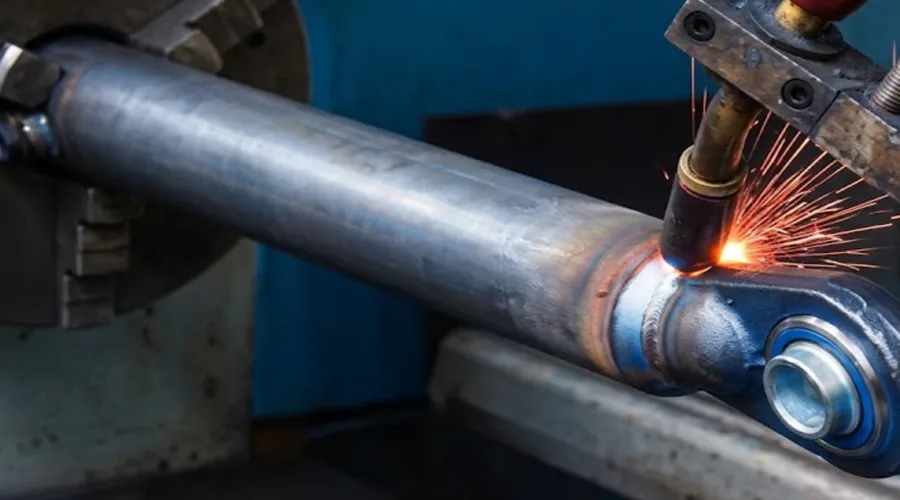
More than ten years of accumulated experience in large industrial gear production, gearbox assembly, and heavy mechanical component engineering underpins every EP-Forging Spur Gear we produce. The manufacturing operation covers agricultural gearboxes, worm gear reducers, planetary drive assemblies, power take-off shafts, hydraulic cylinders, roller chains, and industrial motors — all managed within the same ISO 9001:2015 certified quality system that governs the EP-Forging Spur Gear programme from raw billet receipt through to final gear inspection and shipment documentation.
We design and fabricate gearbox assemblies in ductile iron, cast iron, cast steel, precision cast steel, and cast aluminum, alongside a complete range of standard and non-standard mechanical components — gears of all types and sizes, worm gears, sprockets, pulleys, worms, and precision transmission shafts. The EP-Forging Spur Gear series reflects the upper end of our production capability: large module sizes demand large press capacities, large heat treatment furnaces, and large gear grinding machines, all of which are in active production use within our facility. For mining, cement, and energy sector customers in Canada, Australia, Brazil, Germany, and South Korea who need a single supplier accountable for the complete gear design, forging, heat treatment, and finish machining sequence, our facility provides that integration from a single engineering and quality system relationship.
Oficina
Compatible Drive Components — Complete Heavy Industrial Drive from One Source
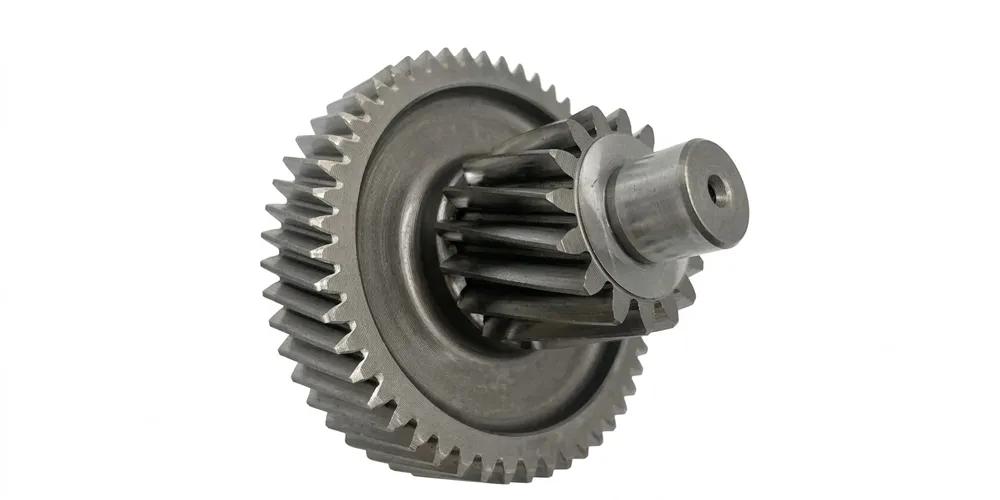
A large forging spur gear in a mining or industrial gearbox seldom operates as a standalone element. It works within a multi-stage gear train that may include helical pre-reduction stages upstream and rack-and-pinion linear mechanisms downstream. Sourcing the complete drive train from the same facility eliminates material traceability gaps, ensures accuracy grade consistency across all gear mesh interfaces, and simplifies maintenance documentation for industrial plant regulatory compliance reporting.
Engrenagem helicoidal dupla
In multi-stage industrial gearboxes, a double helical gear (herringbone) stage handles the primary high-speed reduction where noise reduction justifies the additional bearing complexity, while the large forging spur gear stage handles the lower-speed, higher-torque second and third reduction steps where straight tooth simplicity and zero axial thrust are the preferred engineering characteristics. Matching the double helical gear's module, material grade, and accuracy class to the downstream large forging spur gear from a single manufacturing source ensures gear train performance consistency and eliminates the risk of accuracy grade mismatches at the inter-stage gearbox shaft interface that can produce vibration in heavy industrial gearboxes.
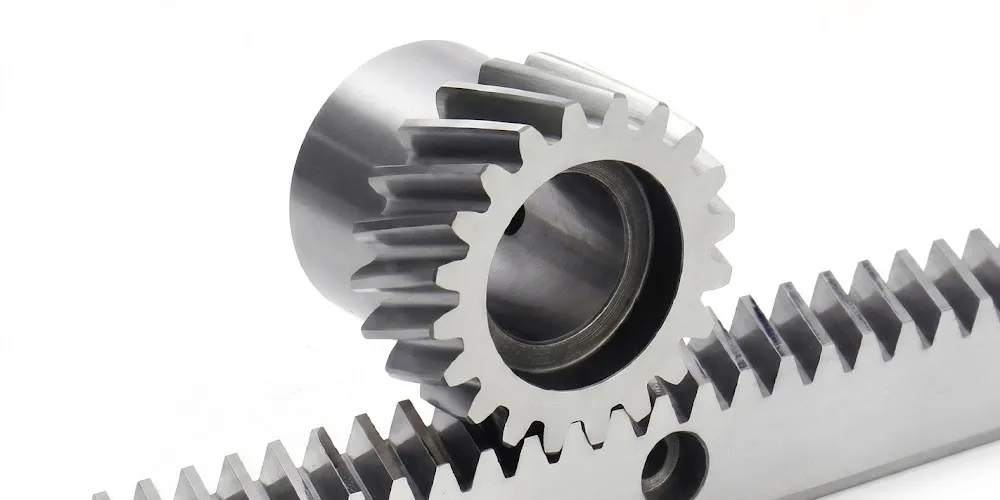
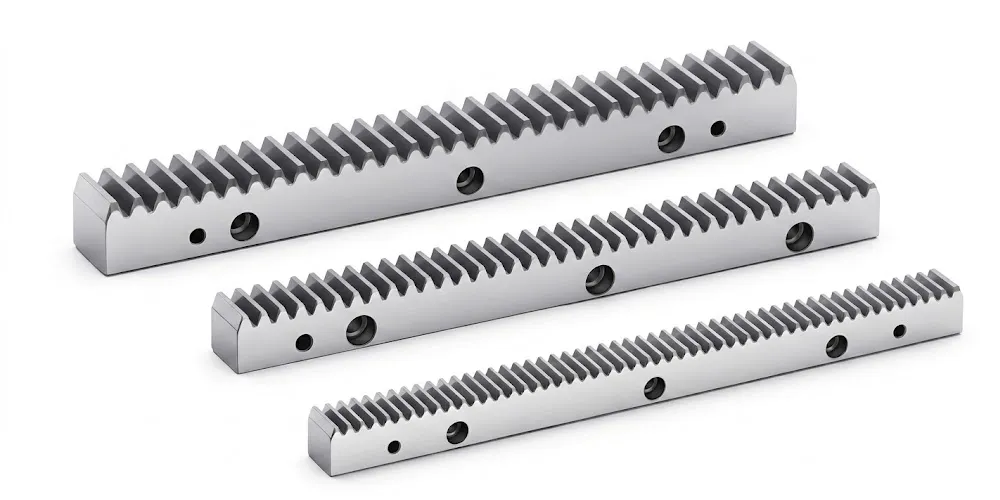
Cremalheira
Large-module gear racks in M6–M20 are used in heavy-duty linear drive applications — crane travel drives, tunnel boring machine thrust systems, and large CNC machine tool gantry axes — where the pinion spur gear output shaft meshes with the rack to convert gearbox output rotation into controlled linear displacement at high force. The gear rack module must match the pinion spur gear's module exactly, and both must share the same DIN accuracy grade to prevent periodic force variation at the rack-pinion interface that causes gantry positioning error in precision machine tool applications. Manufacturing both the large forging spur gear pinion and the matching gear rack within the same production facility eliminates this pitch accuracy mismatch risk at its source.
Frequently Asked Questions — EP-Forging Spur Gear
Editor: PXY