
GENERAL BUYER GUIDE & COMPARISON
A practical engineering guide covering how mounting configuration affects installation complexity, alignment requirements, structural load handling, and maintenance — for engineers and buyers selecting a کاهنده سرعت تک سرعته for industrial applications worldwide.
Why Mounting Configuration Matters
When specifying a کاهنده سرعت تک سرعته for a new machine or a retrofit, engineers typically spend the most time on ratio selection and output torque verification. Mounting style — shaft-mounted versus foot-mounted — often gets less deliberate attention, yet it determines how the کاهنده سرعت تک سرعته connects to the driven machine and its supporting structure, which directly affects installation labor, shaft alignment demands, baseplate requirements, and future serviceability.
A foot-mounted کاهنده سرعت تک سرعته sits on a baseplate bolted to the machine frame, with its output shaft coupled to the driven shaft via a flexible or rigid coupling. A shaft-mounted unit slides its hollow output bore directly onto the driven shaft, eliminating the coupling assembly entirely. Both mounting strategies appear across the WP series of single speed worm gear reducers — the WPDS flange-face models represent foot-mounted designs, while the WPKA hollow-bore configuration represents the shaft-mounted approach. Understanding the mechanical trade-offs between the two is the starting point for any sound procurement decision involving a کاهنده سرعت تک سرعته.
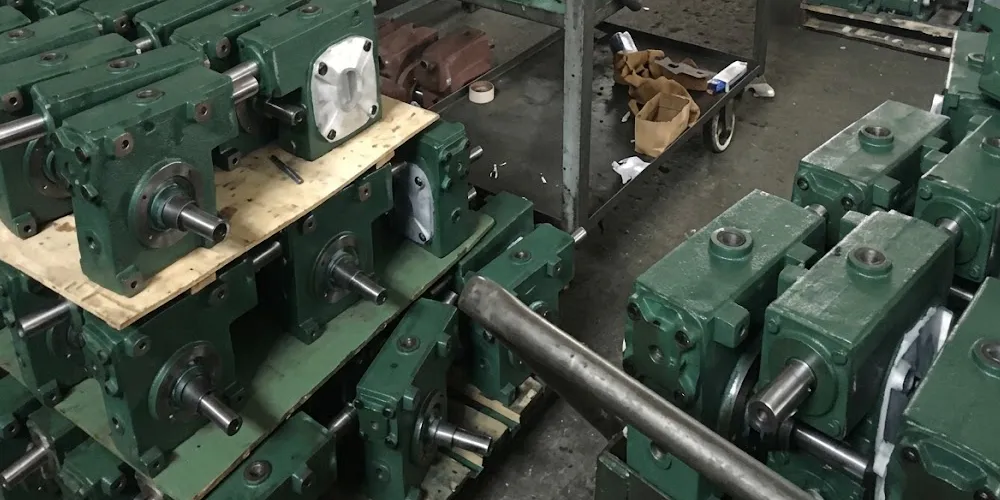
Manufacturing Structure: How Each Mounting Type Is Built
A foot-mounted کاهنده سرعت تک سرعته is constructed around a rigid cast-iron housing with machined mounting pads — typically four pads at the housing corners, drilled and tapped for foundation bolts. The housing carries the full static weight of the reducer and the torque reaction load without relying on the driven shaft for structural support. The WPDS model in the WP series exemplifies this approach: its flange-face input accepts an IEC B5 motor directly, keeping the motor and reducer concentric without a separate motor support bracket and making coupling alignment more straightforward than in separate-baseplate arrangements.
A shaft-mounted کاهنده سرعت تک سرعته such as the WPKA is machined with a hollow output bore — typically finished to H7 tolerance — that accepts the driven machine shaft directly. Torque is transmitted through a keyway or shrink-disc clamping arrangement. Because the reducer has no separate output shaft extension and no coupling, the complete drive assembly is mechanically shorter and occupies less axial space on the machine. However, the housing of a shaft-mounted کاهنده سرعت تک سرعته would rotate under load if not restrained, so a torque arm — a bracket extending from the housing to a fixed point on the machine frame — is required to absorb reaction torque. The torque arm’s pivot compliance matters: rubber-bushed pivot ends at both connection points isolate the کاهنده سرعت تک سرعته from structure-borne vibration, while rigid connections transmit vibration into the machine frame and can generate bending loads in the driven shaft at the hollow bore connection during start-up torque spikes.
The critical structural difference is where load paths terminate. In a foot-mounted کاهنده سرعت تک سرعته, the housing feet route all static and torque-reaction loads into the baseplate. In a shaft-mounted unit, the driven shaft’s bearings carry an additional radial overhung load from the weight of the mounted reducer — which in the WPKA series ranges from 5 kg for the smallest frame to 260 kg for the 250-frame unit. This overhung load must be verified against the driven shaft’s bearing ratings before finalizing any shaft-mounted specification.
Material System: Housing, Gearing, and Shaft Specifications
Material specification does not change based on whether a کاهنده سرعت تک سرعته is foot-mounted or shaft-mounted — the same housing alloys, gear materials, and seal compounds appear across both configurations in the WP series. Housings are produced from HT250 grey cast iron for the standard range, with ductile iron available in larger frames where improved tensile strength supports higher overhung loads. Grey cast iron provides the damping characteristics that reduce transmitted vibration in continuous-duty installations and the machinability needed to hold tight bore tolerances on the hollow output bore of shaft-mounted units.
Worm shafts throughout the WP کاهنده سرعت کرم تک سرعته series are manufactured from 20CrMnTi chromium-manganese alloy steel, case-carburized and hardened to 58–62 HRC on the thread flanks, with a ground finish on the thread form. Worm wheels are centrifugally cast from ZCuSn10Pb1 tin bronze — chosen for its compatibility with hardened steel worm shafts under the sliding contact conditions inherent to worm gear mesh. This material pairing gives the کاهنده سرعت چرخ دنده حلزونی its load capacity and wear resistance across the 10:1 to 60:1 ratio range available in the single-stage WP models.
Shaft seals use double-lip nitrile rubber in both configurations. Shaft-mounted units rely on precision bore fits and — in larger WPKA frames — labyrinth grooves at the hollow bore exit to prevent oil migration onto the driven shaft. Oil capacity in the WP series ranges from 0.4 L to 5.2 L depending on frame, scaled to housing volume and thermal load at the rated input power range of 0.12 kW to 15 kW.
Side-by-Side Comparison: Key Selection Criteria
The table below summarizes the practical engineering differences between shaft-mounted and foot-mounted کاهنده سرعت تک سرعته configurations. Both mounting styles cover the same 10:1 to 60:1 ratio range in the WP single stage series; selection between them is driven by machine geometry, structural resources, and maintenance access rather than by speed or torque rating alone. This comparison applies equally to single speed gear reducers operating in materials handling, food processing, agricultural, and general industrial drive contexts.
| Criterion | Shaft-Mounted (WPKA) | Foot-Mounted (WPDS) |
|---|---|---|
| Coupling required | خیر | Yes |
| Torque arm required | Yes | خیر |
| Shaft alignment sensitivity | کم | Moderate to High |
| Driven shaft radial load | Overhung (added) | Minimal |
| Baseplate or steelwork needed | Minimal | Required |
| Axial space requirement | Compact | Standard |
| Input power range (WP series) | ۰.۱۲–۱۵ کیلووات | ۰.۱۲–۱۵ کیلووات |
| Ratio range (single stage) | ۱۰:۱ – ۶۰:۱ | ۱۰:۱ – ۶۰:۱ |
| Typical applications | Conveyor, screw, elevator | Pump, fan, general drive |
| In-service removal ease | متوسط | High |
Looking for the Right Single Speed Reducer for Your Drive System?
The complete کاهنده سرعت تک سرعته series — foot-mounted WPDS, shaft-mounted WPKA, and the full WP range — is available with detailed dimensional data and ratio specifications for engineering review.
Product Reference: EP-WPDS and EP-WPKA
The two models below represent the foot-mounted and shaft-mounted configurations discussed throughout this guide. Both are built around the same worm gear transmission core — hardened 20CrMnTi worm shaft meshing with tin bronze worm wheel — and share the same cast-iron housing material and oil-bath lubrication system. The difference lies entirely in how they interface with the driven machine structure.
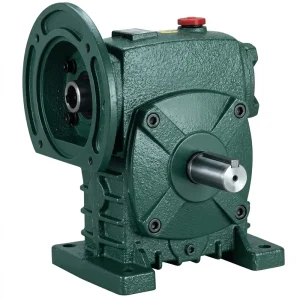
EP-WPDS — Foot-Mounted Single Speed Reducer (0.12–15 kW)
The WPDS is a foot-mounted کاهنده سرعت تک سرعته with a flange-face input (DS configuration) for direct IEC B5 motor coupling. Its solid output shaft and flat mounting feet make it a practical general-purpose drive for pumps, fans, and processing machinery where a stable baseplate is already part of the machine design. The absence of a torque arm requirement simplifies machine layout, and the solid output shaft can be directly coupled with a standard flexible coupling in both horizontal and vertical orientations. Input power runs from 0.12 kW to 15 kW across the available frame sizes.
Mounting: Foot (DS flange input) | Ratio: 10:1–60:1 | Input: ۰.۱۲–۱۵ کیلووات
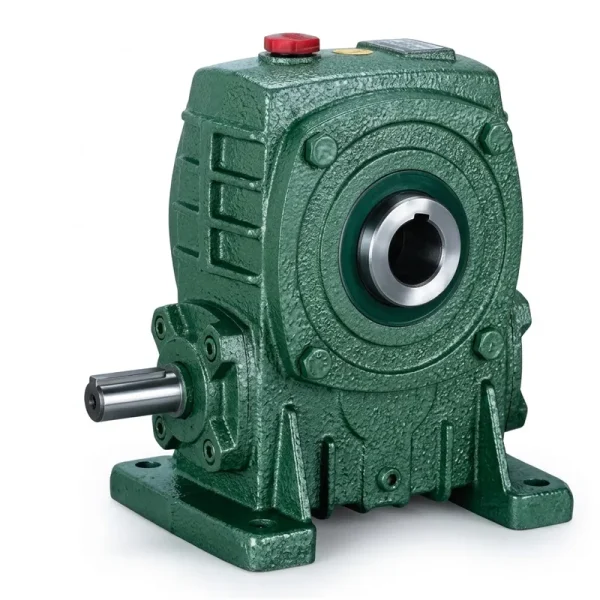
EP-WPKA — Shaft-Mounted Single Speed Reducer (5–260 kg)
The WPKA is a hollow-bore shaft-mounted کاهنده سرعت تک سرعته designed to slide directly onto a driven shaft, eliminating the coupling and reducing overall drive length. Frame sizes span 40 to 250, with unit weights from 5 kg to 260 kg. Both horizontal and vertical mounting orientations are supported. The WPKA suits conveyor drives, screw conveyors, rotary screens, and elevator drives — particularly in retrofit scenarios where an existing shaft is already in place and a foot-mounted drive would require new baseplate fabrication. Engineers in Australian mining and US materials handling facilities regularly specify the WPKA for exactly this retrofit application.
Mounting: Hollow-bore shaft | Weight: 5–260 kg | Ratio: 10:1–60:1
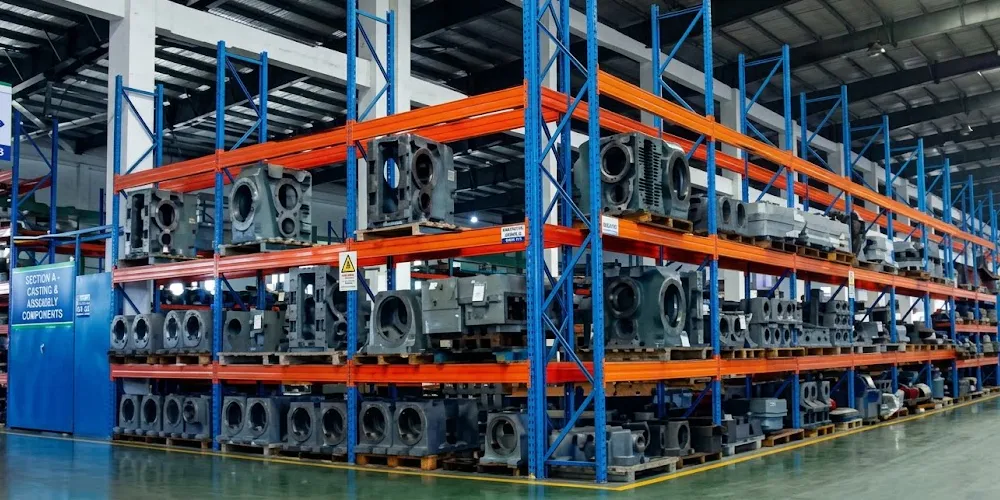
Installation, Lubrication, and Maintenance Considerations
Installing a foot-mounted کاهنده سرعت تک سرعته involves mounting the unit on its baseplate and aligning the output shaft to the driven machine’s input shaft using dial indicator or laser alignment tools. Flexible couplings tolerate small angular and parallel offsets — typically up to 0.5° angular and 0.25 mm parallel — but gross misalignment accelerates coupling wear and generates vibration that shortens bearing and seal life on both sides of the coupling. A shaft-mounted کاهنده سرعت تک سرعته installation is mechanically simpler from an alignment standpoint: the hollow bore eliminates the coupling, though the torque arm pivot axes must be parallel to the driven shaft axis to avoid binding under load. In retrofit applications on Australian mining conveyors or UK packaging lines, shaft-mounted installation is often faster because no new baseplate fabrication or precise coupling alignment is required.
Lubrication for both mounting styles relies on an internal oil bath. Standard oil capacity in the WP series runs from 0.4 L to 5.2 L depending on frame. Oil change intervals using mineral gear oil are typically 2,000 to 3,000 hours under normal conditions. For shaft-mounted units, the filler and drain plug positions shift with the housing’s rotational orientation around the driven shaft axis — most WPKA housings address this with multiple threaded plug bosses so the installer can designate filler and drain locations appropriate to the actual mounted orientation. For food processing applications in the USA or Netherlands where hygiene is a concern, H1-rated food-grade lubricant in the appropriate ISO VG grade is compatible with the tin bronze worm wheel material used throughout the WP series.
In-service removal is more straightforward for foot-mounted units: disconnect the motor, remove the coupling, unbolt the mounting feet, and lift the gearbox clear. Removing a shaft-mounted unit requires releasing the hollow bore connection and detaching the torque arm — manageable on clean equipment, but more involved on older machinery with corroded shafts or worn keyways. Sites with limited on-site maintenance resources, such as remote Colombian industrial facilities or rural South Korean processing plants, should factor this into the mounting style decision.
اجزای سیستم درایو سازگار
الف کاهنده سرعت تک سرعته performs as part of a complete drive system. Sourcing the motor and worm gearbox components from a single supply chain removes interface compatibility questions and simplifies procurement — particularly for OEM machine builders managing multiple parallel projects who prefer dealing with one technical contact across the motor, gearbox, and downstream gearing specification.
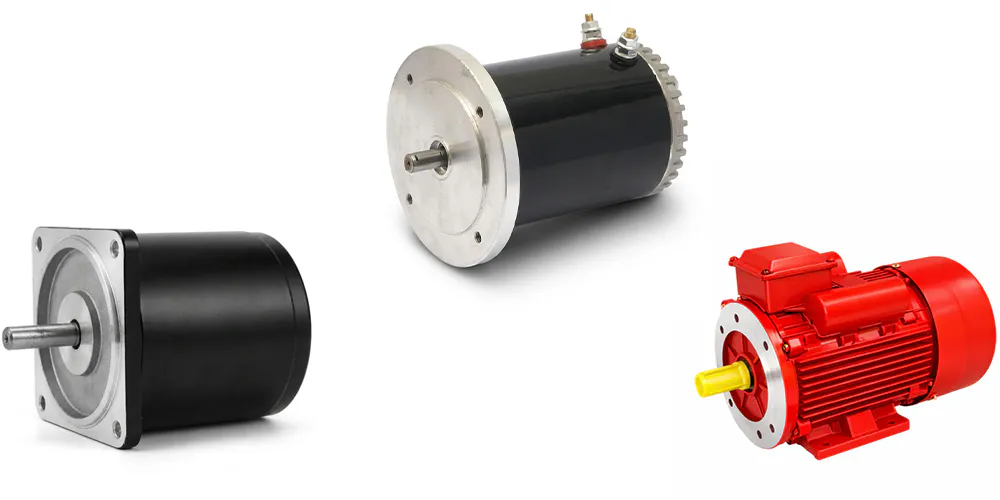
موتورهای الکتریکی
The WP کاهنده سرعت تک سرعته series accepts IEC B3, B5, and B14 frame موتورهای الکتریکی across the 0.12 kW to 33 kW input power range. Foot-mounted WPDS models accept direct B5 motor flange coupling; shaft-mounted WPKA units use a motor support bracket positioned relative to the reducer input shaft. Selecting a matched motor from the same source avoids field-modification of input bore or keyway dimensions and ensures the motor’s torque curve is correctly aligned with the gearbox’s efficiency at the operating ratio.
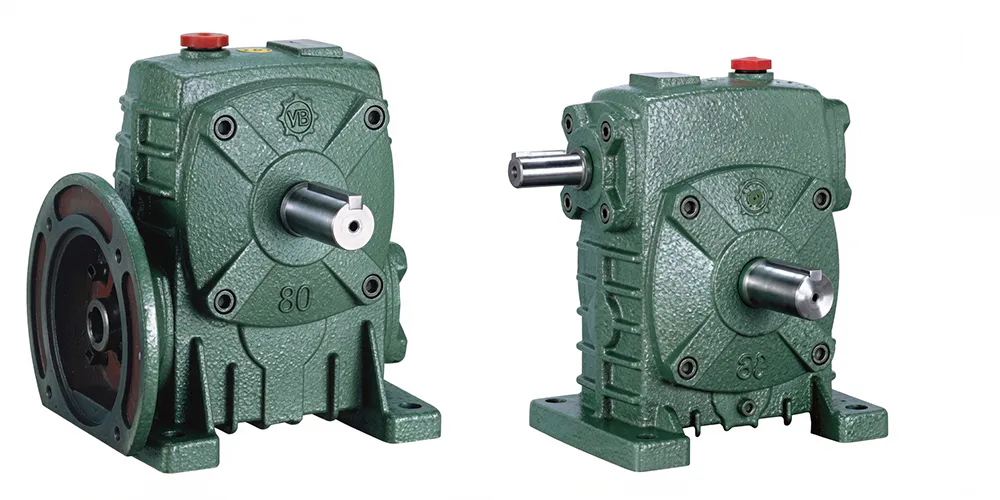
گیربکس حلزونی
Where a کاهنده کرم کاهنده تک provides one stage of ratio, a full گیربکس حلزونی range extends the available transmission architecture to double-stage and multi-stage configurations, reaching ratios up to 1/900. The shared housing material (cast iron) and shaft material specification across single and double-stage WP families simplifies interfacing between product lines for drive systems requiring ratios beyond the 10:1–60:1 single-stage envelope of the کاهنده سرعت کرم range.
درباره کارخانه تولیدی
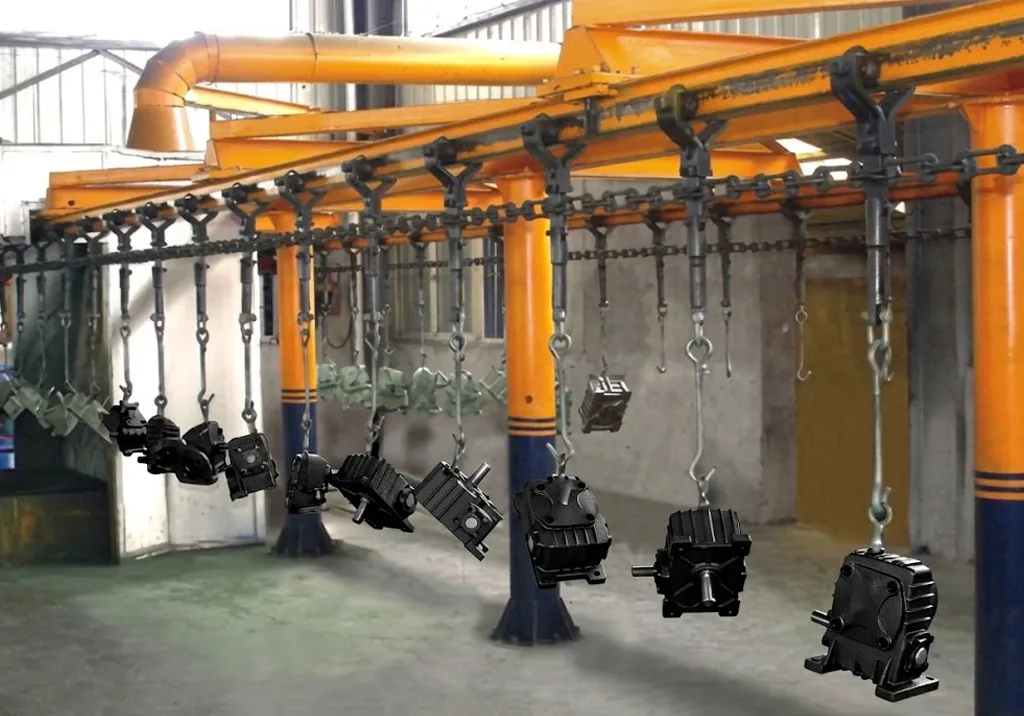
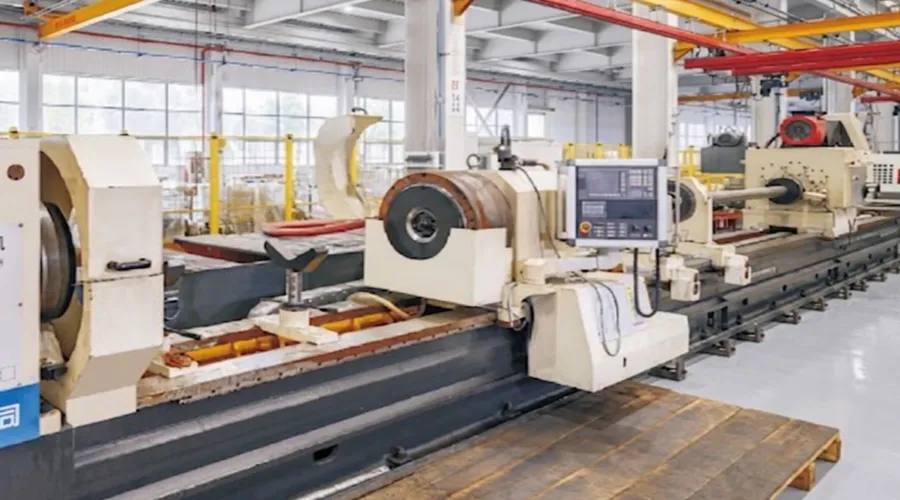
Our production facility designs and manufactures a comprehensive range of industrial and agricultural power transmission equipment — including worm gear reducers, planetary gear drives, agricultural gearboxes, power take-off shafts, hydraulic cylinders, gears, sprockets, chains, and motors. The کاهنده سرعت تک سرعته series covers both shaft-mounted and foot-mounted configurations across the full WP family of frame sizes.
Housing castings are produced from ductile iron, grey cast iron, cast steel, precision cast steel, and cast aluminum. Gears, sprockets, worm gears, pulleys, worms, and shafts — both standard catalog dimensions and non-standard parts to customer drawings — are manufactured in-house. The facility is ISO 9001:2015 certified. As a تولیدکننده کاهنده سرعت تک سرعته, we serve customers in the USA, UK, Australia, Canada, the Netherlands, Brazil, South Korea, Colombia, and other global markets with OEM customization, private-label supply, and technical support for drive system integration projects of all scales.
کارگاه


سوالات متداول
The questions below address the practical concerns that engineers, maintenance managers, and procurement professionals most commonly raise when evaluating a کاهنده سرعت تک سرعته mounting configuration for industrial drive applications.
What is the main reason to choose a shaft-mounted single speed reducer over a foot-mounted model for a conveyor drive in a US food processing plant?
The primary reason is installation simplicity and the elimination of shaft coupling alignment. A shaft-mounted کاهنده سرعت تک سرعته slides directly over the conveyor’s driven shaft, removing the coupling alignment procedure that a foot-mounted drive requires. In food processing environments where conveyors are periodically repositioned or replaced, the faster installation and removal cycle has real practical value. The trade-off — additional overhung radial load on the conveyor shaft’s bearings from the mounted reducer weight — must be checked against the bearing’s rated radial capacity before finalizing the WPKA specification for heavier frames above 100 kg.
How does the torque arm design affect single speed reducer performance in a UK industrial packaging line application?
The torque arm prevents the housing of a shaft-mounted کاهنده سرعت تک سرعته from rotating under load. For packaging line drives in UK facilities where noise and vibration are managed, a torque arm with rubber-bushed pivot ends at both connection points is preferred — it isolates the کاهنده سرعت تک سرعته housing from structure-borne vibration and absorbs small angular deflections during motor start-up torque spikes without transmitting bending loads into the driven shaft at the hollow bore connection. A rigid torque arm without compliance at its pivots can generate side loads into the shaft that shorten bearing service life, particularly in high-cycle packaging machine applications.
Which single speed worm reducer mounting style is better for retrofit installation on an existing grain elevator drive in an Australian agricultural facility?
The shaft-mounted configuration is typically the more practical choice for Australian agricultural retrofit scenarios. The driven shaft is already present and machined, so fitting a hollow-bore WPKA کاهنده سرعت تک سرعته requires no new shaft work and no baseplate fabrication — both significant considerations in remote locations where fabrication resources are limited. The WPKA frame range from 40 to 250 covers the majority of grain elevator shaft sizes. If the existing shaft bearings are marginal for overhung load, positioning the torque arm connection close to the reducer’s center of mass minimizes the bending moment.
What worm gear reduction ratio range does a single stage speed reducer cover, and when is a two-stage unit needed instead?
الف کاهنده سرعت تک مرحلهای in the WP worm gear series covers 10:1 to 60:1, handling the majority of conveyor, mixer, and agitator drive requirements from a standard 1450 RPM motor. For a 1450 RPM input at 60:1 ratio, the output shaft turns at approximately 24 RPM. When an application requires output speeds below roughly 5 RPM from the same motor — typically ratios above 290:1 — a two-stage unit or a dedicated double-stage gearbox in the 200:1 to 900:1 range is the appropriate choice. Pushing a single worm stage beyond 60:1 results in steep efficiency losses due to unfavorable contact angles at deep-reduction geometry.
Where can OEM machine builders in Canada or the Netherlands source a customized single speed reducer with non-standard output shaft dimensions for a mixer drive?
OEM builders in Canada, the Netherlands, or other international markets requiring a کاهنده سرعت تک سرعته سفارشی with modified output shaft diameter, non-standard keyway, or adapted mounting foot drilling can engage our export engineering team directly. The WP series housing is produced in cast iron with standardized bore patterns that can be machined to non-catalog dimensions within the structural limits of each frame. Typical customizations include modified shaft-end dimensions to match proprietary coupling interfaces and adjusted oil plug positions for non-standard mounting orientations. Sample units with the agreed custom specification are available within standard lead time for qualified OEM programs, followed by scheduled series production deliveries.
تدوینگر: PXY