
GENERAL BUYER GUIDE & COMPARISON
A well-specified and correctly maintained riduttore di velocità singolo can deliver 20,000 hours or more of reliable service. The gap between that theoretical figure and the actual field life recorded in many industrial installations comes down to a handful of specific, avoidable factors — and understanding each of them is the starting point for improving gearbox service life in any operation.
Expected Service Life of a Single Speed Reducer
The published design life of a riduttore di velocità singolo in the WP worm gear series is typically stated in terms of L10 bearing life — the number of operating hours at which 10% of a population of identical units under identical loading would be expected to have experienced a bearing-related failure. For standard WP series frames operating at rated load and correct oil fill with mineral ISO VG 220 gear oil, L10 bearing life is typically in the range of 15,000 to 25,000 hours, depending on the frame size and the ratio. This corresponds to roughly 8–14 years of operation at a two-shift industrial schedule of 3,600 hours per year.
The bearing life figure is not the same as the worm wheel service life, which is often the primary wear-out mechanism in a well-maintained riduttore di velocità a stadio singolo. The tin bronze worm wheel is the designed sacrificial wear element in any worm gear reducer, and its service life is determined by the sliding contact velocity at the mesh, the oil film thickness, the surface hardness of the worm shaft, and the load level relative to the rated output torque. Under ideal conditions — rated load, correct oil, smooth duty cycle — a worm wheel in a WP series riduttore a velocità singola can expect 15,000 to 30,000 hours of service before the accumulated pitting and surface fatigue on the tooth flanks creates enough output torque ripple or efficiency loss to justify replacement. Under adverse conditions, that figure can drop to 3,000 to 5,000 hours or fewer.
Six Factors That Shorten Single Speed Reducer Service Life
The factors below account for the majority of premature riduttore di velocità singolo failures reported across industrial facilities in the USA, UK, Australia, Canada, and other markets. Each one is avoidable — either at the specification stage or through maintenance practice — yet all six appear regularly in field failure investigations of the riduttore di velocità singolo in worm gear configurations.
1. Operating Beyond Rated Output Torque
Continuous or frequent operation above the published rated output torque of a riduttore di velocità singolo compresses the Hertz contact stress between the worm shaft thread and the worm wheel tooth face. The bronze wheel’s fatigue limit is finite; once contact stress exceeds it consistently, micro-cracks initiate below the tooth surface and propagate to create pitting and spalling. A riduttore di velocità singolo running at 120% of rated torque continuously may lose half its expected wheel life or more compared to a unit operating within its rated envelope.
2. Incorrect Lubricant Viscosity or Grade
Worm gear reducers depend on elastohydrodynamic lubrication — a thin oil film formed under the high contact pressure of the worm-wheel mesh that prevents direct metal-to-metal contact. If the oil viscosity is too low for the operating temperature, the film thins below the minimum required thickness and boundary lubrication conditions prevail, producing rapid adhesive wear at the contact surface. ISO VG 220 is the standard grade for WP series units at typical ambient temperatures; switching to a lower viscosity to reduce oil drag at low temperatures — a common field mistake in Canadian winter startups — eliminates the protective film at operating temperature and dramatically reduces worm wheel life in a riduttore di velocità a vite senza fine.
3. Overdue Oil Changes and Contamination
Mineral gear oil oxidizes during operation — heat and oxygen attack the base oil molecules, increasing viscosity and forming acidic degradation products that corrode bearing races and gear surfaces. The recommended oil change interval for mineral ISO VG 220 in a WP series riduttore di velocità singolo is 2,000–3,000 hours under normal conditions. Many facilities in Australia and the Netherlands extend this to 5,000+ hours without oil sampling data to support the extension, resulting in operation on severely degraded lubricant that accelerates all wear mechanisms simultaneously. Water contamination from a failed seal compounds the problem by displacing the oil film and promoting bearing corrosion.
4. Chronic High Operating Temperature
Oil oxidation rate roughly doubles with every 10°C rise above normal operating temperature — a well-established Arrhenius relationship in lubricant engineering. A riduttore a vite senza fine a velocità singola housing consistently running at 95°C surface temperature degrades its oil bath approximately four times faster than the same unit running at 75°C. Causes include inadequate ventilation around the gearbox, overfill of the oil sump that creates excessive churning heat, or operation in hot ambient environments without adjusting the oil grade to a higher viscosity index fluid. In UK and South Korean processing facilities where enclosed machinery rooms can reach 40°C in summer, seasonal oil viscosity review for all installed riduttore di velocità singolo units is a worthwhile maintenance practice.
5. Shaft Misalignment at the Coupling
In foot-mounted riduttori a velocità singola, the output shaft is connected to the driven machine shaft via a coupling. Angular and parallel misalignment at this coupling introduces cyclic bending loads at the output shaft extension — loads that were not part of the gearbox’s design load case. These bending loads translate directly into elevated radial loads on the output shaft bearings, reducing L10 bearing life in proportion to the cube of the load ratio. A coupling misalignment of only 0.5 mm parallel offset — barely perceptible during rough installation — can reduce output shaft bearing life by 30–50% in a riduttore di velocità singolo operating continuously in a US food processing or packaging application.
6. Shock Loads Without Service Factor Margin
UN riduttore di velocità singolo specified at exactly its rated output torque for a steady-state load has no mechanical margin for the peak torque transients that occur at motor startup, conveyor jam events, or tool engagement in machine tool drives. Each peak torque event that exceeds the rated output torque accelerates fatigue crack initiation in the bronze worm wheel. Agricultural drives in Brazil and Colombia, where the riduttore di velocità a vite senza fine is subjected to frequent start-under-load conditions, are particularly vulnerable to this failure mode when the initial specification ignored the service factor that should have been applied to account for the shock-load classification of the application.
Service Life Comparison: Ideal vs. Adverse Conditions
The table below illustrates how each of the six life-shortening factors affects the expected service life of a typical WP series riduttore di velocità singolo relative to a correctly specified and maintained baseline. Values represent typical field observations rather than precise engineering calculations — actual impact on a given riduttore di velocità singolo depends on the severity and duration of each adverse condition.
| Condition | Baseline Life | Adverse Condition | Estimated Life Impact |
|---|---|---|---|
| Rated output torque, correct oil | 15,000–25,000 hrs | 120% of rated torque, continuous | 40–60% reduction |
| ISO VG 220 mineral oil | 15,000–25,000 hrs | Wrong viscosity grade | 50–75% reduction |
| Oil change at 2,500 hrs | 15,000–25,000 hrs | Oil change overdue to 6,000+ hrs | 30–50% reduction |
| Housing temp 70–80°C | 15,000–25,000 hrs | Chronic 95°C+ housing temp | 60–80% oil life reduction |
| Coupling aligned <0.1 mm | Full L10 bearing life | 0.5 mm parallel offset | 30–50% bearing life reduction |
| Service factor applied correctly | Full rated life | SF ignored, shock load application | Up to 70% life reduction |
Manufacturing Structure and Material System: What Determines the Design Life
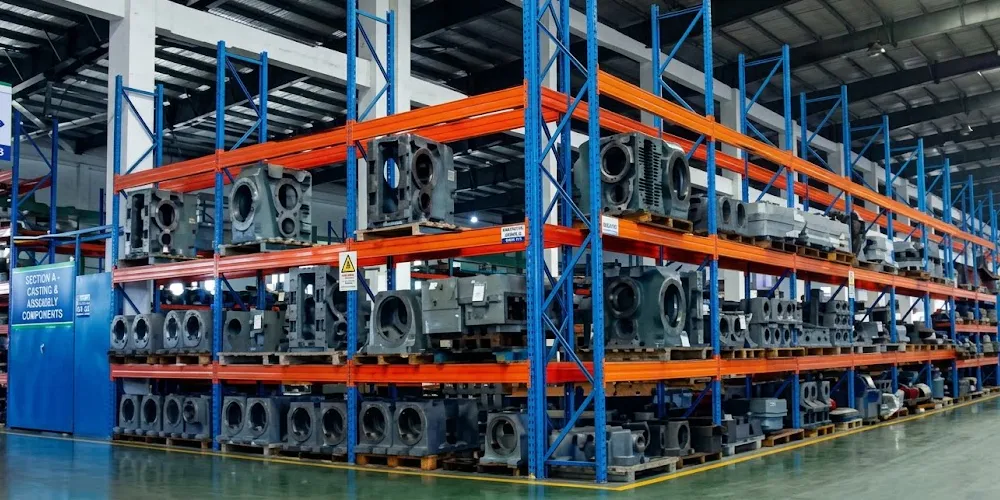
The theoretical service life of a riduttore di velocità singolo is set during the design and manufacturing process, before any installation or operating conditions come into play. In the WP series, the housing is produced from HT250 grey cast iron — a material with high compressive strength suitable for the bearing preload forces, good vibration damping to reduce cyclic fatigue loading on the housing bores, and the machinability required to hold the shaft bore tolerances that keep worm and wheel in correct mesh alignment throughout service. Housing bore concentricity is maintained by machining in a single fixturing setup — a process control step that prevents the accumulated alignment error that arises from sequential re-fixtured operations.
The worm shaft material is 20CrMnTi alloy steel, case-carburized and hardened to 58–62 HRC on the thread flanks, then ground to the final thread form. This surface hardness is what establishes the contact fatigue life of the worm shaft — at 58–62 HRC, the worm shaft thread has a calculated fatigue limit that, under rated load conditions, exceeds the expected service life of the worm wheel by a factor of three or more. The worm wheel is centrifugally cast from ZCuSn10Pb1 tin bronze. This alloy’s fatigue limit under sliding contact with a hardened steel worm shaft, combined with the lubrication conditions in the WP series oil bath, determines the wheel life that the published ratings reflect. Bearings throughout the WP series are selected to achieve L10 lives that meet or exceed the wheel life under rated conditions — meaning the first mechanical wear-out event in a correctly maintained riduttore a vite senza fine is typically worm wheel pitting, not bearing failure.
How to Extend Single Speed Reducer Service Life in Practice
The single highest-value action for extending the service life of a riduttore di velocità singolo is maintaining the oil. This is not a complex intervention — it requires drain-and-refill at the correct interval, selection of the right oil grade for the operating temperature, and visual inspection of the drained oil before refilling. Synthetic gear oils formulated for worm gear drives offer significantly better oxidation resistance than mineral oils — oil change intervals for synthetic worm gear oil are typically 5,000 to 8,000 hours versus 2,000 to 3,000 hours for mineral oil, and the thermal protection at elevated housing temperatures is meaningfully better. For WP series riduttore di velocità singolo units operating in South Korean or Brazilian industrial facilities running continuous shifts in warm ambient conditions, a synthetic ISO VG 220 or VG 320 worm gear oil is a cost-effective life extension measure.
Coupling alignment is the second-highest-value maintenance action for foot-mounted units. A laser alignment check at installation, followed by a recheck after the first 100 hours of operation when thermal expansion and bedplate settling have stabilized the drive system, establishes a correct baseline. For shaft-mounted units like the WPKA series, torque arm bushing condition should be checked at each oil service — worn bushings allow the housing to rock slightly under torque transients, which imposes cyclic bending on the driven shaft and its bearings over time. Beyond oil and alignment, a monthly visual walkdown covering housing surface temperature, shaft seal condition, and external oil leaks catches the early-stage failure indicators described in maintenance best-practice guides for single speed gear reducers before they progress to costly internal damage.
Replacing a Worn-Out Single Speed Reducer or Planning a Spare Stock Program?
The complete WP series riduttore di velocità singolo range — from compact 40-frame models to large 250-frame units — is available with full dimensional documentation for replacement planning and OEM spare stock programs.
Product Reference: Long-Service-Life Single Speed Reducers
The following WP series models are frequently specified in applications where long service intervals between planned replacements are a priority — either because access for maintenance is difficult, or because the production cost of downtime during a gearbox replacement is high. Both models offer the oil capacity and thermal mass that support long oil change intervals when correct lubricant grades are used.
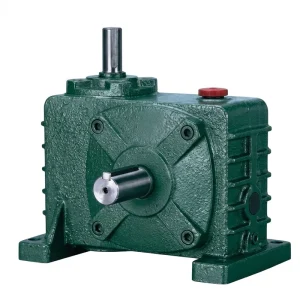
EP-WPZ — Riduttore a velocità singola con capacità dell'olio da 0,4 a 5,2 litri
The WPZ series spans oil capacities from 0.4 L to 5.2 L across frame sizes 40 to 250, providing a larger internal oil volume relative to the heat-generating worm mesh than more compact designs. The larger oil reservoir reduces the rate at which the oil bath temperature rises under load, which directly extends oil change intervals and slows oxidation-driven oil degradation. For US and Australian food processing applications where this foot-mounted riduttore di velocità singolo operates in warm facility environments on continuous two- to three-shift schedules, the WPZ’s oil capacity is a practical advantage in sustaining longer service intervals between planned maintenance windows.
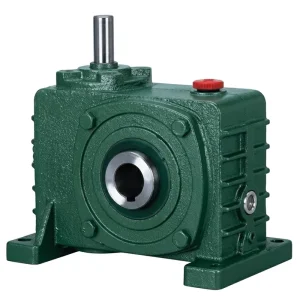
EP-WPKZ — Riduttore a velocità singola con capacità dell'olio da 0,4 a 5,2 litri
The WPKZ is the hollow-bore shaft-mounted variant of the WPZ series, sharing the same oil capacity range (0.4 L to 5.2 L) in a configuration that eliminates the coupling assembly. For conveyor and elevator applications in UK and Netherlands facilities where the shaft-mounted configuration is preferred for installation efficiency, the WPKZ provides the same oil thermal buffer advantage as the WPZ in a compact drive package. Multiple threaded plug boss positions on the housing allow the oil filler and drain plugs to be correctly positioned regardless of which rotational mounting orientation is required by the installation geometry — important for maintaining correct oil level in this riduttore di velocità singolo variant.
Componenti del sistema di azionamento compatibili
UN riduttore di velocità singolo achieves its rated service life most reliably when the complete drive system — motor, gearbox, and downstream gearing — is specified and maintained as an integrated unit. Component mismatches at the motor-gearbox interface or at the gearbox-driven machine coupling are among the leading causes of premature failure that show up in industrial maintenance records.
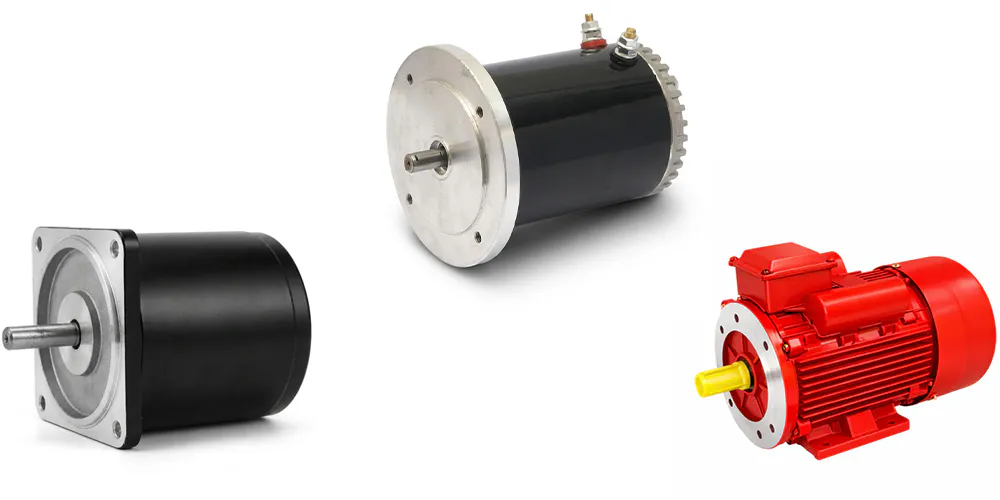
Motori elettrici
A correctly matched motore elettrico with the right torque curve and shaft dimensions reduces the magnitude of startup torque spikes that the riduttore di velocità singolo must absorb. Motors with soft-start or variable frequency drive control eliminate or reduce the peak torque at motor start — one of the most significant life-shortening events for worm wheel tooth flanks. Selecting a motor with IP55 or higher ingress protection also prevents moisture ingress into the motor winding, which is a common cause of motor failure events that produce uncontrolled load transients during the failure sequence.
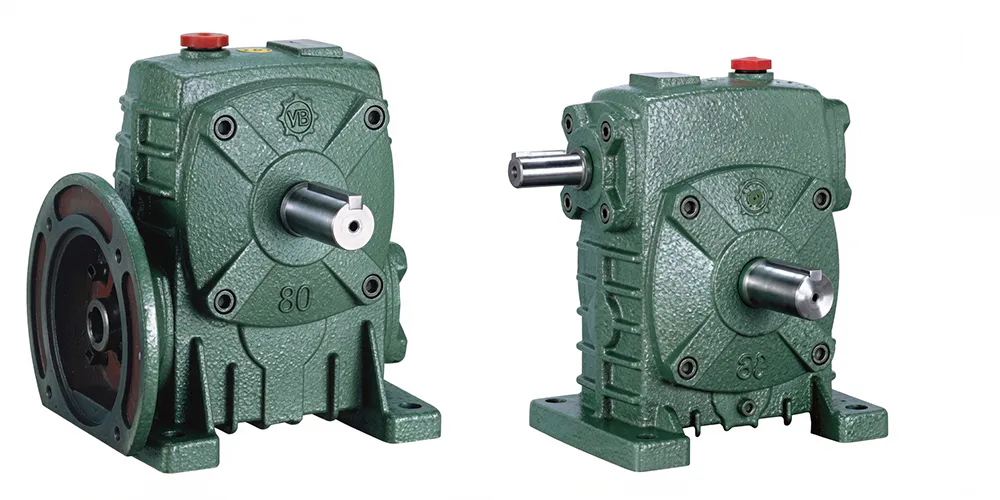
Ingranaggio a vite senza fine
For applications where the required ratio exceeds the 10:1 to 60:1 range of a single-stage unit, a worm gearbox in a double-stage configuration reduces each stage’s operating load — which directly benefits service life because each stage now runs at a lower fraction of its rated torque. A single-stage unit running at 80% of rated torque has a significantly shorter expected wheel life than a two-stage configuration where each stage runs at a lower proportion of its own rating to achieve the same combined output speed and torque.
Informazioni sull'impianto di produzione
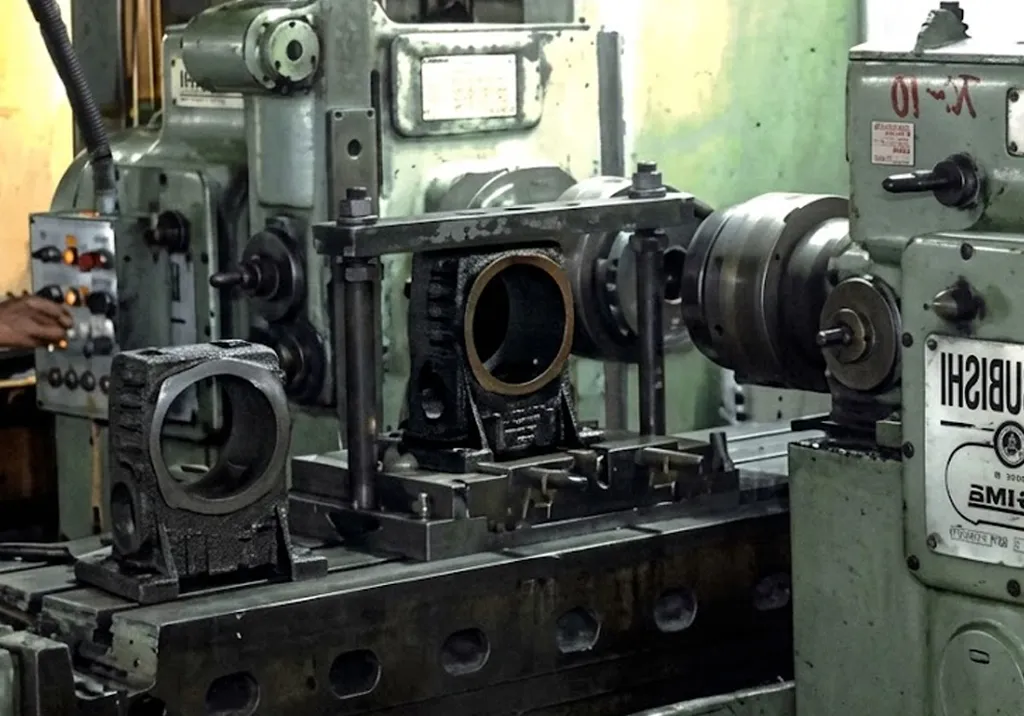
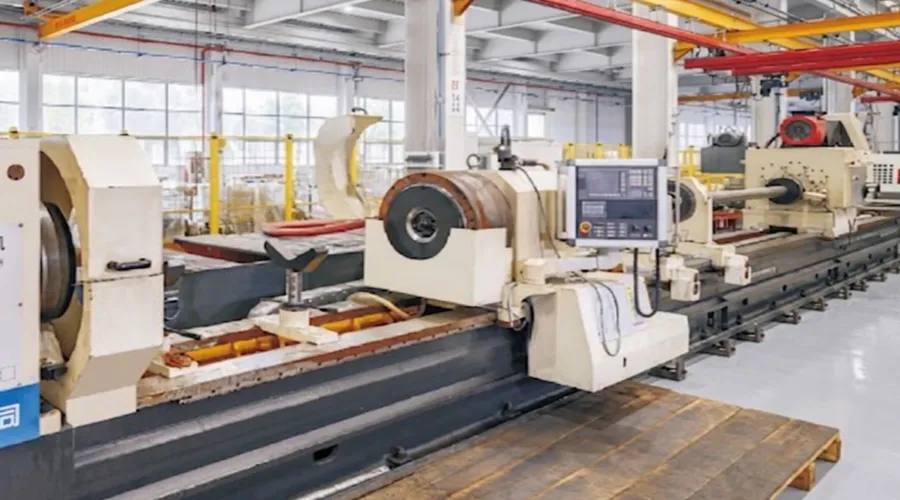
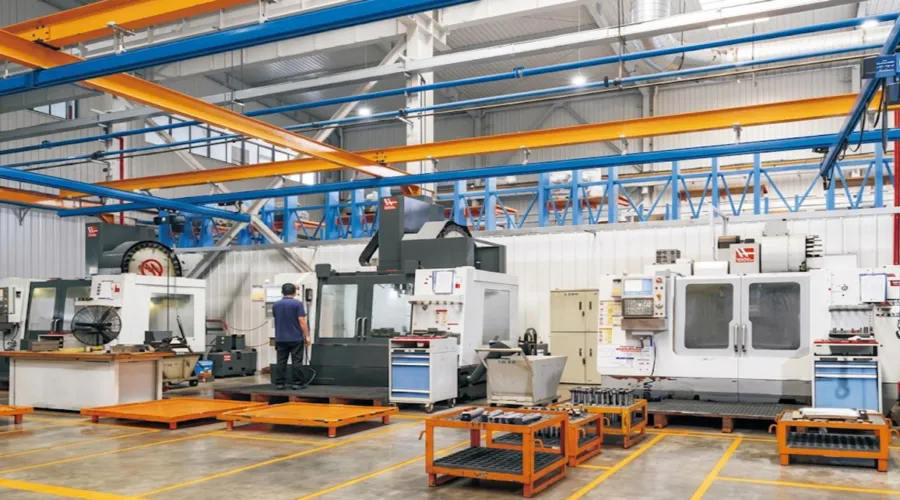
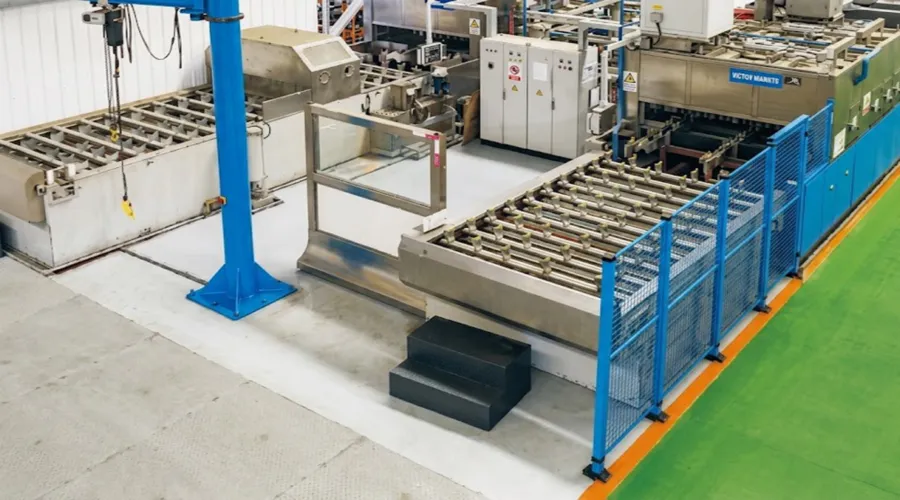
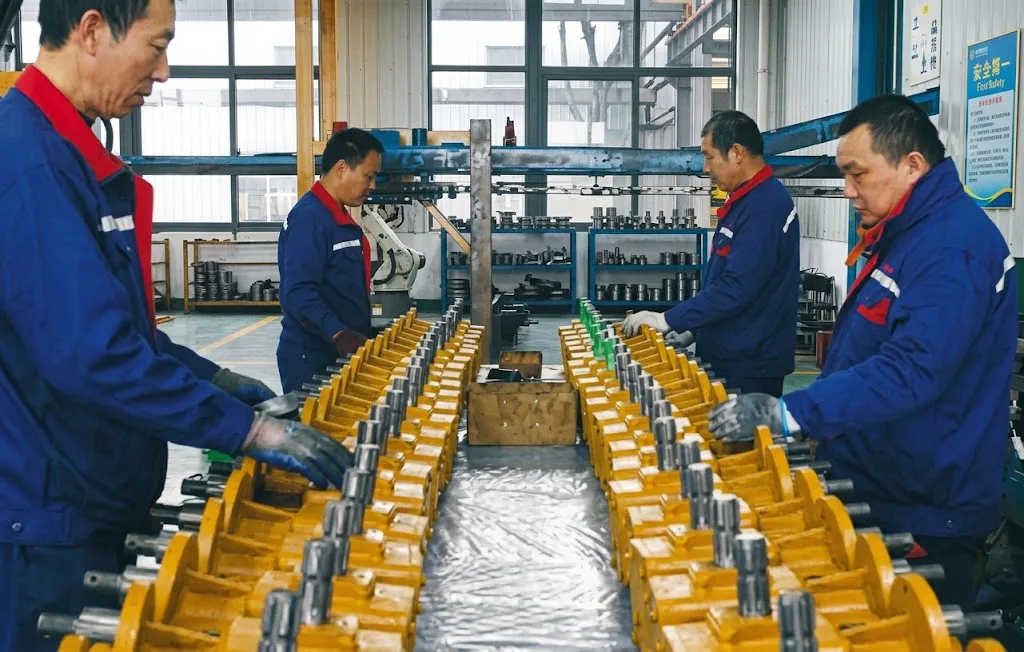
Our production facility manufactures a comprehensive range of industrial and agricultural power transmission equipment — worm gear reducers, planetary gear drives, agricultural gearboxes, power take-off shafts, hydraulic cylinders, gears, sprockets, chains, and motors. The riduttore di velocità singolo series covers both foot-mounted and shaft-mounted configurations across the WP family of frame sizes, with housing materials in ductile iron, grey cast iron, cast steel, precision cast steel, and cast aluminum. Gears, sprockets, worm gears, pulleys, worms, and shafts — both standard catalog dimensions and non-standard parts to customer specifications — are manufactured in-house under ISO 9001:2015 quality management certification. As a produttore di riduttori a velocità singola serving customers in the USA, UK, Australia, Canada, the Netherlands, Brazil, South Korea, Colombia, and other global markets, we provide OEM customization, private-label supply, technical consultation for service life optimization, and replacement parts support for field maintenance programs.
Workshop
Domande frequenti
These questions address the practical concerns that maintenance engineers and procurement professionals raise when evaluating the expected service life of a riduttore di velocità singolo across different operating environments.
What is the typical service life of a single speed worm gear reducer installed on a conveyor drive in a US food processing facility running two shifts per day?
For a correctly specified WP series riduttore di velocità singolo on a two-shift US food processing conveyor — approximately 3,600 operating hours per year — the expected worm wheel service life is 15,000 to 25,000 hours (4–7 years) under rated load conditions using the correct food-grade H1-rated gear oil at the proper viscosity grade. Bearing L10 life typically meets or exceeds this. The most common reason this life is not achieved in food processing facilities is the use of food-grade lubricants at incorrect viscosity grades — H1-rated synthetic worm gear oils are available in ISO VG 220 and VG 320 grades and should be selected based on the actual operating temperature of the gearbox housing, not defaulted to the lowest viscosity available.
How does ambient temperature in Australian mining facilities affect the oil change interval and service life of a single stage speed reducer?
In Australian mining facilities where ambient temperatures routinely reach 35–45°C in summer, the oil bath temperature in a riduttore di velocità a stadio singolo under load can easily reach 90–100°C on the housing surface — 15–20°C above what the same unit would see in a temperature-controlled European facility. At those temperatures, mineral worm gear oil oxidizes at a rate that effectively halves the recommended 2,500-hour oil change interval. The practical response is twofold: switch to a synthetic worm gear oil with a better oxidation stability index (which tolerates higher temperatures with a less accelerated degradation rate), and take a 30-minute quarterly oil sample for viscosity and acid number testing rather than relying solely on fixed-interval oil changes. Oil analysis data from the field allows the change interval to be matched to actual oil condition rather than applied as a fixed-time rule.
Which maintenance action most effectively extends the bearing life of a single speed gear reducer in a UK packaging line running three shifts?
For a three-shift UK packaging line — approximately 6,000 operating hours per year — coupling alignment is the single maintenance action with the highest bearing life payoff per unit of effort. A laser alignment check at commissioning and after the first 200 hours of operation (when thermal settling stabilizes the drive train geometry) consistently extends output shaft bearing L10 life by 30–50% compared to units installed with rough coupling alignment. At 6,000 hours per year, a 40% bearing life extension translates to delaying a bearing replacement event by two to three years in this riduttore di velocità singolo application — a material reduction in planned maintenance cost over the equipment’s life.
How do I know when the worm wheel in my single speed reducer has reached the end of its service life and needs replacement in a South Korean industrial facility?
Three observable indicators signal that the worm wheel in a riduttore di velocità singolo is nearing end of life: accelerating bronze particle concentration in drained oil samples (detected by visual inspection or oil analysis); a periodic knock or irregular noise from the gearbox at the worm-wheel mesh frequency; and visible pitting or circumferential scoring on the wheel tooth flanks when the housing is opened during a scheduled maintenance inspection. In South Korean industrial facilities with structured predictive maintenance programs, oil sample analysis at each 2,000-hour oil change provides the earliest warning — a doubling of bronze particle concentration between two consecutive oil samples is a reliable signal that wheel surface fatigue is accelerating and a replacement window should be planned within the next service cycle.
Where can OEM machine builders in the Netherlands or Canada source a customized single speed reducer with extended oil capacity for long-interval maintenance programs?
OEM machine builders in the Netherlands, Canada, and other international markets requiring a riduttore di velocità singolo personalizzato with modified oil sump capacity, non-standard housing dimensions, or specific mounting configurations can engage our export engineering team for a tailored solution. The WP series WPZ and WPKZ models already offer oil capacities up to 5.2 L in the largest frames, supporting extended oil change intervals when combined with synthetic gear oil. For applications requiring oil capacity beyond the standard catalog, housing modifications are feasible within the structural limits of each frame size. Dimensional documentation, material certificates, and application-specific rating confirmation are available to support design review and procurement processes in both European and North American markets.
Redattore: PXY