
Textile & Garment Manufacturing
How worm gear reducer construction, sealing strategy, and material choices determine drive reliability across dyeing, washing, and finishing machinery in global textile wet processing facilities.
Wet processing is the most chemically aggressive operating environment within a textile manufacturing facility. Dyeing machines, jiggers, jet dyeing vessels, continuous washing ranges, pad-mangles, and open-width finishing lines all expose their mechanical drive components to a combination of hot water, alkali solutions, acid dye carriers, steam condensate, and in some cases chlorine-based bleaching agents. The drive units positioned at fabric roll drives, squeeze roll nips, conveyor tensioning systems, and dye liquor circulation pump drives operate continuously under these conditions, often in ambient temperatures of 40 to 60 degrees Celsius with airborne humidity approaching saturation.
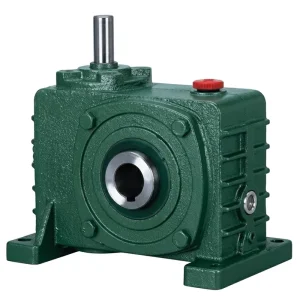
Against this background, the selection of a ஒற்றை வேகக் குறைப்பான் for wet process textile machinery involves criteria that go beyond ratio and torque rating. Housing material, shaft seal type, surface treatment, oil specification, and mounting orientation all influence how long the unit will perform reliably before maintenance intervention is needed. The worm gear single speed reducer — particularly the WP-series — has a service record in textile wet processing environments that reflects a combination of physical characteristics well suited to these conditions.
This page examines the construction, material system, sealing, and maintenance requirements of a worm single speed reducer as applied to dyeing machine and finishing machine drive positions, with reference to the operating conditions found in textile wet processing facilities in Pakistan, Indonesia, Portugal, and Brazil.
உற்பத்தி கட்டமைப்பு
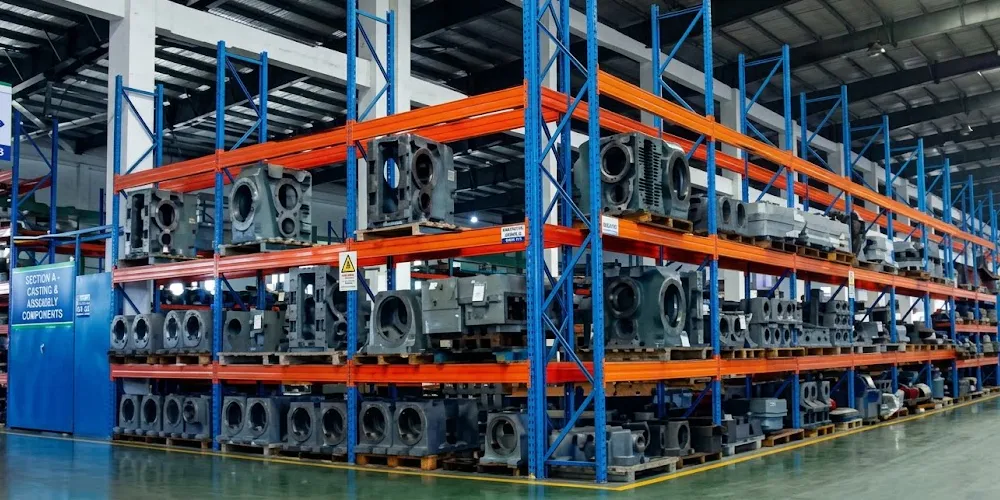
The housing of a worm single speed reducer used in textile dyeing and finishing applications is a single-piece casting, with grey cast iron or ductile iron selected for the majority of wet-process drive positions. The choice between grades depends primarily on the magnitude of the radial load at the output shaft. On a jigger roll drive where the fabric roll diameter changes continuously as cloth is wound and unwound, the output shaft carries a varying overhung load, and ductile iron’s higher tensile strength provides a suitable margin. On lighter-duty positions such as a fabric spreading roll drive or a tenter chain tensioning unit, the standard grey cast iron housing is adequate.
Precision-cast aluminium alloy housings appear on compact WP-series units deployed at selvedge guide drives and fabric edge sensors where the unit weight must be minimised to avoid deflecting the lightweight guide frame structures to which they are bolted. In wet-process environments, aluminium housings require an anodised or epoxy-coated surface — bare aluminium corrodes rapidly in alkaline dye solutions — so the surface treatment specification for this grade in textile dyeing areas differs from the standard painted cast iron unit.
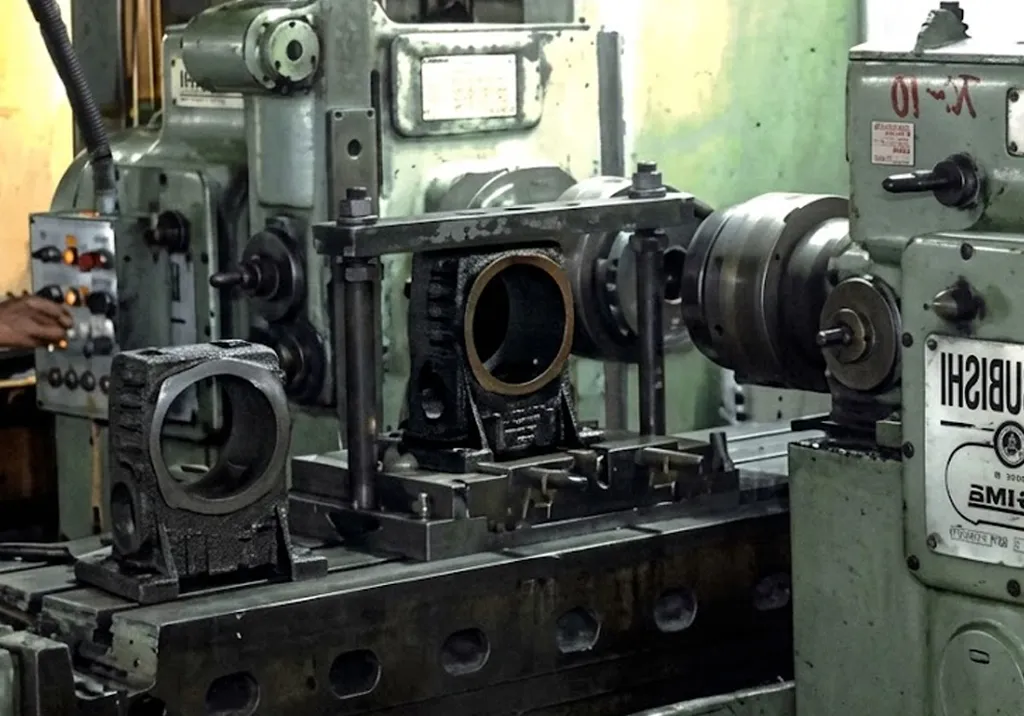
The worm shaft and worm wheel are positioned at a 90-degree intersection inside the housing, providing a right-angle output that suits the physical layout of most dyeing machine and finishing machine frame structures. In a continuous washing range, for example, the drive motor runs along the length of the machine frame while the squeeze roll or transport roller runs transversely through the fabric width — a geometry that the right-angle worm output serves without requiring additional direction-change components. All bore locations, shaft journals, and cover joint faces are finish-machined after casting to ensure dimensional consistency between units across a production batch.
பொருள் அமைப்பு
The worm shaft is produced from 20CrMnTi or 40Cr alloy steel, case-carburised and precision-ground to Ra 0.6 to 0.8 surface finish. The worm wheel uses a centrifugally cast tin-bronze or phosphor-bronze rim on a ductile iron or cast steel hub. This material pairing is the primary reason worm gear reducers are favoured over spur or helical units in many wet-process drive positions: the bronze wheel tolerates the marginal lubrication conditions that occur when moisture ingress degrades the oil film in the mesh zone, without the rapid pitting fatigue that affects hardened steel-on-steel pairs under the same conditions.
The external housing surfaces and exposed fasteners on units installed in dyeing and washing sections require careful material and coating specification. Alkali dye auxiliaries, optical brightening agents, and bleach solutions are all aggressive to unprotected cast iron. Standard paint systems — epoxy primer plus polyurethane topcoat — provide adequate protection in most dyeing environments up to pH 12 and temperatures to 60 degrees Celsius. For units installed in jig dyeing or pressure vessel dyeing sections where caustic soda concentrations are higher, a two-pack polyurethane topcoat with a minimum dry film thickness of 80 microns on a zinc phosphate primer is a more robust specification.
Fasteners at the housing cover joints should be stainless steel or zinc-phosphate-coated carbon steel — standard uncoated carbon steel fasteners corrode rapidly in humid alkaline environments, leading to seized cover joints that make oil changes difficult. This is a detail that is easily overlooked at the specification stage but has real consequences for maintenance ease in a busy dyeing plant in Pakistan or Indonesia where reducer cover removal is a routine part of oil service.
Sealing Strategy in Wet Process Environments
Shaft seal selection is the most critical single-component decision for a worm single speed reducer in a textile dyeing or finishing drive position. The shaft seal must prevent oil from exiting the housing — oil contamination of fabric is a direct quality defect in dyeing and bleaching lines — while also preventing dye solution, hot water, and steam condensate from entering and degrading the oil bath.
Standard NBR (nitrile rubber) lip seals perform adequately at temperatures up to 80 degrees Celsius and resist most non-aromatic textile dye auxiliaries. For units installed adjacent to jigger dyeing machines or high-temperature pressure vessels where the shaft seal operates above 80 degrees Celsius, an FKM (fluoroelastomer) lip seal is the appropriate upgrade — FKM retains its sealing lip elasticity at temperatures to 150 degrees Celsius and resists a broader range of chemical media including some aromatic solvents used in specialty dyeing processes.
A double-lip seal arrangement — two separate NBR lips with a grease-filled inter-lip zone — provides a secondary barrier against ingress even when the primary lip begins to show wear. This arrangement is recommended for output shafts on fabric roll drives and squeeze roll drives where the shaft rotates slowly (typically 8 to 40 rpm) and the seal lip wear rate is low, but where the chemical exposure risk from dye splash and condensate drip is continuous. The slow shaft rotation in these positions also means the inter-lip grease retains its consistency longer between maintenance intervals than it would at higher speeds.
Drive Points and Reducer Configuration by Machine Type
The table below maps common wet-process textile machine drive stations to the relevant worm single speed reducer configuration and primary selection consideration for each position.
| Machine / Drive Point | Typical Output Speed | Key Selection Criterion |
|---|---|---|
| Jigger fabric roll drive | 8 – 25 rpm | Double-lip output seal; high-ratio self-lock holds roll on stop |
| Continuous washing range squeeze roll | 15 – 60 rpm | Right-angle output fits frame; FKM seal if high-temperature section |
| Pad-mangle nip roll drive | 10 – 40 rpm | Fixed ratio maintains uniform wet pick-up across fabric width |
| Stentering / tenter chain drive | 20 – 80 rpm | Splash lubricated; oil capacity 0.4–5.2 L matches frame-size range |
| Dye liquor circulation pump drive | 25 – 120 rpm | Compact unit; flange mount eliminates separate base on pump housing |
| Open-width washing machine transport roll | 15 – 50 rpm | Hollow shaft output eliminates coupling on roll shaft mounting |
| Fabric edge spreading roll drive | 5 – 20 rpm | Aluminium housing minimises mass on lightweight frame section |
Highlighted Product: EP-WPKZ Series
Lubrication Management in High-Humidity and Chemical Environments
The splash lubrication system of the worm single speed reducer keeps the oil volume inside a sealed housing, but wet-process environments impose specific challenges. High ambient humidity accelerates condensation inside the housing when the unit cools overnight or between production shifts, introducing water into the oil bath as a free phase or as an emulsion. Water in worm gear oil degrades the oil film at the mesh contact zone, accelerates corrosion of the worm shaft surface at the oil-air interface inside the housing, and promotes rust formation on the bearing races.
Oil selection for textile dyeing and finishing drives should favour synthetic polyalkylene glycol (PAG) worm gear oil over mineral EP oil where budget allows — PAG oil has significantly better demulsibility (water-shedding ability), which means ingressed moisture separates to the bottom of the housing rather than forming an emulsion throughout the oil volume. This keeps the oil film at the mesh zone intact even after moderate moisture ingress. PAG oil also reduces mesh temperature at steady state compared to mineral EP oil of equivalent ISO VG viscosity, which is a useful characteristic in the 40 to 60 degree Celsius ambient temperatures typical of enclosed dyeing machine sections.
ISO VG 220 PAG worm gear oil suits most textile wet-process drive positions operating in the 15 to 60 rpm output speed range. Drain intervals with PAG oil in a well-sealed, properly maintained unit run to 5000 – 7000 operating hours. In environments where chemical contamination of the oil is suspected — indicated by rapid darkening or emulsification — reducing the drain interval to 2000 hours and conducting oil analysis provides early warning of seal degradation before bearing damage occurs.
Speed Ratio Selection and Fabric Quality Implications
In dyeing and finishing machinery, the output speed of the drive unit directly determines the rate at which fabric passes through the processing zone. On a continuous washing range, the transport roll speed governs the dwell time of the fabric in each wash compartment and therefore the degree of dye removal or scouring achieved. On a pad-mangle, the squeeze roll speed determines the fabric surface speed relative to the nip pressure, which affects wet pick-up — the percentage of dye solution retained in the fabric after the nip. Inconsistency in these speeds, even at the level of a few percent, produces measurable variation in the finished fabric’s dye depth or chemical treatment uniformity.
A worm single speed reducer with a fixed ratio transmits the motor’s shaft speed to the driven roll at a ratio that does not drift with load, temperature, or mechanical wear over the unit’s service life — unlike variable-ratio belt-and-sheave systems where the effective ratio changes as the belt stretches or the sheave groove wears. This ratio stability is a practical quality control asset in a dyeing plant where the process engineer has set fabric transport speeds against validated dye recipes that assume a precise dwell time in each section of the machine.
The single stage right-angle worm-gear speed reducer achieves ratios from 5:1 to 100:1, which covers the full range of fabric transport roll and jigger roll output speeds typically encountered in textile wet processing — from high-speed tenter chain drives at 80 rpm output down to slow-moving jigger fabric rolls at 8 rpm. This span in one stage, without compound gearing, keeps the drive train simple and the oil-management task to one housing per drive point.
Operating Parameter Reference — Wet Process Drive Applications
| அளவுரு | Typical Range | Wet Process Application Note |
|---|---|---|
| உள்ளீட்டு சக்தி | 0.12 – 15 கிலோவாட் | Covers edge guide to jigger roll drives |
| Speed Ratio | 5:1 – 100:1 | Single stage; matches tenter chain to jigger output speeds |
| எண்ணெய் கொள்ளளவு | 0.4 – 5.2 L | PAG oil recommended for high-humidity sections |
| Shaft Seal Options | NBR / FKM lip seal; double-lip option | FKM for high-temperature or aromatic-solvent exposure |
| வீட்டுவசதி பொருள் | Cast iron / Ductile iron / Cast aluminium | Aluminium requires anodised or epoxy coat in alkaline zones |
| Surface Treatment | Epoxy primer + polyurethane topcoat | Two-pack PU at 80 µm DFT for high-caustic zones |
| Worm Wheel Rim | Tin-bronze / Phosphor-bronze | Tolerates marginal lubrication from moisture-contaminated oil |
| Mounting Options | Foot, flange, hollow shaft | Hollow shaft eliminates coupling on roll shaft in wet sections |
தொடர்புடைய தயாரிப்புகள்
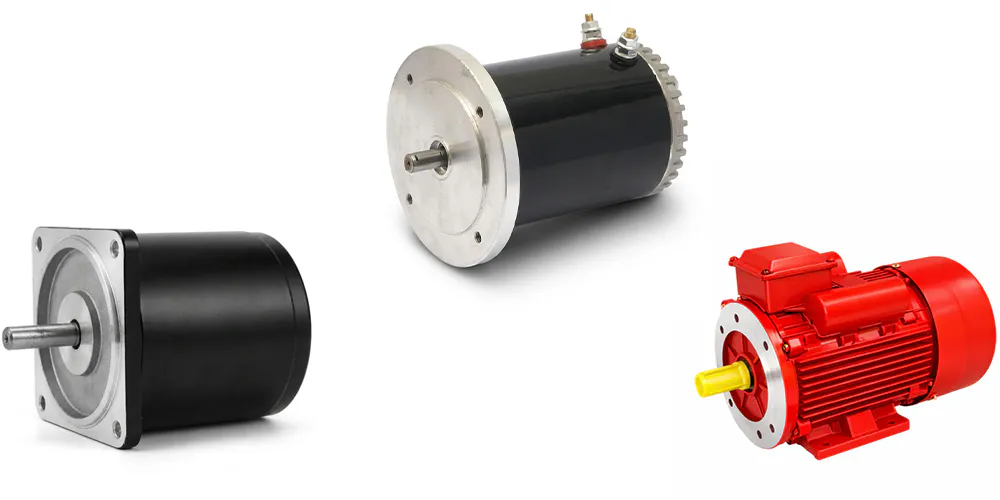
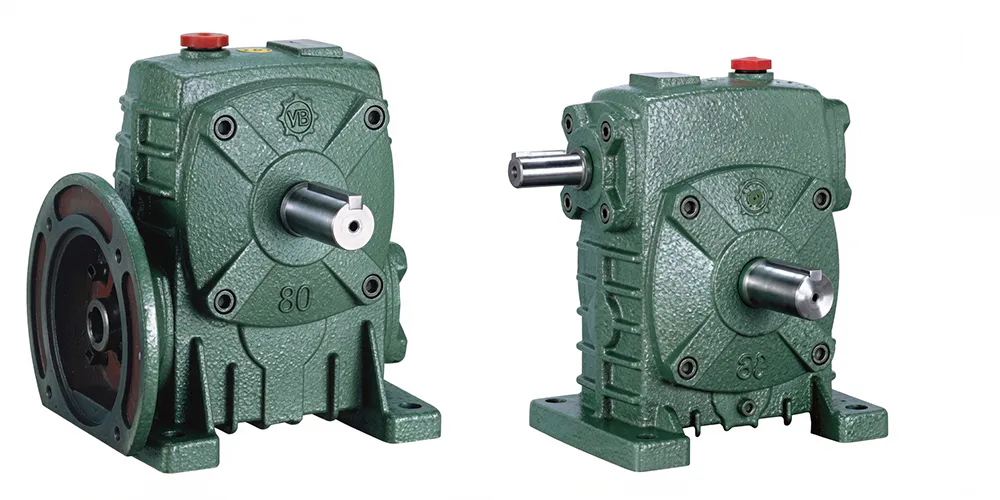
Two product families commonly specified alongside the single speed reducer in textile dyeing and finishing machinery drive systems are listed below.
எங்களைப் பற்றி
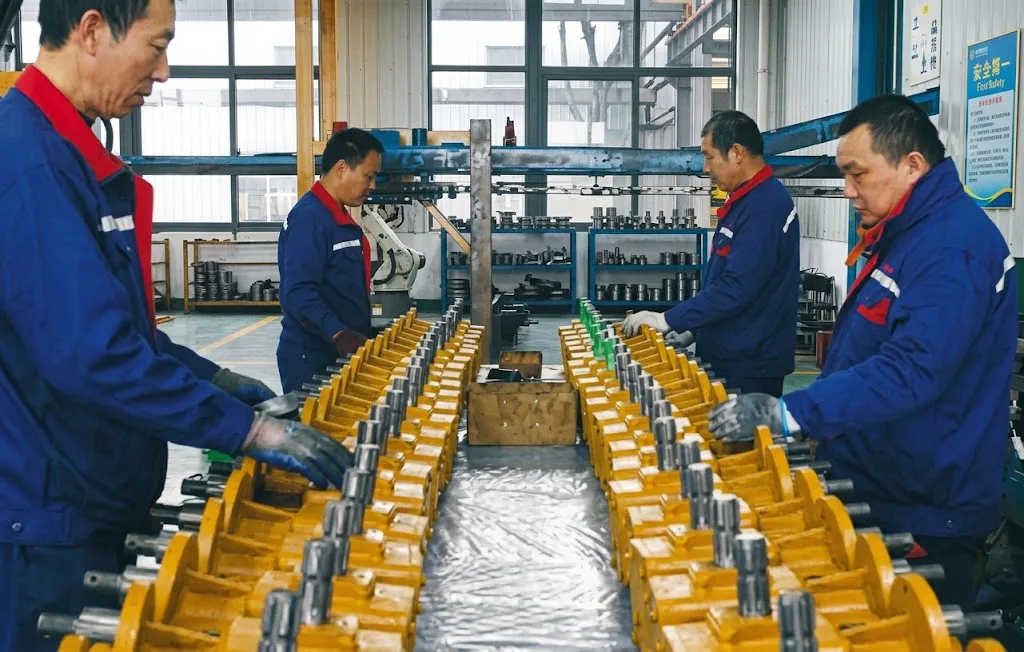
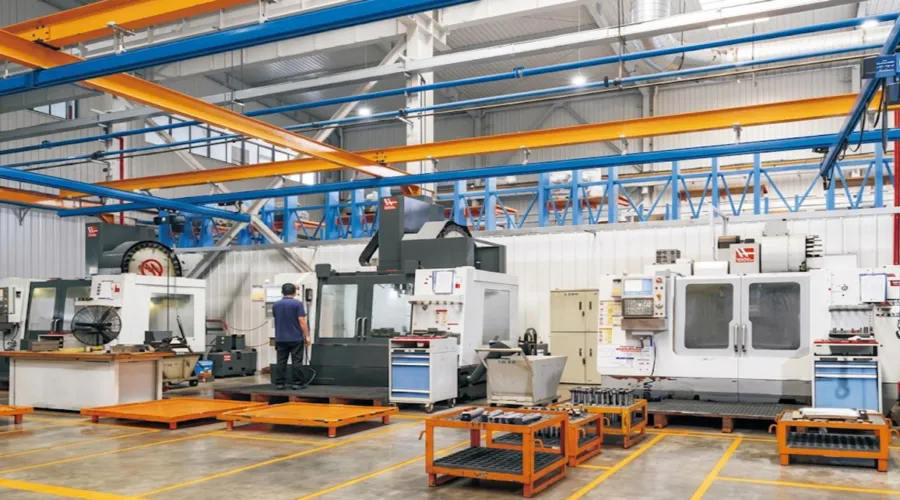
The manufacturing programme covers agricultural gearboxes, worm gear reducers, planetary gear drives, power take-off shafts, hydraulic cylinders, gears, chains, and motors. The production facility is ISO 9001:2015 certified. Engineering and manufacturing extends to industrial and agricultural gearbox assemblies produced in ductile iron, cast iron, cast steel, precision cast steel, and cast aluminium, alongside gears, sprockets, worm gears, pulleys, worms, shafts, and both standard and non-standard mechanical components manufactured to customer drawings or established industry dimensional standards for textile machinery OEM and aftermarket supply programmes worldwide.
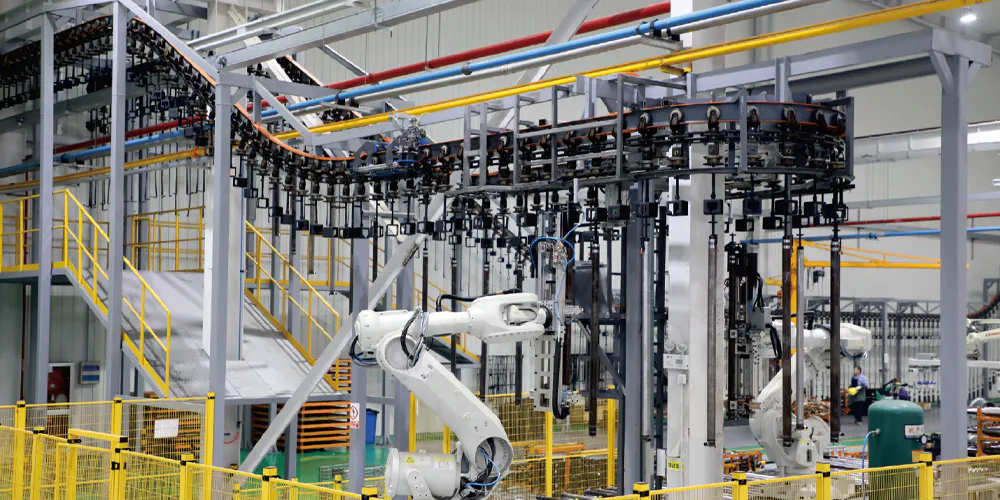
பட்டறை
அடிக்கடி கேட்கப்படும் கேள்விகள்
பதிப்பாசிரியர்: PXY