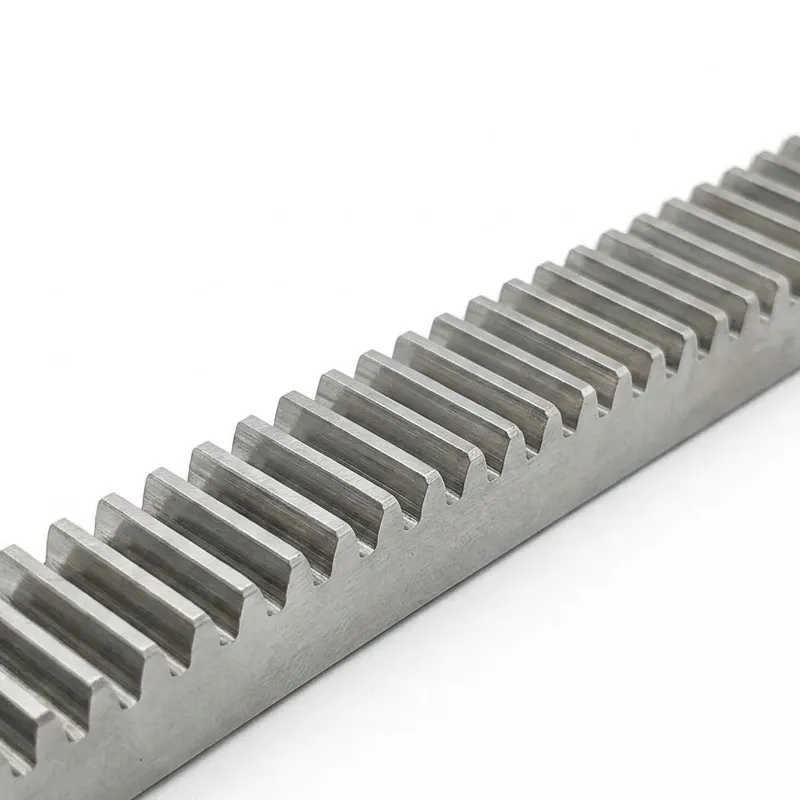
EP Wear-Resistant Corrosion-Resistant MC Nylon PA66 Plastic Gear Rack — Multi-Material, Module 0.5–5.0
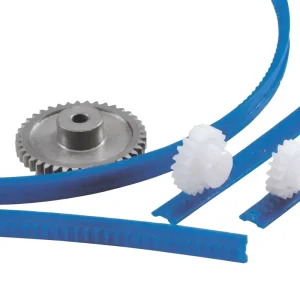
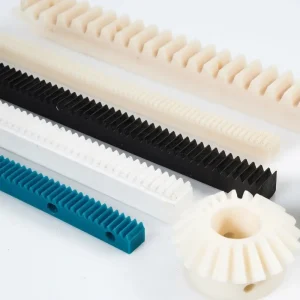
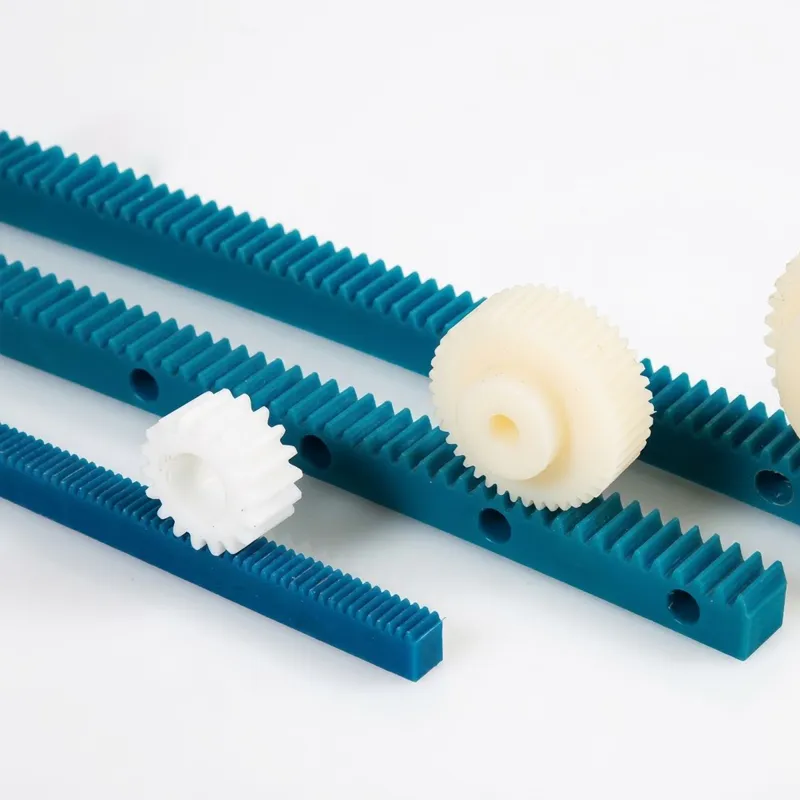
The EP series plastic gear rack is available in a range of materials including MC Nylon, PA66, POM, PEEK, PU, PC, PVC, Acrylic, PE, UPE, and PTFE — each selected for a specific performance profile rather than a one-size-fits-all material choice.
MC Nylon (monomer cast nylon) is the workhorse material of the range. Its combination of high mechanical strength, excellent abrasion resistance, low friction coefficient, and natural self-lubrication makes it the default choice for plastic gear rack and pinion drives operating in clean industrial environments. PA66 (polyamide 66) adds dimensional stability and stiffness relative to standard PA6, making the PA66 plastic gear rack better suited to higher-load or elevated-temperature applications where creep resistance is important. POM (polyacetal) delivers the tightest dimensional tolerances and the best surface finish of the standard engineering polymer range — often the first choice when low friction and precise mesh geometry matter most in a plastic rack and pinion system.
The EP plastic gear rack series covers module sizes from M0.5 — for compact small rack and pinion mechanisms in instrumentation, medical devices, and consumer products — up to M5.0 for light-to-medium duty heavy duty plastic gear rack drives. Cross-section dimensions range from 5 mm to 200 mm, and shapes are produced to customer drawings where catalogue dimensions do not suit the application. The product ships from stock in standard sizes and is also produced to order in custom module, length, material, and color combinations — making this one of the more flexible plastic gear rack platforms available from a single production source.
ENGINEERING POLYMER LINEAR DRIVE
EP Wear-Resistant Corrosion-Resistant MC Nylon PA66 Plastic Gear Rack — Multi-Material, Module 0.5–5.0
The EP series plastic gear rack is an injection-molded or machined engineering polymer rack available in MC Nylon, PA66, POM, PEEK, PU, PC, PVC, Acrylic, PE, UPE, PTFE, and more. Covering module sizes from M0.5 to M5.0 and cross-section diameters from 5 mm to 200 mm, this plastic rack and pinion solution delivers reliable linear motion with built-in advantages that steel racks cannot match: self-lubrication, corrosion immunity, electrical non-conductivity, and significantly reduced weight — making it the preferred plastic gear rack specification for food processing, medical equipment, semiconductor handling, and light automation worldwide.
Product Specifications
The table below consolidates the core specification parameters for the EP engineering polymer plastic gear rack series. Custom cross-sections, non-standard lengths, alternative colors, and material grades beyond those listed can be produced against customer drawings. Free samples of standard sizes are available on request before placing a production order.
| அளவுரு | Details |
|---|---|
| Product Name | Wear-Resistant Corrosion-Resistant MC Nylon PA66 Plastic Gear Rack |
| Module Range | M0.5 – M5.0 |
| Cross-Section (Diameter) | 5 – 200 mm, or customized |
| Materials Available | Acrylic, PC, PVC, Nylon (MC/PA6/PA66), PEEK, PU, PA, POM, PE, UPE, PTFE, UHMW-PE, ABS, PPS, PVDF, and others |
| Colors | White, black, green, natural, blue, yellow, and custom |
| Tooth Profile | Straight tooth (spur); custom profiles to drawing |
| Shape / Form | Sheet, rod, tube, gear, rack, pulley, guide rail, plastic fittings; as per drawing |
| Condition | In stock (standard sizes) / Made to order (custom) |
| Certifications | ISO 9001, SGS, Test Report, RoHS |
| Free Sample | Available for standard sizes before production order |
| Procurement Advantage | One-stop procurement across plastic rack, pinion, gear, and drive components |
| Packing | Plastic bags, cartons, wooden case, pallet, or container — to order quantity |
Common Material Grades — Performance Reference
| பொருள் | Wear Resistance | அரிப்பு எதிர்ப்பு | Self-Lubrication | Max. Temp. (°C) | வழக்கமான பயன்பாடு |
|---|---|---|---|---|---|
| MC Nylon | Excellent | Good | ஆம் | 110 | General automation, conveyor, sliding gate |
| PA66 | Very Good | Good | ஆம் | 130 | Higher-load drives, automotive auxiliary systems |
| POM | Very Good | Very Good | Excellent | 100 | Precision instruments, low-noise quiet drives |
| PEEK | Outstanding | Outstanding | Good | 260 | Semiconductor, medical, high-temperature environments |
| UHMW-PE | Outstanding | Excellent | ஆம் | 80 | Food processing, wet/wash-down applications |
| PTFE | Good | Outstanding | Excellent | 260 | Chemical processing, ultra-low friction axes |
How a Plastic Gear Rack and Pinion System Works
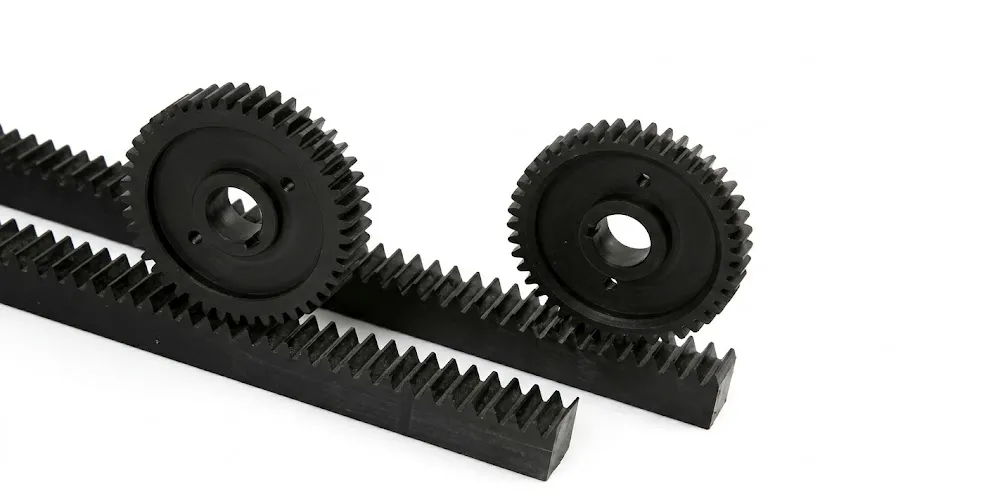
தி plastic gear rack and pinion mechanism operates on the same rotary-to-linear conversion principle as metal rack and pinion drives: a circular pinion engages the straight teeth of the rack, and as the pinion rotates, the rack travels linearly — or, in a fixed-rack layout, the pinion and its carriage traverse along the stationary rack. The gear ratio of rack and pinion is determined by the module and the pinion tooth count: linear travel per revolution equals π × module × number of pinion teeth, giving engineers a predictable, calculable relationship between motor speed and carriage velocity.
What changes when the rack material moves from steel to an engineering polymer is the mechanical interface behaviour. Polymer rack teeth have lower contact stiffness than steel, which means they absorb micro-shock loads through elastic deformation rather than transmitting them directly into the machine structure. This acts as a natural vibration dampener — a property that explains why plastic rack and pinion drives are favored in equipment where structural resonance or vibration would degrade product quality or sensor readings. The self-lubricating surface of a MC Nylon or POM plastic gear rack further reduces friction at the tooth contact zone without the need for an external grease or oil supply, lowering both running resistance and maintenance frequency.
In a plastic gear rack for sliding gate application, for example, the polymer rack is fixed to the gate leaf and the motor-driven pinion traverses it. The inherent low friction and corrosion resistance of the nylon or POM rack eliminates the rust seizure and re-lubrication cycles that steel rack gate drives require — particularly relevant in coastal climates across Australia, the UK, and Canada where salt-air corrosion shortens the service life of unprotected steel drive components.
Five Reasons to Specify a Plastic Gear Rack Over Steel
Steel racks rely on blackening, phosphating, or zinc plating to resist corrosion — surface treatments that wear off over time and require periodic re-application. A plastic gear rack in MC Nylon, PA66, POM, or UHMW-PE is immune to rust, galvanic corrosion, and most industrial chemicals by the nature of the polymer itself. This is a decisive advantage in food processing lines with regular wash-down cycles, marine equipment, outdoor gate drives, and any wet environment where maintaining steel rack surface treatments is impractical.
MC Nylon, PA66, and POM rack materials contain a low-friction polymer structure that provides natural lubrication at the tooth contact face without any added lubricant. In practice, this means a plastic rack and pinion drive running at moderate load and speed can operate for extended periods without re-greasing — a meaningful benefit in applications where access is difficult, lubrication contamination is a concern (food and pharmaceutical equipment), or automated lubrication systems are impractical to install.
All engineering polymer rack materials are electrical insulators. In semiconductor wafer handling and PCB assembly equipment, a non-conductive plastic gear rack, MRI-adjacent medical devices, and any environment where electrical conductivity or static charge transfer through a drive component would create a safety hazard or damage a product, a plastic gear rack eliminates the risk entirely. This is not a property that can be easily replicated with surface-treated steel racks — the polymer insulation is intrinsic to the material across the full cross-section.
Engineering polymers are typically 6–8× lighter than steel for the same volume. On a fast-cycling linear rack and pinion axis where the rack is the moving element — carried by a servo-driven carriage — reducing rack mass directly reduces the inertia load on the drive motor. This allows smaller, more energy-efficient motors for the same acceleration performance, or higher acceleration rates from the same motor — a practical benefit that machine builders in South Korea, Germany, and Japan regularly exploit in high-cycle pick-and-place and assembly automation.
With over fifteen engineering polymer grades available — from standard MC Nylon and PA66 through to PEEK, PTFE, and PVDF for extreme environments — and color options including white, black, green, natural, blue, and yellow, the EP plastic gear rack range supports one-stop procurement for OEM machine builders who need to match different drive axes to different environmental requirements. Certifications covering ISO 9001, SGS, Test Report, and RoHS facilitate export documentation for equipment shipped to EU, Australian, and North American markets.
Material Science & Quality Standards
The performance of a plastic gear rack is determined almost entirely by the polymer grade selected and the processing quality applied during manufacturing. MC Nylon (monomer cast nylon) stands apart from standard injection-moulded PA6 because the casting process creates a higher-molecular-weight polymer structure with lower residual stress — the result is better dimensional stability, higher impact strength, and improved creep resistance under sustained load. PA66 builds on this by substituting a different diamine in the polymer chain, raising the glass transition temperature and improving stiffness at elevated working temperatures — useful when the plastic rack and pinion drive operates near heat sources or in enclosed equipment where ambient temperature rises during operation.
POM (polyoxymethylene, also known as acetal or Delrin) has the lowest coefficient of friction of the standard engineering polymer grades and the best tooth-surface finish achievable through machining or injection moulding. It absorbs very little moisture — less than 0.2% by weight in equilibrium — which means POM rack dimensions do not change significantly with humidity variations, an important property when the linear gear rack tooth pitch must remain consistent across seasonal humidity changes in markets like South Korea, Brazil, and the Netherlands. PEEK provides the highest temperature and chemical resistance in the standard range, qualifying the plastic gear rack for sterilization in medical device manufacturing and for aggressive chemical environments in the semiconductor and pharmaceutical industries.
Production of the EP plastic gear rack series is carried out under ISO 9001 quality management, with SGS and RoHS certification available to support compliance requirements for markets in the EU and North America. Material traceability documentation and test reports can be supplied with production orders. Custom material grades beyond the standard range — including glass-filled, carbon-filled, or internally lubricated variants of base polymers — can be specified against customer drawings.
பயன்பாட்டு சூழ்நிலைகள்
The breadth of polymer grades available in the EP plastic gear rack series means it fits a far wider range of environments than any single steel rack specification. Below are the sectors where polymer racks are routinely specified over metal equivalents.
தி plastic gear rack for sliding gate application is one of the most widespread uses of the polymer rack worldwide. Residential and commercial motorized sliding gates, warehouse fire doors, and industrial access control barriers all benefit from the corrosion immunity and self-lubricating properties of MC Nylon or PA66 racks. Installation teams in Australia, the UK, and Canada prefer polymer racks on exterior gates specifically because they eliminate the annual greasing schedule required by steel rack gate drives in salt-air coastal environments.
Conveyor lane dividers, portion-control indexing tables, and packaging line transfer shuttles in food facilities use UHMW-PE or FDA-compliant PA racks because they tolerate repeated wash-down with caustic cleaning agents that would corrode unprotected steel within weeks. The heavy duty plastic gear rack in UHMW-PE also handles incidental food contact without the contamination risk of metal particles from a worn steel rack — a critical consideration under food safety regulations in North America and the EU.
Imaging table positioning systems, laboratory automation robots, and diagnostic device actuators use compact plastic gear rack and pinion drives in POM or PEEK. The non-magnetic, non-conductive, and sterilizable properties of these polymer grades are requirements that steel racks cannot meet. The low-noise operation of a POM plastic rack and pinion — due to inherent damping and lower meshing stiffness — also suits the quiet operating environments expected in clinical settings across European and North American hospitals.
Wafer transfer stages, reticle storage handlers, and PCB component placement systems in semiconductor fabs use PEEK plastic gear rack drives because the material is compatible with ultra-clean environments, resists the aggressive solvents used in semiconductor processing, and does not generate metal particles that would contaminate wafers or sensitive electronic assemblies. The low-outgassing characteristic of PEEK also suits vacuum-chamber equipment found in flat-panel display and thin-film coating lines in South Korea and Japan.
Compact plastic rack pinion drives in M0.5 to M1.5 are the standard linear drive solution inside inkjet printers, document scanners, 3D printer carriages, vending machine dispensers, and similar consumer-scale devices. The low cost of injection-moulded polymer racks, combined with their low noise, light weight, and self-lubrication, makes them the practical and economical choice for millions of units per year in these high-volume OEM applications across the US, Germany, and Brazil.
Valve actuators, reagent dosing systems, and marine equipment such as hatch cover drives and davit positioning mechanisms use PTFE or PVDF plastic gear rack components for their outstanding resistance to aggressive acids, alkalis, and salt-water immersion. Where any steel rack would corrode and seize within months, a PTFE or PVDF polymer rack delivers multi-year service life with minimal intervention — a direct operational cost saving across offshore and chemical plant installations in the Netherlands, Australia, and Brazil.
Compatible Drive Components
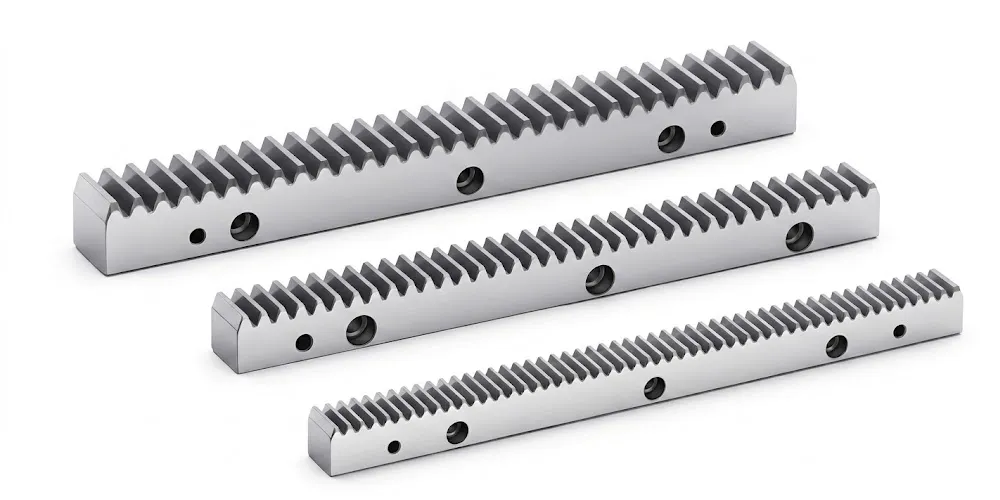
ஒரு plastic gear rack delivers its best performance when paired with a matched pinion from the same module specification as the plastic gear rack. We supply a range of complementary drive components for complete axis procurement from one source — including metal gear racks for mixed-material axis designs, and helical gear pinions for quieter, higher-load engagement.
Designers running mixed-axis machines — polymer racks on light or sensitive axes, metal racks on heavy-load or high-precision axes — can source both types from our catalogue. Our full gear rack range covers straight spur racks and helical racks in S45C, 42CrMo, and stainless steel across module M1.5 to M12, with DIN6 and DIN8 precision grades available. Sourcing the complete plastic gear rack and pinion plus the steel rack inventory from one supplier simplifies module matching and reduces the number of vendor approvals required for multi-axis machines exported to demanding markets in Europe, North America, and Australasia.
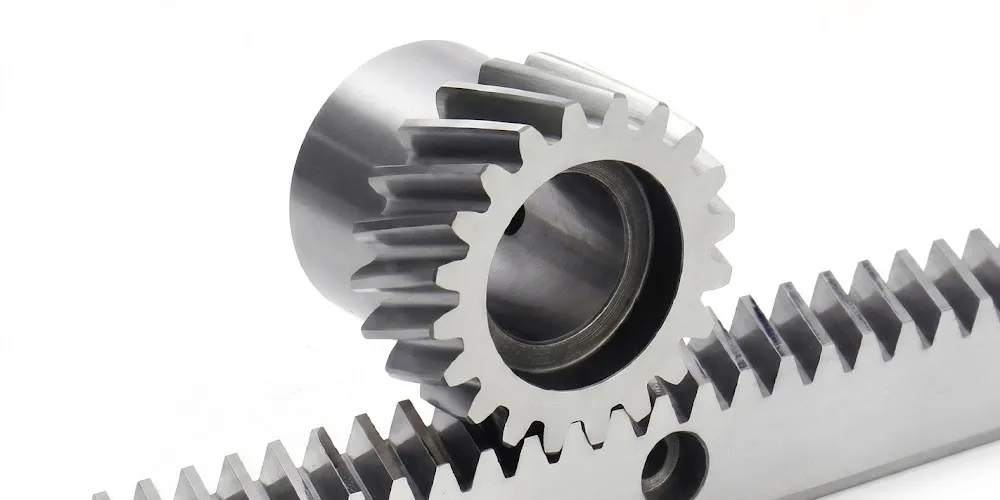
For applications where the plastic gear rack is driven by a helical pinion — to reduce noise and improve load distribution across the tooth width — our Helical Gear range provides compatible module sizes and bore options for direct motor or gearbox shaft coupling. Matching the plastic rack with a properly specified helical pinion extends rack service life by reducing the peak tooth-face stress that occurs with straight-tooth engagement, and lowers the audible noise level in environments where quiet operation is required — office equipment, medical instruments, and laboratories across Germany, the UK, and South Korea.
எங்கள் உற்பத்தி செயல்பாடு பற்றி
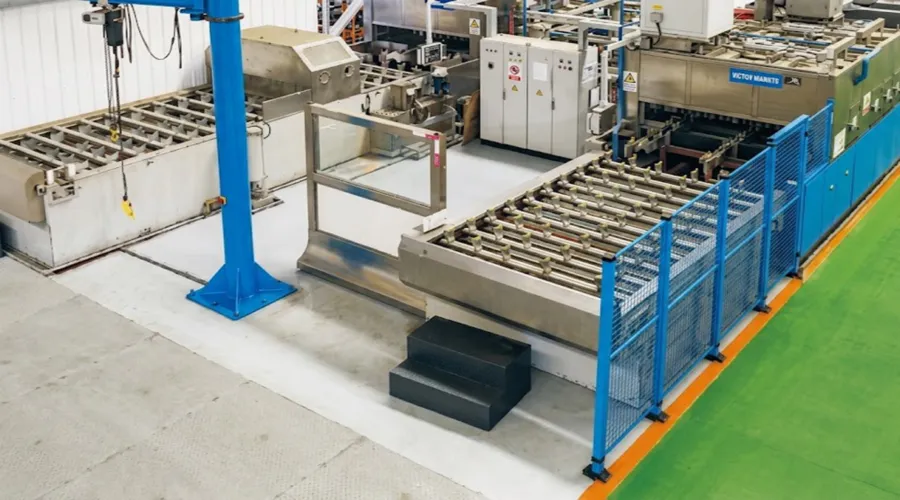
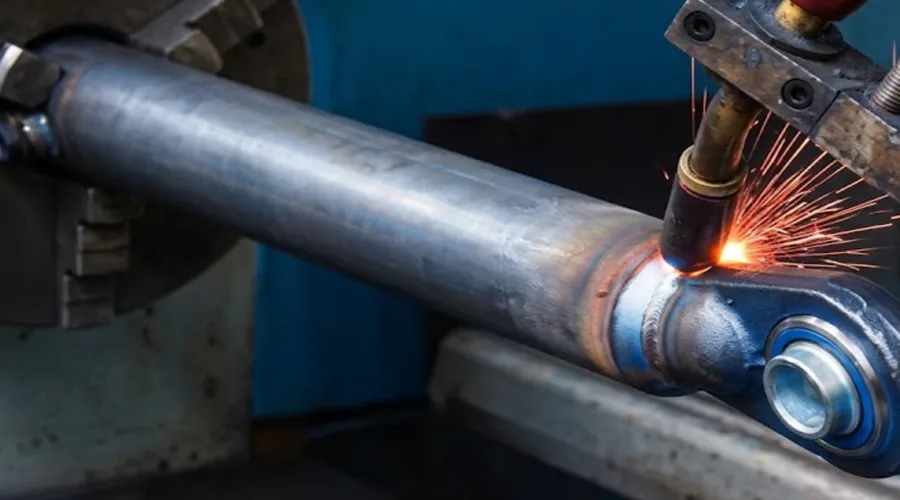
More than ten years of focused production in mechanical power transmission components gives our team the material science and machining knowledge needed to produce engineering polymer parts that consistently meet specification. Our product range extends well beyond plastic gear rack components to cover agricultural gearboxes, worm gear reducers, planetary gear drives, power take-off shafts, hydraulic cylinders, transmission chains, and drive motors — with gearbox housings available in ductile iron, cast iron, cast steel, precision cast steel, and cast aluminum.
The full catalogue includes gears, sprockets, worm gears, pulleys, worms, shafts, and a broad range of standard and non-standard mechanical components, all produced under our ISO 9001:2015 certified quality management system. For buyers sourcing a plastic gear rack alongside metal racks, pinions, or drive gearboxes for the same machine platform, our one-stop procurement capability reduces lead time and supplier management overhead on multi-component orders from industrial customers in the Netherlands, Brazil, Canada, and Australia.
பட்டறை

அடிக்கடி கேட்கப்படும் கேள்விகள்
பதிப்பாசிரியர்: PXY