
Agriculture & Farming Equipment
A practical engineering guide for agricultural equipment designers and farm machinery specifiers on how worm gear single speed reducers control seeding metering drives across grain drills, row crop planters, and precision seeders worldwide.
Seeding Rate Accuracy Starts at the Drive Mechanism
A few seeds too many or too few per metre is the difference between a productive season and a yield that fails to cover input costs. Precision seeding demands that metering rollers, finger-pickup plates, and fluted feed wheels rotate at exactly the right speed relative to ground travel — and that relationship must stay constant across varying soil conditions, terrain gradients, and PTO speed fluctuations throughout an entire planting day. The single speed reducer sitting between the ground drive wheel or PTO input and the seed metering shaft is the mechanical component that establishes and holds that ratio. Get the reduction ratio wrong, and seed spacing is off from the first pass. Specify a reducer with inadequate torque rating, and missed rotations under heavy soil load cause unpredictable seeding gaps that do not show up until crop emergence several weeks later.
Agricultural equipment manufacturers across the United States, Canada, Argentina, Ukraine, India, and Australia have used worm gear single speed reducers in seed drill and planter drivetrains for decades, precisely because the worm gear architecture delivers a fixed, repeatable reduction ratio in a compact housing that fits within the tight spatial constraints of planter frame side rails and drill toolbar mounting positions. This guide covers the structural and material engineering behind the WP series worm gear single speed reducer and explains how to match a reducer specification to the specific drive requirements of different seeding equipment configurations.
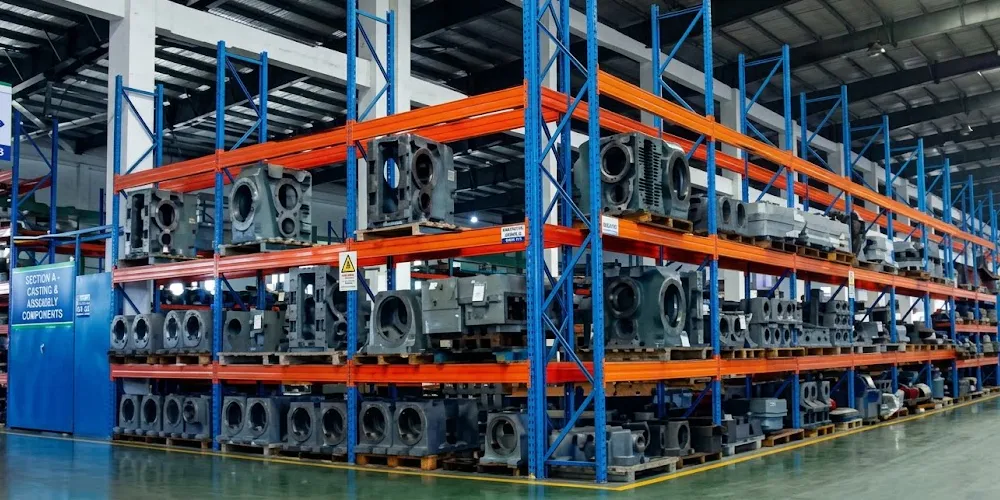
Manufacturing Structure of WP Series Single Speed Reducers
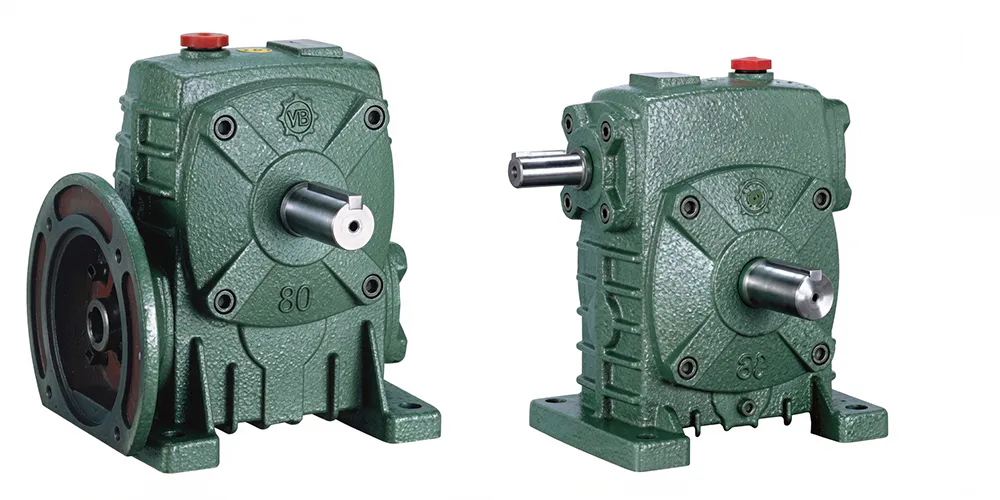
The WP series single speed reducer uses a right-angle worm gear layout housed in a precision-machined cast body. The input worm shaft — machined from case-hardened alloy steel and supported by tapered roller or angular-contact bearings — drives a bronze worm wheel mounted on the output shaft. The gear mesh operates in an oil bath retained by double-lip shaft seals, with the entire assembly enclosed in a housing that provides dust and moisture exclusion appropriate for field operating conditions. This single-stage architecture achieves substantial speed reduction in one compact unit, with the worm-and-wheel geometry producing inherently smooth, shock-dampened output torque — a characteristic that matters in seed drill applications where sudden changes in ground resistance could otherwise transmit impulse loads into fragile metering components.
For agricultural equipment duty, the physical compactness of the worm gear single speed reducer is as important as its performance specifications. Planter frames and drill toolbars have limited space between drive components, and a reducer that requires multiple mounting stages or large shaft overhangs creates structural problems at attachment points subjected to continuous vibration from field operations. The WP series housings are available in configurations including foot-mount, flange-mount, and hollow-shaft variants, giving equipment designers the flexibility to integrate the reducer into toolbar weldments without custom adapter plates. The sealed housing also protects the gear mesh from the dust, chaff, and fertiliser particles that permeate the environment around a working seed drill — contaminants that would rapidly accelerate wear in an unsealed gear arrangement.
Housing
Cast iron or cast aluminum. Compact profile fits within planter side-rail and drill toolbar mounting spaces. Sealed against dust, chaff, and fertiliser particle ingress.
Eje del sinfín
Case-hardened alloy steel, HRC 45–55, thread-ground. Angular-contact bearings handle combined radial and axial loads from ground wheel chain drives and PTO shaft inputs.
Rueda helicoidal
Tin-bronze CuSn alloy. Low friction coefficient against the hardened steel worm produces smooth output rotation — critical for consistent metering roller speed without micro-speed fluctuations.
Shaft Seals
NBR double-lip radial seals standard. Retains gear oil against field contamination. FKM upgrade available for environments with chemical fertiliser or herbicide exposure adjacent to the drive assembly.
Material System: Field-Duty Specifications for Agricultural Drive Components
Agricultural equipment operates in environments that combine mechanical stress with chemical and abrasive contamination in ways that industrial equipment rarely experiences. A seed drill passes through fields carrying varying concentrations of granular fertiliser, herbicide, and fungicide-treated seed — all of which can settle on external gear reducer surfaces and, if seal integrity is compromised, migrate into the gear chamber. The material choices across the housing, wheel, and lubricant system determine whether the reducer survives one season or ten before requiring attention.
Cast iron housings provide the best combination of rigidity, vibration damping, and machinability for agricultural single speed reducer applications. The dense, fine-grained structure of grey cast iron resists the fatigue loading generated by chain drive impacts, which are a common input to seed drill metering reducers driven via roller chain from a ground press wheel. The alternative — cast aluminum — is lighter and useful where total implement weight is a planter design constraint, though it requires careful paint or anodising treatment to resist the corrosive effects of fertiliser chemical exposure over a working season. Gear lubricant grade selection for field duty follows the same ISO VG 220 or VG 320 convention as industrial applications, but the oil change interval should be calibrated to seasonal rather than hourly benchmarks: an end-of-season oil change before winter storage prevents accumulated condensation and abrasive particle contamination from degrading the bronze wheel surface during the months the implement sits unused.
| Component | Standard Specification | Agricultural Field-Duty Note |
|---|---|---|
| Housing | Grey cast iron, painted | Apply chemical-resistant enamel or epoxy in fertiliser-heavy environments |
| Worm shaft | Alloy steel, HRC 45–55 | Hardened surface resists abrasive wear from chain drive sprocket contact |
| Worm wheel | Tin-bronze CuSn | Smooth output eliminates micro-speed variation in metering roller drive |
| Shaft seals | NBR double-lip | Inspect and replace every 2–3 seasons in high-dust grain drill applications |
| Lubricant | ISO VG 220–320 gear oil | Change at end of each planting season; check fill level at start of season |
| Aspectos | Tapered roller or angular-contact | Handles chain tension and lateral loads from sprocket misalignment in field conditions |
Recommended Model: EP-WPDS for Seed Drill and Planter Metering Drives
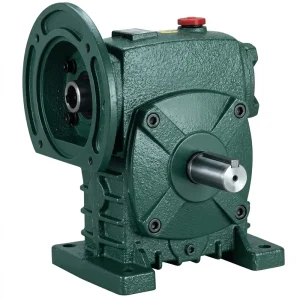
EP-WPDS — 0.12 to 15 kW Input Power Single Speed Reducer
The EP-WPDS covers input power from 0.12 kW through 15 kW, making it applicable to the full range of seed drill and row crop planter metering drive configurations — from compact single-row seeders with small ground wheel drives at the low end, through wide-section multi-row precision planters with electric motor metering drives at the upper range. The WPDS configuration provides both foot and flange mounting faces and a dual-side output shaft arrangement, which is particularly useful in seed drill applications where the reducer must simultaneously drive a main metering shaft on one side and a secondary drive for fertiliser placement rollers or row clutch control mechanisms on the other.
The hardened tooth surface worm shaft and tin-bronze worm wheel combination produces the stable, vibration-free output rotation that precision metering systems require. For agricultural OEM equipment builders in India, Argentina, and Ukraine who are designing new planter platforms or upgrading existing seed drill drive systems, the broad power coverage and multiple mounting options of the WPDS series reduce the number of distinct reducer models required across a product line — simplifying spare parts logistics for dealerships and service networks in regional markets.
How the Single Speed Reducer Controls Seeding Rate in Practice
The mechanical relationship between forward travel speed and metering element rotation speed determines the number of seeds deposited per unit area. In a ground-wheel-driven seed drill, the drive chain from the press wheel transmits rotation to the single speed reducer input shaft, and the reducer output shaft drives the metering rollers at a fixed proportion of ground wheel rotation. Changing the seeding rate on a ground-wheel-driven drill is accomplished by changing the chain sprocket ratio between the press wheel and reducer input — the single speed worm gear reducer itself maintains a constant internal ratio that is selected at the design stage to place the sprocket ratio requirements within a practical range.
In electrically driven precision planters — now common in North American, European, and Australian wide-area grain production where individual row control and variable rate seeding are required — a small electric motor drives the metering mechanism through a single speed gear reducer. The reducer allows a standard 1,400–3,000 RPM electric motor to produce the 20–120 RPM output shaft speed that most finger-pickup and cell wheel metering systems require. Variable rate seeding is achieved by varying motor speed electronically while the reducer maintains a fixed ratio; the reducer ensures that the electronic speed signal translates to a precisely proportional mechanical output without the hunting, backlash, or ratio drift that a gearless direct drive or variable transmission would introduce into the system.
Ground Wheel Drive
Press wheel rotation drives input via roller chain. Reducer ratio is fixed; seeding rate adjusted by changing sprocket ratios. Suits conventional grain drill and fertiliser spreader configurations.
Electric Motor Drive
Motor speed controlled electronically; reducer provides fixed ratio output to metering shaft. Enables variable rate seeding and individual row control on precision planters.
PTO Shaft Drive
Tractor PTO drives the reducer input through a gearbox chain, with the reducer providing the final ratio stage to metering speed. Common in air seeder and pneumatic seed distribution systems.
Self-Locking Benefit
At high reduction ratios, worm gear reducers exhibit self-locking — the output shaft cannot be back-driven. This prevents metering rollers from reverse-rotating under gravity load when the tractor stops on a hill.
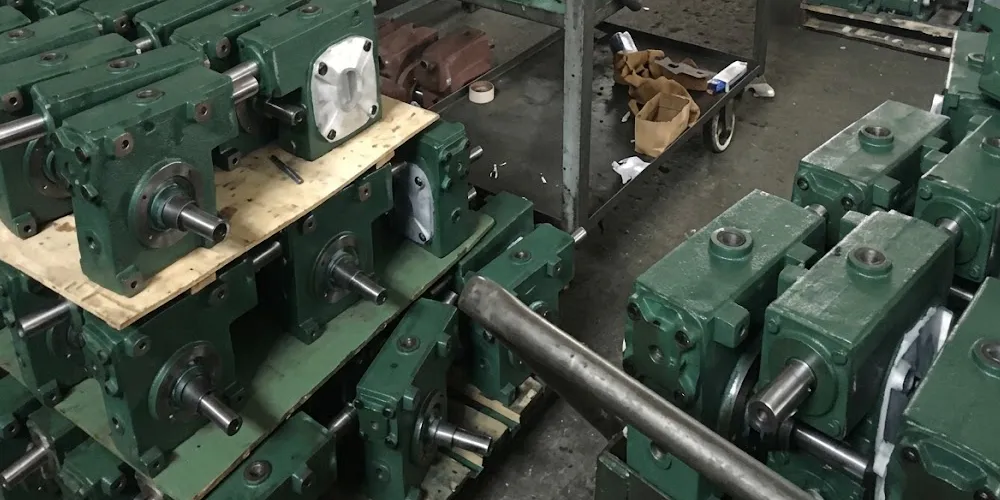
Gear Ratio Selection Across Crop Types and Seeder Configurations
Different crops and seeding systems require very different metering shaft speeds, and the single speed worm gear reducer selection must be matched to the specific output RPM range that each metering technology operates within. Fluted roller seed metering systems for small grains — wheat, barley, oats, canola — typically require output shaft speeds of 20–60 RPM from the reducer, as the shallow flute geometry dispenses seed at low rotation rates. Cell wheel and finger-pickup metering systems for large seeds — maize, sunflower, soybean, sorghum — can require 60–150 RPM output depending on seed size and target plant population. Air delivery seeders with high-speed fan metering systems may require 150–300 RPM at the metering element, which changes the reducer ratio requirements significantly.
Agricultural OEM equipment builders in Brazil, Canada, and Germany designing multi-crop planting platforms often specify a family of WP series worm reducers with different reduction ratios across a shared housing size, so that the same physical mounting interface can accept different ratio variants as a customer changes between crop configurations. This approach simplifies frame design and tooling while providing the metering speed flexibility that multi-crop planters demand. The table below shows typical reducer output speed requirements mapped to crop type and seeding system, as a reference for the specification process.
| Crop / Seeder Type | Metering System | Output Speed Range (RPM) | Typical Ratio (1400 RPM input) | Recommended Variant |
|---|---|---|---|---|
| Wheat / Barley / Oats | Fluted roller | 20–50 | 28:1 – 70:1 | WPDS / WPKA |
| Canola / Rapeseed | Fluted roller (fine) | 15–35 | 40:1 – 80:1 | WPDS / WPDKA |
| Maize / Corn | Finger-pickup / cell wheel | 60–120 | 12:1 – 23:1 | WPDS / WPKS |
| Soybean / Sunflower | Cell wheel | 40–80 | 18:1 – 35:1 | WPDS / WPKA |
| Air seeder / Pneumatic | High-speed metering disc | 100–250 | 6:1 – 14:1 | WPZ / WPKZ |
Seasonal Maintenance and Field Service for Agricultural Single Speed Reducers
Agricultural gear reducers operate on a seasonal duty pattern that differs fundamentally from continuous industrial applications. A seed drill single speed reducer may accumulate only 200–400 operating hours per year during planting seasons, but those hours are concentrated in intensive periods with limited maintenance windows, followed by extended storage where internal conditions — moisture, condensation, and oil oxidation — can develop without regular inspection. Establishing a seasonal maintenance routine calibrated to the agricultural duty cycle, rather than simply applying an industrial interval schedule, significantly extends reducer service life and reduces the risk of finding a failed metering drive after the drill has been hitched and driven to the field on the first day of planting season.
Pre-Season Check
Verify oil level before first use each season. Rotate output shaft by hand to confirm smooth operation. Inspect shaft seal for cracking or oil tracking before putting the drill in the ground.
In-Season Monitoring
Check housing surface temperature after initial warm-up. Unusual heat — more than warm to the touch — indicates oil starvation or a binding chain drive. Investigate before continuing.
End-of-Season Oil Change
Drain and refill with fresh ISO VG 220 oil at the end of every planting season. Flush removes abrasive wear particles and condensed moisture before the implement enters winter storage.
Preparación para el almacenamiento
After final oil change, cover the reducer housing with a canvas or plastic sleeve to prevent spray corrosion during winter storage. Protect exposed shaft ends from direct moisture exposure.
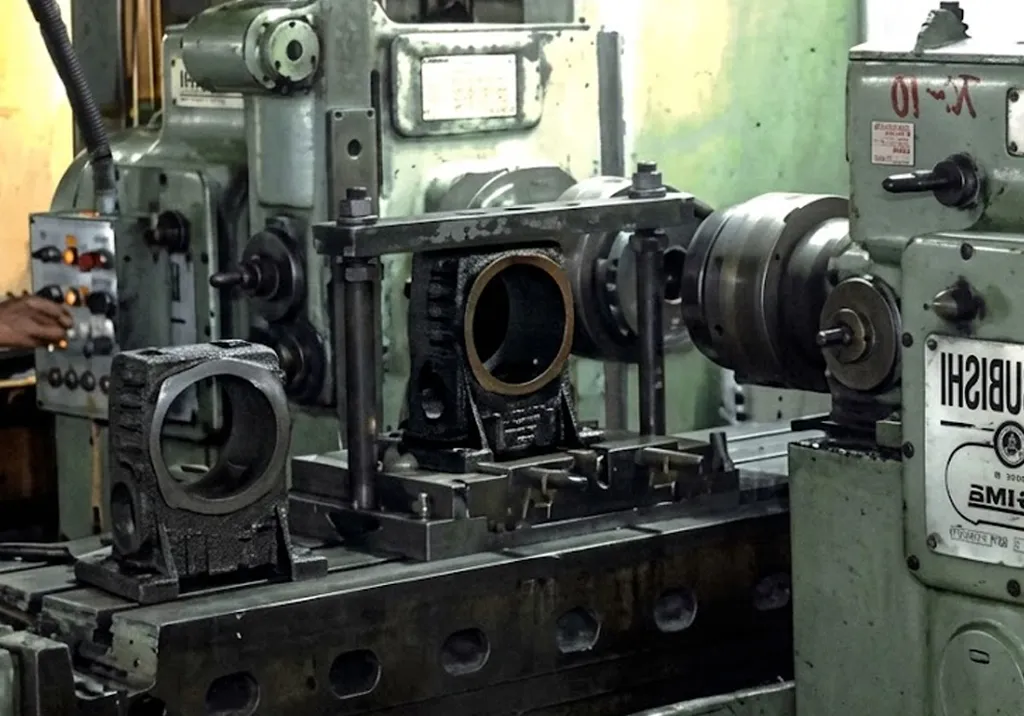
Customized Single Speed Reducer Options for Agricultural OEM Equipment Builders
Agricultural equipment manufacturers designing seed drills and row crop planters for regional markets often need a customized single speed reducer that does not match standard catalogue dimensions. Non-standard output shaft diameters to suit proprietary metering shaft couplings, modified mounting face bolt patterns to align with existing toolbar weldments on established equipment platforms, and specific gear ratios between standard catalogue steps to achieve precise target metering speeds are all modifications that the WP series accommodates through precision machining changes to standard castings. For OEM builders in India, Argentina, Ukraine, and Brazil designing new planting equipment for large domestic agricultural markets, the ability to specify custom ratios and shaft dimensions without requiring fully bespoke castings significantly reduces tooling cost and lead time compared to developing a purpose-designed gear reducer from scratch.
Documentation requirements for agricultural OEM equipment differ from food industry applications but remain important for quality-conscious equipment manufacturers. Material test certificates, dimensional drawings, and assembly inspection records under an ISO 9001:2015 certified quality management system provide the traceability that large agricultural dealership networks and export market certification requirements increasingly demand. Working with a single speed reducer manufacturer that maintains this documentation capability reduces the engineering burden on the OEM during new model development and supports after-market spare parts supply to service networks in distant regional markets.
Specify Your Agricultural Drive
Explore the Full Range of Single Speed Reducers for Farming Equipment
The WP series covers input power from 0.12 kW to 15 kW, dual-side and hollow shaft configurations, and a full range of reduction ratios — matched to every metering drive requirement from small canola seed drills to wide-section maize planters.
Related Products: Complete Drivetrain for Seed Drill and Planter Systems
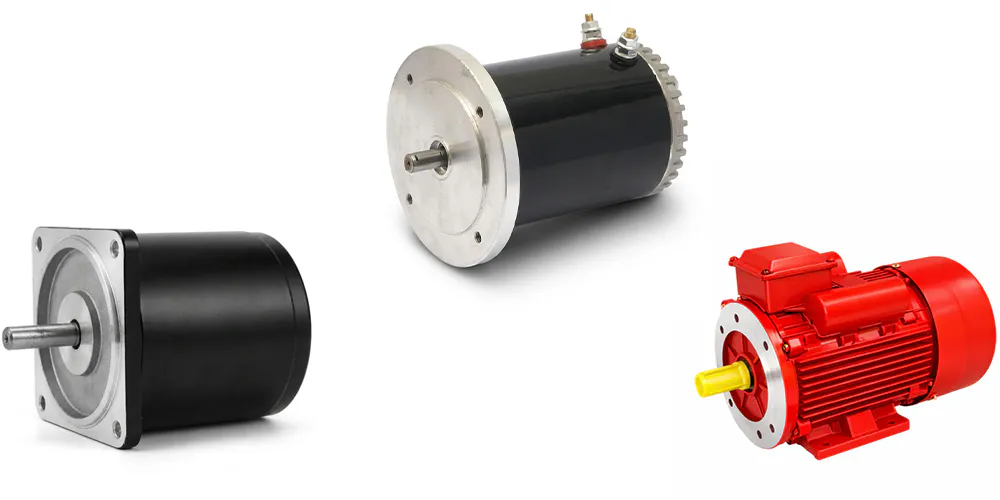
A single speed reducer functions as one element of the seed drill metering drivetrain. Matching the reducer to the motor or ground drive input, and sourcing compatible components from one supplier, simplifies engineering documentation, reduces spare parts complexity across a dealership network, and provides a single technical support contact for the full drivetrain package across regional markets.
Sobre nosotros
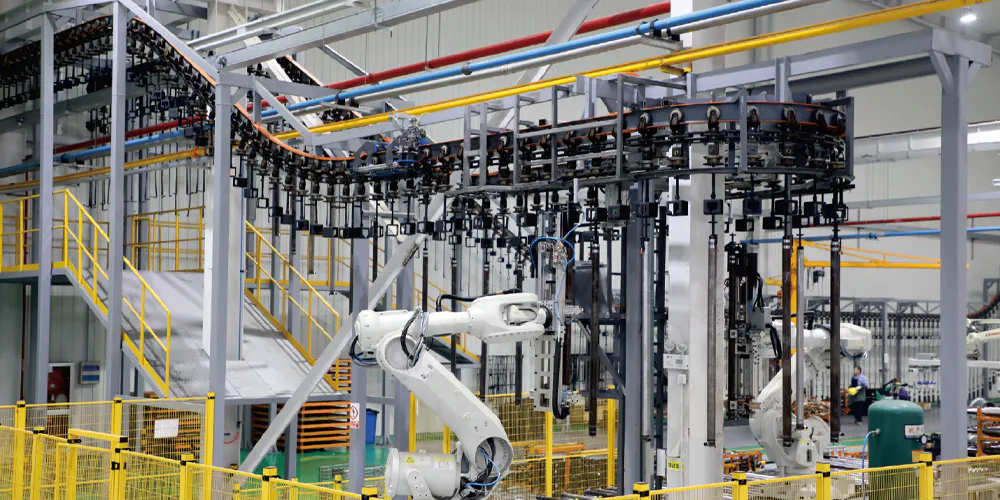
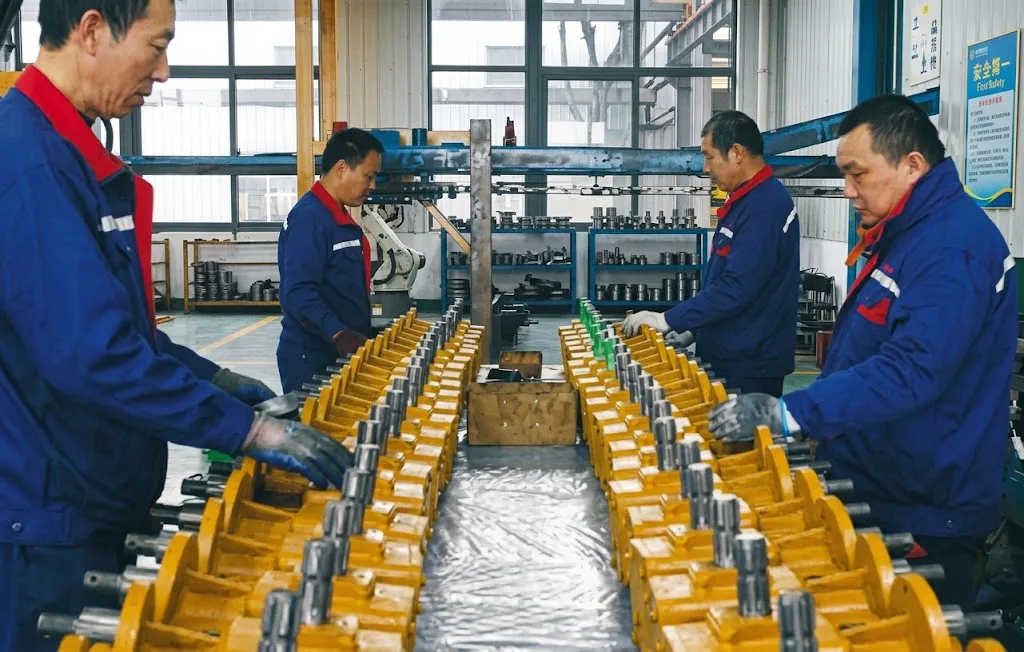
The engineering and manufacturing programme spans agricultural gearboxes, worm gear reducers, planetary gear drives, power take-off shafts, hydraulic cylinders, gears, chains, and motors. All production is operated under an ISO 9001:2015 certified quality management system. Manufacturing capability extends to industrial and agricultural gearboxes and assemblies produced in ductile iron, cast iron, cast steel, precision cast steel, and cast aluminum, together with gears, sprockets, worm gears, pulleys, worms, shafts, and a broad range of standard and non-standard mechanical parts. Export experience includes seed drill and planter equipment OEM customers across North America, South America, Europe, Asia, and Africa, with documentation and dimensional standards available to support all major regional market certification requirements.
Taller
Preguntas frecuentes
What gear ratio should I specify for a single speed reducer driving a fluted roller metering system on a wheat drill in a North American or Canadian grain farming operation?
For a fluted roller wheat drill metering system targeting 20–50 RPM at the metering shaft with a standard 4-pole motor or ground wheel drive, a reduction ratio of 28:1 to 70:1 is the applicable range. The exact ratio depends on the ground wheel diameter, the drive sprocket ratio, and the target seed spacing for the specific wheat variety and target plant population. The WPDS variant with dual-side output shafts is a practical choice for wheat drill applications in North American and Canadian grain operations where the same output shaft must simultaneously drive metering and fertiliser placement rollers on opposite sides of the toolbar.
How do I find a reliable worm gear single speed reducer supplier for a precision maize planter project in Brazil or Argentina who can provide OEM documentation and customized shaft dimensions?
Look for a single speed reducer manufacturer with ISO 9001:2015 certification who explicitly lists OEM customization — shaft diameter modification, mounting flange changes, non-standard ratios — as part of their standard service offering. For Brazilian and Argentine agricultural equipment markets, confirm that the supplier can provide dimensional drawings in metric format, material test certificates for the bronze worm wheel alloy, and assembly inspection records that can be included in the equipment technical file. Established export experience to South American agricultural OEM customers is a practical indicator of the supplier’s ability to meet regional documentation and logistics requirements.
What are the disadvantages of using a single reduction worm gear reducer instead of a chain-sprocket direct drive on a seed drill metering system in a European farming operation?
The primary disadvantage of a single reduction worm gear reducer compared to a direct sprocket-chain drive in a seed drill application is lower mechanical efficiency — typically 65–85% depending on ratio — compared to 97–99% for a direct roller chain drive. For battery-powered electric seed drills where power consumption is a design constraint, this efficiency difference has a real impact on operating time per charge. The worm gear reducer compensates with important advantages: it eliminates the open chain that accumulates field debris and requires lubrication maintenance, it provides inherent self-locking that prevents metering rollback on slopes, and it delivers far more precise ratio repeatability than a chain that stretches over time and introduces metering speed variation.
When should an agricultural equipment manufacturer in India or Ukraine consider specifying a customized single speed reducer rather than a standard catalogue model for a new multi-crop planter design?
Customized single speed reducer variants are worth specifying when the planter metering shaft diameter does not match standard output bore dimensions, when the toolbar frame requires a non-standard flange bolt circle, when a precise gear ratio between catalogue steps is needed to achieve a specific target seeding rate at a fixed ground speed, or when the planter is designed for a crop that requires an unusually low or high metering RPM outside the range achievable with standard catalogue ratios and available sprocket combinations. For Indian and Ukrainian agricultural OEM manufacturers building equipment for diverse regional crop calendars, custom ratio variants also allow a single planter platform to cover multiple crops without requiring the operator to change sprocket sets in the field.
Editor: PXY