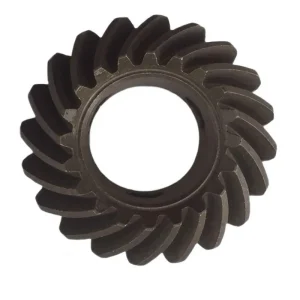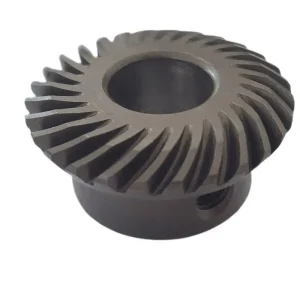
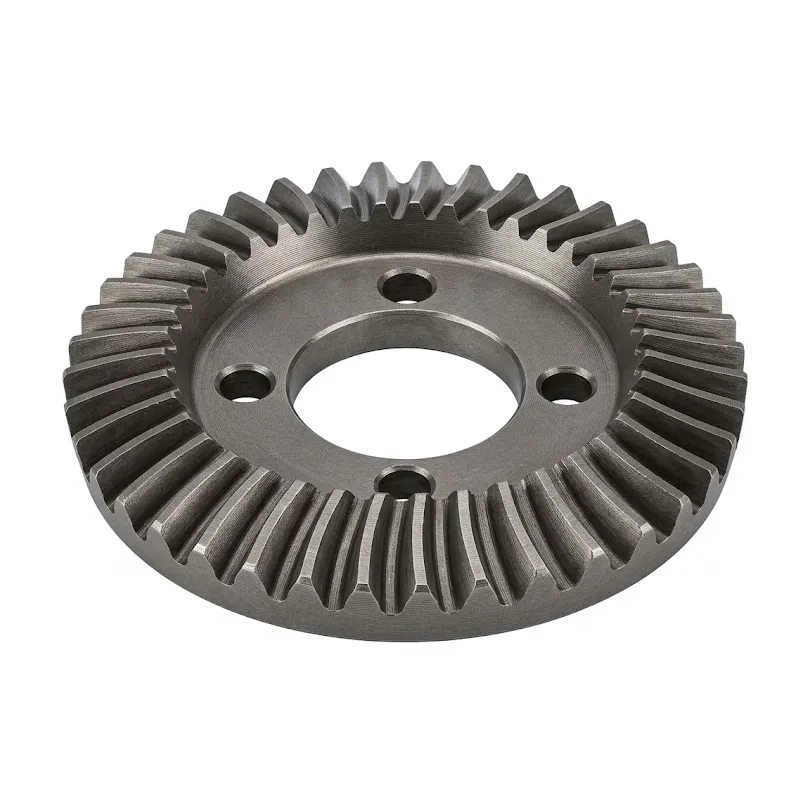
EP-மருத்துவ பெவல் கியர்
The EP-Medical Bevel Gear is a high-precision transmission component engineered for critical medical devices and demanding industrial applications. Available in modules from M0.15 to M2.2 and diameters ranging from 3mm to 120mm, these gears are manufactured from diverse materials including Stainless Steel, Brass, Aluminum, and POM to meet specific biocompatibility and strength requirements. They achieve superior meshing grades of ISO6, DIN 6, and AGMA 12, ensuring smooth, quiet operation essential for medical equipment. Certified under ISO 9001:2008 and TS16949, each unit undergoes rigorous quality control and is vacuum-packed with plastic trays to prevent contamination during transit via DHL or UPS. Fully customizable via ODM/OEM services, EP provides reliable bevel gears for surgical robots, diagnostic imaging systems, and automotive applications where precision and reliability are paramount.
Precision Medical Instrumentation / Bevel Gear Transmission
EP-மருத்துவ பெவல் கியர்
A miniature precision bevel gear engineered to the exact tolerances demanded by medical device design — available from Φ3 mm to Φ120 mm, module M0.15 to M2.2, in an extensive range of biocompatible and sterilisation-compatible materials. Certified to ISO 9001:2008 and TS16949, with ODM/OEM custom design support and global express delivery.
Module: M0.15 – M2.2
Grade: ISO6 / AGMA 12–13 / DIN 5–6
ODM / OEM Available
Certificate: ISO 9001:2008 / TS16949
Delivery: DHL & UPS
Technical Specification
The table below presents the complete technical specification for the EP-Medical பெவல் கியர் series. All dimensional and material parameters are available for ODM/OEM customisation. The reference dimension of Φ6 mm is the standard minimum for the listed meshing grades; smaller bevel gear dimensions down to Φ3 mm are achievable at reduced module specifications.
| அளவுரு | Medical Bevel Gear — EP Series |
|---|---|
| Dimension (Overall Range) | Φ3 mm – Φ120 mm |
| Reference Dimension (Standard) | Φ6 mm |
| Module Range | M0.15 – M2.2 |
| Material Type | Metal, Bronze, Steel, Alloy, POM, Zinc, Aluminum, Iron, Stainless, Brass, Copper |
| Meshing Grade | ISO6, JGMA 1, JIS 6, AGMA 13, DIN 6, DIN5, AGMA12 |
| விண்ணப்பம் | Automotive, Military, Aircraft, Mechanical, Industrial, Medical |
| Customised | ODM / OEM |
| Sample | Sample available |
| Modes of Packing | Vacuum-packed with Plastic Tray |
| Modes of Delivery | DHL & UPS |
| Certificate | ISO 9001:2008 / TS16949 |
| Typical Shaft Angle | 90° (other angles available per ODM specification) |
| Gear Tooth Form | Straight bevel; spiral bevel available on request |
Bevel Gear vs Spur Gear — Choosing the Right Gear Type for Medical Devices
The choice between a bevel gear and a spur gear is one of the first decisions in medical instrument drive design, and it is fundamentally governed by shaft geometry. A spur gear pair requires both shafts to be parallel — a constraint that can force sub-optimal motor placement in a compact instrument housing. A bevel gear pair transmits motion between intersecting shafts, most commonly at 90°, freeing the device designer to orient the drive motor along the instrument handle or housing axis while directing power to a perpendicularly oriented cutting, gripping, or sensing head. This shaft orientation flexibility is why the bevel gear appears in almost every class of powered surgical and diagnostic instrument, regardless of how a spur gear might otherwise perform adequately.
From a performance standpoint, a straight-tooth bevel gear operates at similar efficiency to a spur gear — both have sliding and rolling contact at the tooth flanks, and friction losses are comparable when lubrication is equivalent. The bevel gear does generate axial thrust forces on both shafts, which the bearing arrangement must react, whereas a spur gear generates only radial loads. In the small, lightly loaded medical bevel gear applications considered here, the axial thrust magnitudes are low and easily managed by standard miniature ball bearings or journal bearings appropriate to the instrument scale.
| Characteristic | பெவல் கியர் | Spur Gear |
|---|---|---|
| Shaft Arrangement | Intersecting (any angle) | Parallel only |
| Axis Change | Yes (typically 90°) | இல்லை |
| Axial Thrust | Yes (both shafts) | Radial load only |
| இரைச்சல் அளவு | Moderate (straight); low (spiral) | மிதமான |
| Torque Density | High for compact intersecting drives | High for parallel drives |
| Typical Medical Use | Surgical drills, endoscopes, robots | Linear actuators, pump drives |
What Is a Medical Bevel Gear?
A medical bevel gear is a precision-cut conical gear designed to transmit rotational motion and torque between intersecting shafts — typically at 90°, though other shaft angles are achievable depending on the bevel gear tooth geometry. Unlike standard industrial bevel gear components, a medical bevel gear must meet specifications that go significantly beyond dimensional accuracy: material biocompatibility, resistance to repeated sterilisation cycles (autoclave, EtO, gamma radiation), cleanliness of surface finish, and traceability of material certification are all mandatory requirements in regulated medical device supply chains. The EP-Medical பெவல் கியர் series addresses every one of these requirements, offering a miniature bevel gear platform with diameters from Φ6 mm (standard reference size) and an overall dimension range of Φ3 mm to Φ120 mm — covering the small-to-medium size range that dominates surgical instrument, diagnostic equipment, and therapy device applications.
The module range of M0.15 to M2.2 positions this bevel gear firmly in the fine-pitch precision segment. At M0.15, teeth are smaller than can be resolved by the naked eye, and the bevel gear is used in ultra-compact instrument mechanisms — endoscope tip actuators, miniature surgical drills, and micro-manipulation systems. At M2.2, the bevel gear is still considered fine-pitch in industrial terms but is suitable for surgical robots, powered exoskeletons, and rehabilitation drive units where moderate torque and higher structural strength are required alongside the precision and cleanliness standards of the medical sector. The ability to serve this full module range from a single manufacturing facility — under consistent quality management and material traceability — is the core value proposition of the EP-Medical பெவல் கியர் programme.
Multi-standard meshing grade compliance — ISO6, JGMA 1, JIS 6, AGMA 13, DIN 6, DIN5, and AGMA12 — ensures that a medical device OEM in the United States specifying AGMA, a Japanese manufacturer referencing JIS, and a European device builder using DIN or ISO standards can all source the same bevel gear series with the applicable standard documentation. This flexibility eliminates the need to qualify multiple bevel gear suppliers for different markets, which significantly reduces procurement complexity for global medical device programmes.
Five Key Advantages of the EP-Medical Bevel Gear
① Miniature Precision Down to M0.15 — Enabling Ultra-Compact Device Design
The defining technical advantage of this medical bevel gear series is its availability at modules as fine as M0.15 — a scale at which the gear becomes a micro-mechanical component rather than a conventional machine element. At M0.15 with a reference diameter of Φ6 mm, a bevel gear of 40 teeth has a pitch of less than 0.5 mm, requiring CNC gear generating equipment with sub-micron positioning capability and cutting tools at the limit of conventional tooling technology. This level of miniaturisation enables medical device engineers in the US, Germany, Japan, and South Korea to reduce the envelope of driven mechanisms in endoscopes, catheter tip actuators, micro-surgical instruments, and wearable medical devices — without sacrificing the angular motion transmission capability that only a bevel gear can provide in a compact intersecting-shaft arrangement.
② Broad Material Portfolio — Biocompatible and Sterilisation-Compatible Options
A medical bevel gear must survive not only its mechanical duty cycle but also the repeated sterilisation cycles mandated by hospital infection control protocols. The EP-Medical பெவல் கியர் series is available in metal (general specification), bronze, steel, alloy steel, POM (acetal), zinc alloy, aluminium, iron, stainless steel, brass, and copper — a material range wide enough to cover every medical application from disposable single-use components to reusable precision instruments rated for hundreds of autoclave cycles. Stainless steel (typically 316L or 17-4PH) is the default specification for reusable surgical instruments where autoclave compatibility and biocompatibility are both required. POM suits dry-running mechanisms in monitoring and therapy devices where weight reduction and self-lubricating behaviour are priorities. The bevel gear material is always selected as part of the overall device design, never in isolation.
③ Multi-Standard Meshing Grade Compliance
Medical device manufacturers operate under national and regional regulatory frameworks that frequently reference specific gear accuracy standards for precision components. The EP-Medical பெவல் கியர் series is manufactured and inspected to ISO6, JGMA 1, JIS 6, AGMA 13, DIN 6, DIN5, and AGMA12 — the full set of internationally recognised precision gear standards. This multi-standard compliance means a single bevel gear product can be qualified against the standard applicable in the device manufacturer's home market and documented for regulatory submissions across different jurisdictions simultaneously. For global medical device programmes where the same device bill of materials must satisfy FDA 510k in the US, CE marking in the EU, and PMDA approval in Japan, a multi-standard compliant bevel gear component eliminates a significant compliance bottleneck.
④ Full ODM/OEM Custom Design Support
Medical device mechanisms rarely accommodate off-the-shelf bevel gear components without modification. Shaft diameters, hub geometries, bearing interface dimensions, gear ratio requirements, and clearance envelopes are all device-specific, and the bevel gear must be engineered to fit the mechanism rather than the mechanism engineered around the gear. The EP-Medical பெவல் கியர் programme operates on an ODM/OEM basis, accepting customer drawings and engineering briefs as the starting point for each order. The engineering team reviews the application — including shaft angle, torque, speed, lubrication, and sterilisation requirements — and designs the bevel gear geometry accordingly before entering the production flow. This design-to-order model ensures that every medical bevel gear delivered is a fit-for-purpose component, not a standard catalogue item pressed into an application it was not designed for.
⑤ Vacuum Packing, Express Delivery, and Sample Availability
Medical device supply chains demand component cleanliness and packaging integrity as a given — a bevel gear delivered with contaminated surfaces or damaged teeth cannot be introduced into a medical device assembly environment without risk of foreign body contamination. The EP-Medical பெவல் கியர் is vacuum-packed with plastic trays that protect tooth flanks and bore surfaces during transit. DHL and UPS express delivery is available globally, enabling rapid replenishment for urgent production runs or prototype iteration cycles. Samples are available for engineering evaluation and qualification testing, allowing device development teams to validate fit, function, material properties, and surface finish before committing to production tooling or volume orders. This sample-first approach is aligned with the risk management requirements of ISO 13485, the quality management standard for medical device suppliers.
How a Medical Bevel Gear Works
Understanding how a bevel gear works in a medical device context starts with the fundamental geometry. A bevel gear has teeth cut on the surface of a cone, and when two bevel gear cones mesh with their apices meeting at a common point, rotation is transmitted between the two shafts — which intersect at that apex point. The angle between the shafts is the shaft angle, most commonly 90° in medical instrument mechanisms, though other shaft angles (45°, 60°, or custom) are achievable by selecting appropriate pitch cone angles for each bevel gear in the pair.
The gear ratio of a bevel gear pair is determined by the ratio of the number of teeth on each gear. A bevel gear with 20 teeth driving a mating gear with 40 teeth produces a 2:1 reduction ratio, slowing the output shaft to half the input speed while doubling the output torque (less friction losses). In medical bevel gear applications — where the mechanism must be compact, lightweight, and often battery-powered — the gear ratio selection directly governs the torque available at the driven instrument tip versus the speed of motion, and this balance is fundamental to device usability and patient safety. A surgical drill, for example, requires a specific speed range at the cutting end; a powered suture driver requires specific torque; both use a bevel gear to redirect the motor axis and simultaneously achieve the required output ratio.
At the tooth contact level, a straight bevel gear pair engages along a line that sweeps across the tooth face width as the gear rotates, similar in principle to a spur gear mesh. This line contact produces a load impulse at each tooth engagement that can generate vibration and noise — acceptable in many medical applications but a consideration in precision diagnostic instruments where vibration must be minimised. Spiral bevel gear variants (curved tooth form) address this by producing gradual, progressive tooth engagement similar to the helical gear principle, reducing vibration and noise at the cost of higher manufacturing complexity. The choice between straight and spiral tooth form in the medical bevel gear is application-dependent: straight teeth suffice for low-speed, low-noise-budget applications; spiral teeth are specified for higher-speed drives where smooth, quiet operation is a clinical requirement.
Lubrication of a medical bevel gear set must be compatible with the overall device design, particularly regarding sterilisation. Grease-lubricated bevel gear pairs in sealed gearheads can be designed for long service life without relubrication access, provided the initial lubricant charge is sufficient and the grease specification is compatible with the temperature range and sterilisation method. Dry-running POM medical bevel gear sets avoid the lubricant selection issue entirely, at the cost of somewhat lower load capacity and higher sensitivity to sliding wear at elevated temperatures. For single-use disposable medical instrument components, lubrication is often omitted entirely, and the bevel gear material and surface finish are selected to survive the intended number of actuations without additional lubrication.
Material, Surface Treatment & Quality Certification
Selecting the correct material for a medical bevel gear is inseparable from understanding the device's clinical use, sterilisation pathway, and regulatory classification. The EP-Medical பெவல் கியர் series supports a wider material range than almost any competing medical bevel gear manufacturer, reflecting the diversity of medical device applications from laboratory benchtop instruments to implant-adjacent surgical tools. Key material options include:
- Stainless Steel (304 / 316L / 17-4PH) — The preferred material for reusable surgical instrument bevel gear components. 316L provides superior corrosion resistance for autoclave, steam, and liquid chemical sterilisation environments. 17-4PH precipitation-hardened stainless achieves significantly higher hardness after age hardening, improving the contact fatigue resistance of the bevel gear tooth flanks in higher-load powered instrument applications.
- Bronze — A traditional bearing and gear material valued for its compatibility against steel pinions, corrosion resistance in moist environments, and good machinability. Bronze medical bevel gear components are specified in rehabilitation equipment and some powered surgical tool applications where the softer material preferentially wears rather than damaging a more expensive steel mating gear — a designed-in wear indicator strategy.
- POM (Polyoxymethylene / Acetal) — Self-lubricating, lightweight, and dimensionally stable in humid conditions, POM suits dry-running medical bevel gear applications in monitoring equipment, therapy devices, and consumer medical products. POM is not suitable for autoclave sterilisation but tolerates EtO and gamma radiation within defined dose limits.
- Aluminium Alloy — Where weight reduction is critical — handheld battery-powered instruments, wearable medical devices — aluminium alloy provides adequate strength for the load levels typical of small bevel gear sets in this application, at approximately one-third the density of stainless steel.
- Brass, Copper, Zinc Alloy — Used in specific instrument, sensor drive, and precision actuator applications. Brass medical bevel gear components are particularly common in optical instrument mechanisms and fine-pitch actuators where machinability and dimensional stability are primary selection criteria.
All EP-Medical பெவல் கியர் components are manufactured under ISO 9001:2008 / TS16949 certification, with full material certificates and dimensional inspection reports available on request. For medical device OEMs undergoing FDA or CE regulatory submissions, material traceability documentation — including raw material test certificates, heat treatment records, and final inspection data — is provided as a standard part of the quality package. The vacuum packing with plastic tray protects cleanliness from factory dispatch to device assembly, reducing the risk of particle contamination that would require costly cleaning validation in the device manufacturer's facility.
Medical Bevel Gear Application Areas
தி medical bevel gear application range extends across virtually every category of powered medical device that requires angular motion redirection in a compact, sterile-compatible package. Below are the primary sectors served by this product series globally.
Surgical Instruments & Powered Handpieces
Powered surgical tools — bone drills, sagittal saws, oscillating handpieces, and powered suture passers — routinely incorporate a bevel gear set to redirect the drive motor axis relative to the cutting or grasping head. The 90° shaft angle enabled by the medical bevel gear allows motor orientation along the ergonomic grip axis of the instrument while directing cutting torque perpendicularly — a geometric relationship that is almost universal in powered surgical handpiece design. In orthopaedic surgery, neurosurgery, and ENT procedures, the reliability and precision of the instrument bevel gear set directly affects surgical accuracy and patient safety. Surgical instrument makers in Germany, the US, Japan, and South Korea specify medical bevel gear components to the highest available meshing grades for this reason.
Endoscopes & Minimally Invasive Instruments
The miniaturisation of the bevel gear to modules as fine as M0.15 is perhaps most consequential in endoscope and minimally invasive instrument design. The distal tip of a steerable endoscope or a robotic surgical tool must contain all the mechanical elements needed to articulate, grasp, and apply therapeutic energy within an outer diameter that may be as small as 5–10 mm. At these scales, a bevel gear of Φ3–Φ6 mm is not merely a precision component — it is a micro-mechanical structure whose manufacturability defines the engineering limit of the device. The medical bevel gear application in endoscope tip steering mechanisms, robotic wrist joints, and biopsy forceps actuation systems is one of the most technically demanding assignments in the entire precision gear manufacturing domain.
Surgical Robotics & Exoskeletons
Surgical robot joints — such as those found in laparoscopic robot arms, orthopaedic surgical planning systems, and neurosurgical positioning robots — combine multiple degrees of freedom in compact, sterilisable housings. The bevel gear is the preferred transmission element at each joint axis where the drive motor must be offset from the joint rotation axis. Stainless steel medical bevel gear sets at AGMA 13 or DIN 6 precision grade are the standard specification in this application, where positional accuracy, repeatability, and long service life under repeated sterilisation are all mandatory. Rehabilitation exoskeletons — for stroke recovery, spinal injury therapy, and gait training — use similar bevel gear configurations at larger modules (M1–M2.2), where the torques involved in supporting and moving patient limbs demand more substantial gear cross-sections.
Diagnostic & Imaging Equipment
Diagnostic imaging equipment — CT scanner gantry drives, MRI table positioning systems, ultrasound probe rotation stages, and ophthalmological examination instruments — uses medical bevel gear components in the precision scan axis drives where angular position accuracy translates directly into image quality. In MRI applications, the bevel gear material must be non-magnetic, which drives specification toward aluminium alloy, bronze, or specific non-magnetic stainless steel grades. The smooth, quiet operation of a well-designed bevel gear set minimises acoustic interference in ultrasound and acoustic measurement applications — a benefit that is difficult to achieve with other gear types at the shaft angles required. Medical device engineers in the Netherlands, USA, and Japan frequently specify medical bevel gear parts for diagnostic imaging actuation systems.
Infusion Pumps, Drug Delivery & Monitoring Devices
Infusion pumps, syringe drivers, insulin pumps, and wearable drug delivery systems require compact, reliable gear stages to convert motor rotation into accurate fluid dispensing rates. Where the motor axis must be redirected to optimise housing geometry, a micro bevel gear set in the M0.15–M0.5 module range provides the most space-efficient solution. POM and aluminium medical bevel gear variants are commonly used in battery-powered portable monitors and drug delivery devices where weight, self-lubrication, and compatibility with dry-running are more important than maximum load capacity. Continuous glucose monitoring device actuators, wearable insulin pump drives, and ambulatory drug infusion systems used across European, American, and Asian healthcare markets all represent active medical bevel gear application areas within this category.
Related Products — System Compatibility & One-Stop Supply
A medical bevel gear typically operates as part of a multi-stage drive train that may also include parallel-shaft gear stages, linear actuator components, or other motion elements. Sourcing all drive components from a single supplier reduces qualification effort, ensures module compatibility across stages, and simplifies the supply chain documentation required for regulated medical device programmes. The two product families below are most frequently specified alongside the medical bevel gear in complete instrument and device drive designs.
இரட்டை சுருள் கியர்
The double helical gear series complements the bevel gear range by providing the parallel-shaft reduction stages that are frequently paired with a bevel gear set in multi-stage medical device drives. Where the bevel gear redirects the drive axis, a double helical gear stage upstream of it handles the speed reduction from motor speed to the range appropriate for the instrument function — with the added benefit of axial thrust cancellation that eliminates thrust bearing requirements in the parallel stage. For surgical robotics and rehabilitation exoskeleton drivetrains that combine parallel and intersecting shaft stages, a single-source supply of both bevel gear and double helical gear components streamlines qualification and ensures module-matched tooth geometry across the full drive train.
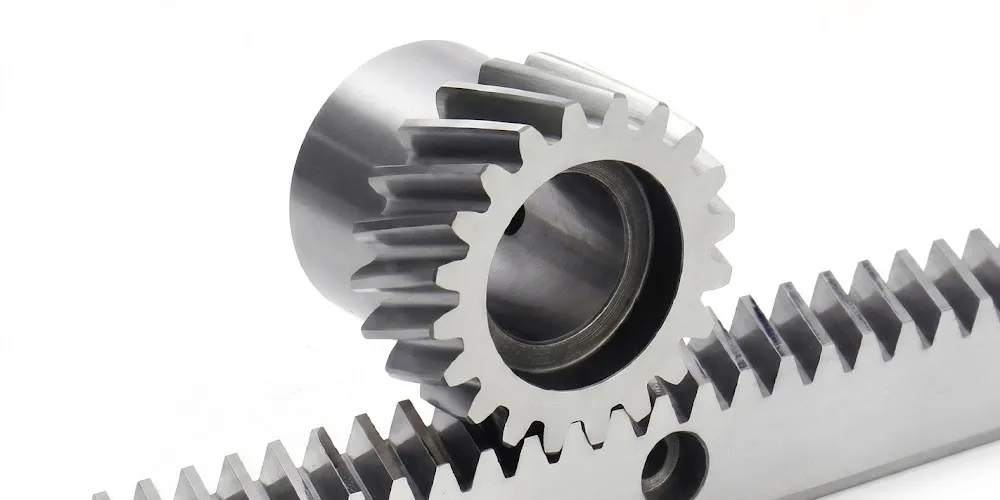
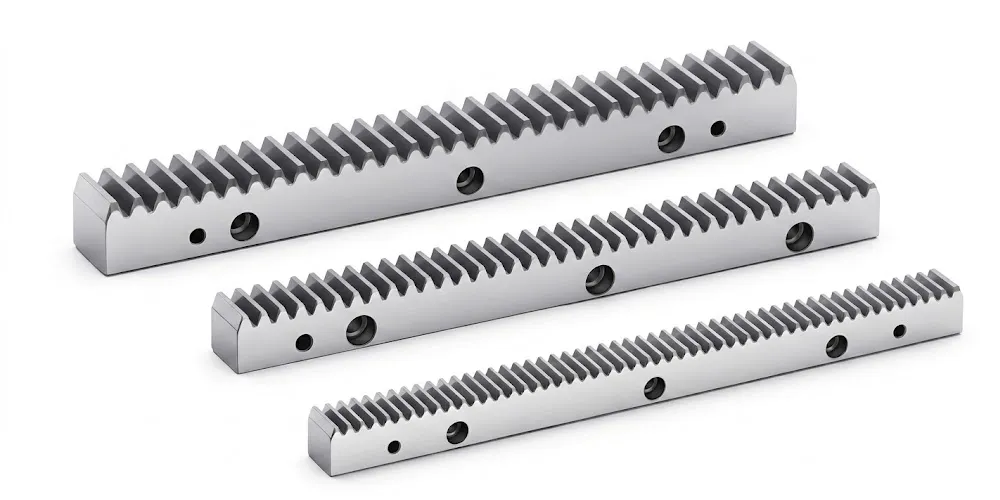
கியர் ரேக்
For medical device applications where linear motion output is required — table positioning drives in imaging equipment, linear stage actuators in surgical robots, and specimen handling in laboratory automation — the gear rack provides the linear element to a rotary pinion drive. In many medical device designs, a bevel gear stage redirects the motor axis onto the pinion shaft driving the rack, creating a compact L-shaped drive arrangement that fits tightly within the device housing. The gear rack range uses modules matched to the broader gear portfolio, ensuring pitch compatibility with precision miniature pinion gears produced on the same CNC equipment as the medical bevel gear series. Available in stainless steel and aluminium alloy for cleanroom and medical environment compatibility.
About the Manufacturing Facility
With more than ten years of direct experience in precision mechanical transmission manufacturing, our facility serves industrial, agricultural, and specialist technical markets — including the demanding medical device sector — from a single, vertically integrated production site. The product scope spans agricultural gearboxes, worm gear reducers, planetary gear drives, power take-off shafts, hydraulic cylinders, gears, chains, and motors, providing customers with a technically credible, single-source procurement option across diverse mechanical drive requirements.
The facility is certified to ISO 9001:2008 and TS16949, with quality management applied rigorously from raw material procurement through to final inspection, packaging, and dispatch. We design and manufacture a comprehensive range of industrial and agricultural gearboxes and assemblies in ductile iron, cast iron, cast steel, precision cast steel, and cast aluminium, alongside standard and non-standard parts including gears, sprockets, worm gears, pulleys, worms, and shafts. All manufacturing is in-house under consistent quality management — not distributed across subcontractors — ensuring material traceability and dimensional accountability throughout the supply chain.
The medical bevel gear programme benefits from this manufacturing depth and operates under the additional documentation disciplines required for medical device supply. Full material certificates, dimensional inspection reports, and process records are maintained for every bevel gear production batch, meeting the traceability requirements of ISO 13485 and supporting regulatory submissions for medical device OEM customers globally. We are a factory, not a trading intermediary; engineering queries about medical bevel gear design, material selection, and sterilisation compatibility are answered by the engineers and machinists who produce the product.
அடிக்கடி கேட்கப்படும் கேள்விகள்
The questions below address the most common technical and sourcing queries from medical device engineers and procurement teams evaluating precision bevel gear components for regulated device programmes globally.
பதிப்பாசிரியர்: PXY