Liermotor
Complete Guide
Invoering
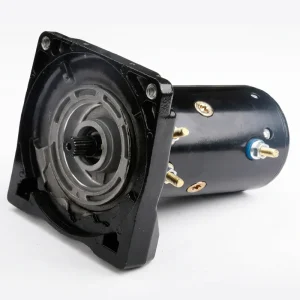
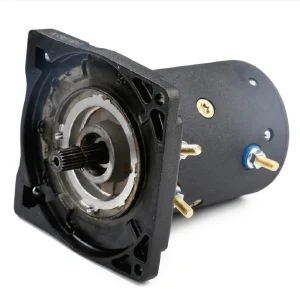
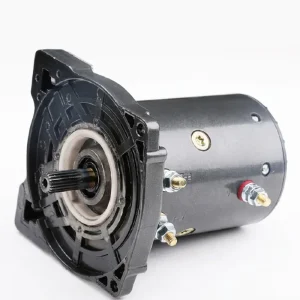
What Is a Winch Motor?
A winch motor is a purpose-built DC electric motor designed to generate high starting torque under heavy, intermittent loads. Unlike general-purpose motors, winch motors are engineered to handle extreme peak-current demands — often several times the rated current — during the brief periods of maximum pull, then recover during idle phases.
They operate on a duty cycle basis (typically S2 2-minute duty at 7–9% ED), meaning they deliver very high power for short bursts rather than continuous operation. This matches precisely how real winch applications work — rapid load movement followed by rest intervals.
Winch motors in the DC series are available in 12V and 24V configurations, making them directly compatible with vehicle electrical systems — ideal for off-road recovery, marine lifting, industrial hoisting, and agricultural equipment.
Key Characteristics
High Starting Torque
Delivers 4–9 N·m rated torque at stall conditions, essential for heavy load initiation.
Intermittent Duty Rating
S2 2-minute duty cycle at 7–9% ED prevents thermal overload during sustained use.
Weather Resistance
IP54 to IP67 waterproof ratings allow operation in rain, mud, and marine environments.
Bidirectional Operation
All models support both forward and reverse rotation, enabling full load control.
Winch Motor Types
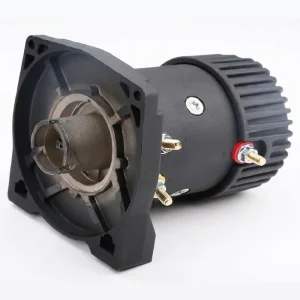
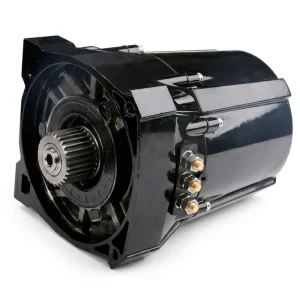
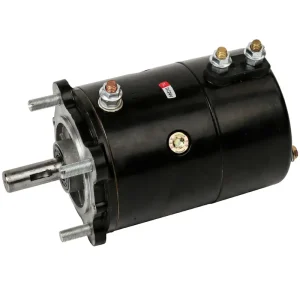
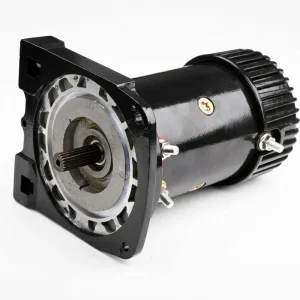
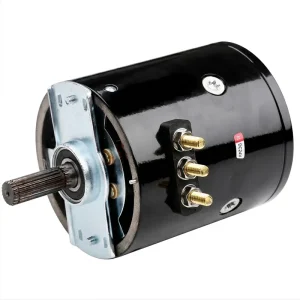
Product Range
Technical Specifications Overview
Seven distinct motor configurations covering 12V and 24V systems from 1,400W to 2,200W, each tuned for specific winch capacity ranges.
| Spanning (V) | Vermogen (W) | Nominale stroomsterkte (A) | Nominaal koppel (N·m) | Bedrijfscyclus | Insulation | Waterproof | Rotatie |
|---|---|---|---|---|---|---|---|
| 12 | 2200 | ≤285 | 8 | 2min-7%ED | F | IP67 | Bidirectioneel |
| 12 | 2000 | ≤265 | 6 | 2min-7%ED | F | IP67 | Bidirectioneel |
| 12 | 1750 | ≤240 | 6 | 2min-7%ED | F | IP54 | Bidirectioneel |
| 12 | 1750 | ≤240 | 6 | 2min-7%ED | F | IP67 | Bidirectioneel |
| Spanning (V) | Vermogen (W) | Nominale stroomsterkte (A) | Nominaal koppel (N·m) | Bedrijfscyclus | Insulation | Waterproof | Rotatie |
|---|---|---|---|---|---|---|---|
| 24 | 2100 | ≤180 | 9 | 2min-9%ED | F | IP54 | Bidirectioneel |
| 24 | 2000 | ≤125 | 8 | 2min-7%ED | F | IP67 | Bidirectioneel |
| 24 | 1400 | ≤185 | 4 | 2min-7%ED | F | IP54 | Bidirectioneel |
Keeping Your Winch Motor in Service
Brush Inspection
Inspect carbon brushes every 100 operating hours or annually. Replace when worn to less than 50% of original length. Asymmetric wear indicates misalignment between brush holder and commutator.
Terminal Connection Check
Check A1 and D2 terminals for corrosion or looseness. Even a 0.1Ω increase in terminal resistance causes significant voltage drop at 200A+ current levels, reducing effective motor power and generating heat.
IP Seal Integrity
After any impact or submersion event, verify that IP seals remain intact. Water ingress into a Class F winding causes insulation breakdown within as few as 10 operating cycles if left unchecked.
Duty Cycle Compliance
Never exceed the rated 2-minute pull without a full thermal recovery pause. In high-ambient-temperature conditions, extend recovery time proportionally. Most field failures are traced to ignored duty cycle limits.
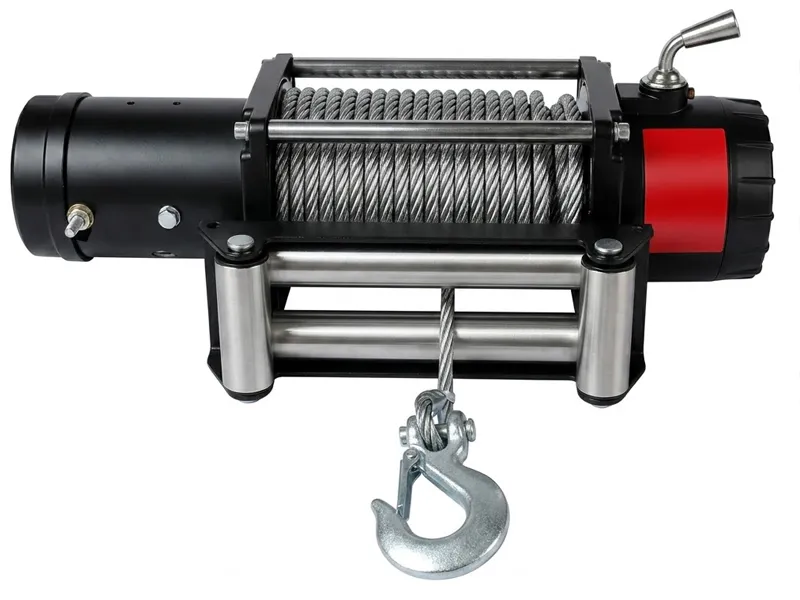
Installation
Wiring & Installation Notes
Cable Sizing
At 12V and 285A peak current, cable cross-section is critical. Use minimum 35mm² cable for runs under 1m; 50mm² for longer runs. Undersized cable is the most common cause of poor winch performance that gets misattributed to a failing motor.
At 24V the current is approximately halved (125–185A depending on model), allowing smaller cable cross-sections — one of the practical advantages of 24V systems in larger installations.
Solenoid Selection
All motors in the range use an A1/D2 terminal wiring diagram compatible with standard winch solenoid packs. The solenoid must be rated for the full peak current, not just the nameplate current — peaks can reach 2.5–3x rated current during stall conditions.
Use heavy-duty reversing solenoid contactors rated for inductive DC loads. Resistive-rated contactors fail prematurely in motor switching applications due to arc energy at contact opening.
Montageoriëntatie
DC winch motors are designed for horizontal shaft operation. Vertical-shaft mounting is possible but may require additional bearing preload consideration, particularly on models with heavier output shaft pinion gears.
Secure all mounting bolts to manufacturer-specified torque. Vibration-induced loosening under load can shift motor alignment relative to the gearbox input, causing rapid gear wear and premature bearing failure.
Get in Touch
Need Help Specifying
the Right Motor?
Our engineering team works with OEM winch manufacturers, aftermarket suppliers, and fleet operators to match motor specifications to application requirements. Provide your voltage, load, and environment — we will identify the correct model from the range.
Response Time
Within 24 Hours
Custom Specifications
OEM Available
Selectiegids
How to Choose the Right Winch Motor
Follow these five decision points in order. Each filters the field and brings you to the correct specification for your application.