
Mining & Quarrying
A technical review of how single-speed worm gear reducers deliver the fixed-ratio, high-torque, shock-resistant drive characteristics that mine mud pump stations require for consistent hydraulic head and fluid pressure across underground and open-cut mining pump circuits worldwide.
Mine mud pump stations handle some of the most challenging fluid transport tasks in industrial engineering. Slurry mixtures containing abrasive mineral particles — tailings slurry in gold and copper processing plants, thickened paste fill material in underground mines, coal-water slurry in preparation plant reject circuits, and drilling mud in exploration and production wells — impose demands on pump drive systems that standard clean-water pump stations do not. The fluid is dense, corrosive, and laden with particles that abrade internal surfaces; the required hydraulic head may be several hundred metres in deep underground mine dewatering circuits; and the consequence of pump failure or pressure instability in a paste fill system is an underground void left unfilled, a stability risk that directly affects mine safety.
In these conditions, the single speed reducer that connects the drive motor to the pump impeller or crank shaft plays a role that extends well beyond simple speed conversion. Its fixed gear ratio establishes the pump operating speed precisely, without the slip or variable-ratio uncertainty of hydraulic couplings or variable-frequency drive systems operating below their rated accuracy at very low output speeds. The worm gear architecture used in most WP series single speed reducers adds a specific additional property — the inherent resistance to back-driving that prevents the loaded pump shaft from spinning under fluid column pressure when the motor is de-energised — that simplifies pump station design and reduces the mechanical valve count needed to protect the pump from reverse flow.
Why Fixed Gear Ratio Is Critical for Stable Head and Pressure Control
In a mine mud pump circuit, the hydraulic head and discharge pressure are direct functions of pump speed: for a centrifugal slurry pump, head varies approximately with the square of speed, and flow rate varies linearly with speed, according to affinity law relationships. This means that a 5% change in pump impeller speed produces approximately a 10% change in delivered head. For a paste fill pump station delivering to a specific underground stope at a defined head requirement — where excess pressure risks pipe failure and insufficient pressure leaves material stratifying in the line — the pump speed must be maintained within a tight band around the design point to hold the discharge pressure within the pipeline design limit.
A single speed reducer with a fixed worm gear ratio delivers a precise, deterministic output speed for any given motor speed — there is no slip, no ratio variation with load, and no electronic control tolerance that introduces uncertainty at the speed setpoint. This deterministic relationship between motor and pump shaft speed is the primary engineering reason for selecting a fixed-ratio single speed reducer rather than a variable-ratio drive in mud pump stations where the pump is designed to operate at a specific duty point for extended periods without human intervention. Variable-speed systems are valuable for pump circuits that operate across a wide range of flow rates or heads, but in many mine mud pump applications the duty point is fixed by the circuit hydraulics and the only requirement is to hold that point accurately under varying slurry density.
For positive-displacement mud pumps — piston or plunger pumps used in high-pressure drilling and cement grout injection circuits — the relationship between crank shaft speed and output flow is even more direct than for centrifugal pumps: output flow is strictly proportional to crank speed, with no slip or bypass losses. The single speed reducer’s fixed ratio therefore directly controls the delivery rate of a piston pump, and the compactness of the single stage right-angle worm-gear speed reducer configuration allows a right-angle drive arrangement at the pump crank that suits the standard piston pump layout without requiring additional shafting or bevel gear stages to redirect the motor axis.
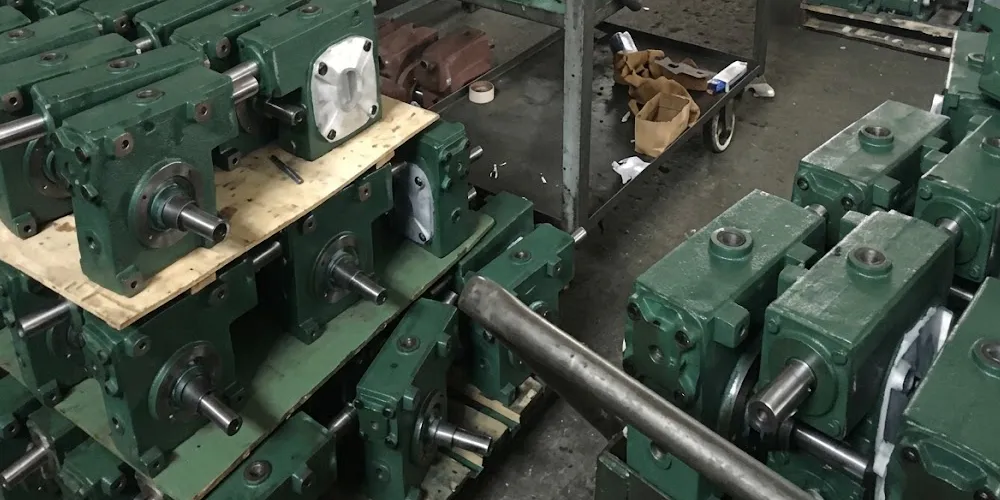
Manufacturing Construction
The manufacturing construction of a single speed reducer used in mine mud pump service must account for conditions that standard industrial pump drives do not typically face: elevated ambient humidity in underground pump stations, continuous vibration from reciprocating piston pumps transmitted back through the drive shaft, occasional reverse torque from fluid column pressure during emergency stops, and the need for reliable operation over maintenance intervals that may extend to 4,000 hours or more in deep underground installations where access for routine service is time-consuming and disruptive to mine production schedules.
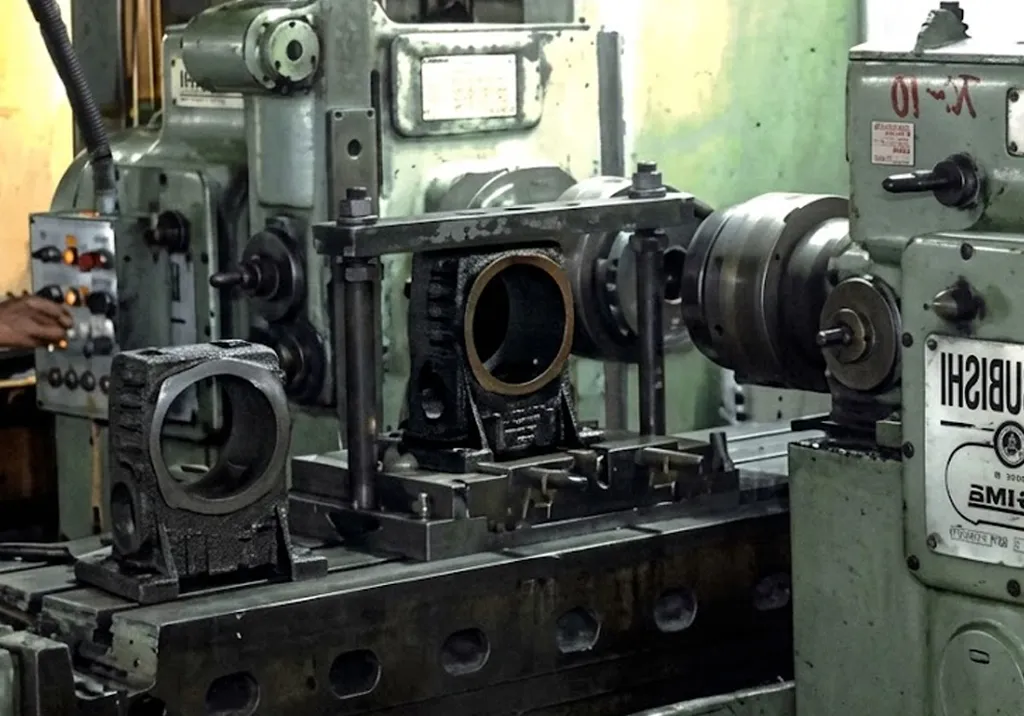
The worm shaft is produced from case-hardening alloy steel, processed through carburizing, quenching, and profile grinding to achieve HRC 58–62 surface hardness at the worm thread. Profile grinding after heat treatment corrects the distortion that quenching introduces and establishes the precise involute geometry that controls both the contact pattern and the efficiency of the worm-wheel mesh. In mud pump applications where the reducer must resist occasional back-driving loads from fluid column pressure — even if the worm ratio is high enough to be nominally self-locking — the profile accuracy of the worm thread is important because an imprecise contact pattern under reverse torque concentrates the load on a smaller area of the thread face than during forward drive, accelerating wear at precisely the contact zone that is hardest to inspect without disassembly.
The worm wheel in WP series single speed reducers is cast from phosphor bronze or tin bronze, either centrifugally cast for larger frame sizes or die-cast for smaller ones, and assembled onto a cast iron or steel hub. The hub-to-rim connection — typically a shrink fit for larger sizes and an interference-plus-key arrangement for intermediate sizes — must be capable of transmitting the full rated torque of the reducer without fretting at the interface, which requires adequate contact pressure across the engagement face and a hub material with sufficient compressive yield strength to maintain that pressure under the thermal cycling of intermittent mine pump operation. For deep underground pump stations in Australian or South African gold mines where ambient temperatures at depth exceed 35°C, the thermal expansion differential between the bronze rim and the ferrous hub must be accounted for in the interference specification to ensure the fit remains adequate at operating temperature.
Material System
The material system of a single speed reducer in mine mud pump service must address the corrosive atmosphere of underground pump chambers — where groundwater seeping from the surrounding rock mass creates a permanently humid, often acidic environment — alongside the mechanical load requirements that the pump duty imposes. Standard WP series housing materials and surface treatments provide adequate performance for the majority of underground mine pump station positions, but the specific material choices at each component level merit review for particularly aggressive installations.
Worm Shaft: Case-Hardened Alloy Steel
After carburizing and grinding, the thread surface reaches HRC 58–62, providing contact fatigue resistance under the sustained high contact pressure of continuous pump duty. The case-hardened core retains the ductility needed to absorb the shock loads from piston pump torque reversals at each crank stroke transition, where the kinetic energy of the reciprocating mass is transferred into the drive shaft as a brief overload pulse that the reducer must absorb without tooth surface damage.
Applied across all WP series models for mine pump duty
Worm Wheel: Phosphor Bronze
Phosphor bronze (CuSn10P) is the standard worm wheel material for mine pump reducers because its combination of hardness lower than the worm shaft — ensuring sacrificial wear in the replaceable bronze component — and adequate fatigue strength handles both the sustained high-cycle loading of centrifugal slurry pump operation and the pulsating load of reciprocating piston pump drives. The bronze’s inherent corrosion resistance to the mildly acidic groundwater environments found in many underground mine workings reduces the risk of crevice corrosion at the hub-rim interface in high-humidity pump chambers.
Centrifugally cast for WPKA, WPKS, WPDKA larger frames
Housing: Close-Grained Cast Iron
Grey cast iron (HT200) housing provides inherent vibration damping — a relevant property for pump station reducers where continuous piston pump operation generates vibration at the crank frequency — and adequate corrosion resistance for the majority of underground mine pump chamber environments when the external surface is properly painted or epoxy-coated. For particularly aggressive environments (acidic mine water, high chloride groundwater), a sealed epoxy coating system on the housing exterior extends the interval between surface treatment maintenance.
Standard across WPDS, WPKA, WPKS, WPKZ, WPZ series
Recommended Product for Mine Mud Pump Drive Applications
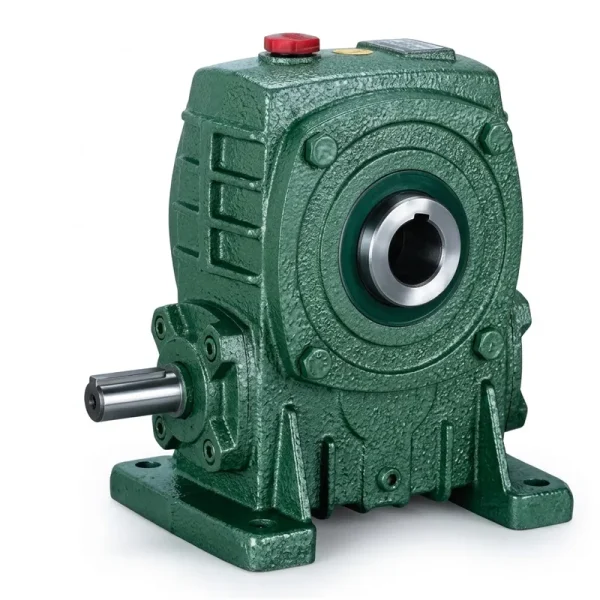
EP-WPKA เกียร์ทดรอบความเร็วเดียว 5–260 กก.
The EP-WPKA spans a frame weight range from 5 to 260 kg, covering the mid-to-large frame sizes that correspond to the motor and torque requirements of centrifugal slurry pumps and medium-bore piston pumps used in mine mud pump stations. Its right-angle worm gear architecture provides self-locking at gear ratios above approximately 40:1, which is directly applicable to pump station drive positions where the pump shaft must not back-drive under fluid column pressure during unplanned motor trips. The cast iron housing is sealed for splash lubrication operation in multiple mounting orientations, supporting the varied installation geometries found in underground pump bays where space constraints sometimes dictate non-standard mounting configurations.
- Frame weight range: 5 to 260 kg
- Gear ratio range: 10:1 to 60:1 (single stage)
- Worm shaft: Case-hardened alloy steel, profile ground
- Worm wheel: Phosphor bronze or tin bronze
- Housing: Close-grained grey cast iron, sealed
- Self-locking: Yes at gear ratios above approx. 40:1
- Multiple mounting orientations supported
Mud Pump Types and Their Single Speed Reducer Duty Requirements
Different mud pump types in mine pump stations place distinct demands on the single speed reducer in terms of output torque characteristic, shock loading profile, and required gear ratio. The following table summarises the key reducer selection parameters for the principal pump types found in mining and mineral processing pump station applications.
| Pump Type | Typical Ratio | Load Character | Self-Locking Needed | Duty Profile |
|---|---|---|---|---|
| Centrifugal slurry pump | 10:1 – 25:1 | Smooth, sustained | Yes (high head) | Continuous |
| Piston / plunger pump (paste fill) | 20:1 – 50:1 | Pulsating, cyclic | Yes | Continuous / intermittent |
| Progressive cavity pump (tailings) | 30:1 – 60:1 | Smooth, high torque | Yes (back-flow risk) | Continuous |
| Peristaltic pump (reagent dosing) | 40:1 – 60:1 | Cyclic, low torque | Partial | Intermittent |
| Diaphragm pump (filter press) | 10:1 – 30:1 | Pulsating, moderate torque | No | Intermittent |
Self-Locking Characteristic and Its Role in Pressure Safety
One of the most practically important properties of a high-ratio single speed worm reducer in mine pump station service is its self-locking behaviour — the inability of the output shaft to be driven in reverse by a torque applied at the output, regardless of how large that torque is, when the worm geometry meets the self-locking condition. This condition is met when the lead angle of the worm thread is less than the friction angle between the worm and worm wheel materials, which in practice occurs for gear ratios above approximately 40:1 in standard steel-on-bronze worm gear combinations.
In a mine pump station where the pump delivers fluid to a high-head discharge point — a tailings dam 200 metres above the pump, or a surface vent shaft 300 metres above an underground pump bay — the static fluid column above the pump creates a back-pressure on the impeller that would spin the pump shaft in reverse if the motor trips and no mechanical check valve or brake is present. In centrifugal slurry pump systems, reverse rotation is particularly damaging because it acts against the pump’s rotation direction for which the impeller wear surfaces are designed, and the abrasive slurry particles accelerate erosion of the back-face of the impeller and the suction side of the pump casing during the reverse spin period.
A single stage right-angle worm-gear speed reducer with a ratio of 40:1 or higher, installed between the motor and the pump shaft, passively prevents this reverse rotation without requiring any additional mechanical check or braking device. This simplification of the pump station piping and mechanical arrangement is a real engineering and maintenance advantage — fewer valve bodies in abrasive slurry service means fewer wear items to monitor and replace, and fewer potential failure points in the system that could cause unplanned production interruptions at Canadian nickel mines, Australian gold operations, or South African platinum processing facilities where pump station reliability directly determines plant throughput.
Lubrication and Maintenance in Underground Pump Stations
The lubrication regime of a single speed reducer in an underground mine pump station is shaped by three characteristics that distinguish it from surface industrial applications: elevated ambient temperature at depth in deep underground mines (ambient may reach 35–45°C in deep South African and Australian operations without forced ventilation), the high humidity that promotes water contamination of the sump oil through condensation on cool housing surfaces, and the long maintenance intervals imposed by the difficulty of accessing underground pump bays for routine service during production.
For WPZ and WPKZ series single speed reducers — which carry oil capacities from 0.4 to 5.2 litres and rely on splash lubrication — the oil grade must be selected for the actual sump temperature at the installation depth, not for the nominal ambient temperature used in surface applications. A reducer at 800 metres depth in a Witwatersrand gold mine may see a sump temperature of 85–90°C under full load at depth without supplementary cooling. At these temperatures, a mineral ISO VG 460 gear oil — the standard specification for moderate-ratio worm reducers — may have a viscosity at operating temperature that is borderline for adequate film formation at the worm-wheel mesh. Upgrading to a synthetic polyglycol (PAG) ISO VG 460 oil raises the viscosity index sufficiently to maintain adequate film thickness at 90°C sump temperature while still flowing freely at the cold-startup temperatures of underground pump stations after a shift-change idle period.
Oil change intervals for mine pump station reducers should be based on oil condition monitoring rather than fixed hours, because the combination of high temperature, vibration from piston pumps, and potential water contamination from condensation degrades oil faster than calendar or hour-based schedules alone would predict. A quarterly oil sample analysed for viscosity, water content, particle count, and copper and iron levels from worm and bearing wear provides the data needed to extend oil life when conditions allow — reducing maintenance entries into underground pump bays — and to trigger early oil changes when conditions are deteriorating faster than expected.
WP Series Single Speed Reducer — Mud Pump Station Parameters
ส่วนประกอบระบบที่เข้ากันได้
Mine mud pump stations integrate the single speed reducer with drive motors on the input and with pump shafts, flexible couplings, or belt-drive arrangements on the output. Sourcing both the motor and reducer from a single supply chain that designs for dimensional compatibility reduces the risk of coupling mismatch — a common source of unexpected vibration in pump station drive assemblies that is difficult to diagnose and correct once the equipment is underground.
มอเตอร์ไฟฟ้า
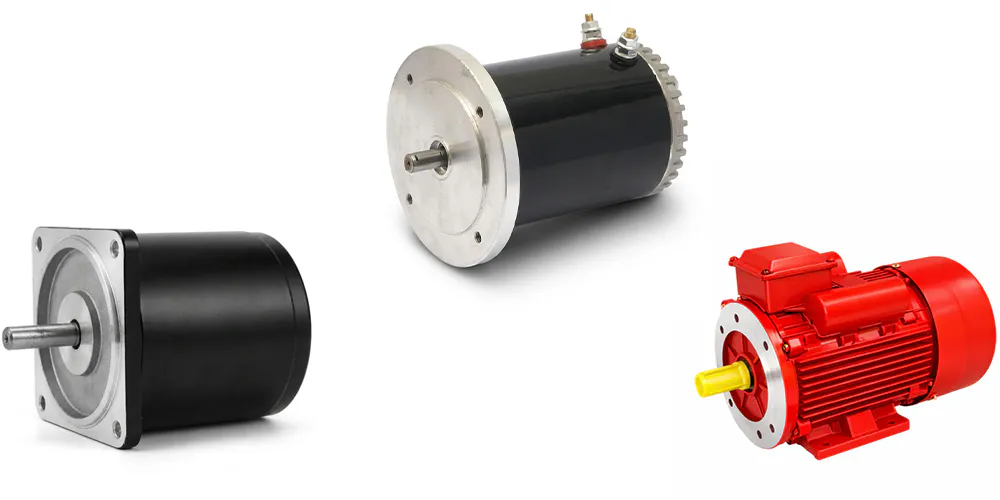
Our range of electric motors — including totally enclosed fan-cooled (TEFC) induction motors and high-torque DC configurations — is rated for the wet and humid environments of underground pump stations and dimensioned for direct coupling or belt drive to WP series single speed reducer input flanges across the full power range applicable to mine mud pump service.
เกียร์หนอน
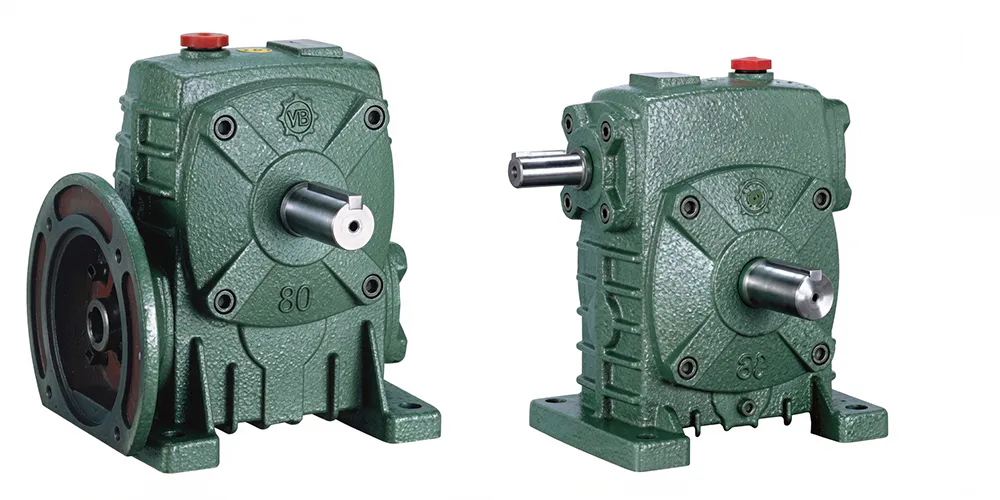
For pump station positions requiring higher reduction ratios than a single stage can provide — deep shaft dewatering pumps where very low crank speed is needed, or progressive cavity pumps requiring ratios above 60:1 — our worm gearbox range provides two-stage and compound arrangements in sealed housings suitable for underground mine environments.
เกี่ยวกับเรา
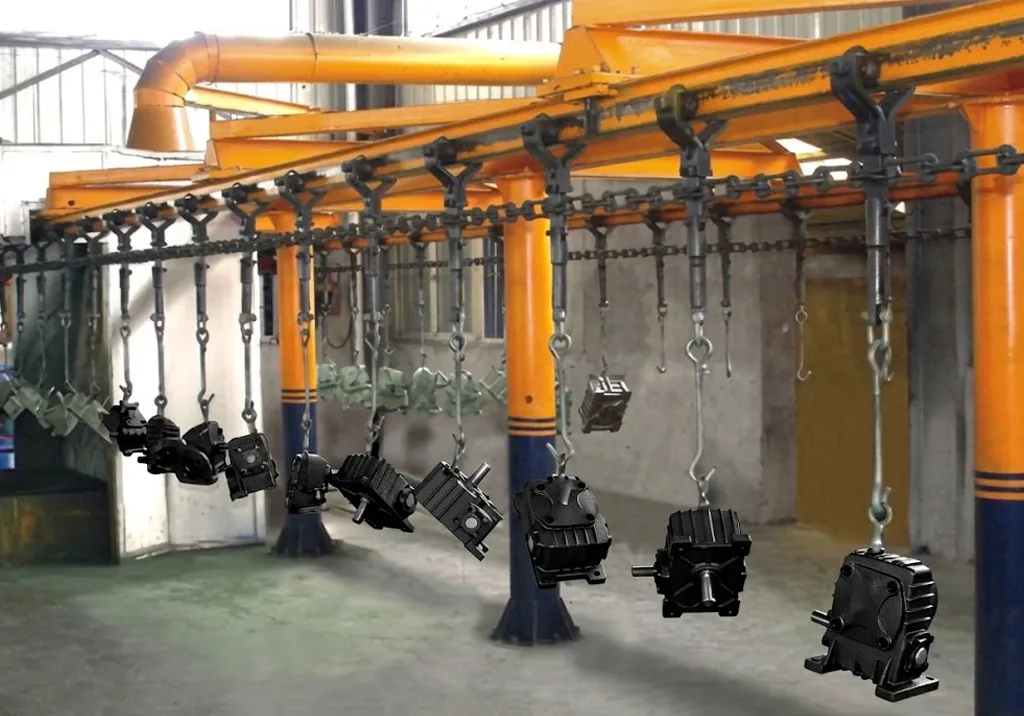
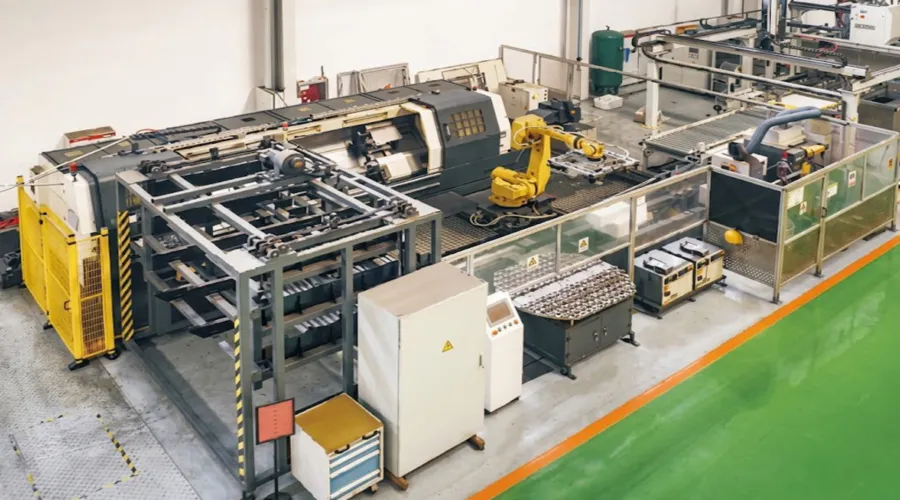
With more than a decade of engineering and manufacturing experience, our ISO 9001:2015 certified facility produces worm gear reducers, agricultural gearboxes, planetary drives, PTO shafts, hydraulic cylinders, precision gears, roller chains, sprockets, and motors across a broad range of frame sizes and specifications. Standard catalogue products and custom-engineered assemblies are both produced in-house, using materials including ductile iron, cast iron, cast steel, precision investment-cast steel, and cast aluminium, to serve mining, industrial, and agricultural customers in North America, Europe, Australia, and Asia.
Engineering support at the specification stage covers frame size selection, gear ratio optimisation, thermal derating for high ambient temperature mine installations, lubrication grade selection, and mounting orientation review — reducing the incidence of specification errors that cause premature single speed reducer failure in underground mine pump station service, where the cost of unplanned replacement is compounded by the access difficulty of underground equipment locations.
เวิร์กช็อป
คำถามที่พบบ่อย
Why is a self-locking single speed worm reducer preferred over a check valve for back-flow prevention in a mine paste fill pump station in Canada?▼
In a mine paste fill pump station in Canada, a self-locking single speed worm gear reducer at 40:1 or higher ratio prevents the pump from back-driving under the paste column hydrostatic pressure when the motor trips, passively and without any control signal. A check valve performs the same function hydraulically but introduces additional wear items — the valve disc, seat, and actuator mechanism — that are all in contact with the abrasive paste slurry and require periodic inspection and replacement. In a deep underground pump station where access requires a significant production interruption, every reduction in the number of wear items that require regular service has tangible operational value. The self-locking reducer eliminates the check valve from the pump discharge as a required component rather than as a redundant back-up, simplifying the piping arrangement and reducing the number of items on the pump station preventive maintenance schedule.
What gear oil specification is correct for a single speed worm reducer driving a slurry pump at a deep South African mine where ambient temperature at depth exceeds 40°C?▼
For a single speed worm reducer on a slurry pump at a deep South African mine where ambient temperature at pump station level exceeds 40°C, the sump oil at full load is likely to reach 80–95°C. At this temperature range, a mineral ISO VG 460 gear oil may have a kinematic viscosity close to the minimum threshold for adequate elastohydrodynamic film at the worm-wheel mesh. A synthetic polyglycol (PAG) or polyalphaolefin (PAO) gear oil at ISO VG 460 provides significantly higher viscosity at 90°C operating temperature than its mineral-oil equivalent, maintaining adequate film thickness without requiring a larger-frame reducer with more thermal mass. The synthetic oil also resists oxidative thickening better at sustained high temperatures, extending the oil change interval from approximately 2,000 hours with mineral oil to 4,000–6,000 hours — a practical benefit in underground pump stations where oil change access requires planned downtime.
Where can I source a reliable single stage speed reducer for a tailings slurry pump drive replacement at a copper mine in South America?▼
For a tailings slurry pump drive replacement at a copper mine in South America, sourcing a reliable single stage speed reducer requires confirming the following parameters against the original specification before ordering: output torque capacity at the required gear ratio, input and output shaft dimensions and keyway specifications, housing mounting type and bolt pattern, oil fill and drain port locations and orientations for the specific mounting configuration in the pump station, and self-locking capability if the pump faces a back-drive risk from the hydraulic head. Request dimensional drawings, torque capacity tables, and a thermal rating confirmation for the ambient temperature at the specific pump station level alongside the formal quotation. ISO 9001:2015 certification of the manufacturing process provides the quality assurance baseline that most copper mine procurement specifications require for mechanical drive components.
What are the key differences between a single speed worm reducer and a helical gearbox for a progressive cavity pump drive at an Indian coal mine?▼
For a progressive cavity pump drive at an Indian coal mine, the single speed worm reducer has three practical advantages over a helical gearbox. First, the right-angle shaft configuration suits the compact installation geometry of a progressive cavity pump drive where the motor must be arranged perpendicular to the pump rotor axis. Second, the high reduction ratio achievable in a single worm stage — up to 60:1 — matches the slow rotor speed requirement of progressive cavity pumps without a separate reduction stage, reducing the total part count of the drive assembly. Third, the self-locking characteristic at ratios above approximately 40:1 prevents the pump rotor from back-spinning under the suction head when the motor stops, which is a practical concern in progressive cavity pumps where rotor reversal causes the stator elastomer to load incorrectly and can cause delamination. The trade-off is lower transmission efficiency of the worm drive compared to a helical gearbox — typically 75–85% versus 95–98% — which is an energy cost consideration for high-power continuous-duty pump circuits, but is often acceptable for moderate-power pump drives where the reliability and back-drive prevention benefits outweigh the efficiency differential.
บรรณาธิการ: PXY