
Construction & Material Handling · Application Guide
A technical reference for road construction equipment engineers, paver OEM procurement teams, and maintenance specialists specifying worm gear single speed reducers for asphalt paver auger and feed conveyor drives in road-building operations across Germany, Australia, the United States, the United Arab Emirates, Brazil, and the United Kingdom.
An asphalt paver distributes hot mix asphalt continuously across the road surface as the machine advances. The two drive systems most critical to this process are the screed feed auger — a horizontal screw conveyor that moves hot mix laterally from the receiving hopper to the full width of the screed — and the main longitudinal conveyor that carries material from the truck-receiving hopper forward to the auger distribution zone. Both drives must operate at precisely controlled, constant low speeds while handling hot, abrasive material at temperatures of 140–180 °C. A reduktor jednobiegowy is the standard drive component for both functions, chosen for its high reduction ratio in a single gear stage, compact envelope, and resistance to the continuous vibration and thermal environment of a paving machine.
What makes asphalt paver drive specification genuinely demanding is the combination of heat, abrasion, and continuous duty. The auger and conveyor operate for the full duration of each paving pass — sometimes 8–12 hours without interruption — while immersed in or immediately adjacent to asphalt at 160 °C. The reducer housing surface temperature in this environment can reach 70–90 °C without supplementary cooling, which affects both lubricant viscosity and seal integrity. Specifying the wrong reduktor ślimakowy results in oil film failure in the worm mesh, premature seal failure, and eventual worm wheel bronze tooth fatigue — each failure mode shutting down the paver in the middle of a road section where continuity of paving is critical to pavement quality.
Asphalt Paver Drive Systems — Auger and Conveyor Functions
A modern asphalt paver has two distinct conveyor sub-systems that use reduktor jednobiegowy drives. The main feed conveyors — typically twin bar-type or drag-chain conveyors running longitudinally under the hopper — operate at 2–8 m/min at the chain and require reduction ratios of 20:1 to 60:1 from a standard 4-pole motor. These conveyors carry the full weight of hot mix from the hopper to the rear distribution zone, and their drive torque is relatively predictable once the machine is in steady paving operation. The auger screws — typically two counter-rotating horizontal screws, one on each side, distributing material laterally under the screed — operate at 30–120 RPM and require finer torque control because the auger speed is varied during the paving pass to maintain a constant head of material in front of the screed. A deficit of material causes the screed to drop; a surplus causes ridging — both impair the final pavement surface quality.
Both drive systems are powered by the paver’s hydraulic system in most modern machines, but a significant proportion of smaller pavers and older machines continue to use electrically driven reducers for the conveyor and auger functions. In these configurations, the single stage speed reducer connects a standard asynchronous motor to the conveyor chain sprocket or auger shaft, and the conveyor speed is varied by VFD (variable-frequency drive) control of the motor. The reducer provides the bulk of the speed reduction and torque multiplication, while the VFD provides the fine-speed adjustment needed for material flow control. This motor-VFD-reducer arrangement is common on European paver designs (Vögele, Dynapac) and on small-to-medium North American pavers used in residential and light commercial road work across Canada and the United States.
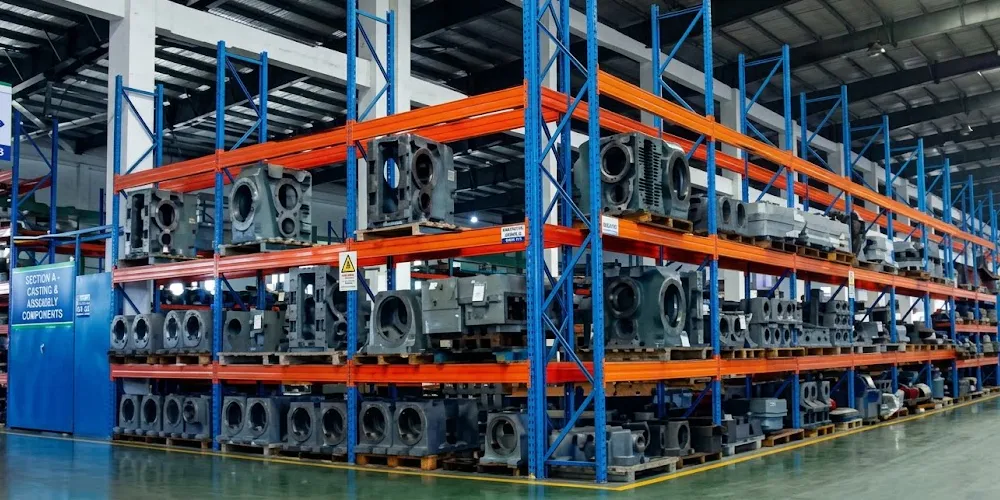
Manufacturing Structure for High-Temperature Paver Service
A single speed worm reducer for an asphalt paver auger or conveyor drive must be manufactured with several structural provisions that distinguish it from a standard catalogue unit. The housing thermal dissipation area is the primary structural consideration: at an ambient temperature of 160 °C (from the adjacent hot mix material) and a self-generated heat input from worm gear friction losses, the reducer housing surface reaches 70–90 °C in steady operation. This temperature, sustained for 8–12 hours during a paving shift, degrades standard alkyd paint to the point of blistering and peeling within one season — the housing coating system must be a heat-resistant two-component epoxy or a silicone-modified paint system rated to 150 °C service temperature.
The housing rib geometry for paver reducers is optimised for thermal dissipation rather than structural stiffness alone: taller, thinner fins spaced at closer intervals maximise the convective heat transfer coefficient from housing surface to the ambient air stream generated by the paver’s cooling fan and forward motion. The worm shaft bearing housings are extended to allow a double-lip seal arrangement with an inter-lip grease cavity — the outer lip excludes asphalt fines, dust, and condensed bituminous vapour from the bearing, while the inner lip retains the lubricant. The inter-lip cavity grease prevents the inner lip from running dry against the shaft in the early stages of a contamination event, extending the time between seal failures from a few hundred hours to 1500 hours or more in paver service.
Material System for Hot-Mix Asphalt Environment
Case-carburised to 1.0–1.5 mm case depth and hardened to HRC 58–62, then precision-ground on both flanks to Ra 0.4–0.6 µm. The continuous-duty nature of paver operation places high demands on the hydrodynamic oil film between worm and wheel — surface finish quality on both flanks determines whether a continuous film forms at the operating temperature and speed, or whether mixed-lubrication asperity contact occurs with consequent progressive wear.
For paver auger and conveyor drives operating at elevated ambient temperature, aluminium bronze (ZCuAl10Fe3Mn2) tooth rings are preferred over standard tin phosphor bronze in the higher-torque frame sizes. Aluminium bronze maintains its compressive yield strength better at 80–100 °C wheel temperature than ZCuSn10Pb1, resisting the surface creep (plastic deformation of the tooth flanks) that limits the service life of tin bronze wheels at sustained high temperature under moderate contact stress.
Ductile iron with an external rib pattern optimised for thermal dissipation. The surface coating is a two-component epoxy-silicone system rated to 150 °C continuous service — not the standard polyurethane topcoat adequate for ambient-temperature industrial drives. The coating is applied to a minimum 120 µm DFT total, with an epoxy-zinc primer providing cathodic protection against the mild acid condensate (bituminous vapour) that settles on the housing surface during paving stops.
Tapered roller bearings for bidirectional axial load capacity (auger drives in particular receive axial loads from the material being conveyed against the auger flight). Bearing grease repack at assembly uses a NLGI 2 lithium complex or polyurea grease rated to 160 °C — not standard general-purpose lithium grease that softens and migrates above 120 °C. The high-temperature grease specification prevents grease bleeding from the bearing cavity onto the shaft seal, which would degrade the seal lip through softening of the NBR elastomer.
Auger drive output shafts specified for shrink-disc rather than keyway connection eliminate the stress concentration at the keyway root that initiates fatigue cracking under the repeated torque variations of an auger encountering material density changes. Auger shafts in hot-mix service are subjected to cyclical bending from the auger flight pitch reaction, adding a bending fatigue component to the torsional loading — the uniform circumferential clamp of a shrink-disc distributes these loads without a fatigue-initiation point.
The outer seal lip in contact with the paver’s operating environment must be resistant to bituminous compounds — standard NBR rubber deteriorates in the presence of aromatic hydrocarbon solvents in bituminous vapour. FKM (Viton) elastomer outer lips provide significantly better hydrocarbon resistance at the operating temperatures of paver service, extending seal service life from 500–800 hours (NBR in bituminous environment) to 1500–2000 hours (FKM) between planned replacements.
Selection Reference — Single Speed Reducers for Asphalt Paver Drives
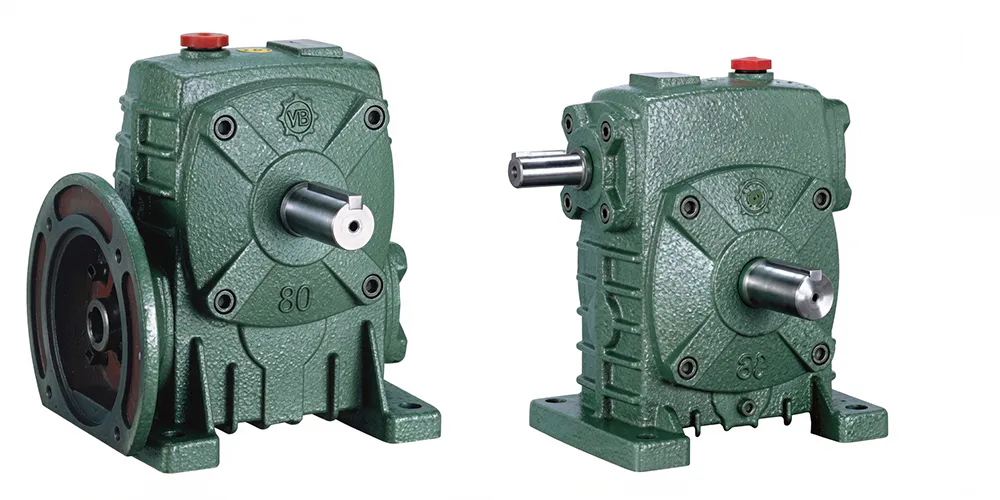
The table below provides selection guidance for reduktory prędkości przekładni ślimakowej across the range of asphalt paver classes where an electrically driven reduktor jednobiegowy configuration is specified. Paver classifications align broadly with paving width and throughput capacity — the figures are representative of common European, North American, and Australian market paver models. The full product range is listed at the reduktor jednobiegowy product page.
| Paver Class | Paving Width | Drive Function | Motor (kW) | Recommended Series |
|---|---|---|---|---|
| Small path / residential | 1.0 – 3.0 m | Auger + conveyor | 0.37 – 1.5 | EP-WPDS (0.12 – 15 kW) |
| Medium highway | 3.0 – 6.0 m | Dual auger + twin conveyor | 1.5 – 5.5 | EP-WPDS / EP-WPKA (5–260 kg) |
| Large highway | 6.0 – 10.0 m | Dual auger + twin conveyor | 5.5 – 11 | EP-WPKA / EP-WPKS (4–365 kg) |
| Motorway widening | 10 – 16 m | Extended dual auger + conveyor | 11 – 22 | EP-WPKS + EP-WPDKA in series |
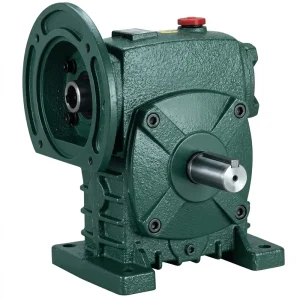
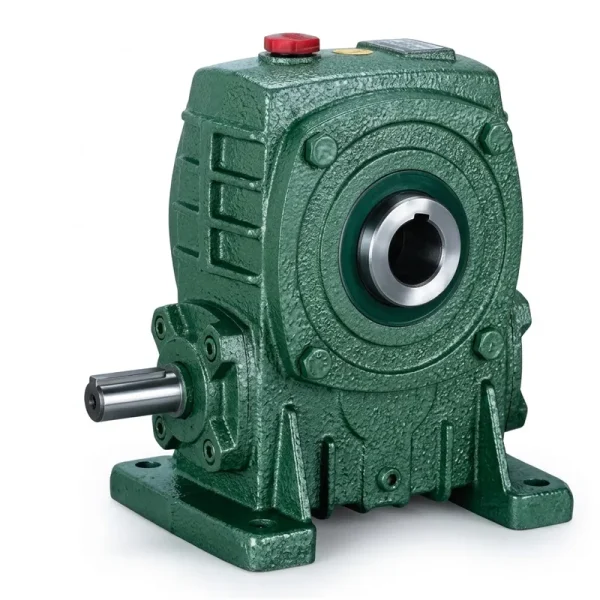
Recommended Products for Asphalt Paver Applications
Lubrication in High-Temperature Paving Environments
The lubricant in an asphalt paver reduktor jednobiegowy operates under the most thermally demanding conditions encountered in construction equipment service. With the housing surface at 70–90 °C and the oil sump temperature at 80–100 °C during a full-shift paving run, a mineral-base ISO VG 460 gear oil approaches the upper end of its safe operating temperature range. At sump temperatures above 90 °C, mineral oil oxidises progressively — forming varnish deposits on housing walls and oil passages that restrict flow and reduce heat transfer from the housing walls to the oil. This accelerating degradation loop eventually leaves the worm mesh running on degraded, high-viscosity oil with insufficient film thickness, causing tooth face scuffing that renders the reducer unserviceable within a few hundred hours of the onset of degradation.
The correct lubricant specification for asphalt paver service is a fully synthetic PAO ISO VG 460 gear oil with extreme-pressure additives and confirmed compatibility with the wheel alloy specified (tin bronze or aluminium bronze — the EP additive package differs for each). Synthetic PAO oil oxidises at a significantly lower rate than mineral oil at 100 °C, maintaining its base viscosity and EP additive activity across a 2000-hour change interval rather than the 1000-hour interval required for mineral oil in paver service. For machines operating in the Gulf state road construction season (UAE, Saudi Arabia) where ambient temperatures on the road surface can reach 55–60 °C and the paver drives operate effectively in a 70 °C ambient, the oil grade should be reviewed with the supplier — ISO VG 680 PAO may be appropriate to maintain the minimum film thickness at the higher sump temperature of this climate.
Service Factor Application for Paver Auger and Conveyor Drives
The service factor for an asphalt paver auger or conveyor reduktor jednobiegowy must account for three loading conditions that compound the base smooth-load rating. The first is the start-under-load condition: the auger and conveyor start with material in the trough at the beginning of each paving day — cooled and stiffened overnight. Starting torque can reach 2.5–3.0 times running torque, and this spike repeats at each day’s commencement and after each material replenishment stop. The second is the material density variation: hot-mix asphalt is not homogeneous — aggregate size distribution and mixing temperature both affect viscosity and density, causing torque variations of ±30–50% around the running mean during a paving pass. The third is the elevated temperature derating: at sump oil temperatures of 80–100 °C, the reducer’s continuous thermal rating is reduced below the catalogue value for standard ambient conditions.
A combined service factor of 1.5–1.75 for most paver auger drives and 1.5 for conveyor drives, applied to the motor rated power, is a widely used baseline in European paver engineering practice (consistent with DIN 3964 requirements for continuous-duty warm-environment drives). For Gulf state operations where ambient temperature derating adds a further 0.25, the combined factor for auger drives is 1.75–2.0. This means selecting a reduktor ślimakowy whose rated output torque at the required reduction ratio is 1.75–2.0 times the motor’s running torque — a margin that covers cold starts, density variations, and thermal derating simultaneously without requiring a separate thermal calculation for each individual case.
Field Maintenance in a Road-Paving Environment
Asphalt paver reducers operate in a field environment that is structurally hostile to planned maintenance. The machine advances continuously during paving, the drive station is enclosed within the machine chassis and partially obscured by the auger trough, and the entire area is covered in bituminous residue within the first few hours of operation. Oil level checking and sampling — the most important routine maintenance tasks for a reduktor jednobiegowy — require the machine to be stationary, the drive station to be cleaned sufficiently to access the oil level/drain plugs, and the oil temperature to be below 60 °C (to avoid burns during sampling). In practice, these conditions are met only at planned maintenance intervals — typically the daily end-of-shift inspection or the weekly scheduled service stop.
Planning the oil change interval around the machine’s seasonal maintenance schedule rather than a fixed-hour interval is the practical approach on asphalt paving projects in Germany, the UK, and Australia, where machines operate intensively during the paving season (April–October in Northern Europe; March–November in eastern Australia) and are parked for winter overhaul. A seasonal oil change — at the start of the paving season after winter storage, and again at the mid-season if the machine operates for more than 1000 hours — aligned to the machine’s major service interval provides a practical maintenance framework that is compatible with paving project scheduling without requiring a dedicated maintenance stop mid-production. Synthetic PAO oil supports this extended interval without compromising gear protection, provided the sump temperature remains below 100 °C at steady state throughout the season.
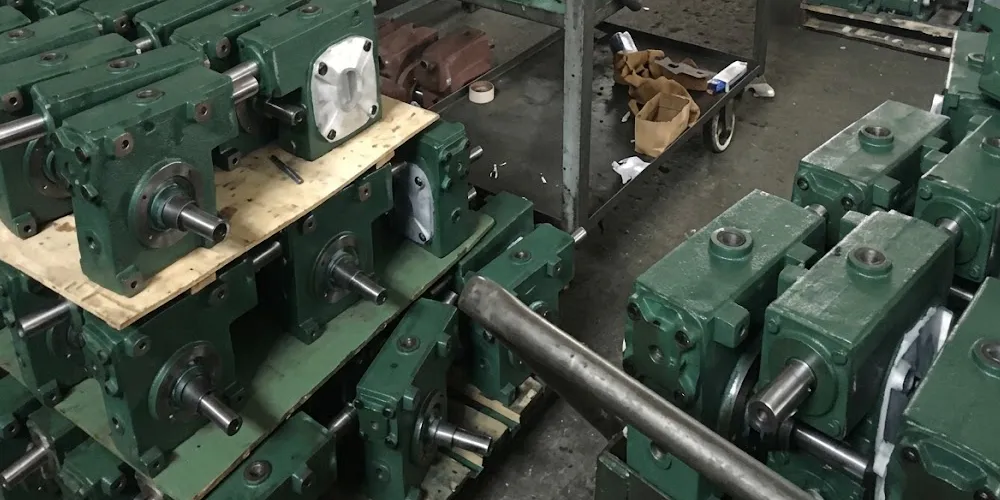
Możliwości produkcyjne
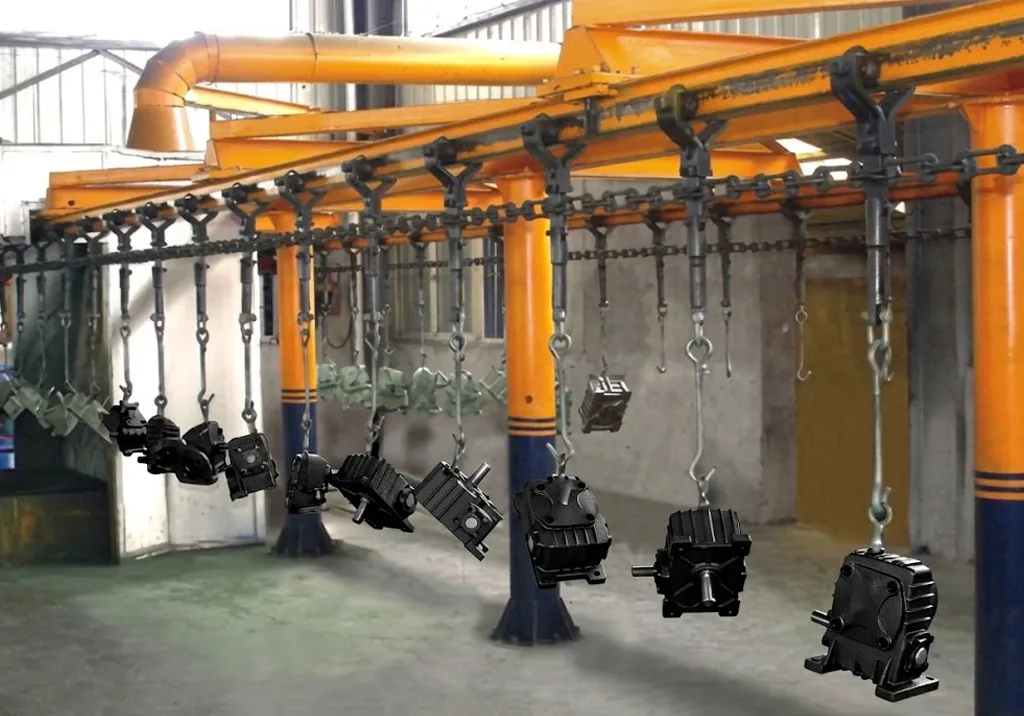
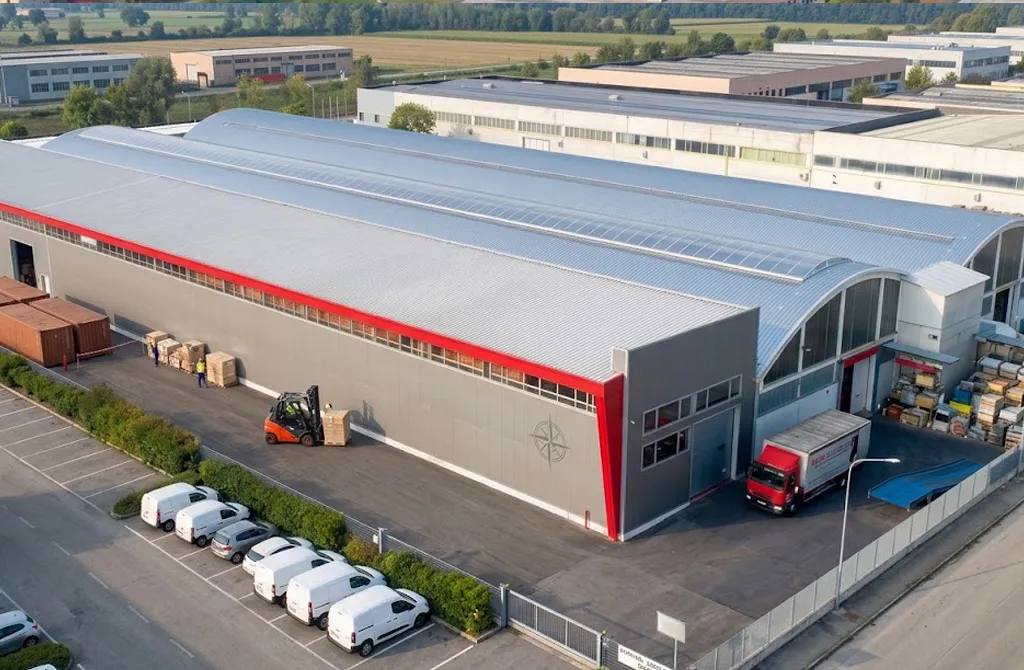
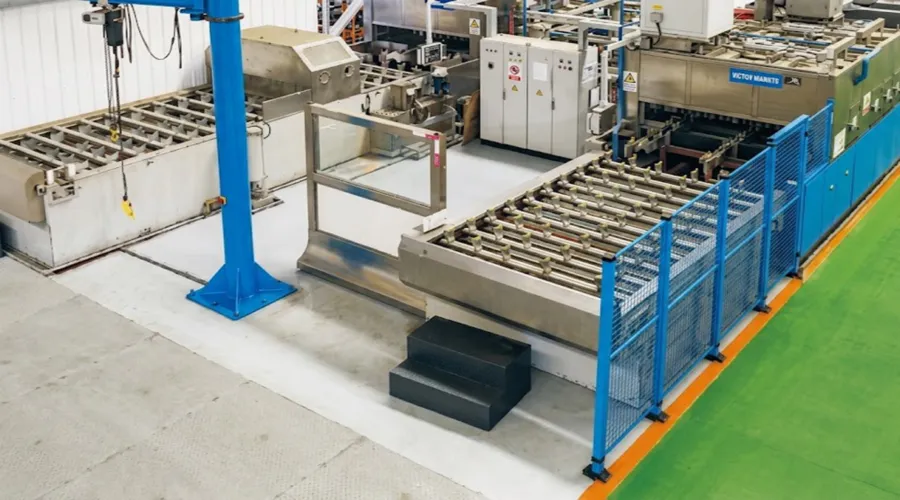
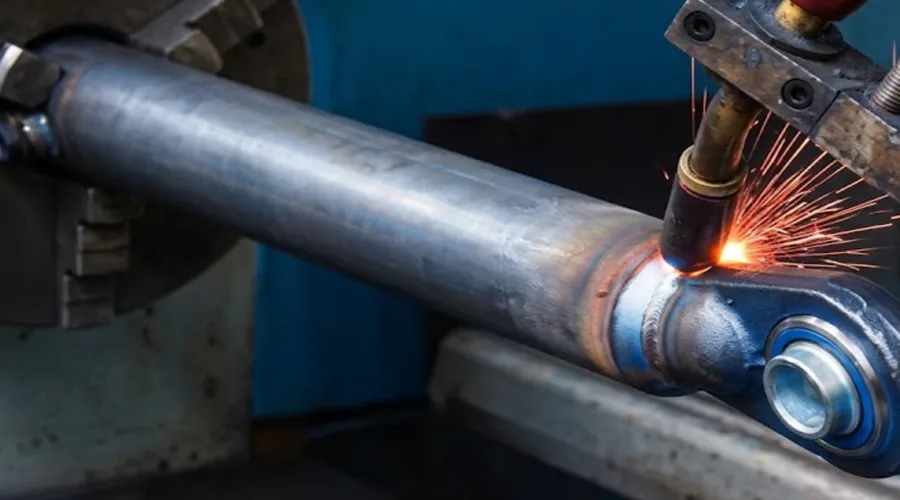
Our manufacturing facility has more than ten years of engineering experience in mechanical power transmission, supplying worm gear reducers, planetary gear drives, agricultural gearboxes, power take-off shafts, hydraulic cylinders, precision gears, roller chains, and electric motors to road construction, mining, and industrial equipment markets under ISO 9001:2015 quality management system certification. Structural housing components are produced in ductile iron, grey cast iron, cast steel, precision investment-cast steel, and aluminium alloy selected for the load, operating temperature, and service environment of each product. Gear teeth, worm shafts, sprockets, pulleys, and output shafts are machined to DIN and ISO standards on multi-axis CNC hobbing, grinding, and turning centres. Customers requiring a complete asphalt paver drive system — reducer, motor, mounting hardware, and coupling components — can source all elements through a single technically accountable supplier, simplifying procurement for road construction equipment OEMs in Germany, Australia, the UAE, Brazil, Canada, and the United Kingdom.
Warsztat
Compatible Drive Components
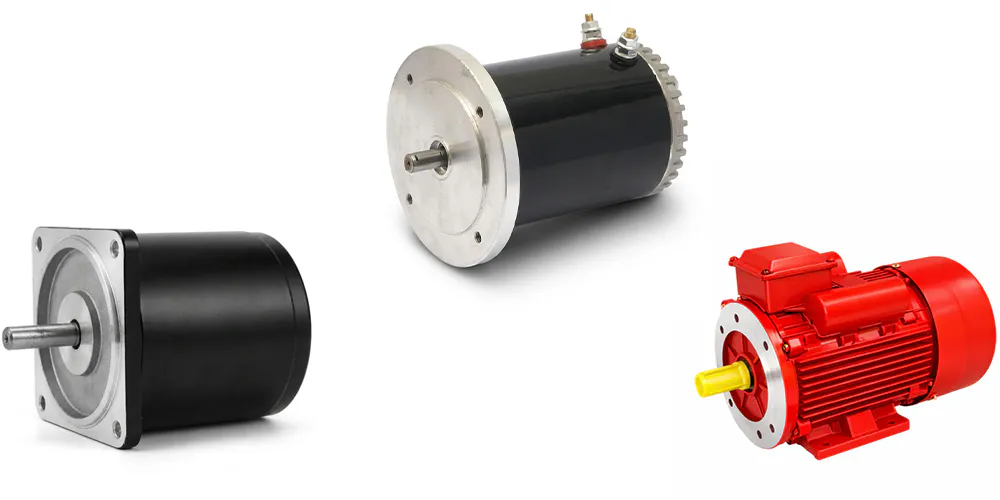
A complete asphalt paver drive system requires a matched motor and, for larger machines, compatible control and coupling components. The following product lines are available from the same manufacturing source, enabling procurement teams to specify a fully documented drive assembly for a new paver design or a retrofit upgrade.
Często zadawane pytania
Redaktor: PXY