
Silnik pompy olejowej
Silnik prądu stałego
Kompleksowy przewodnik po zrozumieniu, wyborze i stosowaniu silników prądu stałego do pomp olejowych — od agregatów hydraulicznych po systemy podnośników samochodowych i specjalistyczny sprzęt przemysłowy.
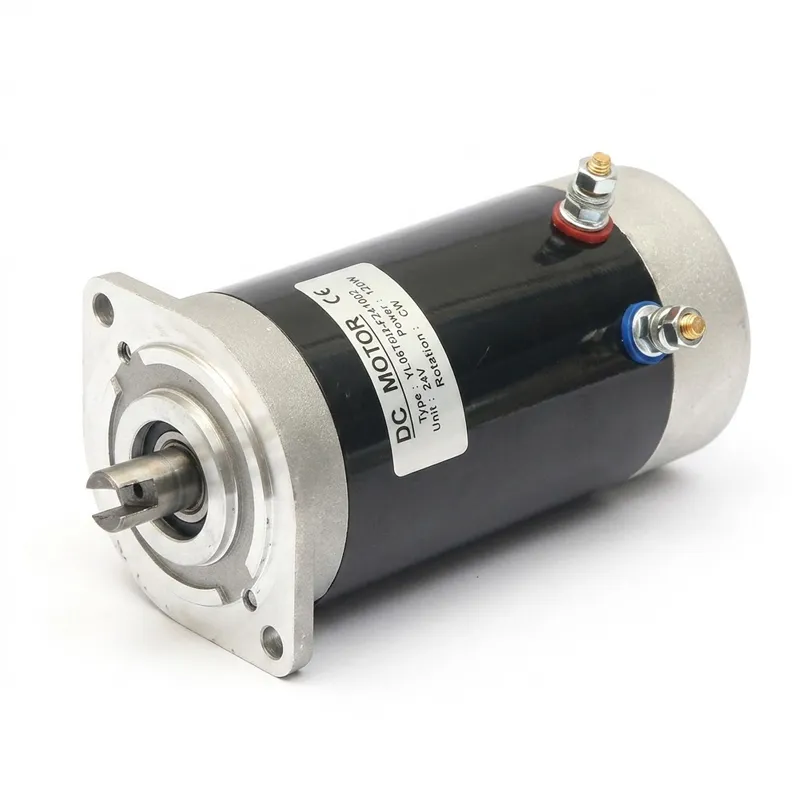
Czym jest silnik pompy olejowej?
Silnik pompy olejowej to silnik elektryczny prądu stałego zaprojektowany specjalnie do napędzania pomp hydraulicznych w mobilnych i przemysłowych systemach zasilania. W przeciwieństwie do silników ogólnego przeznaczenia, silniki pomp olejowych są zbudowane z myślą o krótkich, przerywanych cyklach pracy przy wysokim momencie obrotowym – wzorcu wymaganym przez obwody pomp hydraulicznych podczas podnoszenia, przechylania lub sprężania ładunku.
Silniki te przetwarzają energię elektryczną z akumulatora lub zasilacza prądu stałego na energię mechaniczną obrotową, która następnie jest przekazywana do pompy zębatej lub tłokowej. Pompa przekształca ten ruch obrotowy w kontrolowany przepływ hydrauliczny i ciśnienie. Silnik i pompa razem stanowią rdzeń hydraulicznego agregatu napędowego (HPU), który jest sercem niemal każdego mobilnego podnośnika samochodowego, burty załadowczej, pomostu przeładunkowego i systemu platform hydraulicznych działających obecnie na rynku.
Ponieważ układy hydrauliczne pojazdów zwykle działają z akumulatorów o napięciu 12 V, 24 V, 36 V, 48 V lub 72 V, silniki pomp olejowych są niemal powszechnie maszynami prądu stałego — albo z magnesami trwałymi, albo z magnesami trwałymi — zaprojektowanymi w celu wytwarzania wysokiego momentu rozruchowego i utrzymywania go w każdym cyklu roboczym bez przegrzewania.
Typy silników pomp olejowych
-
Silnik pompy olejowej EP-XL2408FCE 800W
-
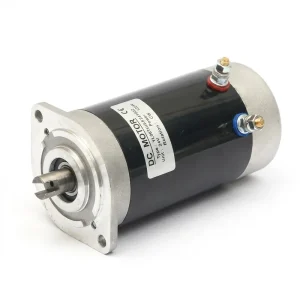
Silnik pompy olejowej EP-XL2412FCE 1200 W
-
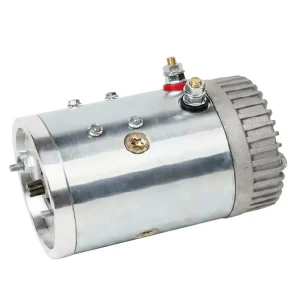
Silnik pompy olejowej EP-XL16LTBX 1600W 12V
-
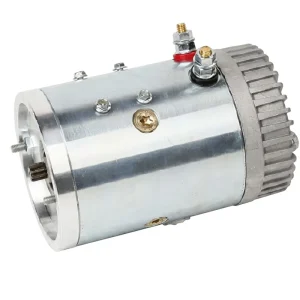
Silnik pompy olejowej EP-XL22LTBX 2200W 24V
-
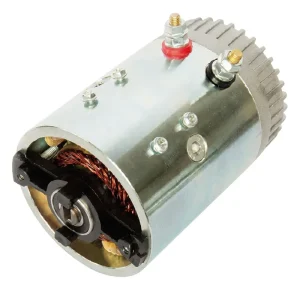
Silnik pompy olejowej EP-XL22FD 2200W 24V
-
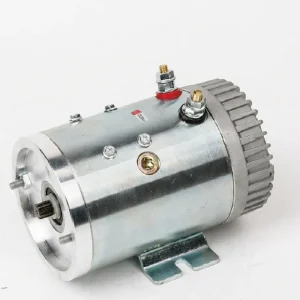
Silnik pompy olejowej EP-XL22ZX 2200W 24V
-
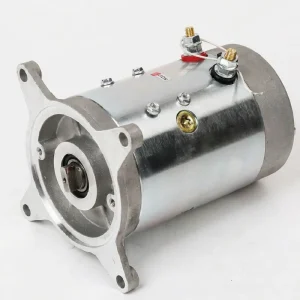
Silnik pompy olejowej EP-XL22QL 2200W 22V
-
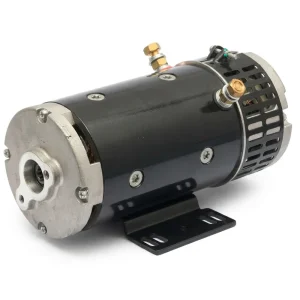
Silnik pompy olejowej EP-XL2440NK 4000W 24V
-
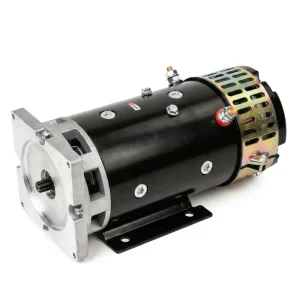
Silnik pompy olejowej EP-XL40LT 4200W 24V
-
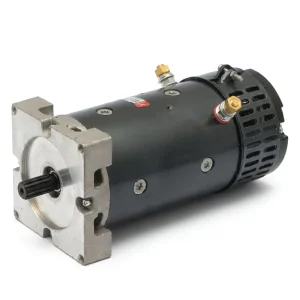
Silnik pompy olejowej EP-XL2430TW 3000W 24V
-
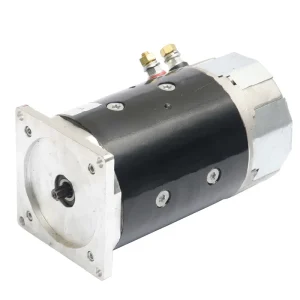
Silnik pompy olejowej EP-XL2433PNK 4500W 24V
-
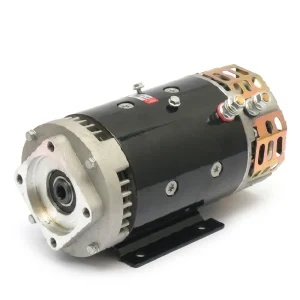
Silnik pompy olejowej EP-XL2455ZX 5500W 24V
Z czego składa się silnik pompy olejowej?
Każdy silnik pompy olejowej ma tę samą architekturę rdzenia. Zrozumienie każdego podzespołu pomaga w diagnozowaniu usterek i doborze odpowiedniej części zamiennej.
Wirnik (Uzbrojenie)
Obrotowy rdzeń nawinięty jest na miedziane cewki. Prąd płynący przez uzwojenia wirnika oddziałuje z polem magnetycznym stojana, generując moment obrotowy. Wał wirnika jest bezpośrednio połączony z kołem napędowym pompy.
Stojan (montaż polowy)
Nieruchoma obudowa zewnętrzna, która wytwarza pole magnetyczne. W silnikach z magnesami trwałymi są to cewki z uzwojeniem miedzianym; w silnikach z magnesami trwałymi (PM) magnesy trwałe o dużej wytrzymałości są przyklejone do wewnętrznej strony stalowej obudowy.
Komutator
Segmentowany miedziany pierścień na wale wirnika, który mechanicznie zmienia kierunek przepływu prądu przez uzwojenia wirnika podczas obrotu wirnika, utrzymując stały moment obrotowy w jednym kierunku. Jest to cecha charakterystyczna silnika prądu stałego ze szczotkami.
Szczotki węglowe
Sprężynowe bloki grafitowe, które dociskane są do komutatora i przekazują prąd do obracającego się wirnika. Szczotki są głównym elementem zużywającym się. Są one wymienne, a ich stan bezpośrednio wpływa na żywotność silnika.
Namiar
Łożyska kulkowe lub wałeczkowe na obu końcach wału wirnika podtrzymują wirnik i pochłaniają obciążenia promieniowe i osiowe. Wstępnie nasmarowane łożyska uszczelnione są standardem w zastosowaniach pomp olejowych, gdzie odporność na zanieczyszczenia ma kluczowe znaczenie.
Wsporniki końcowe i obudowa
Odlewane aluminiowe lub stalowe wsporniki końcowe ustalają położenie łożysk i zamykają korpus silnika. Wspornik po stronie napędu często zawiera kołnierz montażowy i adapter pompy SAE, który pasuje bezpośrednio do korpusu hydraulicznej pompy zębatej.
Zaciski i okablowanie
Grube miedziane zaciski (A1/A2 dla wirnika, D1/D2 dla uzwojeń wzbudzenia w modelach z uzwojeniem wzbudzenia) przenoszą wysokie prądy rozruchowe, sięgające 210 A, pobierane przez silniki pomp hydraulicznych. Prawidłowa polaryzacja zacisków decyduje o kierunku obrotów.
System izolacji termicznej
Izolacja klasy F (do 155°C) jest standardem w całej gamie produktów. System izolacji chroni uzwojenia wirnika przed nagrzewaniem się podczas cykli pracy, zapewniając bezpieczną pracę i długą żywotność w warunkach okresowego wysokiego obciążenia.
Jak wybrać odpowiedni silnik pompy olejowej
Wybierz przewodnik
W skrócie
Krok 01
Dopasuj napięcie systemu
Zacznij od napięcia akumulatora pojazdu lub jednostki napędowej. Dostępne standardy to 12 V, 24 V, 36 V, 48 V i 72 V. Większość urządzeń platform przemysłowych działa przy napięciu 24 V lub 48 V. Systemy w pojazdach lekkich często działają przy napięciu 12 V. Niedopasowanie napięcia powoduje uszkodzenie silnika w ciągu kilku sekund — to pierwszy filtr, którego nie można pominąć.
Krok 02
Określ wymaganą moc i moment obrotowy
Oblicz zapotrzebowanie na moc hydrauliczną: pomnóż wydajność pompy (cm3/obr.) przez ciśnienie robocze (bar) i prędkość obrotową (obr./min) i podziel przez 600, aby uzyskać kW. Dodaj margines 20-30% dla szczytowych wartości momentu obrotowego rozruchowego. Nasza oferta obejmuje modele o mocy od 800 W do 4200 W, obejmujące większość mobilnych zastosowań hydraulicznych, od małych wind załadowczych po ciężkie ładowarki platformowe.
Krok 03
Sprawdź cykl pracy
Duty cycle specifies how long the motor can run (on-time) within a defined period (e.g., 2min-7%ED means the motor may run for 2 minutes at 7% of each hour). Under-rating the duty cycle causes premature thermal failure. Count your daily lift cycles, estimate on-time per cycle, and choose a motor whose rated ED comfortably exceeds your calculated figure.
Krok 04
Wybierz poziom ochrony IP
Stopień ochrony IP43 jest odpowiedni do zamkniętych zastosowań wewnętrznych z minimalnym narażeniem na zachlapanie. Stopień ochrony IP54 jest wymagany w przypadku systemów montowanych na pojazdach na zewnątrz, w środowiskach narażonych na mycie lub wszędzie tam, gdzie możliwy jest kontakt z deszczem i zanieczyszczeniami. Im wyższa druga cyfra, tym lepsza odporność na wnikanie cieczy. Nigdy nie obniżaj stopnia ochrony IP, aby zaoszczędzić na kosztach sprzętu przeznaczonego do zastosowań zewnętrznych.
Krok 05
Potwierdź mocowanie i konfigurację wału
Silniki pomp olejowych są przykręcane bezpośrednio do pompy hydraulicznej. Liczba zębów sprzęgła (2 lub 9 zębów) musi być zgodna ze sprzęgłem pompy. Należy sprawdzić rozstaw śrub kołnierza, średnicę wału i całkowitą długość silnika pod kątem dostępnego miejsca w obudowie zespołu napędowego. Dostępne są adaptery kołnierzowe SAE do montażu w pojazdach różnych marek.
Rozważ także
Opcje personalizacji
Dostępne są termistory zabezpieczające przed przegrzaniem, kondensatory przeciwzakłóceniowe EMI, niestandardowe długości wałów, niestandardowe napięcia, obrót dwukierunkowy, specjalne powłoki ram oraz konfiguracje do pracy ciągłej. Skontaktuj się z naszym zespołem inżynierów, podając pełną specyfikację swojego systemu, aby stworzyć rozwiązanie dostosowane do Twoich potrzeb.