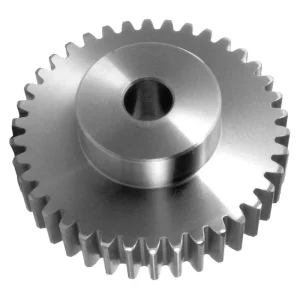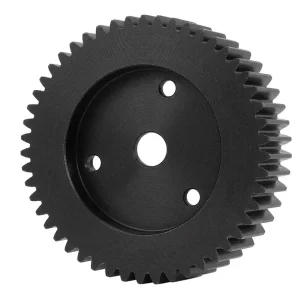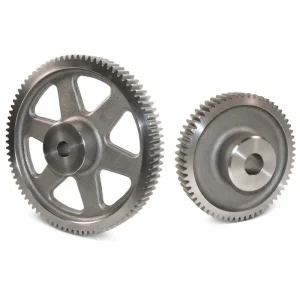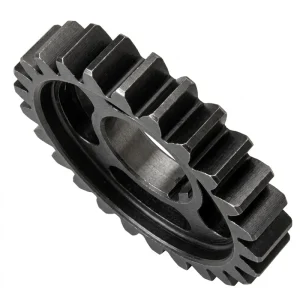
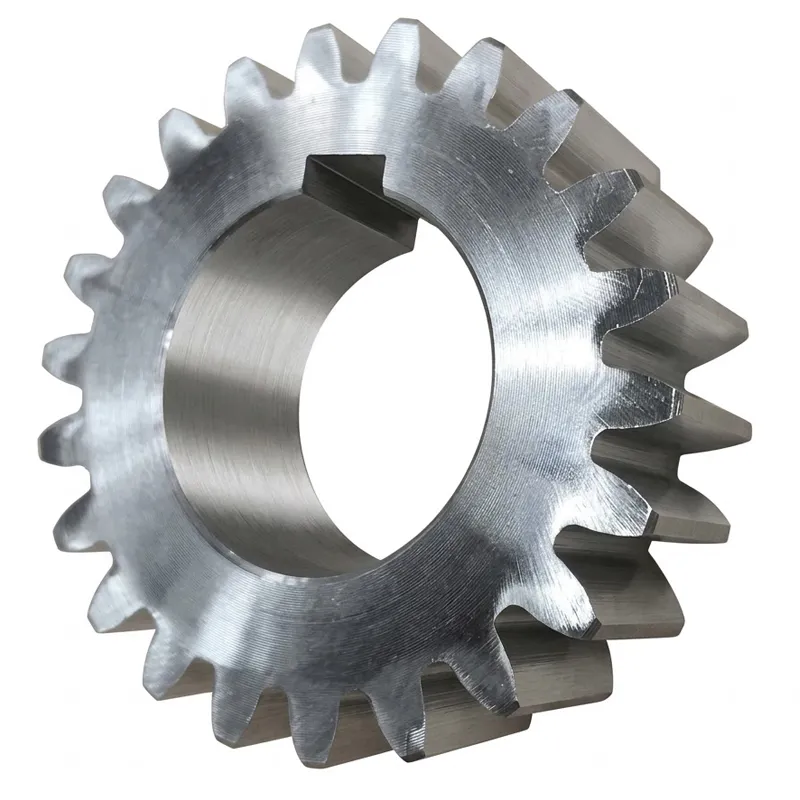
EP-Steel Spur Gear
The EP-Steel Spur Gear series offers high-precision transmission components available in modules ranging from M1 to M12. Manufactured from versatile materials including C45 steel, Brass, Stainless steel, Copper, POM, Aluminum, and Alloy, these gears are engineered to meet diverse industrial requirements. They achieve strict precision standards of DIN6, DIN7, DIN8, and DIN9, with tight tolerances between 0.001mm and 0.1mm. Surface treatments include Zinc-plating, Nickel-plating, Anodization, Geomet, Dacromet, Black Oxide, and Powder Coating, while teeth can be Hardened, Milled, or Ground for optimal durability. Compliant with ISO, DIN, ANSI, JIS, and BS standards, production lead times are 20 business days for samples and 25 days for bulk orders. Samples are available ($2–$100), with secure packing in plastic bags, cartons, or wooden cases.
การส่งกำลังไฟฟ้าในภาคอุตสาหกรรม
Precision-engineered steel spur gear components built for demanding industrial applications. From small spur gears to large spur gears, we manufacture to ISO, DIN, ANSI, JIS and BS standards with tolerances as tight as 0.001 mm.
EP-Steel Spur Gear — Technical Specifications
Standard module series with key dimensional and performance data
| Module (m) | Typical Tooth Count | Pitch Circle Dia. (mm) | มุมแรงดัน | Face Width Range (mm) | Precision Grade | Typical Material |
|---|---|---|---|---|---|---|
| M1 | 12 – 200 | 12 – 200 | 20° | 5 – 15 | DIN6 – DIN9 | C45 / Brass / POM |
| M1.5 | 12 – 150 | 18 – 225 | 20° | 8 – 20 | DIN6 – DIN9 | C45 / Aluminum |
| M2 | 10 – 120 | 20 – 240 | 20° | 10 – 25 | DIN6 – DIN8 | C45 / Stainless |
| M2.5 | 10 – 100 | 25 – 250 | 20° | 12 – 30 | DIN6 – DIN8 | C45 / Alloy Steel |
| M3 | 10 – 80 | 30 – 240 | 20° | 15 – 40 | DIN6 – DIN8 | C45 / Brass |
| M4 | 10 – 60 | 40 – 240 | 20° | 18 – 50 | DIN6 – DIN8 | C45 / Alloy Steel |
| M5 | 10 – 50 | 50 – 250 | 20° | 20 – 60 | DIN6 – DIN8 | C45 / Stainless |
| เอ็ม8 | 10 – 40 | 80 – 320 | 20° | 30 – 80 | DIN6 – DIN8 | C45 / Alloy Steel |
| เอ็ม12 | 10 – 30 | 120 – 360 | 20° | 40 – 100 | DIN6 – DIN8 | เหล็กอัลลอย |
* Custom modules, tooth counts, bore sizes, and keyway dimensions available on request. All dimensions in millimetres unless otherwise noted.
What Is a Spur Gear — and Why Does Material Choice Matter?
A spur gear is the most fundamental type of cylindrical gear, featuring straight teeth cut parallel to the rotational axis. The involute spur gear tooth profile — the industry standard since the early 20th century — allows smooth meshing with a mating gear or pinion gear, transmitting torque efficiently between parallel shafts. Unlike a helical spur gear, the straight tooth generates no axial thrust, which simplifies bearing selection and reduces overall system complexity.
When engineers specify steel gears, they are choosing a component that needs to handle radial loads without flex, maintain dimensional accuracy through millions of mesh cycles, and survive surface contact stresses that would crack brittle materials. Carbon steel and alloy steel give a structural backbone that brass spur gears or nylon spur gears simply cannot match in high-torque industrial drives. That said, material selection is always application-driven: aluminum spur gears suit weight-sensitive mechanisms, stainless steel spur gears handle corrosive environments, and POM or nylon options suit quiet, low-load auxiliary drives.
Our EP-Steel range covers module sizes from M1 through M12 and beyond, with the option for custom spur gears outside standard module and tooth count tables. Whether you are designing spur gears for a new gearbox, replacing worn pinion and spur gear sets on existing machinery, or sourcing metric spur gears to match European equipment, this line addresses the full requirement spectrum in a single supply source.
Five Reasons Engineers Specify Our Steel Spur Gears
Tight Tolerance Manufacturing
Each spur gear tooth is machined to tolerances of 0.001 mm–0.01 mm, ensuring consistent backlash control and quiet, vibration-free mesh across DIN6–DIN9 precision grades. Ground-tooth finishing is available for the highest precision class.
Multi-Material Flexibility
Beyond C45 steel, we manufacture from brass, stainless steel, copper, POM, aluminum, and alloy steel. Switching between metal spur gears and plastic spur gears is straightforward with our standardised bore and keyway dimensions.
Broad Module Coverage
Standard modules M1, M1.5, M2, M2.5, M3, M4, M5, M8, M12 and more keep both small spur gears and large spur gears in a single catalogue. Metric spur gears and inch-pitch variants are both available to serve global customers.
Comprehensive Surface Treatments
Zinc-plating, nickel-plating, black oxide, Dacromet, Geomet, phosphatizing, powder coating, and anodizing are all in-house options. Surface treatment selection directly influences corrosion resistance and service life in outdoor or humid industrial environments.
International Standards Compliance
Production conforms to ISO, DIN, ANSI, JIS, and BS standards. This means a spur gear set ordered for a Canadian mining plant, a European conveyor line, or an Australian packaging machine will drop into the original specification without adaptation.
How a Spur Gear Transmits Power
An external spur gear works on the involute tooth principle: as the driving gear rotates, the flanks of its teeth roll across the flanks of the mating gear, maintaining a constant velocity ratio through the full arc of engagement. Because the teeth are straight and parallel to the shaft axis, the contact force is purely radial — there is no helical component pushing the gear along the shaft. This is the most significant practical difference when engineers debate spur gear vs helical gear selection: spur gears impose zero axial thrust, so journal bearings and thrust faces see less combined loading.
The pitch circle is the theoretical cylinder on which two meshing external spur gears are considered to roll without slip. Module (m) defines the ratio of pitch circle diameter to tooth count, and selecting the correct module for a given torque and speed is the starting point for designing gears. Higher module numbers mean larger, stronger teeth capable of carrying greater tangential force but also producing more vibration at a given RPM. A differential gear arrangement — where two planet gears engage a central sun and an outer ring — extends the basic principle into compact reduction stages used widely in automotive and robotics drives.
Tooth treatment after machining locks in service performance. Hardened teeth resist pitting and wear under cyclic contact stress; milled teeth suffice for moderate-duty cycles; ground teeth deliver the quietest mesh and the closest tolerances for high-speed drives. Shot or sandblast finishing improves fatigue life by inducing compressive residual stresses on the tooth root, where bending stress is highest during the engagement cycle.
Material Options for Every Duty Condition
The service life of any spur gear is ultimately determined by the material at its tooth surface. Our EP-Steel range uses C45 medium carbon steel as the baseline: it is readily machinable, accepts heat treatment to surface hardnesses that resist pitting under cyclic contact loads, and is economical enough to be the practical choice across most industrial conveyor, printing, and packaging drives.
Stainless steel spur gears — typically 304 or 316 grade — are specified for food processing lines, pharmaceutical equipment, and marine auxiliary drives where hygiene regulations or salt-laden atmospheres prohibit carbon steel. Brass spur gears deliver inherent corrosion resistance, low magnetic permeability, and better emergency lubrication properties in lightly loaded, high-cycle instruments. Aluminum spur gears keep inertia low in servo-driven positioning axes. POM and nylon spur gears bring self-lubricating properties and noise attenuation to domestic appliances, office equipment, and light automation.
For the most demanding pinion and spur gear applications — mining equipment, heavy presses, large agricultural gearboxes — we offer alloy steel with through-hardening, case carburising, or nitriding as required. Every material grade is traceable to mill certificate level, and we maintain in-house hardness testing and dimensional inspection records for each production batch to support customer quality audits.
Where Steel Spur Gears Are Used
Industrial Conveyors & Material Handling
Belt conveyors, chain conveyors, and roller tables rely on spur gear sets to step down motor speed and multiply torque. The straight-tooth design tolerates shaft misalignment better than many alternative gear types, a practical advantage in large conveyor frames subject to thermal expansion and structural flex.
Printing & Packaging Machinery
High-speed printing presses and form-fill-seal packaging lines demand repeatable angular position across millions of cycles. Precision-ground metric spur gears maintain tight pitch line velocity tolerances, keeping registration marks and cut positions within the narrow windows that modern packaging specifications require.
เครื่องจักรกลการเกษตร
Grain handling augers, combine threshing mechanisms, and implement gearboxes use large spur gears in C45 or alloy steel. Hardened teeth withstand the shock loading from abrasive crop material and the unpredictable torque spikes common in field conditions.
Automotive & EV Drivetrains
Differential spur gear arrangements within planetary reduction stages are at the heart of modern electric vehicle axle drives. Small spur gears machined to DIN6 precision manage the speed ratios between motor shaft and wheel hub with the compactness that EV packaging demands.
Robotics & Automation
Collaborative robot joints, CNC tool changers, and Cartesian gantry drives use custom spur gears with hardened and ground teeth for backlash-free positioning. Aluminum spur gears keep arm inertia low; stainless steel variants survive repeated sterilisation cycles in medical-device assembly lines.
Mining & Heavy Equipment
Crushers, ball mills, and winch drives in the mining sector need large spur gears that combine high face-width to pitch-circle-diameter ratios with through-hardened alloy steel cores. Our supply extends to non-standard modules and pitch diameters above 500 mm for these heavy-duty applications, with material certifications supplied as standard.
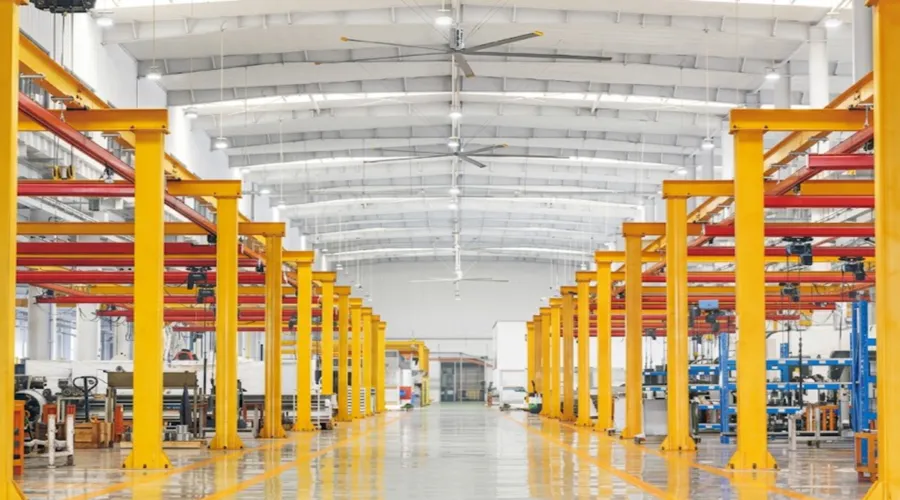
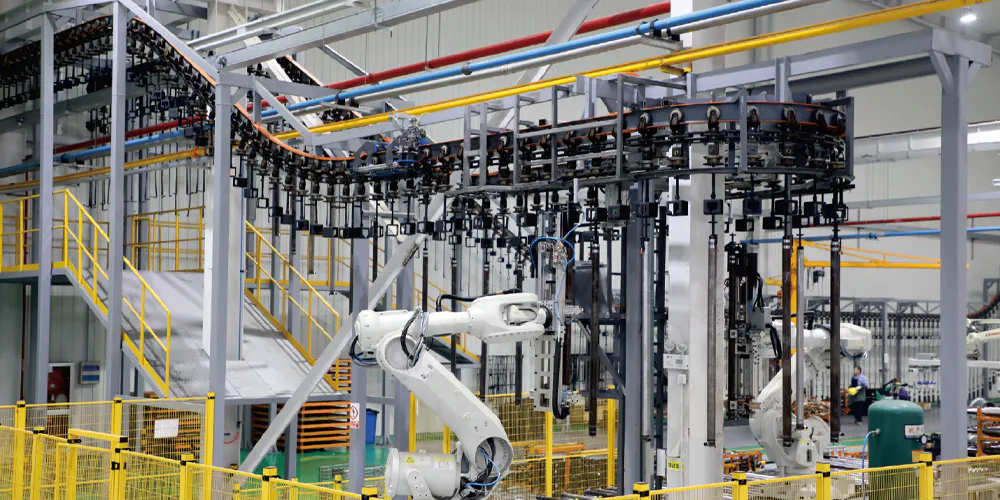
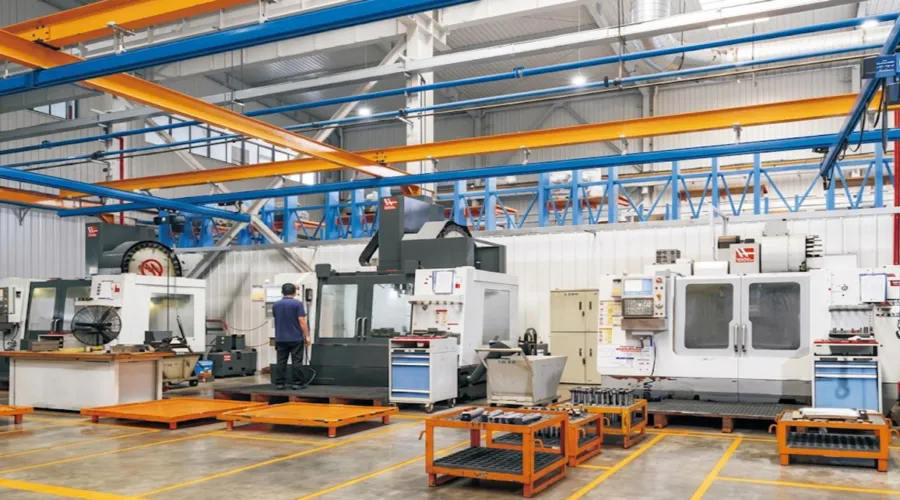
เกี่ยวกับโรงงานผลิตของเรา
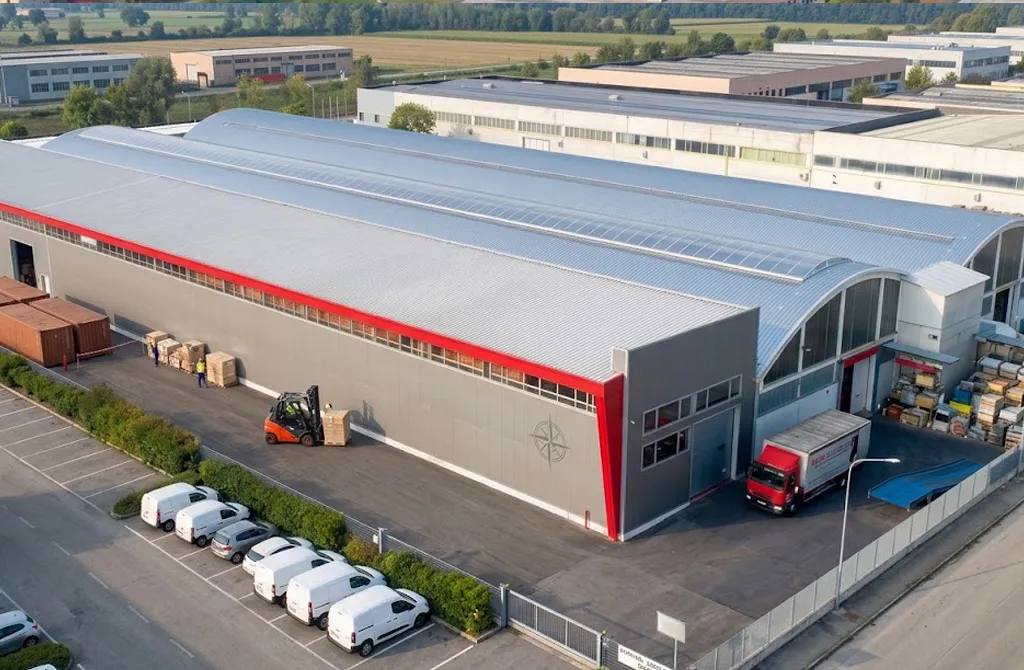
With over ten years of accumulated expertise in precision mechanical power transmission, our ISO 9001:2015 certified facility produces a comprehensive range of industrial and agricultural drivetrain components. The product portfolio spans agricultural gearboxes, worm gear reducers, planetary gear drives, power take-off shafts, hydraulic cylinders, gears, roller chains, and motors — a breadth that allows customers seeking spur gears for sale to source complementary components from a single, audited supplier.
Engineering capability extends well beyond standard catalogue items. Our design and manufacturing teams handle custom spur gears, non-standard sprockets, precision worm gears, machined pulleys, worms, shafts, and other bespoke mechanical parts produced in ductile iron, cast iron, cast steel, precision cast steel, and cast aluminium. Whether the brief calls for a single prototype or a volume production run, capacity and process documentation are in place to support both.
เวิร์กช็อป
Complete the Drive System
เฟืองเกลียวคู่
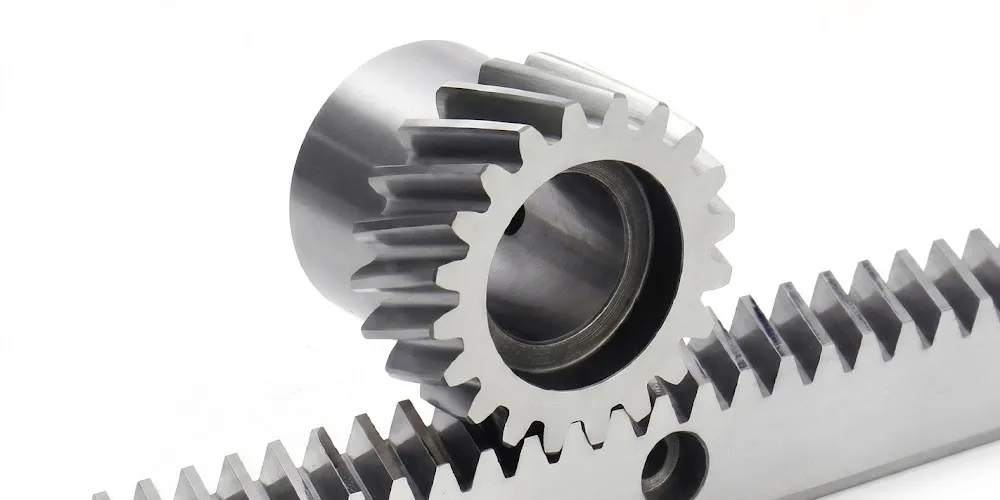
Where a standard spur gear reaches its noise or speed limits, a double helical gear — also called a herringbone gear — offers greater contact ratio and self-cancelling axial thrust. Both types share the same parallel-shaft geometry, so upgrading from spur to helical at the design stage involves minimal housing modification.
แร็คเกียร์
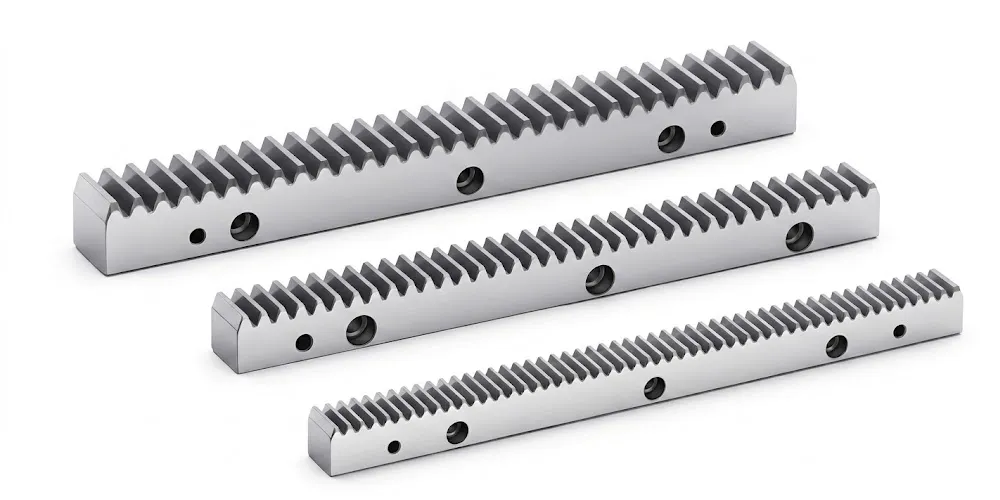
A gear rack converts the rotational output of a spur gear into precise linear motion — the operating principle behind CNC axis drives, sliding gate openers, and telescope focusers. Because rack and gear tooth geometry follows the same involute standard, centre distance and backlash can be calculated with the same equations.
Order & Trade Information
Minimum Order
Standard spur gear parts carry a baseline MOQ. Mixed models — for example, combining M2 and M3 modules in one order — can be combined to reach approximately USD 1,500. For evaluation purposes, 1–5 pcs samples are available to new customers at sample price; 1–2 pcs orders can be evaluated individually, though unit cost will be higher than volume pricing.
ระยะเวลานำส่ง
Standard catalogue items: 10–25 working days
Custom spur gears (CNC, OEM, non-standard): 20–45 working days
High-precision / heat-treated: 30–60 working days
Samples (1–5 pcs): 7–25 working days
Trade Terms
Standard spur gear components are shipped under EXW, FOB, CIF, or DAP terms as preferred. FCA, CFR, CPT, CIP, and DDP can be negotiated for specific project requirements. For urgent spares or small sample quantities, courier service (DHL/FedEx/UPS) on EXW or DDP basis is available.
Payment & Packaging
Payment by T/T (bank transfer) or L/C. Standard packing: individual plastic bags within outer cartons. Wooden crating available for large spur gears or heavy consignments. Samples are shipped at customer's expense via nominated courier account or prepaid freight.
คำถามที่พบบ่อย
Which type of spur gear material works best for food processing conveyor drives in humid Australian facilities?
How do I decide between a spur gear and a helical gear when designing a new industrial gearbox for a Canadian mining application?
What precision grade of involute spur gear do I need for a servo-driven robotic arm joint where backlash must stay below 3 arc-minutes?
What surface treatments are available for steel spur gears used on outdoor agricultural equipment exposed to rain and fertiliser spray in South American markets?
บรรณาธิการ: PXY