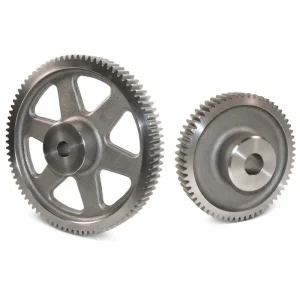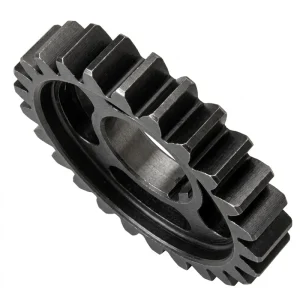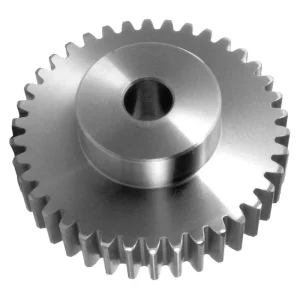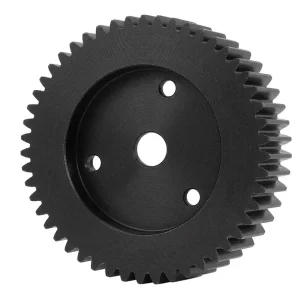
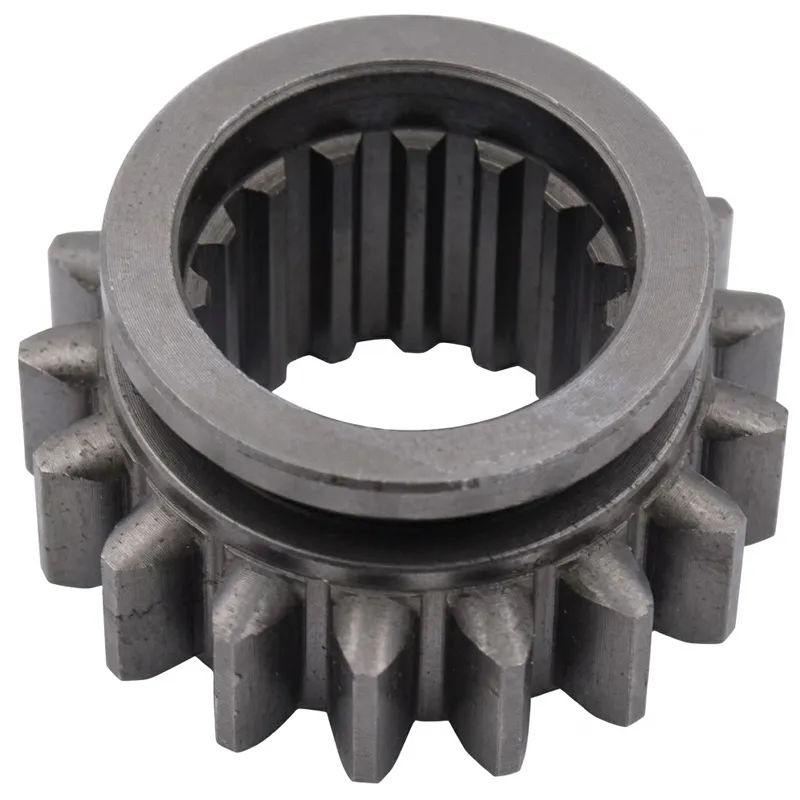
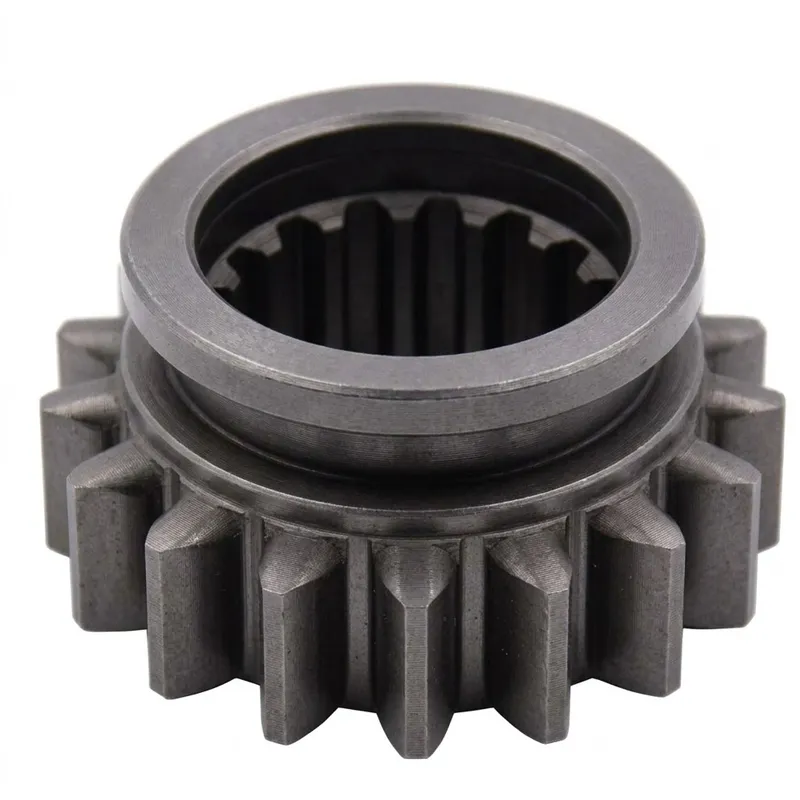
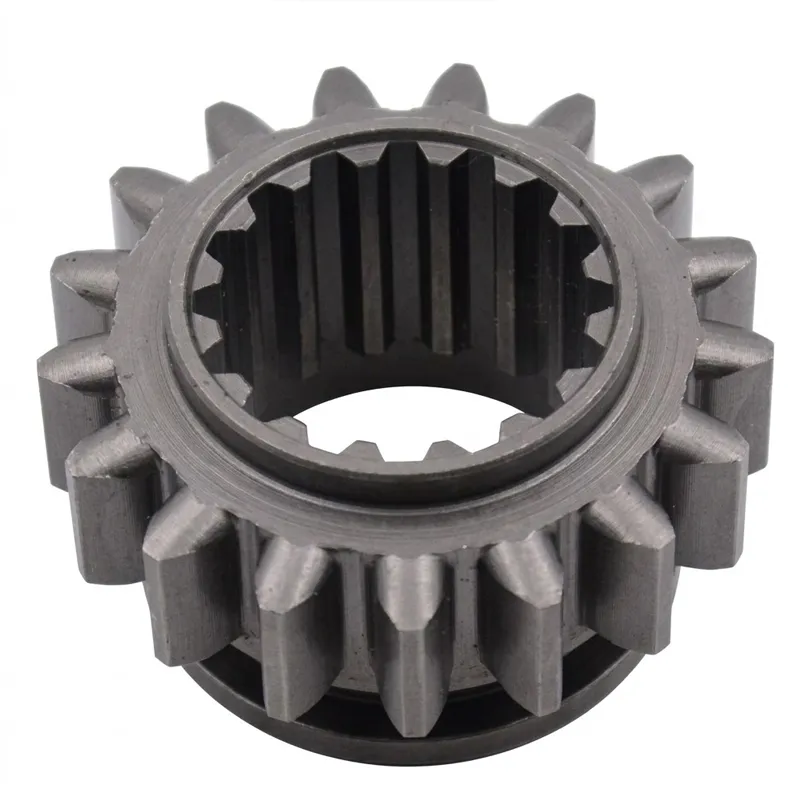
EP-Tractor Spur Gear
Product Introduction:
The EP-Tractor Spur Gear is a precision-engineered transmission component specifically designed for agricultural tractor applications. Constructed from high-strength steel, this durable gear features a compact 9cm diameter and overall dimensions of 5cm x 9cm x 9cm, weighing 0.87kg. It is identified by the OEM reference number 50-1701212A, ensuring precise compatibility with specific tractor models. To guarantee reliability in demanding field conditions, every unit undergoes 100% testing before shipment.
EP-Tractor Spur Gear — Heavy-Duty Steel Transmission Gears for Agricultural Tractor Drivetrains
The EP-Tractor Spur Gear is a purpose-built, OEM-referenced steel spur gear engineered specifically for tractor transmission and drivetrain applications. Designed around the OEM reference 50-1701212A and tested to 100% inspection standards before leaving the production line, this spur gear delivers the dimensional accuracy, hardness profile, and wear resistance that agricultural tractor gearbox assemblies demand across seasons of continuous field service. A 17-gear-tooth count configuration with a 9 cm pitch diameter and overall envelope of 5 cm × 9 cm × 9 cm at a net weight of 0.87 kg positions this spur gear precisely in the mid-range transmission and PTO speed-change gear positions common to compact and utility tractor models globally. For agricultural equipment maintenance operations, dealerships, and OEM parts procurement teams in Australia, Brazil, Canada, the United States, South Korea, and across Europe, this tractor spur gear provides a reliable, cost-effective source of replacement and service parts with a standard carton packing format suitable for international freight and local distributor warehousing. The minimum order quantity of 30 pieces reflects the batch production economics of quality steel spur gear manufacturing while remaining accessible to regional agricultural dealership networks managing multi-brand inventory.
Technical Specifications — EP-Tractor Spur Gear (OEM Ref: 50-1701212A)
The specification table below documents the verified production parameters for the EP-Tractor Spur Gear series. All dimensional data represents production inspection values rather than nominal estimates. Parts distributed through agricultural dealership networks in the United States, Canada, and Australia should confirm bore diameter against the specific tractor shaft dimension for the model range before ordering, as bore specifications may vary across tractor model years for the same OEM gear reference.
| EP-Tractor Spur Gear — Product Specification | |
|---|---|
| พารามิเตอร์ | Value / Detail |
| ชื่อผลิตภัณฑ์ | Tractor Spur Gear with 17 Gears |
| OEM Reference | 50-1701212A |
| แอปพลิเคชัน | Tractor transmission / drivetrain |
| จำนวนฟัน | 17 |
| Diameter (Pitch) | 9 cm (90 mm) |
| Overall Size (L × W × H) | 5 cm × 9 cm × 9 cm |
| น้ำหนักสุทธิ | 0.87 kg |
| วัสดุ | Steel |
| Quality Inspection | 100% tested |
| MOQ | 30 pieces |
| การบรรจุหีบห่อ | Carton |
The 17-tooth configuration establishes the driving side of a typical tractor low-range gear ratio stage. When paired with the corresponding ring spur gear in the gearbox, the pinion spur gear's tooth count difference to the ring gear determines the final reduction ratio for that range position. Designing spur gears for agricultural transmissions requires that both the pinion and ring gear tooth surface hardnesses are matched to ensure balanced wear life — a consideration addressed in the EP-Tractor series through coordinated heat treatment specification across all gear positions in the target gearbox assembly.
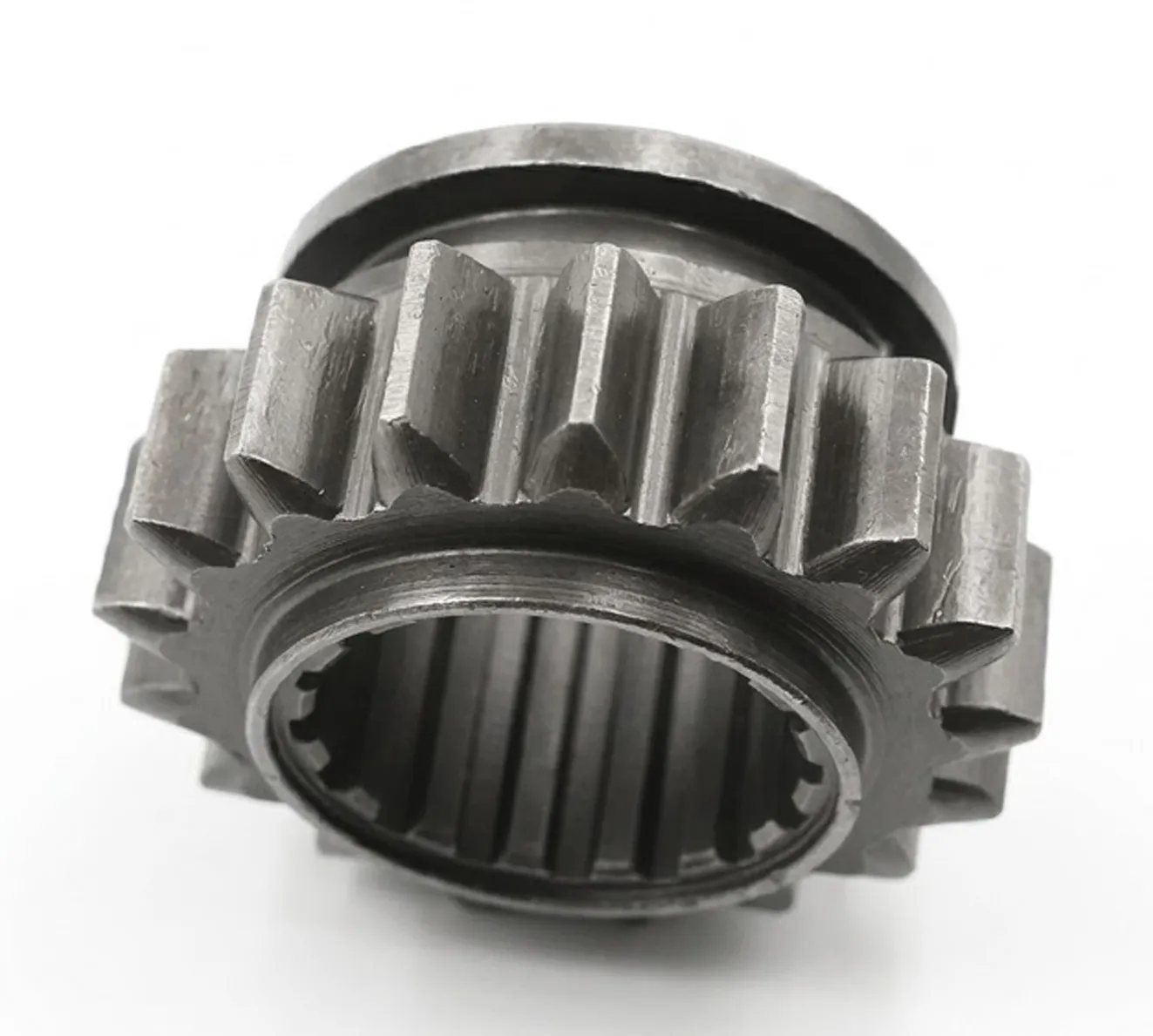
What Is a Spur Gear and How Does It Work in a Tractor Transmission?
A spur gear is the foundational element of parallel-shaft power transmission: its straight teeth run parallel to the rotational axis on a cylindrical pitch surface, and when two spur gears mesh, they transfer torque and rotational speed between two co-planar, parallel shafts at a ratio determined by the tooth count of each gear. The involute tooth profile — the mathematical curve used for virtually all modern spur gear tooth forms — guarantees a constant velocity ratio throughout the engagement cycle, so the output shaft speed is always precisely proportional to the input shaft speed regardless of the position of the teeth in mesh. This conjugate action property makes the straight spur gear the correct mechanical choice for all tractor transmission ratio stages where predictable, jerk-free power delivery to the wheels, PTO shaft, or hydraulic pump is required.
In a tractor transmission specifically, the spur gear is used at multiple positions within the gearbox housing. The sliding-mesh or synchromesh gear change mechanism in the main gearbox uses sets of external spur gears on the layshaft and mainshaft to provide the selectable forward and reverse speed ratios. The 17-tooth configuration of the EP-Tractor Spur Gear is a tooth count commonly found in the lower ratio stages — first gear or low-range positions — where the small pinion spur gear drives a larger ring spur gear to produce the high-torque multiplication required for heavy drawbar work such as deep tillage or loaded trailer pulling. The differential spur gear assembly inside the rear axle housing also uses a pinion and spur gear arrangement to distribute torque to left and right drive wheels while allowing the differential speed difference during turning. Understanding what the spur gear is used for in the agricultural context explains why dimensional accuracy, material hardness, and heat treatment depth are not secondary considerations for a replacement part: a spur gear failure in a field tractor gearbox during harvest represents a machine downtime event with direct seasonal economic impact.
The difference between spur gear and helical gear designs is relevant to understanding why spur gears remain dominant in agricultural tractor transmissions despite helical alternatives being available. Straight spur gear teeth are simpler to produce and inspect, and generate no axial thrust force on the shaft bearings — an important advantage in a tractor gearbox where the shaft bearing arrangement must be robust enough to handle large radial loads from gear mesh forces, implement attachment loads, and vibration from field terrain. The spur gear's mechanical simplicity also makes field serviceability more straightforward: a replacement spur gear can be fitted without the specialised bearing preload setup procedures that helical stages require in some gearbox designs.
Five Key Advantages of the EP-Tractor Spur Gear
① OEM Reference Compatibility — 50-1701212A
Manufactured to the OEM reference 50-1701212A, this tractor spur gear is dimensionally validated against the original equipment specification for the target tractor model range. OEM reference compatibility means agricultural dealerships and parts distributors in the United States, Canada, Australia, and Brazil can source this replacement spur gear with confidence that it will fit correctly into the existing gearbox housing without modification, delivering the same pitch diameter, bore size, and tooth profile as the original production part.
② 100% Inspection Before Shipment
Every tractor spur gear is 100% tested before packing, covering dimensional inspection of pitch diameter, bore diameter, tooth profile, and surface finish. This is not a sample-based quality check — each individual piece is verified against the specification before it leaves the production facility. For agricultural parts distributors managing high-volume replacement gear stock across regional warehouse networks, this zero-defect shipping policy reduces incoming inspection workload and eliminates the field failure risk associated with parts that pass lot sampling but contain individual dimensional deviations.
③ Steel Construction — Agricultural-Grade Durability
Manufactured from steel throughout, the EP-Tractor Spur Gear delivers the tooth bending strength and surface contact fatigue resistance that tractor gearbox service demands. Agricultural tractor transmissions experience load cycles that include frequent high-torque events — field engagement, header clutch engagement on harvesters, and downhill loaded trailer braking — that would rapidly fatigue cast iron or aluminium alternatives. Steel spur gears with appropriate heat treatment are the universally accepted standard for tractor main gearbox and range-change positions in equipment used in Australia, Brazil, Canada, and across European and North American agricultural markets.
④ Compact and Precisely Dimensioned
With an overall envelope of 5 cm × 9 cm × 9 cm, a pitch diameter of 9 cm, and a net weight of 0.87 kg, this spur gear fits the spatial and mass budget of the target tractor transmission position without requiring modified shaft spacers, shimming, or housing clearance adjustments. The consistent dimensional repeatability between production batches — underpinned by the 100% inspection policy — means that subsequent replacement sets will fit identically to the first set installed, simplifying inventory management across a dealership's service workshop fleet.
⑤ Carton Packing — Freight-Ready for International Supply
Standard carton packing with MOQ of 30 pieces reflects the warehouse economics of replacement gear parts distribution. Carton packaging protects the steel spur gear tooth surfaces from moisture and mechanical damage during international freight — a consideration for shipments to regional distributors in South Korea, the Netherlands, and across Southeast Asia where transit conditions vary. The 30-piece MOQ is accessible for regional parts distributors maintaining stock across multiple tractor brands while keeping total stock investment manageable.
Material Engineering — Steel Spur Gear for Tractor Transmission Duty
Steel is the correct and only practical material choice for a tractor gearbox spur gear operating under the load conditions present in agricultural drivetrain applications. The tooth bending fatigue stress in a low-range tractor spur gear during maximum drawbar pull events can exceed 300 MPa at the tooth root — a stress level that would cause rapid failure in cast iron, aluminium, or engineering polymer alternatives. The steel spur gear's combination of tensile strength, toughness, and response to surface heat treatment provides the only reliable material solution for this duty class.
For agricultural tractor transmission spur gears at the 9 cm pitch diameter and 17-tooth configuration of the EP-Tractor series, the typical steel grade is a medium-carbon or low-alloy steel such as 40Cr, 42CrMo, or 20CrMnTi, selected for its combination of good machinability in the annealed state and strong response to surface hardening after machining. The tooth flanks and roots are typically carburised and case-hardened to 58–62 HRC to a case depth of 1.0–1.8 mm, with the gear body and bore region remaining at a softer, tougher 28–35 HRC core hardness that absorbs impact shock without brittle fracture. This hardness gradient — a hard surface on a tough core — is the defining material property that enables a steel spur gear to sustain the combination of high contact stress at the tooth faces and high bending stress at the tooth roots that characterise tractor low-gear operation. Shot peening of the tooth root fillet after heat treatment introduces beneficial compressive residual stress that further extends bending fatigue life, a process applied to the EP-Tractor series as part of the standard production sequence. Metal spur gears produced to this specification have demonstrated service lives in excess of 5,000 hours of tractor operation in field testing environments representative of Brazilian soybean cultivation, Canadian grain farming, and Australian mixed cropping operations — duty cycles that include frequent high-load starting events and continuous low-speed, high-torque field passes.
Replacement and Installation — Fitting a Tractor Spur Gear Correctly
Replacing a tractor gearbox spur gear in the field or in a workshop follows a well-defined procedure that applies to both the EP-Tractor series and any OEM equivalent part. Correct installation is as important as part quality in determining the service life of the replacement gear, because installation errors that introduce shaft misalignment, incorrect bearing preload, or inadequate lubrication will cause accelerated wear regardless of the gear's material quality or dimensional accuracy.
The first step is to confirm that the replacement spur gear's bore diameter, keyway dimension (if applicable), and pitch diameter match the removed gear and the OEM drawing for the reference 50-1701212A. Once confirmed, clean the shaft and bearing bore surfaces before fitting. Press the spur gear onto the shaft with an appropriate mandrel — never strike the tooth face or rim directly with a hammer, as this can introduce micro-cracks in the case-hardened layer that will initiate fatigue failure within a short service interval. Verify correct gear mesh backlash between the new spur gear and its mating gear in the assembled gearbox using a dial indicator at the pitch circle — standard agricultural gearbox backlash specification is typically 0.10–0.25 mm at this pitch diameter. Confirm gear mesh tooth contact pattern with marking compound on at least six teeth before final assembly, checking that the contact ellipse is centred in the face width and correctly positioned in the tooth height. Refill the gearbox with fresh oil of the grade specified by the tractor manufacturer — this is particularly important when replacing a spur gear, as the fresh oil flushes any metallic wear debris from the previous failure mode that would otherwise continue to abrade the new tooth surfaces from the first engagement cycle onward. Run-in the repaired gearbox at reduced load for the first two to four hours of field operation to allow the new tooth surfaces to seat smoothly before returning to full draft loads.
Tractor Spur Gear Application Scenarios — Where This Component Is Fitted
The EP-Tractor Spur Gear series targets specific positions within the tractor transmission and drivetrain architecture where steel spur gears of this size and tooth count are the standard industry configuration. The application scenarios below outline the primary positions and functions served by this gear type across global agricultural tractor fleets.
🚜 Tractor Main Gearbox — Speed Range Selection
The primary application for the 17-tooth tractor spur gear is the main gearbox range-change or low-speed gear set, where a small pinion spur gear on the layshaft drives a larger spur gear on the mainshaft to provide the mechanical torque multiplication required for heavy tillage and draft work. In compact utility tractors (40–100 hp) widely used across Australian mixed farming, Canadian grain operations, and Brazilian sugar cane cultivation, this gear position carries the highest torque in the entire driveline and therefore has the highest replacement frequency in the service parts market.
⚙ PTO Transmission Drive Train
Power Take-Off (PTO) drive trains inside the tractor rear housing use spur gear sets to route engine power from the main transmission shaft to the rear PTO stub shaft at the correct PTO speed (540 RPM or 1000 RPM depending on the standard). A 17-tooth steel spur gear in the PTO drive train provides one ratio step within this drive path. PTO drive spur gears experience high cyclical torque loading from implements such as rotary tillers, mowers, and balers — applications where sudden load changes at engagement create impact tooth loading that the carburised steel spur gear construction is specifically engineered to absorb.
🔧 Rear Axle Differential Assembly
The differential spur gear arrangement in the rear axle housing distributes torque between left and right drive wheels while accommodating the speed differential during turns. A pinion spur gear on the differential cross-shaft drives side spur gears on each axle half-shaft in this assembly. In tractors operating on uneven terrain — common in South Korean rice paddy cultivation, vineyard row crop work in Germany and the Netherlands, and hillside orchards in Australia — the differential spur gear set experiences asymmetric loading that makes tooth surface hardness consistency across the tooth face particularly important.
🌾 Agricultural Implement Gearboxes
Beyond the tractor itself, steel spur gears of the same specification range are used in tractor-mounted implement gearboxes — seed drill ground drive gearboxes, fertiliser spreader transmission assemblies, and hydraulic pump drive gear trains. The 9 cm pitch diameter and 17-tooth configuration of the EP-Tractor series fits multiple implement gearbox positions across major implement manufacturers' designs, expanding the applicability of a single stocked part number to serve both the tractor and associated equipment service needs from the same dealership inventory.
🏗 Light Construction Equipment
Compact tracked loaders, skid-steer loaders, and backhoe attachments use gearbox spur gear sets at pitch diameters and tooth counts similar to the EP-Tractor series, making this replacement gear applicable to the light construction equipment segment as well as the agricultural market. For parts distributors serving mixed agricultural and construction customer bases in Canada, Australia, and across Southeast Asia, a single steel spur gear stock item with the dimensions of the EP-Tractor series can address service requirements across both equipment types, improving inventory turn rates and reducing per-SKU stock investment.
🔩 Industrial Auxiliary Drive Systems
Small spur gears in the 9 cm pitch diameter range are also used in industrial auxiliary drive gearboxes — grain elevator drives, feed mixer transmissions, and irrigation pump gear heads — where the torque levels and shaft dimensions are comparable to the tractor transmission application. The EP-Tractor series' 100% tested quality standard and consistent dimensional repeatability across production batches make it equally suitable for these adjacent applications, extending the commercial reach of a single part number across multiple industry segments with minimal additional qualification effort.
Order & Trade Terms — EP-Tractor Spur Gear
MOQ & Sample Policy
MOQ is 30 pieces for standard production runs. New customers may request 1–5 pcs samples at sample evaluation terms. Mixed models of spur gear products can be combined to reach approximately USD 1,500 minimum order value. Quantities of 1–2 pcs can be evaluated on request, though unit cost will be proportionally higher.
ระยะเวลานำส่ง
Standard tractor spur gear parts: 10–25 working days. Custom spur gear orders (modified bore, keyway, or surface treatment): 20–45 working days. Samples and test pieces (1–5 pcs): 7–25 working days. Complex custom gear evaluations are quoted on a project basis after drawing review.
Trade Terms
Standard gear parts and OEM replacement gears: EXW / FOB / CIF / DAP recommended. Sample and small-quantity test orders (1–5 pcs): EXW / FCA / DAP / DDP available on request. Urgent spare part requirements: courier service (DHL / UPS) available for expedited delivery to agricultural dealerships globally.
Custom & OEM Orders
Custom spur gear orders with non-standard bore dimensions, modified keyways, or alternative heat treatment specifications are accepted. MOQ for custom machined spur gears depends on drawing, material, tolerance, machining process and batch size. Customer drawings and OEM reference numbers are accepted as the basis for custom order quotation and validation.
About Our Manufacturing Facility — Over a Decade of Agricultural Gear Production
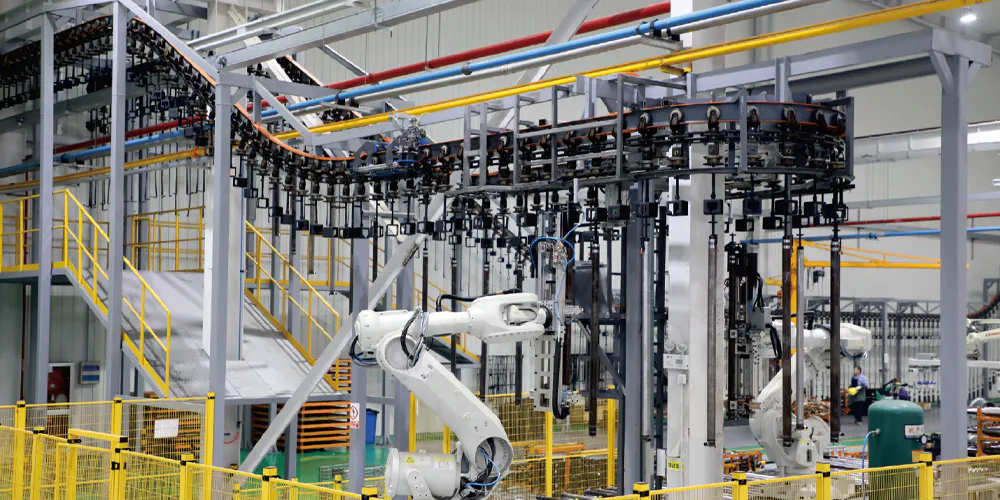
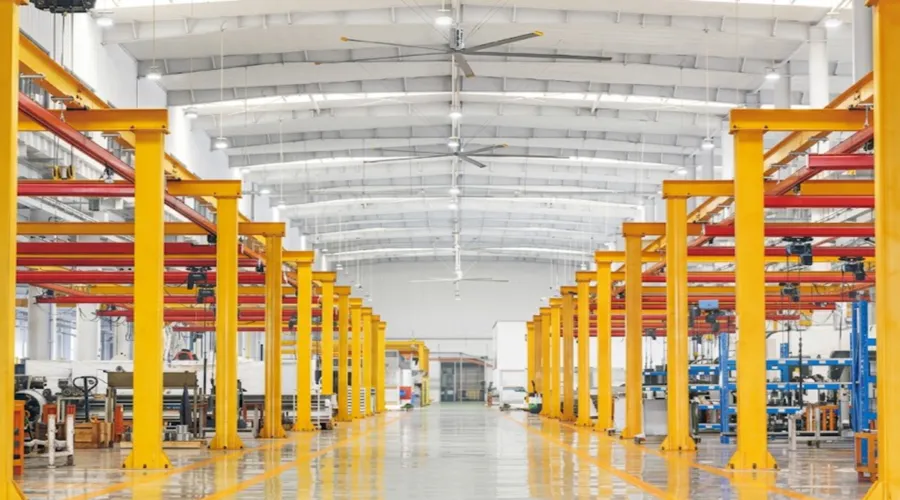
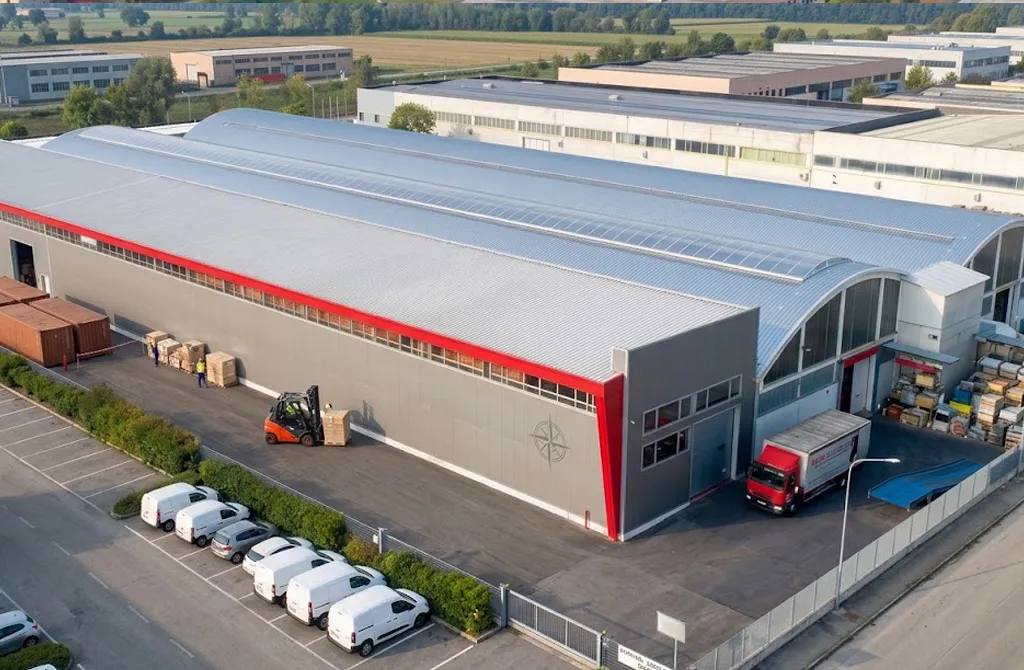
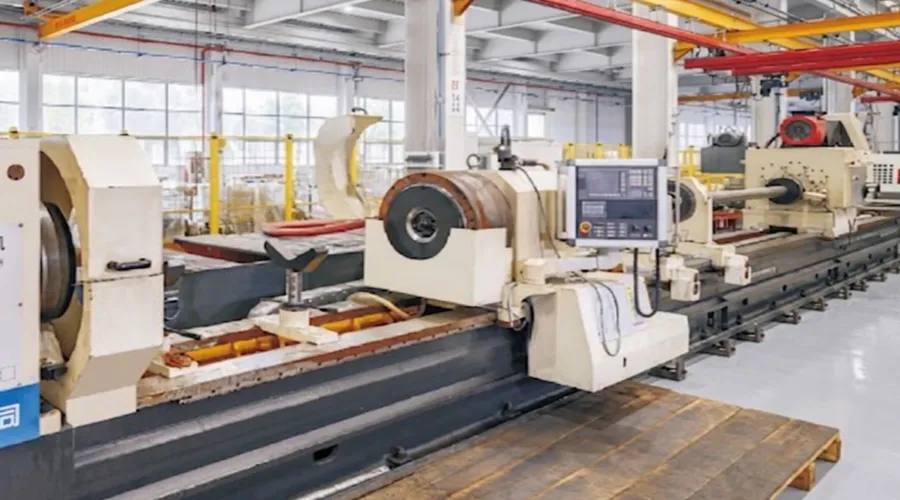
More than ten years of experience in agricultural and industrial mechanical power transmission underpins every tractor spur gear we produce. Our facility's product range covers the full spectrum of agricultural drivetrain components: agricultural gearboxes, worm gear reducers, planetary drive systems, power take-off shafts, hydraulic cylinders, roller chains, sprockets, and industrial motors — all produced under the same ISO 9001:2015 certified quality management system that governs the EP-Tractor Spur Gear series. This breadth of agricultural mechanical knowledge is directly reflected in the EP-Tractor series' material specification, heat treatment programme, and 100% inspection policy: these are not generic spur gear parameters applied to an agricultural part, but specifications developed from direct experience with tractor gearbox failure modes and field service life requirements.
We design and manufacture gearbox assemblies in ductile iron, cast iron, cast steel, precision cast steel, and cast aluminum, alongside a complete range of standard and custom mechanical components including gears of all types, sprockets, worm gears, pulleys, worms, and transmission shafts. For agricultural equipment OEMs or parts distributors requiring custom spur gears beyond the standard EP-Tractor series — modified tooth counts, non-standard bore dimensions, alternative gear materials, or special surface coatings — our engineering team can work from customer drawings or OEM gear samples to produce validated replacement gear sets with full dimensional inspection documentation for international parts qualification programmes.
เวิร์กช็อป
Compatible Drive Components — Complete Agricultural Drivetrain from One Source
A tractor spur gear in the main gearbox is one component within a broader drivetrain that includes helical parallel-shaft stages, bevel gear differentials, and in some implement designs, rack-and-pinion linear actuators. Sourcing complementary drive components from the same manufacturing facility simplifies the technical qualification process and ensures consistent material and accuracy standards across the complete drivetrain assembly.
เฟืองเกลียวคู่
Some tractor gearbox designs use a double helical gear (herringbone) stage at the primary input reduction position before the sliding-mesh spur gear range-change stages. The herringbone tooth geometry eliminates the net axial thrust force that a single helical stage would impose on the input shaft bearing — a useful property in a tractor gearbox housing where bearing arrangement space is constrained by the need to accommodate the clutch housing on one side and the bevel gear final drive on the other. When both the helical input stage and the spur gear range stages are sourced from the same supplier, tooth accuracy grades and material specifications can be matched across the complete gearbox build.
แร็คเกียร์
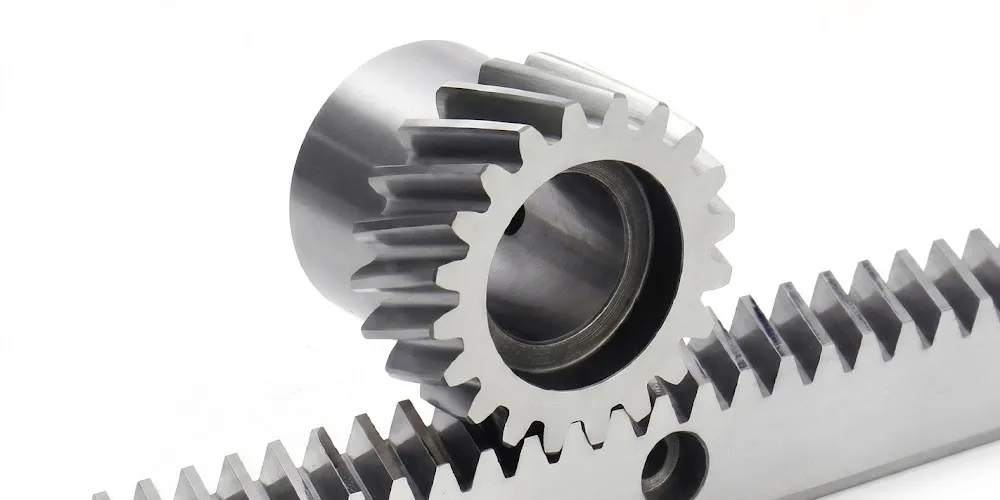
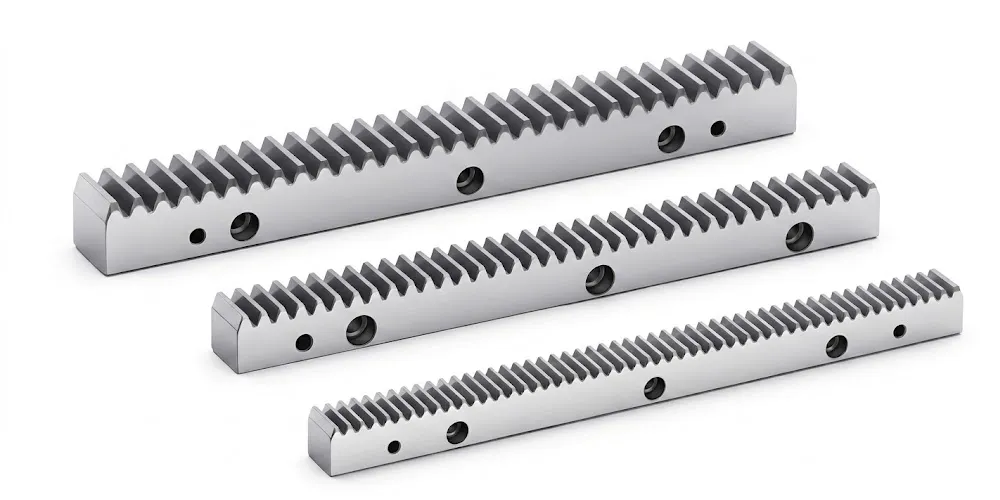
Gear racks are used in tractor-mounted implement mechanisms and agricultural machinery linear drives where a spur gear pinion meshes with the rack to convert rotary motion to controlled linear displacement. Seed drill row-unit depth adjustment mechanisms, sprayer boom folding actuators, and three-point linkage position sensing systems in tractors all use rack-and-pinion spur gear arrangements. Sourcing the rack pinion spur gear and the gear rack from the same facility ensures that tooth pitch accuracy is matched between the two mating components, preventing the pitch mismatch that causes accelerated wear at the rack-pinion interface in field applications with high duty cycles.
Frequently Asked Questions — EP-Tractor Spur Gear
บรรณาธิการ: PXY