
Paper, Pulp & Printing Industry
A technical reference covering construction principles, material systems, ratio selection, and operational parameters for worm gear speed reducers in coating and laminating web-drive applications across global paper and converting operations.
Coating and laminating lines process continuous webs of paper, board, film, or foil at speeds ranging from a few metres per minute to well over 500 m/min in modern high-output facilities. Throughout every metre of that web path — from the unwind stand through the coating station, drying tunnel, and on to the rewind — the web tension must be kept within a defined window. Too much tension and the substrate stretches, distorting the coat weight profile and, in the case of lightweight tissue or thin film laminates, snapping the web entirely. Too little tension causes wrinkles, register errors in printed laminates, and uneven nip loading at the laminating roll stack.
At the mechanical heart of this tension control system sits the drive — specifically the single speed reducer that steps down motor speed to the rotational rate required by each driven roller section. Selecting the right single speed reducer is not a commodity decision on a coating or laminating line. The gear reduction ratio, output shaft torque capacity, backlash level, and thermal behaviour of the reducer all directly influence the tension uniformity the line can maintain. A poorly chosen or misapplied reducer introduces torsional compliance or speed variability that propagates upstream and downstream through the web, causing the coating weight to fluctuate in synchrony with the reducer’s mechanical imperfections.
This article addresses the engineering principles behind single speed reducer selection for coating and laminating web drives, with particular reference to worm gear speed reducer geometry, material systems, ratio selection, and integration with variable-frequency drive (VFD) motor control — the dominant architecture in modern tension-controlled web lines worldwide, from European flexible packaging converters to corrugated board coaters in North America and specialty laminate producers across South and Southeast Asia.
Why Web Tension Demands Precise Drive Speed Control
Web tension on a coating or laminating line is maintained by controlling the differential surface speed between adjacent driven sections. If the coating head nip rolls run fractionally faster than the unwind, the web is in draw tension — the normal operating condition. The magnitude of that differential, typically between 0.5% and 3% of line speed depending on substrate and process, defines the working tension. Any variation in the surface speed of a driven roller — caused by torque ripple, backlash cycling, or thermal drift in the reducer — appears as a tension fluctuation at the web.
The single speed reducer’s role is to translate a controlled motor speed into a precise and stable roller surface speed. Unlike multi-stage gearboxes, a single stage worm gear speed reducer introduces only one gear mesh into the kinematic chain. This matters because each additional gear mesh adds its own contribution to torsional stiffness variation and positional error. For web-drive applications where speed accuracy is measured in fractions of a percent, the fewer the gear meshes, the cleaner and more predictable the output shaft speed characteristic.
Worm gear reducers also offer a natural damping characteristic. The sliding contact between the worm thread and the worm wheel tooth face absorbs minor torsional pulses from the motor or from load disturbances at the roller, rather than transmitting them elastically through the drivetrain. In a coating line where metering roll nip pressure varies as the web path changes, this inherent damping is a practical benefit that helical gear units — which transmit impact loads more directly — do not provide to the same degree.
Budownictwo produkcyjne
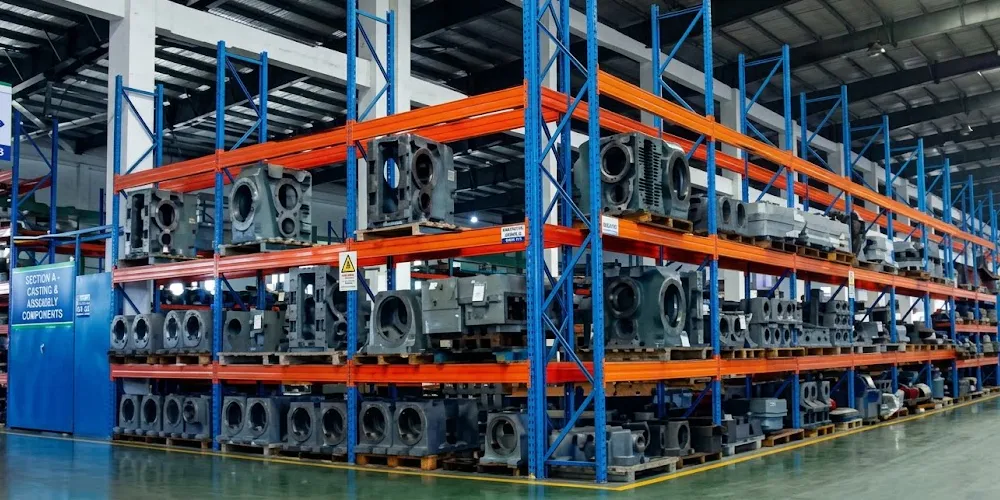
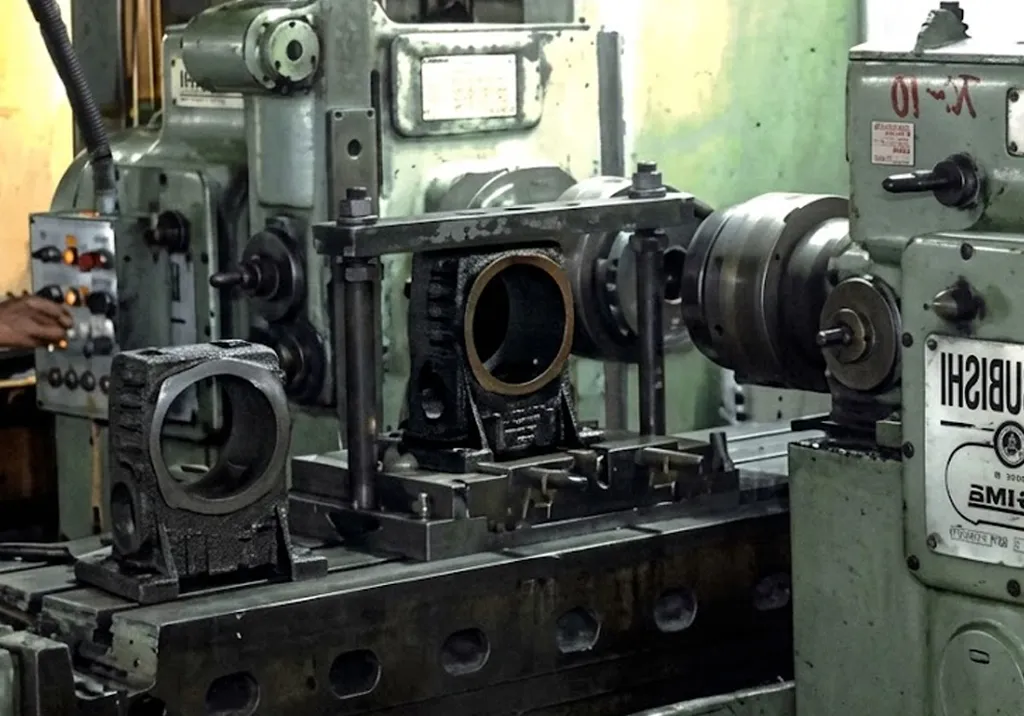
The housing of a single speed reducer for coating and laminating service is typically gravity-cast in close-grained grey cast iron, machined on all mating faces and bore centres to tight geometric tolerances. The importance of housing rigidity in a web-drive application is often understated: if the housing flexes under the radial load from the worm wheel output shaft, the gear mesh shifts out of its designed contact pattern, altering the effective gear ratio momentarily and introducing a speed fluctuation at the roller. A rigid, well-ribbed cast iron housing maintains the worm and wheel in their nominal mesh position under all operating loads.
The worm shaft is supported on tapered roller bearings or angular-contact ball bearings at both ends of the housing. These bearings are preloaded during assembly to eliminate axial float, which is essential because the worm thread generates substantial axial thrust when transmitting torque. Any uncontrolled axial movement of the worm shaft shifts the mesh contact zone axially along the worm wheel tooth face, causing instantaneous ratio variation. Bearing preload eliminates this source of output speed error at the cost of marginally higher bearing operating temperature — an acceptable trade-off in web-drive precision applications.
The output shaft passes through the housing on a pair of deep-groove ball bearings, sized to handle both the radial load from the worm wheel and the overhung load imposed by a chain sprocket, timing pulley, or direct coupling to the roller journal. For laminating line drives where the output shaft connects directly to a rubber-covered pressure roll, the overhung moment can be significant, and the output bearing selection must account for this in the service life calculation.
Oil seals at all shaft penetrations prevent lubricant migration into the machine frame, the web, or the coating material. In coating environments where even trace contamination of the substrate with mineral oil would cause coating adhesion failure or print quality rejection, lip seals of adequate quality — or, where required, labyrinth seals with a grease-purged cavity — must be specified. The reducer’s drain, fill, and level plugs should be accessible from the accessible side of the machine frame to allow oil changes without partial dismantling of the drive arrangement.
Material Systems
The worm in standard WP-family single speed reducers is machined from 45# high-carbon steel, case-hardened by induction heating and finish-ground on the thread flanks to a surface roughness typically below Ra 0.8 µm. The hardened and ground surface is essential for two reasons in web-drive service: it provides a well-defined and consistent coefficient of friction with the bronze wheel tooth, which stabilises the efficiency of the mesh over time; and it minimises the running-in wear that would otherwise cause a brief period of geometric instability at the start of a new unit’s service life. For coating lines where production yields are highest during continuous long runs, the shorter and more controlled run-in period of a ground worm is a production advantage.
The worm wheel is centrifugally or sand-cast from tin bronze — typically an alloy in the CuSn10Pb1 family — which provides the combination of conformability, low sliding friction against hardened steel, and adequate compressive strength needed for the worm gear mesh. Tin bronze undergoes gradual plastic deformation of the tooth surface asperities during the run-in phase, progressively increasing real contact area and reducing the instantaneous contact stress. This process is self-limiting and results in a stabilised, low-noise mesh that remains consistent throughout the gear’s service life, provided the lubrication regime is maintained correctly.
The housing is cast from HT200-grade or equivalent grey cast iron, which offers compressive yield strength adequate for all standard bearing loads in this product range. The graphite flake microstructure of grey cast iron also provides intrinsic vibration damping — a property particularly valuable in coating line drives where electrical drive harmonics from VFD switching can excite mechanical resonances in the drivetrain. The cast iron housing damps these sub-harmonic excitations before they can modulate the output shaft speed.
For applications in humid or chemically aggressive paper-mill environments, external surfaces of the housing are protected by primer and top-coat paint systems or epoxy coatings. Internal surfaces in the oil sump are not coated, as the oil film provides adequate corrosion protection, but the internal bore machined surfaces are protected during transport and storage by corrosion-inhibited oils that must be fully removed before filling with the specified operating lubricant.
Ratio Selection for Coating and Laminating Web Drive Sections
Each driven roller section on a coating or laminating line requires its own reducer, and each reducer must deliver the correct surface speed for that section’s function. The unwind tension roll, the pre-coating spreader, the coating metering roll, the laminating nip, and the rewind pull roll all operate at different peripheral speeds relative to the nominal line speed, with the differential between them defining the draw tension profile along the web path.
The single stage worm gear speed reducer covers ratio ranges from 10:1 through 60:1 in standard catalogue configurations. Paired with a 4-pole induction motor running at 1450 rpm through a VFD, the output shaft speed range is approximately 24–145 rpm before the VFD scaling factor. With a roller diameter of 200 mm, this maps to a surface speed range of roughly 15–91 m/min from the mechanical drive alone — extended upward by VFD overspeed and downward by VFD underspeed, to cover the full operating range of most paper-plant and flexible-packaging coating lines. Heavy-duty board laminating lines operating at lower speeds but higher torque levels can use 40:1 or 60:1 ratios to stay within the motor’s efficient speed range while delivering the higher torque required at the roller.
When multiple drive sections on a line are driven by reducers of the same ratio, the VFD for each section can be set to the same frequency, and any required draw differential is introduced by trimming the roller diameters — a practice known as “taper” or “draw taper” setting. When sections require substantially different speed ranges, different ratios are selected for each drive position, and the VFD references are calculated accordingly. This modular approach, using the single reduction worm reducer as a standardised mechanical element, simplifies spare parts management and allows rapid ratio change at machine rebuild by substituting reducer units without redesigning the motor or VFD specification.
Technical Parameters: EP-WPDS Single Speed Reducer (0.12–15 kW)
The EP-WPDS 0.12–15 kW Input Power Single Speed Reducer covers the input power range most relevant to individual drive sections on coating and laminating lines, where motor sizes typically fall between 0.37 kW (for dancer roll positioning drives) and 11 kW (for heavy main pull rolls on wide-format board laminators).
| Parametr | Specyfikacja | Relevance to Coating / Laminating Drive |
|---|---|---|
| Gearing Type | Single-stage worm gear | Single mesh minimises speed variation sources |
| Input Power Range | 0.12 – 15 kW | Covers dancer roll to main pull roll motor sizes |
| Standard Reduction Ratios | 10:1, 15:1, 20:1, 25:1, 30:1, 40:1, 50:1, 60:1 | Wide ratio range maps to all web-drive section speeds |
| Worm Material | 45# steel, induction-hardened & ground | Ground flanks stabilise mesh efficiency and output speed |
| Materiał koła ślimakowego | Tin bronze (CuSn10Pb1) | Conforms under load; stable sliding friction coefficient |
| Materiał obudowy | Close-grain grey cast iron | Damps VFD switching harmonics and load disturbance pulses |
| Shaft Orientation | Right-angle (worm to worm wheel) | Compact cabinet depth on narrow machine frames |
| Mounting Options | Foot-mount; flange adapter available | Fits standard drive-side machine frames without modification |
| Oil Capacity | 0.4 – 5.2 L (frame-dependent) | Sufficient thermal buffer for VFD-modulated duty cycles |
| Lubrication Type | ISO VG 220 / VG 320 mineral or synthetic PG oil | Synthetic PG recommended for hot or humid mill environments |
Recommended Product for Coating and Laminating Web Drives
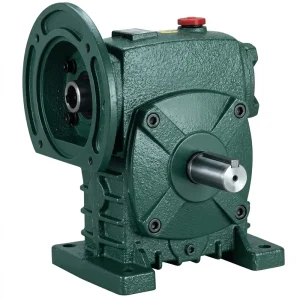
EP-WPDS 0.12–15 kW Single Speed Reducer
A right-angle foot-mounted worm gear speed reducer covering the 0.12–15 kW motor input range, with standard ratios from 10:1 to 60:1. Ground worm flanks ensure stable mesh efficiency that VFD-based tension control systems rely on for accurate speed reference tracking. Compact housing with accessible oil service points suits multi-drive machine frame layouts typical of coating and laminating line construction.
Integration with Variable-Frequency Drive Systems
Modern coating and laminating lines use VFD-controlled motors on every drive section, with the tension control system — typically a closed-loop dancer position or load cell signal — adjusting the VFD output frequency in real time to maintain the target tension. The single speed reducer sits between the motor and the driven roller, converting the VFD-controlled motor speed to the required roller surface speed.
For this architecture to deliver accurate tension control, the reducer must present a consistent mechanical impedance to the control loop. This means the effective gear ratio must not vary due to backlash, the output shaft must not exhibit torsional resonance within the control loop bandwidth, and the efficiency of the reducer must be sufficiently stable that the torque delivered to the roller is predictably related to the motor current. The single reduction worm gear speed reducer meets these requirements better than many alternatives: its single mesh stage limits backlash to one gear pair, the sliding contact geometry provides inherent damping, and the efficiency characteristic — while lower than a helical unit — is stable and predictable across the normal operating speed range when the lubricant is maintained at the correct viscosity.
One consideration specific to VFD operation is the avoidance of prolonged running at very low output shaft speeds, which can reduce the oil film formation rate in the worm mesh below the minimum needed for full-film lubrication. Most single speed reducers in the WP series are rated for worm shaft input speeds above 100 rpm for splash lubrication to remain effective. When VFD operation requires extended periods at very low speed — for example, during web threading at startup — a forced or circulating lubrication system, or a temporary switch to a higher-viscosity oil, may be warranted for larger frame sizes.
Drive Type Comparison for Tension-Sensitive Web Handling
| Typ napędu | Backlash Level | Damping | Self-Braking | Typical Web Application |
|---|---|---|---|---|
| Single speed worm gear reducer | Low (single mesh) | High (sliding contact) | Yes (high ratios) | Coating head, laminating nip, pull roll |
| Helical-bevel gearbox (2-stage) | Low–medium (2 meshes) | Low | NIE | High-speed thin-film laminating |
| Cycloidal drive | Very low | Medium | NIE | Precision register coating (high cost) |
| Belt-and-pulley drive | None | Medium (belt slip) | NIE | Unwind/rewind torque assist |
| Direct motor drive (no reducer) | None | None | NIE | Servo-motor pull rolls (high speed only) |
Lubrication and Maintenance in Continuous Production Environments
Coating and laminating lines typically operate on 24-hour production schedules with minimal planned downtime windows. This imposes demanding service conditions on every component in the drive train, including the single speed reducer. Oil in a continuously operating worm gear speed reducer oxidises and accumulates wear debris from the bronze wheel and hardened worm surfaces, gradually losing its film-forming capacity. Monitoring the oil condition — either by scheduled oil analysis or by strict adherence to the manufacturer’s change interval — is the most cost-effective way to extend reducer service life on a continuous-production line.
For reducers on coating and laminating lines in tropical or semi-arid climates — including facilities across South and Southeast Asia, the Middle East, and sub-Saharan Africa — synthetic polyglycol (PG) oil in ISO VG 320 grade is the preferred lubricant. PG oil’s high viscosity index maintains adequate film thickness across the wide ambient temperature range these regions experience, and its higher thermal stability extends the effective change interval compared to mineral oil. The initial fill at commissioning should be changed after 100 hours of operation to remove metallic particles generated during the run-in of the bronze wheel. Subsequent intervals are typically 2,000–2,500 hours for mineral oil and up to 5,000 hours for PG synthetics in well-maintained units.
Bearing condition monitoring — either by regular vibration measurement at the reducer housing or by thermographic scanning of the bearing housings — is straightforward to implement in a plant that already operates vibration-based maintenance programmes on its larger rotating equipment. Early identification of bearing degradation in a reducer allows a planned replacement during a scheduled maintenance window, avoiding the unplanned stoppage and potential web breakage that results from bearing failure during production.
Related Products: Complete Web Drive System Supply
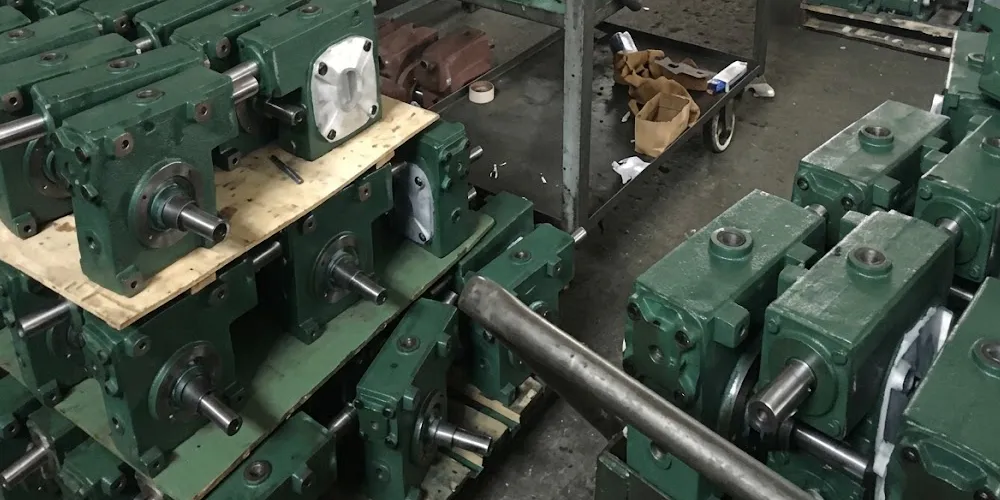
The single speed reducer operates as part of a broader drive system. Two complementary product families integrate directly with this reducer range to provide a complete, single-source mechanical drive solution for coating and laminating line builders and operators.
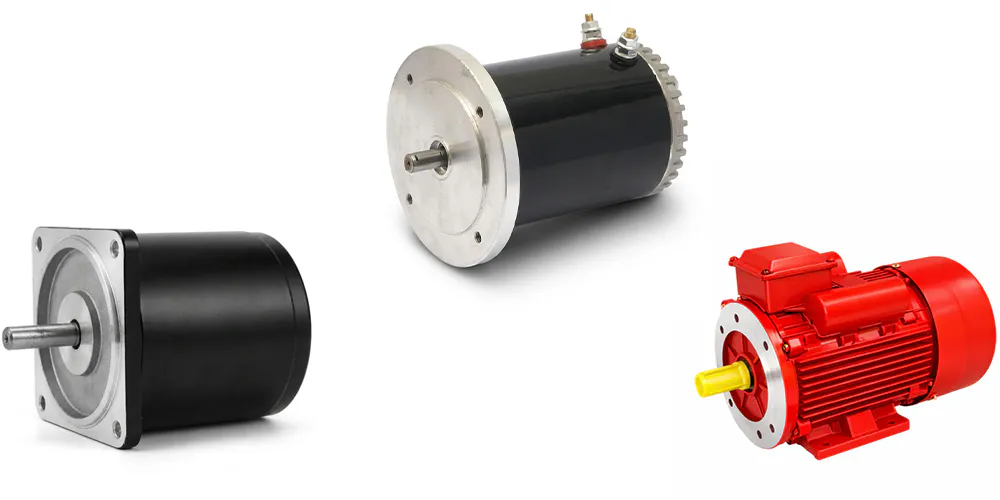
Silniki elektryczne
IEC-standard frame electric motors with shaft diameters and flange patterns matched to the WP-series reducer input configurations. Available across the full kW range relevant to coating and laminating web drives, from small dancer-roll positioning drives through heavy main pull roll applications.
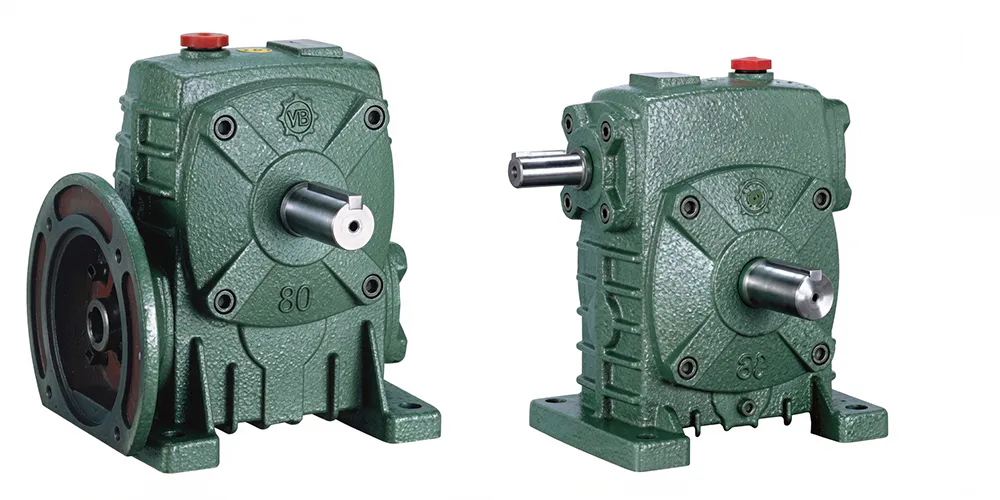
Full-Series Worm Gearbox
The complete worm gearbox range covers frame sizes from 40 mm through 250 mm centre distance, providing dimensional and ratio continuity across all drive positions on a multi-section coating or laminating line. Standardising on a single supplier for both the reducer and the upstream motor simplifies procurement, qualification, and spare parts inventory management.
O producencie
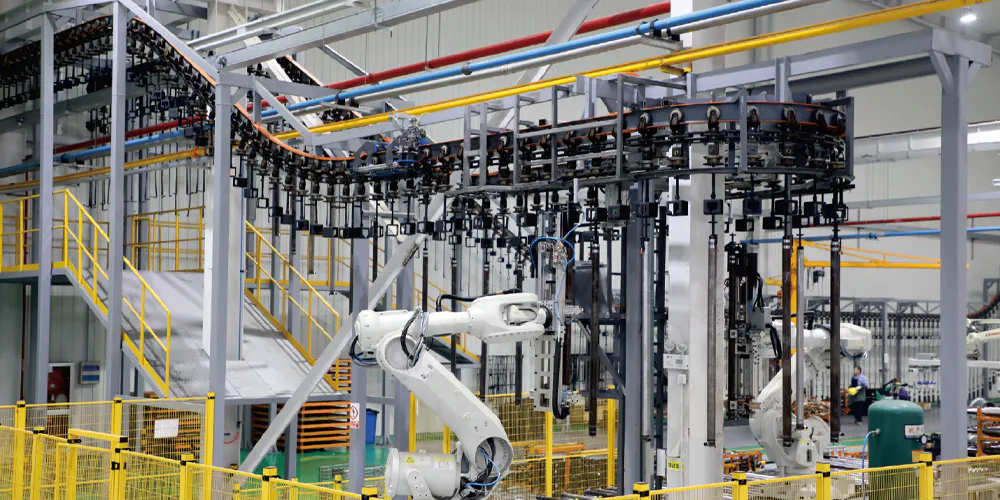
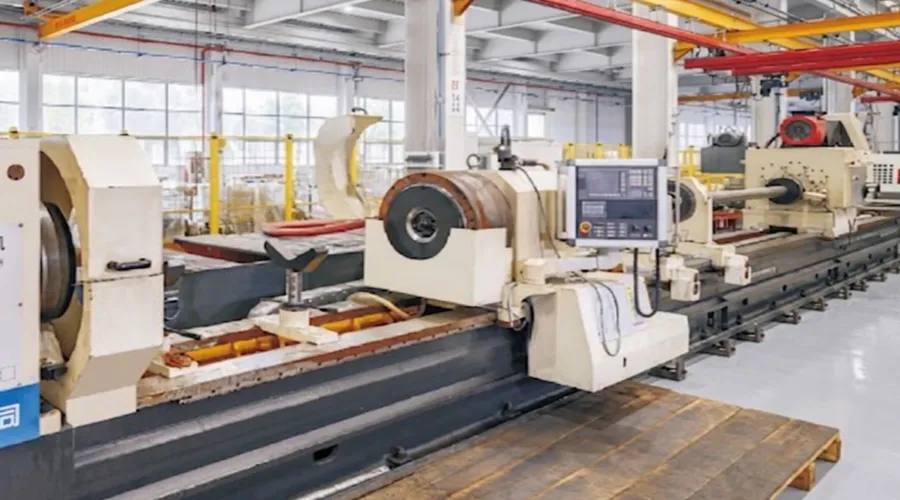
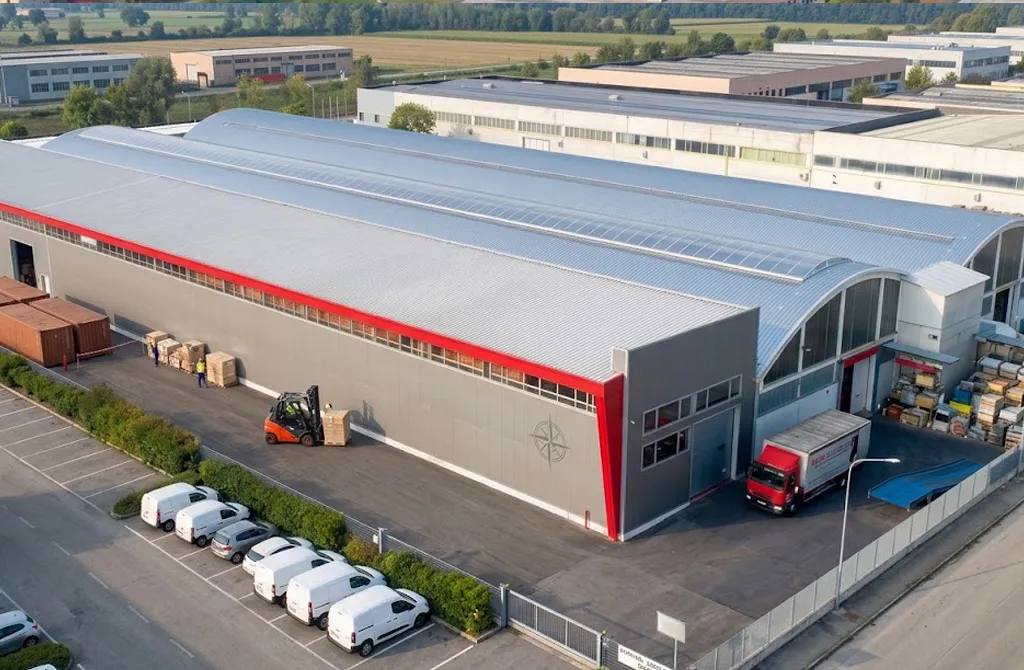
The product range originates from a facility operating under ISO 9001:2015 certification, with design and manufacturing capability covering worm gear reducers, planetary gear drives, agricultural gearboxes, power take-off shafts, hydraulic cylinders, gears, chains, and motors. Both standard catalogue products and custom OEM assemblies are produced in-house, working with materials including ductile iron, cast iron, cast steel, precision cast steel, and cast aluminium. Worm gears, sprockets, pulleys, worm shafts, and precision mechanical components are all manufactured on-site, maintaining direct engineering control over dimensional quality at every production stage.
Warsztat
Często zadawane pytania
Which single speed reducer ratio is best for a coating line pull roll operating at 80 m/min with a 250 mm diameter roller and a 4-pole 1450 rpm motor in a flexible packaging plant in Germany or the Netherlands?
For an 80 m/min surface speed with a 250 mm diameter roller, the required shaft speed is approximately 102 rpm. At a motor speed of 1450 rpm, the theoretical gear ratio needed is 14.2:1. A standard 15:1 single reduction worm reducer gives an output of 96.7 rpm, with the remaining 3% speed difference compensated by a slight VFD frequency trim — a standard adjustment in any tension-controlled web drive system. The 15:1 ratio falls within the most thermally efficient range of the worm gear mesh for continuous operation, making it the preferred selection for high-duty-cycle paper plant installations.
What type of lubrication oil is recommended for a single speed worm gear reducer on a laminating line operating in a humid paper mill environment in Southeast Asia or Brazil?
In high-humidity tropical environments, synthetic polyglycol (PG) oil at ISO VG 320 viscosity grade is the most suitable lubricant for worm gear speed reducers on continuous-production laminating lines. PG oils maintain a more stable viscosity across the 25–50°C ambient temperature range common in tropical paper mills, providing consistent film formation in the worm mesh throughout the production shift. The first oil change should be made after 100 operating hours; subsequent intervals can typically extend to 4,000–5,000 hours with PG synthetic, reducing maintenance downtime compared to mineral oil schedules.
How does a single stage right-angle worm-gear speed reducer compare with a helical-bevel unit for tension control accuracy on a paper coating line in the UK or Australia?
The single stage right-angle worm-gear speed reducer introduces only one gear mesh into the kinematic chain, limiting the sources of output speed variation. Its sliding contact geometry also provides inherent mechanical damping that absorbs minor load disturbances before they modulate the web tension. A helical-bevel unit is more mechanically efficient and runs cooler, but its rolling-contact gear mesh transmits load impulses with less damping, which can appear as micro-tension fluctuations at the web. For most coating and laminating line applications below 200 m/min, the worm gear speed reducer provides adequate precision at lower procurement cost. Above 200 m/min, where efficiency losses in the worm mesh generate significant heat, helical-bevel units become the preferred choice.
Where can a laminating line builder in Canada or South Korea get a quote for a customized single speed reducer with a non-standard ratio or shaft configuration?
Customized single speed reducers with non-standard ratios, extended shaft lengths, or modified mounting configurations are available from manufacturers offering OEM engineering services. When requesting a quote, the enquiry should specify the required output shaft speed, peak and continuous torque, service factor, mounting orientation, shaft diameter, and any special sealing or coating requirements. Standard lead times for modified units are typically 4–8 weeks. Manufacturers with on-site gear cutting and housing machining capability can accommodate non-standard specifications without disproportionate cost premiums on orders of ten or more units.
Redaktor: PXY