Listwa zębata z tworzywa sztucznego PA66 o wysokiej precyzji z nylonu EP | Elastyczna listwa zębata i zębatka
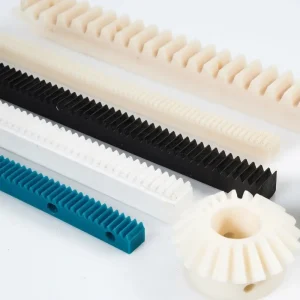
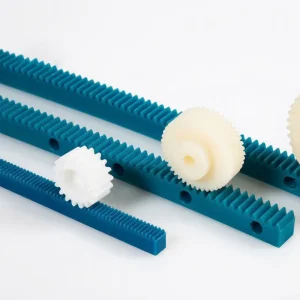
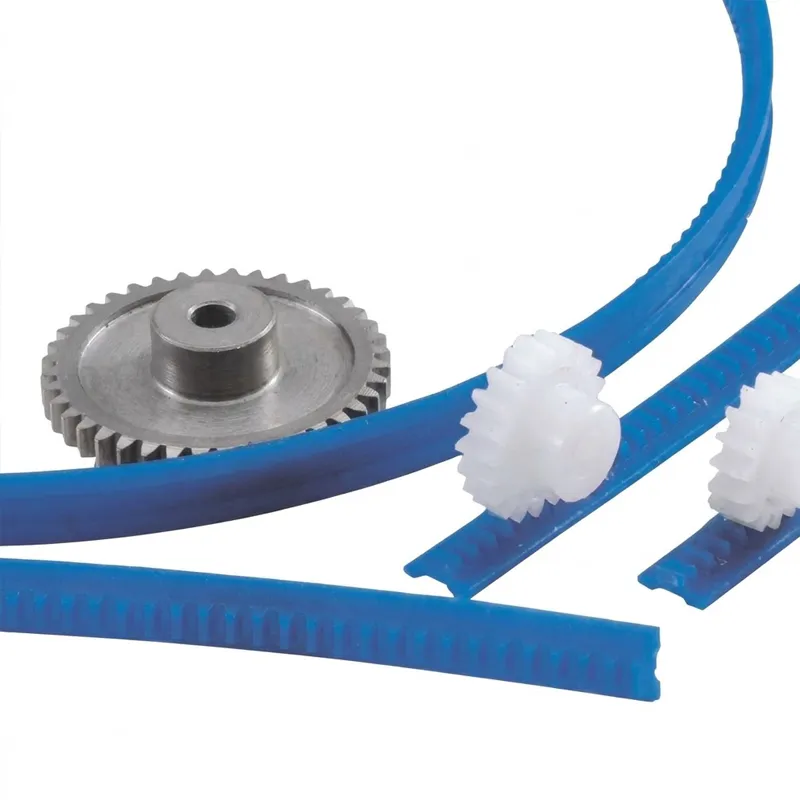
Ten EP High Precision PA66 Nylon Plastic Gear Rack is a flexible, self-lubricating linear motion component engineered from Polyamide PA66 (Nylon 66), available in standard modules M1 through M4 with custom options. Featuring a 20° pressure angle and tolerances of ±0.0051 mm, this rack offers tensile strength ≥80 MPa and heat deflection temperatures up to 250°C in glass-fiber-reinforced grades. The strip-form construction enables lateral bending for curved track installations, while its inherent corrosion resistance and low water absorption (≤1.3%) make it ideal for food processing, medical equipment, sliding gates, and marine environments.
Precision Polymer Motion Components
Listwa zębata z tworzywa sztucznego PA66 o wysokiej precyzji z nylonu EP | Elastyczna listwa zębata i zębatka
Polyamide PA66 · ISO 9001:2015 Certified · RoHS Compliant · Custom Modules & Lengths Available · Global Supply
Specyfikacje techniczne i parametry
| Parametr | Specyfikacja |
|---|---|
| Tworzywo | Polyamide PA66 (Nylon 66) — optionally glass-fiber reinforced |
| Tooth Type | Straight spur tooth (standard) / Helical tooth (optional) |
| Module Range | M1 / M1.5 / M2 / M2.5 / M3 / M4 (custom available) |
| Pressure Angle | 20° |
| Standard Length | 500 mm / 1000 mm / custom cut-to-length |
| Rack Height | Varies by module — M2: approx. 10 mm; M3: approx. 14 mm |
| Color | Natural (ivory/cream) / Black (carbon-filled) / Grey |
| Tensile Strength | ≥ 80 MPa (unreinforced PA66) |
| Heat Deflection Temp. | 66°C (unfilled) / up to 250°C (GF30 grade, under load) |
| Water Absorption | Low — ≤ 1.3% (23°C, 24 h immersion) |
| Tolerance | ±0.0051 mm (±0.0002 in) |
| Industry Standards | ISO 9001:2015 · RoHS Compliant · PPAP available |
| Flexibility | Lateral bending — suitable for curved track installations |
| Lead Time | Standard: up to 2 weeks · Rush service available |
| Custom Capability | CAD/CAM design · CMM inspection · Reverse engineering |
What Is a Plastic Gear Rack?
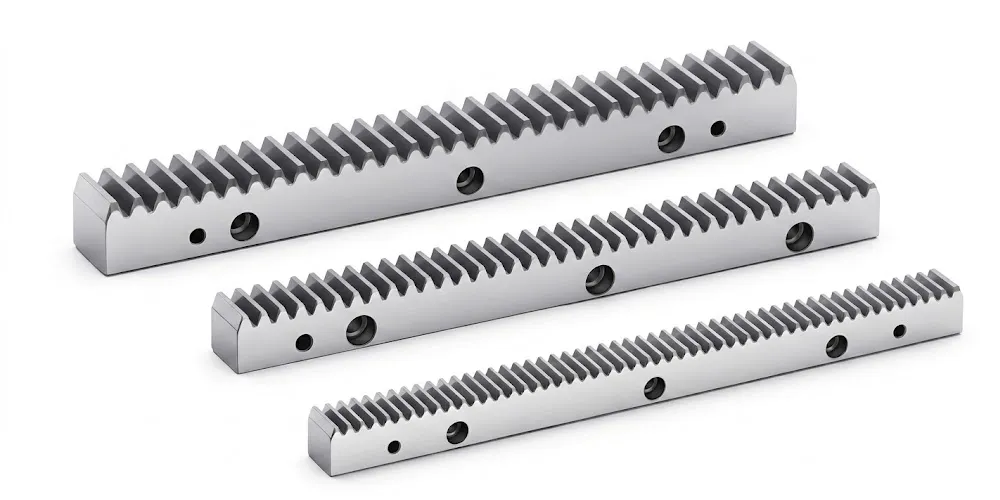
A plastic gear rack is a linear toothed component that converts rotational motion from a mating pinion gear into precise straight-line movement. Unlike traditional steel racks, a plastic gear rack and pinion system relies on engineering-grade polymer materials to reduce weight, eliminate corrosion risk, and operate quietly in environments where metal-on-metal contact would be unsuitable. The tooth geometry follows the same involute profile as a steel rack but is engineered specifically to account for the thermal expansion coefficients and dimensional tolerances characteristic of polymer production.
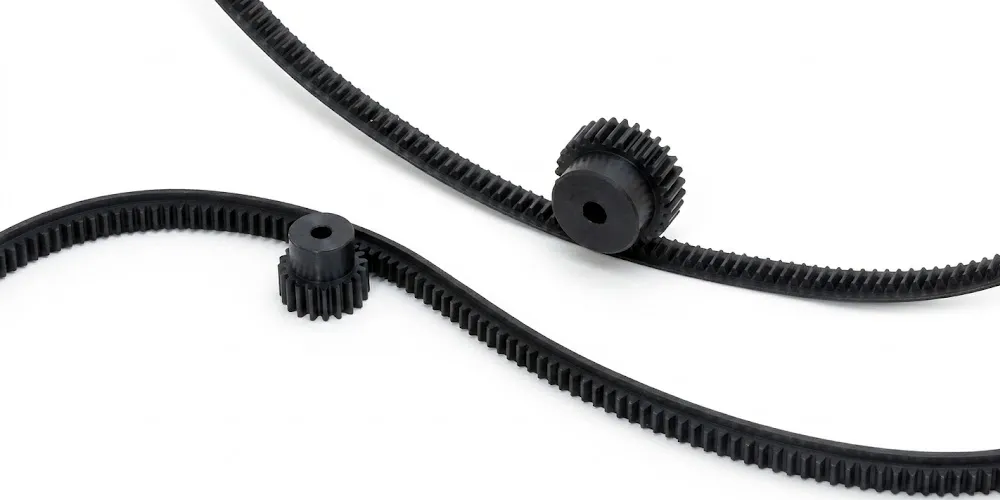
The EP PA66 Nylon flexible gear rack takes this further: its strip-form construction allows the rack to curve and follow non-linear paths, making it applicable wherever rigid rack geometry cannot conform to the required motion trajectory. This combination of flexibility, self-lubrication, and chemical resistance positions the plastic rack and pinion as a first-choice component in automation, sliding gate systems, and light industrial machinery across Europe, North America, and the Asia-Pacific market.
Working Principle of the Flexible Gear Rack
The operating principle of any rack and pinion gear system is straightforward: a circular pinion gear rotates, and its teeth engage progressively with the linear tooth row of the rack. Each tooth engagement point advances the rack by one pitch length, converting angular displacement into controlled linear displacement. In a plastic gear rack and pinion set, the polymer tooth flanks carry the contact load through the involute engagement arc while the inherent elasticity of PA66 nylon absorbs minor shock loads and compensates for small alignment errors.
What makes the flexible variant distinct is its capacity to bend laterally along its length. As the pinion gear rotates, the rack tooth rows — carried on a semi-rigid polymer strip — conform to the curvature of the drive path rather than demanding a straight channel. This bending-and-engaging action delivers linear motion along curved trajectories: a capability that rigid linear gear rack systems simply cannot replicate.
Ten gear ratio of rack and pinion in a linear system is determined by the pinion's pitch circle diameter and the rack module. A larger pinion produces faster linear travel per revolution; a smaller pinion produces finer positional resolution. Choosing the correct module and pinion diameter for a given load and speed requirement is the central design decision in any rack and pinion gear application.
5 Key Advantages of EP PA66 Plastic Gear Rack
Engineering-driven decisions behind each design choice.
Self-Lubricating PA66 Nylon
Polyamide PA66 carries an inherent lubricating property at the tooth surface — no external oil or grease application is required during normal operation. This eliminates maintenance intervals for lubrication, keeps surrounding components clean, and makes the plastic gear rack suitable for food processing, medical equipment, and cleanroom environments where contamination from lubricants is unacceptable.
Flexible Path Capability
The strip construction of the flexible rack and pinion allows the rack to navigate curved conveyor guides, gate track curves, and non-linear automation paths. This capability makes the component usable in installations where a rigid linear rack and pinion channel would require complex custom machining or multiple rack segments with difficult alignment requirements.
Corrosion and Chemical Resistance
PA66 nylon resists a wide range of industrial chemicals, moisture, and dilute acids that would cause surface pitting or rust on mild steel racks. For outdoor applications — including plastic gear rack for sliding gate installations — the polymer construction eliminates the rust-induced binding that reduces service life on uncoated steel alternatives operating in humid or salt-air environments.
Low Noise Operation
Metal-to-polymer tooth engagement produces significantly less impact noise than steel-on-steel contact at equivalent pitch velocities. In residential gate drives, office automation, and medical device actuators — applications where acoustic output matters — the plastic rack and pinion running against a steel or polymer pinion delivers a noticeably quieter drive cycle.
High Impact and Heat Resistance
PA66 grades used in this plastic gear rack maintain structural integrity under repeated shock loading — a typical condition in automated sliding gate systems where the drive reverses at end-of-travel. Heat deflection temperature of glass-filled PA66 reaches 220–250°C under load, keeping tooth geometry stable in warm industrial environments that would soften lower-grade polymer racks.
Material Selection for Plastic Gear Racks
Choosing the right polymer for a plastic gear rack is not a single decision — it depends on load magnitude, operating temperature range, chemical exposure, and whether the installation is indoors or outdoors. PA66 (Polyamide 66) is the standard choice for general-purpose spur gear rack applications: it combines good tensile strength (≥80 MPa), high impact resistance, and effective self-lubrication into a cost-efficient form.
When elevated temperature stability is required — for example in an automotive or industrial baking environment — glass-fiber reinforced PA66 (GF30 grade) raises the heat deflection temperature from 66°C to over 200°C under load, while improving dimensional stability and reducing creep under sustained tooth contact force. The trade-off is reduced flexibility, which matters for the flexible gear rack variant.
For applications where chemical resistance to oils, greases, or dilute alkaline solutions is the primary concern, Polyacetal (POM/Delrin) offers an alternative with lower moisture absorption than standard PA66. MC Nylon (monomer cast nylon) suits larger custom rack sections where its superior wear resistance and compressive strength outweigh the higher raw material cost. Our manufacturing process covers injection molding, extrusion, and CNC machining of all these polymer grades to meet application-specific requirements. Dimensional stability across the tolerance band of ±0.0051 mm is maintained through controlled mold design and CMM inspection of finished racks.
Plastic Gear Rack Application Scenarios
Industries and installations where PA66 flexible and rigid rack systems deliver reliable performance.
Sliding Gates and Automatic Doors
Ten plastic gear rack for sliding gate is one of the highest-volume applications globally. The flexible strip construction follows the gate track's curvature without bespoke machining, and the self-lubricating surface keeps the drive system maintenance-free across years of daily operation. Residential, commercial, and industrial gate installations in Europe, Australia, and South America use polymer rack systems extensively for exactly these reasons.
Industrial Automation and Linear Slides
On rack and pinion linear slide assemblies in light-duty CNC systems, pick-and-place robots, and conveyor positioning units, the plastic gear rack reduces system weight and eliminates the need for lubrication management. Where stainless steel is specified for the slide guide itself, a polymer rack running against a metal pinion provides the noise reduction and corrosion resistance the application requires.
Agricultural and Valve Actuation
In agricultural machinery — irrigation system valves, spreader gate controls, and auger positioning — a custom gear rack in PA66 resists the fertilizer residues, mud, and moisture that corrode steel components rapidly in the field. Valve components and hydraulic system accessories using rack pinion gear combinations benefit from polymer's dimensional stability across the humidity cycles common in outdoor service.
Medical Equipment and Cleanroom Systems
Diagnostic imaging tables, surgical positioning units, and laboratory automation gantries use plastic rack and pinion systems where lubricant contamination is prohibited. The self-lubricating PA66 surface provides adequate tooth film under low-to-moderate loads without any oil or grease addition, satisfying strict hygiene and contamination-control protocols in medical device manufacturing environments across North America and Europe.
Marine and Offshore Equipment
Salt-air and splash-zone environments degrade unprotected steel racks rapidly. Polymer gears rack and pinion systems on deck hatches, winch controls, and marine access systems resist the corrosive combination of salt spray and UV exposure without surface treatment. This makes the plastic gear rack a direct replacement in retrofit projects upgrading corroded steel rack installations on vessels operating in the North Sea, Pacific, or Southeast Asian coastal routes.
Compatible Components: One-Stop Supply
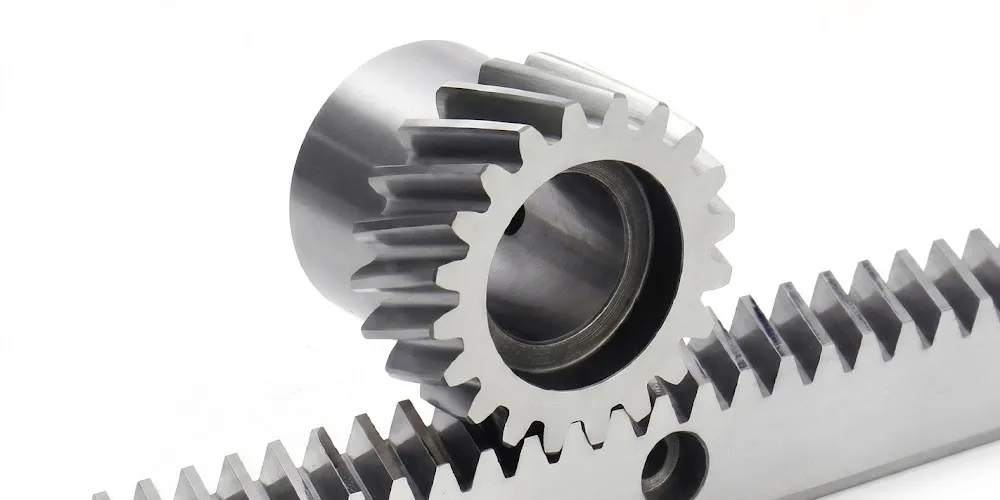
Nasz plastic gear rack is part of a complete motion component range. We supply matched pinions, helical gears, and steel rack sections — confirmed compatible rather than theoretically compatible.
Full Gear Rack Range
Alongside the polymer series, our factory produces hardened steel spur racks, stainless steel racks, and helical rack and pinion sets in standard and custom modules. Systems that combine a steel pinion with a plastic gear rack for noise reduction can source both components from us, eliminating the compatibility risk of sourcing from multiple suppliers. Browse our complete gear rack catalogue for the full range.
Helical Gear Series
For applications requiring higher load capacity and smoother tooth engagement than a straight spur gear rack allows, our Helical Gear range provides the matched drive component. Helical tooth geometry distributes contact load across a longer contact line, which reduces peak tooth stress and lowers operating noise further — particularly useful in office automation and medical device applications where both load capacity and acoustics matter.
About Our Factory
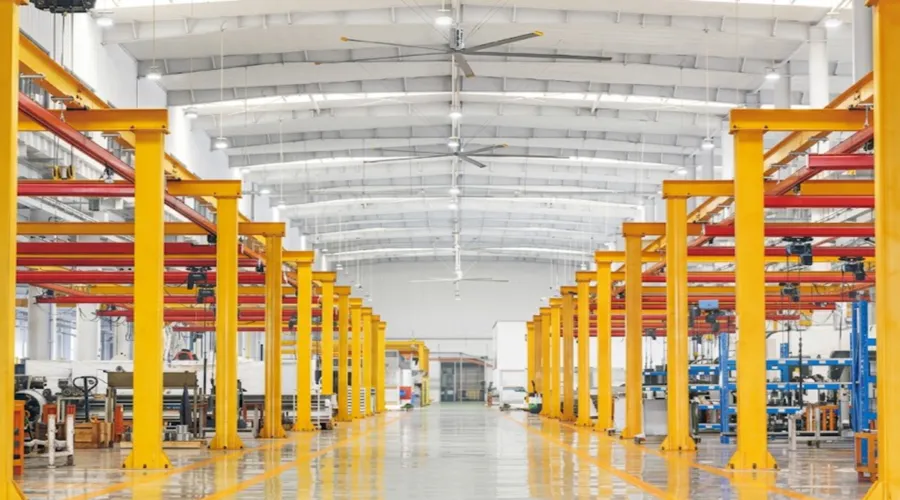
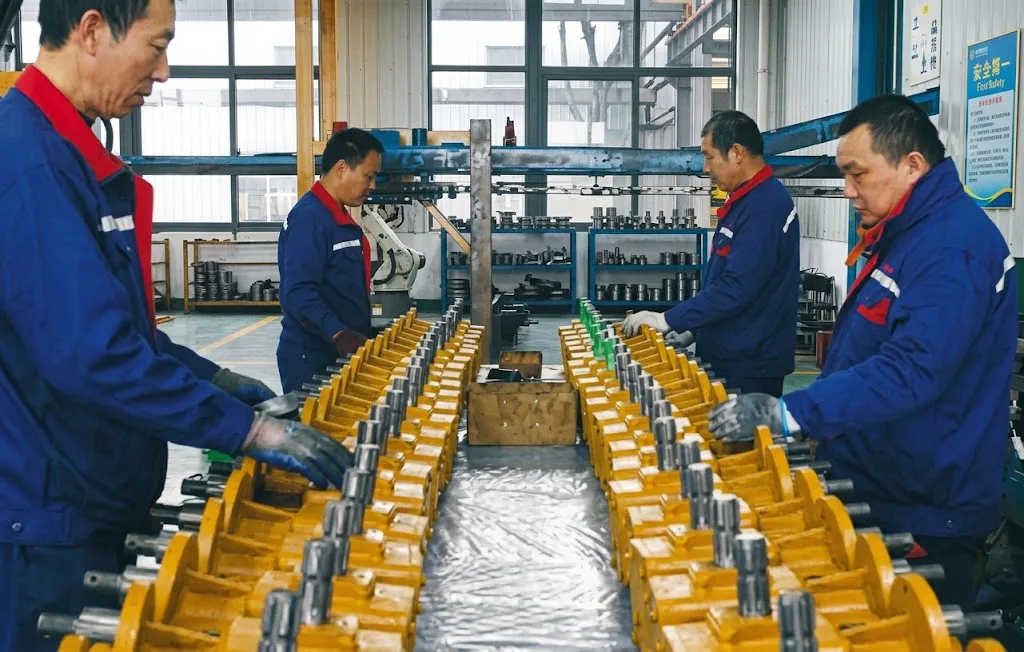
Our production facility carries ISO 9001:2015 certification and has accumulated over ten years of hands-on experience across the full mechanical transmission component spectrum — including agricultural gearboxes, worm gear reducers, planetary gear drives, power take-off shafts, hydraulic cylinders, gears, chains, and motors. The depth of in-house knowledge across material science, gear geometry, and precision machining informs every decision made in plastic gear rack design and manufacture.
Our factory designs and produces a broad range of industrial and agricultural gearbox assemblies in ductile iron, cast iron, cast steel, precision cast steel, and cast aluminum — alongside gears, sprockets, worm gears, pulleys, worms, shafts, and both standard and non-standard mechanical parts. This range of in-house capability means that custom plastic rack and pinion projects can be designed, prototyped, CMM-inspected, and delivered from a single source — significantly reducing the coordination burden on procurement teams.
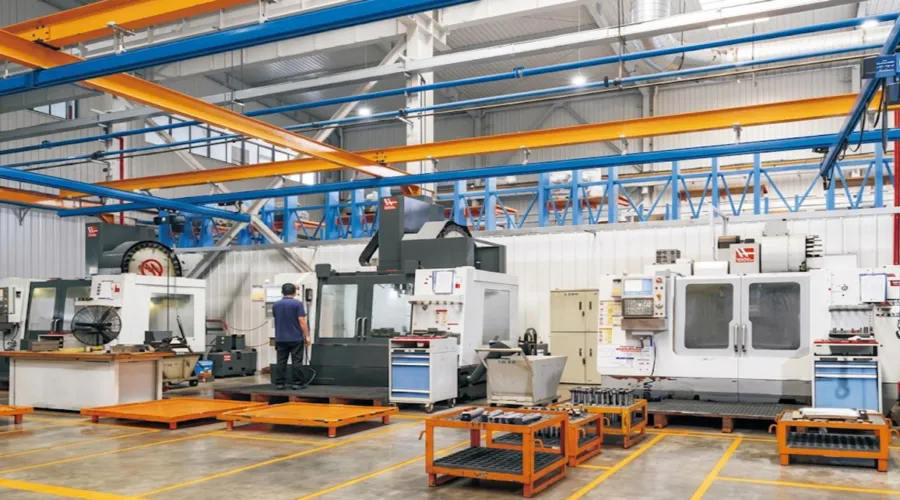
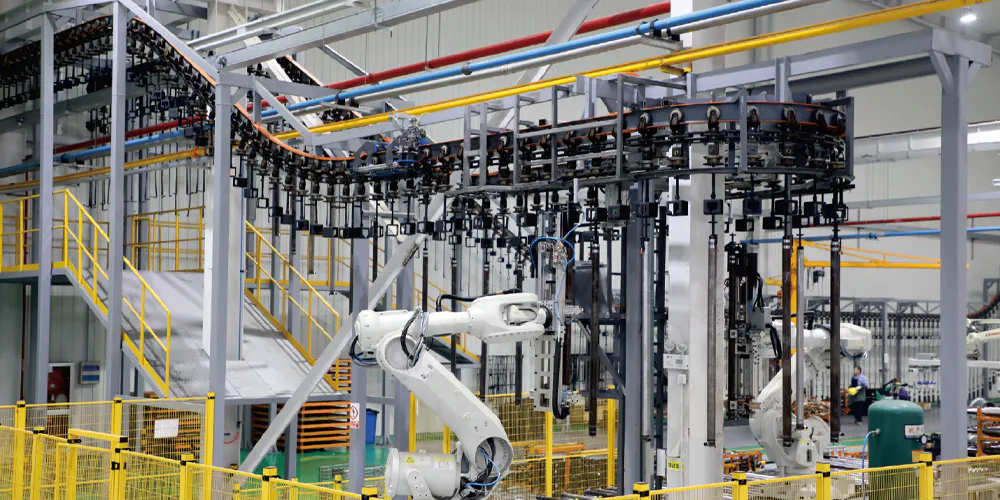
Our manufacturing equipment spans CNC Swiss-type turn-mill-drill centers, molding machines, stamping machines, automatic lathe machines, and spring machines, supported by full CAD design services, CAM programming, and Coordinate Measuring Machine (CMM) quality verification.
Warsztat
Często zadawane pytania
What is the difference between a plastic gear rack and a steel gear rack for sliding gate applications in humid coastal regions?
How do I calculate the gear ratio of rack and pinion systems when designing a linear automation stage for European industrial machinery?
Which plastic gear rack material works best for food processing conveyor systems in North American production facilities that require washdown cleaning?
Where can I source custom plastic gear rack and pinion sets with specific module and tooth profile for medical device actuation in the European market?
What are the main disadvantages of using a plastic gear rack compared to steel in heavy-duty industrial automation in Australian mining and construction equipment?
Redaktor: PXY