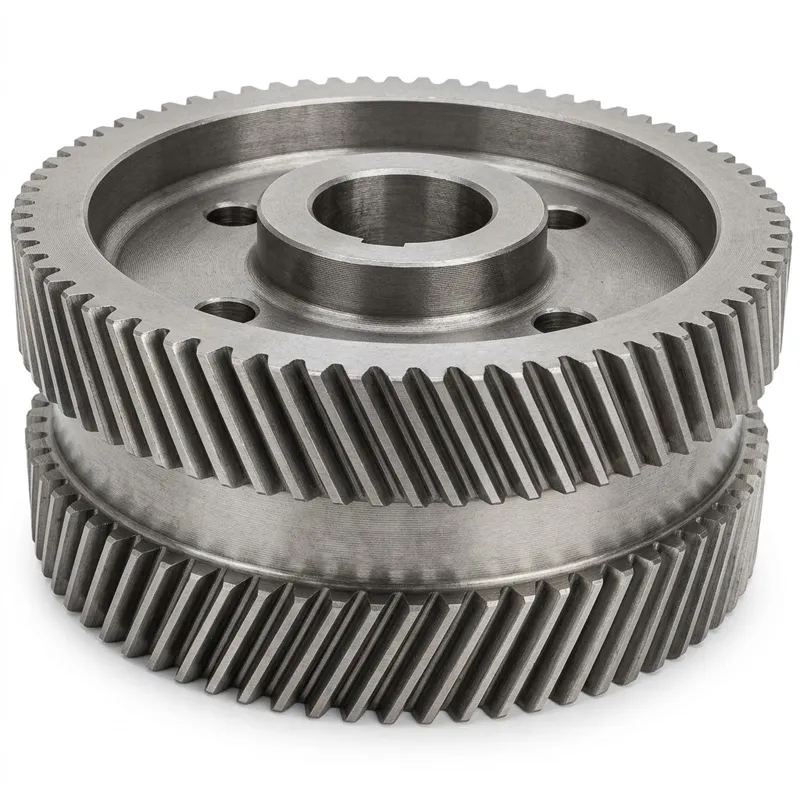
EP-Heavy Double Helical Gear
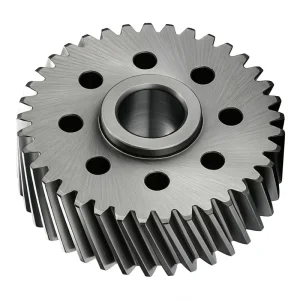
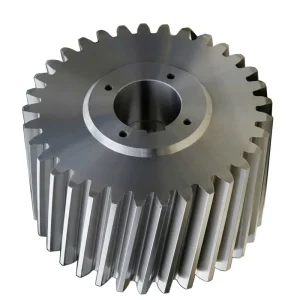
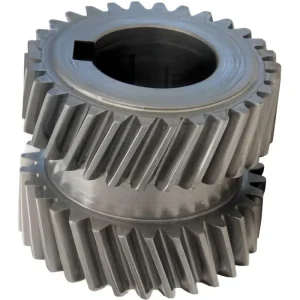
The EP-Heavy Double Helical Gear is an external cut gear produced from cast steel and alloy steel, engineered to meet the structural and operational demands of heavy machinery across sectors including marine drives, agricultural machinery, industrial motors, and automotive powertrain systems. Unlike a single helical gear, the double helical configuration features two opposing rows of helical teeth arranged symmetrically on a single gear body. This mirror geometry causes the axial thrust forces generated by each row to cancel one another, leaving the shaft bearings free from the net axial load that would otherwise require larger, more complex bearing supports.
The toothed portion shape is classified as a double helical gear (also referred to as a double helix gear in some international markets), produced by the cut gear method with gear hobbing as the primary tooth-forming process. The pressure angle is fixed at 20°, while the helix angle is available as a custom-made specification to match the gear designer’s contact ratio and overlap ratio targets. Heat treatment is applied as quenching and tempering, and surface hardness options are available on request.
Applications listed in the product specification cover motor drives, electric vehicles, motorcycles, industrial machinery, marine propulsion, agricultural machinery, and automotive gearbox assemblies — an unusually wide application envelope that reflects the versatility of the double helical tooth form and the flexibility of the custom manufacturing approach used in production. Buyers from Australia, Germany, South Korea, Brazil, the UK, and Canada regularly specify this gear series for both OEM new-build and maintenance replacement programs.
Heavy-Duty Power Transmission
Designed for the most demanding heavy machinery applications — the EP-Heavy double helical gear eliminates axial thrust while delivering smooth, high-torque power transmission across a broad range of industrial drive systems. Cast steel construction, induction hardening, and OEM-grade dimensional accuracy make this the preferred specification for engineers who cannot afford drive train failures.
Technical Specifications of Double Helical Gear
The following table captures the core product description parameters as extracted from the product specification. These data points define the manufacturing scope and the material and processing baseline for the EP-Heavy Double Helical Gear series.
| Double Helical Gear Parameter | Specyfikacja |
|---|---|
| Aplikacja | Motor, Electric Cars, Motorcycle, Machinery, Marine, Toy, Agricultural Machinery, Car |
| Hardness | Soft Tooth Surface |
| Gear Position | External Gear |
| Manufacturing Method | Cut Gear |
| Toothed Portion Shape | Podwójne koło zębate śrubowe |
| Tworzywo | Cast Steel |
| Obróbka cieplna | Induction Hardening / Quenching and Tempering |
| Specyfikacja | Alloy Steel |
| Gear Hobbing | Available |
| Pressure Angle | 20° |
| Helical Angle | Custom Made |
| Surface Hardness | Options Available |
| Gear Accuracy Grade | 8–9 Grade (ISO 1328) |
Steel Code Grades — International Cross-Reference
One of the practical challenges engineers face when specifying helical gear material across international supply chains is reconciling material grade designations from different standards systems. The following cross-reference table covers the alloy steel grades most commonly used in the production of this double helical gear series, allowing buyers from Germany (DIN), Japan (JIS), the USA (ASTM), and other regions to specify equivalent materials without ambiguity.
| GB | ISO | ГОСТ | ASTM | JIS | DIN |
|---|---|---|---|---|---|
| 45 | C45E4 | 45 | 1045 | S45C | CK45 |
| 40Cr | 41Cr4 | 40X | 5140 | SCr440 | 41Cr4 |
| 20CrMo | 18CrMo4 | 20XM | 4118 | SCM22 | 25CrMo4 |
| 42CrMo | 42CrMo4 | 38XM | 4140 | SCM440 | 42CrMo4 |
| 20CrMnTi | — | 18ХГТ | — | SMK22 | — |
| 20Cr2Ni4 | — | 20X2H4A | — | — | — |
| 20CrNiMo | 20CrNiMo2 | 20XHM | 8720 | SNCM220 | 21NiCrMo2 |
| 40CrNiMoA | — | 40ХН2МА / 40ХНМА | 4340 | SNCM439 | 40NiCrMo6 / 36NiCrMo4 |
| 20CrNi2Mo | 20NiCrMo7 | 20XH2MA | 4320 | SNCM420 | — |
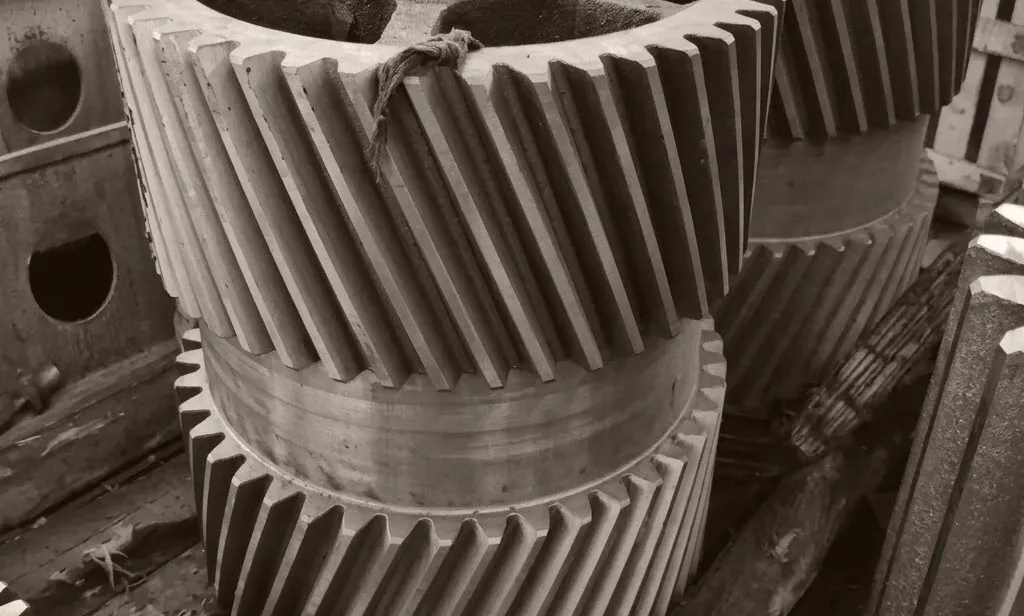
How Does a Double Helical Gear Work?
To understand the operational principle of a double helical gear, it helps to start with the basic helical gear mechanism. In a standard single helical gear, the teeth are cut at an angle to the gear axis — the helix angle. As the gear rotates, tooth engagement begins at one end of the face width and progresses toward the other, which means load is transferred gradually rather than all at once. This progressive contact is what gives helical gears their characteristic smooth, quiet operation compared to spur gears. However, this angled contact also generates an axial force component that pushes along the shaft axis and must be absorbed by thrust bearings.
A double helical gear resolves this axial thrust problem entirely. The gear body carries two sets of helical teeth — one with a left-hand helix, the other with a right-hand helix, separated by a central groove or a land between the two rows. Because the two rows are mirror images of each other, the axial forces they produce are equal in magnitude but opposite in direction. They cancel out within the gear body itself, so the net axial load transmitted to the shaft and its bearings is essentially zero. This self-canceling geometry is the defining feature of the double helical gear design and is the main reason this gear type is preferred in turbine drives, ship propulsion systems, and other high-power applications where bearing life is a critical design constraint.
In the EP-Heavy series, gear hobbing is used to form the tooth profile at the specified 20° pressure angle, after which heat treatment by induction hardening or quenching and tempering establishes the mechanical properties needed for the application. The helix angle is selected on a custom basis per order, allowing the contact ratio and overlap ratio to be optimized for the specific speed, torque, and noise requirements of each machine. Gear accuracy is verified to ISO 1328 Grade 8–9, ensuring that the pitch, profile, and lead deviations are within the limits required for reliable meshing at rated operating conditions.
Helical Gear Material — Cast Steel & Alloy Steel Options
The EP-Heavy Double Helical Gear is produced from cast steel as the primary structural material, with a full range of alloy steel grades available as custom-made specifications. The choice of helical gear material fundamentally determines the load capacity, surface wear rate, and fatigue life of the gear in service. Cast steel provides a good balance of machinability, weldability, and tensile strength for large gear bodies that would be impractical or uneconomical to produce by forging. For smaller, more highly loaded components, wrought alloy steel grades — including 40Cr, 42CrMo, 20CrNiMo, and 40CrNiMoA — are available, each offering different combinations of hardenability, toughness, and surface hardness potential after heat treatment.
Heat treatment plays an equally critical role in defining the final gear properties. Induction hardening targets the tooth flanks and root fillets specifically, creating a hardened surface layer while leaving the core at a lower hardness to maintain toughness. This surface-hardened condition is appropriate for gears operating under moderate to high contact stresses where some sacrifice of surface finish under load is acceptable. Quenching and tempering is applied as an alternative when a more uniform through-section hardness distribution is preferred — typical for gears carrying high bending stresses or where shock loading is anticipated. The two processes are not mutually exclusive: many heavy-duty double helical gear specifications call for quench-and-temper as the core treatment followed by selective induction hardening of the tooth contact surfaces.
Surface hardness options are available on request, allowing the gear specification to match the lubrication regime, contact stress, and surface fatigue life target of the application. Engineers specifying steel helical gear components for long-service drives in Australian mining, South Korean industrial machinery, or Canadian infrastructure projects will find the material cross-reference table in this page useful for aligning the production specification with their local material standards without requiring custom alloy testing or approval.
5 Advantages of the Double Helical Gear Configuration
Zero Net Axial Thrust
The opposing helix rows cancel each other's axial force components within the gear body. Shaft bearings are relieved of axial load, which extends bearing service life, simplifies the bearing support design, and allows smaller, lighter shaft assemblies compared to single helical gear arrangements of equivalent power rating. This is one of the core advantages of double helical gear design that makes it the standard choice for high-power turbine and marine drives globally.
Higher Power Density Than Single Helical
Because both rows of helical teeth carry load simultaneously, the effective face width for torque transmission is double that of a single helical gear of the same body width. This doubles the load-carrying capacity for a given gear diameter without increasing the axial envelope — a significant advantage in machine designs where gearbox casing size is constrained. The double helical gear design consistently outperforms single helical and spur gear arrangements on a power-to-weight basis at equivalent accuracy grades.
Smooth, Low-Noise Operation
The helical tooth engagement principle — progressive contact from one end of the face to the other — inherently reduces the dynamic tooth load compared to spur gears. With two opposing rows in continuous simultaneous engagement, the double helical gear achieves a very high contact ratio that further smooths out load fluctuations. The result is measurably lower vibration and acoustic noise, which matters for marine vessel comfort, machine tool precision, and regulatory noise compliance in industrial facilities across Germany and the UK.
Custom Helix Angle for Application Optimization
The helix angle is available as a custom-made parameter rather than a fixed catalog value. This gives drive system designers the freedom to optimize the overlap ratio and contact ratio for their specific speed, noise, and load conditions. A higher helix angle increases the overlap ratio and smooths operation further; a lower angle reduces the groove depth between the two tooth rows, making production easier without sacrificing the key axial-thrust-canceling benefit. This flexibility is what distinguishes custom made helical gears from catalog-standard spur or helical gears in demanding OEM applications.
Broad Material and Heat Treatment Options
From plain cast steel for economical large gears to high-alloy 40CrNiMoA for the most demanding fatigue and impact conditions, the production range accommodates the full spectrum of heavy machinery requirements. The international steel grade cross-reference table provided with this product simplifies procurement for buyers in South Korea, Brazil, Canada, and other markets where local material standards differ from the production base standards. Combined with selectable heat treatment — induction hardening or quenching and tempering — buyers can specify exactly the surface and core property combination their application requires rather than accepting a fixed catalog specification.
Double Helical Gear vs Herringbone Gear — What Is the Actual Difference?
The terms double helical vs herringbone gear are sometimes used interchangeably, but there is a meaningful engineering distinction. A herringbone gear has two opposing helical tooth rows that meet at a central apex with no gap between them, forming a continuous V-shaped tooth profile when viewed axially. A double helical gear, by contrast, has the two rows separated by a central groove or land. This groove is a practical manufacturing feature: it provides clearance for the hobbing or milling cutter to exit at the end of each tooth row during the helical gear machining process, and it allows the gear body to be produced on standard hobbing equipment rather than requiring the specialized form-milling process needed for true herringbone teeth.
From a performance standpoint, both configurations cancel axial thrust and achieve high contact ratios. The herringbone arrangement is slightly more compact axially because it eliminates the groove, but the additional manufacturing complexity makes herringbone gears less practical for custom-made applications where delivery time and tooling cost matter. For most heavy industrial drives — marine gearboxes, mill drives, compressor trains — the double helical gear configuration is the preferred engineering choice, and it is the configuration used in the EP-Heavy series. The single vs double helical gear comparison is more straightforward: the single helical gear is simpler to produce and lighter, but the axial thrust it generates makes it less suitable for high-power applications where bearing simplicity and compactness are priorities.
Double Helical Gear Applications
Ten double helical gear applications covered by the EP-Heavy series span an exceptionally broad range of industries and drive configurations. The following are the primary sectors served, reflecting the specification data from the product sheet and the real-world procurement patterns of customers across Australia, South Korea, Germany, Brazil, the UK, and Canada.
Industrial Motor Drives
Electric motors coupled to helical gear reducer units represent the most widespread application for this gear type. The double helical configuration allows higher speed ratios in a single stage without the axial thrust complications that would arise with single helical gears at high pitch line velocities. Soft tooth surface hardness options are appropriate for motor drives where noise is a priority over maximum surface durability.
Marine Propulsion Gearboxes
Ship reduction gearboxes are one of the classic double helical gear uses in engineering history. Marine drives must transmit very high power through compact casings, operate continuously for months without inspection, and do so with minimal vibration to avoid structure-borne noise reaching the vessel's accommodation areas. The zero-axial-thrust characteristic of the double helical gear satisfies all three requirements simultaneously, making it the standard configuration in commercial vessel propulsion worldwide.
Agricultural Machinery Transmissions
Tractors, combines, and self-propelled agricultural equipment require gearboxes that handle high torque, frequent load changes, and exposure to contaminated operating environments. The double helical gear's high contact ratio distributes tooth loads across a larger area, reducing Hertzian contact stress and extending service life between overhauls — an important consideration for agricultural operators in Brazil and Australia running seasonal equipment far from service centers.
Electric Vehicle Powertrain
The transition to electric drive in passenger and commercial vehicles has created demand for helical gear machining at tighter tolerances and with lower noise floors than previous internal combustion powertrain gearing. Electric motors operate over a wider speed range and have no masking combustion noise, making every gear mesh harmonic audible. Double helical EV gears, with their inherently high overlap ratios and smooth engagement, are increasingly specified in high-performance electric car and motorcycle transmission development programs in South Korea and Germany.
Power Generation & Turbine Drives
Gas turbine reduction gearboxes, wind turbine main gearboxes, and steam turbine-driven compressor trains all rely on double helical gears for the high-speed, high-power stage nearest the prime mover. In these applications, the elimination of axial bearing loads is not just a convenience — it is a fundamental requirement because thrust bearing failures in turbine trains are catastrophic events with long replacement lead times. The custom helix angle capability accommodates the wide range of speed ratios encountered across turbine gearbox designs.
Heavy Machinery & Construction Equipment
Cranes, excavators, road paving machines, and tunnel boring equipment place extraordinary demands on their drive components — high torque, shock loads, and continuous operation in abrasive environments. The cast steel construction and induction hardening treatment used in the EP-Heavy double helical gear produce the core toughness and surface durability needed to survive these conditions, while the precision ISO 1328 Grade 8–9 accuracy ensures consistent meshing behavior even as operating temperatures fluctuate over the working cycle.
Produkty powiązane — Kompletne dostawy układów napędowych
Specifying the right double helical gear is only part of the drive system picture. The meshing quality, dimensional compatibility, and material consistency of the mating components are equally important to the final performance of the assembly. We supply the full range of complementary drive components from the same production facility, eliminating the tolerance stack-up and material certification gaps that arise when components are sourced from multiple suppliers. For buyers in the UK, Canada, and Germany managing multi-site maintenance programs, single-source supply for the entire gear train significantly simplifies part numbering, procurement documentation, and incoming inspection workload.
Full-Range Przekładnia śrubowa Szereg
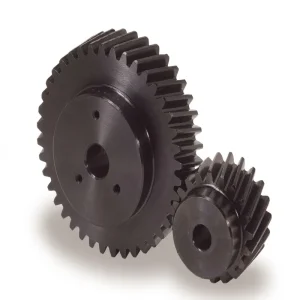
Our single helical gear range covers standard modules and helix angles across a wide selection of alloy steel grades, available in both left-hand and right-hand configurations. These components are geometrically compatible with the double helical gear series and are commonly used together in multi-stage gearbox assemblies where the first stage uses double helical gearing for the high-speed section and single helical gears carry the lower-speed, higher-torque output stage. All documentation — material certificates, inspection records, dimensional reports — is aligned across both product families for simplified OEM supply chain management.
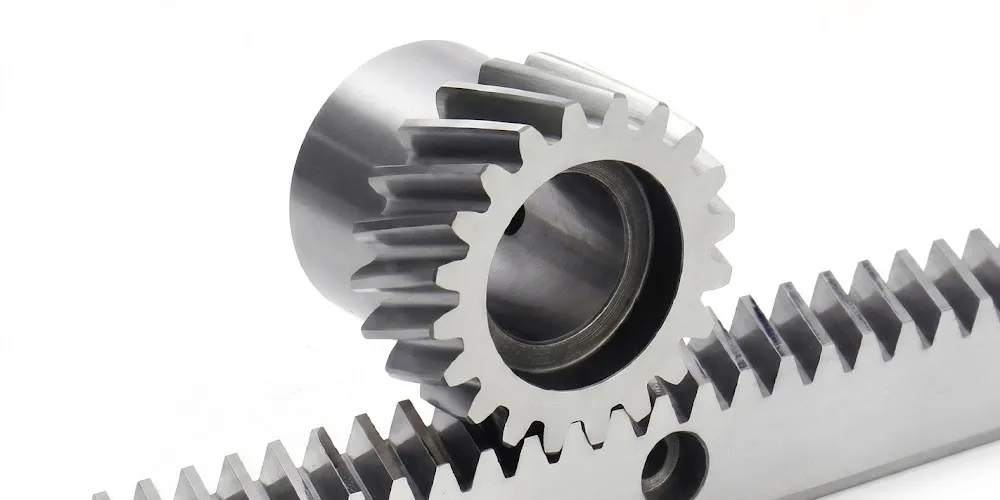
Listwa zębata — Linear Motion Integration
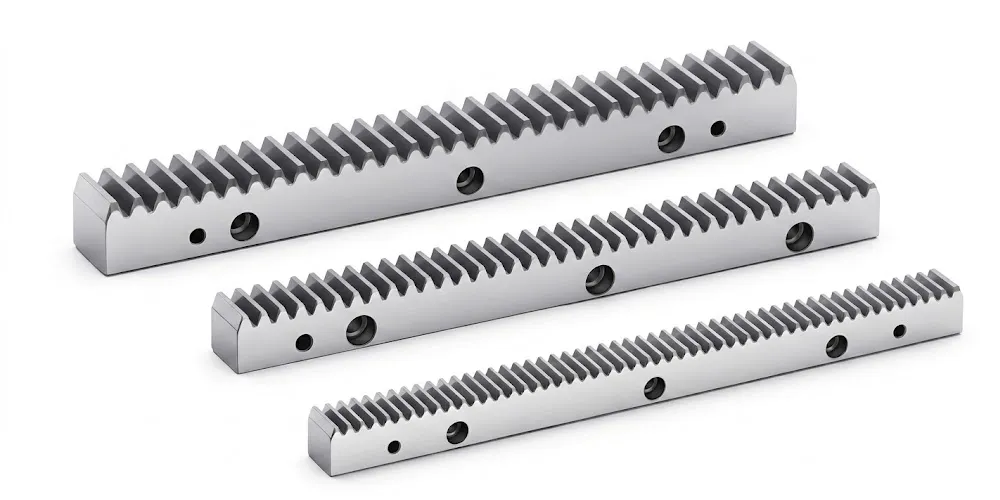
When the drive system requires linear motion output — gantry traversal, rack-and-pinion steering, machine tool feed axes — a precision gear rack paired with a matching helical pinion extends the same power density and smooth engagement characteristics of the helical gear into the linear domain. Our gear rack production is aligned with the same module and pressure angle standards used in this double helical gear series, ensuring geometric compatibility without custom adaptation. Helical rack profiles matching the mating gear's helix angle are available as standard, enabling the full overlap-ratio benefit of helical meshing to carry through into the linear drive.
About Our Factory — Over a Decade of Mechanical Transmission Expertise
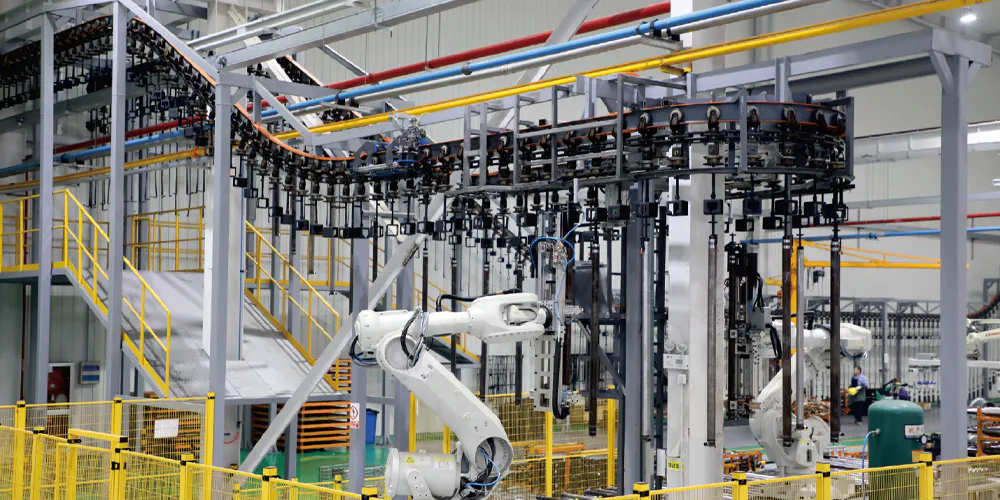
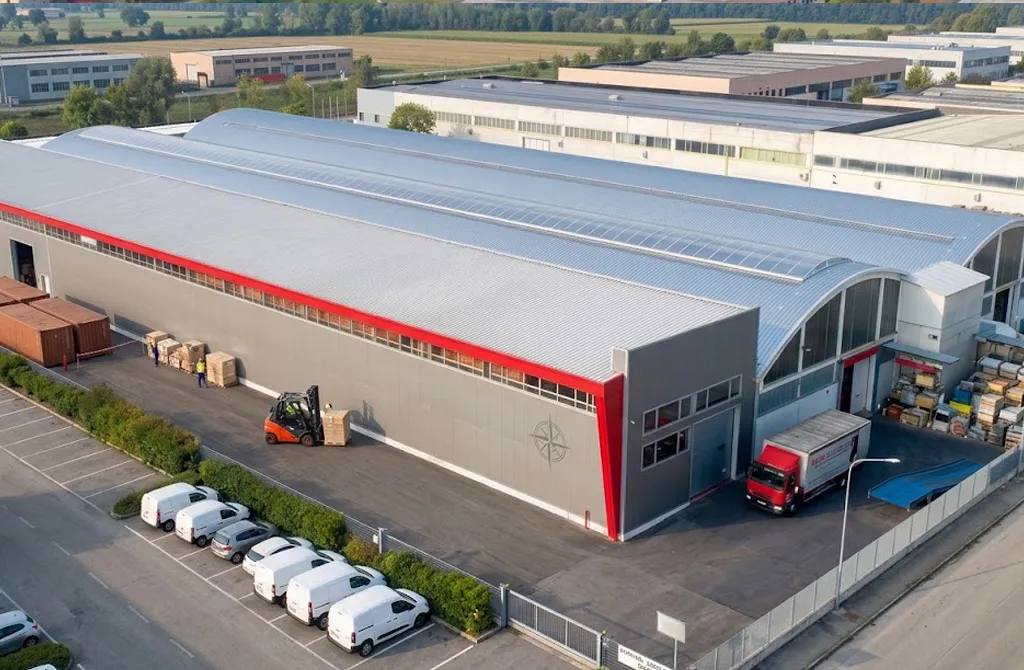
This production facility has been manufacturing mechanical transmission components for more than ten years, supplying industrial buyers across Australia, Germany, South Korea, Brazil, the UK, and Canada with gears, gearboxes, and drive system assemblies built to documented quality standards. We operate as a factory — not a trading intermediary — which means every component is produced, inspected, and shipped under one quality management system, with full traceability from raw material to finished part.
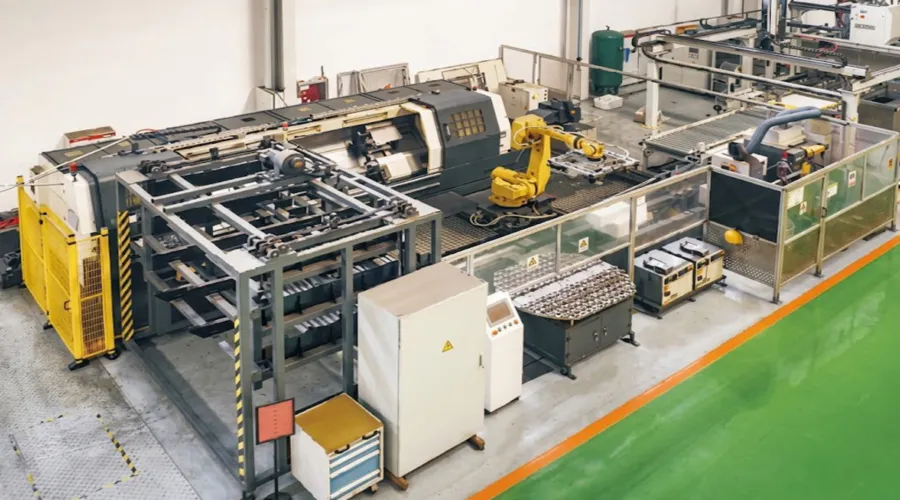
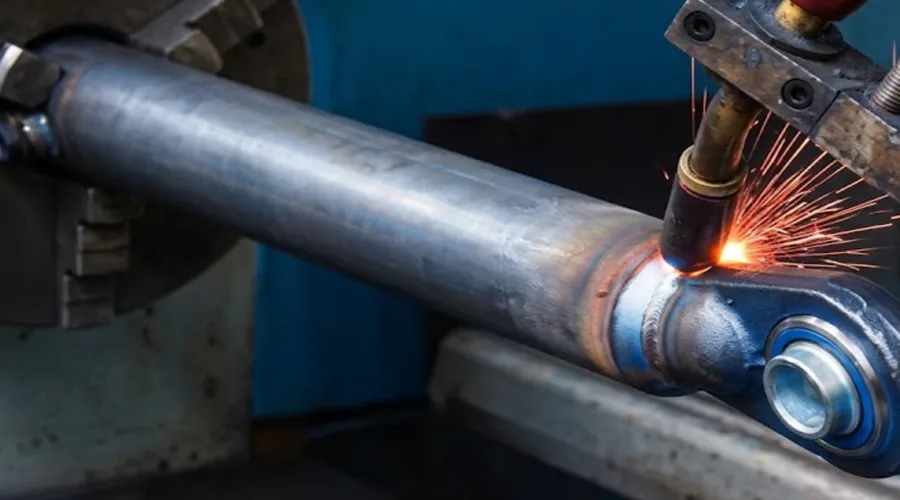
Our manufacturing scope covers agricultural gearboxes, worm gear reducers, planetary gear drives, power take-off drive shafts, hydraulic cylinders, precision gears, roller chains, and industrial motors. Gearbox and mechanical assembly production spans cast materials including ductile iron, cast iron, cast steel, precision cast steel, and cast aluminum — giving design engineers a genuine choice of structural material to match the weight, strength, and corrosion requirements of their application. Beyond standard catalog products, we design and manufacture non-standard gears, sprockets, worm gears, pulleys, worm shafts, and custom mechanical parts to customer drawings or specifications. The entire operation is certified to ISO 9001:2015, with documented control plans covering all manufacturing and inspection processes. This certification is recognized by procurement teams in Germany and South Korea as a baseline quality assurance requirement for gearbox and gear component supply.
For engineers evaluating helical gear factory options or seeking a reliable helical gear supplier for a long-term supply agreement, our facility offers direct engineering support, custom-made gear capability, and complete documentation packages as standard deliverables with every order.
Warsztat
Często zadawane pytania
Ready to Specify Your Double Helical Gear?
Share your module, helix angle, number of teeth, material specification, and application load data to receive a detailed custom manufacturing proposal for your double helical gear requirement. Our engineering team supports qualification programs for Australian, South Korean, German, Brazilian, Canadian, and UK buyers.
Redaktor: PXY