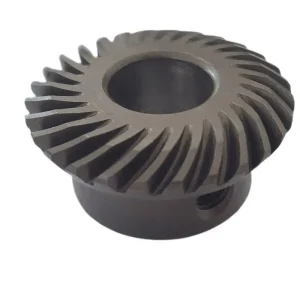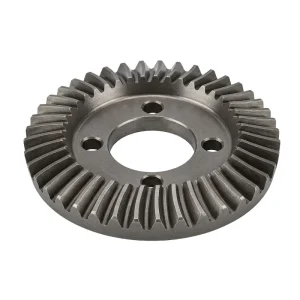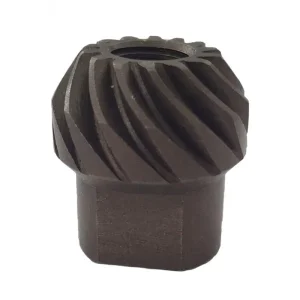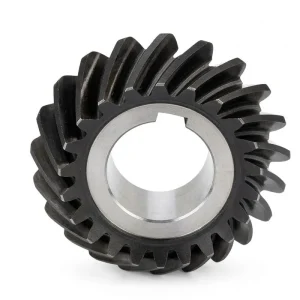
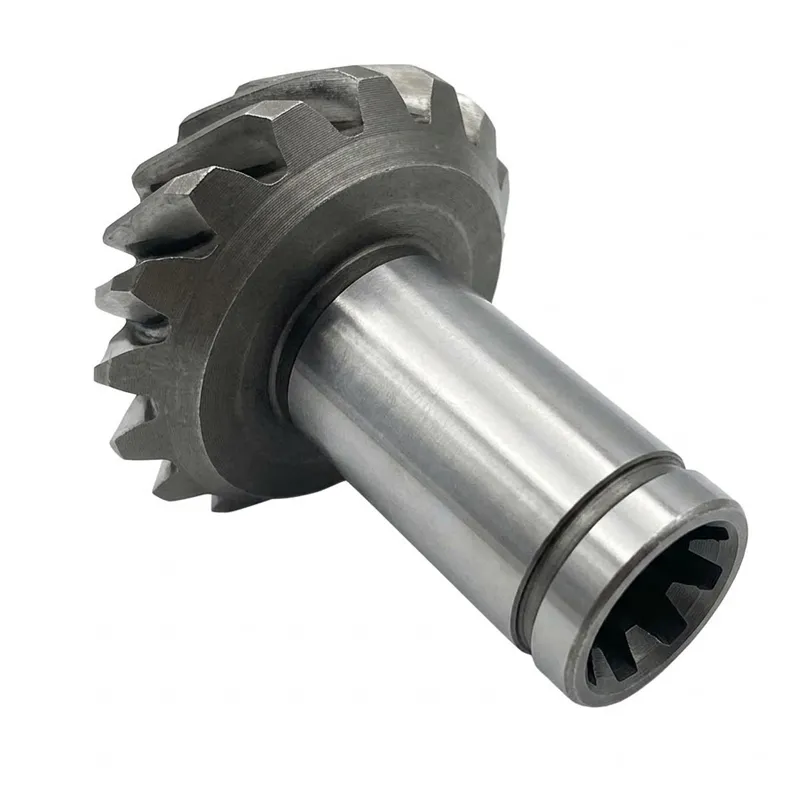
EP-Automotive Bevel Gear
The EP-Automotive Bevel Gear is a precision-engineered angular drive component designed for automotive powertrain and drivetrain applications. With a Φ12 mm outer diameter and a module range of M0.15–M2.2, this series is available in eleven material options—including Steel, Alloy, Bronze, Stainless, Aluminum, POM, Brass, Copper, Zinc, Iron, and Metal—to suit diverse load, weight, and environmental requirements. It achieves meshing grades of JGMA 1, JIS 6, AGMA 13, DIN 6, DIN 5, and AGMA 12, ensuring high accuracy for demanding automotive differentials, EV reduction stages, transfer cases, and steering actuators. Manufactured under ISO 9001:2008 and TS16949 certified quality systems, each unit is vacuum-packed on plastic trays and shipped worldwide via DHL or UPS. Standard pressure angle is 20°, with modified angles (14.5°–25°) available through ODM/OEM customization. Samples are available upon request for first-article validation.
EP-Automotive Bevel Gear — High-Performance Angular Drive Solutions for Modern Powertrain Systems
The EP-Automotive Bevel Gear is a purpose-built precision bevel gear engineered for the demanding torque, speed, and dimensional accuracy requirements of automotive powertrain and drivetrain applications. Machined to a Φ12 mm outer diameter with a module range spanning M0.15 to M2.2, this bevel gear series accommodates a broad scope of vehicular drive configurations — from passenger car differentials and EV reduction stages to light commercial vehicle transfer cases and off-road axle assemblies. Every bevel gear produced in this series is manufactured under ISO 9001:2008 and TS16949 certified quality systems, making it directly traceable and qualification-ready for Tier-1 and Tier-2 automotive supply chains globally. With support for ODM and OEM engineering from initial drawing review through to serial production, our facility offers automotive procurement teams in Germany, Japan, South Korea, the United States, Brazil, and Australia a reliable, certified source for precision bevel gear components. Samples are available for first-article validation before volume commitment, and logistics are managed through DHL and UPS to ensure consistent, trackable international delivery.
Technical Specifications — EP-Automotive Gear
The specification table below consolidates the verified technical parameters for the Automotive Bevel Gear series. These figures represent the certified production baseline and should be used as the primary reference during engineering selection and supplier qualification activities. Module selection within the M0.15–M2.2 range is validated against the Φ12 mm gear envelope to confirm adequate tooth depth and face width for the intended torque duty.
| Automotive Gear — Complete Specification | |
|---|---|
| Parametr | Value / Detail |
| Dimension (OD) | Φ12 mm |
| Module Range | M0.15 – M2.2 |
| Material Types | Metal, Bronze, Steel, Alloy, POM, Zinc, Aluminum, Iron, Stainless, Brass, Copper |
| Meshing Grade | JGMA 1 / JIS 6 / AGMA 13 / DIN 6 / DIN 5 / AGMA 12 |
| Application Fields | Automotive, Military, Aircraft, Mechanical, Industrial, Medical |
| Customisation | ODM / OEM available |
| Sample Availability | Sample available upon request |
| Packing Method | Vacuum-packed with Plastic Tray |
| Delivery Carriers | DHL & UPS |
| Certificate | ISO 9001:2008 / TS16949 |
Standard bevel gear pressure angle for the EP-Automotive series is 20° in compliance with AGMA and ISO references. Modified pressure angle configurations from 14.5° to 25° are available through the ODM engineering programme for applications where dedendum strength, contact ratio, or specific sliding velocity profiles must be adjusted beyond the standard geometry to meet vehicle-level NVH or durability targets.
How Does a Bevel Gear Work in Automotive Drive Systems?
Understanding how a bevel gear works starts with its defining geometry. Unlike a spur gear or helical gear, which transmit power between parallel shafts, a bevel gear operates on a conical pitch surface. When two bevel gears mesh, their cones share a common apex point, and torque is redirected from one rotational axis to another — most commonly through a 90° angle, though custom intersection angles are achievable through modified tooth geometry. In automotive applications, this capability is fundamental: a vehicle's engine produces rotation along the longitudinal axis of the vehicle, but rear axle shafts rotate perpendicular to that direction. The bevel gear pair inside the differential gearset is the mechanical bridge that makes this conversion possible.
The gear ratio of a bevel gear pair in an automotive differential is determined by the tooth count relationship between the ring gear and pinion. A typical rear-drive passenger car differential uses a ratio between 3.0:1 and 4.1:1, adjusting road speed relative to engine RPM while multiplying available torque at the wheels. Within the differential itself, a further set of smaller bevel gears — the spider gears and side gears — allow left and right drive shafts to rotate at different speeds when cornering, distributing torque smoothly without wheel scrub. These inner bevel gears operate under continuous cyclic loading and require tight tooth accuracy, typically AGMA 12 to AGMA 13 grade, to sustain smooth mesh engagement throughout the vehicle's service life. The EP-Automotive series is built to satisfy all of these accuracy levels from a single manufacturing source.
The practical bevel gear pressure angle used in automotive drivetrains is standardised at 20°, balancing tooth strength against the sliding velocity at the contact zone. Spiral bevel gear designs — where the teeth are curved along their length — carry multiple teeth in contact simultaneously, which reduces noise considerably compared to straight bevel counterparts, an essential property for passenger vehicle NVH (noise, vibration, harshness) targets. Understanding the difference between helical and bevel gear behaviour helps clarify the design choices: while helical gears deliver quiet, smooth power transmission on parallel shafts, a bevel gear achieves the same noise-reduction advantage through spiral tooth geometry at intersecting shaft angles — and the two can be combined within the same gearbox housing to cover both directions of power flow.
5 Key Bevel Gear Advantages in Automotive Applications
① Multi-Standard Meshing Accuracy
Available in JGMA 1, JIS 6, AGMA 13, DIN 6, DIN 5, and AGMA 12 accuracy classes, this bevel gear series lets automotive engineers select the exact grade demanded by their NVH targets and load cycle requirements. High-volume passenger car applications may select DIN 6 for cost efficiency; performance vehicle drivetrains or EV reduction units can step up to AGMA 13 where sub-micron pitch error control directly influences drivetrain refinement.
② Automotive-Grade Material Range
From case-hardened alloy steel for heavy-duty differential ring gears to lightweight aluminum for motorsport applications where unsprung mass reduction matters, the EP-Automotive bevel gear is available in eleven material families. Stainless steel variants address corrosion requirements in underbody environments in North European markets; POM grades serve auxiliary instrument drives where lubrication-free operation is specified.
③ TS16949-Aligned Quality Systems
ISO 9001:2008 and TS16949 certification means every batch of precision bevel gear components comes with documented process controls and dimensional records, satisfying the traceability and PPAP (Production Part Approval Process) documentation requirements of global automotive Tier-1 supply chains. This certification base reduces supplier qualification effort significantly for procurement teams in Germany, Japan, and the United States.
④ Compact Φ12 mm Form Factor
The Φ12 mm outer diameter targets the growing segment of compact EV drive modules, micro-mobility platforms, and auxiliary actuator systems where packaging space inside the vehicle body is at a premium. The M0.15–M2.2 module range within this compact envelope covers both precision instrument-level drives and moderately loaded structural gearing in a single product family, simplifying supplier consolidation across model lines.
⑤ Full OEM Engineering Support
Custom tooth profiles, non-standard shaft angles, proprietary bore and keyway geometries, surface treatments including phosphating and black oxidising, and modified bevel gear pressure angles can all be integrated into an ODM programme. Engineering review, first-article samples, and pre-production validation are standard offerings, enabling automotive customers globally to move from concept to serial production without changing precision bevel gear suppliers between development phases.
Material Selection Across the EP-Automotive Bevel Gear Family
Choosing the correct material for a precision bevel gear in an automotive environment is a multi-variable decision that touches on contact fatigue life, surface hardness, operating temperature range, lubricant compatibility, and mass constraints. The EP-Automotive series addresses this by offering eleven material options, each optimised for a distinct duty profile within the vehicle architecture.
Alloy steel (20CrMnTi, 20CrMo, 8620) remains the dominant material for structural automotive bevel gears in differentials and transfer cases. Through carburising and case-hardening to 58–62 HRC, these grades achieve a contact fatigue strength that sustains the cyclic Hertzian stress of differential ring-and-pinion interfaces across hundreds of thousands of kilometres. Precision forged bevel gears in alloy steel are frequently specified for high-volume passenger car differentials where net-shape forging reduces machining allowance and improves fibre flow in the tooth root, increasing bending fatigue resistance. Stainless steel bevel gear variants are selected for underbody components in vehicles operating in high-salt environments — a common requirement for fleet vehicles in Canada, Norway, and the Netherlands where road salting is intensive during winter seasons. Aluminum alloy reduces rotating inertia significantly, making it a preferred precision bevel gear choice for motorsport differential cages and electric vehicle axle assemblies where every gram of rotating mass affects dynamic response. POM and brass serve the auxiliary drive segment: dashboard instrument clusters, steering column adjustment drives, and HVAC flap actuators all use small bevel gears where low noise and absence of lubrication requirements are more important than ultimate load capacity. The availability of all these materials from a single precision bevel gear manufacturer eliminates the supply chain complexity of managing multiple qualified vendors across a vehicle programme.
How to Install an Automotive Precision Bevel Gear Correctly
Correct installation of a precision bevel gear in an automotive drivetrain is the single largest factor separating adequate performance from premature failure. The installation procedure for how to install a precision bevel gear in a differential or transfer case follows a defined sequence that the EP-Automotive series is designed to accommodate from the outset of the engineering review stage.
The first consideration is establishing the correct mounting distance for both the ring gear and the pinion. Mounting distance errors — the deviation of each gear's apex position from the theoretical intersection point — translate directly into tooth contact pattern displacement, increasing concentrated stress at the tooth ends and accelerating micropitting. For the EP-Automotive bevel gear at AGMA 13 / DIN 6 accuracy grade, mounting distance should be held within ±0.025 mm. Pinion preload, set via a collapsible spacer or solid spacer-and-shim arrangement, determines the bearing preload that maintains pinion position under axial loading through the mesh. Setting this preload correctly — typically 1.0–2.5 N·m of rotational drag torque on the pinion shaft alone — is critical before the ring gear is introduced. Gear mesh backlash, measured at the ring gear rim with a dial indicator, is then adjusted by shifting the ring gear carrier axially through the differential case until the specified value (commonly 0.10–0.20 mm for automotive differentials) is achieved. Final verification uses gear marking compound applied to six to eight ring gear teeth: the resulting contact pattern should cover approximately 50–65% of tooth face length, centred slightly toward the toe under light load, and shifting outward under full load — exactly the bearing pattern that maximises tooth strength across the full load range. Understanding bevel gear vs spur gear installation confirms why bevel gear assembly requires more setup steps: the conical geometry introduces both radial and thrust load components, and both must be managed simultaneously through bearing selection and preload procedures.
Precision Bevel Gear Application Scenarios — Automotive & Beyond
The EP-Automotive series covers a wide spectrum of drive system positions within the vehicle architecture, and its specifications extend naturally into adjacent sectors where automotive-standard quality and material flexibility are valued.
🚗 Passenger Vehicle Differentials
The classic precision bevel gear application: ring-and-pinion and spider gear sets in open and limited-slip differentials for front-wheel, rear-wheel, and all-wheel drive passenger vehicles. The EP-Automotive bevel gear's alloy steel grades and AGMA 12–13 accuracy options address both NVH refinement and long-term contact fatigue durability across typical passenger car service intervals of 150,000 km or more.
⚡ Electric Vehicle Axle Drives
EV single-speed reduction units use a bevel gear within the motor-to-wheel drive path to redirect torque from the motor axis to the wheel axis in space-constrained eAxle packaging. Aluminum alloy bevel gears reduce the unsprung mass contribution of the axle assembly, supporting vehicle dynamics targets. AGMA 13 accuracy grade ensures that gear mesh transmission error — a key source of tonal noise audible in the absence of combustion masking — is controlled to within the tight limits demanded by EV NVH standards in markets including Germany, South Korea, and the United States.
🚛 Commercial Vehicle Transfer Cases
Transfer cases in four-wheel-drive trucks and commercial vehicles use a bevel gear pair to route power to front and rear axle driveshafts simultaneously. These bevel gears operate at higher torque levels than passenger car differentials, requiring alloy steel grades with deep case-hardening and face widths toward the upper end of the available module range. The EP-Automotive series' M2.2 module ceiling fits the duty requirements of light to medium commercial vehicle transfer cases operating in markets such as Australia, Brazil, and Canada.
🔧 Steering System Actuators
Electric power steering (EPS) and steer-by-wire systems use compact bevel gear or worm-and-bevel combinations to transfer torque from the assist motor to the steering column or rack. Noise generated at the gear mesh is particularly noticeable in the steering system since the driver's hands are in direct mechanical contact with the output shaft. POM and brass precision bevel gears operating without grease — or with long-life factory-filled lubricants — address this noise requirement while maintaining positional accuracy through millions of lock-to-lock steering cycles.
🏎 Motorsport & Performance Applications
Motorsport engineers specify a precision bevel gear with tighter accuracy grades, lightweight materials, and custom tooth geometry to extract every fraction of drivetrain efficiency. A bevel gear maker advanced enough to support non-standard spiral angles, asymmetric tooth profiles, and surface coatings such as DLC (diamond-like carbon) enables performance teams to optimise their specific gear ratio of bevel gear setup for each circuit layout. Our ODM programme handles these requirements with full CAD collaboration and rapid prototype delivery.
🩺 Medical & Industrial Adjacencies
The same TS16949-aligned manufacturing process and material discipline that underpins the EP-Automotive gear translates directly into adjacent sectors. Surgical robotic wrist joints in South Korea and Japan, laboratory dispensing automation in the Netherlands, and precision industrial actuators in the UK all benefit from a gear produced under automotive supply chain quality standards — because those standards are simply among the most demanding specifications applied to small mechanical transmission components anywhere in global manufacturing.
About Our Manufacturing Facility — Over a Decade of Precision Gear Engineering
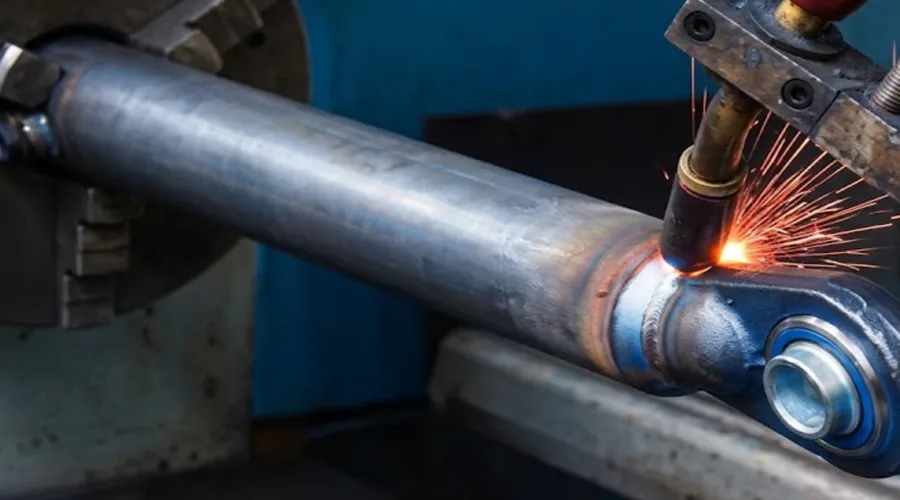
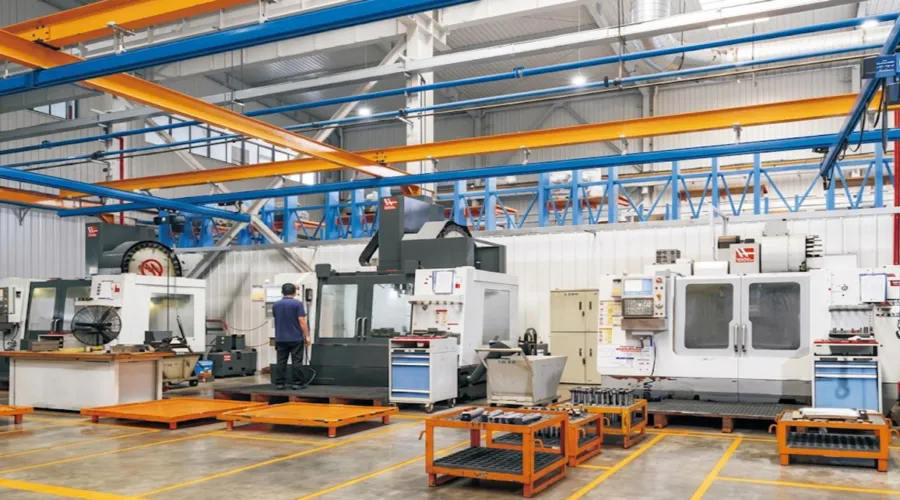
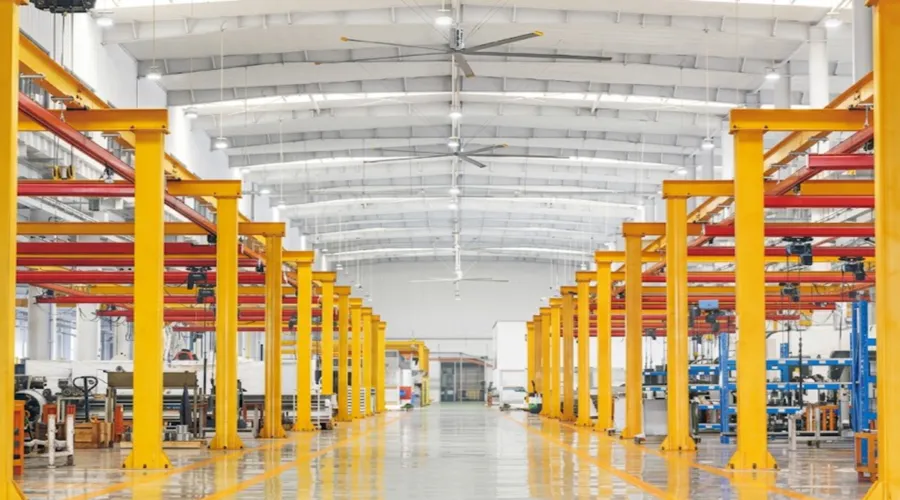
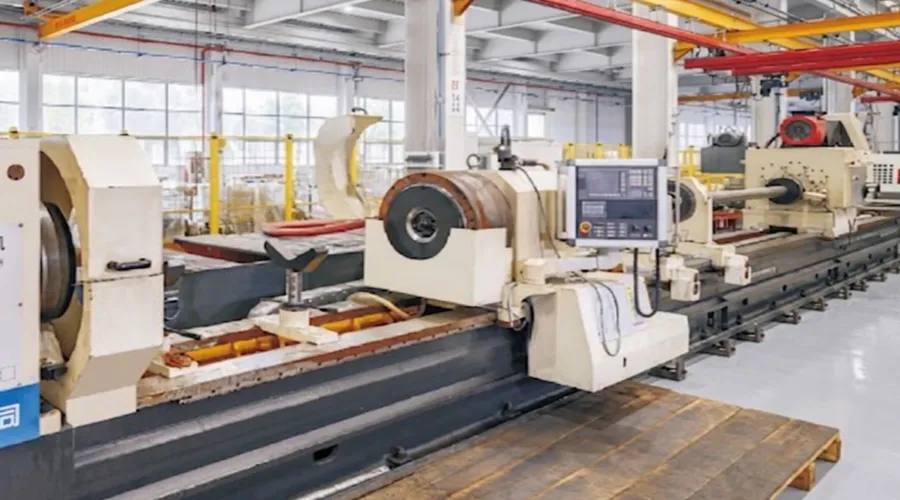
With more than ten years dedicated to precision mechanical power transmission, our production facility manufactures a comprehensive range of gear components, gearbox assemblies, and drivetrain hardware for industrial and agricultural customers across every major global market. Our core product range encompasses agricultural gearboxes, worm gear reducers, planetary drive systems, power take-off shafts, hydraulic cylinders, precision gears, roller chains, sprockets, and industrial motors — all produced within the same ISO 9001:2015 certified quality management framework that governs the EP-Automotive gear series.
We design and manufacture both standard-catalogue and fully non-standard mechanical components, using ductile iron, cast iron, cast steel, precision cast steel, and cast aluminum as primary structural materials. Gears, worm gears, pulleys, worms, shafts, and custom assemblies are produced in-house, giving us genuine control over tolerance stack-ups across complete drivetrain sub-assemblies rather than simply managing individual component quality in isolation. For automotive customers, this breadth means a single supplier relationship can cover not only the precision gear but also associated shafts, housings, and ancillary gearing across the same vehicle programme, simplifying vendor management and enabling unified quality documentation.
Warsztat
Compatible Products — System-Level Drive Solutions
A bevel gear operating in an automotive drivetrain rarely functions as a standalone component. It connects upstream to helical parallel-shaft reduction stages and downstream to rack-and-pinion or lead-screw linear mechanisms. Sourcing all of these elements from the same facility guarantees dimensional compatibility, matched surface finish standards, and a unified quality documentation chain — a significant advantage during vehicle programme PPAP and production launch.
Podwójne koło zębate śrubowe
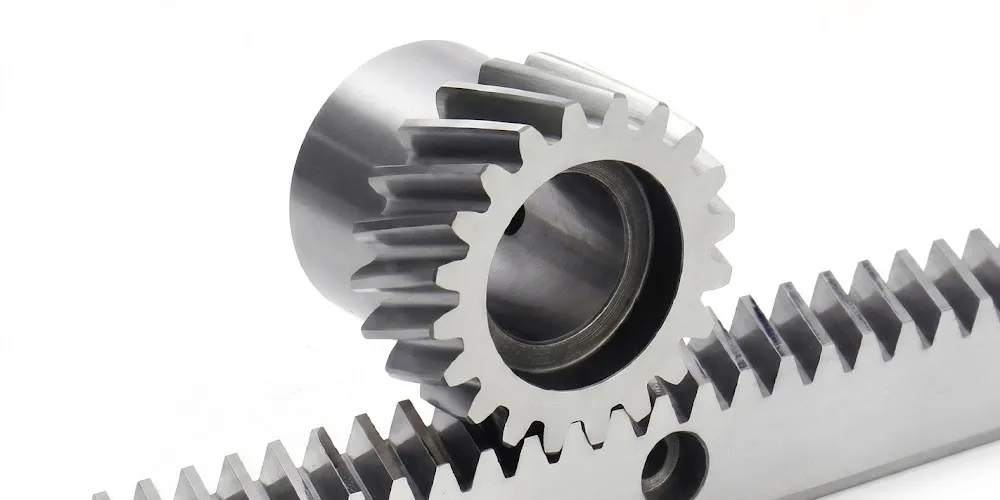
In automotive multi-stage gearboxes, a double helical gear (herringbone configuration) handles the primary torque reduction stage on parallel input/output shaft axes, while the bevel gear manages the angular change of direction at the axle. The herringbone tooth geometry cancels net axial thrust — an important feature when the adjacent bevel gear is already generating combined radial and axial bearing loads that the housing must manage. Sourcing both gear types from the same manufacturing operation eliminates interface tolerance mismatches and simplifies assembly drawings across the drivetrain package.
Listwa zębata
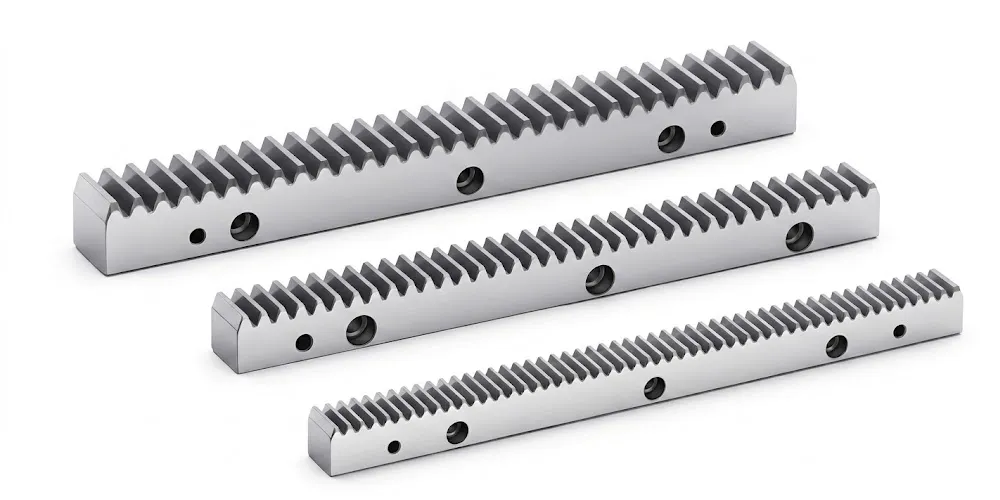
A gear rack converts rotational output from a bevel gear reduction stage into controlled linear motion. In automotive rack-and-pinion steering systems, electric window regulators, and seat adjustment drives, the gear rack and its mating pinion must be dimensionally compatible with the rotary bevel gear stage upstream. Manufacturing both the bevel gear and gear rack components within the same quality system ensures matched pitch accuracy, coordinated surface finish specifications, and compatible material hardness pairings — all factors that directly affect the wear life and tactile quality of the final assembly as experienced by the end user.
Trade & Delivery Information — Gear Products
The following trade terms, lead times, and MOQ policies are specifically mapped to gear-type products (gears, pinions, worm gears, bevel gears, helical gears, ground gears) based on our general trading framework. Only clauses directly referencing gear products have been extracted from the full terms library.
Lead Time
Based on the standardisation level, machining complexity, and processing requirements of gear products:
| Gear Products — Lead Time Reference | |
|---|---|
| Product Category | Estimated Lead Time |
| Standard Transmission Gears | 10–25 working days |
| Standard Gears + Simple Processing | 15–35 working days |
| Custom Machined Gears | 20–45 working days |
| High-Precision / Heat-Treated Gears | 30–60 working days |
Trade Types
Recommended Incoterms based on product volume, weight, value, and urgency for gear products:
| Gear Products — Recommended Trade Terms | |
|---|---|
| Product Type | Recommended Terms |
| Standard Gears | EXW / FOB / CIF / DAP |
| Custom / OEM Gears | EXW / FOB / CIF / DAP |
FCA, CFR, CPT, CIP and DDP terms are also available upon specific request and subject to negotiation.
MOQ
Minimum order quantities for gear products are determined by product type, material, processing requirements, and batch size:
| Gear Products — MOQ Guidelines | |
|---|---|
| Product Category | MOQ Policy |
| Custom Gears | MOQ depends on drawing, material, tolerance, machining process and batch size. |
| Heat Treatment / Surface Treatment | Special processing may be limited by process batch size. |
General Terms
The following baseline terms apply to all gear product orders:
| General Trading Terms | |
|---|---|
| Term | Policy |
| MOQ Principle | Flexible based on product type and order value. |
| Sample Policy | New customers may apply for 1–5 samples where suitable. |
| Mixed Orders (Consolidation) | Combination of different models supported; total order value should reach approximately USD 1,500. |
| Small Orders | 1–2 pcs orders supported, but unit price may be relatively higher. |
| Overall Delivery Time | Standard parts: 10–25 working days | Custom components: 20–45 working days | Project equipment: 45–120 working days |
| Overall Trade Terms | EXW, FOB, CIF, DAP supported as standard; FCA, CFR, CPT, CIP and DDP available upon specific negotiation. |
Frequently Asked Questions — EP-Automotive Bevel Gear
Redaktor: PXY