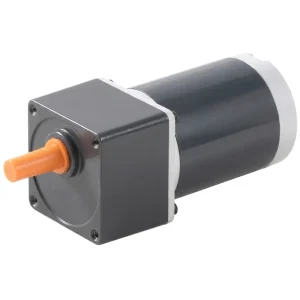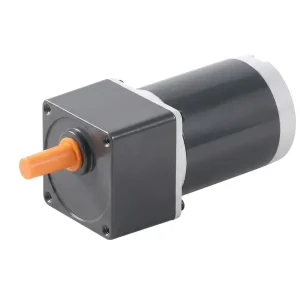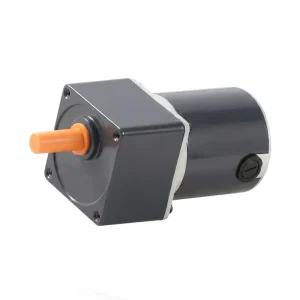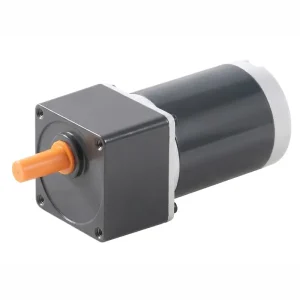
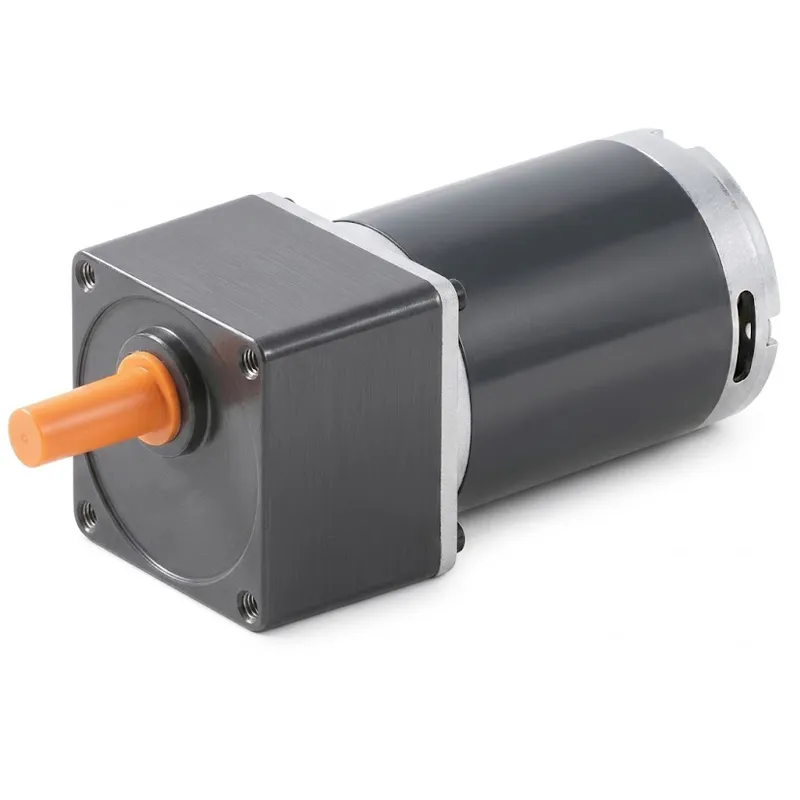
Silnik prądu stałego o dużej mocy wyjściowej EP-250W
W wielu zastosowaniach przemysłowych ogólnego przeznaczenia — głównych napędach przenośników, zestawach pomp, mechanizmach mieszadeł i napędach podajników — architektura szczotkowa o mocy 250 W oferuje przekonującą równowagę: wrodzoną krzywą momentu obrotowego i prędkości silnika prądu stałego z magnesami trwałymi w połączeniu z prostą kontrolą prędkości PWM z poziomu standardowego sterownika napędu silnika prądu stałego.
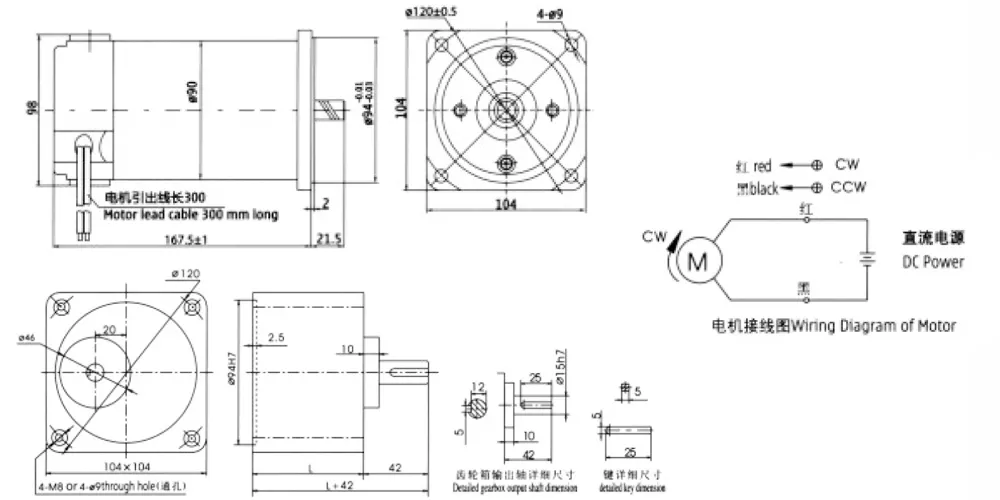
Rama K6D, na której opiera się ten silnik, jest znacznie bardziej wytrzymała niż rama K5D stosowana w zakresie mocy 40–120 W. Średnica obudowy wzrasta do 120 mm, kołnierza do 104×104 mm, a układ śrub montażowych wykorzystuje łączniki M8 (lub otwory przelotowe 4×ø9), zapewniając sztywność konstrukcyjną niezbędną do reagowania na obciążenia boczne przekładni i siły promieniowe wału wyjściowego w zastosowaniach wymagających ciągłej pracy. Długość korpusu silnika wynosi 167,5 mm ± 1 mm, a kabel zasilający silnik jest wstępnie zamontowany na długości 300 mm – co wystarcza do prowadzenia przewodów w większości standardowych obudów.
Seria EP | Moc wyjściowa 250 W o dużej wytrzymałości
Silnik prądu stałego EP-250W
Gdy standardowe napędy o ułamkowej mocy nie wystarczają, wkracza EP-250W. Ten wytrzymały silnik szczotkowy silnik prądu stałego Zapewnia stałą moc wyjściową 250 W w trzech konfiguracjach napięcia — 24 V, 90 V i 220 V — przy znamionowej prędkości obrotowej 3000 obr./min i maksymalnym momencie obrotowym 796 kg·cm. Zbudowany na ramie K6D z kołnierzem montażowym o wymiarach 104×104 mm i obudową o średnicy 120 mm, jest idealnym wyborem dla producentów maszyn, którzy potrzebują niezawodnego i sterowalnego rozwiązania. silnik prądu stałego o wysokim momencie obrotowym Bez konieczności stosowania skomplikowanych i kosztownych rozwiązań trójfazowego falownika prądu przemiennego. Dostępny z wałem wyjściowym z przekładnią, wałem płaskim lub z frezowanym wpustem, EP-250W integruje się bezpośrednio z serią przekładni 6GU, zapewniając kompletne rozwiązania napędów elektromechanicznych w wymagających środowiskach przemysłowych, rolniczych i automatyzacji procesów na całym świecie.
Parametry pracy silnika
Wszystkie poniższe wartości zostały zmierzone w standardowych warunkach testowych (20°C, poziom morza). Sufiks □ oznacza typ wału wyjściowego — patrz tabela wymiarów wału wyjściowego silnika bez przekładni, w przypadku konfiguracji z wałem przekładni, typem płaskim i frezowanym rowkiem wpustowym. Napięcie, moc i prędkość silnika można dostosować do dopuszczalnych wymiarów ramy w przypadku potwierdzonych zamówień.
| Model | Napięcie (V) | Moc (W) | Bez obciążenia | Pełne obciążenie | Żywotność pędzla (H) | Waga (kg) | |||
|---|---|---|---|---|---|---|---|---|---|
| Prędkość (obr./min) | Prąd (A) maks. | Prędkość (obr./min) | Moment obrotowy (kg·cm) | Prąd (A) | |||||
| K6D250-24□ | 24 | 250 | 3400 | 3.0 maks. | 3000 | 796 | 16.0 | 2000 | 3.2 |
| K6D250-90□ | 90 | 250 | 3300 | 1,2 maks. | 3000 | 796 | 4.0 | 2000 | 3.2 |
| K6D250-220□ | 220 | 250 | 3300 | 0,9 maks. | 3000 | 796 | 2.0 | 2000 | 3.2 |
Uwaga: Napięcie, moc i prędkość silnika można dostosować do specyfikacji klienta w ramach dopuszczalnych wymiarów ramy.
Wymiary kompatybilnej skrzyni biegów — seria 6GU
Przekładnie serii 6GU montuje się bezpośrednio do kołnierza EP-250W o wymiarach 104 × 104 mm za pomocą czterech śrub M8 (lub 4 otworów przelotowych ø9). Wymiar L to długość korpusu przekładni bez silnika; łączna długość napędu wynosi L + 42 mm + długość korpusu silnika. Masa samego silnika wynosi 3,2 kg; łączna masa podana jest poniżej.
| Model skrzyni biegów | Wymiar L (mm) | Masa skrzyni biegów (kg) |
|---|---|---|
| 6GU3K – GU9K | 72 | 1.87 |
| 6GU10K – GU18K | 72 | 2.10 |
| 6GU20K – GU200K | 72 | 2.75 |
| Silnik (goły) | — | 5,68 (z przekładnią) |
Dopuszczalny moment obrotowy na skrzyni biegów — K6D250-24GU
Poniższe wartości momentu obrotowego obowiązują, gdy silnik K6D250-24GU jest sparowany z kompatybilną przekładnią serii 6GU. Przed ostatecznym ustaleniem specyfikacji napędu należy zawsze upewnić się, że wymagany moment obrotowy na wyjściu jest niższy od dopuszczalnego momentu obrotowego przy wybranym przełożeniu. Moment obrotowy jest podawany zarówno w N·m, jak i kgf·cm, co stanowi międzynarodowe odniesienie techniczne.
| Typ | Parametr | 3 | 3.6 | 5 | 6 | 7.5 | 9 | 12.5 | 15 | 18 | 25 | 30 | 36 | 50 | 60 | 75 | 90 | 100 | 120 | 150 | 180 | 200 |
|---|---|---|---|---|---|---|---|---|---|---|---|---|---|---|---|---|---|---|---|---|---|---|
| K6D250-24GU | Prędkość (obr./min) | 1000 | 833 | 600 | 500 | 400 | 333 | 240 | 200 | 166 | 120 | 100 | 83 | 60 | 50 | 40 | 33 | 30 | 25 | 20 | 16 | 15 |
| Moment obrotowy (N·m) | 1.93 | 2.32 | 3.22 | 3.86 | 4.83 | 5.80 | 7.20 | 8.70 | 10.4 | 13.1 | 15.7 | 18.9 | 26.2 | 31.5 | 40.0 | 40.0 | 40.0 | 40.0 | 40.0 | 40.0 | 40.0 | |
| Moment obrotowy (kgf·cm) | 19.7 | 23.6 | 32.8 | 39.4 | 49.3 | 59.2 | 74.1 | 88.9 | 106 | 133 | 160 | 192 | 267 | 400 | 400 | 400 | 400 | 400 | 400 | 400 | 400 |
Opcje wału wyjściowego silnika bez osłony
| Typ wału | Wał przekładni | Typ płaski | Frezowany wpust |
|---|---|---|---|
| Kod modelu | DC6GU□ | DC6A□ | DC6A1□ |
| Typowe zastosowanie | Mocowanie bezpośrednie skrzyni biegów | Napęd krążkowy | Sprzęgło klinowe / zębatka |
Pięć kluczowych zalet silnika prądu stałego EP-250W
① Prawdziwa moc ciągła 250 W
W przeciwieństwie do silników o mocy szczytowej lub przerywanej, EP-250W charakteryzuje się ciągłą mocą wyjściową 250 W – wartością, która ma znaczenie w rzeczywistych warunkach produkcyjnych. Przy znamionowym momencie obciążenia wynoszącym 796 kg·cm przy 3000 obr./min, silnik elektryczny o wysokim momencie obrotowym umożliwia ciągłą pracę napędu bez obniżania parametrów znamionowych pod wpływem temperatury, dzięki czemu jest niezawodny w wielozmianowych harmonogramach produkcji w zakładach od Wielkiej Brytanii po Koreę Południową.
② Trzy opcje napięcia — 24 V, 90 V, 220 V
Seria EP-250W obejmuje trzy napięcia zasilania: mobilne i samochodowe systemy elektryczne 24 V, regulowaną szynę prądu stałego 90 V, powszechnie stosowaną w północnoamerykańskich i europejskich zakładach przemysłowych, oraz zasilanie 220 V do zastosowań bezpośrednio podłączonych do sieci. Ta szeroka gama produktów eliminuje potrzebę stosowania urządzeń do konwersji napięcia w różnych regionach rynkowych, upraszczając zarządzanie zestawieniami materiałowymi (BOM) w międzynarodowych programach OEM.
③ Możliwość dostosowania napięcia, mocy i prędkości
Standardowe napięcie silnika, moc znamionowa i prędkość bez obciążenia można dostosować do specyfikacji klienta w ramach dopuszczalnych wymiarów ramy – co odróżnia produkcję fabryczną od dostaw wyłącznie katalogowych. Dzięki temu EP-250W stanowi praktyczną bazę dla niestandardowych jednostek napędowych w specjalistycznych maszynach rolniczych, urządzeniach procesowych i stanowiskach testowych, gdzie standardowe parametry katalogowe nie są precyzyjnie dostosowane do wymagań obciążeniowych.
④ Kompatybilność z przekładnią Direct 6GU
Kołnierz 104×104 mm i standardowe wałki wyjściowe pasują bezpośrednio do serii przekładni 6GU, zapewniając przełożenia od 3:1 do 200:1 z dopuszczalnym momentem obrotowym do 400 N·m przy wysokich przełożeniach. To bezpośrednie połączenie eliminuje konieczność stosowania płyt adaptacyjnych i zmniejsza łączną długość zespołu, dzięki czemu zespół silnik-przekładnia jest wystarczająco kompaktowy, aby zmieścić się w zamkniętych bazach maszyn i ciasnych przestrzeniach montażowych w zautomatyzowanych liniach produkcyjnych.
⑤ ISO 9001:2015 Zweryfikowana jakość
Każdy moduł EP-250W opuszcza linię produkcyjną z kompletnym protokołem testów funkcjonalnych, obejmującym prędkość bez obciążenia, pobór prądu przy obciążeniu znamionowym, rezystancję izolacji uzwojeń oraz jakość komutacji. Ta identyfikowalność wspiera oznakowanie CE i dokumentację zgodności UKCA dla rynków europejskich i brytyjskich, a także spełnia wymogi dotyczące ujawniania materiałów wymagane przez australijskie rejestry urządzeń przemysłowych i północnoamerykańskie jednostki certyfikujące bezpieczeństwo.
Zasada działania silnika prądu stałego
Ten zasada działania silnika prądu stałego Silnik EP-250W napędza to samo prawo elektromagnetyczne, które działa w każdym silniku szczotkowym z magnesami trwałymi: przewodnik z prądem stałym w polu magnetycznym doświadcza siły mechanicznej proporcjonalnej do natężenia pola, natężenia prądu i długości przewodnika. W praktyce nawinięte cewki wirnika przewodzą ten prąd, podczas gdy otaczające je magnesy trwałe w obudowie stojana wytwarzają pole statyczne. W rezultacie na każdym czynnym przewodniku wirnika działa siła styczna — sumowana na wszystkich żłobkach uzwojenia, daje ciągły moment obrotowy mierzony na wale wyjściowym.
Mechaniczny komutator — precyzyjnie szlifowany segmentowy pierścień miedziany — przełącza kierunek prądu w każdej grupie uzwojeń w dokładnej synchronizacji z położeniem kątowym wirnika. To samoczynne działanie wyróżnia szczotkowy silnik prądu stałego z bezszczotkowy silnik prądu stałego Lub silnik BLDC, który wymaga zewnętrznego elektronicznego stopnia napędowego i czujnika położenia wirnika, aby wykonać tę samą funkcję elektronicznie. Przy mocy 250 W koszt silnika szczotkowego plus standardowy napęd silnika prądu stałego kontroler jest zazwyczaj niższy niż równoważny silnik BLDC system z trójfazowym falownikiem, czujnikiem położenia i wiązką przewodów — praktyczny aspekt, który sprawia, że silniki szczotkowe pozostają istotne w nowych projektach maszyn znacznie dłużej, niż sugerowałby to ich wiek jako technologii.
Regulacja siły elektromotorycznej zwrotnej (WMS) zapewnia naturalną stabilizację prędkości, dzięki czemu EP-250W doskonale nadaje się do zastosowań o zmiennym obciążeniu. Wraz z przyspieszeniem wirnika, wytwarza on napięcie przeciwne, które ogranicza dalszy wzrost prędkości. Rosnące obciążenie mechaniczne zmniejsza siłę elektromotoryczną zwrotną, umożliwiając przepływ większego prądu i automatyczny wzrost momentu obrotowego – bez konieczności stosowania oddzielnego sterownika ze sprzężeniem zwrotnym w wielu standardowych zastosowaniach przenośników taśmowych lub pomp. Aby zapewnić dokładniejszą regulację prędkości, wystarczy zastosować proste sprzężenie zwrotne z tachometrem. napęd silnika prądu stałego zamyka pętlę przy minimalnej dodatkowej elektronice.
W porównaniu do silnik serwo prądu stałegoEP-250W nie posiada zintegrowanego enkodera ani resolwera położenia, dlatego nie oferuje precyzyjnej kontroli położenia całej osi serwo. W porównaniu z silnik krokowy prądu stałego, zapewnia płynny, ciągły obrót zamiast dyskretnych skoków kątowych, dzięki czemu znacznie lepiej nadaje się do zadań napędowych o stałej prędkości przy tym poziomie mocy. Pytanie o to, jaki typ silnika prądu stałego pasuje do danego zastosowania, zazwyczaj sprowadza się do pytania: jaka precyzja pozycjonowania jest wymagana i jaki koszt sterownika napędu jest akceptowalny? W przypadku napędów z regulacją prędkości w zakresie 250 W, szczotkowe silnik prądu stałego z magnesami trwałymi pozostaje praktyczną i ekonomiczną odpowiedzią na obydwa pytania.
Materiały i jakość wykonania
Przy ciągłej mocy wyjściowej 250 W, zarządzanie temperaturą i sztywność konstrukcji stają się kluczowymi czynnikami konstrukcyjnymi. Obudowa EP-250W to konstrukcja ze stali walcowanej na zimno, malowana proszkowo dla zapewnienia odporności na korozję i stabilna wymiarowo w wyższych temperaturach uzwojenia generowanych przy tym poziomie mocy. Średnica obudowy 120 mm pozwala na zastosowanie większego otworu stojana w porównaniu z ramami o średnicy 90 mm stosowanymi w silnikach EP o niższej mocy, co pozwala na zastosowanie magnesów trwałych o większej energii, niezbędnych do wytworzenia znamionowego momentu obrotowego silnika wynoszącego 796 kg·cm przy praktycznym prądzie wirnika.
Magnesy stojana to spiekane magnesy trwałe o wysokiej koercji, dobrane pod kątem stabilnej gęstości strumienia magnetycznego do ciągłej temperatury uzwojenia do 90°C. Poniżej tego progu – który EP-250W bez problemu utrzymuje przy obciążeniu znamionowym w standardowych warunkach warsztatowych – straty strumienia magnetycznego są pomijalne w całym okresie eksploatacji silnika. Rdzeń wirnika wykonany jest z warstw stali krzemowej o zorientowanym ziarnie z międzywarstwowym lakierem izolacyjnym, co ogranicza straty wiroprądowe w zakresie 3000–3400 obr./min i utrzymuje wzrost temperatury uzwojenia w granicach znamionowych dla emaliowanego drutu miedzianego klasy B (130°C).
Komutator wykonany jest z miedzi szlifowanej metodą CNC, a jego powierzchnia jest wykończona z zachowaniem ścisłych tolerancji współosiowości, co zapewnia równomierny nacisk szczotek węglowych w całym zakresie prędkości roboczych. Uchwyty szczotek są sprężynowe, co zapewnia równomierną siłę nacisku w miarę zużycia szczotek, wydłużając tym samym spójną jakość komutacji, która stanowi podstawę 2000-godzinnej żywotności szczotek. Chociaż jest to krótszy okres niż 3000-godzinna żywotność mniejszych silników serii EP – naturalna konsekwencja wyższej gęstości prądu przy mocy 250 W – pozostaje on praktycznym okresem serwisowym w przypadku kwartalnych harmonogramów konserwacji w większości zastosowań przemysłowych.
Łożyska kulkowe na obu końcach wału to wstępnie nasmarowane, uszczelnione łożyska z głębokim rowkiem, przeznaczone do wyższych obciążeń promieniowych, charakterystycznych dla tego rozmiaru ramy, szczególnie w konfiguracjach montowanych na skrzyni biegów, gdzie obciążenia boczne wału wyjściowego są przenoszone z powrotem przez łożysko silnika. Wszystkie materiały są zgodne z dyrektywą RoHS 2 i posiadają oznaczenia CE i UKCA, co potwierdza ich certyfikację na rynku europejskim i brytyjskim.
Scenariusze zastosowań
Przy mocy 250 W seria silników EP wkracza na rynek, gdzie bezpośrednio konkuruje z małymi kombinacjami silników prądu przemiennego i falowników. W przypadku napędów prądu stałego z regulacją prędkości, gdzie prostota zasilania i dynamiczna reakcja momentu obrotowego są ważniejsze niż maksymalna efektywność energetyczna, poniższe sektory konsekwentnie określają silniki szczotkowe. silniki elektryczne prądu stałego w tym paśmie mocy.
🏭 Napędy główne przenośników przemysłowych
Główne silniki napędowe w systemach przenośników o małej i średniej mocy — liniach montażowych produktów, taśmach sortujących i systemach transferu palet — regularnie pracują w zakresie mocy 200–300 W. Model EP-250W o napięciu 24 V zasila systemy przenośników z szyną DC 12 V/24 V, powszechnie stosowane w północnoamerykańskich obiektach logistycznych, natomiast wariant 90 V obsługuje europejskie instalacje z regulowaną szyną DC. Płynna regulacja prędkości za pomocą napędu PWM zapewnia natychmiastową reakcję prędkości w cyklach start/stop, bez skoków napięcia charakterystycznych dla silników prądu przemiennego z bezpośrednim zasilaniem.
🌾 Sprzęt do produkcji pasz i przetwórstwa rolnego
Główne napędy ślimaków zbożowych, silniki sieczkarni do kiszonki i głowice napędowe mieszalników-podajników w gospodarstwach w Australii i Ameryce Południowej wymagają solidnych napędów, które niezawodnie współpracują z bateriami akumulatorów ładowanymi z WOM ciągnika lub agregatami prądotwórczymi. Wariant K6D250-24□ o napięciu 24 V zasilany jest bezpośrednio z 24-woltowej instalacji elektrycznej, dostarczając moc z wału, aby poradzić sobie ze zmiennym obciążeniem ziarna bez przestoju – scenariusz, w którym silnik prądu stałego z magnesami trwałymiSamoregulacja siły przeciwelektromotorycznej zapewnia naturalne zwiększenie momentu obrotowego przy niskiej prędkości i dużym obciążeniu.
⚙️ Napędy pomp i sprężarek
Główne pompy agregatów hydraulicznych, pompy obiegowe wody chłodzącej i napędy sprężarek układów próżniowych w zakładach produkcyjnych w Wielkiej Brytanii i Europie wykorzystują silniki prądu stałego o mocy 250 W, w których istotna jest zmienna kontrola przepływu. napęd silnika prądu stałego dzięki sprzężeniu zwrotnemu z tachometru w EP-250W możliwe jest uzyskanie regulacji prędkości ±1% przy obciążeniu znamionowym — co jest wartością wystarczającą w przypadku większości zastosowań w chłodzeniu procesowym i utrzymaniu ciśnienia hydraulicznego bez konieczności dodatkowej inwestycji w pełną zamkniętą pętlę serwomechanizmu.
🔬 Stanowiska testowe i dynamometryczne
Platformy symulacji obciążenia i stanowiska kalibracji momentu obrotowego w południowokoreańskich i japońskich ośrodkach badawczych często wykorzystują silnik o mocy 250 W jako sterowane źródło obciążenia lub jako główny napęd w stanowiskach do testów wytrzymałościowych. Dostępność napięcia 220 V sprawia, że EP-250W można łatwo podłączyć bezpośrednio do jednofazowego źródła zasilania stosowanego w wielu środowiskach laboratoryjnych, eliminując konieczność stosowania transformatora obniżającego napięcie, zazwyczaj wymaganego do zasilania silnika 90 V.
🚛 Napędy do transportu materiałów i podnośników
Małe wciągniki towarowe, wciągarki linowe i napędy bębnów nawijających w holenderskich i belgijskich magazynach to naturalne rozwiązanie dla modelu EP-250W w połączeniu z przekładnią 6GU o wysokim przełożeniu. Redukcja 200:1 redukuje moc wyjściową silnika 3000 obr./min do 15 obr./min na bębnie – wystarczająco wolno, aby umożliwić kontrolowane podnoszenie – a dopuszczalny moment obrotowy przekładni 40 Nm przy tym przełożeniu bezpiecznie radzi sobie ze szczytowym naprężeniem liny w typowych cyklach pracy wciągników lekkich towarów.
🖥️ Automatyzacja i podnapędy robotyczne
Osie obrotowe baz robotów współpracujących, koła napędowe pojazdów sterowanych automatycznie (AGV) oraz duże napędy stołów obrotowych CNC wykorzystują silniki szczotkowe klasy 250 W jako ekonomiczną alternatywę dla bezszczotkowych systemów serwo w osiach, gdzie dokładność pozycjonowania ±0,5° lub lepsza nie jest wymagana. Dla kanadyjskich i australijskich producentów maszyn projektujących niestandardowe stanowiska automatyzacji, EP-250W w połączeniu z enkoderem optycznym i sterownikiem serwomechanizmu DC oferuje odpowiednią wydajność sterowania ruchem przy ułamku ceny dedykowanego systemu. silnik serwo prądu stałego i pakiet wzmacniacza.
O naszym zakładzie produkcyjnym
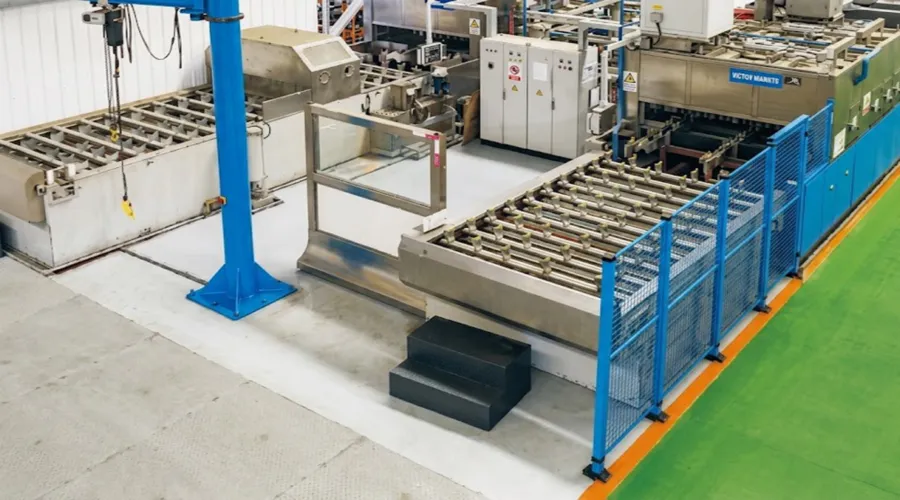
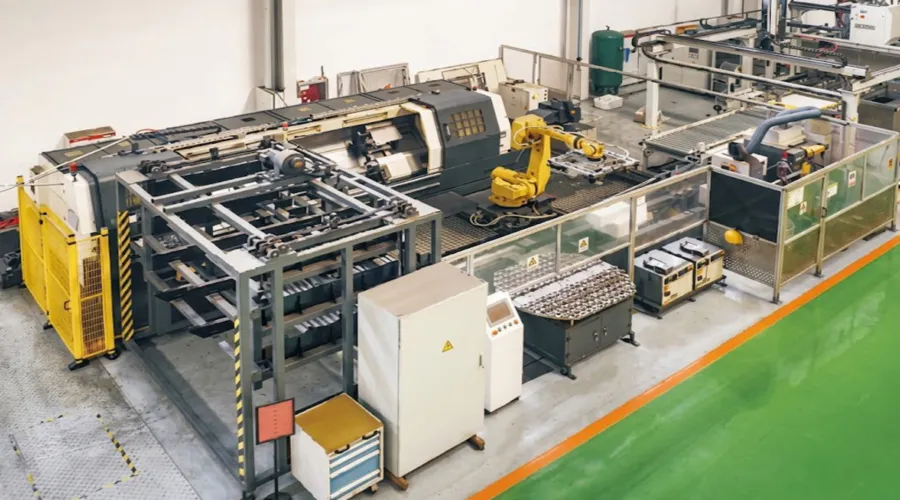
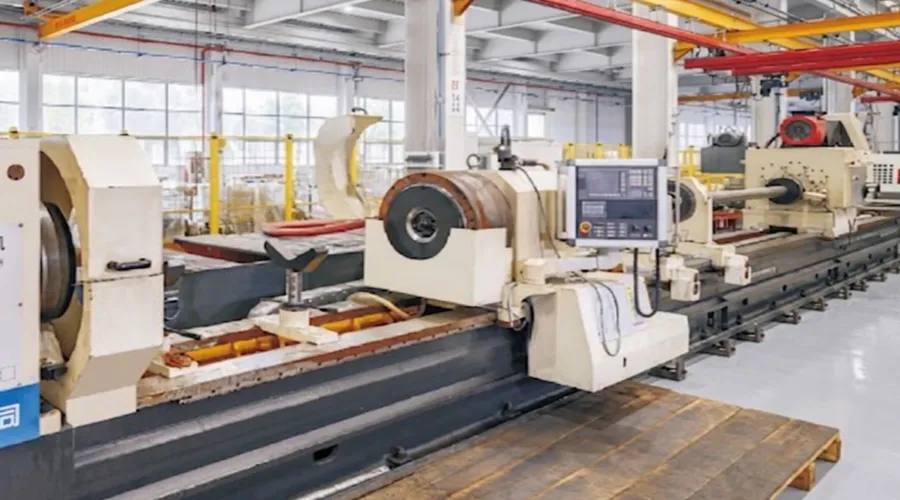
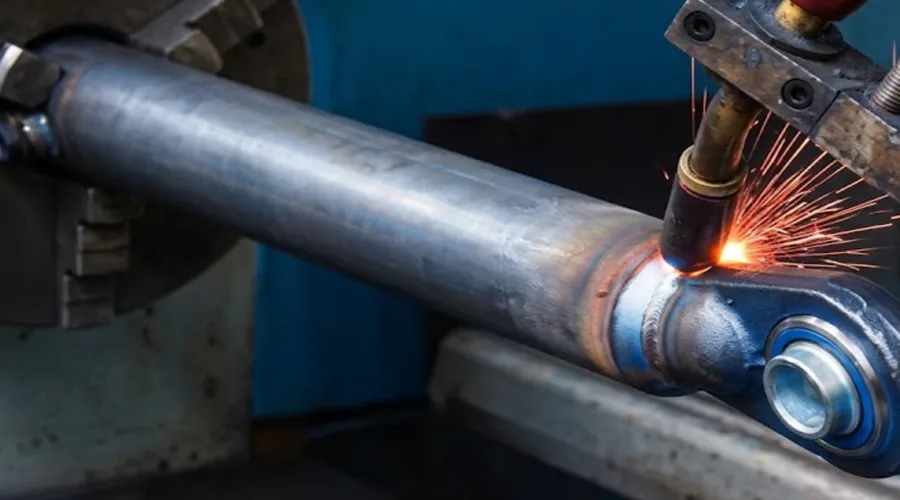
Z ponad dziesięcioletnim doświadczeniem w produkcji mechanicznych komponentów przeniesienia napędu na rynki globalne, nasz zakład produkcyjny dysponuje wiedzą specjalistyczną w zakresie całego łańcucha napędowego – od zespołów uzwojeń wirnika i szlifowania komutatorów, poprzez frezowanie kół zębatych, toczenie wałów, po montaż przekładni. Ta pionowa integracja pozwala nam oferować dostosowane konfiguracje napięcia, mocy i prędkości silnika w modelu EP-250W: wiedza inżynieryjna umożliwiająca modyfikację parametrów uzwojeń i weryfikację rezultatów znajduje się w tym samym budynku, co linia produkcyjna, a nie w sieci podwykonawców.
Nasza oferta produktów obejmuje przekładnie rolnicze, reduktory ślimakowe, przekładnie planetarne, wały odbioru mocy, siłowniki hydrauliczne, łańcuchy przekładniowe i pełną gamę silniki elektryczne prądu stałegoZakład działa zgodnie z certyfikatem zarządzania jakością ISO 9001:2015, z udokumentowaną kontrolą materiałów przychodzących, kontrolą w trakcie produkcji oraz testami funkcjonalnymi na końcu linii produkcyjnej. Zespoły mechaniczne i przekładnie produkowane są z żeliwa sferoidalnego, żeliwa, staliwa, staliwa precyzyjnego oraz odlewu aluminiowego; produkujemy również koła zębate, koła łańcuchowe, przekładnie ślimakowe, koła pasowe, wały ślimakowe oraz standardowe i niestandardowe części przekładni według rysunku klienta.
Każdy EP-250W silnik prądu stałego do produktu dołączony jest zapis testów funkcjonalnych umożliwiający prześledzenie procesu, a pełne pakiety dokumentacji — obejmujące rysunki wymiarowe, deklaracje zgodności materiałów i raporty z testów wydajności — są dostępne w celu wsparcia procesów certyfikacji i zgodności klientów w Wielkiej Brytanii, UE, Australii, Kanadzie i innych głównych rynkach.
Warsztat
Produkty uzupełniające — kompleksowa dostawa układów napędowych
EP-250W silnik prądu stałego jest najskuteczniejszy jako część zintegrowanego układu napędowego. Nasz zakład produkuje pełną gamę kompatybilnych komponentów napędowych i redukcyjnych, umożliwiając klientom zaopatrzenie się w silniki, przekładnie i powiązane elementy napędowe z jednego punktu kontaktowego – co upraszcza zaopatrzenie, zmniejsza ryzyko inżynieryjne u różnych dostawców i usprawnia obsługę posprzedażową dla naszej międzynarodowej bazy klientów.
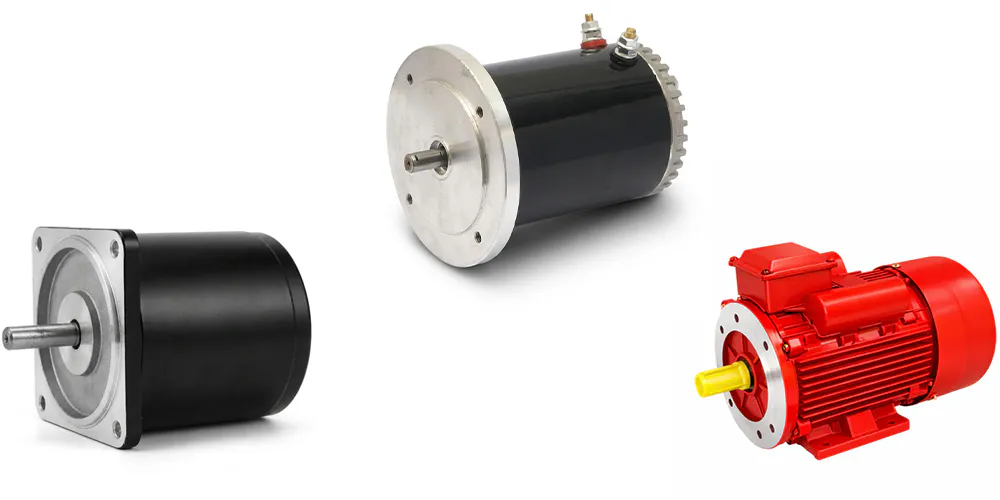
Nasza pełna Silniki elektryczne Katalog obejmuje silniki indukcyjne prądu przemiennego, trójfazowe, jednofazowe oraz silniki prądu stałego w szerokim zakresie mocy. Producenci maszyn potrzebujący różnych mocy napędowych dla różnych osi jednej maszyny mogą zaopatrzyć się w silniki prądu przemiennego i stałego o spójnych standardach kołnierzy i wspólnej dokumentacji technicznej – to prawdziwa zaleta podczas uruchamiania systemów wieloosiowych na rynkach europejskich i północnoamerykańskich, gdzie zgodność z dokumentacją jest ściśle kontrolowana.
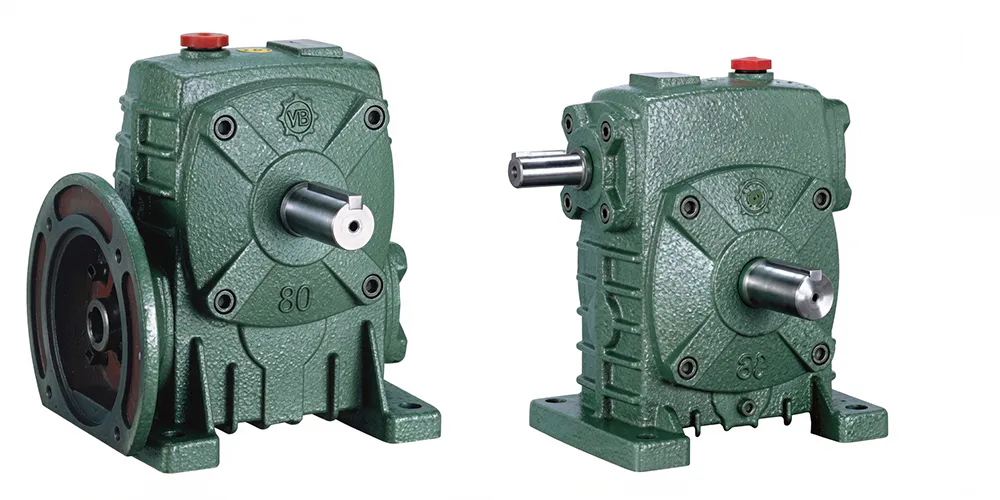
Nasz Przekładnia ślimakowa Seria idealnie współpracuje z EP-250W wszędzie tam, gdzie wymagany jest napęd kątowy i samohamowne wyjście. Przełożenia od 5:1 do 100:1, w połączeniu z ciągłą mocą wyjściową EP-250W wynoszącą 250 W, zapewniają moment obrotowy znacznie przekraczający ten osiągany przez silnik bez napędu – a samohamowne działanie przekładni ślimakowej utrzymuje obciążenie po odłączeniu zasilania, bez konieczności stosowania oddzielnego hamulca mechanicznego w aplikacjach z siłownikami wciągników, bram lub zaworów.
Często zadawane pytania
Redaktor: PXY