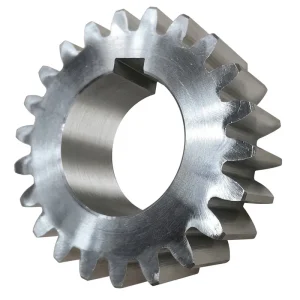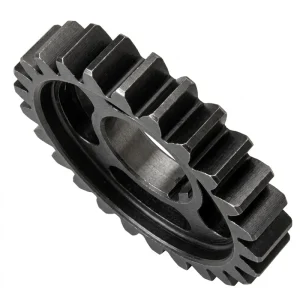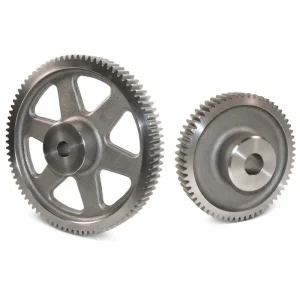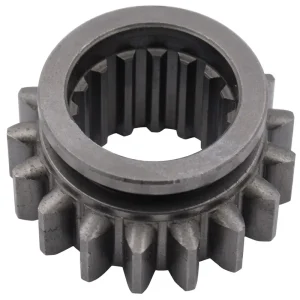
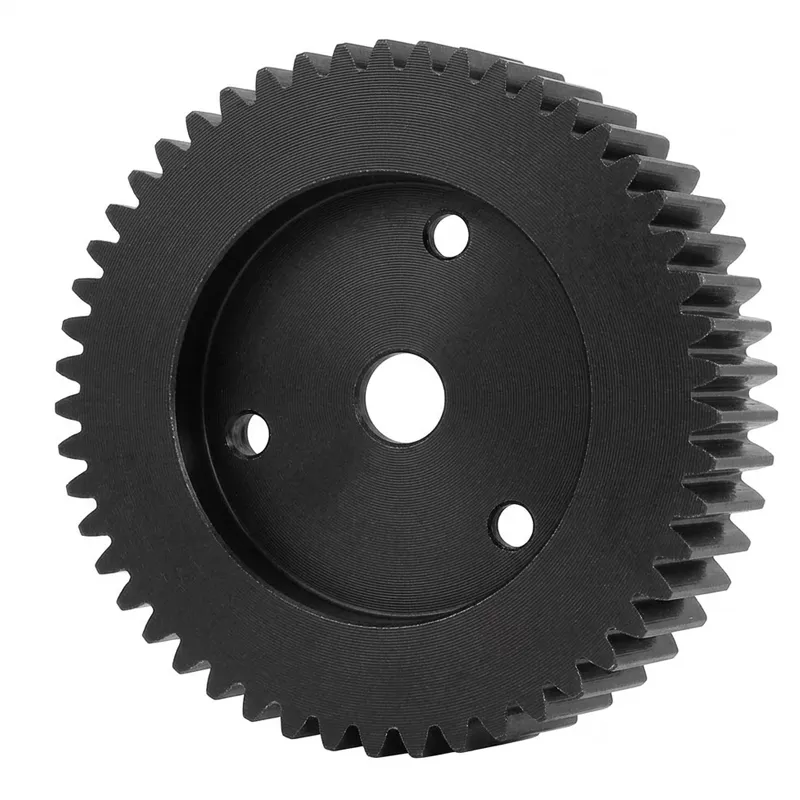
EP-Automotive Spur Gear
The EP-Automotive Spur Gear series delivers precision-engineered transmission components designed for demanding automotive, medical, military, aircraft, and mechanical applications. Available in dimensions ranging from Φ3mm to Φ120mm, this series covers modules from M0.15 to M2.2, including specific ranges like M0.25-M0.8 and M1.0<M<2.0. Manufactured from a versatile selection of materials—including Metal, Bronze, Steel, Alloy, POM, Zinc, Aluminum, Iron, Stainless, Brass, and Copper—these gears are tailored to meet specific performance requirements. They achieve high-precision meshing grades conforming to GB 6, ISO 6, JGMA 1, JIS 6, AGMA 13, DIN 6, and AGMA 12. Produced under ISO 9001:2008 and TS16949 certification, we offer full ODM/OEM customization with samples available. Each unit is securely vacuum-packed in plastic trays and shipped via DHL, TNT, FedEx, or UPS to ensure global delivery reliability.
EP-Automotive Spur Gear — Precision Compact Metric Spur Gears for Automotive, Medical and Mechanical Drive Systems
The EP-Automotive Spur Gear series delivers precision-manufactured compact spur gears engineered to the dimensional accuracy and surface quality standards demanded by automotive, medical, military, and mechanical drive applications. With an outer diameter of Φ16 mm, module coverage spanning M0.15 through M2.0 across five sub-ranges, and eleven material options from alloy steel and stainless to POM, brass, and copper, this spur gear family addresses the full breadth of small-diameter precision parallel-shaft drive requirements found in vehicle accessory systems, instrument actuators, robotic sub-assemblies, and precision mechanical devices. The series is certified under ISO 9001:2008 and TS16949 — the automotive supply chain quality standard — and is verified to meshing accuracy grades GB 6, ISO 6, JGMA 1, JIS 6, AGMA 13, DIN 6, and AGMA 12, enabling automotive OEM procurement engineers in Germany, Japan, South Korea, and the United States to qualify this spur gear against their specific gear accuracy grade requirements without additional re-measurement or grading work. Samples are available, and full ODM/OEM customisation is supported for tooth count, bore geometry, keyway, and surface treatment modifications. Delivery is managed through DHL, TNT, FedEx, and UPS, supporting reliable international logistics to automotive Tier-1 and Tier-2 supply chains in Brazil, Canada, Australia, and across Europe.
Technical Specifications — EP-Automotive Spur Gear
The specification table below documents the verified production parameters for the EP-Automotive Gear. All values represent certified manufacturing standards traceable to the TS16949 quality system. Engineers specifying this spur gear for an automotive sub-system should cross-reference the module sub-range against their specific pitch diameter and tooth count combination to confirm that the selected module falls within the appropriate manufacturing precision band for the required accuracy grade.
| EP-Automotive Spur Gear — Full Technical Specification | |
|---|---|
| Parametr | Value / Detail |
| Dimension (OD) | Φ16 mm (overall product range: Φ3 mm – Φ120 mm) |
| Module Range | M0.15 / M0.2 / M0.25–M0.8 / M1.0–M1.5 / M1.5–M2.0 |
| Material Types | Metal, Bronze, Steel, Alloy, POM, Zinc, Aluminum, Iron, Stainless, Brass, Copper |
| Meshing Grade | GB 6 / ISO 6 / JGMA 1 / JIS 6 / AGMA 13 / DIN 6 / AGMA 12 |
| Aplikacja | Medical, Automotive, Military, Aircraft, Mechanical |
| Customisation | ODM / OEM (tooth count, bore, keyway, surface treatment) |
| Sample Availability | Sample available upon request |
| Packing | Vacuum-packed with Plastic Tray |
| Delivery Carriers | DHL / TNT / FedEx / UPS |
| Certificate | ISO 9001:2008 / TS16949 |
The module sub-ranges are production-optimised bands: M0.15 and M0.2 are discrete sizes for the finest instrument-grade drives; M0.25–M0.8 covers the compact precision automation segment; M1.0–M1.5 serves mid-range automotive accessory drives; and M1.5–M2.0 handles the upper automotive sub-system torque range within the Φ16 mm envelope. Each sub-range has its own tooling and process parameter set to ensure that accuracy grade commitments are met consistently across production batches, not just in initial sample submissions.
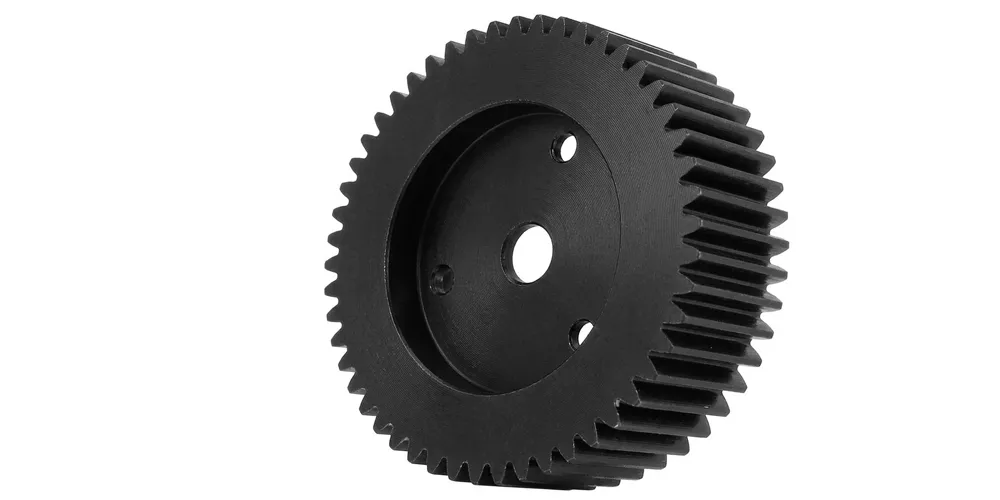
What Is a Spur Gear and How Does It Work in Automotive Drive Systems?
A spur gear transmits power between two parallel rotating shafts through the engagement of straight, radially-oriented teeth on a cylindrical pitch surface. The involute tooth profile — the standard mathematical form for all modern precision spur gear teeth — ensures constant velocity ratio throughout the engagement cycle, meaning that for every angular position of the driving gear, the driven gear's angular velocity is exactly proportional to the tooth count ratio between the two gears. This mathematical property, called conjugate action, makes the involute spur gear the most predictable and controllable gear form in mechanical engineering and the preferred choice for any automotive sub-system where timing accuracy, NVH (noise, vibration, harshness) performance, and positional repeatability must be maintained across the full life of the vehicle.
In the automotive context specifically, understanding what the spur gear is used for clarifies why the Φ16 mm format of the EP-Automotive series matters. Compact vehicle sub-systems — electric window lift mechanisms, mirror adjustment drives, HVAC flap actuators, instrument cluster pointer mechanisms, seat position motors, door latch solenoid geartrains, and anti-lock braking system (ABS) sensor wheel drives — all use small spur gears with outer diameters in the Φ10 mm to Φ25 mm range, where module sizes from M0.15 to M2.0 cover the torque and size requirements of these applications. The difference between spur gear and helical gear selection in these compact automotive sub-systems is driven primarily by space and axial load constraints: a spur gear generates only radial load on its shaft bearings, requiring no axial bearing capacity, which simplifies the bearing selection in the miniature housings typical of automotive accessory drives. A helical gear operating in the same space would require axial thrust bearings or more complex housing geometry to manage the net axial force — a mass and cost penalty that automotive sub-system designers consistently choose to avoid at this compact scale.
The gear ratio of a spur gear pair within the EP-Automotive series is set simply by the tooth count of each gear: a 15-tooth driving pinion spur gear meshed with a 45-tooth ring spur gear produces a 3:1 reduction. Within the Φ16 mm envelope and the M0.15–M2.0 module range, designers have considerable freedom to select tooth counts that achieve their target ratio while staying within the outer diameter constraint imposed by the vehicle sub-system housing. Designing spur gears at these micro-module sizes requires precision grinding and lapping operations to achieve the tooth profile accuracy needed for quiet, long-life operation — capabilities built into the EP-Automotive series from the outset of the product specification.
Five Key Advantages of the EP-Automotive Spur Gear
① TS16949 Automotive Quality Certification
ISO 9001:2008 and TS16949 dual certification means this spur gear is manufactured under the quality management requirements of the global automotive supply chain. TS16949 imposes production control documentation, measurement system analysis, failure mode and effects analysis (FMEA), and control plan requirements that go well beyond general industrial ISO 9001 certification — making the EP-Automotive series ready for Tier-1 and Tier-2 automotive supplier qualification without additional quality system development from the gear manufacturer's side.
② Seven Meshing Accuracy Grades — One Series
GB 6, ISO 6, JGMA 1, JIS 6, AGMA 13, DIN 6, and AGMA 12 accuracy grades are all available within this gear series, covering the major international precision gear standards simultaneously. A single design validated to AGMA 13 automatically satisfies the equivalent ISO 6 and DIN 6 grade requirements, simplifying multi-market product compliance documentation for automotive OEM customers submitting to supply chain qualification programmes across European, North American, and Asian automotive markets at the same time.
③ Eleven Material Options — Single Sourcing Across Sub-Systems
Metal, Bronze, Steel, Alloy, POM, Zinc, Aluminum, Iron, Stainless, Brass, and Copper — eleven distinct material options within the same product programme allow a single supplier relationship to cover spur gear requirements across multiple vehicle sub-systems with different environmental and performance requirements. Steel and alloy grades serve structural drive positions; POM delivers lubrication-free operation in instrument and HVAC actuators; stainless resists automotive fluid contamination; brass provides EMI-neutral operation in sensor-adjacent positions.
④ Micro-Module Range — M0.15 to M2.0
Five module sub-ranges within M0.15–M2.0 address the full spectrum from precision instrument drives at the finest module end to moderately loaded accessory drives at M1.5–M2.0. Micro-module spur gears in the M0.15–M0.8 range require dedicated precision grinding, lapping, and optical inspection infrastructure that most spur gear manufacturers cannot access — the EP-Automotive series makes this capability available with TS16949 documentation backing for global automotive supply use.
⑤ Vacuum Packing + Four-Carrier Global Logistics
Vacuum-packed with Plastic Tray protects the precision tooth surfaces of each spur gear from corrosion, mechanical contact damage, and contamination between the production facility and the customer's assembly line — critical for micro-module gears where a surface rust pit of even 5 µm depth represents a significant fraction of the total tooth depth. Delivery through DHL, TNT, FedEx, and UPS provides four independent logistics options, supporting both standard air freight schedules and urgent expedited shipments to automotive assembly plants globally.
Material Selection — Matching Each Automotive Spur Gear to Its Operating Environment
The eleven material options in the EP-Automotive Spur Gear series are not interchangeable alternatives — each material family addresses a specific set of automotive operating conditions that the other materials cannot satisfy. Understanding the correct material selection for a given application is the difference between a spur gear that lasts the full vehicle service life and one that fails prematurely in a warranty claim event.
Alloy steel and carbon steel are the primary choices for structural spur gears in automotive applications where tooth bending strength and contact fatigue life are the dominant requirements. Case-hardened alloy steel spur gears operating in electric window lift gearboxes and seat motor drives in German, Japanese, and South Korean vehicles achieve 60 HRC surface hardness with a tough core that resists the sudden overload events caused by window obstruction or seat jam conditions. Stainless steel spur gears are selected for applications near the engine bay or underbody where exposure to road wash, brake fluid splash, or coolant contact makes corrosion resistance a baseline requirement — not an optional upgrade. POM (acetal) spur gears are the preferred small spur gear material for instrument cluster drives, HVAC blend door actuators, and diagnostic connector cover mechanisms in passenger vehicles across markets in the United States, Canada, and Australia, where NVH targets effectively prohibit metallic gear-on-gear tooth engagement noise in passenger-audible frequency ranges. POM's coefficient of friction against a steel counter-gear is approximately 0.10–0.15 without lubrication — lower than almost any other engineering plastic — and it sustains this low-friction operation over the full temperature range of a passenger vehicle interior (−40 °C to +85 °C). Brass spur gears serve applications in proximity to electronic sensors or control modules where the non-magnetic, non-conductive nature of brass prevents electromagnetic interference with adjacent sensor readings — a specification requirement encountered in ABS wheel sensor drive gears and transmission position sensor drives in vehicles produced in European markets. Aluminum alloy spur gears reduce rotating inertia in high-speed, low-torque instrument drives and in motorsport sub-systems where mass optimisation at every component level is a documented engineering requirement. The breadth of this material range means that a single spur gear supplier relationship can address requirements across an entire vehicle programme rather than requiring separate qualification processes for each sub-system's preferred material grade.
Automotive Spur Gear Application Scenarios — Where Compact Precision Drives Matter
The EP-Automotive Spur Gear's compact Φ16 mm envelope and micro-module range make it applicable across a wide spread of vehicle sub-systems and adjacent sectors. The application cards below describe the primary use cases in which the EP-Automotive series is qualified and in production.
🚗 Automotive Body Systems
Electric window lifts, door mirror adjustment motors, power seat drive modules, sunroof actuators, and retractable door handle mechanisms all use compact spur gear sets in the Φ10 mm–Φ20 mm diameter range to reduce motor speed and multiply torque. The EP-Automotive gear's POM and brass material options directly address the NVH and electromagnetic compatibility requirements of these passenger-audible, sensor-adjacent applications in vehicles produced across markets in Germany, South Korea, Japan, and the United States.
🏥 Medical Device Drives
Precision infusion pump gear stages, imaging gantry drive sub-assemblies, and surgical instrument positioning actuators all demand spur gears with the dimensional repeatability and material traceability that the TS16949-aligned manufacturing system of the EP-Automotive series provides. POM and stainless steel versions operating without lubrication eliminate contamination risk in sterile environments, while the AGMA 13 / ISO 6 accuracy grade ensures that transmission error remains within the tight limits required for precise fluid volume delivery and positioning repeatability in medical applications across Australia, Canada, and the United Kingdom.
✈ Aerospace & Military Instruments
Navigation system drive mechanisms, cockpit instrument pointer drives, and weapons system aiming actuators in military and aircraft applications use micro-module spur gears at the M0.15–M0.5 range where the combination of compact envelope, precise transmission ratio, and material options including copper, brass, and stainless addresses the weight, corrosion, and EMI compatibility constraints of avionics-grade sub-assembly design. The JGMA 1 and AGMA 13 accuracy grade availability satisfies the precision gear specifications referenced in aerospace procurement standards.
🤖 Robotics & Automation
Collaborative robot wrist sub-assemblies, precision dispensing system drives, and small delta robot arm linkage actuators use compact spur gear sets where the module range M0.5–M1.5 and alloy steel or aluminum material options deliver the required torque capacity within the joint mass budget. The pinion and spur gear set in these applications operates at high cycle rates — often hundreds of cycles per minute — making tooth accuracy grade and material hardness the primary determinants of service life between maintenance intervals in factory automation installations across South Korea, Japan, and Germany.
⚡ EV & Hybrid Vehicle Auxiliary Drives
Electric and hybrid vehicles introduce additional compact spur gear applications beyond conventional ICE vehicles: battery management system thermal valve actuators, charging port door mechanisms, active grille shutter drives, and EV-specific door seal inflation systems all use small spur gear sets in the Φ10 mm–Φ20 mm range.
🔬 Precision Mechanical Instruments
Laboratory analytical instruments, optical adjustment mechanisms, and scientific measurement devices use metal spur gears and brass spur gears in the M0.15–M0.5 range as the finest-resolution gear elements in their motion control architecture. The EP-Automotive series' micro-module precision and multi-material breadth make it applicable across this segment, which requires the same dimensional accuracy and material certification standards as the automotive and medical sectors — without necessarily requiring automotive-specific documentation packages — serving instrumentation customers in the Netherlands, the United Kingdom, and Australia.
Order & Trade Terms — EP-Automotive Spur Gear
MOQ & Sample Policy
Standard automotive spur gear parts have baseline MOQ requirements. Mixed models can be combined to reach approximately USD 1,500 minimum order value. New customers may request 1–5 pcs samples for qualification validation. Orders of 1–2 pcs can be evaluated, though unit cost will be proportionally higher for very small quantities.
Lead Time
Standard and stock spur gear parts: 10–25 working days. Custom or OEM automotive spur gear orders (modified bore, keyway, surface treatment): 20–45 working days. High-precision / heat-treated gear orders: 30–60 working days. Samples and test pieces (1–5 pcs): 7–25 working days, with complex micro-module pieces evaluated on a project basis.
Trade Terms
Standard automotive gear parts and OEM custom gear components: EXW / FOB / CIF / DAP recommended. Sample and test piece orders (1–5 pcs): EXW / FCA / DAP / DDP available on request. Urgent or expedited spare part shipments: DHL / TNT / FedEx / UPS courier service available globally.
OEM / ODM Custom Orders
Custom automotive spur gear MOQ depends on drawing, material, tolerance, machining process and batch size. Special processing (heat treatment, surface coating, lapping) may be limited by process batch size. Special processing may be limited by process batch size. Customer engineering drawings and OEM part reference numbers are accepted as the qualification baseline for custom order development.
About Our Manufacturing Facility — Over Ten Years in Precision Automotive Gear Supply
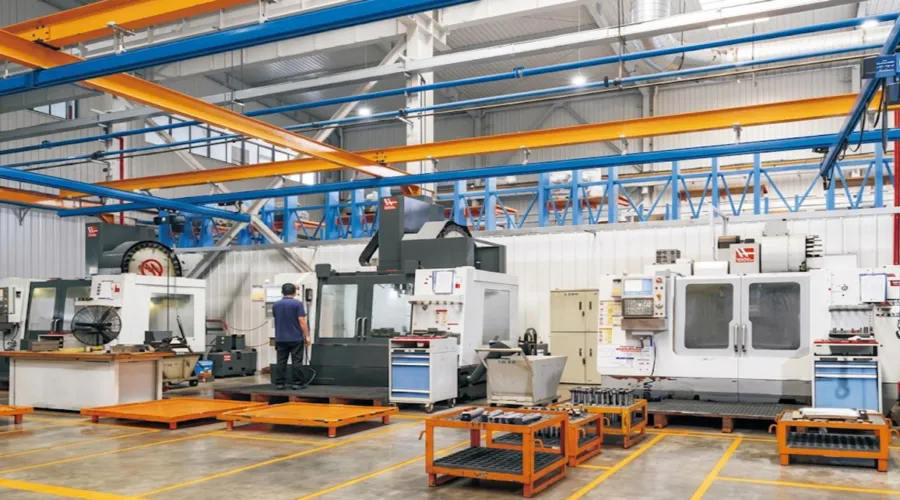
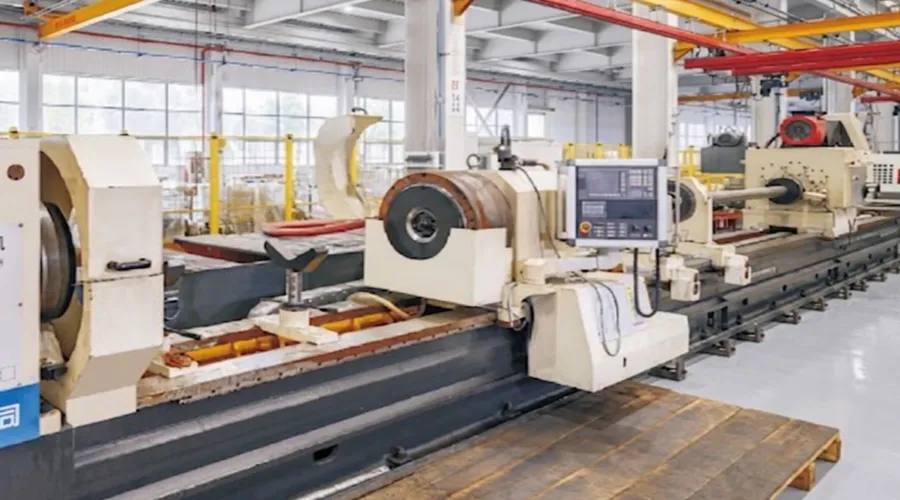
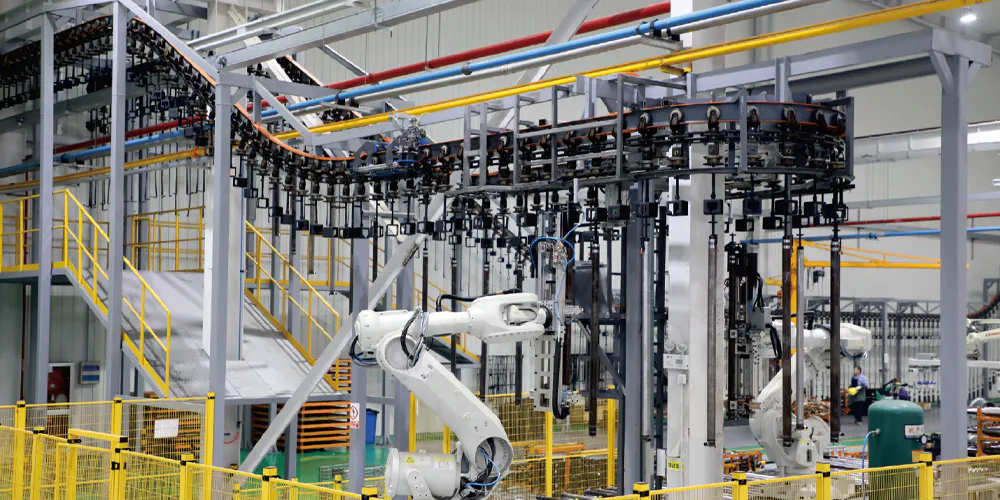
Our production facility brings more than a decade of precision mechanical engineering experience to the manufacture of the EP-Automotive Spur Gear series and the broader drive component catalogue that supports it. Product scope covers agricultural gearboxes, worm gear reducers, planetary drive assemblies, power take-off shafts, hydraulic cylinders, roller chains, sprockets, and industrial motors — all produced under the same ISO 9001:2015 certified quality management framework that governs the automotive-grade spur gear series featured on this page.
We design and fabricate both standard catalogue and custom non-standard mechanical components in ductile iron, cast iron, cast steel, precision cast steel, and cast aluminum, alongside gears of all types, worm gears, pulleys, worms, and precision transmission shafts. The micro-module spur gear manufacturing capability of the EP-Automotive series sits within a facility that also handles large industrial gear production — a combination that gives engineering teams sourcing a compact automotive spur gear the same technical depth and quality system rigour normally found only at dedicated precision instrument gear specialists.
Warsztat

Compatible Drive Components — Complete Automotive Drive System from One Source
A compact automotive spur gear rarely operates in isolation within a vehicle sub-system. Upstream helical reduction stages and downstream rack-and-pinion linear actuators are common architectural partners. Sourcing these complementary components from the same TS16949-aligned manufacturing facility ensures matched accuracy grades, consistent material documentation, and a unified quality chain that simplifies PPAP submission for automotive Tier-1 and Tier-2 suppliers.
Podwójne koło zębate śrubowe
When a vehicle sub-system gearbox requires a primary parallel-shaft reduction stage upstream of the spur gear ratio stage, a double helical gear (herringbone configuration) provides lower noise engagement at the higher input speed — an advantage in EV vehicles where gear noise is no longer masked by combustion sound. The herringbone geometry cancels net axial thrust, which simplifies the bearing arrangement in the compact gearbox housing shared with the downstream spur gear stage. Matching the double helical gear module and accuracy grade to the spur gear stage from the same production facility eliminates accuracy grade mismatches at the inter-stage interface and simplifies the PPAP dimensional submission package.
Listwa zębata
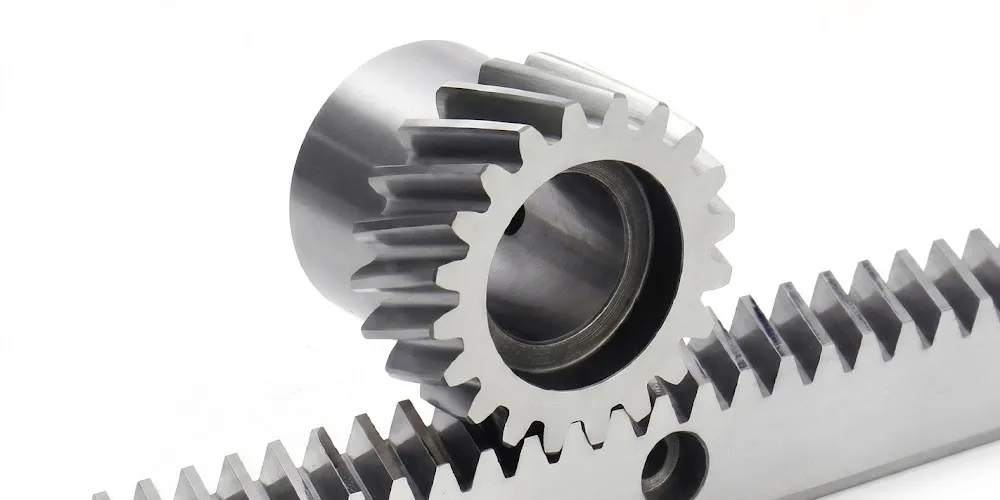
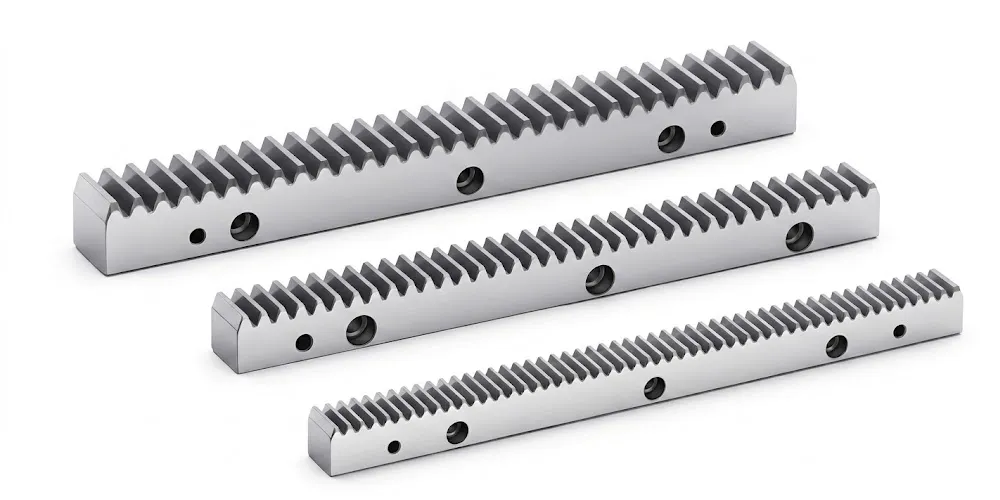
Automotive rack-and-pinion applications — power steering systems, seat slide adjustment mechanisms, and retractable step drives — use a pinion spur gear meshing with a linear gear rack to convert motor rotation into controlled linear displacement. In compact automotive applications, the rack pitch must be matched exactly to the pinion spur gear module for correct meshing geometry: a pitch mismatch of even 5% between the rack and pinion produces a cyclical tooth force variation that accelerates surface wear and creates an audible roughness in the drive feel. Sourcing the pinion spur gear and the gear rack from the same TS16949-compliant facility guarantees pitch accuracy matching and simplifies the quality documentation chain for the complete steering or seat mechanism assembly.
Frequently Asked Questions — EP-Automotive Spur Gear
Redaktor: PXY